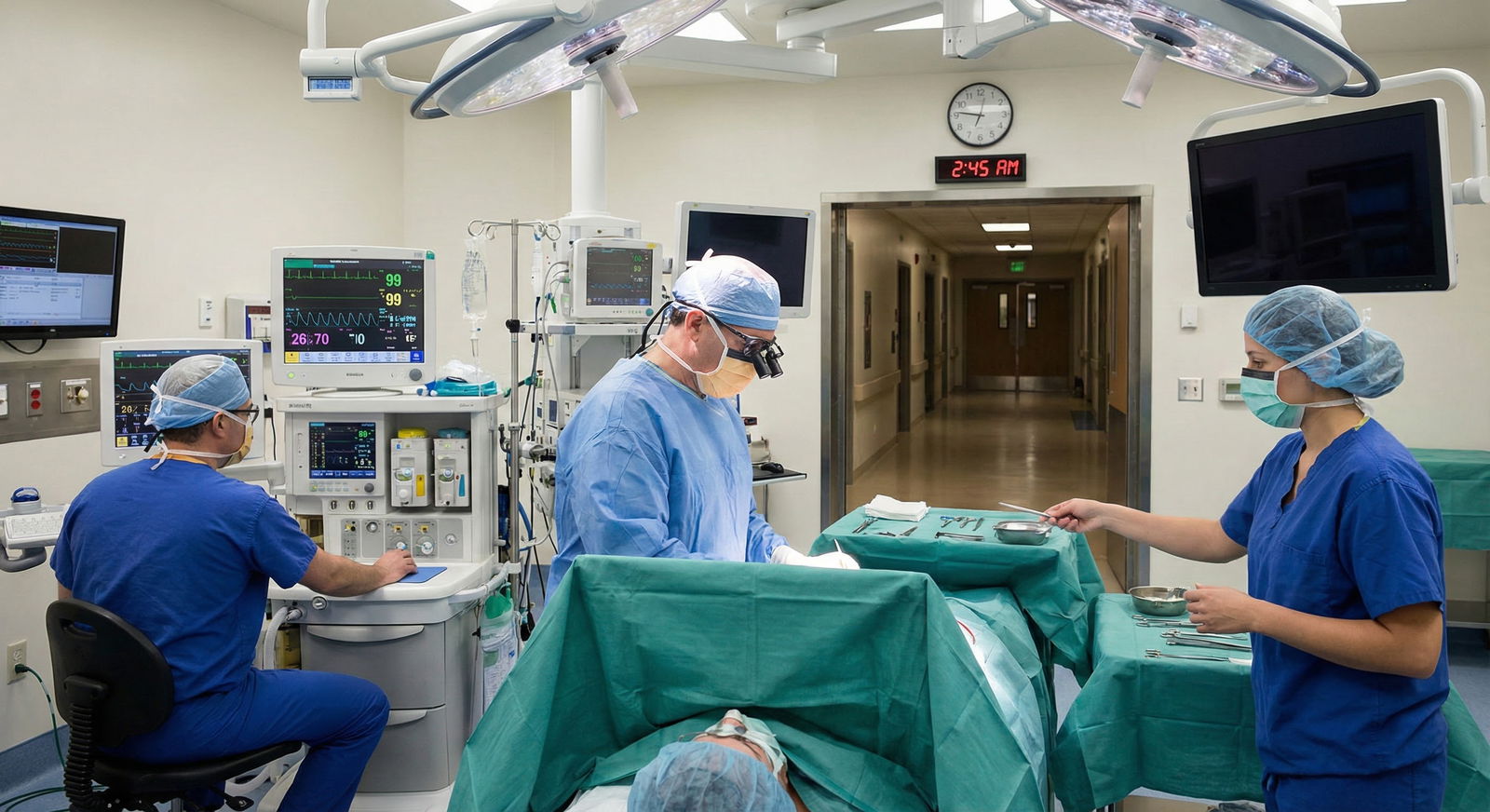
It’s 3:17 a.m. You’re in the call room, still in your OR cap, scrolling through residency program websites instead of sleeping. You just got out of your fourth ex-lap in 24 hours. Your watch says you’ve taken 1,000 steps in the last three hours…and all of them were between PACU and the ED.
And you’re thinking:
“I can’t do this for five more years. I don’t even like the OR that much. Did I just ruin my life picking surgery?”
You’re not alone, and you’re not trapped. There is a path from a malignant-feeling surgery intern year to a lifestyle specialty. But you need to be smart, fast, and a little ruthless about how you do it.
Let’s walk through what that actually looks like, step by step.
Step 1: Get Clear on What’s Burnout vs. “I Chose the Wrong Field”
First thing: separate “I am exhausted and miserable” from “I am in the wrong specialty.”
They overlap, but they’re not the same.
Ask yourself three blunt questions:
- On my best days in surgery, when I’m rested and not being screamed at, do I enjoy the work itself?
- When I imagine being an attending surgeon, does that future feel exciting or heavy?
- If I had to repeat intern year but in a different specialty, would I still want it to be surgery?
If your honest answers are:
- “Not really,”
- “Honestly I don’t want that life,” and
- “I’d rather do almost anything else than this again”
…then you’re not just “tired.” You’re in the wrong field.
I’ve watched people wait until PGY-3, 4, even chief year to admit this. Those years do not get refunded to you. Residency is not sunk-cost-proof. It just keeps going.
If you’re even 60–70% sure surgery isn’t your long-term home, start planning a move now. You don’t need 100% certainty to start gathering information and options.
Step 2: Know Which Fields Are Realistically “Lifestyle” and Will Take You
You can’t just say “I want lifestyle” and throw darts. Some fields are far more realistic transitions from surgery than others, especially after intern year.
Here’s the honest lay of the land from a surgical intern starting point:
| Specialty | Lifestyle Quality | Realistic Transition After Surgery PGY-1? |
|---|---|---|
| Anesthesiology | High | Very realistic |
| Radiology (DR) | High | Realistic if you move quickly |
| PM&R | High | Realistic, esp. if you like MSK/Neuro |
| Pathology | High | Realistic, surgery year is a bonus |
| Dermatology | Very high | Difficult but possible with strong record |
| Family Med | Moderate–High | Very realistic |
| Psych | High | Very realistic |
Let me give you quick, no-BS snapshots:
Anesthesiology – Probably the most common escape hatch from surgery. OR-adjacent, procedural, better hours, actual days off. Your surgical exposure helps. Programs understand surgical interns bail.
Diagnostic Radiology – Great lifestyle long-term. True cognitive/procedural mix. Your OR and ICU time gives you clinical credibility. Competitive but not impossible, especially community programs and mid-tier academics.
PM&R – If you like MSK, neuro, function, and talking to patients instead of holding retractors for doing nothing, this is a smart pivot. Lifestyle is solid; call is reasonable.
Pathology – Massive lifestyle upgrade. Your surgery exposure is directly relevant (specimens, cancer, anatomy). You lose direct patient contact; some people love that.
Dermatology – Fantastically lifestyle-friendly, but brutally competitive. Doing a “surgery prelim then derm” is a known path, but you’ll need high board scores, strong research, and letters. The bar is high.
Psychiatry / Family Med / IM with outpatient focus – Very realistic transitions. Lifestyle is heavily practice-dependent but generally far better than surgery.
The point: you have options. But you need to pick a type early:
- OR-adjacent procedural (Anesthesia)
- Image/procedure cognitive (Radiology)
- Clinic + MSK/Neuro (PM&R)
- Lab/anatomic focus (Path)
- Patient contact clinic (Psych/IM/FM)
- Ultra-competitive lifestyle unicorn (Derm)
Do not apply to all of them. That screams “I just want out of surgery” and you will not match well.
Step 3: Timing – When to Bail and How Fast to Move
The calendar matters. A lot.
Here’s the rough reality for transitioning after surgery intern year:
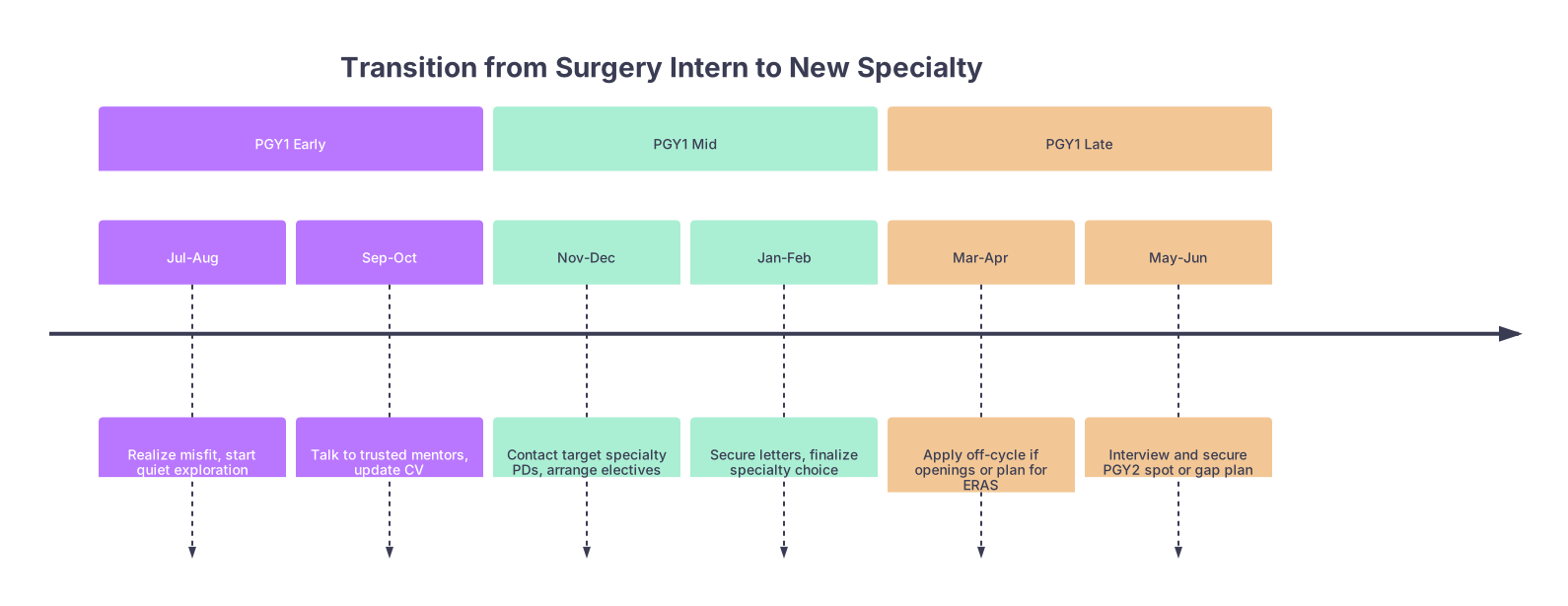
| Period | Event |
|---|---|
| PGY1 Early - Jul-Aug | Realize misfit, start quiet exploration |
| PGY1 Early - Sep-Oct | Talk to trusted mentors, update CV |
| PGY1 Mid - Nov-Dec | Contact target specialty PDs, arrange electives |
| PGY1 Mid - Jan-Feb | Secure letters, finalize specialty choice |
| PGY1 Late - Mar-Apr | Apply off-cycle if openings or plan for ERAS |
| PGY1 Late - May-Jun | Interview and secure PGY2 spot or gap plan |
There are two main paths:
Path A: Off-cycle transfer (spot opens unexpectedly)
This happens when another resident quits, gets dismissed, or a program expands.
How to position yourself:
- Start now looking at:
- AMA FREIDA
- Residentswap.org
- Specialty listservs (anesthesia, radiology, PM&R often share openings)
- Program websites and Twitter (yes, some PDs still announce there)
- Email PDs directly when you see positions:
- Short, professional email
- One-paragraph summary of who you are and why you’re switching
- CV attached
- Ask if they’d consider a transfer for PGY-2 or PGY-1 restart
This path is chaotic but fast. You might jump directly into PGY-2 in the new field, or restart as PGY-1 if your surgery year doesn’t count.
Path B: Reapply through ERAS
If no good off-cycle options hit, you prep for a formal reapplication.
You’d be:
- A surgery PGY-1 or PGY-2 during application season
- Applying to start PGY-1 again in your new specialty the following July
Yes, this likely means repeating intern year. Is that annoying? Sure. Is it better than 4–5 more years in a specialty you hate? Absolutely.
Either way, you can’t wait until May of intern year to start thinking. By then, letters, networking, and electives should already be in motion.
Step 4: Control the Narrative Without Throwing Surgery Under the Bus
Program directors in lifestyle fields have seen this movie before:
- The surgery intern who’s cooked and wants out.
- The neurosurgery PGY-2 who realizes they want kids and a life.
- The OB/GYN resident who was sold a “family-friendly” program that wasn’t.
If your message is “I hate surgery and I’m burned out,” you will tank. They’ll assume you’ll burn out with them too.
You need a coherent, forward-facing story. Something like:
“I went into surgery because I love acute care and procedures. During intern year I realized my favorite part was managing physiology in the ICU and perioperatively. That aligns more with anesthesiology, where I can focus on that full-time.”
“I’ve enjoyed the technical side of surgery but found myself most interested in imaging, pre-op scans, and postoperative complications. Radiology fits how I think and lets me still impact patient care while having a sustainable career.”
“Surgery taught me I value patient relationships and long-term outcomes more than the OR. I’m drawn to PM&R because I want to work on function, rehab, and quality of life, especially after trauma.”
The formula:
- Start with what you’ve learned about yourself from surgery.
- Connect that directly to positive aspects of the new specialty.
- Emphasize what you’re moving toward, not what you’re fleeing.
And do not trash your program or attendings. Ever. Even if they’re objectively toxic. You can say:
- “The workload in surgery made me really examine what I want long-term, and I realized I need a field where I can sustain my energy and focus over decades. [New specialty] offers that while still letting me [do X that I love].”
They get the subtext. You don’t need to spell out “I was drowning and my chiefs were maniacs.”
Step 5: Get the Right People on Your Side (Without Blowing Yourself Up)
This is the trickiest part: whom to tell, and when.
Start with safe mentors, not your PD
Talk first to:
- A senior resident who’s honest and not a gossip
- A faculty member you’ve clicked with who doesn’t live to impress the PD
- An advisor from med school if they’re responsive and sensible
Tell them plainly:
“I’m seriously considering switching from surgery to [new specialty]. I want to handle this professionally and not compromise patient care or my responsibilities here. I’d really appreciate your advice about timing and references.”
You’re reading their reaction, but also mining for:
- Who in your hospital is connected to the new specialty
- How your PD typically reacts to people who leave
- Which attendings would write you solid letters
Your PD: tell them, but not too early and not too late
This depends on your program culture. In a normal, non-psychotic program, the right time is:
- After you’re sure you want to switch
- After you’ve identified the target specialty
- Before you formally apply out
You want your PD to:
- Not be blindsided by a reference call
- Have time to write a letter (if they’ll be supportive)
- Know you’re not going to start slacking off on surgery responsibilities
In malignant or punitive programs, you may delay this conversation and lean more on other letter writers. You still need to be professional in the meantime:
- Show up on time
- Do your notes
- Learn
- Keep your frustration off the public radar
PDs talk. The “bitter, lazy intern who wanted lifestyle and checked out” story will haunt you.
Step 6: Letters, CV, and How to Not Look Like a Flake
Programs in your new specialty are going to ask themselves:
- Can this person do the job?
- Are they going to quit us too?
- Do they understand what we actually do, or do they just think we have weekends?
Your application has to answer all of that.
Letters of recommendation
Ideal combo:
- 1–2 letters from surgical attendings who say:
- You work hard
- You’re reliable
- You’re teachable
- 1–2 letters from your target specialty:
- Elective rotations
- Shadowing
- Research or case reports
If you can, get at least one letter from the new specialty that literally says “This resident understands what [field] entails and will be an asset to our program.”
You want zero whiff of “just trying to escape.”
Your CV
You’re not rewriting your life story. You’re reframing it:
Highlight:
- OR cases that relate (for anesthesia, radiology, PM&R for trauma, etc.)
- ICU time, floor management
- QI projects, teaching, leadership
- Any research/interest that touches the new field
If you’re moving to derm with a general surgery prelim background, you better have derm research or involvement somewhere. Same with radiology: some exposure to imaging goes a long way, even if it’s just a little project on CT findings.
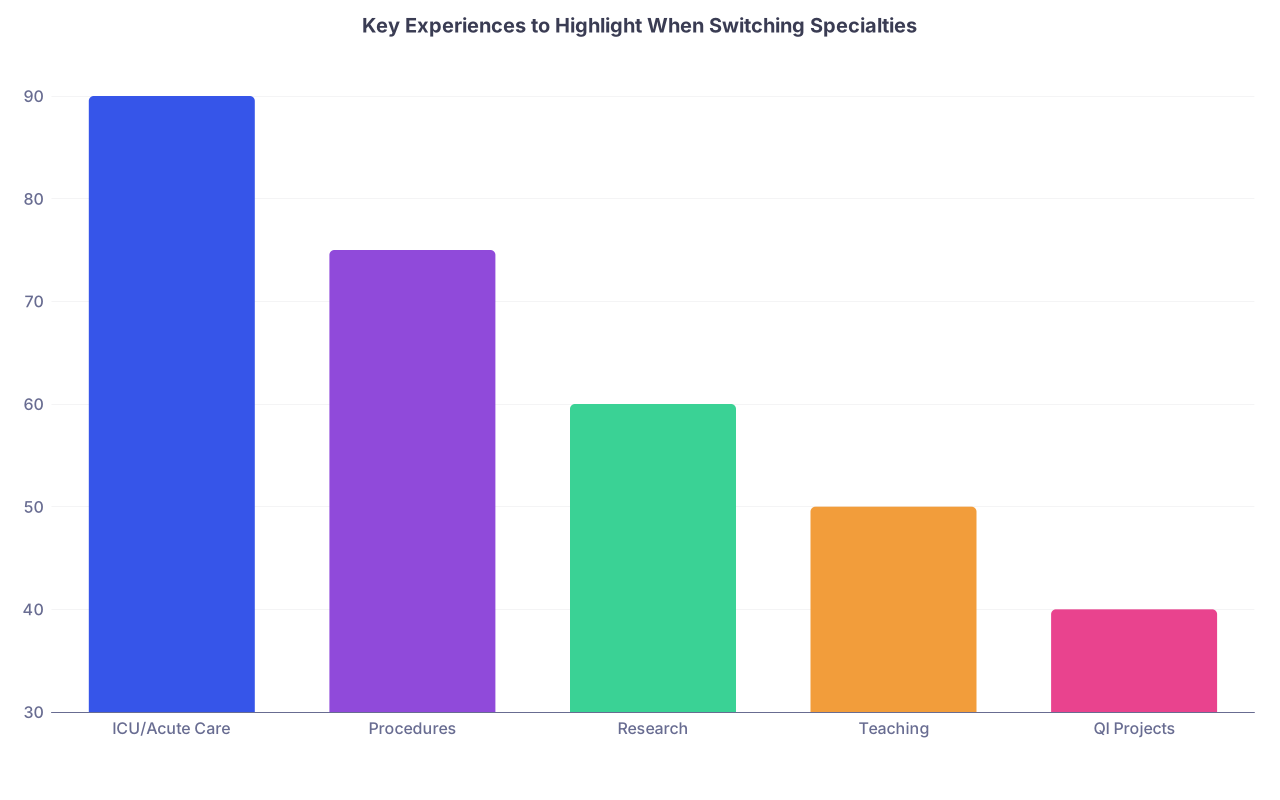
| Category | Value |
|---|---|
| ICU/Acute Care | 90 |
| Procedures | 75 |
| Research | 60 |
| Teaching | 50 |
| QI Projects | 40 |
Step 7: Use Your Remaining Time in Surgery Strategically
You’re tired. I get it. But the months you have left in surgery can either:
- Make you a much stronger candidate for your new field
or - Be a blurry, miserable stretch you barely survive
Aim for the first.
Ask (tactfully) for rotations that help your future field
Examples:
- Anesthesia: Ask for more ICU, trauma, acute care, vascular. Shows comfort with sick patients and lines/airways.
- Radiology: Push for ICU, ED, any chance to sit with radiology for sign-out or film review. Shows clinical grounding.
- PM&R: Polytrauma, ortho, neuro, ICU. Ask to be involved in rehab planning discussions.
- Pathology: Tumor board, tissue conference, time in pathology lab if allowed.
- Psych / FM / IM: ED, ICU, ward medicine months, clinic exposure.
Frame requests as “where I can grow the most” and “round out my education,” not “I hate night float and I don’t want to take call.”
Behave like the attending you want to be
This sounds cheesy, but it matters.
- Don’t dump scut on students or junior residents.
- Be calm when things are chaotic.
- Read a bit about your new field on your phone instead of scrolling social media mindlessly at 2 a.m.
- Write clean notes. Be the reliable person nurses trust.
You’re building a reputation that will follow you. You want future PDs hearing: “Yeah, they left surgery, but honestly, they were one of our best interns.”
Step 8: Money, Gaps, and the Practical Stuff No One Tells You
Changing specialties isn’t just emotional. It’s logistical and financial.
Things to get in order:
- Loans / Income: If there’s a gap between programs or if you repeat intern year:
- Talk to your loan servicer early about deferment/forbearance
- Build a small cushion if you can (locums when you’re further along, moonlighting later, side gig if allowed)
- Licensing: Your GME office needs to know if/when you’re leaving so they can handle:
- State license transitions (if applicable)
- Board eligibility documentation
- Contract stuff: Some programs have weird contract clauses. If anything looks sketchy about penalties for leaving, get it in writing and, if needed, talk to GME or a lawyer. Do not just assume.
You are not the first resident to switch. HR has a protocol, even if they act like they don’t.
Step 9: What If You Can’t Switch Immediately?
Sometimes the timing just doesn’t work:
- No open spots in your target field this year.
- Your PD is slow to provide a reference.
- Personal stuff (family, health) forces you to delay.
You still have options:
Finish PGY-1 and work as a surgical prelim / transitional year grad
- Then reapply with that year under your belt.
- Use time between to do research or a fellowship-like year in your new field (especially common for derm, radiology, anesthesia).
Do a second prelim year in something closer to your target
Example: prelim medicine while aiming for radiology or anesthesia.Take a research year in your target specialty
- Usually in an academic setting.
- Builds mentors, letters, and credibility.
This part is uncomfortable. It feels like your life is in limbo. But one or two “wasted” years are still better than a miserable 30-year career.
Quick Reality Check: What’s Actually Lifestyle vs. Instagram Fantasy
You already know surgery is brutal. Let’s anchor what “lifestyle” actually means in practice.

Lifestyle fields:
- Still have call.
- Still have bad days.
- Still have annoying attendings and EMR nonsense.
But the spread of misery is different.
Typical patterns (yes, this varies, but directionally true):
- Anesthesiology: Early starts, but predictable ends, post-call days that are real, fewer 28-hour marathons.
- Radiology: Longer days mentally, but less physical exhaustion, decent flexibility, night float models.
- PM&R: Solid hours, minimal nights in many jobs, weekends often light.
- Pathology: Very little call in many practices, lots of desk time but extremely predictable schedules.
- Psych / Derm / Outpatient IM/FM: Clinic-driven schedules. Your life is largely what you negotiate at your eventual practice.
So no, you’re not signing up for hammocks and four-day weekends. You’re signing up for a life where you can:
- See friends on purpose
- Have hobbies
- Be awake during dinner
- Not dread the sound of your pager like a trauma flashback
A Concrete Example: Surgery → Anesthesia
Let me make this painfully specific, since this is a very common route.
You’re a current general surgery intern, July–August. You already suspect anesthesia might be a better fit.
Here’s what you do over the next 6–9 months:
August–September
- Reach out to anesthesia faculty at your hospital.
- Ask to shadow in the OR on post-call days or golden weekends.
- Tell one trusted surgery attending you’re considering anesthesia and want honest advice.
October–December
- Arrange an official anesthesia elective month if possible.
- During that month: show up early, be enthusiastic, ask basic but thoughtful questions, stay a bit late when cases are interesting.
- Ask two anesthesiologists if they’d be comfortable writing you strong letters.
January–March
- Talk to your surgery PD:
- “Through intern year I’ve realized I’m more drawn to the intraoperative physiology and acute management side of care. Anesthesiology fits that for me. I’m committed to finishing this year strong, but I’d like to apply to anesthesia. I’d appreciate your support and any guidance.”
- Update your CV with ICU, cases, and any QI.
- Talk to your surgery PD:
Spring
- Start scanning for off-cycle CA-1 positions or anesthesia PGY-2s.
- If none, plan ERAS application for anesthesia, starting over as PGY-1.
Throughout
- Do not become the intern who complains constantly.
- Study a bit of anesthesia content (Miller/Lange summaries, online resources).
- Keep a running list of cases where you handled airways, lines, resuscitation—those are gold in interviews.
By the time you interview, your story is crisp:
“I loved the OR environment, but found myself most engaged in the management of hemodynamics, airway, and perioperative care rather than the technical aspects of cutting and sewing. My ICU and trauma experiences confirmed that I want a career focused on physiology and acute care, which points clearly to anesthesiology. I’ve spent time on anesthesia electives, worked with Dr. X and Dr. Y, and they’ve both affirmed that my skills and mindset are a strong match for your field.”
That’s believable. That gets you taken seriously.
Final Thoughts: You’re Not Stuck
Here’s what I want you to walk away with:
- You’re not trapped in surgery. People switch out of “big” fields every year and go on to have excellent careers with actual lives.
- You need a clear, forward-facing story and a concrete plan. Decide on a target specialty, get the right mentors, and time your move deliberately.
- Don’t torch your reputation on the way out. Finish strong, be professional, and let your surgical year be the foundation that makes you a better, more mature physician in whatever lifestyle field you choose.
You’re exhausted now. Fine. But you’re not powerless. Use the rest of this year to build the bridge out—before you’re too burned out to walk across it.