
The biggest mistake applicants make is trying to judge lifestyle from a single interview day. You cannot. You evaluate lifestyle over months, by design, watching how programs act when they think you are not looking.
Here’s the month‑by‑month strategy I’ve seen actually work.
Big Picture: What You’re Doing Each Month
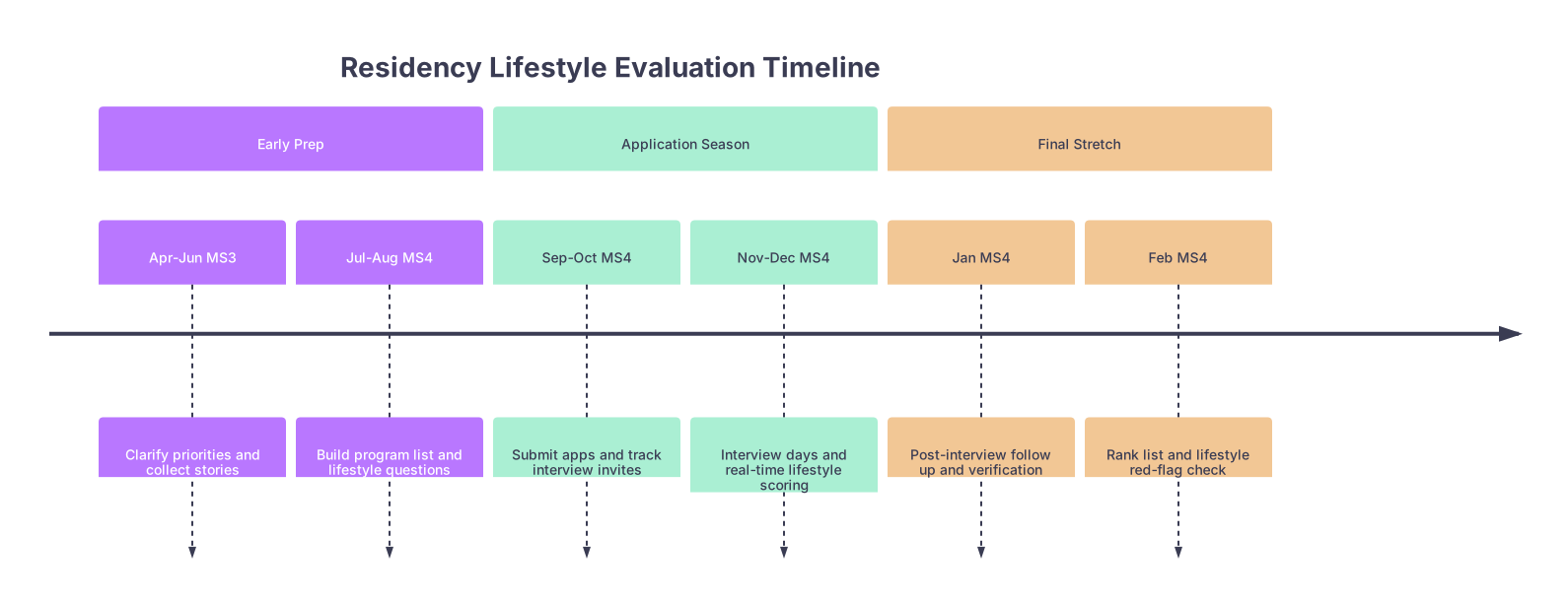
| Period | Event |
|---|---|
| Early Prep - Apr-Jun MS3 | Clarify priorities and collect stories |
| Early Prep - Jul-Aug MS4 | Build program list and lifestyle questions |
| Application Season - Sep-Oct MS4 | Submit apps and track interview invites |
| Application Season - Nov-Dec MS4 | Interview days and real-time lifestyle scoring |
| Final Stretch - Jan MS4 | Post-interview follow up and verification |
| Final Stretch - Feb MS4 | Rank list and lifestyle red-flag check |
You’re going to:
- Decide what “lifestyle friendly” actually means for you
- Bake lifestyle checks into every phase: emails, invites, interviews, socials, follow‑ups
- Maintain a running, structured log instead of relying on vibes
Let’s walk the calendar.
April–June of MS3: Define Lifestyle Before You Chase It
At this point you should stop saying “good lifestyle” like it’s a magic word and define it in real numbers.
Week 1–2: Build your non‑negotiables
Sit down once and be ruthless. For you (not Reddit) what matters?
Common buckets:
- Hours:
- Average weekly hours you can live with (ex: 55 vs 70)
- Number of 24‑hour calls per month you’ll tolerate
- Schedule predictability:
- How far in advance you see your schedule
- How often schedules get changed last‑minute
- Nights/weekends:
- Max number of weekends per month you’re okay working
- Night float vs 24‑hour call preference
- Culture & support:
- How attendings talk to residents
- Response to pregnancy, illness, mental health leave
- Geography & commute:
- Max commute time you’ll tolerate
- Willingness to pay higher rent in exchange for shorter commute
Write them down. Literally. This becomes your filter later.
Week 3–4: Talk to real people
At this point you should be collecting stories, not statistics.
- Pull aside residents on your current rotation who:
- Are in specialties you’re considering
- Just matched or are PGY‑2s
- Ask:
- “What does a bad week look like at your program?”
- “Who actually leaves at 5 p.m.? Interns? Seniors? Never?”
- “What’s the unspoken rule when residents are sick?”
- “If you had to do it again, would you pick this place for lifestyle?”
Write down exact phrases you hear:
- “We survive” vs “We’re happy here”
- “You learn a lot” = usually code for “it’s brutal”
- “You will work hard but it’s fair” = maybe okay
- “Administration has our backs” = green flag
You’re building your internal phrase translator now so you can decode interviews later.
Week 5–8: Map specialties vs lifestyle
If you’re choosing between specialties, you need a basic competitiveness and lifestyle map.
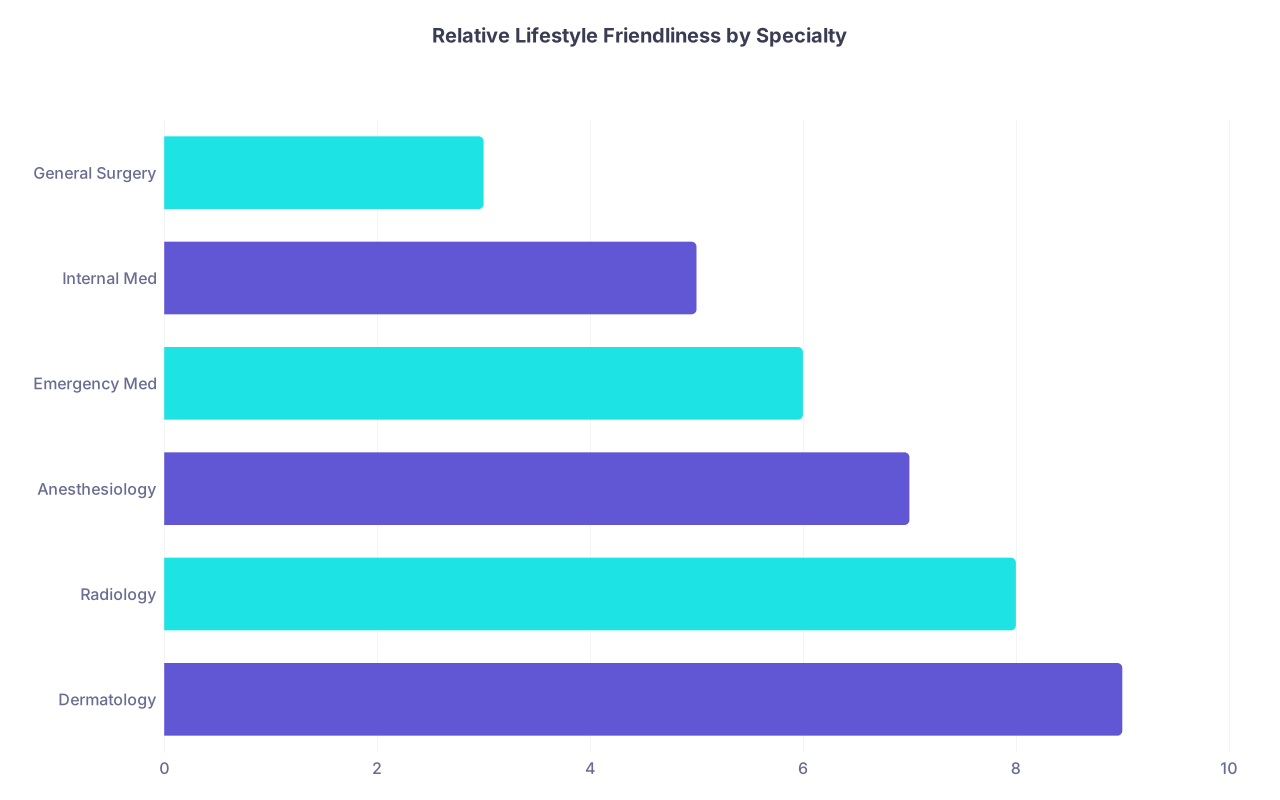
| Category | Value |
|---|---|
| Dermatology | 9 |
| Radiology | 8 |
| Anesthesiology | 7 |
| Emergency Med | 6 |
| Internal Med | 5 |
| General Surgery | 3 |
(10 = consistently lifestyle‑friendly, 1 = soul‑crushing on average. This is relative, not gospel.)
At this point you should:
- Decide: Are you targeting generally lifestyle‑friendly fields (derm, rads, rad‑onc, PM&R, some anesthesia, some EM) or trying to find the most humane programs in a demanding field (surgery, OB, EM)?
- Adjust expectations accordingly. A “good lifestyle” general surgery program still looks busier than a “tough” PM&R program.
July–August of MS4: Build Your Lifestyle Evaluation Toolkit
Now you’re getting concrete.
Week 1–2: Create your lifestyle scorecard
You’ll forget specifics if you don’t track them. Build a simple sheet or note.
| Category | Weight (1–5) | Example Data Point |
|---|---|---|
| Average weekly hours | 5 | 55 vs 70 |
| Call schedule | 4 | #24h calls/month, night float setup |
| Schedule predictability | 3 | How often changed last minute |
| Resident mood/culture | 5 | Seem exhausted vs satisfied |
| Program support/flexibility | 4 | Handling of illness, leave, mistakes |
At this point you should:
- Decide your top 5 categories
- Assign each a weight (how much you care)
- Plan to rate each program 1–10 in every category on interview day
Week 3–4: Draft your lifestyle questions
You need different questions for:
- Residents (honest)
- Faculty/PDs (filtered)
Skip the generic: “What’s work–life balance like?” That gets you rehearsed nonsense.
Instead prepare:
For residents
- “On your last inpatient month, what time did you usually actually leave?”
- “How many times in the last year did you stay more than 2 hours past your scheduled time off?”
- “How often do people miss major life events—weddings, funerals—because of schedule inflexibility?”
- “If your friend who really values time with their kids asked you whether to come here, what would you tell them?”
- “When someone is struggling, what actually happens? Who helps, and how?”
For faculty/PDs
- “How do you monitor and respond to duty hour violations?”
- “What changes have you made in the last 2 years to improve resident workload?”
- “How do you handle schedule requests for important life events?”
- “In the last 12 months, have any residents left the program? Why?”
Write these into your notes app so you can copy/paste into your interview prep documents for each program.
Week 5–8: Build your program list with lifestyle in mind
At this point you should be sorting programs into tiers before ERAS opens.
Sources:
- Program websites: look for explicit comments about wellness and concrete examples (built‑in jeopardy coverage, protected didactics truly honored, no 24‑hour call, etc.)
- Current residents: DM alumni or use your school’s match list
- Word‑of‑mouth: the unflattering stories are usually not made up
Tag programs as:
- Tier A – Reputation for sane hours and supportive culture
- Tier B – Neutral / unknown
- Tier C – Known grinders (still might apply, but you know what you’re doing)
September–October MS4: Use the Invite Phase as Lifestyle Data
How a program handles invitations tells you a lot about how they treat residents.
Week 1–2 (ERAS submission): Track response patterns
Set up a simple tracking sheet:
- Date you applied
- Date of first communication
- Tone and clarity of messages
Watch for:
- Clear, respectful communication about timelines = usually means organized leadership
- Complete email chaos, mixed messages, or rude “do not contact us” language = often mirrored in how schedules and coverage are handled
Week 3–6: Monitor interview scheduling behavior
At this point you should be paying attention to:
- How easy is it to schedule?
- Do they offer multiple dates?
- Are they accommodating if you ask (once) about a conflict?
Red flags:
- “You must accept or decline within 1–2 hours” with no flexibility
- Mass cancellations with poor explanation
- Radio silence after you accept
Green flags:
- Offering a waitlist for preferred dates
- Clear policies laid out in concise emails
- Staff who answer logistical questions quickly and kindly
This is the same admin that will “help” when you’re sick or need parental leave.
November–December MS4: Interview Months – Day‑By‑Day Lifestyle Recon
This is your field work. Every interview day, you’re collecting specific, comparable data.
Before Each Interview Day (Night Before)
At this point you should:
- Read your own lifestyle scorecard categories
- Skim the program website for:
- Call schedule details
- Vacation policy
- Any mention of wellness with specifics
Set 2–3 “must‑get” questions for that program based on what’s unclear.
Interview Day Morning
Your job is to watch, not just listen.
Pay attention to:
- How residents look at 7–8 a.m.
- Exhausted, flat, rushed? Or tired‑but‑fine?
- Do they joke with each other? That usually means they still have bandwidth.
- Who shows up
- Only chiefs and very polished PGY‑3s? Or actual interns and mid‑levels who look like real humans?
Ask early:
- “What did your last week look like—number of days, hours, calls?” Ask one resident casually at breakfast. Don’t interrogate, just be curious.
Mid‑Day: Conferences, Tours, PD Meeting
During PD/faculty sessions, you’re listening for hidden signals.
Green phrases from leadership:
- “We redesigned the call schedule last year after residents pushed for better rest.”
- “We have jeopardy coverage so people can actually be out sick.”
- “We routinely monitor hours and adjust rotations when violations cluster.”
Yellow/red phrases:
- “Our residents work hard, but they’re like family” (translation: you will suffer but we’ll hug)
- “We haven’t changed the schedule in years; it works” (for whom?)
- “We rarely have duty hour violations because residents are committed” (often: underreporting)
During the tour:
- Look at the resident rooms. Are they used? Comfortable? Or just for show?
- Notice where residents eat. Are there actually places they go, or do they just say “we eat when we can”?
Afternoon: Resident‑Only Q&A and Socials
This is the gold mine.
At this point you should be doing three things:
Ask anchored questions
Instead of “how many hours do you work?” ask:
- “On your last ICU month, what time did you usually sign out and leave?”
- “How many call shifts did you do that month?”
- “How many weekends off did you have?”
Compare residents’ answers to each other
If PGY‑1 says: “We usually leave by 5–6,” and PGY‑3 later says “Some rotations are rough, we’re there until 8–9 a lot,” you’ve found inconsistency. Push gently:
- “You mentioned some rotations are rough—can you give an example and what those weeks look like?”
Watch what they volunteer without prompting
Big tells:
- They apologize for how tired they look = high strain
- They joke openly about “disappearing” from friends/family for months = rough lifestyle
- They casually mention hobbies, trips, or real days off = more sustainable
Immediately After Each Interview: 24‑Hour Rule
You will forget specifics if you wait.
Within 24 hours, you should:
- Fill out your lifestyle scorecard for that program
- Write 3–5 bullet notes under each:
Examples:
- Hours: “PGY‑2 said wards 60–65h/wk, ICU 70‑75, clinic 45–50. Intern usually out by 6 p.m.”
- Culture: “Residents joked but not bitter. One mentioned co‑residents covered for sick family emergency without blowback.”
- Red flags: “PD brushed off question about schedule changes, said ‘residency is hard everywhere.’”
Do not let interview “vibes” override your written data later. This is how people end up ranking lifestyle disasters because the city was pretty.
January MS4: Verification Month – Push for Reality
The high is over. People get more honest.
Week 1–2: Second‑pass questions
At this point you should email or text 1–2 residents at programs you’re seriously considering:
- “I’m finalizing my rank list and wanted to double‑check something. For interns, about how many 24‑hour calls per month do you have on average? And how many weekends off per month?”
- “If you had to describe the program culture in one sentence to someone who cares a lot about time with family, what would you say?”
You’re looking for:
- Numbers that more or less match what you wrote down earlier
- Tone: hesitant vs straightforward enthusiasm
Week 3–4: Cross‑check with alumni
Reach out to alumni from your school who matched there 1–3 years ago.
Ask bluntly:
- “Is the lifestyle what you thought it would be based on interview day?”
- “Anything you wish you’d known before ranking?”
- “If you were me, putting lifestyle as a top priority, where would you put this program on your list?”
If you keep hearing “it’s busier than I expected, but I’m surviving,” that’s a yellow flag. Not immediate no, but eyes open.
February MS4: Rank List – Lifestyle Red Flag Audit
By now, you have:
- A list of programs
- Scorecards for each
- 2–3 months of small signals
Now you run the audit.
Step 1: Assign final lifestyle composite scores
Take each program and convert to one number.
Example approach:
- Hours (weight 5)
- Call structure (weight 4)
- Predictability (weight 3)
- Culture/support (weight 5)
Score 1–10 in each category, multiply by weight, sum. Higher = better lifestyle.
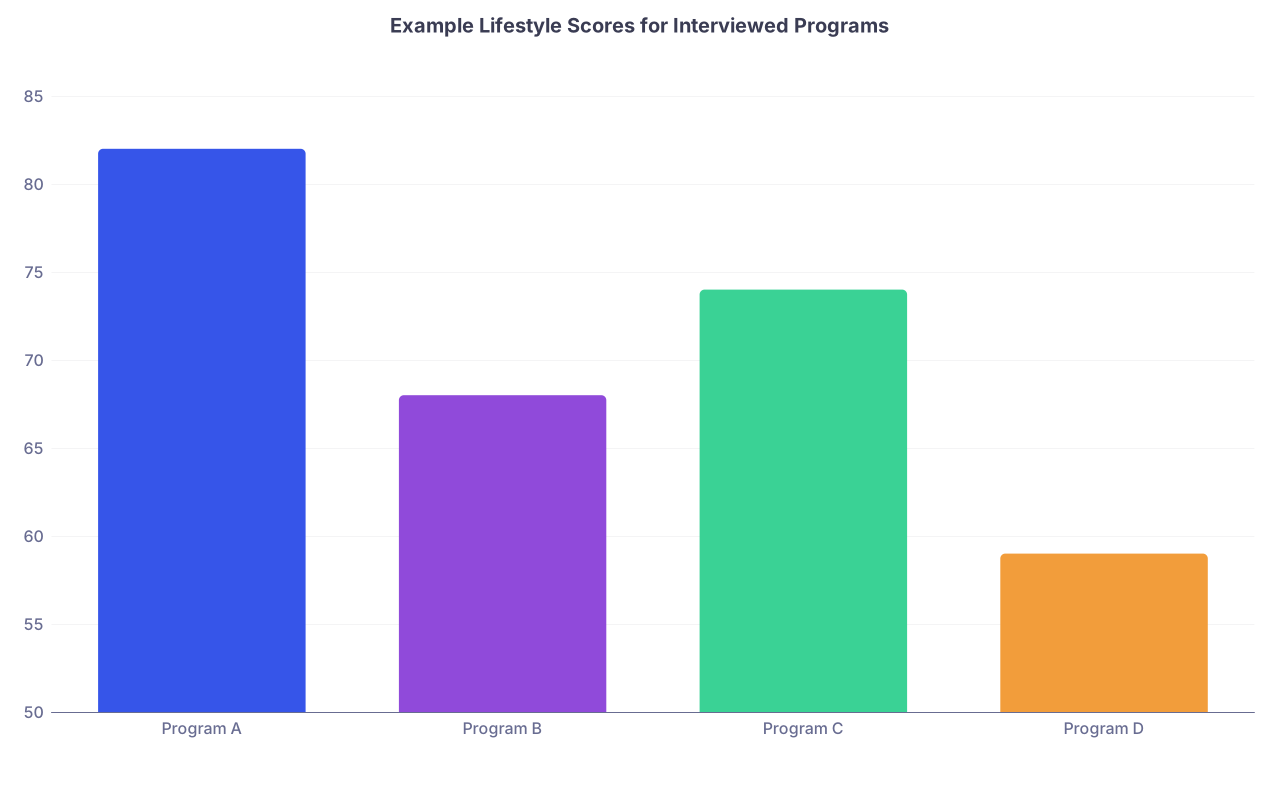
| Category | Value |
|---|---|
| Program A | 82 |
| Program B | 68 |
| Program C | 74 |
| Program D | 59 |
You don’t need perfect math; you need relative clarity.
Step 2: Force the “would I trade” question
For adjacent programs on your rank list, ask:
- “Would I trade 10–15 extra hours a week to live in City X instead of City Y?”
- “Would I accept 1 extra 24‑hour call per month for slightly better prestige?”
- “If I end up in the worst‑case rotation at this program, can I tolerate that for months?”
If the answer is no, move the lifestyle‑friendlier program up. Prestige does not tuck you into bed on post‑call days.
Step 3: Final red‑flag sweep
At this point you should be honest about:
- Programs where multiple residents independently hinted at burnout
- Programs with:
- High resident attrition in last few years
- Vague or evasive answers about hours or schedule changes
- Leadership that used a lot of “back in my day we worked harder” language
These don’t automatically drop to the bottom, but they deserve a long pause.
How This Looks in Real Time: A Sample Month‑by‑Month Snapshot
To make it concrete, here’s how one student’s calendar might look.

October 15–31
- Accepts 8 interview invites
- Notes: Program X has clear, kind emails; Program Y sends chaotic last‑minute changes twice
- Starts gut‑tagging: X = organized, Y = disorganized
November
- Attends 4 interviews
- After each, fills out scorecard within 24 hours
- Realizes one “top‑name” program has residents who all quietly admit they’re “tired all the time, but it’s a great opportunity”
- Another mid‑tier program has residents who talk about weekends off, hobbies, and actual vacations
December
- Finishes remaining interviews
- Rereads notes and sees consistent pattern:
- Big‑name urban Program A: amazing pathology, consistently rough hours, residents flatly exhausted
- Slightly less shiny Program B: solid training, multiple residents referencing time with family and real support
January
- Emails 2 residents from Programs A and B with follow‑up questions
- Response from A: “It’s tough but worth it if you’re committed.”
- Response from B: “I’m busy but I see my partner, I sleep, I have a life. I’d choose this again.”
Program B moves up.
Two Hard Truths You Should Remember

- All residencies are hard. “Lifestyle friendly” does not mean easy. It means survivable with some joy left.
- Programs rarely lie with numbers. They lie with tone, omission, and spin. Your job over these months is to collect enough tiny, concrete details that the spin can’t overpower the reality.
Key Takeaways
- Start months early by defining your own lifestyle priorities and building a scorecard; don’t wait for interview season to improvise.
- Treat every phase—emails, invites, interviews, follow‑ups—as lifestyle data and record it within 24 hours while it’s still sharp.
- When you rank, force explicit trade‑offs between hours, culture, and prestige; if you want a truly lifestyle‑friendly residency, your list has to reflect that on paper, not just in your imagination.