
The biggest mistake PGY1s make is waiting until they are completely miserable before pivoting toward a more lifestyle-friendly specialty.
You cannot afford that. By then the best doors have quietly closed.
Here is the month‑by‑month, then week‑by‑week, blueprint for PGY1–PGY2: when and how to pivot if you are unsure and you care about lifestyle.
Big Picture: What “Lifestyle-Friendly” Actually Means in Residency and Beyond
Before the timeline, anchor the target.
When residents say “better lifestyle,” they usually mean some combination of:
- More predictable hours
- Fewer nights/weekends/calls
- Better control over schedule post‑residency
- Lower burnout risk
- Flexibility for family, side projects, or non‑clinical work
The usual lifestyle‑friendly suspects (especially if you start in a more intense field):
- Outpatient internal medicine / hospitalist with controlled schedule
- Allergy & Immunology
- Rheumatology
- Endocrinology
- Gastroenterology (depending on practice, but can be very lifestyle-friendly in the right group)
- PM&R (Physical Medicine & Rehabilitation)
- Dermatology (very competitive to re‑enter, but excellent lifestyle)
- Radiology (especially outpatient / teleradiology setups)
- Pathology
- Occupational medicine
- Palliative care (within IM or FM)
- Non‑procedural primary care, concierge medicine, or urgent care models
| Pathway | Typical Training Route |
|---|---|
| Outpatient IM/FM | IM or FM categorical |
| Allergy/Immunology | IM or Pediatrics |
| Rheumatology | IM |
| PM&R | Categorical PM&R or PGY1 prelim |
| Radiology | Prelim + Diagnostic Radiology |
| Pathology | Straight Pathology |
Now, the question is not “which specialty is best?”
The question is “from PGY1, when is it still realistic to pivot into one of these without burning your life down?”
July–September PGY1: The Reality Check Phase
At this point you should watch, not jump.
Your job in the first 3 months is to collect data about yourself under real residency conditions.
Week 1–4: Baseline Observation
At this point you should:
- Track your actual hours for 4 weeks. Not “feels like.” Real numbers.
- Note how you feel after:
- 6 straight 12‑hour days
- Night float
- ICU or ED shifts (if you rotate early)
Create a simple log in your phone:
- Start time / end time
- Number of pages / calls overnight
- One sentence mood at end of day: “Could do this long‑term” vs “Absolutely not sustainable.”
Red flags you should take seriously even this early:
- Dreading every call shift
- Feeling physically wrecked after nights in a way that does not improve over 3–4 cycles
- Realizing you hate the core work of your chosen field (e.g., you went into surgery but cannot stand the OR)
Late August–September: Early Pattern Recognition
By the end of September you should:
- Have a sense of whether your current specialty’s average day feels:
- Energizing but tiring
- Tolerable with tradeoffs
- Completely wrong
Ask yourself bluntly:
- If the best case of this specialty (great group, high support, reasonable hours) still looks like many nights/weekends and heavy call, do I care?
- Do I like the core activities? Procedures vs talking vs diagnostics vs systems.
If you are more “hmm, I am not sure this fits” than “I chose wrong,” you are not pivoting yet. You are on watch.
October–December PGY1: Decision Window #1 – Internal Pivot vs External Pivot
This is where people either quietly start plotting or quietly dig into denial.
October: Reality vs Reputation
At this point you should:
- Compare your day‑to‑day reality with what senior residents and attendings actually do.
Ask 2–3 seniors separately:
- “What is a realistic week like for alumni from this program 3–5 years out?”
- “Who here chose a more lifestyle-friendly path within this specialty?”
You are looking for internal lifestyle options before you consider jumping ship. For example:
- IM → outpatient primary care, hospitalist with 7‑on/7‑off at a low acuity hospital, palliative care
- General surgery → breast surgery, minimally invasive surgery, or even administrative/QI focused roles (still not “light,” but better than trauma heavy general)
- OB/GYN → GYN‑only practices, family planning, hospitalist models
- EM → urgent care, telemedicine EM, low‑volume rural sites
- Anesthesia → outpatient centers, pain (though pain has its own lifestyle traps)
If all the “good lifestyle” options in your chosen specialty still look miserable to you, you are heading toward an external pivot.
November: Initial Branch Point
By November you should be honest with yourself:
Path A – You like the field but want softer lifestyle:
→ Focus on finding lifestyle‑friendly niches within the specialty. Keep your residency.Path B – You are not sure this field fits your values/energy, and the lifestyle endpoints look bad:
→ Start exploring alternate specialties that are still reachable from your PGY1 base.
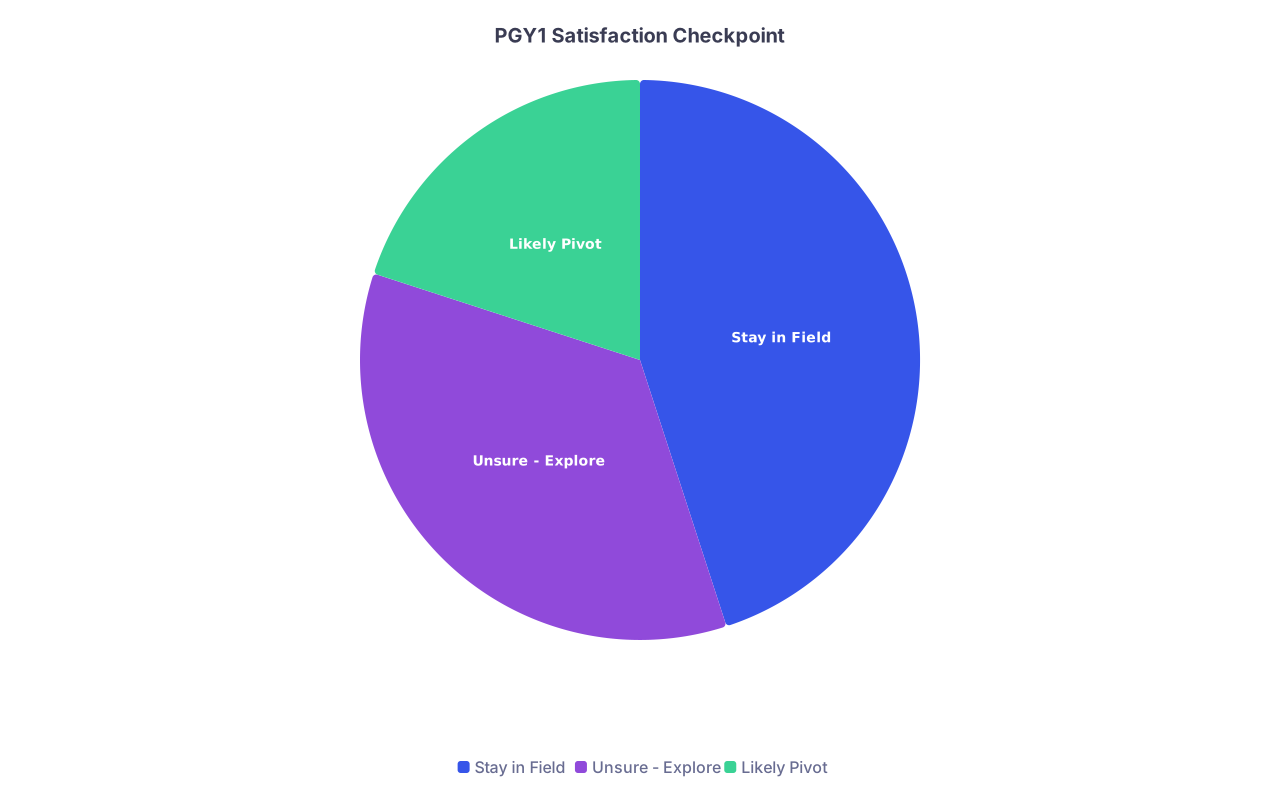
| Category | Value |
|---|---|
| Stay in Field | 45 |
| Unsure - Explore | 35 |
| Likely Pivot | 20 |
December: Information-Gathering Month
At this point you should:
Quietly schedule chats with residents/fellows in lifestyle-friendlier fields:
- PM&R
- Allergy/Immunology
- Radiology
- Pathology
- Outpatient IM / FM
- Palliative care
Ask very pointed questions:
- “Real hours, including charting, for you and your recent grads?”
- “Night/weekend burden?”
- “What do people complain about the most here?”
Start a short list of feasible endpoints from your current training, e.g.:
- As a categorical IM PGY1, you can realistically still aim for:
- Outpatient IM
- Hospitalist
- Endocrine / Rheum / Allergy / Palliative / Occupational med
- As a surgical prelim or categorical:
- PM&R (with prelim year), radiology (with prelim), anesthesia, sometimes EM
- As a TY or prelim medicine:
- Many fields remain open but application timing is tight
You are not announcing anything yet. You are mapping your exit routes.
January–March PGY1: Decision Window #2 – Commit to Explore or Commit to Endure
This is the real pivot zone. Program directors start planning their PGY2+ spots, fellowship dreams form, and ERAS deadlines are no longer theoretical.
January: Hard Self‑Assessment
At this point you should spend a weekend off doing a brutally honest audit:
Write 3 columns:
- What I like about current specialty
- What I hate and cannot realistically change
- What a lifestyle-friendly path would fix (or not)
Ask yourself:
- If I do NOTHING and stay the course, what does my life look like 5 years out?
- If I pivot to a lifestyle-friendly pathway that is feasible from here, what changes?
You are not chasing perfection. You are deciding between hard now + better later vs hard forever.
February: Quiet Testing of Alternatives
At this point you should:
- Use elective time (if any) to shadow or rotate in target lifestyle fields:
- A week with outpatient allergy
- A few days with path or radiology
- Clinic‑heavy IM or FM weeks
If your program blocks you, ask for:
- “Career exploration” afternoons
- Informal shadowing on golden weekends
I have seen residents realize in two days in a radiology reading room or allergy clinic that they feel human again. That is data you do not ignore.
March: Early Tactical Conversations (If Pivot Is Likely)
If, by March, you are leaning strongly toward pivoting out, at this point you should:
- Identify 1–2 faculty you trust who:
- Are not punitive
- Have some influence
- Have seen people change specialties before
Talk to them like an adult:
“I am committed to finishing this year strong. I am also realizing that long‑term, I may be a better fit for [X lifestyle-friendly field]. I want your honest read on whether that is feasible and how to do it professionally.”
You are not quitting. You are planning. Program directors hate surprises far more than they hate pivots.
April–June PGY1: Execution Phase – Applications, Networking, and Positioning
By this point, if you are going to pivot for PGY2 or PGY3, you are on the clock.
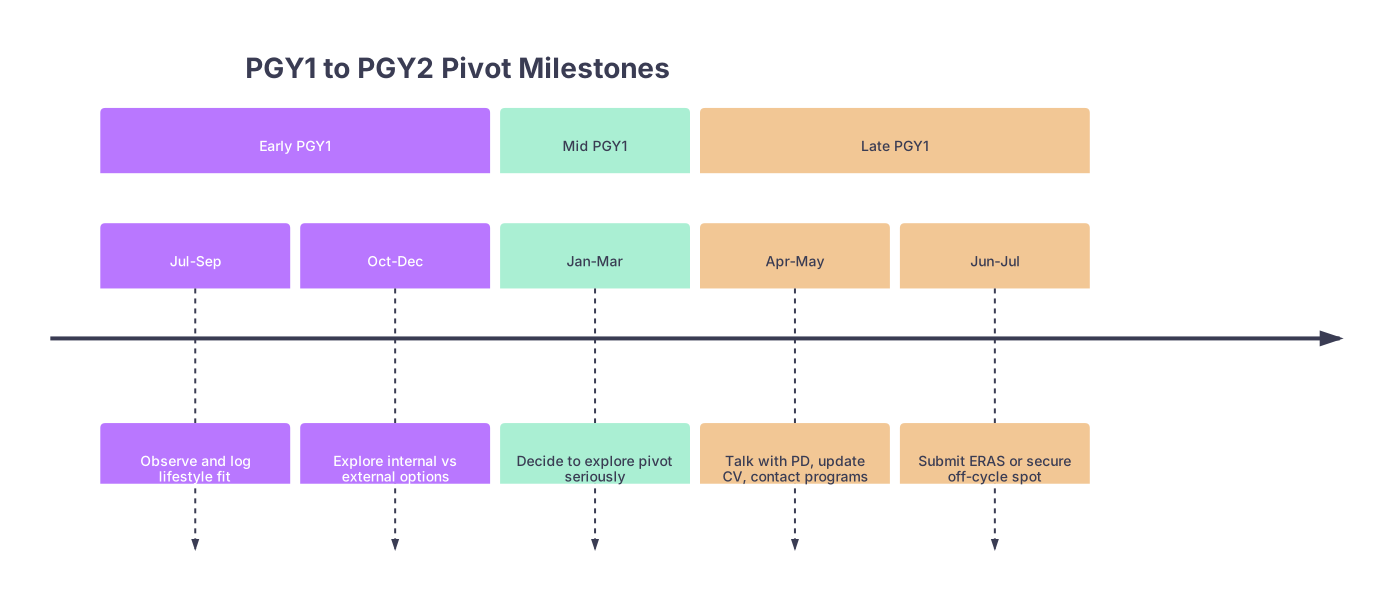
| Period | Event |
|---|---|
| Early PGY1 - Jul-Sep | Observe and log lifestyle fit |
| Early PGY1 - Oct-Dec | Explore internal vs external options |
| Mid PGY1 - Jan-Mar | Decide to explore pivot seriously |
| Late PGY1 - Apr-May | Talk with PD, update CV, contact programs |
| Late PGY1 - Jun-Jul | Submit ERAS or secure off-cycle spot |
April: Talk to Your Program Director (If You Haven’t Yet)
At this point you should:
- Have a focused, respectful meeting with your PD.
Goals:
- Reassure: you will complete PGY1 and maintain professionalism.
- Be clear: you are strongly considering [X paths] for lifestyle/work‑fit reasons.
- Ask directly:
- “Can I count on you for an honest letter?”
- “Are you aware of open PGY2 spots or categorical positions in [X field]?”
Some PDs will be incredibly helpful. Some will be annoyed. You plan for both.
May: Update Your Application Arsenal
At this point you should have:
Updated CV with:
- Quality improvement projects
- Teaching
- Any research (even poster level)
- Leadership roles in residency
A short, coherent story for why you are pivoting:
- Focus on:
- Patient care preferences
- Sustainable career
- Strengths that match new field
- Avoid:
- “I hate nights” as your only reason
- Trashing your current specialty or program
- Focus on:
Example framing:
“Through intern year I found that the most meaningful parts of my work were longitudinal outpatient relationships and nuanced diagnostic thinking. I am seeking a field where I can sustainably focus on these strengths with a schedule that allows long‑term balance, which is why I am pivoting toward Allergy/Immunology.”
June: Applying or Securing a Spot
You have two main routes:
- Formal ERAS application for a new categorical program or advanced specialty
- Off‑cycle PGY2+ spot through:
- Program listservs
- Specialty societies
- Whisper network of residents/faculty
At this point you should:
- Email targeted programs directly:
- Short intro + CV
- Explicitly mention your completed PGY1 and any board exams passed
- Activate your network:
- Ask attendings to send “FYI, great resident looking for X” emails
PGY2: Course‑Correction vs Fine‑Tuning
Let us assume two scenarios.
Scenario 1: You Successfully Pivoted Pre‑PGY2
You land in a new, more lifestyle‑friendly trajectory (e.g., radiology, PM&R, outpatient‑heavy IM).
July–September PGY2: Stabilize and Rebuild
At this point you should:
- Give yourself 6–9 months before judging the new field. You are again the new person.
- Use early months to:
- Learn the culture
- Identify the chill, competent seniors (these are your models)
- Observe which attendings actually have the life you want
October–March PGY2: Carve the Lifestyle Path Early
At this point you should:
- Steer elective choices toward lifestyle-aligned directions:
- In radiology: outpatient imaging centers, subspecialties with more predictable hours
- In PM&R: MSK and outpatient clinics vs acute inpatient consult‑heavy realms
- In IM: primary care clinics, rheum, endocrine, allergy, palliative
You are planting seeds with attendings who may later hire you or vouch for you for fellowships.
Scenario 2: You Stayed in Original Specialty but Want a Lifestyle-Focused Endpoint
Not everyone pivots out. Some smart residents decide, “I actually like this field, I just need to be strategic.”
For you, PGY2 is about trajectory control.
July–December PGY2: Reputation and Skill Building
At this point you should:
- Become known as:
- Reliable
- Reasonable to work with
- Not a martyr, but not a chronic complainer
That reputation gives you leverage later when you ask for:
- Specific electives
- Part‑time FTE negotiations post‑residency
- Letters into lifestyle‑friendly fellowships (e.g., rheum, endocrine, palliative)
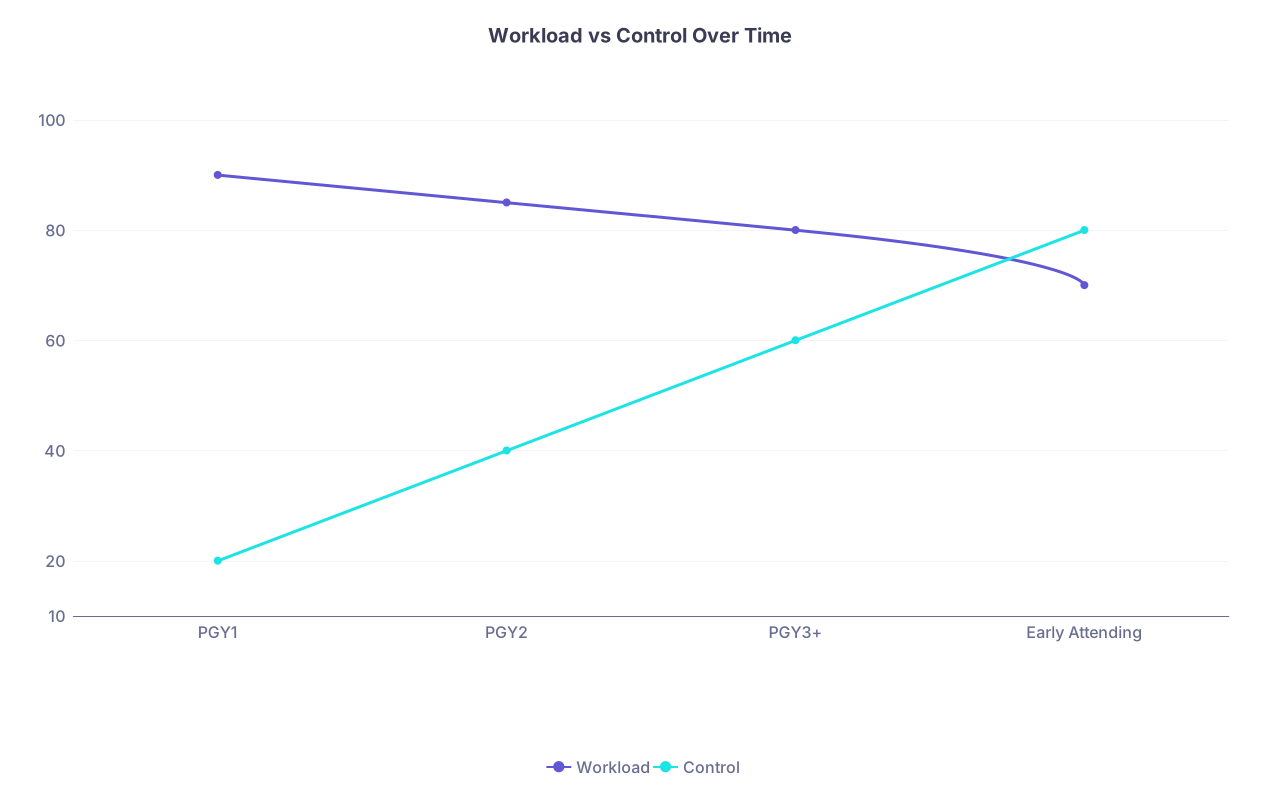
| Category | Workload | Control |
|---|---|---|
| PGY1 | 90 | 20 |
| PGY2 | 85 | 40 |
| PGY3+ | 80 | 60 |
| Early Attending | 70 | 80 |
January–June PGY2: Lock in the Lifestyle Track
At this point you should:
- Decide which “soft landing” within your specialty you are aiming for:
- Outpatient vs inpatient dominant
- Academic vs community vs private
- Procedure‑heavy vs cognitive
Then back‑plan:
- Which electives build that skillset?
- Which mentors live that lifestyle and can sponsor you?
- Which fellowships or jobs you should be targeting by name?
Emotional Timeline: What You Should Be Feeling (Roughly) When
I will not sugarcoat it. Intern year is rough even in lifestyle‑friendly fields.
But there are patterns I have watched over and over.

Rough emotional timeline, if you are headed toward a pivot:
- July–September PGY1 – “This is hard, but maybe it gets better.” Confusion, fatigue.
- October–December PGY1 – “I see what the seniors’ lives actually look like.” Mild dread if it does not fit.
- January–March PGY1 – “I cannot unsee this. I need a different future.” Clarity with anxiety.
- April–June PGY1 – “I am acting on this.” Stressful but purposeful.
- PGY2 post‑pivot – “It is still residency, but this fits me better.” Fatigue + relief.
If instead your curve is:
- Constant dread
- No joy even on good rotations
- Envy bordering on obsession when you talk to friends in lifestyle‑friendly fields
You are late, not crazy. Move.
Common Timing Traps and How to Avoid Them

Trap 1: Waiting for “More Data” Until PGY2 Is Almost Over
By the time you hit late PGY2, a full specialty pivot is drastically harder. You are “too trained” for some programs, “not trained enough” for others.
At this point you should:
- Make your major pivot decisions by end of PGY1 or early PGY2 at the latest if you want a clean reboot.
Trap 2: Assuming Fellowship Will Magically Fix Lifestyle
Fellowship can refine lifestyle. It does not overturn the base nature of:
- Surgery
- OB/GYN
- EM
- Anesthesia
If your hatred is for nights, emergencies, time‑sensitive procedural chaos, no procedural fellowship will solve that. You need a different core specialty.
Trap 3: Overvaluing Prestige, Undervaluing Daily Life
Being “the neurosurgeon from Top Program” is useless if you are chronically burnt out and fantasizing about quitting. I have sat with people like this. It is not theoretical.
When you look at lifestyle‑friendly paths, ignore the prestige meter. Focus on:
- Who looks rested
- Who has time for their family
- Who has hobbies that are not doomscrolling
Concrete 12‑Month Action Plan If You Are Unsure Right Now (Early PGY1)

Assume you are July–September PGY1 and unsure.
Here is exactly what to do over the next year.
Months 1–3 (Now): Observe and Log
- Track hours and mood daily.
- Talk to at least 2 seniors about their future plans and lifestyle expectations.
- Keep a running list: moments you loved, moments you thought “I cannot do this forever.”
Months 4–6: Explore Internally, Scan Externals
- Identify lifestyle‑friendly endpoints within your specialty.
- Set up 3–5 coffees with people in clear lifestyle‑friendly specialties (Allergy, PM&R, Radiology, Pathology, outpatient IM/FM).
- Ask yourself in writing: “If I had to start residency over today, what would I choose?”
Months 7–9: Decide Whether to Act
- If your answer is still “I think I would pick X different field,” treat that as a decision.
- Meet with:
- A trusted mentor
- Then your PD
- Map out:
- PGY2 options
- Application timelines
- Letters and rotations you need
Months 10–12: Execute
- Update CV, draft a pivot‑story personal statement.
- Apply via ERAS or to open PGY2+ spots.
- Protect your reputation in your current program. You still need good evaluations.
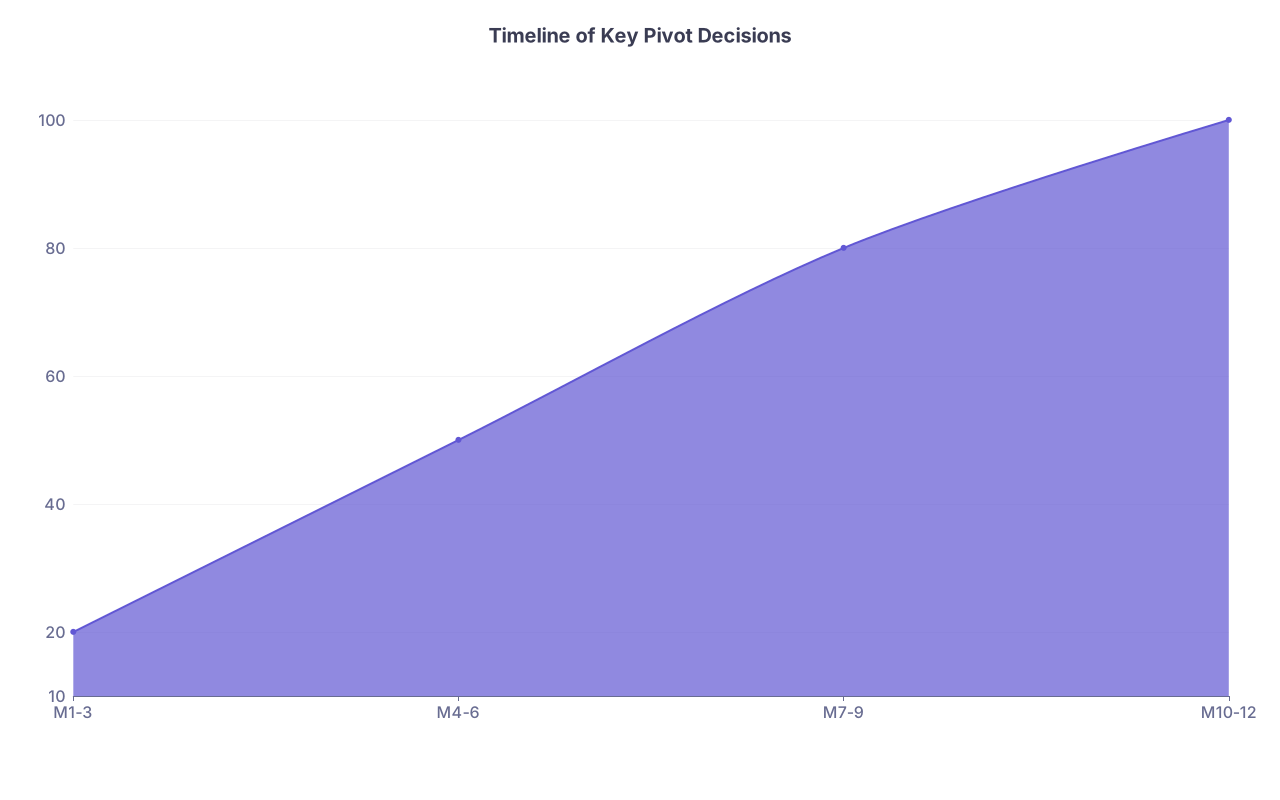
| Category | Value |
|---|---|
| M1-3 | 20 |
| M4-6 | 50 |
| M7-9 | 80 |
| M10-12 | 100 |
The Bottom Line
If you care about lifestyle and you are unsure about your specialty, indecision is the real enemy.
You make your best, cleanest pivots between October PGY1 and June PGY1. After that the doors do not slam shut, but they do narrow.
So here is your next step:
Tonight, before you crash, open your calendar and block 30 minutes this week for one task: write a one‑page brutally honest reflection on your current specialty’s lifestyle long‑term. No filters. Once it is on paper, you will know whether you are adjusting… or whether it is time to start planning your pivot.