
Waiting until you’re “burned out” to explore non‑clinical options is a terrible strategy.
By the time you’re desperate to leave, you’ve lost leverage, energy, and time.
If you’re on a lifestyle specialty track (derm, ophtho, radiology, PM&R, anesthesia, path, outpatient psych, outpatient cards/GI, etc.), you actually have an advantage: you have more control over your schedule and mental bandwidth than most residents. The mistake I see? People waste those years assuming they’ll “figure it out later.”
Here’s the reality:
If you even suspect you might want non‑clinical options—industry, informatics, consulting, admin, medical education, entrepreneurship—you need a structured, time‑based plan that starts early in residency and evolves step-by-step.
This is that plan.
Big-Picture Timeline: Year-by-Year
Before we go month-by-month, zoom out. This is the macro arc you’re aiming for.
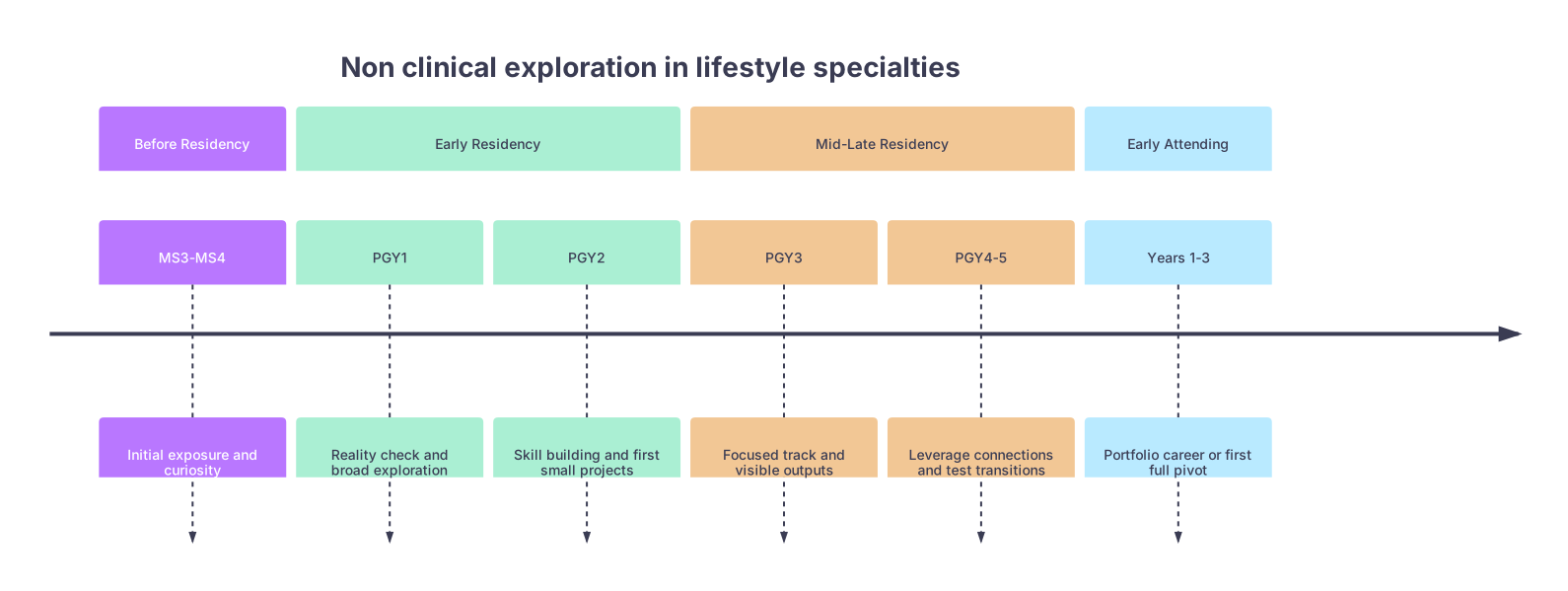
| Period | Event |
|---|---|
| Before Residency - MS3-MS4 | Initial exposure and curiosity |
| Early Residency - PGY1 | Reality check and broad exploration |
| Early Residency - PGY2 | Skill building and first small projects |
| Mid-Late Residency - PGY3 | Focused track and visible outputs |
| Mid-Late Residency - PGY4-5 | Leverage connections and test transitions |
| Early Attending - Years 1-3 | Portfolio career or first full pivot |
At each stage your question changes:
- Before residency: “Do I even care about non‑clinical work, or am I just tired of rotations?”
- PGY1: “What non‑clinical domains exist, and which fit my personality?”
- PGY2: “What concrete skills and experiences signal that I’m serious?”
- PGY3+ / fellowship: “How do I become recruitable and credible outside the hospital?”
- Early attending: “Do I scale up non‑clinical work or keep it as a side stream?”
Now let’s build the detailed, time‑stamped roadmap.
Phase 0: MS3–MS4 – Pre‑Residency Positioning (Optional but Smart)
If you’re already in residency, skip ahead. If not, this is where you quietly plant seeds.
MS3 (Spring) – “Exposure Only” Mode
At this point you should not be trying to design your entire non‑clinical career. You’re just collecting data and language.
Focus on:
- Paying attention when attendings mention:
- “My friend in pharma makes more and never takes call.”
- “Our EHR liaison is a physician but doesn’t see patients anymore.”
- Joining or at least lurking in:
- A medical entrepreneurship or biotech interest group
- A health policy, informatics, or innovation track if your school has one
By late MS3, aim to:
- Identify 2–3 non‑clinical areas that sound interesting:
- Examples: health tech, pharma, med ed, hospital admin, consulting, medical writing.
MS4 (Summer–Fall) – Applying to Lifestyle Specialties
At this point you should:
- Choose a specialty that:
- Leaves some bandwidth in residency (derm vs neurosurgery, you get the idea).
- Actually has natural bridges to non‑clinical work. For example:
| Lifestyle Specialty | Natural Non-clinical Areas |
|---|---|
| Dermatology | Aesthetics industry, devices, telederm startups |
| Radiology | AI/ML in imaging, informatics, telerad companies |
| Anesthesia | Pharma/devices, peri-op analytics, patient safety orgs |
| PM&R | Rehab tech, med devices, sports performance industry |
| Ophthalmology | Devices, biotech, global health eye initiatives |
- Draft your personal statement and interviews with optionality in mind:
- Mention interest in “innovation,” “systems improvement,” or “health technology” without sounding like you hate patients.
You’re not making promises. You’re leaving doors open.
Phase 1: PGY1 – Reality Check and Broad Exploration
PGY1 will punch you in the face with fatigue. But in lifestyle specialties, it’s usually less brutal than surgery or OB. You still have limited energy; use it strategically.
First 3 Months (PGY1 Q1) – Adjust First, Then Explore
At this point you should not commit to any big side projects yet. Your job is:
- Survive orientation and early rotations.
- Note your emotional patterns:
- Do you love the clinical puzzles but hate documentation?
- Do you enjoy teaching students?
- Do systems-level failures bother you constantly?
End of Q1 checklist:
- One note in your phone with:
- “Things I enjoy about the work”
- “Things I’d gladly never do again”
- 1–2 alumni or seniors you’ve identified as “interesting careers” people.
Months 4–6 (PGY1 Q2) – Light Recon
Now you start light, no‑risk exposure to non‑clinical domains.
At this point you should:
- Attend 1–2 noon conferences / grand rounds that touch:
- Quality improvement
- Informatics
- Leadership / admin
- Industry collaboration
- Have one 30-minute coffee chat per month with:
- A senior resident doing a side project
- A faculty member involved in admin, QI, or informatics
- A physician you find on LinkedIn with a hybrid or non‑clinical role
Keep a simple log: date, person, what they do, what sounded appealing/awful.
Months 7–12 (PGY1 Q3–Q4) – Pick 1–2 Domains to Test
By the end of PGY1, you don’t need a full plan. You just need to narrow the field.
Common domains:
- Health tech / startups / product
- Pharma / med devices
- Medical education
- Clinical informatics / EHR
- Admin / leadership / quality
- Consulting / strategy
- Media / communications / writing
At this point you should:
- Pick 1–2 domains to explore more intentionally in PGY2.
- Avoid the trap of “I’m kind of interested in everything, so I’ll do nothing.”
Phase 2: PGY2 – Skill Building and First Real Outputs
This is the inflection point. Most residents stay in vague “curious” mode forever. You’re not doing that.
PGY2 is where you build portable skills and produce visible work.
PGY2, Q1 (Months 1–3) – Design Your Non‑Clinical “Track”
At this point you should outline a concrete mini‑track for the year:
- Choose ONE primary non‑clinical lane to prioritize this year.
- Define a 12‑month outcome. Examples:
- “Have one poster or publication in informatics / QI.”
- “Ship one small digital health project (MVP app, workflow tool, etc.).”
- “Develop a teaching portfolio and lead 1–2 recurring sessions.”
- “Do paid freelance medical writing or consulting at least once.”
Then, block time:
- 2–4 hours per week. Non‑negotiable. Treat it like protected time even if it isn’t.
PGY2, Q2–Q3 (Months 4–9) – Start Small, But Start
Tangible examples by domain:
- Informatics / Tech:
- Join your hospital’s EHR or data committee as the “resident rep.”
- Learn basic SQL or Python / R enough to pull and analyze simple datasets.
- Pharma / Devices:
- Volunteer as a sub‑investigator on a small clinical trial.
- Attend 1–2 industry-sponsored dinners and ask about MSL or medical affairs roles.
- Medical Education:
- Build and deliver a mini‑curriculum for MS3s or interns.
- Start collecting evaluations and slide decks (your portfolio).
- Admin / QI / Leadership:
- Lead a tightly scoped QI project with clear metrics and timeline.
- Join a departmental committee—scheduling, patient safety, throughput.
At this point you should aim for:
- One concrete project with your name on it.
- One mentor or sponsor in your chosen non‑clinical lane.
PGY2, Q4 (Months 10–12) – Show Your Work
By the end of PGY2:
- Submit something—anything—external:
- Abstract to a conference.
- Short piece to a specialty newsletter.
- Poster at a local/regional meeting.
- Update your CV with a clearly labeled “Non‑Clinical / Systems / Innovation Activities” section.
You’re not “leaving medicine.” You’re establishing dual credibility.
Phase 3: PGY3 – Focus and Visibility
PGY3 is usually the sweet spot in lifestyle specialties. You’re competent clinically, you’ve got some control over your schedule, and you’re still flexible.
Here’s where the timeline matters a lot.
Early PGY3 (Months 1–4) – Decide: Side Stream or Exit Option?
At this point you should ask yourself bluntly:
- “Do I want non‑clinical work as:
- A side stream (20–40% of my time)?
- A potential full pivot within 3–5 years?”
Your answer changes your timelines.
- If you want a side stream:
- You double down on synergy with your clinical role (med ed, QI, leadership, consulting in your specialty).
- If you want a full pivot:
- You prioritize transferable skills, external visibility, and networking outside your institution.
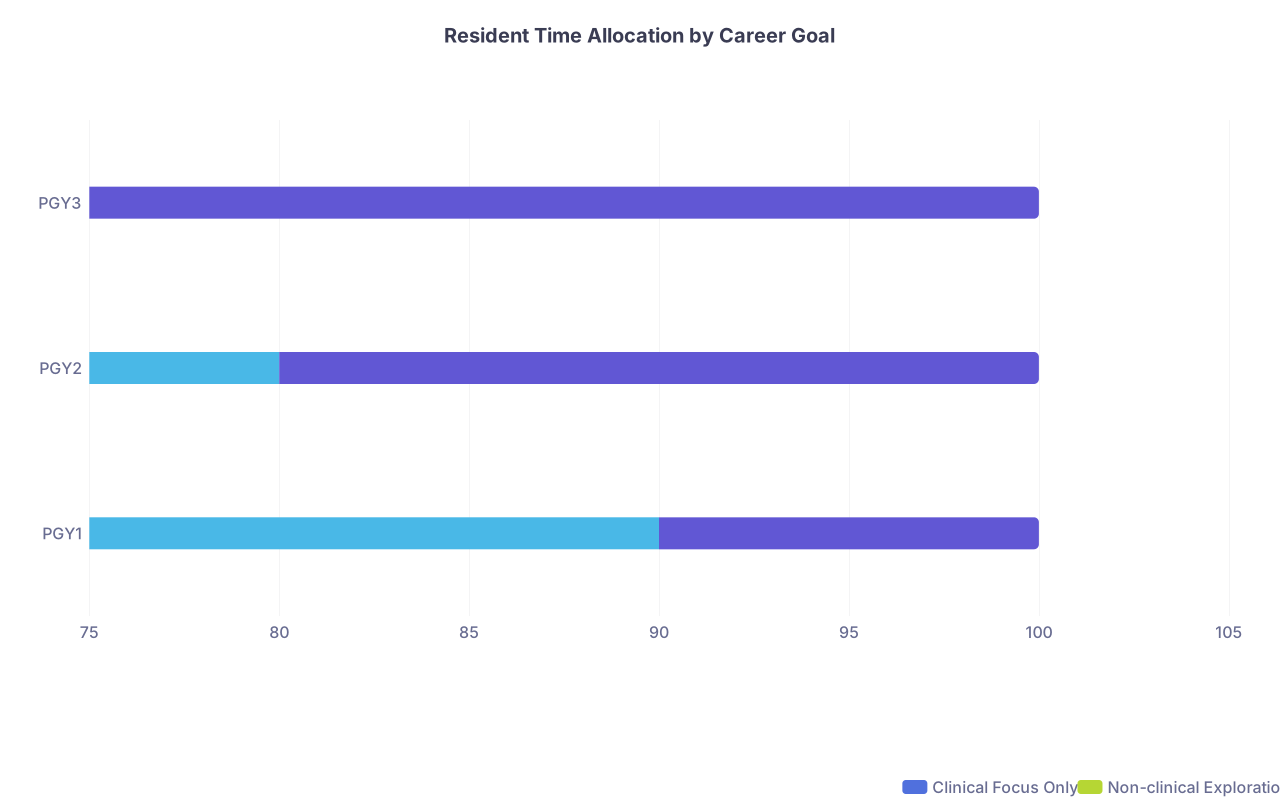
| Category | Clinical Focus Only | Non-clinical Exploration |
|---|---|---|
| PGY1 | 90 | 10 |
| PGY2 | 80 | 20 |
| PGY3 | 75 | 25 |
Mid PGY3 (Months 5–9) – Build Leverage
This is where most of the leverage is created.
At this point you should:
- Convert PGY2 projects into longer-term roles:
- Ongoing committee spot with voting rights.
- Named role: “Resident liaison for X,” “Assistant course director,” etc.
- Start strategic networking outside your hospital:
- Specialty society working groups (informatics, education, policy).
- Online communities in your lane (e.g., digital health Slack groups, med writer forums, etc.).
- LinkedIn: 1–2 intentional messages a month to people doing jobs you might want.
Aim by end of PGY3:
- 2–3 strong bullets on your CV that someone in industry/admin would actually care about.
- 1–2 people who would pick up a call for you if you applied to a non‑clinical role.
Late PGY3 (Months 10–12) – Decision Checkpoint
At this point you should run a hard check:
- Do I still like patient care enough to keep it central?
- Do I see a realistic path to non‑clinical work I’d enjoy?
- How urgently do I want out of full‑time clinical?
This is where some residents:
- Choose a fellowship that aligns with their non‑clinical lane (e.g., informatics fellowship, medical education fellowship, pain with device overlap, etc.).
- Or decide to go straight to attending with a portfolio career (part clinical, part other).
Phase 4: PGY4–5 / Fellowship – Making Yourself Recruitable
If your lifestyle specialty has longer residencies or fellowship (e.g., ophtho, PM&R with sports, pain, etc.), this is your consolidation phase.
Year 1 of Fellowship / PGY4 – Aim for One “Flagship” Project
At this point you should anchor your story around one big thing:
Examples:
- Tech / Informatics:
- Led deployment of a clinical decision support tool across your department.
- Built analytics dashboards that changed scheduling/staffing decisions.
- Med Ed:
- Co-directed a course, redesigned a core curriculum, or ran a simulation program.
- Admin / QI:
- Chaired or co‑led a safety/throughput project with measurable outcomes.
- Industry-aligned:
- Ran multiple industry-sponsored trials.
- Advised a startup (even informally) with documented contributions.
You want one project that:
- Has real scope.
- Involves multiple stakeholders.
- Generates numbers or outcomes you can quote.
Final Year Before Attending – Test the Market
Now we get specific about when you actually explore non‑clinical options as real possibilities, not hypotheticals.
At this point you should:
-
- Update LinkedIn thoroughly with your non‑clinical achievements.
- Quietly message people in:
- Medical affairs (pharma/biotech)
- Health tech product/clinical roles
- Consulting / advisory firms
- Academic leadership or admin roles
- Ask, “If someone with my profile wanted to be competitive in 12 months, what would you tell them to do now?”
6–9 months before finishing:
- Attend at least one conference where non‑clinical people gather:
- AMIA (informatics), HIMSS (health IT), ACGME/AMEE (med ed), specialty‑specific admin meetings, or even industry conferences.
- Do exploratory interviews (not formal job apps yet).
- Attend at least one conference where non‑clinical people gather:
3–6 months before finishing:
- Decide which path you’re going to actively pursue:
- 100% clinical + side work.
- 60/40 or 50/50 split.
- Trying for a full non‑clinical job right out of training (harder, but possible if you’ve done the legwork).
- Decide which path you’re going to actively pursue:

Early Attending Years (1–3): Execution and Transition
If you time it right, you don’t wake up as an attending thinking, “Now what?” You already have a track.
Year 1 – Stabilize Clinically, Keep the Door Open
At this point you should not immediately overload yourself with side gigs. You:
- Get comfortable in your attending role and workflow.
- Maintain 1–2 ongoing non‑clinical threads:
- A committee seat.
- Paid speaking or teaching.
- Single consulting or advisory arrangement.
- Ongoing industry collaboration.
You’re protecting your credibility in both worlds.
Year 2 – Start Experimenting with Hours and Mix
Now you can start playing with clinical vs non‑clinical mix.
At this point you should:
- Consider:
- Dropping to 0.8–0.9 FTE clinically if your group allows.
- Formalizing that non‑clinical work as:
- Medical director role
- Educator role with protected FTE
- Part‑time industry gig
- Evaluate:
- Which work gives you energy (not just money)?
- Where you’re getting unsolicited opportunities (people asking you to do more)?
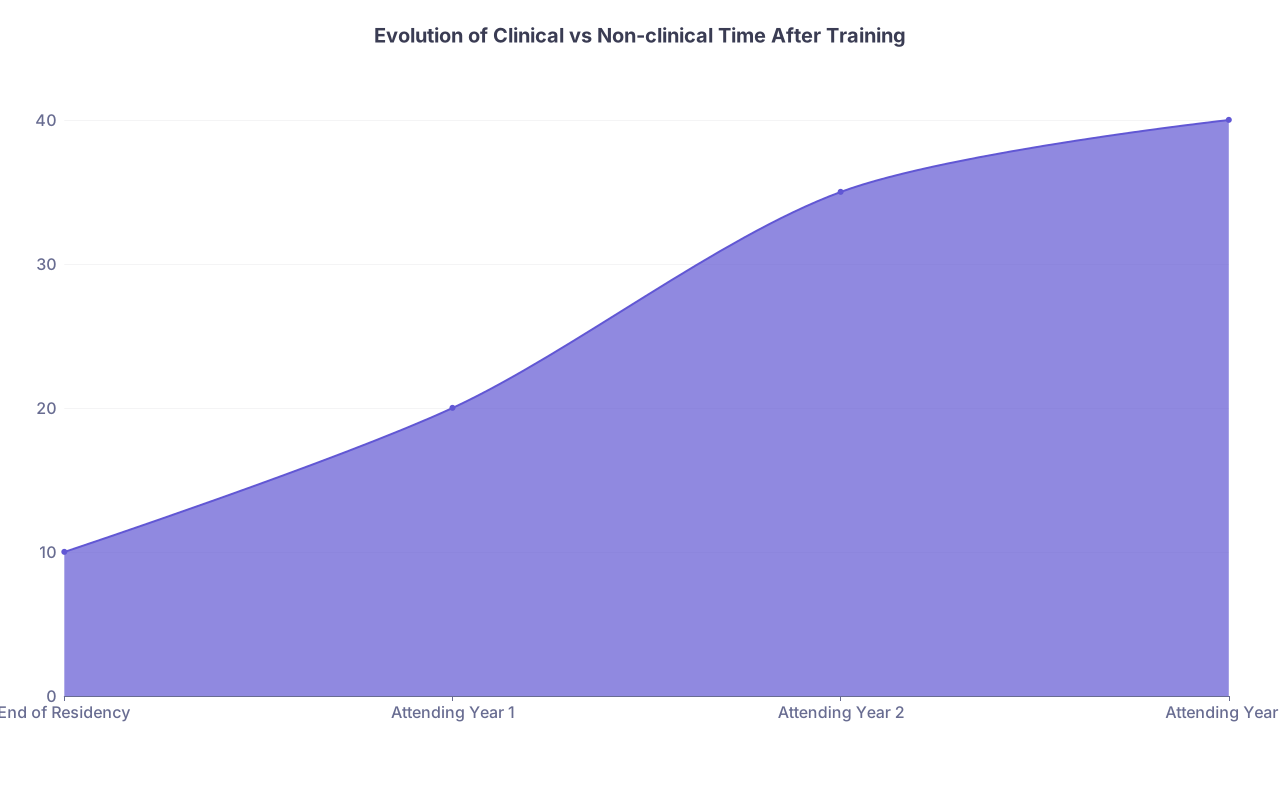
| Category | Value |
|---|---|
| End of Residency | 10 |
| Attending Year 1 | 20 |
| Attending Year 2 | 35 |
| Attending Year 3 | 40 |
Year 3 – Decide on Scale vs Stability
By year 3 as an attending, you should have enough real‑world data.
At this point you should:
- Decide whether to:
- Keep a light non‑clinical side stream (5–20%).
- Intentionally build toward 40–60% non‑clinical over the next 2–3 years.
- Or plan a full exit by:
- Taking a bridge role (medical director, full‑time industry role, etc.).
- Or applying your established portfolio to a new domain (startups, consulting, etc.).
A Brutally Honest Timing Guide
If you want something simple, here it is.
If you start in PGY1:
You can be genuinely competitive for hybrid or non‑clinical roles by the end of residency or fellowship.If you start in PGY3:
You’ll likely need 2–3 years as an attending to build enough non‑clinical credibility before a full pivot.If you wait until you’re miserable as an attending:
You’re looking at a 3–5 year runway for a clean exit, unless you get lucky or take a big pay/role cut.
The right time to start exploring is always one training stage earlier than feels comfortable.
Mini-Checklist by Stage
PGY1
- Identify 1–2 non‑clinical areas of curiosity
- Have 3–5 coffee chats with people in different lanes
- Narrow to 1–2 domains to test in PGY2
PGY2
- Pick 1 primary non‑clinical lane
- Block 2–4 hrs/week for it
- Complete at least 1 tangible project
- Present or submit something externally
PGY3+
- Decide: side stream vs potential full pivot
- Take on 1 “bigger scope” role (committee, curriculum, QI lead)
- Build at least 2 strong external relationships in your lane
- Choose fellowship and attending jobs with your non‑clinical goals in mind

FAQ (Exactly 3 Questions)
1. Is it risky to show interest in non‑clinical work during residency? Will programs think I’m less committed?
If you walk around saying, “I want to leave medicine,” yes, that’s dumb. But framing it as interest in informatics, quality, education, leadership, or innovation is not only safe, it’s usually valued—especially in lifestyle specialties. The key is doing your clinical job well first, then adding structured non‑clinical work on top. Excellence in both is the best defense against skepticism.
2. Can I jump straight into a non‑clinical job right after residency or fellowship?
Yes, but only if you’ve treated residency like a preparation window, not a holding pattern. That means by graduation you should have: a focused non‑clinical lane, real projects with measurable impact, people outside your hospital who know your work, and a CV that looks credible to that industry. If you start the process in PGY3 or later, expect a slower path and probably a hybrid role first.
3. What if I picked the “wrong” non‑clinical lane early on? Did I waste time?
No. The first 1–2 years are about transversal skills—project management, communication, basic data skills, understanding how systems work. Those translate to almost any non‑clinical area. If you realize during PGY3 that pharma isn’t for you but informatics is, you won’t be starting from zero. You’ll just refine your story and shift your next project and mentor choices accordingly. The only real waste is doing nothing.