
The first 90 days of residency decide whether you bend residency to your life or let it steamroll you.
Most interns learn that the hard way. Especially in the so‑called “lifestyle friendly” specialties. Family medicine, outpatient internal medicine, dermatology, psychiatry, radiology, PM&R, ophtho, pathology — they attract people who care about balance. But balance does not appear just because the call schedule is lighter than surgery. You build it. Early. Or you lose traction fast.
I am going to walk you through the first 90 days like a project plan. At each point, what you should be doing, what you must protect, and what you can safely ignore. Chronological. Concrete. No fluff.
We will divide this into:
- Pre‑Day 1 setup
- Days 1–7: Survival and observation
- Days 8–30: Systems and boundaries
- Days 31–60: Refinement and efficiency
- Days 61–90: Long‑term lifestyle foundation
With specialty‑specific tweaks for lifestyle‑friendly fields layered in.
Before Day 1: Set the rails, not the goals
By the time you show up at orientation, your lifestyle is already 30–40% decided. By default. By your commute, your housing, your phone settings, your habits with food and sleep.
At this point you should focus on rails, not resolutions.
2–4 weeks before residency
1. Fix your physical logistics (non‑negotiable)
You want low friction. Because on day 14 when you are post‑call and fried, you will not “rise to the occasion.” You will sink to your level of default systems.
Choose housing with:
- ≤ 25–30 minute predictable commute (for outpatient-heavy fields, this matters long‑term)
- Quiet sleeping space (if you share, negotiate noise rules now)
- Safe area for late returns and early departures
Do one dry run:
- Drive or transit to the hospital at your start‑time hour
- Find parking, entrance, resident lounge, call rooms, lockers
- Find: coffee location, microwaves, fridge, bathroom near your clinic/ward
2. Set your “protected health basics”
Make these appointments now, not in September when everything is on fire:
- PCP visit booked (annual, med refills, baseline labs if you want)
- Dentist cleaning
- Eye exam if you wear contacts/need new Rx
- Any ongoing therapy/psychiatry care scheduled with clear follow‑up cadence
Then set:
- Vaccinations up to date (flu, COVID, hep B titers if program requires, etc.)
- Refills for:
- Any maintenance meds (3‑month supply if possible)
- Contacts, allergy meds, migraine meds, etc.
3. Choose your core lifestyle habits (no more than three)
You will not successfully build eight new habits in the first 90 days of residency. Pick three anchor habits that serve every specialty:
- A consistent wind‑down routine (15–30 minutes)
- A sustainable movement minimum (e.g., 20 minutes 3x/week)
- One deliberate connection habit (e.g., call/text a non‑medical friend twice weekly OR Friday dinner with partner)
Write them down. Post them where you will see them (locker, fridge, bedside).
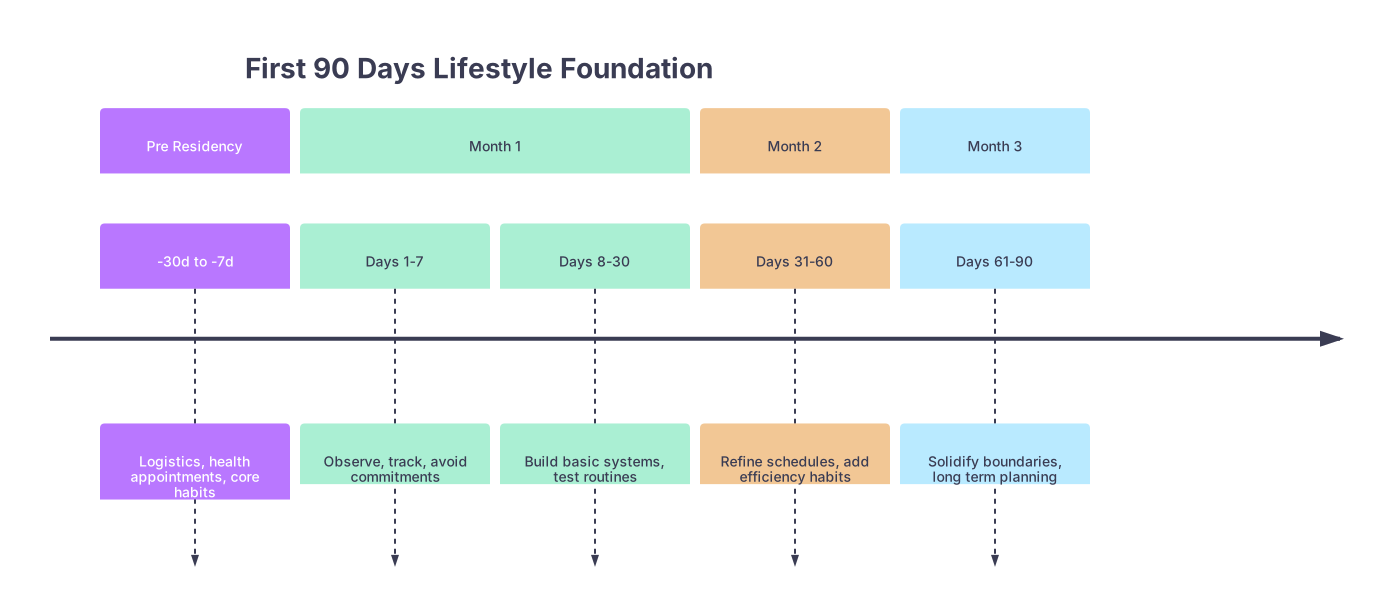
| Period | Event |
|---|---|
| Pre Residency - -30d to -7d | Logistics, health appointments, core habits |
| Month 1 - Days 1-7 | Observe, track, avoid commitments |
| Month 1 - Days 8-30 | Build basic systems, test routines |
| Month 2 - Days 31-60 | Refine schedules, add efficiency habits |
| Month 3 - Days 61-90 | Solidify boundaries, long term planning |
Days 1–7: Observe before you optimize
Everyone wants to “start strong.” Most interns overcommit in week one and then watch everything collapse by week three. Do not do that.
At this point you should treat yourself like a scientist running a one‑week time‑use experiment.
Day 1–2: Orientation and reality check
You focus on three things:
Sleep window
Figure out your real possible bed and wake times.- Track:
- When you actually get into bed
- When your alarm must be set to arrive 10–15 minutes early
- Notice:
- How long you take to “turn off” after getting home
- How much time you waste scrolling before sleep
- Track:
Commute pattern
Log commute times for:
- Morning rush
- Post‑call / evening return
- Where delays appear regularly (traffic choke points, bus frequency)
Food realities
For 3 days:
- Write down exactly what and when you eat
- Note:
- How many hours between meals
- When you start to feel shaky, foggy, or irritable from hunger
Do not try to fix everything yet. Just track.
Day 3–4: Social mapping and mental health guardrails
You need allies and you need boundaries.
At this point you should:
- Identify:
- One senior resident who “seems like they have a life” — ask them directly how they protect it
- One co‑intern you can text when things go sideways
- Clarify:
- Where and how to call in sick
- Whether your program has:
- Resident wellness resources
- Anonymous counseling
- A point person for scheduling crises
Then set 2 mental health guardrails:
- A threshold to tell someone:
- “If I have 5 consecutive days of no real sleep or I lose interest in everything outside work, I will text X and say I am not okay.”
- A threshold to escalate:
- “If I ever have thoughts of self‑harm or feel unsafe, I will stop, tell a co‑resident/attending, and use the program’s emergency resources — immediately.”
You decide those rules now. Not at 2 am in October.
Day 5–7: Establish bare‑minimum structure
Now you add the first layer of habit.
1. Create your “Non‑Negotiable 30”
This is 30 minutes per day that is not optional. It is not for charts. Not for emails. For you.
Break it as needed:
- 10 minutes: Movement (walk, stairs, simple bodyweight routine)
- 10 minutes: Wind‑down (shower, stretching, non‑medical reading)
- 10 minutes: Human connection (short call, text, or time with roommate/partner)
Put it in your calendar as:
- “NN30 – protected”
2. Set your tech boundaries
Lifestyle‑friendly specialties are absolutely ruined by phones if you are not careful, especially:
- Outpatient IM/FM: patient portal messages at all hours
- Derm, ophtho: image texts, “quick questions”
- Psych: documentation creep into evenings
By day 7:
- Silence non‑critical notifications:
- Social media off by default
- Email “batch checks” 1–2x/day instead of constant pings
- Decide:
- After what time will you not respond to non‑emergent work messages?
- Where is your phone during sleep? (Hint: not in bed)
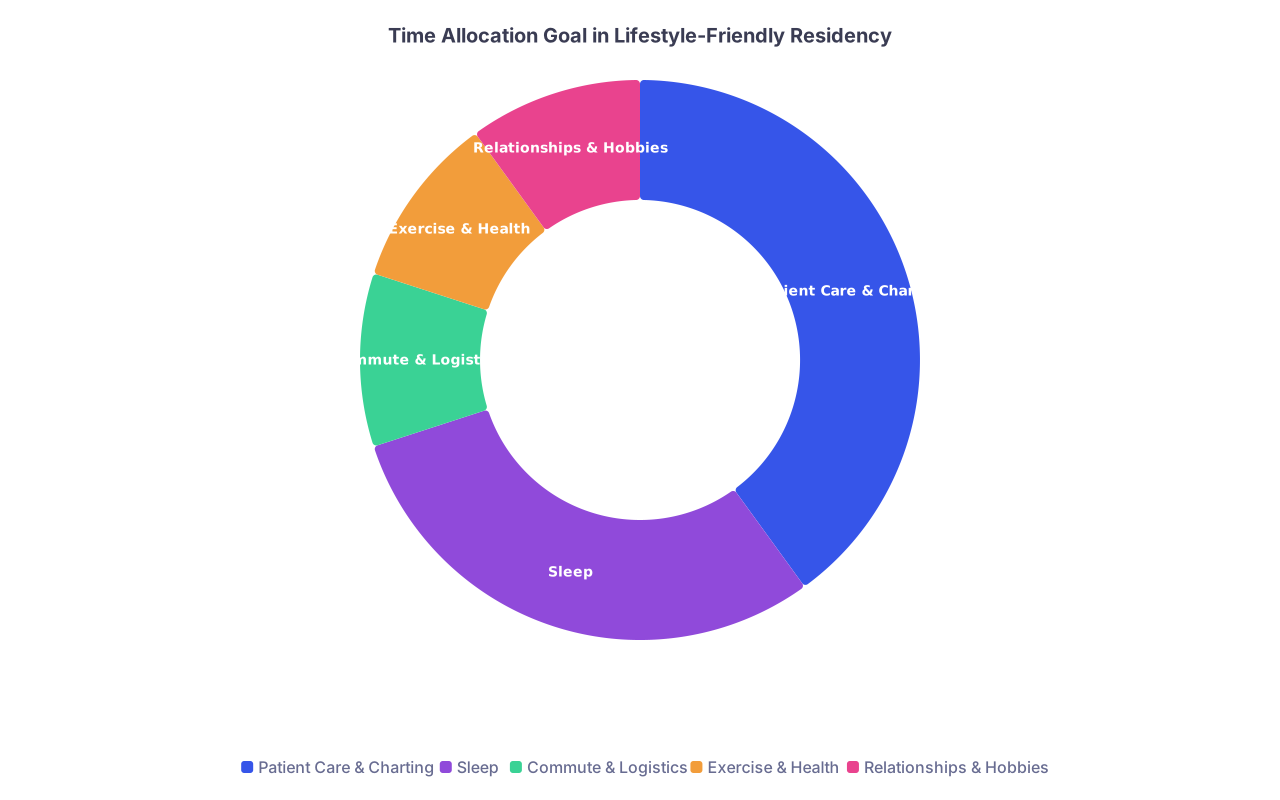
| Category | Value |
|---|---|
| Patient Care & Charting | 40 |
| Sleep | 30 |
| Commute & Logistics | 10 |
| Exercise & Health | 10 |
| Relationships & Hobbies | 10 |
Days 8–30: Build systems, not willpower
The second to fourth week is where interns decide whether they are “drowning” or “busy but okay.” The work volume has not changed. Their systems have.
At this point you should start deliberately shaping routines around your actual schedule, not the imaginary one you hoped for.
Week 2 (Days 8–14): Weekly template and food automation
1. Create a realistic weekly template
Take your upcoming schedule (call shifts, clinic days, didactics). Build a minimal template:
- For each day of the week, write:
- Wake time window
- Commute
- Work hours (approx)
- Commute
- Two blocks:
- “Admin” (bills, emails, housekeeping)
- “Recovery” (NN30 + sleep prep)
Your goal: every day has:
- One defined sleep window
- One defined personal slot
- One admin slot (even if just 10 minutes)
2. Automate food decisions
If you blow this, lifestyle falls apart fast.
Pick one of these patterns and commit for 3 weeks:
Batch cook once, eat 3–4 times
- Sunday or post‑short call: make 2 big meals that reheat well (chili, curry, sheet‑pan chicken and veg)
- Pre‑portion into containers you can grab at 5 am
Outsource lunch, control breakfast and dinner
- Accept that you will buy cafeteria or nearby lunches
- But:
- Always have breakfast staples at home
- Have 2–3 “emergency dinners” in the freezer (frozen dumplings + frozen veg; pre‑cooked grains + rotisserie chicken)
Clinic‑heavy specialties (FM, psych, derm, outpatient IM):
- Pack:
- One “real” snack with protein (nuts, yogurt, cheese, hummus)
- One backup “I am stuck in clinic” snack (protein bar, trail mix)
- Pack:
Your rule: no more than 4 waking hours without at least a snack. Cognitive performance craters otherwise. I have watched interns go from competent to scattered just from chronic low‑grade hypoglycemia and dehydration.
Week 3 (Days 15–21): Specialty‑specific adjustments
Lifestyle‑friendly specialties still differ in how your days feel. At this point you should tune habits to the shape of your field.
Outpatient‑heavy (FM, outpatient IM, psych, derm, ophtho):
- Protect start and end of day:
- Hard arrival time that allows:
- 5–10 minutes to review schedule before first patient
- Hard departure ritual:
- Last 15 minutes: close charts, write down next‑day “must do,” then log out
- Hard arrival time that allows:
- Set charting guardrails:
- Aim to close >75% of notes before leaving clinic
- Max 30–45 minutes of charting at home, on at most 2 evenings/week
Shift‑based (EM month if you rotate, some radiology, nocturnist‑style blocks later):
- Build pre‑shift and post‑shift rituals:
- Pre‑shift: light snack + brief review of critical topics
- Post‑shift: no phone calls for the first 30 minutes home, shower, then sleep as soon as possible
Radiology / pathology / PM&R:
- Sedentary danger zone. Force micro‑movement:
- Every 60–90 minutes:
- Stand up, 2–3 minutes of walking or stretching
- Put a full water bottle at your workstation and finish by midday, refill once
- Every 60–90 minutes:
Week 4 (Days 22–30): Sleep protection plan
By now the initial adrenaline is fading. Fatigue is not cute anymore.
At this point you should make sleep structural, not aspirational.
Define your “minimal viable sleep” rules:
- Aim: 7–8 hours when schedule allows
- Minimum threshold: <5–6 hours per night for more than 3 days triggers:
- Adjusted bedtime (no TV, no social media after X pm)
- Asking for support (co‑resident, chief if pattern is structural)
Standardize your wind‑down routine (20–30 minutes):
- Same 3–4 steps every night:
- Dim lights
- Shower or wash face
- 5–10 minutes of stretching or reading non‑medical book
- Phone away from bed (if you are on call, use Do Not Disturb with “Favorites” allowed)
- Same 3–4 steps every night:
Set “emergency recovery” tactics:
- After brutal call:
- Eat something substantial within 1 hour home
- Hydrate >500 ml
- Sleep in a dark, cool room, even if only 3–4 hours
- Do not commit to social plans that require alertness post‑call. You will resent them.
- After brutal call:

Days 31–60: Refine and reclaim your time
The second month is where you can either entrench bad coping strategies (endless DoorDash, staying late every day “to be helpful”) or start to feel your life again.
At this point you should move from pure survival to deliberate efficiency.
Week 5–6 (Days 31–42): Efficiency habits at work
Pick one efficiency target for the next two weeks. Not three. One.
Common high‑yield targets:
Notes and charting
- Build 2–3 templates for common encounters (FM: hypertension, diabetes follow‑up; psych: med check; derm: acne, eczema)
- Practice “note in the room” when appropriate:
- Type key points while the patient talks, review with them, then finalize as you step out
Pre‑rounding / pre‑clinic
- Set a fixed time:
- “I will arrive 30 minutes early to quickly scan labs and imaging for all my patients — no exceptions.”
- You then avoid 20 small panics during the day
- Set a fixed time:
Inbox / messaging
- Batch review:
- 2–3 specific times per day (e.g., 10:30, 14:00, 16:30)
- Outside those times, messages wait unless truly urgent
- Batch review:
Your metric: you leave the hospital 15–30 minutes earlier on at least 2–3 days per week compared with your first two weeks, without dumping work on others.
Week 7–8 (Days 43–60): Upgrade your life outside the hospital
Now you have some data on your actual schedule. Time to make it livable.
1. Lock in your minimum movement plan
At this point you should:
- Commit to a movement floor, not a gym fantasy:
- Example:
- 20–30 minutes, 3 days/week, that you can do on a random Tuesday after clinic
- Options:
- Walk with a podcast after work
- Brief strength routine at home (pushups, squats, bands, etc.)
- Cycle commute 1–2 days/week if safe
- Example:
Treat this like brushing your teeth. Not a “workout streak.”
2. Protect one recurring social anchor
Choose one of:
- Weekly dinner with partner/roommate/friend (even if takeout, even if 45 minutes)
- Standing video call with a non‑medicine friend on a lighter evening
- Recurring group activity that is easy to attend (residency book club, low‑key game night)
Put it in your calendar for the next 6 weeks. You will reschedule sometimes, but the default is: it happens.
3. Start financial sanity habits
Lifestyle friendly specialties often lead to lifestyle inflation. You get home earlier; you spend more without thinking.
Set up:
- Automatic transfer:
- Small, fixed amount on payday to:
- Emergency fund or loan payments
- Small, fixed amount on payday to:
- Tracking:
- One simple method (YNAB, Mint, spreadsheet, or even a notebook) to see:
- How much you are bleeding on food, rideshares, subscriptions
- One simple method (YNAB, Mint, spreadsheet, or even a notebook) to see:
You do not need a full financial plan in month 2. You do need to stop the leaks.
| Specialty Type | Movement Focus | Biggest Risk | Key Guardrail Habit |
|---|---|---|---|
| Outpatient-heavy (FM, psych, derm) | Short daily walks | Charting at home creep | 45-min hard stop after clinic |
| Radiology / Pathology | Micro-breaks | Sedentary fatigue | 2-min stand/walk every 60–90 minutes |
| PM&R / Ophtho | Mixed | Add-on tasks overflow | One no-exception personal evening |
| Outpatient IM | Clinic overbooking | Portal message overload | Message batching 2–3x/day |

Days 61–90: Cement the foundation and set long‑term boundaries
By month three, people stop giving you as much slack. “You are not brand‑new anymore.” The danger is you quietly accept work patterns that will wreck your long‑term lifestyle.
At this point you should deliberately choose what kind of resident you are going to be.
Week 9–10 (Days 61–75): Boundary setting and identity
You do not owe your residency every free minute. You owe patients safe care and your team reliability. That is different.
1. Choose your “always yes” and “usually no”
Write it out:
Always yes:
- Staying late for a genuinely sick patient
- Helping a co‑resident drowning in an emergency
- Teaching a med student when it does not destroy your own safety
Usually no:
- Extra committees just for your CV, especially in PGY1
- Optional research meetings you dread
- Being the default person for schedule swaps because you “have an easier specialty”
Practice actual phrases:
- “I cannot take this on right now without compromising my patient care and sleep. Can we revisit in 3–6 months?”
- “I am happy to help occasionally, but I cannot be the default person for this.”
2. Audit and adjust your habits
Look at your three core habits from before Day 1:
- Wind‑down routine
- Movement
- Connection
For each:
- Are you doing it ≥70% of the time?
- If not, is the problem:
- Time? (then shrink the habit)
- Location? (wrong place, like gym too far)
- Trigger? (no clear cue to start)
Example adjustments:
- 30‑minute wind‑down → 10 minutes of stretching + reading in bed
- 3x/week 30‑min workout → 4x/week 15‑min walks
The goal is something you can sustain during your worst rotation, not your best.
Week 11–12 (Days 76–90): Plan the next year like an adult, not a victim
The first 90 days are data collection. Now you use them.
At this point you should:
- Review your schedule for the next 6–12 months
- Identify:
- Heaviest rotations
- Lightest rotations
- Vacation blocks
Make a “stress map”:
- For each month, rate expected intensity 1–5
- Decide:
- High‑intensity months: aim for maintenance only (sleep, food, movement bare minimum)
- Low‑intensity months: add growth goals (research blocks, extra clinics, bigger fitness or personal projects)
Set 2–3 realistic year‑one lifestyle goals
Examples:
- “Average at least 7 hours of sleep on non‑call nights.”
- “Keep exercise at ≥2 days/week year‑round.”
- “Maintain one weekly non‑medical social contact (in person or virtual).”
Tie them to concrete actions:
- Alarm back‑timed from target sleep
- Recurring calendar blocks labeled “non‑negotiable”
- Sign up for something external (rec league, class) only in your lighter months
- Schedule one check‑in with your PD or mentor
Agenda:
- Briefly: how you feel clinically (strengths, struggles)
- Honestly: how you are doing with sleep, stress, and life balance
- Ask directly:
- “Residents who graduate from here with good lifestyles — what do they do differently in PGY1?”
Write down what they say. Adapt, do not just admire.
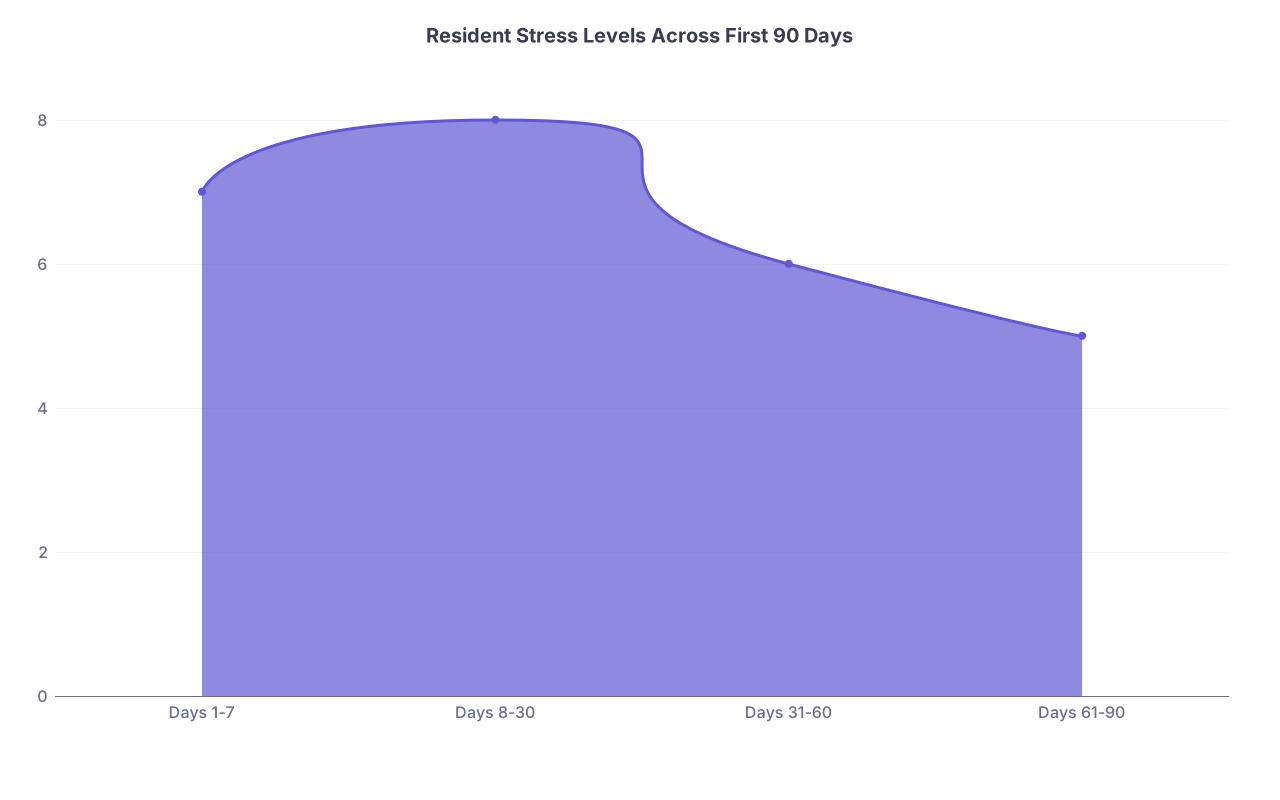
| Category | Value |
|---|---|
| Days 1-7 | 7 |
| Days 8-30 | 8 |
| Days 31-60 | 6 |
| Days 61-90 | 5 |
FAQ (exactly four questions)
1. I am in a “lifestyle” specialty but my first rotation is brutal inpatient. Should I still try to build habits now?
Yes, but scale them down. In a heavy inpatient month, your lifestyle foundation is:
- Sleep protection
- Reliable calories
- One small movement habit
- One human connection
You do not need a perfect gym routine or gourmet meal prep. You need survival habits that prevent collapse. Once you hit your outpatient or lighter rotations, you expand the same habits rather than starting from zero.
2. How many extra things (research, committees, moonlighting) should I say yes to in the first 90 days?
Zero. The first 90 days are for learning the job and building your systems. After that, you can selectively add:
- 1 research project or QI project
- 1 committee or leadership role
But only if your sleep, basic movement, and mental health are reasonably stable. The resident who takes on five side projects in July and flames out by October is not impressive. Just exhausted.
3. What if my co‑residents stay late every day and I feel guilty leaving “on time”?
You are not paid in martyr points. If you are finishing your work, handing off appropriately, and your patients are safe, leaving at a reasonable hour is not laziness.
You can:
- Offer help to someone clearly drowning, occasionally
- Share efficiency tips once you find them
- Model healthy behavior — you will be surprised how many people quietly appreciate it
If a culture of chronic unnecessary staying late is enforced from above, talk with a trusted senior or chief about it. Quietly. Early.
4. How do I know if my lifestyle “balance” is actually unsafe burnout?
Red flags I have seen too often:
- You dread every shift, even the lighter ones
- You numb out with constant scrolling, alcohol, or food
- You have no interest in anything you enjoyed pre‑residency for >2 weeks
- You feel hopeless, trapped, or think your patients would be better off without you
If two or more of those are true for more than a week or two, stop treating this as a “lough rotation.” It is a problem. Use the mental health guardrails you set: tell someone, access your program’s resources, and if you are in real danger, step out of the workflow and get urgent help. Your license and career will not be saved by pretending you are fine.
Open your calendar right now and block a 30‑minute window this week labeled “Residency Lifestyle Setup — First 90 Days.” In that block, build your weekly template and write down your three core habits. That is your first deliberate move from reaction to control.