
It is July 1st. You are three years out of residency. You spent last night finishing notes at 10:30 p.m. after a brutal admit-heavy call. Your colleague just moved to an all-clinic job and swears she is home by 5 p.m. most days. You are staring at the schedule for next month’s nights and thinking: “I need out of this.”
You want a transition from hospital-based to outpatient-focused work. Not a fantasy. A plan. Year-by-year, then quarter-by-quarter, down to what you should be doing this month.
Let us walk through a realistic 3–5 year transition timeline. Assume you are in a hospital-heavy field (hospitalist IM, inpatient psych, EM, inpatient-heavy subspecialty) and want a clinic‑dominant, lifestyle‑friendly setup.
Big Picture: The 3–5 Year Arc
Before we go year by year, you need the skeleton of the plan.
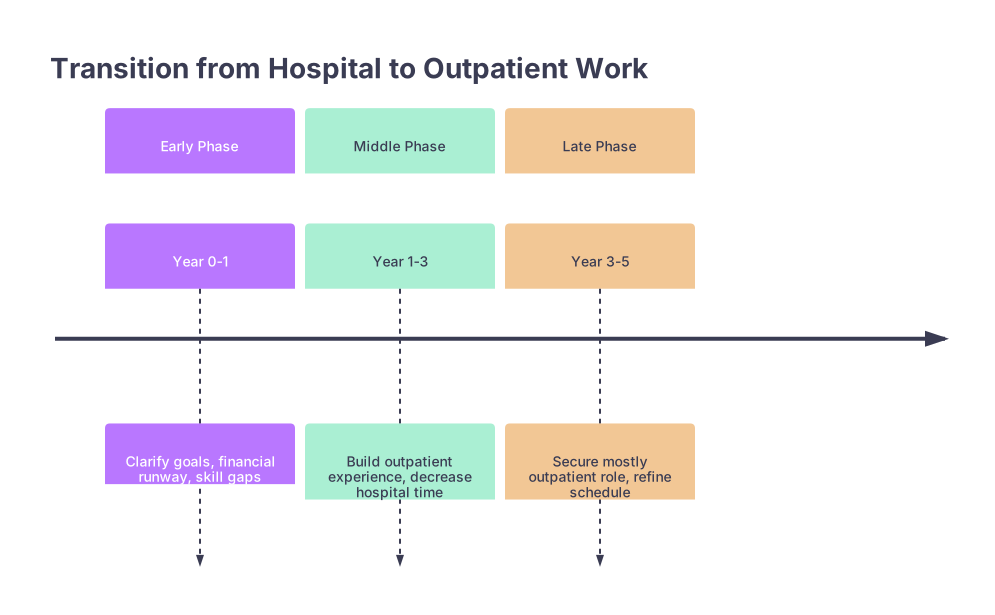
| Period | Event |
|---|---|
| Early Phase - Year 0-1 | Clarify goals, financial runway, skill gaps |
| Middle Phase - Year 1-3 | Build outpatient experience, decrease hospital time |
| Late Phase - Year 3-5 | Secure mostly outpatient role, refine schedule |
At a high level, your arc looks like this:
- Year 0–1: Clarity and groundwork
- Year 1–2: First outpatient foothold (side clinic sessions, locums, or partial FTE)
- Year 2–3: Shift to majority outpatient, reduce or end nights/inpatient call
- Year 3–5: Optimize for lifestyle: fewer days, no weekends, specialty‑specific tweaks
You can compress this into 2 years if you are aggressive and flexible on pay/location. But expect 3+ years for most employed physicians in competitive markets.
Year 0–1: Clarify, Audit, and Position Yourself
At this point you should stop thinking “I want clinic” and start defining exactly what kind of outpatient life you are chasing.
Months 0–3: Define Your Target and Constraints
You sit down one weekend and answer, in writing:
What exact outpatient model do you want?
- Full-time office-based IM/FM with no hospital?
- Procedural clinic (derm, GI with endoscopy center time, pain, IR clinic-heavy)?
- Outpatient psych (med management, maybe telehealth)?
- Specialty clinic in cardiology, rheum, endocrine, etc., with minimal call?
How much income cut can you tolerate for 12–24 months?
- This is not theoretical. You assign a number.
Non-negotiables
- No nights?
- No weekends?
- No more than 1 late clinic per week?
- Geographic constraints (cannot leave current city due to family)?
You also do a quick market reality check — not vibes, data:
- Search your region’s job boards (hospital systems, FQHCs, large groups, national recruiters).
- Call or text 2–3 colleagues already in outpatient-heavy roles and ask exactly:
- Their FTE
- Clinic days per week
- Panel size
- Call structure
- RVU expectations
If your dream does not exist locally, better to know that in Month 1, not Year 3.
Months 3–6: Skills, CV, and Financial Runway
At this point you should:
Audit your outpatient skill set
Ask realistically:
- When did you last run a full primary care panel?
- Are you comfortable with chronic disease management at scale: diabetes, COPD, chronic pain contracts, ADHD, anxiety, depression?
- For subspecialists: are you fluent in the bread-and-butter outpatient work or mostly doing acute inpatient consults?
If rusty, you start:
- Picking up occasional clinic sessions within your current hospital system (beg for 1 half‑day/week).
- Doing targeted CME toward outpatient guidelines, not ICU/sepsis refreshers.
Fix your CV narrative
Your current CV screams “hospital workhorse.” You reshape it:
- Emphasize ambulatory electives, clinic blocks, QI work related to care transitions, follow‑up clinics.
- Add any telehealth or outpatient pilot projects you have touched.
- Draft a 1‑paragraph “career objective” that clearly states your desire for longitudinal outpatient care, continuity, and preventative focus.
Create a 6–12 month financial runway
You are planning a transition that may temporarily dip your income. That means:
- Pay off high-interest debt if possible.
- Build an emergency/transition fund (goal: 3–6 months of essential expenses).
- Review disability and malpractice coverage; know what happens if you switch employers.
If you ignore this financial step, you will later feel trapped in your current job because the money is too good. I see that derail people constantly.
Months 6–12: Start Outpatient Exposure Where You Are
By the end of Year 1, you should have some outpatient time on your actual schedule.
You approach your current employer with something like:
- “I would like to add half‑day clinic continuity for discharged complex patients.”
- “Could I staff a hospital follow‑up clinic one afternoon per week?”
- “Can I cover a colleague’s outpatient panels when they are on vacation?”
This does three things:
- Refreshes your outpatient skills.
- Gives you real, recent outpatient experience to list in applications.
- Allows you to test if you actually like clinic in practice, not just in your imagination.
If your current job refuses any outpatient time, log that mentally. That is a system that will fight your exit.
Year 1–2: Get Your First Real Outpatient Foothold
At this point you should be actively hunting for a bridge role. Not yet your dream unicorn job, but your first serious step out of the hospital.
Quarter 1 (Months 12–15): Aggressive Job Recon
You treat this like a project.
- Update CV and a short, targeted cover letter.
- Start networking:
- Reach out to outpatient‑heavy departments within your own system.
- Email: “I am currently a hospitalist with X years experience, and over the last year I have developed an interest in ambulatory care and care transitions. I would like to explore outpatient clinic opportunities with limited or no inpatient responsibilities.”
You also consider:
- FQHCs and community health centers (often flexible, outpatient-only, sometimes loan repayment).
- Large multi‑specialty groups (Optum, Kaiser, Privia, etc.) that already separate inpatient/outpatient functions.
- Telehealth-only or hybrid roles (especially psych, endocrine, rheum, FM/IM chronic disease clinics).
Quarter 2–3 (Months 15–21): Negotiate a Mixed Role
Your initial move is often a mixed model:
- 0.6–0.8 FTE clinic
- 0.2–0.4 FTE hospital / call / coverage
This is the bridge. It feels messy but it works.
Key negotiating points:
- Clinic-protected time: No random inpatient add-ons during your clinic days.
- Predictable schedule: Same clinic days each week.
- Sunset clause on inpatient: Aim for a written plan: “Intend to reassess and reduce inpatient weeks by Year 3.”
Here is how a realistic transition schedule can look:
| Year | Hospital Work | Outpatient Work | Nights/Weekends |
|---|---|---|---|
| 1 | 100% | 0% | 6–8 nights/mo |
| 2 | 60% | 40% | 3–4 nights/mo |
| 3 | 30% | 70% | 1–2 nights/mo |
| 4+ | 0–10% | 90–100% | 0–1 night/mo |
Not glamorous. But you can feel the nights shrinking and the clinic time growing.
Quarter 4 (Months 21–24): Evaluate and Adjust
By the end of Year 2, you should have:
- 6–12 months of consistent clinic time under your belt.
- A clear sense of patient volume expectations (18 vs 24 vs 28/day).
- Data on your own tolerance:
- Are you drained after 4 clinic days?
- Are procedures the only part you enjoy?
- Is telehealth energizing or miserable?
You adjust your target accordingly:
- Some discover: “Four days of high-volume primary care is worse than my hospital gig.” Fine. Then you pivot to:
- Three days clinic, one admin/telehealth day, no hospital.
- Procedural outpatient with fewer face-to-face visits.
Year 2–3: Flip the Ratio to Majority Outpatient
At this point you should be pointed in a clear direction. Now you scale it.
Months 24–30: Commit to Majority Clinic
You decide your minimum acceptable outpatient proportion (usually ≥70%).
You either:
- Renegotiate within your existing system:
- “I want to move to 0.8 FTE clinic, 0.2 FTE inpatient next academic year, with goal to eliminate inpatient within 12–18 months.”
- Or change employers to one that is already structured for outpatient‑only roles.
For specialties:
Internal Medicine / FM / Pediatrics
- Push for clinic-only with outpatient call rotation only (phone triage, no overnight in-house).
- Strongly prefer groups that use hospitalists for all admissions.
Psychiatry
- Move to 80–100% outpatient: community mental health, private groups, telepsychiatry.
- Avoid “outpatient” roles that actually require inpatient coverage q4.
Neurology, Endocrine, Rheum, GI (selectively)
- Look for specialty clinics that partner with hospitalists for inpatient.
- For GI, consider endoscopy center models that are daytime, outpatient‑based.
Months 30–36: Kill Nights and Weekends
This is where the lifestyle shift becomes real.
You aggressively eliminate:
- In‑house nights.
- 24-hour weekend calls that include hospital rounds.
- Random cross-coverage for inpatient teams.
You may still have:
- Outpatient call (phone coverage, urgent refills, lab results).
- Occasional Saturday half‑day clinic (often negotiable).
Track your call burden vs income. Many physicians accept minor pay cuts to remove night/weekend work. That trade is almost always worth it for long-term sustainability.
Year 3–5: Fine-Tune for Lifestyle, Not Just Outpatient
You are mostly out of the hospital. Now the goal shifts from “not inpatient” to “sustainable, sane outpatient life.”
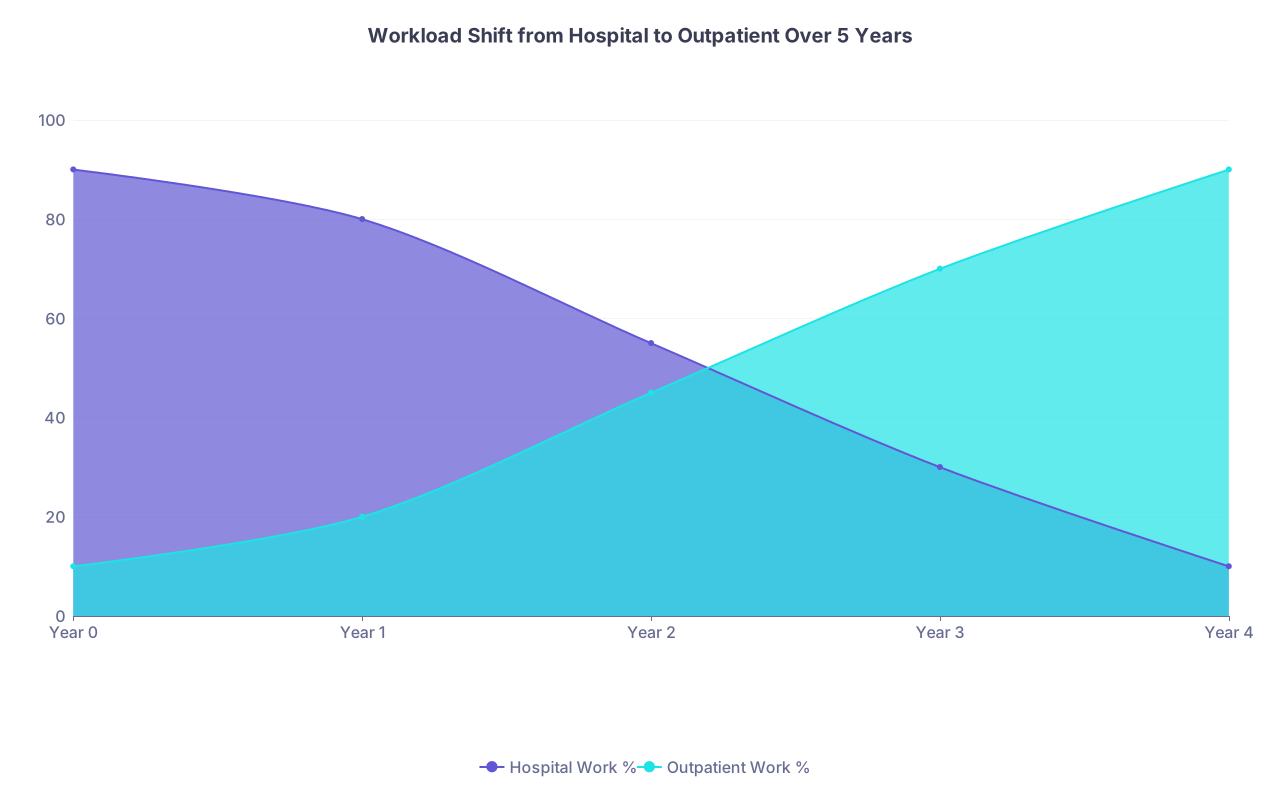
| Category | Hospital Work % | Outpatient Work % |
|---|---|---|
| Year 0 | 90 | 10 |
| Year 1 | 80 | 20 |
| Year 2 | 55 | 45 |
| Year 3 | 30 | 70 |
| Year 4 | 10 | 90 |
Year 3–4: Optimize Your Weekly Template
At this point you should:
- Fix a stable clinic template and stop letting others “just add a couple more” visits.
- Clarify:
- Max patients per day you are willing to see.
- Number of new vs follow‑up slots.
- Protected admin time for inbox, refills, labs.
A reasonable lifestyle-friendly template for a full-time outpatient clinician:
- 3.5–4 days of direct patient care.
- 0.5–1 day blocked for:
- Results, prior auths, patient messaging.
- Follow-up calls, care coordination.
- CME, meetings.
Year 4–5: Shape Your Ideal Niche
Once you are stable, you refine:
Develop a niche that makes outpatient more enjoyable and more sustainable:
- For IM/FM: obesity medicine, complex care, geriatrics, women’s health, addiction medicine.
- For psych: perinatal psych, ADHD clinics, TMS/ketamine services with daytime schedules.
- For neurology: headache clinic, MS clinic, outpatient epilepsy.
- For GI: outpatient IBD clinic, motility, functional GI if endoscopy volume burns you out.
Gradually focus your panel on patients that match your interests and skills.
This is where your work stops feeling like random volume and starts feeling like a career you chose on purpose.
Specialty-Specific Notes: Lifestyle Reality Check
Not all transitions are created equal. Here is a blunt snapshot.
| Specialty | Ease of Outpatient Shift | Typical Path Length | Key Barrier |
|---|---|---|---|
| Psych | High | 1–2 years | Panel/inbox load |
| FM / IM | High | 2–3 years | Volume expectations |
| Neurology | Moderate | 2–3 years | Call expectations |
| EM | Moderate | 3–5 years | Need retraining |
| Hospitalist IM | High | 2–3 years | Outpatient skills |
Quick comments:
Psychiatry: Easiest field to move outpatient-only, including full telehealth. Risk is overwhelming panel and inbox if you are not careful with scheduling and boundaries.
FM/IM/Peds: Many outpatient-only roles exist, but some are glorified RVU mills. You have to scrutinize daily visit expectations.
Neurology/Subspecialties: Quite doable in larger systems; the main challenge is escaping cross-coverage for inpatient consults and stroke alerts.
EM: Harder. You usually need a defined transition plan, like:
- Urgent care → occupational medicine → primary care or outpatient specialty fellowship (e.g., pain, sports, addiction).
Month-by-Month Micro-Checklist (First 18 Months)
You probably want specifics. Here is a rough micro‑timeline for the first year and a half.
Months 0–3
- Write down your exact target outpatient model.
- Review 10–20 job postings to ground your expectations.
- Text/email 3 people in outpatient-heavy roles and ask for 15 minutes to talk.
- Start a transition savings account.
Months 4–6
- Meet with your current leadership; request at least one half‑day per week of clinic or hospital follow-up visits.
- Update your CV to highlight anything ambulatory.
- Identify gaps in outpatient skills; sign up for 1–2 high-yield ambulatory CMEs.
Months 7–9
- Actually work your first consistent clinic sessions.
- Track how many patients you see, time per note, types of cases that drain vs energize you.
- Start soft networking with outpatient groups (lunch with a community PCP, chat with a psych group, etc.).
Months 10–12
- Decide: stay within system vs plan to leave.
- If staying: draft a proposal for a mixed role beginning next academic year.
- If leaving: refresh job search, talk with recruiters, identify 3–5 serious opportunities.
Months 13–18
- Interview for roles that give you at least 30–50% outpatient.
- Negotiate schedule, call, and written expectations explicitly. No “we will figure it out later.”
- Set a personal hard date when your nights and inpatient blocks must start decreasing.
FAQ (Exactly 4 Questions)
1. How early in residency should I start planning a move to outpatient-focused work?
By PGY-2 you should at least know whether inpatient life energizes you or drains you. If you suspect you are ultimately an outpatient person, use PGY-3 and any elective time to load up on clinic blocks, ambulatory electives, and continuity experiences. You do not need to lock in a job during residency, but you should avoid graduating with only ICU and wards on your CV if your long-term goal is clinic-only.
2. Do I need additional fellowship training to move from hospital-based to outpatient work?
Usually no, unless you are in a procedure-heavy or highly specialized field and want a very specific niche (e.g., pain, sports, advanced GI). Hospitalists, EM, and general IM/FM physicians can transition without formal retraining, but EM-to-primary-care often requires a structured bridge, additional CME, and a very honest self-assessment of skill gaps. Fellowship can help but is not automatically required.
3. How big of a pay cut should I expect when shifting away from hospital/nights to clinic-only?
Commonly 10–30% initially, depending on specialty and market. Hospitalist and EM premiums for nights and weekends are real. However, some outpatient subspecialty and high-throughput primary care models can match or exceed hospital income. The key is whether you are willing to tolerate RVU pressure and visit volume. Many physicians consciously trade some income for predictability and lighter call.
4. What are red flags when evaluating “outpatient” jobs that will actually wreck my lifestyle?
Three big ones:
- Vague language about call: “Light call” without specifics. You want written details: frequency, in-house vs phone, weekend expectations.
- High daily visit caps with no protected admin time: 24–28 patients/day and no scheduled inbox time is a recipe for 9 p.m. charting.
- Required inpatient coverage that “only happens occasionally”: in practice, this often becomes routine. If you want to be done with hospital work, insist on clear boundaries and ask to speak with someone already doing the job right now.
Key points:
- Treat your transition like a 3–5 year project with explicit milestones, not a vague wish.
- Use a bridge phase where you deliberately mix inpatient and outpatient to rebuild clinic skills and prove your value.
- Once mostly outpatient, shift your focus from “not inpatient” to building a sustainable, interest-aligned clinic life with sane volume, clear boundaries, and a niche you actually enjoy.