
Waiting until PGY-3 to think about your first contract is how people end up with golden handcuffs and Sunday-night dread.
If you care about lifestyle, you must treat contract negotiation as a 12–18 month project, not a last-minute signature.
This guide is for residents in lifestyle-friendly fields (FM, outpatient IM, psych, derm, ophtho, radiology, anesthesia, PM&R, pathology, some EM and outpatient subspecialties) who want control over:
- Schedule and call
- Location
- Non-clinical time
- Pay and bonuses
- Exit ramps if the job is wrong
I will walk you, chronologically, from 18 months before graduation to the day you sign. At each point: what you should be doing, what you should not be doing, and what actually moves the needle in lifestyle-optimized contracts.
Big Picture: Your 18-Month Contract Timeline
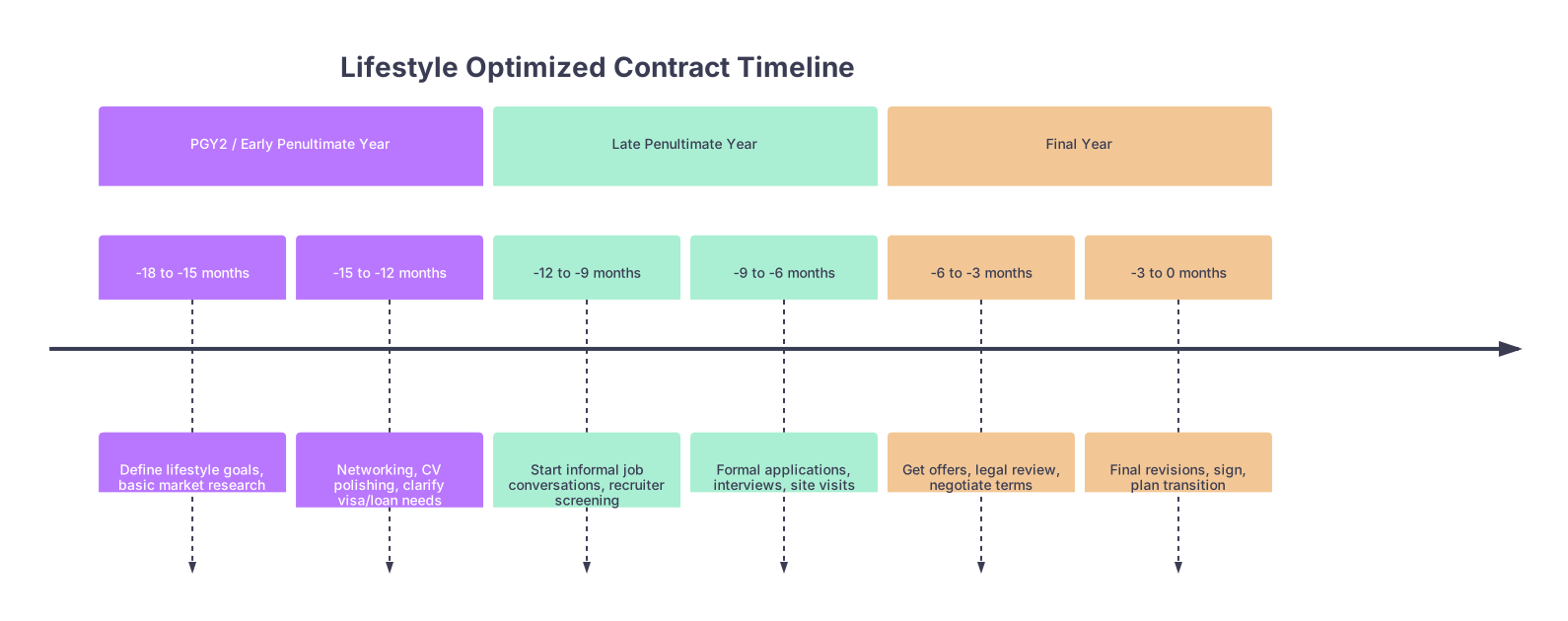
| Period | Event |
|---|---|
| PGY2 / Early Penultimate Year - -18 to -15 months | Define lifestyle goals, basic market research |
| PGY2 / Early Penultimate Year - -15 to -12 months | Networking, CV polishing, clarify visa/loan needs |
| Late Penultimate Year - -12 to -9 months | Start informal job conversations, recruiter screening |
| Late Penultimate Year - -9 to -6 months | Formal applications, interviews, site visits |
| Final Year - -6 to -3 months | Get offers, legal review, negotiate terms |
| Final Year - -3 to 0 months | Final revisions, sign, plan transition |
At this point you should accept one thing: if you do not do the early steps, you lose leverage in the late steps. There is no magic phrase in negotiation that fixes a rushed, desperate search.
18–15 Months Before Graduation: Decide What “Lifestyle” Actually Means
This is late PGY-2 for a three-year program, or early PGY-3 for longer programs.
At this point you should:
Define your non-negotiables.
Not vague “work-life balance.” Specific, measurable terms, such as:- Max clinic hours per week
- Number of evenings/weekends you will accept
- Commute time
- Call frequency or whether you will take call at all
- Expected RVUs or patient-per-day caps
- Protected admin time (e.g., 4 hours per week)
Map how your specialty usually works.
Different “lifestyle” levers exist by specialty:
Lifestyle Levers by Specialty Specialty Biggest Lifestyle Lever Outpatient FM Panel size & visit length Psych Patient load & telehealth % Radiology Shift structure & nights Anesthesia Call and post-call rules Derm Procedures vs meds mix Ophthalmology OR days vs clinic days PM&R Inpatient vs outpatient mix Write your “ideal week” on paper.
Literally sketch a weekly calendar. Example for outpatient IM:- 4 clinic days, 8–5, 1 hour lunch
- 1 admin/telehealth day at home
- No regular weekends, no evenings past 6 pm
This is not fantasy; it becomes your filter and negotiation reference.
Start a simple “Post-Training Job” document.
Sections:- Must-haves
- Nice-to-haves
- Hard nos (e.g., no inpatient weeks, no 1:3 call)
- Geographic targets
- Visa or loan constraints
At this point you should not:
- Tell everyone “I’ll go anywhere for the right job.” That is how hospitals hear “I’ll tolerate anything.”
- Assume academic = lifestyle or private = money. Both assumptions are often wrong.
15–12 Months Before Graduation: Build Leverage Before You Ask for Anything
Now you are in your penultimate year, mid-cycle. Time to act like a soon-to-be attending.
At this point you should:
Clean up your CV.
One solid, updated PDF. Max 2–3 pages. Include:- Dates and locations clearly
- Presentations, QI projects, chief roles
- Special skills (Spanish, ultrasound, interventional, etc.)
Clarify your constraints now.
- Visa: H-1B vs J-1 waiver, timeline, state options
- Loans: PSLF need, NHSC interest, sign-on versus loan repayment
- Partner’s job: realistic geographic radius
Start quiet networking.
- Ask attendings: “If you were looking for a low-call, outpatient-heavy job in this specialty, where would you start?”
- Go to your specialty’s regional/national meeting with one agenda: meet people who do the job you want.
Track basic market data.
Create a simple sheet with rows per potential job type and columns:
- Base salary range
- Bonus type (RVU, collections, quality)
- Call expectations
- Sign-on / relocation
- PTO and CME
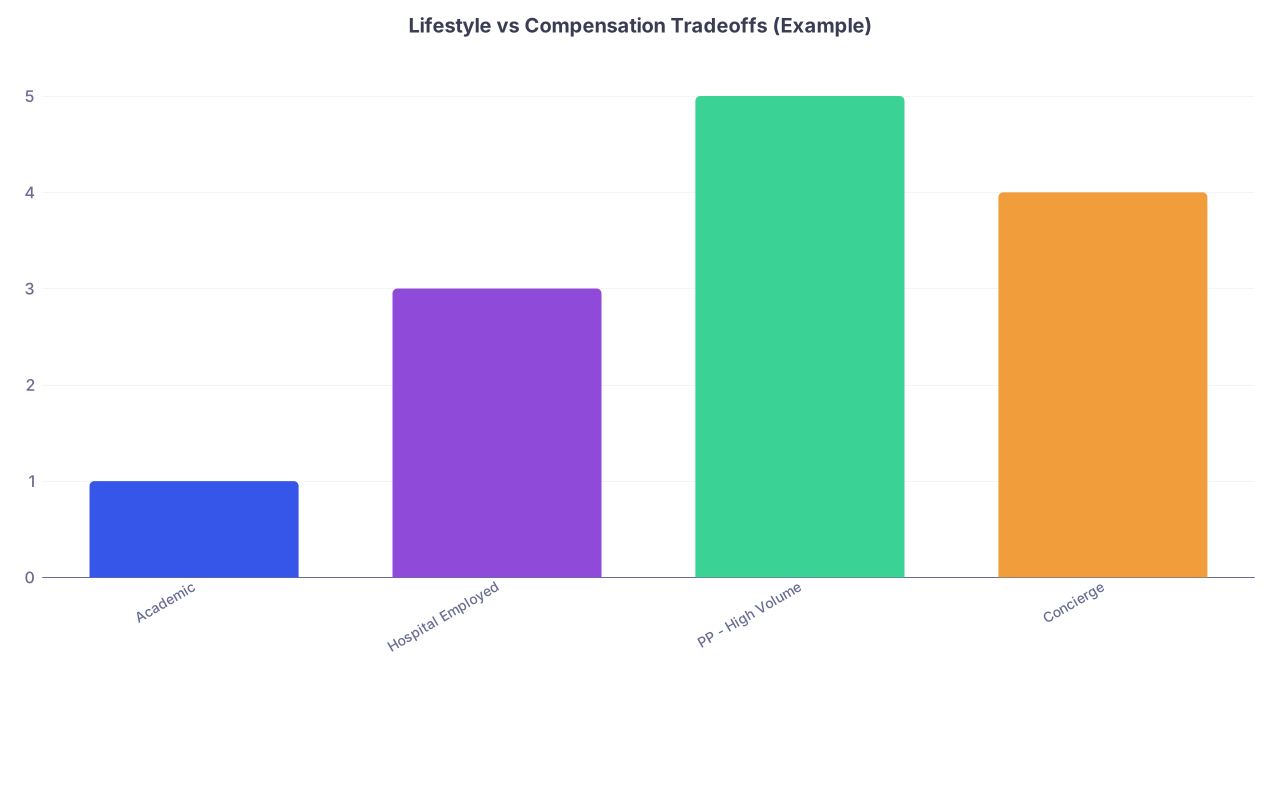
Lifestyle vs Compensation Tradeoffs (Example) Category Value Academic 1 Hospital Employed 3 PP - High Volume 5 Concierge 4 (Scale 1–5 where 5 = best lifestyle, worst volume pressure. This is conceptual, not gospel, but it forces you to think clearly.)
At this point you should not:
- Apply broadly through every recruiter email. That screams desperation and floods you with terrible offers.
- Assume your residency program will place you. They will not. They might share leads; that is it.
12–9 Months Before Graduation: Start the Conversations, Not the Commitments
Now things get real. For many, this is early final year.
At this point you should:
Start “exploratory calls,” not applications.
Script for email or LinkedIn:
“I am a PGY-3 in psychiatry graduating June 2027, interested in outpatient-focused positions with limited call in [region]. I would like to learn what roles might fit that profile in your system.”
You are not asking “Do you have any jobs?” You are telling them what you want and seeing who bites.
Screen recruiters aggressively.
Good recruiters will:
- Ask detailed questions about schedule and call
- Talk compensation and culture
- Know which groups chew through new grads
Red flags:
- “This is a dream opportunity” without specifics
- Dodging questions about turnover or schedule
- Pressure to sign a right-of-first-refusal agreement
Use conferences tactically.
At your specialty conference:
- Schedule 3–5 short meetings with groups in your target region
- Ask each one: “What does your most satisfied full-time physician’s week actually look like?”
- Write down their answers. People slide and exaggerate; written notes keep you honest.
Refine your filters.
After 5–10 conversations, update your “job document.” Many residents realize:
- They care more about control over schedule than absolute salary
- Or they would trade a bit of call for a shorter commute
- Or they want 0.8 FTE as their default
At this point you should not:
- Sign any letter of intent (LOI) yet unless you are certain and already contract-savvy. LOIs can box you in during future negotiation.
- Bring up exotic contract demands before they even show interest. First they must want you.
9–6 Months Before Graduation: Formal Interviews and Real Numbers
For most, this is mid final-year. This is when schedules, RVUs, and call burdens stop being abstract.
At this point you should:
Apply selectively.
Based on your prior filtering, send formal applications to 3–8 positions that:- Match your geographic radius
- Match at least 80% of your lifestyle must-haves
- Appear stable (low turnover, existing coverage, not a brand-new clinic they are dumping on you)
Go to interviews with a checklist.
Ask brutally specific questions:
- “How many patients per day does a new attending carry at 6 months? 12 months?”
- “Who takes overflow when the schedule is full?”
- “How often do people stay 2+ hours late? Why?”
- “What is the post-call policy in practice, not on paper?”
- “How many physicians left in the last 3 years, and why?”
Write answers down the same day. Your memory will soften red flags over time.
Do site visits with an attending lens, not a resident lens.
During a visit:
- Look at parking. Look at clinic layout. Ask where people eat.
- Talk to an MA, a front-desk staffer, a midcareer doc, not just the “champion” they parade.
- Ask: “If your best friend finished residency tomorrow, would you tell them to work here?”
Begin tracking concrete offer expectations.
By now you should know rough numbers for your field in your region:
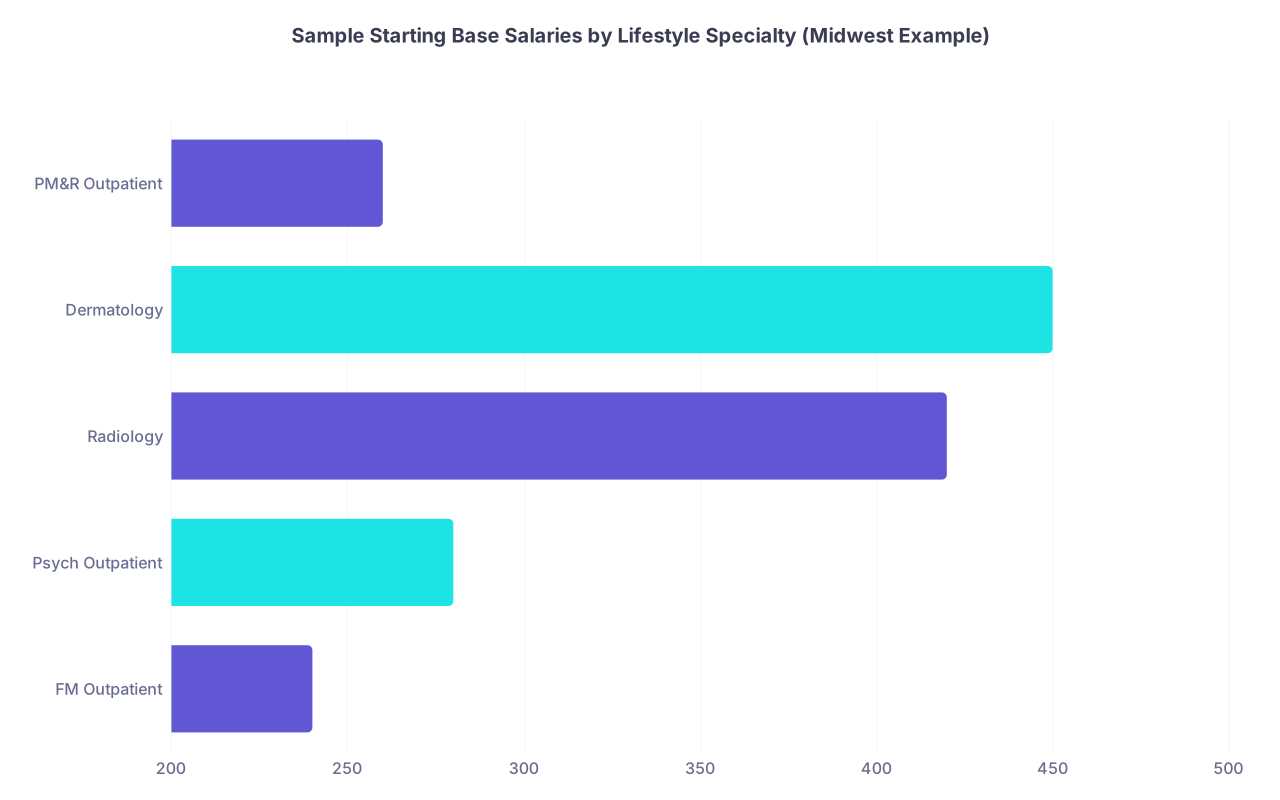
Sample Starting Base Salaries by Lifestyle Specialty (Midwest Example) Category Value FM Outpatient 240 Psych Outpatient 280 Radiology 420 Dermatology 450 PM&R Outpatient 260 These ranges vary by region and year, but this is the ballpark reality. If a practice offers 60–70% of market “because we are lifestyle,” it is usually just a bad deal.
At this point you should not:
- Get starry-eyed with “partnership track” language without clear, written numbers.
- Believe any “you can easily make $XXX,XXX” claim without: base, RVU rate, typical RVUs, and actual incomes of current physicians.
6–3 Months Before Graduation: Offers, Lawyers, and Real Negotiation
Now the contracts arrive. This is where lifestyle is either locked in or sacrificed quietly.
At this point you should:
Line up a physician contract attorney before the first offer hits your inbox.
You want someone who:
- Reviews physician contracts regularly
- Knows your state
- Is not also representing the hospital or group
You will spend $500–$1,500. That is trivial compared with signing a bad non-compete or accepting unsafe call.
Collect offers before committing.
Aim for at least 2, ideally 3 offers (or near-offers) before you:
- Sign a letter of intent
- Commit verbally to anyone
Leverage comes from options. Full stop.
Dissect each offer with a lifestyle lens.
Make a “Contract Comparison” grid:
Lifestyle Contract Comparison Example Feature Job A Job B Job C Clinic days/week 4.5 4 4 Evenings/week 2 0 1 Weekends/month 2 0 1 Call 1:4 in-house 1:8 from home None Base salary 260k 240k 220k (0.8 FTE) Non-compete radius 30 miles 10 miles None Then ask yourself which grid you want to live inside for 2–3 years.
Negotiate in the right order.
With your top one or two options:
First, clarify role and schedule:
- FTE (1.0 vs 0.8–0.9)
- Clinic vs admin days
- Inpatient vs outpatient mix
- Call frequency and type (in-house vs from home, tele, etc.)
Only then move to:
- Base salary
- Bonuses and thresholds
- Sign-on, relocation
- PTO, CME time and funds
Finally, nail the legal traps:
- Non-compete radius and duration
- Termination clause (cause vs no-cause)
- Tail coverage (who pays?)
- Requirements to repay sign-on/relocation if you leave
Sequence matters. If you start with small money moves, they think you are done when you still have major lifestyle asks.
Use specific, reasonable asks.
Example phrases that actually work:
- “Given the call burden of 1:4 in-house, I would like to see post-call time explicitly protected in the contract.”
- “To sustain a full outpatient panel safely, I am asking for 4 hours of weekly scheduled admin time in the template.”
- “I am willing to accept the offered base if we cap clinic days at 4 per week and keep weekends to no more than 1 in 8.”
At this point you should not:
- Argue for every single clause. Pick 3–5 priority items.
- Assume verbal promises count. If it is not in writing, it does not exist.
3 Months Before Graduation: Final Revisions and Signing
By now, you should have at least one contract you could sign without hating yourself.
At this point you should:
Do a final “lifestyle stress test.”
Read the contract and ask:
- “If nothing changes for the next 3 years, am I okay with this schedule?”
- “If leadership changes, would this still be tolerable?”
- “If I need to leave, how painful is it?” (non-compete + tail + repayment)
Double-check the escape hatches.
You want:
- Reasonable without-cause termination (e.g., 60–90 days’ notice, both sides)
- Non-compete limited in time (1–2 years) and geography (realistic radius)
- Clear language on who pays tail insurance and under what scenarios
Confirm duties match what was promised.
Look for:
- No hidden “other duties as assigned” that open the door to dumping inpatient or night work
- No vague “help develop new service lines” without time or compensation specified
Negotiate start date and onboarding expectations.
- Protected orientation period
- Gradual ramp-up of volume over first 6–12 months
- Any early flexibility (e.g., planned time off between residency and start)
Once the final redlines are integrated and you, your attorney, and your future self all agree you can live with this, then you sign.
At this point you should not:
- Delay signing forever while hoping for a unicorn job. Residents who do that often end up taking last-minute, worse offers.
- Ignore your gut. If something feels off and leadership dodges your questions, you are usually right.
Micro-Timeline: What To Do This Week, This Month, Today
To make this concrete, here is how the last 6 months might look in weekly chunks.
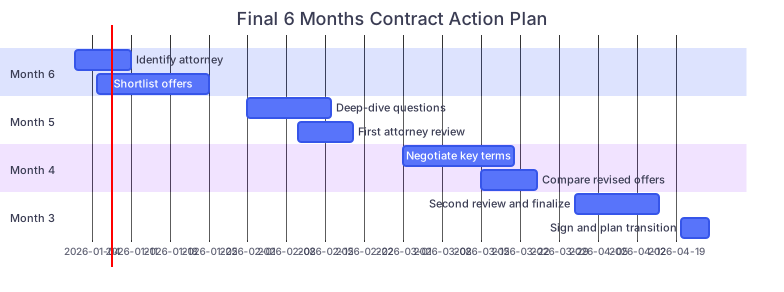
| Task | Details |
|---|---|
| Month 6: Identify attorney | a1, 2026-01-01, 10d |
| Month 6: Shortlist offers | a2, 2026-01-05, 20d |
| Month 5: Deep-dive questions | b1, 2026-02-01, 15d |
| Month 5: First attorney review | b2, 2026-02-10, 10d |
| Month 4: Negotiate key terms | c1, 2026-03-01, 20d |
| Month 4: Compare revised offers | c2, 2026-03-15, 10d |
| Month 3: Second review and finalize | d1, 2026-04-01, 15d |
| Month 3: Sign and plan transition | d2, 2026-04-20, 5d |
And week by week (simplified):
- Week 1: Email contract attorney, schedule review slot.
- Week 2: Send your top contract and your “ideal week” document to them.
- Week 3–4: Receive legal feedback, draft list of 3–5 negotiation priorities.
- Week 5–6: Have call with employer, negotiate; get revised contract.
- Week 7–8: Second review, resolve remaining issues, then sign.
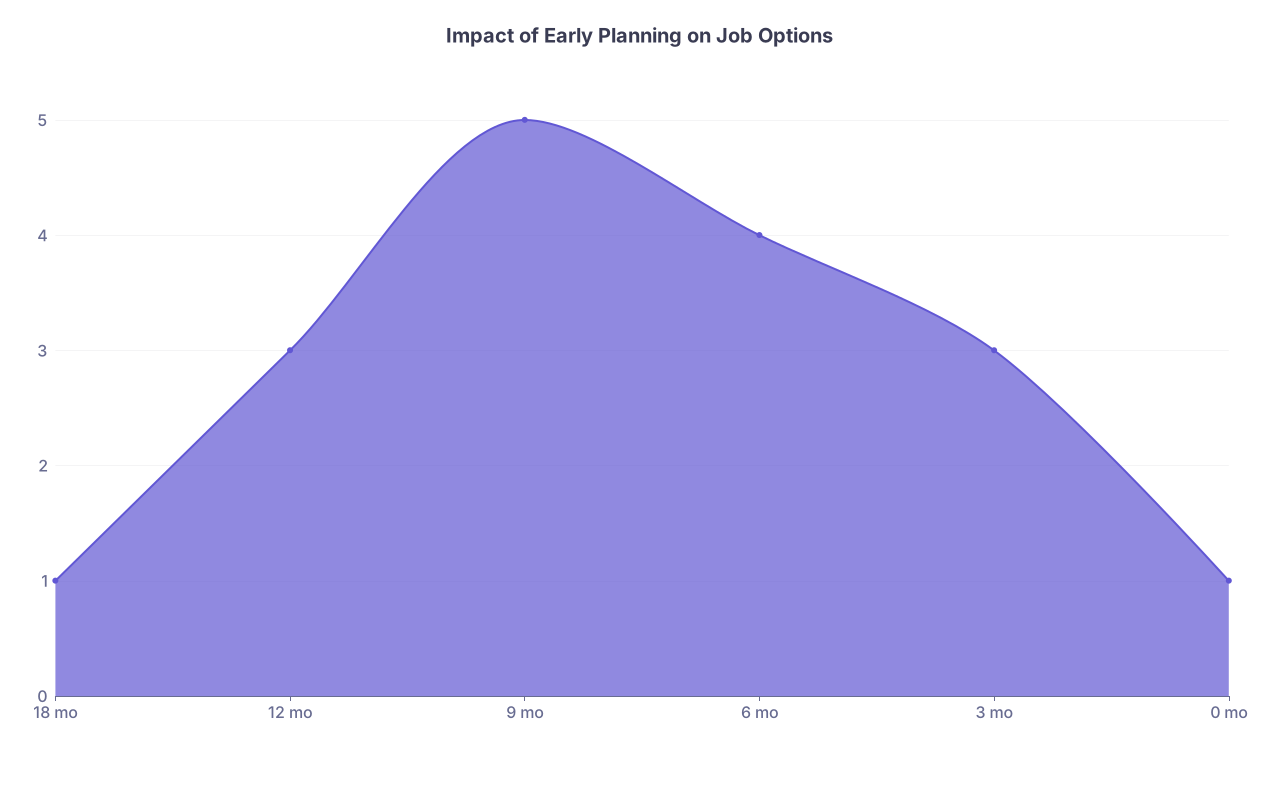
Visual: How Early Work Increases Your Options
| Category | Value |
|---|---|
| 18 mo | 1 |
| 12 mo | 3 |
| 9 mo | 5 |
| 6 mo | 4 |
| 3 mo | 3 |
| 0 mo | 1 |
The residents who start at 18–12 months out hit their peak of options and leverage around 9–6 months. Those who start at 6 months? They live at the far right of that chart—one or two rushed offers and minimal control.
FAQ (Exactly 4 Questions)
1. When is it “too early” to start talking to employers?
If you are more than 18 months out and have no clear geographic or specialty plan (e.g., undecided about fellowship), formal employer conversations are usually premature. Use that time to clarify what lifestyle you want and what your specialty’s market looks like. Around 12–15 months before graduation is the sweet spot to begin exploratory calls in earnest.
2. Do lifestyle-friendly jobs always pay less?
Often, but not always. In many outpatient-heavy or low-call roles, you accept a somewhat lower ceiling on total comp in exchange for sustainable volume and schedule control. However, extreme underpayment is not a “lifestyle premium”; it is exploitation. Compare multiple offers in your region and treat a 10–20% pay difference as potentially reasonable for significant lifestyle gains, anything beyond that demands a very good explanation.
3. How much can a resident realistically negotiate?
More than residents think, less than some blogs claim. You will rarely rewrite a large health system’s entire template, but you can often adjust: call frequency, start date, FTE level, admin time, minor non-compete tweaks, and sometimes base or sign-on. You get the most traction when you are one of several competitive candidates, you have other options, and you are focused on a few key, well-argued changes, not twenty nitpicks.
4. What if I sign a contract and then find a clearly better lifestyle job?
You have three realities to consider: the legal contract (non-compete, repayment, tail), the relational damage, and your own wellbeing. If you have not started yet, sometimes a clean withdrawal with an honest explanation and appropriate notice is possible, but expect bridges to burn. Once you have started, unwinding the contract gets costly and complicated. This is exactly why you do the hard comparison and negotiation work 6–9 months before graduation, not after you have already committed.
Open your calendar right now and count how many months remain until you finish residency. Then start a single document titled “Post-Training Job – Lifestyle Requirements” and write down three non-negotiables. That document is the anchor for every conversation and negotiation you will have from this point on.