
What happens when your ‘famous’ letter writer barely knows you—and a program director can tell in 6 seconds?
If you pick the wrong person to write your residency letter of recommendation, it does not just “fail to help you.” It actively hurts you.
I’ve seen applicants with top Step scores, strong research, solid clerkship performance get quietly dropped because their “big name” letter made them look:
- Forgettable
- Low-impact
- Or worst of all—unliked by the people who actually worked with them
You’re told, “Get the biggest name you can.” That’s half true. And dangerously incomplete.
The real rule is simpler:
A strong letter from a mid-level physician beats a weak letter from a celebrity name every single time.
Let’s walk through the mistakes people keep making with letters—and how to avoid being that applicant someone screens out in 30 seconds.
The seduction of the big name (and why it backfires)
You know the logic:
“This PD is nationally known. If they write my letter, programs will be impressed.”
Here’s the problem: program directors have read thousands of letters. They can recognize the “I barely know this student but they asked me” letter in the first paragraph.
And when they see that, they don’t think, “Wow, what an impressive name.”
They think, “Why couldn’t this student find someone who actually knows their work?”
Red flags in a “big name, bad fit” letter
I’ve read letters that looked great on the surface—famous department chair, long CV—but they were death sentences in practice. They usually share the same features:
-
- “X is a pleasure to work with.”
- “Y will make a fine resident.”
- “I recommend them without reservation.”
Translation: I have nothing specific to say.
No concrete stories
No mention of:- Specific patients you managed
- Cases you handled well
- Times you took ownership
- How you reacted under pressure
Obvious distance
Phrases like:- “I have gotten to know [Name] over the past few months as part of our clerkship.”
- “I have interacted with [Name] a handful of times during conferences.”
- “Based on what others have told me…”
The phrase “based on what I have heard from others” is basically the kiss of death.
Short and lazy
PDs notice when a letter is:- One page with lots of white space
- Mostly boilerplate
- Repeating your CV rather than interpreting it
Here’s the part applicants underestimate:
The stronger the writer’s reputation, the harsher the judgment when the letter is weak.
If a national figure writes a bland, content-free letter, the silent message is:
“Even the big-name attending who should like this person has nothing real to say.”
That’s how “big name” turns into “big problem.”
The core mistake: prioritizing prestige over proximity
You need to stop asking, “Who is the most famous?” and start asking, “Who can tell the best truthful story about how I work?”
Wrong question:
“Who has titles and publications?”
Right question:
“Who saw me show up at 5:45 am, handle a disastrous call night, and still present organized plans?”
The people who write the best letters are almost always:
- Your day-to-day attending on a core or sub-I rotation
- Someone who watched you over weeks, not hours
- A faculty member who trusted you with real responsibility
Not the department chair who saw you twice in grand rounds.
Not the division chief who skimmed your abstract at a poster session.
Quick comparison
| Letter Writer Type | Risk Level | Typical Problem |
|---|---|---|
| Department Chair (no contact) | High | Knows your name only |
| Renowned Research PI (no clinic) | Medium-High | Great at research, saw no clinical work |
| Core Clerkship Attending | Low | Less famous, very specific |
| Sub-I / Acting Intern Attending | Lowest | Saw you function like a resident |
You’re trying to match into a residency, not impress a conference room. Programs care more about:
- “Can this person do the work?”
- “Will I trust them on night float?”
- “Will the nurses hate working with them?”
The attending who supervised you in the trenches can answer those. The big name who only knows your CV cannot.
How bad-fit authors quietly sink your application
The worst part about letter mistakes? Nobody tells you they’re hurting you. They just don’t interview you.
Here’s how it plays out on the other side.
1. Your file gets skimmed, and the letters don’t match the scores
Picture a program director:
- They see your Step scores: strong
- Clerkship comments: solid
- Personal statement: reasonable
Then they open the big-name letter they’re supposed to be impressed by.
What they read:
- “X is a bright and personable student.”
- “They completed a rotation at our institution.”
- Three sentences about your CV copied from ERAS
- No mention of work ethic, reliability, ownership, or growth
That mismatch is a red flag.
They don’t think, “Letter writer was busy.”
They think, “This is probably all there was to say.”
And when they’re choosing between you and another applicant with a detailed, specific letter from a mid-level attending? You lose.
2. A bland letter from a powerful person looks intentionally bland
Senior people know their letters matter. Programs assume that if they really wanted to help you, they’d put in the effort.
So when a chair, chief, or program director submits a short, generic letter, the implied message is:
“I am not comfortable staking my reputation on this person.”
I’ve watched selection meetings where someone literally said:
“If Dr. X really liked this student, this letter would look very different.”
No one calls you to explain that. They just move on.
3. Inconsistent letters raise suspicion
Your other letters say:
- “One of the best students I’ve worked with in 5 years.”
- “Indispensable part of the team on wards.”
But the big-name letter says:
- “Did a nice job during the rotation and interacted well with staff.”
That’s not neutral. That’s damning with faint praise.
Selection committees are used to reading between the lines. When one writer pulls their punches, that sticks.
The letters that actually move the needle
You want letters that do three things:
- Prove someone watched you closely
- Show, not just tell, that you function like a future resident
- Come from people programs take seriously—even if they’re not famous
Strong letters usually have:
Concrete patient stories
- “On my service, [Name] took primary responsibility for a complex patient with decompensated cirrhosis…”
- “They independently recognized a subtle change in exam and escalated care appropriately…”
Behavior under pressure
- Death notifications
- Code situations
- Heavy call nights
- Managing too many tasks at once without melting down
Comparative statements
- “In the top 10% of students I’ve worked with in the last 5 years.”
- “Among the strongest subinterns on our service this year.”
Comments about teachability and growth
- “Responded to feedback about note organization by improving within 24 hours.”
- “Asked for targeted feedback and acted on it consistently.”
Names matter. But specific, credible, grounded praise matters more.
When a big name can work—and when you should walk away
I’m not telling you never to ask a well-known person for a letter. I’m telling you not to be blind about the conditions.
A big name can help if:
- They actually supervised you in clinic, wards, or OR
- They can recall specific patients or interactions with you
- They’ve seen you over at least a few weeks, not a single talk
- They have time and willingness to write a strong letter
Green flags from a big-name potential writer:
- They say things like:
- “I’d be happy to write you a strong letter.”
- “You really stood out on my service.”
- “Remind me of the cases we worked on together so I can mention them.”
If they ask for your CV and personal statement and also talk through your strengths with you in detail, that’s a good sign. They’re planning to actually individualize the thing.
You should say no if:
- They barely know you
- They’ve never actually seen you care for a patient
- Your interaction was mostly:
- Lab work
- A few meetings about research
- One elective week in a huge team where you were the third student
Subtle but critical:
If they say, “I can write you a letter” instead of “a strong letter,” listen closely. That missing word matters.
I’ve seen students talk themselves into believing:
“Well, at least it’s something.”
No. A lukewarm letter from a powerful person is not neutral. It’s negative.
Smart letter strategy: who you should actually prioritize
Think in terms of fit and evidence, not fame.
Here’s a more reliable order of priority for residency letters.
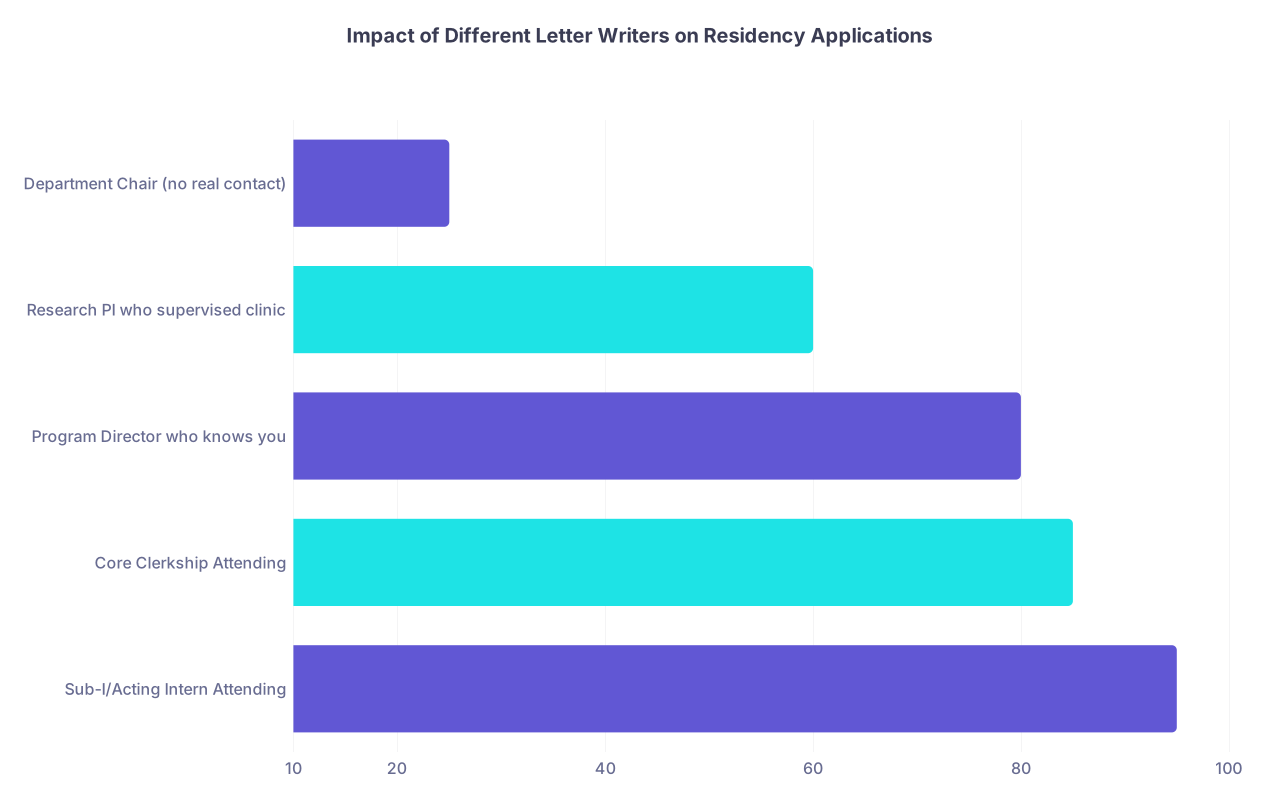
| Category | Value |
|---|---|
| Sub-I/Acting Intern Attending | 95 |
| Core Clerkship Attending | 85 |
| Program Director who knows you | 80 |
| Research PI who supervised clinic | 60 |
| Department Chair (no real contact) | 25 |
Highest-yield letter writers
You should be chasing:
Sub-I / Acting Intern Attendings
The people who saw you behave like a baby resident. Gold.Core clerkship attendings in your specialty
Especially those who:- Actually wrote part of your eval
- Remembered you months later
- Gave you responsibilities beyond “stand in the corner”
Program Directors or APDs who truly know your work
Not from a hallway introduction. From:- Running your sub-I
- Watching your conference presentations
- Overseeing your rotation directly
Research mentors who ALSO supervised your clinical work
Lab work alone doesn’t tell them how you respond when a patient’s BP is 60/30 at 3 am.
Specialty-specific trap
For some specialties (ortho, derm, ENT, neurosurgery), people get obsessed with:
- Department chairs
- Famous researchers
- “Name brand” letters from national figures
Those can help, but only if they’re content-rich. A generic one-liner from the department chair is worse than a detailed letter from the attending who actually watched you scrub cases, pre-round, and stay late.
How to avoid ending up with a weak letter
You’re not powerless here. You can reduce your risk a lot with some simple moves.
1. Choose letter writers before the rotation ends
Do not wait 6 months and then email someone who barely remembers you.
During a rotation:
Pay attention to who:
- Gives you real feedback
- Assigns you real responsibility
- Seems impressed when you improve
End of rotation, ask directly:
- “Do you feel you know my work well enough to write a strong letter of recommendation for residency?”
That word “strong” forces honesty. If they hesitate or hedge, thank them and move on.
2. Give them ammunition
If they agree, make their job easy:
Send them:
- Your CV
- Brief bullet list:
- Patients or cases you worked on together
- Specific feedback they gave that you applied
- Your career goals and target specialty
Do not write the letter for them (ethics aside, it shows). But do remind them of specifics you want highlighting.
3. Control the number of risky letters
You don’t need every letter to be from a celebrity. What you need:
- 2–3 letters from people who supervised you closely
- Optional: 1 “prestige” letter only if it will be detailed and positive
If you’re forced to choose between:
- Famous but distant
- Mid-level but invested and specific
Pick invested and specific. Every single time.
A quick reality check: what PDs actually crib from letters
Here’s what program leadership really extracts from your letters. It’s not the letter writer’s title. It’s patterns.
They scan for:
- Ownership
- Did you take responsibility for patients?
- Reliability
- Did you show up early, stay late when needed, follow through?
- Team behavior
- Any mention of friction with staff? Or praise from nurses?
- Learning curve
- Did you get better over weeks? Or stay flat?
- Comparative ranking
- Are you top 10%, top 25%, or “fine”?
Big names can’t fake this. Either they saw it and can describe it, or they didn’t.
What to do if you already asked the wrong person
If your stomach just dropped because you already chased a big-name letter from someone who barely knows you, don’t panic. But don’t stay passive either.
Options:
Add stronger letters to drown out the weak one
- Get 2–3 excellent, specific letters from closer supervisors.
- Most programs look at patterns; one weak letter surrounded by strong ones hurts less.
Politely pivot (if timing allows and letter isn’t submitted yet)
- “Given my final specialty choice and recent rotations, I think I’ll be going with letters from attendings who supervised my sub-I directly, but I’m very grateful for your support.”
Don’t over-explain. Just re-align.
- “Given my final specialty choice and recent rotations, I think I’ll be going with letters from attendings who supervised my sub-I directly, but I’m very grateful for your support.”
For future applications (prelim, reapply, fellowship)
- Learn from this and build relationships earlier.
- Stop chasing titles. Start chasing supervisors.
Final warning: you’re judged by what others are willing to say about you
Residency applications are full of self-promotion:
- Your personal statement
- Your CV
- Your hobbies section
Letters are the one part that isn’t you talking about you. That’s why they’re so heavily weighted.
If the people you choose to represent you:
- Can’t remember what you did
- Don’t have stories to tell
- Or are too distant to care
You’ve made their prestige more important than your own trajectory.
Do not make that trade.
Remember:
- A specific, detailed letter from a non-famous attending beats a generic letter from a star every time.
- If someone can’t honestly write you a strong letter, you do not want their letter at all.
- Programs are reading between the lines. The wrong author doesn’t just fail to help you—they quietly tell the committee you weren’t worth advocating for.