

The biggest mistake MS4s make with residency letters of recommendation is waiting until they “feel ready” to ask. By then, their best letter writers are already booked or burned out.
You cannot afford that.
You’re going to treat early MS4 like a tactical operation: week-by-week actions to identify, secure, and organize your residency LOR commitments before everyone else even realizes it’s a competition.
Below is your playbook for roughly Weeks 1–8 of early MS4 (right as 4th year starts and before ERAS explodes). Assume you’ve just started your first MS4 rotations and you’re targeting the upcoming application cycle.
Week 1: Reality Check and LOR Strategy Map
At this point you should stop guessing and decide exactly what letters you need.
Step 1: Set your LOR targets
Most programs want 3–4 letters. Your default goal:
- 1 from your specialty of choice (ideally department leader or well-known faculty)
- 1 additional specialty letter (someone who saw you work closely)
- 1 “core” field letter (IM, Surgery, Peds, FM, etc., depending on specialty)
- 1 optional “wild card”: research PI, Sub-I attending, mentor who knows you deeply
If you’re applying to a competitive specialty (Derm, Ortho, ENT, etc.), you want:
- At least 2 strong specialty letters, ideally 3.
| Specialty | Letters Needed | Specialty Letters Ideal | Chair Letter Common? |
|---|---|---|---|
| Internal Med | 3–4 | 1–2 | Often |
| General Surg | 3–4 | 2 | Often |
| Pediatrics | 3 | 1–2 | Sometimes |
| EM | 3 | 2 SLOEs | Required |
| Ortho/Neurosurg/Derm | 3–4 | 2–3 | Common/Expected |
Step 2: Build your “Potential Letter Writer” list
Open a blank document and build three columns:
- Column A: Name + Role (e.g., “Dr. Patel – Trauma Surgery Attending, Program Director”)
- Column B: Connection (worked with on Sub-I, did research, clinic, etc.)
- Column C: Strength Potential (High / Medium / Weak – be honest)
Populate it with:
- All attendings you worked closely with MS3 (especially core rotations)
- Any research mentors
- Current and upcoming MS4 Sub-I / acting internship attendings
- Department leadership you’ve interacted with (clerkship director, PD, chair)
If you can’t think of at least 6–8 names today, that’s your first red flag. You’ll fix that in the coming weeks.
Step 3: Clarify your specialty story
By the end of Week 1 you should be crystal clear on:
- What specialty you’re applying to
- Your realistic competitiveness tier (e.g., community vs. mid-tier academic vs. top academic)
- Whether you need a “backup” specialty plan
Your letter strategy must match that reality. A student with a 210 Step 2 and no research applying Ortho needs rock-solid, personalized letters more than the 270 gunner. That’s just how this works.
Week 2: Reconnect with Past Attendings and Start Planting Seeds
At this point you should be warming up your best potential writers from MS3, not asking cold.
Step 1: Send reconnection emails
You’re sending short, targeted emails to 3–5 top attendings from MS3 who:
- Gave you great feedback on evals
- Pulled you aside to compliment your work ethic
- Trusted you with extra responsibility
Template (edit in your own voice):
Subject: Quick update and thanks
Dear Dr. ___,
I hope you’re doing well. I wanted to thank you again for the opportunity to work with you on the ___ rotation earlier this year. That experience really reinforced my interest in ___, and I still remember ___ (specific case or teaching moment).
I’ve just started my fourth year and will be applying in ___ this cycle. I’d love to stay in touch, and if you’re open to it, I’d really appreciate any advice you have about preparing for residency applications in this field.
Best,
[Name], MS4
You’re not asking for a letter yet. You’re reminding them who you are and reactivating the relationship.
Step 2: Fix your CV and personal statement draft
You are not sending junk to potential letter writers.
By the end of Week 2 you should have:
- A cleaned-up academic CV (1–2 pages, clear sections)
- A rough personal statement draft (does not need to be perfect)
These will be the attachments you send the moment they agree to write.
Step 3: Start a LOR tracker
Use a simple spreadsheet or Notion/Excel/Google Sheet. Columns:
- Faculty name
- Specialty
- Type (core, specialty, research, chair, SLOE, etc.)
- Contact info
- Last interaction
- Status (Not asked / Asked–Pending / Agreed / Uploaded)
- Deadline target
- Notes
You’ll live in this thing from now till ERAS submission.
Week 3: On-Rotation Positioning – Becoming “Letter-Worthy”
At this point you should be on an MS4 rotation. This week is about earning the right to ask.
Step 1: Pick your primary target on your current rotation
Look at your current team. Identify:
- The attending who sees you the most
- The one who gives feedback, teaches, and seems engaged
- Bonus: anyone with a leadership title (Program Director, Associate PD, Clerkship Director)
Decide: If this week goes well, I will ask this person for a letter before the rotation ends.
Step 2: Make your intentions clear (subtly but clearly)
Early in the week, say something like:
“Dr. ___, I’m an MS4 applying into ___ this cycle. I’m really hoping to get a strong letter from someone who sees me work closely, so I’d love any feedback on how I can perform at the level you’d expect from a strong applicant.”
That line does two things:
- Signals you’re serious
- Invites them to pay attention to your performance with a letter in mind
Step 3: Over-communicate and ask for feedback
You’re not just “being a good student.” You’re being a memorable one.
- Volunteer for admits and discharges
- Offer to follow up on labs, imaging, call families
- Ask 1–2 focused questions per day, not 20 scattered ones
- End the week with:
“Do you have any feedback for me, especially as I get ready to apply for residency in ___?”
Attendings remember students who seek and apply feedback. That shows up in letters.
Week 4: First Formal Asks and Locking in Commitments
By the end of Week 4, you should have at least 1–2 verbal commitments from letter writers.
Step 1: Ask your current attending at the right moment
Timing matters. Aim for the last 3–4 days of the rotation, after you’ve had time to prove yourself.
Ideal in-person script:
“Dr. ___, I’ve really appreciated working with you this month and your feedback has been extremely helpful. I’m applying into ___ this cycle, and I was wondering if you’d feel comfortable writing a strong letter of recommendation for my applications?”
Use the word strong. This gives them an out if they can’t write a good one. You do not want a lukewarm letter.
If they hesitate, say:
“I completely understand if you don’t feel you’ve seen enough of my work to do that. I really appreciate your honesty either way.”
If they say yes:
- Thank them sincerely
- Ask: “Is there anything that would be helpful for me to send you? My CV, personal statement draft, or a list of programs?”
Step 2: Convert verbal yes → written confirmation
Within 24 hours, send a follow-up email:
Subject: Thank you and letter of recommendation
Dear Dr. ___,
Thank you again for agreeing to write a strong letter of recommendation for my residency applications in ___. I really enjoyed working with you on the ___ rotation.
I’ve attached my CV and a draft of my personal statement, and I’m happy to provide any additional information or specific points you’d like me to highlight.
ERAS will send you an email with instructions for uploading the letter. I’m aiming to have all of my letters uploaded by [date ~2–3 weeks before your planned ERAS submission].
Thank you again for your support.
Best,
[Name]
Update your LOR tracker: Status → Agreed (Verbal + Email)
Step 3: Send 1–2 formal asks to MS3 attendings (email)
By now you’ve reconnected with some MS3 attendings (Week 2). Pick the best 2–3 and send:
Dear Dr. ___,
I hope you’re well. I wanted to reach out as I’m now beginning my fourth year and will be applying into ___ this application cycle. Working with you on the ___ rotation had a big impact on my decision to pursue this field.
I was wondering if you would feel comfortable writing a strong letter of recommendation on my behalf for my residency applications. You observed me closely on the service, and I would be honored to have your support.
I’d be happy to send my updated CV, personal statement draft, and a reminder of specific cases we worked on together. My goal is to have letters uploaded by [target date].
Thank you again for your mentorship and time.
Best,
[Name]
If they don’t reply in 7–10 days, you’ll follow up in Week 6. Don’t panic. Attendings are slow.
Week 5: Department-Level Strategy and Chair/PD Letters
At this point you should have 1–2 solid yeses. Now you aim higher.
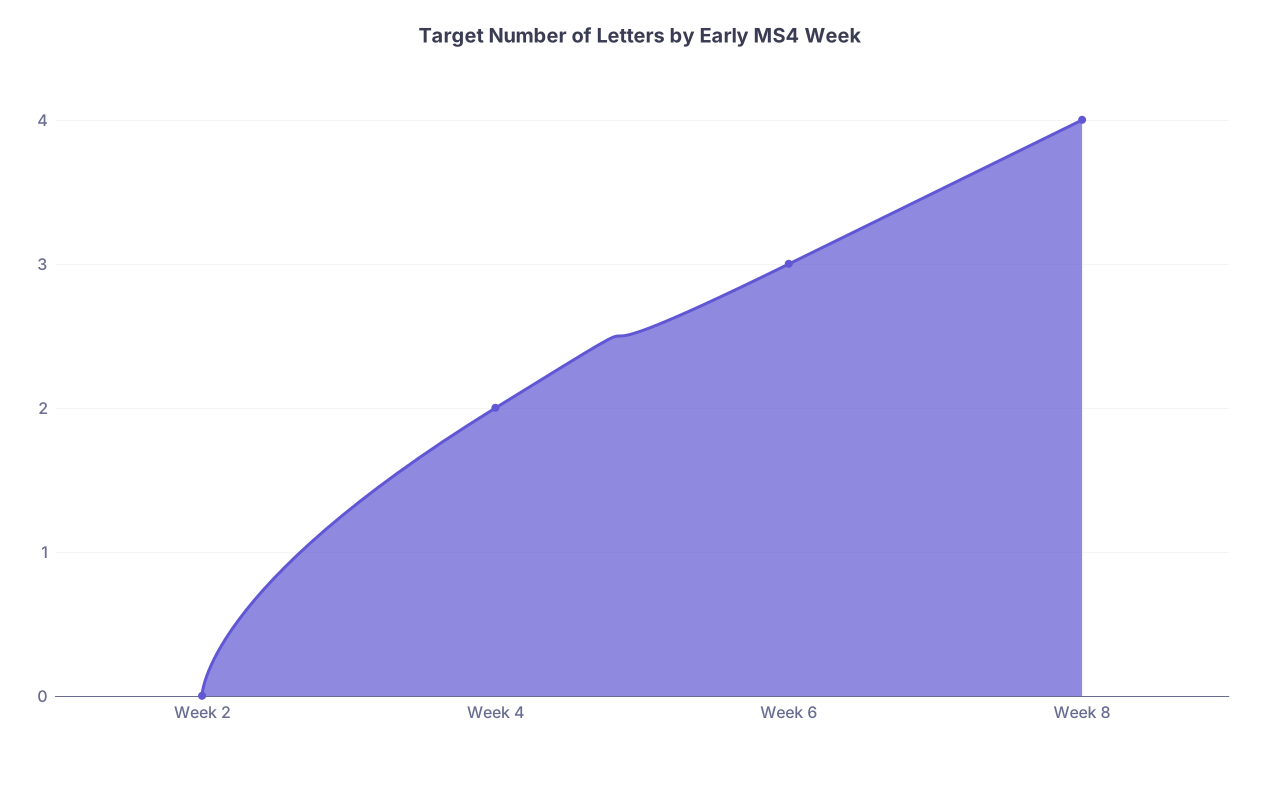
| Category | Value |
|---|---|
| Week 2 | 0 |
| Week 4 | 2 |
| Week 6 | 3 |
| Week 8 | 4 |
Step 1: Figure out your department’s norms
Your specialty may have unwritten rules. For example:
- IM and Surgery often like/expect a Chair or PD letter
- EM usually wants SLOEs (standardized letters)
- Some competitive specialties care a lot about letters from known names
Find out by:
- Asking a trusted upperclassman who just matched
- Asking your school’s specialty advisor
- Checking your department’s advising slides or website
Step 2: Get into the department’s line of sight
If you haven’t already:
- Email the specialty advisor or clerkship director:
- Short intro
- State that you’re applying this cycle
- Ask if there’s a recommended way to secure department letters
- Sign up for any upcoming:
- Specialty interest meetings
- Applicant advising sessions
- “Meet the PD” events
You want the PD/Chair to recognize your name before they see your letter request.
Step 3: Plan the Chair/PD ask
You usually don’t email a Chair cold asking for a letter. You:
- Do a Sub-I / acting internship where they might see or hear about you
- Get endorsed by another faculty member (“I’ll mention you to Dr. ___”)
- Use advising meetings to open the door:
“Dr. ___, I was advised that a Chair/PD letter can be helpful for residency applications in ___. Is that something you typically write, and if so, what would you need from me to consider it?”
You’re asking about process, not begging for a letter. That’s the right tone.
Week 6: Follow-Ups, Fill Gaps, and Secure Your Third Letter
By now, your goal is clear: 3 committed letters and a plan for the 4th.
Step 1: Follow up on silent attendings
For anyone who didn’t respond from Week 4:
Subject: Follow-up: residency letter of recommendation
Dear Dr. ___,
I wanted to briefly follow up on my previous email regarding a potential letter of recommendation for my residency applications in ___. I know your schedule is very busy, so no worries at all if you’re unable to do this.
If you are able to write a strong letter, I’d be very grateful and can send my CV and personal statement. I’m aiming to have letters uploaded by [date].
Thank you again for your time and for the opportunity to have worked with you.
Best,
[Name]
If they still don’t respond: move on. Unresponsive now = unreliable later.
Step 2: Patch weak spots
Look at your tracker and ask yourself:
- Do I have at least 2 letters from my chosen specialty?
- Do I have someone who knows me well personally, not just “MS4 on my team”?
- Do I have at least one letter from a clinician who saw my day-to-day work, not just research?
If you’re missing something, you need to engineer more exposure:
- Ask to do extra shifts or clinics with a promising attending
- Join a short project or QI initiative with a potential letter writer
- Volunteer for call coverage where senior faculty staff
Step 3: Decide your “backup” letter writer
You should always have one more potential letter writer in reserve.
Examples:
- A research PI who knows your work ethic even if not in your specialty
- A preclinical course director you did a teaching project with
- A community physician you shadowed over months
You won’t ask them yet. But you keep them in your back pocket in case someone bails.
Week 7: Tighten the System – Deadlines, ERAS, and Reminders
At this point you should be transitioning from verbal yeses to uploaded letters with real deadlines.
Step 1: Set internal deadlines
Decide:
- Planned ERAS submission date (for most: early–mid September)
- Letter upload deadline: 2–3 weeks before that date
Write it down. Everything orbits around that.
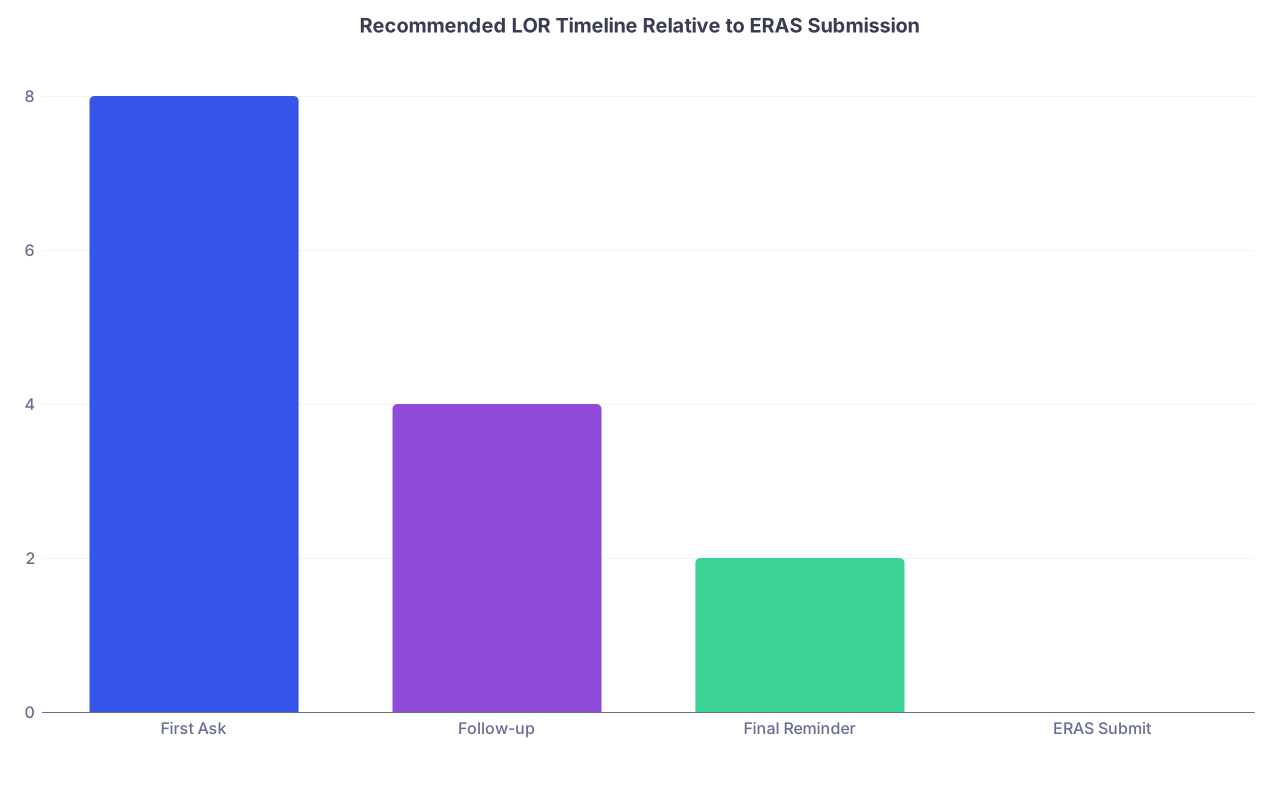
| Category | Value |
|---|---|
| First Ask | 8 |
| Follow-up | 4 |
| Final Reminder | 2 |
| ERAS Submit | 0 |
(Values represent weeks before ERAS submission.)
Step 2: Send polite “timeline” emails to all confirmed writers
Two things in one email:
- Thank you again
- Clear timeline + ERAS instructions reminder
Example:
Dear Dr. ___,
Thank you again for agreeing to write a strong letter of recommendation for my residency applications in ___. ERAS will send you an email with a link to upload the letter directly.
I’m planning to submit my applications around [date], so having the letter uploaded by [deadline date] would be extremely helpful. Please let me know if that timing is an issue in any way.
I’ve attached my CV and personal statement draft here as well for your reference.
Thank you again for your support.
Best,
[Name]
Update your tracker with the target upload date for each writer.
Step 3: Check ERAS / portal mechanics
Do not wait until last minute to figure out the technical nonsense.
You should:
- Log into ERAS
- Find the “Letters of Recommendation” section
- Generate Letter Request Forms for each writer
- Confirm their email addresses
- Decide which letters go to which specialty/program list (if dual applying)
Week 8: Final Push, Safeguards, and Contingency Planning
By the end of Week 8, you want:
- 3 letters confirmed and in progress
- 4th letter identified and either already asked or ready to be asked
- A clear plan if someone ghosts you in August
Step 1: Identify any “at risk” letter
Look at your tracker:
- Anyone verbally agreed but hasn’t answered your follow-up?
- Anyone notorious for being slow (ask other students; every department has one)?
- Anyone going on vacation/sabbatical soon?
Mark them as High Risk if:
- They’re leaving town
- They’re not replying
- They seem disorganized
For each High Risk writer, assign a backup from your reserve list.
Step 2: Ask your backup if needed
If it’s clear someone won’t come through, do this now, not in September.
Email your backup with a similar “strong letter” language, and be honest about timing:
“I realize this is relatively close to application season, but I would be extremely grateful if you’d consider writing a strong letter…”
They may say no. That’s better than pretending your original writer will magically come through.
Step 3: Prepare physical reminder tools for slow attendings
Some attendings still live in 2005. For them:
- Print your CV and personal statement
- Print the ERAS Letter Request Form
- Bring it in a simple folder
“Dr. ___, I put everything you might need for the letter in this folder. Thank you again.”
And yes, sometimes you literally stand by the office door and say:
“Just wanted to gently remind you about my residency letter. ERAS shows it as still pending, and my goal deadline is next week.”
Annoying? A bit. Effective? Very.
Quick Visual: Your Early MS4 LOR Timeline
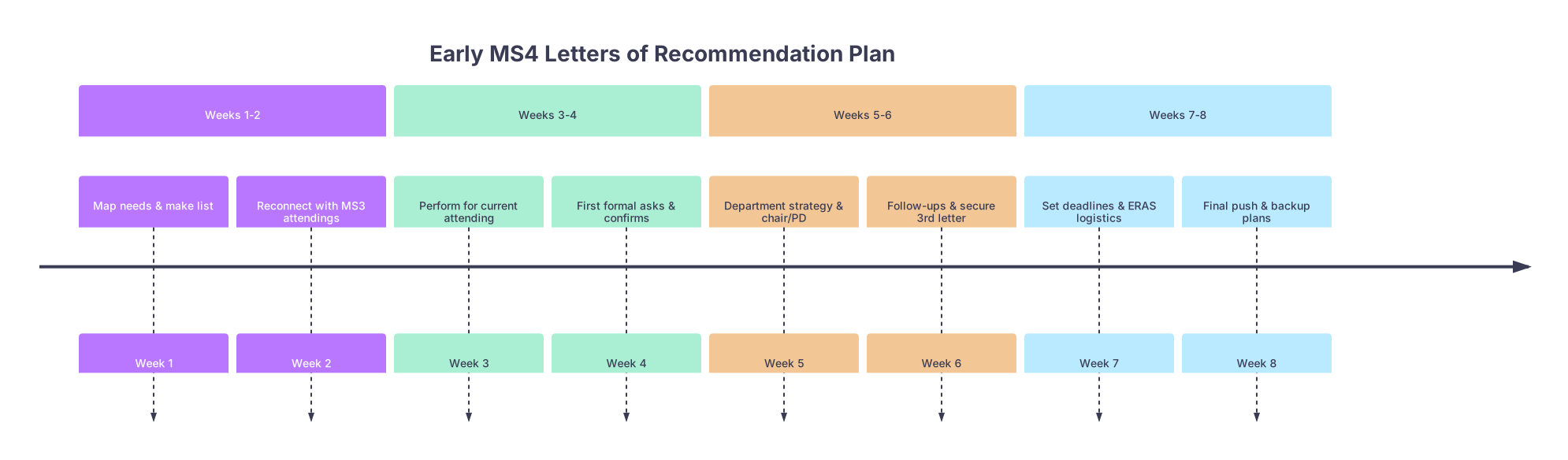
| Period | Event |
|---|---|
| Weeks 1-2 - Map needs & make list | Week 1 |
| Weeks 1-2 - Reconnect with MS3 attendings | Week 2 |
| Weeks 3-4 - Perform for current attending | Week 3 |
| Weeks 3-4 - First formal asks & confirms | Week 4 |
| Weeks 5-6 - Department strategy & chair/PD | Week 5 |
| Weeks 5-6 - Follow-ups & secure 3rd letter | Week 6 |
| Weeks 7-8 - Set deadlines & ERAS logistics | Week 7 |
| Weeks 7-8 - Final push & backup plans | Week 8 |
Daily Micro-Checklist During Early MS4
You don’t need big heroic moves every day. You need small consistent actions.

On any given weekday in Weeks 1–8, you should be doing one of the following:
- Sending 1 reconnection or follow-up email
- Adding 1–2 notes in your LOR tracker after a good clinical interaction
- Asking 1 attending for targeted feedback on your performance
- Tweaking your CV or personal statement before sending to a new writer
- Confirming ERAS logistics (forms, email addresses, deadlines)

Common Ways Students Blow This – And How Your Timeline Avoids Them
You’re following this week-by-week to avoid the classics:
- Waiting until August to ask for letters → You started in Week 3–4.
- Asking people who barely know you → You engineered close contact and feedback.
- Not clarifying “strong letter” → You used that phrase out loud and in email.
- Letting one slow attending hold you hostage → You identified backups by Week 6.
- Forgetting to send materials → You prepped your CV + personal statement in Week 2.
- Losing track of who’s done what → You built and maintained your LOR tracker.

Your Move Today
Do not “bookmark this for later.” Later is how people end up with mediocre generic letters.
Today, right now:
- Open a blank document or spreadsheet.
- List every attending, mentor, or PI who might write you a letter.
- Mark each as High / Medium / Weak potential.
- Choose one person to email before you go to bed.
That one email starts the entire LOR timeline in motion.


