
Physicians are no longer confined to exam rooms and operating suites. Increasingly, they are stepping into boardrooms, incubators, and venture studios as founders, executives, and innovators. This shift from stethoscope to startup is reshaping Healthcare Innovation, fueling new waves of Telemedicine, Digital Health platforms, and Medical Technology solutions that directly address the pain points physicians see every day.
For residents and early-career physicians, this movement opens a new career lane: Physician Entrepreneurship as a legitimate, impactful pathway alongside traditional clinical and academic tracks. Understanding how doctors are building companies—and how you might follow a similar path—can help you navigate the post-residency and job market landscape with more options and purpose.
Below, we’ll explore why physicians are launching startups, how technology is enabling this transformation, what challenges they face, and how you can strategically position yourself to participate in this evolving ecosystem.
The Rise of Physician Entrepreneurs in the Digital Health Era
Over the past decade, several converging trends have set the stage for physician-led startups:
- Exploding costs and inefficiencies in healthcare delivery
- Burnout and dissatisfaction among clinicians
- A maturing Digital Health infrastructure (cloud, APIs, EHRs, interoperable data)
- Cultural acceptance of Telemedicine and remote care—accelerated by COVID-19
- Growing availability of healthcare-focused venture capital and accelerators
Physicians, with their firsthand experience of system failures and patient struggles, are uniquely situated to design and validate solutions. They understand clinical workflows, regulatory pressures, and what actually matters at the bedside—knowledge that many pure technologists lack.
Why Physicians Are Moving from Clinic to Company
1. A Deep Desire for Truly Patient-Centric Care
Many physicians are motivated by a sense that current systems often work around patients rather than for them. They see:
- Fragmented care coordination
- Limited after-visit support
- Gaps in communication between specialties and settings
Entrepreneurial physicians are building:
- Patient-facing apps that simplify complex care plans
- Remote monitoring platforms that bring chronic disease management into the home
- Digital companions that extend the physician-patient relationship beyond the 15-minute visit
By doing so, they aim to redesign care models so that convenience, personalization, and continuity become default features rather than luxuries.
2. Frustration with Administrative and Documentation Burdens
Residents and attendings alike spend substantial time on:
- EHR clicks and duplicate entries
- Prior authorizations and billing codes
- Manual coordination between teams
This administrative overload is a major driver of burnout. Physician entrepreneurs see an opportunity to:
- Automate routine documentation with AI and natural language processing
- Integrate scheduling, referrals, and messaging into a single interface
- Build tools that fit naturally into clinical workflows instead of fighting them
The goal is to “give time back” to clinicians so they can focus on deep clinical thinking and meaningful patient interactions.
3. Harnessing Rapid Technological Advancements
The building blocks of Medical Technology are now more accessible than ever:
- Cloud-based infrastructure and APIs for health data
- Affordable wearable sensors and connected devices
- Mature Telemedicine platforms with integrated payments and documentation
- AI/ML frameworks for imaging, triage, and risk prediction
Physicians who understand both the potential and limitations of these tools are launching startups that:
- Use AI to assist diagnosis rather than replace clinical judgment
- Implement remote monitoring that alerts clinicians only when truly necessary
- Combine behavioral science with Digital Health to improve adherence and outcomes
4. The Drive to Innovate and Solve Systemic Problems
Many doctors are inherently problem-solvers. When they repeatedly encounter the same bottlenecks—inefficient handoffs, unsafe discharge processes, lack of real-time data—they begin to ask:
- “Why does it work this way?”
- “What if we tried doing it differently?”
- “Could technology make this safer, faster, or more humane?”
Physician Entrepreneurship offers a structured way to turn those questions into concrete solutions, pilot projects, and eventually scalable companies.
Case Studies: Physicians Leading Healthcare Innovation
Real-world examples illustrate how physicians are driving change across different segments of Digital Health and Medical Technology.
1. Telemedicine and Acute Care Access: Dr. Michael Apkon and Telestroke
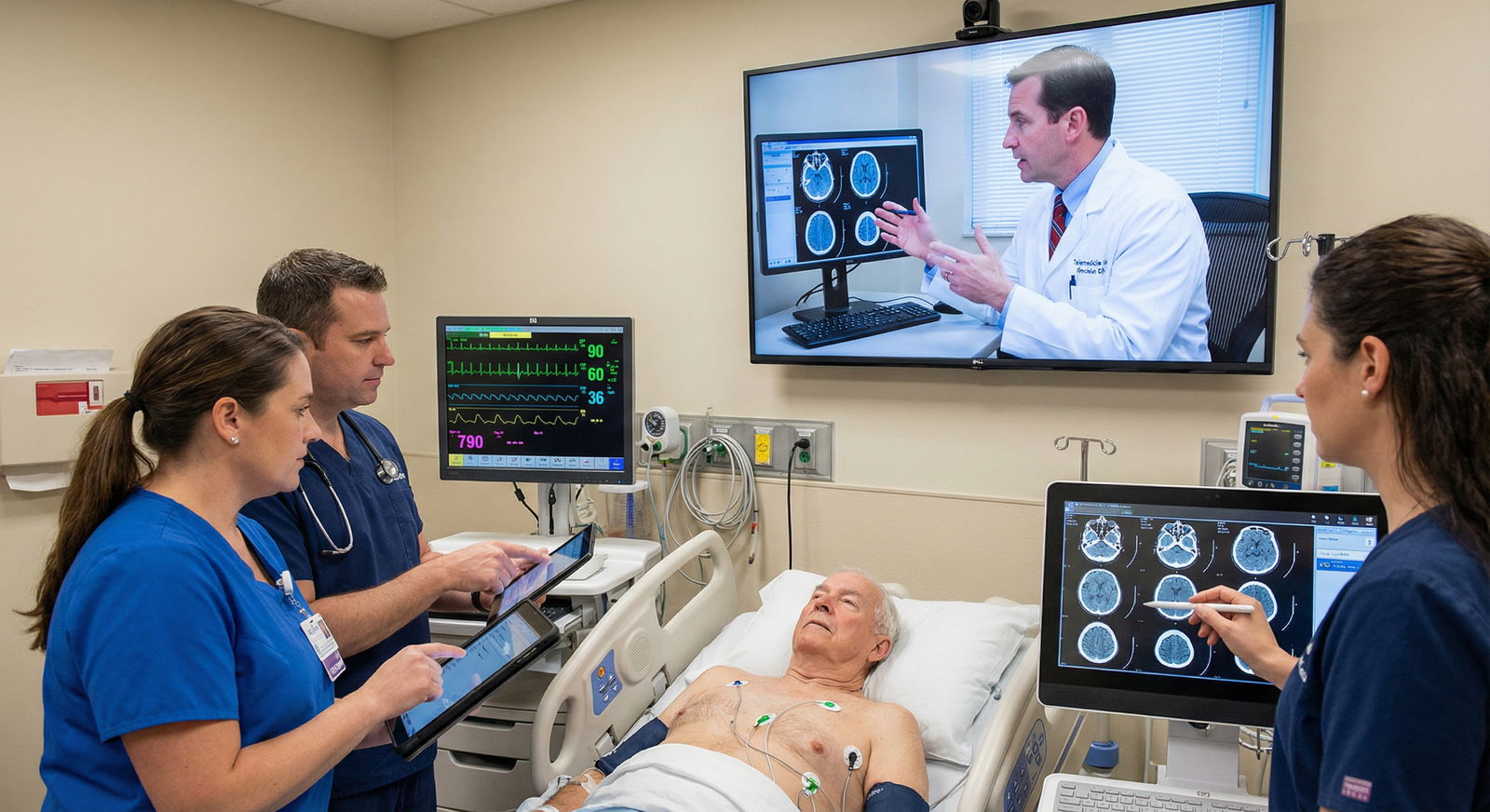
In 2012, Dr. Michael Apkon launched Tufts Medical Center’s Telestroke Program, a pioneering Telemedicine initiative connecting stroke patients in community and rural hospitals to vascular neurologists at academic centers.
Problem identified:
- Rural and community hospitals often lacked 24/7 stroke expertise.
- Delays in evaluation and thrombolytic treatment could mean the difference between recovery and permanent disability.
Solution built:
- A real-time Telemedicine consult system with video, imaging review, and standardized assessment.
- Workflows that allowed remote neurologists to rapidly evaluate patients and guide local teams on thrombolytics or transfer decisions.
Impact:
- Faster door-to-needle times for thrombolysis
- Expanded access to expert care across wider geographic areas
- A scalable model for Telemedicine in other time-sensitive conditions (e.g., trauma, sepsis)
This case exemplifies how a clinically grounded physician can use technology to re-architect emergency care delivery at the system level.
2. Remote Monitoring & Virtual Care: Dr. Joseph Kvedar and Connected Health
Dr. Joseph Kvedar, a widely recognized leader in Digital Health, founded the Center for Connected Health (Mass General Brigham) to explore how technology can keep patients engaged outside the hospital.
Key innovations:
- Remote monitoring programs for chronic diseases (e.g., hypertension, diabetes, heart failure)
- Mobile apps and secure messaging platforms to support medication adherence and symptom tracking
- Data analytics to identify patients at highest risk for deterioration
Clinical and operational outcomes:
- Improved control of chronic conditions through continuous monitoring
- Reduced hospitalizations and emergency visits in high-risk populations
- Increased patient satisfaction due to more touchpoints and easier communication
Kvedar’s work helped mainstream the concept that care can and should extend beyond brick-and-mortar facilities—laying the groundwork for today’s robust virtual care ecosystem.
3. AI for Documentation: Dr. Eric Greene and MedPage
Dr. Eric Greene, co-founder of the clinical documentation company MedPage (hypothetical example based on description), focused on one of the biggest sources of physician frustration: documentation.
Observed pain points:
- Hours lost per week to note-writing and charting
- Risk of burnout due to “pajama time” documentation after clinical shifts
- Cognitive overload from constantly toggling between clinical reasoning and data entry
Startup solution:
- AI-powered software that listens to patient encounters and auto-generates structured notes
- Smart prompts that ensure compliance with billing and quality metrics
- Integration with existing EHRs to minimize duplicate work
Results:
- Shorter documentation times and fewer after-hours charting sessions
- Higher provider satisfaction scores
- More complete and standardized clinical documentation, supporting quality and safety metrics
This is a prime example of Physician Entrepreneurship that starts with a very specific workflow pain point and uses AI to address it effectively.
How Technology Is Powering Physician-Led Healthcare Startups
The modern healthcare startup toolbox is rich and diverse. Physician entrepreneurs are using multiple layers of technology to redesign clinical pathways, care delivery, and patient engagement.
Telemedicine and Virtual-First Care Models
Telemedicine is now foundational to Digital Health. Physician founders are building:
- Virtual-first primary care clinics that combine synchronous visits, asynchronous messaging, and remote monitoring
- Specialty teleconsult services in fields like dermatology, psychiatry, oncology, and geriatrics
- Hybrid care models that strategically blend in-person and virtual visits based on clinical need
These models can:
- Improve access for rural, underserved, and mobility-limited patients
- Decrease wait times and no-show rates
- Reduce unnecessary emergency department utilization
For physicians interested in entrepreneurship, Telemedicine is a high-impact, relatively accessible entry point.
Wearables, Sensors, and Home-Based Diagnostics
Consumer and clinical-grade wearables—smartwatches, ECG patches, continuous glucose monitors, blood pressure cuffs—are generating a continuous stream of health data.
Physician entrepreneurs are:
- Building chronic disease management platforms that integrate data from multiple wearables
- Developing algorithms to flag early warning signs (e.g., atrial fibrillation, heart failure decompensation)
- Creating home diagnostic kits (e.g., for infectious diseases, fertility, or metabolic health) with app-based interpretation and teleconsult follow-up
These innovations shift care from reactive to proactive, allowing earlier interventions and more personalized treatment.
Electronic Health Records (EHR) and Interoperability Tools
Although EHRs are often viewed as burdensome, they are also powerful sources of clinical, operational, and financial data.
Startups are emerging that:
- Act as “middleware” between EHRs and new Digital Health tools
- Use standardized APIs (like FHIR) to pull key data into intuitive dashboards
- Provide analytics for population health, quality improvement, and value-based care programs
Physician founders bring critical insight into which data points are clinically meaningful and how to display them in a way that enhances decision-making rather than overwhelming clinicians.
Artificial Intelligence and Predictive Analytics
AI and machine learning are transforming diagnostics, risk stratification, and operations. Physician-led AI ventures are:
- Assisting radiologists in prioritizing and detecting critical findings on imaging
- Predicting hospital readmission risk and guiding discharge planning
- Supporting triage in urgent care and call centers through symptom-checking tools
- Using natural language processing (NLP) to unlock insights from unstructured clinical notes
Physicians play a key role in ensuring that AI tools:
- Are clinically valid and safe
- Do not introduce or amplify bias
- Integrate seamlessly with existing workflows
Blockchain, Security, and Trust in Health Data
While still emerging, blockchain is being explored to:
- Create tamper-proof logs of medical records and transactions
- Enhance supply chain traceability for drugs and medical devices
- Enable secure, patient-controlled data sharing across institutions
Physician entrepreneurs involved in blockchain projects help guide real-world use cases and ensure that privacy, consent, and clinical practicality are central to design.
Challenges Physician Entrepreneurs Must Navigate
The path from idea to impact is rarely smooth. Physician founders face unique obstacles as they build companies in a highly regulated, risk-averse industry.
Regulatory, Legal, and Compliance Complexities
Healthcare startups must address:
- HIPAA and data privacy regulations in the U.S.
- FDA requirements for medical devices, software as a medical device (SaMD), and diagnostic tools
- State licensure issues for Telemedicine
- Reimbursement rules from CMS and private payers
Practical steps for physician entrepreneurs:
- Engage healthcare-savvy legal counsel early
- Design products with “privacy by design” and security best practices
- Plan regulatory strategy (e.g., whether your tool qualifies as SaMD) from the outset
- Pilot within clear compliance frameworks to avoid regulatory setbacks
Funding and Business Model Challenges
Even with a strong idea, startups can stall without a viable economic engine.
Key considerations:
- Who pays? (patients, employers, payers, health systems, pharma)
- How does your solution impact cost, revenue, or quality metrics that matter to stakeholders?
- Is your model fee-for-service, subscription, per-member-per-month, or value-based?
Physicians venturing into entrepreneurship often need to:
- Learn basic finance, unit economics, and fundraising language
- Build a complementary founding team with business and technical expertise
- Participate in healthcare-focused accelerators that provide mentorship and investor access
Balancing Clinical Practice and Startup Demands
Early-stage founders frequently juggle:
- Clinical duties (full- or part-time)
- Product development
- Customer discovery and pilot studies
- Investor meetings and operational responsibilities
To prevent burnout and protect patient care quality:
- Consider structured time allocations (e.g., 0.6 FTE clinical, 0.4 startup)
- Seek institutional support (protected innovation time, joint appointments)
- Set clear boundaries and gradually transition as the company matures
Competition in a Crowded Digital Health Market
Digital Health funding has created crowded markets in:
- Teletherapy and mental health apps
- Chronic disease management platforms
- Remote monitoring solutions
To stand out, physician entrepreneurs must articulate:
- A sharp, specific problem statement grounded in real clinical pain points
- A clearly differentiated product or workflow innovation
- Evidence of impact (clinical outcomes, cost savings, user satisfaction)
Customer discovery interviews, small pilots, and early outcomes data are critical for refining your value proposition and message.
A Strategic Path Forward: How Residents and Early-Career Physicians Can Enter Healthcare Startups
For those in or just beyond residency, Physician Entrepreneurship doesn’t have to be an all-or-nothing leap. There are staged, low-risk ways to build experience and credibility in Healthcare Innovation and Medical Technology.
Step 1: Build Your Innovation and Business Literacy
- Take electives or online courses in health policy, health economics, or innovation management.
- Attend Digital Health conferences, hackathons, or local meetups.
- Read widely: industry reports, startup case studies, and health-tech news.
Focus on understanding:
- How money flows through healthcare (payers, providers, employers, pharma)
- Basics of product-market fit, MVPs (minimum viable products), and user testing
- Regulatory categories (device, SaMD, wellness app) and common pitfalls
Step 2: Join a Startup as a Clinical Advisor or Part-Time Contributor
Before starting your own company, consider:
- Serving as a medical advisor to an early-stage Digital Health startup
- Collaborating on clinical content, validation studies, or pilot design
- Participating in user testing to ensure clinical relevance
This gives you:
- Exposure to startup operations without full-time risk
- Insight into how product decisions are made
- A network of founders, engineers, and investors
Step 3: Identify a Problem You’re Obsessed with Solving
The most successful Physician Entrepreneurs are relentlessly focused on a specific, meaningful problem, such as:
- Reducing readmissions for heart failure
- Improving access to postpartum mental healthcare
- Streamlining communications between hospitalists and primary care physicians
Ask yourself:
- What frustrates me daily that also damages patient care or system efficiency?
- Where do I see repeated, avoidable harm or waste?
- What might be solvable with Telemedicine, Digital Health tools, or smarter workflows?
Validate your observations by talking to peers, nurses, administrators, and patients.
Step 4: Assemble a Complementary Team
Few physician founders succeed alone. Aim to partner with:
- A technical co-founder (engineering, product management, or data science)
- A business/operations co-founder (strategy, sales, partnerships, finance)
Your role as a physician typically centers on:
- Clinical insight and credibility
- Access to pilot sites or early adopters
- Defining measurable outcomes and safety parameters
Step 5: Start Small, Measure, and Iterate
Rather than building a fully featured platform immediately:
- Start with a narrow use case (e.g., Telemedicine for post-op follow-up in one specialty)
- Run a tightly scoped pilot with clear success metrics
- Gather feedback from users and iterate quickly
As evidence accumulates (reduced no-shows, higher satisfaction, better control of disease markers), you can:
- Refine your value proposition
- Approach health systems, payers, or investors with data-driven pitches
- Scale methodically into adjacent use cases

FAQs: Physician Entrepreneurship, Digital Health, and Life After Residency
1. Why are more physicians becoming entrepreneurs now?
Several forces are driving this shift:
- Growing frustration with inefficient, clinician-unfriendly systems
- Maturation of Digital Health infrastructure and Telemedicine reimbursement
- Increased access to innovation training, accelerators, and VC focused on Medical Technology
- A generational shift in expectations—many younger physicians seek portfolio careers, flexibility, and broader system-level impact
Physician Entrepreneurship offers a path to address root causes of dysfunction, not just manage their downstream consequences.
2. Do I need an MBA or formal business training to start a healthcare company?
An MBA can be helpful but is not mandatory. Many successful physician founders have:
- Learned business fundamentals through short courses, mentors, and accelerators
- Partnered with experienced business co-founders
- Gained practical skills via advisory roles or innovation projects during training
What matters most is your willingness to learn, your clarity on the problem you’re solving, and your ability to communicate clinical and business value.
3. How can I balance clinical practice with working on a startup?
Common strategies include:
- Starting with consulting or advisory roles during residency or fellowship
- Negotiating part-time clinical positions with protected innovation time
- Gradually decreasing clinical FTE as the startup gains traction and funding
- Being explicit about boundaries, schedules, and responsibilities to avoid burnout
Maintaining some clinical practice can be valuable—it keeps you close to real-world problems and sustains credibility with both users and investors.
4. What are the biggest risks for physician entrepreneurs in Digital Health?
Key risks include:
- Underestimating regulatory and compliance complexity
- Building solutions that don’t fit into real clinical workflows
- Overreliance on technology without sufficient clinical validation or safety safeguards
- Choosing an unsustainable business model or misaligned customer segment
Mitigate these by:
- Consulting regulatory experts early
- Co-designing with frontline clinicians and patients
- Running pilots with rigorous outcome tracking
- Remaining open to pivoting your product or target market based on feedback and data
5. How do I find resources and communities for physician innovators?
Look for:
- Innovation tracks or electives within your medical school or residency
- Healthcare innovation centers and incubators affiliated with academic hospitals
- National organizations and societies with Digital Health interest groups
- Online communities, podcasts, and newsletters focused on Healthcare Innovation and Medical Technology
Programs like MD/MBA tracks, Digital Health fellowships, and healthcare startup accelerators can provide structured entry points into the ecosystem.
Physician Entrepreneurship is no longer an outlier career choice; it is a growing, influential force in Healthcare Innovation. By combining clinical insight with emerging technologies like Telemedicine, AI, wearables, and secure data platforms, physicians are building practical solutions that improve outcomes, reduce friction, and expand access.
For residents and early-career clinicians navigating the post-residency and job market landscape, exploring this path doesn’t mean abandoning medicine—it can mean practicing medicine at a different scale. Whether you advise a startup, help run a pilot, or eventually launch your own company, your lived experience at the bedside is precisely what the next generation of Digital Health and Medical Technology needs.