The way most students waste their glide year after a post-bacc is brutal—and totally avoidable.
You either drift in a random job, scramble for last‑minute shadowing, or sit in “application limbo” refreshing your email. That is how strong applicants turn into forgettable ones. A glide year should not be a pause. It should be a launch.
You are coming off a post-bacc. Your academic trajectory is finally pointed in the right direction. Now you have one year to prove that this was not a fluke, that you are reliable, and that you understand what you are signing up for.
(See also: Month-by-Month Timeline: From Post-Bacc Enrollment to AMCAS Submission for a detailed guide on planning your glide year.)
Here is how to structure that year—month by month, and then, when it matters, week by week—so you arrive at the next admission cycle as the applicant who made every month count.
First, Know Your Clock: When Your Glide Year Actually Starts
For most post-bacc students, the “glide year” is the 12–18 months between:
- Finishing your post-bacc coursework
and - Matriculating into medical school
If you are applying during your glide year for entry the following year, the basic application calendar looks like this (for AMCAS-like timelines):
- Primary opens: May–June
- Secondaries: June–September
- Interviews: August–March
- Decisions: October–April
- Matriculation: July–August (following year)
So if you finished your post-bacc in May 2025, apply in June 2025, and hope to start med school July 2026, your “glide year” runs roughly:
- June 2025 – June 2026 (application + waiting + work period)
We will anchor the plan on that structure. Adjust a few months forward or back if your situation is shifted.
6–12 Months Before Primary Submission: Set Up the Glide Year (Not Optional)
If you are reading this before your primary goes in, you are ahead. At this point you should be:
9–12 Months Before Primary (Aug–Nov, Year −1): Stabilize Academics and Test Scores
You just finished or are mid‑post-bacc. Your job now is to make your record unambiguous.
At this point you should:
Lock in your MCAT plan
- If MCAT not yet taken:
- Schedule exam no later than March–April of the application year.
- Build a 4–6 month study schedule that fits around your final post-bacc terms.
- If MCAT is done but borderline (e.g., <508 with upward GPA trend):
- Decide—by October–November—whether to retake.
- Do not roll into the glide year pretending a weak score “might be fine.”
- If MCAT not yet taken:
Secure letter writers while you are still visible
- Ask your post-bacc science faculty directly:
- “Would you feel comfortable writing a strong, detailed letter for my medical school application?”
- Aim for:
- 2 science faculty (from your post-bacc)
- 1 non-science or PI
- 1 clinical supervisor or physician (if possible)
- Use a letter service (Interfolio or your committee system) and set a deadline: letters uploaded by March.
- Ask your post-bacc science faculty directly:
Plan your glide-year job or structured activity You cannot leave this to chance. By this point you should be narrowing to 1–2 target roles:
- Clinical jobs:
- Medical assistant, scribe, EMT, CNA, ED tech
- Research jobs:
- Full-time coordinator, lab assistant (especially if you are aiming academic or research-heavy schools)
- Hybrid roles:
- Clinical research coordinator at a hospital or academic center
Start applications no later than October–November for jobs starting after your post-bacc ends.
- Clinical jobs:
Close gaps in your activities profile Be blunt with yourself:
- No clinical experience? That is a red flag.
- Zero service with underserved? Schools notice.
- Only classroom contact with medicine? Weak story.
Decide which of these you must strengthen during the glide year:
- Longitudinal clinical exposure
- Service (non-clinical, ideally consistent and mission-driven)
- Shadowing (depth with a few physicians, not 20 specialties for 2 hours each)
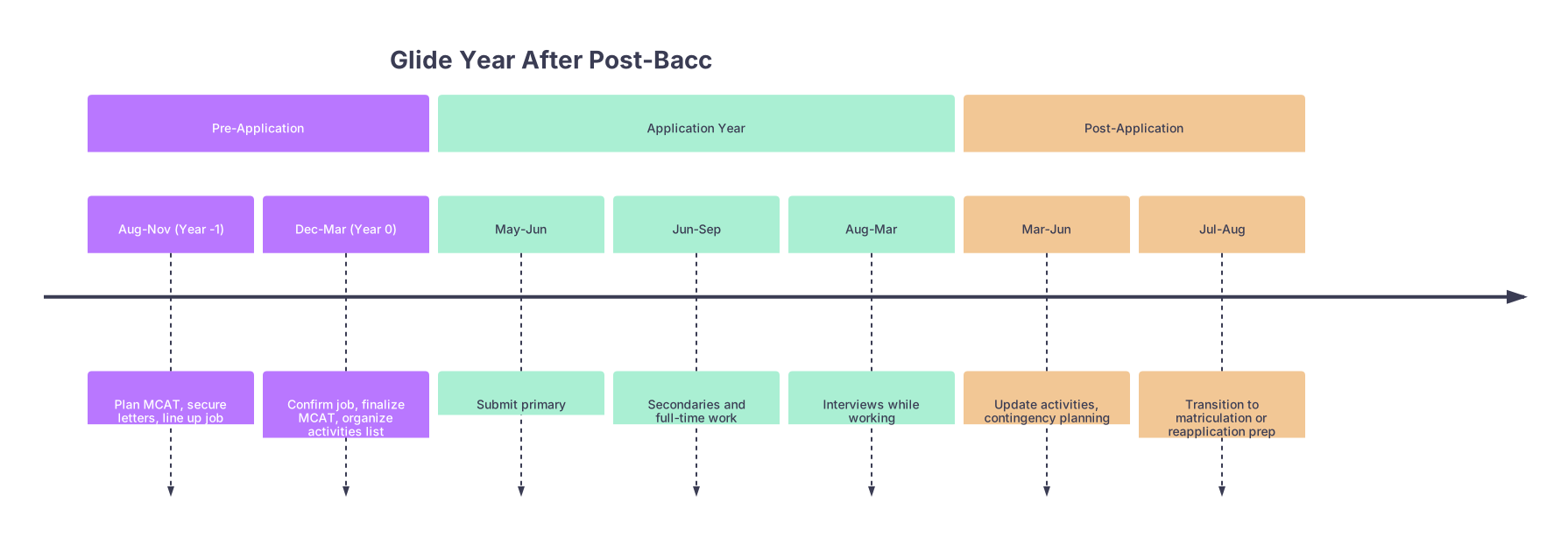
| Period | Event |
|---|---|
| Pre-Application - Aug-Nov (Year -1) | Plan MCAT, secure letters, line up job |
| Pre-Application - Dec-Mar (Year 0) | Confirm job, finalize MCAT, organize activities list |
| Application Year - May-Jun | Submit primary |
| Application Year - Jun-Sep | Secondaries and full-time work |
| Application Year - Aug-Mar | Interviews while working |
| Post-Application - Mar-Jun | Update activities, contingency planning |
| Post-Application - Jul-Aug | Transition to matriculation or reapplication prep |
3–6 Months Before Primary: Lock Down Logistics, Build Infrastructure
Now we move into concrete logistics that will shape your glide year day to day.
Dec–Mar Before Primary (Dec–Mar, Year 0): Build the Foundation
At this point you should:
Finalize your glide-year job
- By January–February, you want:
- An offer in hand or
- A clear pipeline of interviews for roles starting by June–July.
- Prioritize:
- Stable 40-hour weeks if possible
- Direct patient contact or meaningful responsibility
- Avoid:
- Aimless temp work with no clinical or service tie
- “Just studying for the MCAT all year” unless you have a serious remediation story
- By January–February, you want:
Take or retake the MCAT
- Ideal test window: January–early April.
- Do not push into May/June unless:
- You truly needed extra time, and
- You are willing to risk a latest-cycle application.
- In the final 4–6 weeks before your test:
- Scale down clinical/volunteer shifts if possible.
- Treat the MCAT like a full-time job.
Organize your application content Start building the structures you will lean on all year:
- Draft your:
- Personal statement (Version 1 by February/March)
- Work & Activities bullets in a spreadsheet
- For each activity:
- Start date / end date
- Hours per week
- Total hours
- Supervisor name and contact
- 2–3 bullet points with impact, not just tasks
- Draft your:
Plan the “story arc” of your glide year Medical schools want to see:
- Consistency
- Responsibility
- Reflection
That means your glide year should show:
- Sustained clinical exposure (not random bursts)
- Increasing responsibility at work (promotion, training new hires, taking on scheduling or QI projects)
- Evidence of reflection:
- Journaling cases (de-identified)
- Noting difficult conversations, ethical questions, system problems
You are not just filling time. You are building the narrative that will anchor secondaries and interviews.
Primary Application Season: Turning Your Glide Year from Plan to Reality
Now we hit the critical stretch.
May–June: Primary Submission + Job Start
At this point you should:
Submit your primary application early
- Target:
- AMCAS submit window: early June
- Your post-bacc grades should already be visible and strong.
- MCAT score ideally back by late May / early June.
- Target:
Begin (or ramp up) your glide-year job First month at a new role is chaos. Plan for it.
Weekly structure in your first 4–6 weeks:
- 40 hours/week: clinical or research job
- 3–4 hours/week:
- Finish polishing personal statement
- Final check of activities descriptions
- 2 hours/week:
- Tracking experiences in a document (specific patient interactions, learning moments; no identifiers)
Continue or initiate service/volunteering
- Aim: 2–4 hours/week, ideally in:
- Free clinic
- Community health outreach
- Homeless shelter, food pantry, tutoring underserved
You want to show that as your life got busier, you still made service a priority. Schools notice that maturity.
- Aim: 2–4 hours/week, ideally in:
Shadowing: make it intentional, not frantic At this point you should:
- Identify 1–3 physicians you can follow over multiple half-days.
- Schedule maybe:
- 1–2 days/month, not daily. Let your job be the main clinical narrative; shadowing is the supporting evidence.
Secondaries and Summer: The Most Miserable, Most Crucial Stretch
This is where a lot of glide-year students fall apart: full-time job + 20–30 secondaries in a 6–8 week window.
Late June–August: The Secondary Grind While Working
At this point you should:
Pre-write your most common secondary prompts (ideally in May/early June) Common themes:
- “Why our school?”
- Diversity / adversity
- Most meaningful activity
- Service to underserved
- Future goals / specialty interests
Have modular essays that you can adapt quickly.
Structure your weekly schedule ruthlessly
Here is a realistic week for July–August:
Monday–Friday
- 8:00–5:00: Work (clinical/research)
- 6:00–9:00 (3 nights/week): Secondaries (2–3 prompts/night)
- 6:00–9:00 (1 night/week): Exercise + decompress
- 6:00–9:00 (1 night/week): Volunteering or community work
Saturday
- 9:00–1:00: Secondaries
- Afternoon: Errands, rest, social life (you are still human)
Sunday
- 2–3 hours: Edit and finalize essays
- 1–2 hours: Plan upcoming week at work and for applications
If you are not this structured, secondaries either go in late or look rushed. Both are obvious to committees.
Keep your supervisors in the loop Early in the job (June/July):
- Tell your manager: you are applying to medical school this cycle.
- Ask about:
- Flexibility for future interview days
- Remote days (for Zoom interviews) if your role allows
Intentionally collect stories from work Each week, jot down:
- 1 patient encounter that changed how you think about medicine
- 1 systems issue or barrier to care you saw
- 1 example of teamwork or miscommunication
These become:
- Secondary essay content
- Interview answers
- Updates to schools later in the year
Interview Season: Balancing Work, Travel, and Staying Useful
Interviews during a glide year are where your structure either pays off or collapses.
August–December: Early to Mid Interview Season
At this point you should:
Block and batch interviews strategically
- As invitations arrive:
- Schedule them on weekdays where you can either:
- Use PTO
- Trade shifts
- Or stack multiple interviews into the same trip if in similar regions
- Schedule them on weekdays where you can either:
- Aim to:
- Give your workplace at least 2–3 weeks’ notice whenever possible.
- As invitations arrive:
Negotiate your role expectations early Within your first 2–3 months on the job:
- Have the conversation:
- “Over the next 6–9 months, I may have intermittent interview travel. I expect X–Y days per month. Here is how I propose to cover my work.” Come with solutions:
- Offer to:
- Take less popular shifts
- Cover holidays
- Handle specific projects in exchange for flexibility
- Have the conversation:
Weekly structure during heavy interview months
A realistic pattern in October might look like:
- Work: 3.5–4 days/week on site
- Interview travel: 1–1.5 days/week
- Evenings:
- 1–2 hours: prep for upcoming interviews:
- Review school’s mission, special programs, your fit
- Bullet answers for:
- “Why this school?”
- “Describe a challenge you faced.”
- “Tell me about your glide year.”
- 1–2 hours: prep for upcoming interviews:
Keep your job performance solid I have seen glide-year students assume “I am leaving anyway” and mentally check out. Bad move.
At this point you should:
- Still be:
- On time
- Prepared
- Engaged in the team
- Ask for:
- Small quality improvement projects
- Responsibility for onboarding new staff Those details show up in letters and in your own stories.
- Still be:

January–March: Waiting, Updating, and Preparing for Either Outcome
The biggest mistake in this phase is going passive. You are not done yet.
January–March: The Quiet, Dangerous Middle
At this point you should:
Continue full engagement in your role
- Do not subtly cut your hours unless:
- You have a concrete academic or health reason, or
- You are transitioning to another structured activity with clear benefit (e.g., research, teaching).
- Medical schools want to see:
- A full, productive year between post-bacc and matriculation.
- Do not subtly cut your hours unless:
Send targeted updates to schools Only if they accept updates (check each school’s policy).
Updates can include:
- Promotion or new responsibilities at work
- New publications, abstracts, or posters
- Significant milestones:
- Total hours of clinical work
- New leadership roles in volunteering
Structure of an update:
- Brief intro (name, AMCAS ID)
- 1–2 paragraphs summarizing:
- Major updates since the application
- Bullet list with:
- Dates, roles, concrete achievements
Prep financially and logistically
- Continue to:
- Save aggressively from your job. Glide year sweet spot:
- Rent modestly
- Avoid new debt if at all possible
- Build:
- 3–6 months of living expenses before matriculation
Use this to:
- Reduce future loan stress
- Cover deposits and relocation costs
- Continue to:
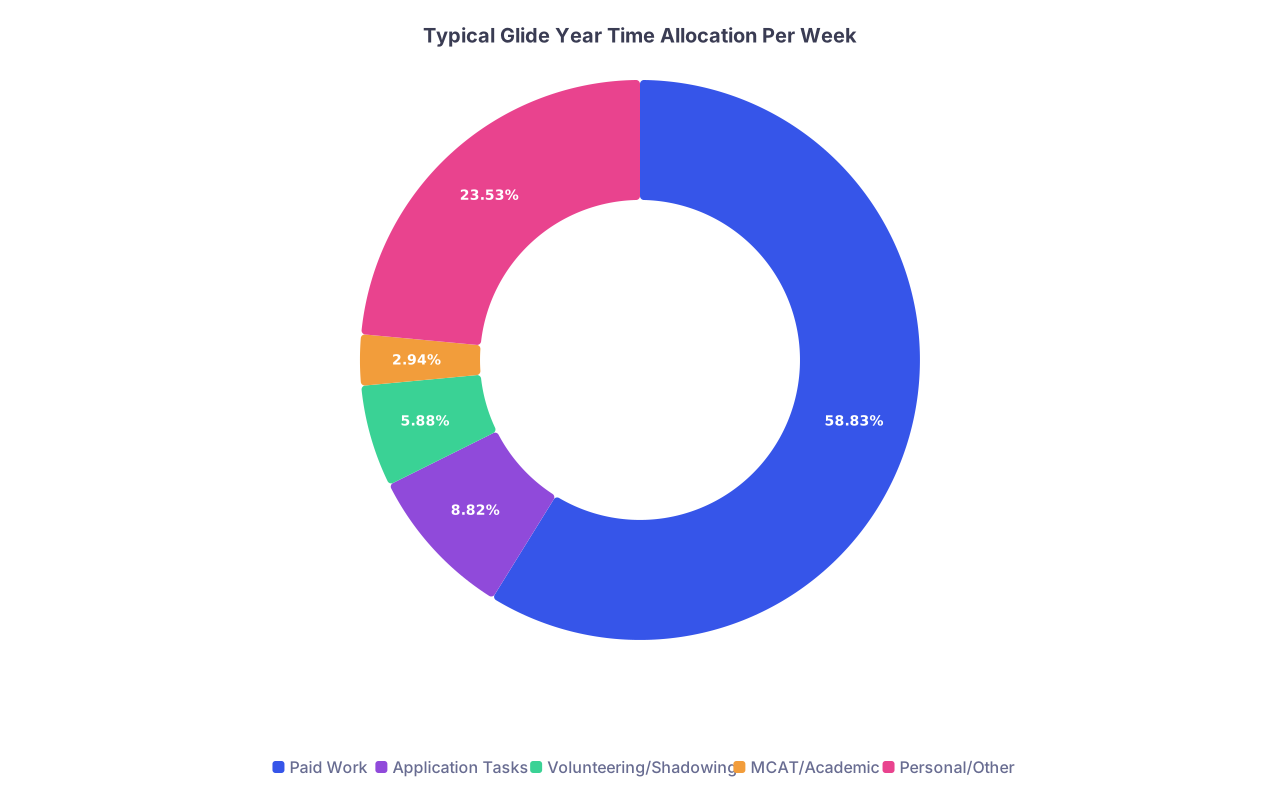
| Category | Value |
|---|---|
| Paid Work | 40 |
| Application Tasks | 6 |
| Volunteering/Shadowing | 4 |
| MCAT/Academic | 2 |
| Personal/Other | 16 |
If You Do Not Matriculate: Turning a Glide Year into a Strong Reapplication
No one likes this section, but ignoring it is childish. You plan for success, and you quietly build a contingency.
March–June: Decision Season and Next Moves
At this point you should:
Be honest about your cycle outcome by late March–April
- If you have:
- Zero interviews by January: odds are low.
- Multiple holds / waitlists only: mixed.
- Do not wait until June to start a backup plan.
- If you have:
Use the glide-year structure to strengthen a reapplication Ask, very concretely:
- Did your glide year show:
- Full-time, consistent clinical or research work?
- Clear letters from supervisors?
- Tangible growth (promotion, new responsibilities)?
- Weak areas to attack in a second glide year:
- MCAT score below school medians
- Sparse service or shadowing
- Late or sloppy application last time
Your plan for a reapplication year might shift like this:
- Keep current job if:
- You are learning
- You have strong support and can deepen your impact
- Or move to:
- More direct patient contact
- A role with clearer leadership or teaching opportunities
- Did your glide year show:
Rewrite your application with the year’s data
- Personal statement:
- Incorporate specific glide-year experiences that changed your understanding of medicine.
- Activities:
- Update hours and responsibilities.
- Reframe old experiences with more insight.
- School list:
- Adjust based on your actual competitiveness, not your fantasy list.
- Personal statement:

| Step | Description |
|---|---|
| Step 1 | Glide Year Ending |
| Step 2 | Prepare to Matriculate |
| Step 3 | Assess MCAT, GPA, School List |
| Step 4 | Reassess Entire Application |
| Step 5 | Plan MCAT Retake + Continued Work |
| Step 6 | Strengthen Clinical/Service + Rewrite Essays |
| Step 7 | Apply Next Cycle |
| Step 8 | Any Interviews or Acceptances? |
| Step 9 | MCAT < Median? |
Structuring Your Day-to-Day Glide Year: What a Good Week Looks Like
Enough theory. Here is what a well-structured glide-year week looks like once the chaos of secondaries is over (say, November–February).
At this point you should have something like:
- 40 hours/week: Job
- 2–4 hours/week: Volunteering or service
- 1–2 hours/week: Shadowing or conferences / grand rounds
- 2–3 hours/week: Application maintenance (updates, interview prep)
- The rest: Sleep, exercise, life
Example:
Monday
- Work 8–5
- Evening: Gym, light review of potential interview questions.
Tuesday
- Work 8–5
- Evening: Free / rest / social.
Wednesday
- Work 8–5
- 5:30–7:30: Volunteering at free clinic.
Thursday
- Work 8–5
- 6:00–8:00: Update journal of clinical experiences; prepare for upcoming interview.
Friday
- Shadowing 8–12 (if job allows half-day swap)
- Work 1–5
- Evening: Relax.
Saturday
- Morning: Deep dive into one school’s curriculum / mission before an interview.
- Afternoon: Life logistics, rest.
Sunday
- 1–2 hours: Weekly review:
- Lessons from work
- Patients/cases that stood out
- Any new accomplishments to log
- 1–2 hours: Weekly review:

What Admissions Actually Want to See From Your Glide Year
Strip away the noise. From an admissions committee perspective, a strong glide year after a post-bacc looks like this:
Consistency, not chaos
- You held a substantial, relevant role for most of the year.
- Your hours are believable and match your story.
Responsibility and growth
- You were not just “the extra pair of hands.”
- You can point to:
- Specific projects
- Times you took initiative
- Situations where you handled difficulty maturely
Reflection and realism about medicine
- Your essays and interview answers show:
- You have seen medicine’s bureaucracy and emotional toll.
- You still want in—with more nuance, not naïve idealism.
- Your essays and interview answers show:
No unexplained dead zones
- Long periods of apparent nothingness are a problem.
- If you had gaps (illness, family, immigration, etc.), you explain them briefly and concretely.
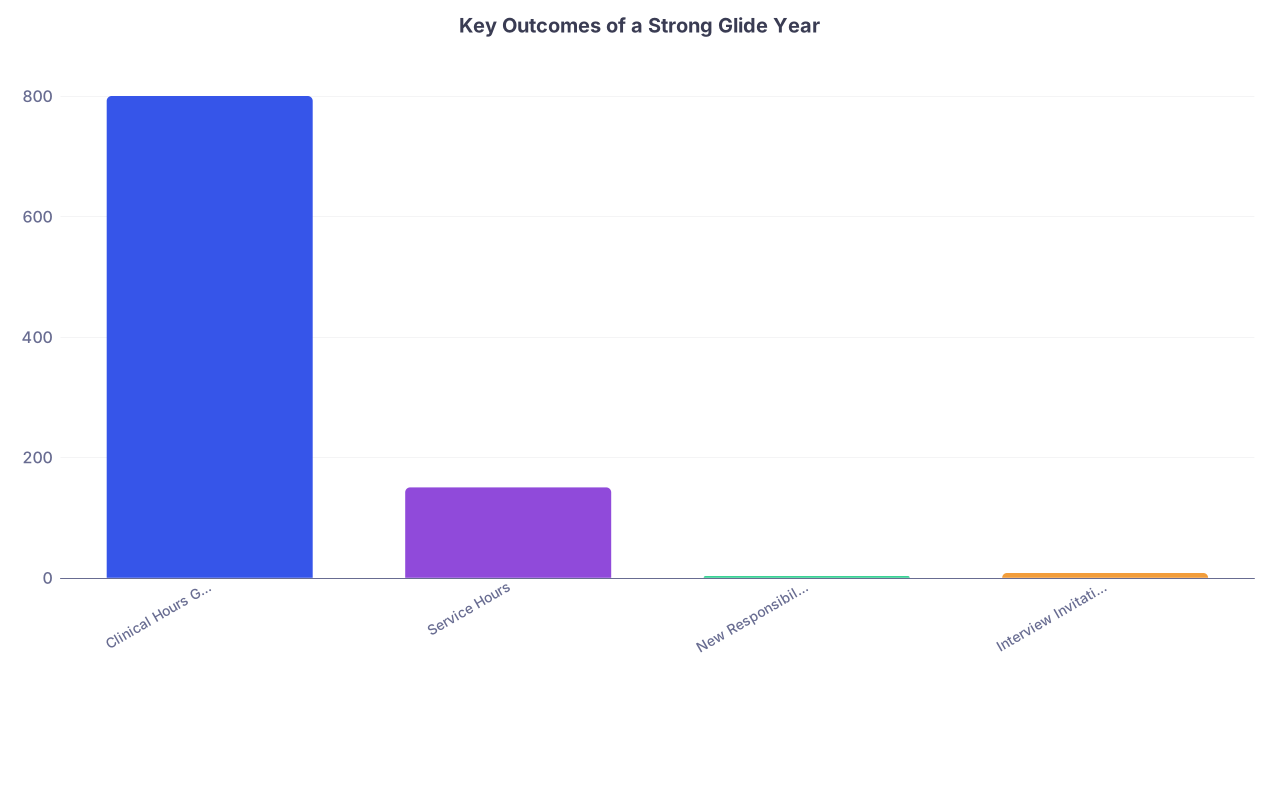
| Category | Value |
|---|---|
| Clinical Hours Gained | 800 |
| Service Hours | 150 |
| New Responsibilities | 3 |
| Interview Invitations | 8 |
The Glide Year, In Three Sentences
- The year after a post-bacc is not a gap in your story; it is the proof that your post-bacc was the beginning of a sustained change, not a temporary spike.
- At every stage—pre-application, secondaries, interviews, and waiting—you should be working a real job, serving real people, and quietly collecting real stories.
- If you structure this year with intention, you will not just “fill time” before medical school; you will walk into your first day as a student already acting like a professional.