
The most dangerous thing you can do in December with zero pre‑match offers is “wait and see.”
You are not “behind.” You are in a different game now. December and January are about aggressive adjustment, not passive hope. At this point, every week you either increase your chances of matching… or you let them quietly decay.
I am going to walk you week‑by‑week through December and January if you have no pre‑match offers (or for NRMP-only programs, no strong signals you are ranked highly). Follow this as a working plan, not a suggestion list.
Big Picture: Where You Actually Stand
By early December:
- Most interview invites for competitive specialties have gone out.
- Community and smaller programs are still moving pieces around.
- Cancellations and no‑shows start creating unexpected openings.
- Some programs still have unfilled interview slots they have not figured out what to do with.
You still have leverage in three places:
- Your existing interviews – converting them to high rank positions.
- Late‑cycle interviews – created by cancellations, expansion, or unfilled slots.
- Backup strategy – SOAP planning if February looks grim.
Here is the high‑level December–January arc you are working with:
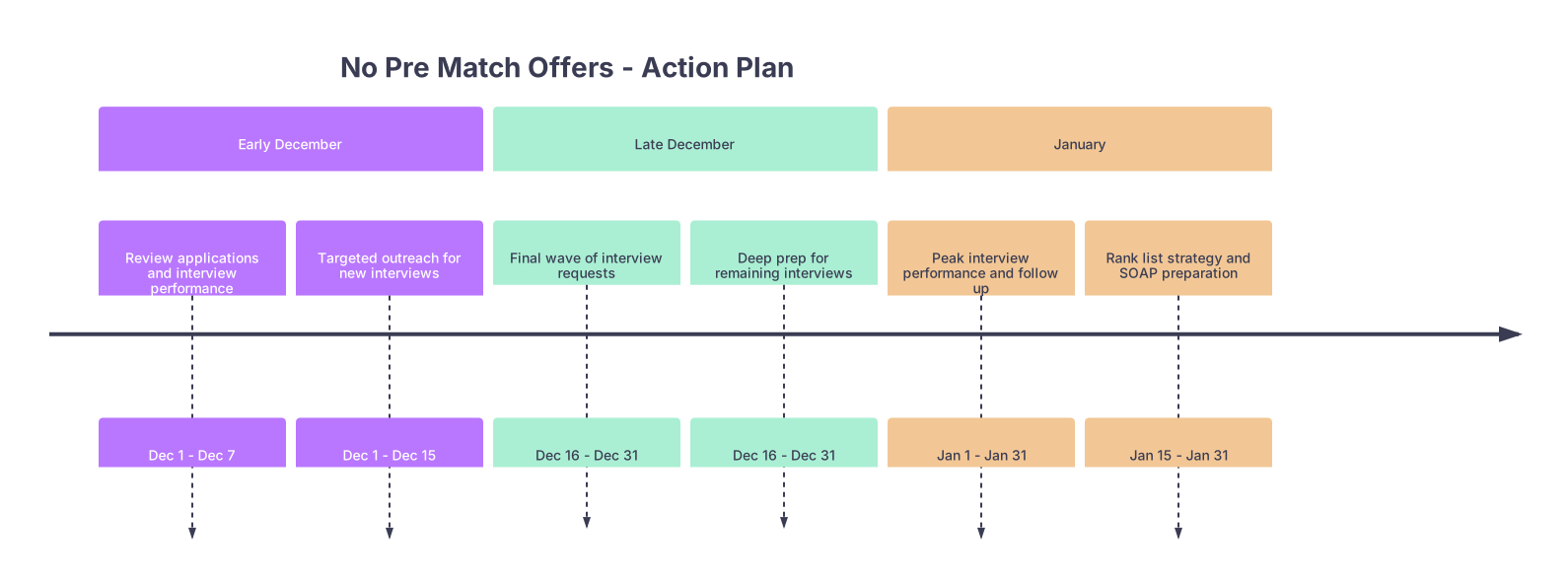
| Period | Event |
|---|---|
| Early December - Review applications and interview performance | Dec 1 - Dec 7 |
| Early December - Targeted outreach for new interviews | Dec 1 - Dec 15 |
| Late December - Final wave of interview requests | Dec 16 - Dec 31 |
| Late December - Deep prep for remaining interviews | Dec 16 - Dec 31 |
| January - Peak interview performance and follow up | Jan 1 - Jan 31 |
| January - Rank list strategy and SOAP preparation | Jan 15 - Jan 31 |
Early December (Dec 1–7): Hard Reality Check and Surgical Adjustments
At this point you should stop guessing and quantify exactly where you are.
Day 1–2: Brutal status inventory
Open a spreadsheet and build a clear snapshot.
| Category | Number |
|---|---|
| Total programs applied | |
| Total interview invites | |
| Interviews completed | |
| Upcoming scheduled interviews | |
| Rejections received | |
| No response / pending |
Then:
- Separate programs by tier (academic vs community, location preference, competitiveness)
- Mark which were realistic targets vs reaches when you applied
- Count how many interviews you truly have (not what you hoped for)
Rule of thumb for categorical specialties like FM, IM, peds, psych (US MD/DO):
- 10–12 solid interviews = generally safe
- 6–9 = uncomfortable but workable
- ≤5 = you are in the danger zone and must act like it
For IMGs, those numbers are higher. You already know that.
Day 3–4: Autopsy your application and performance
At this point you should:
Get a third‑party read on your application.
- Ask a mentor, faculty advisor, or senior resident in your specialty to review:
- Personal statement
- Experience descriptions
- Program list
- Any red flags (gaps, failures, YOG, visa issues)
- Ask one direct question:
“Why do you think I have this number of interviews and not more?”
- Ask a mentor, faculty advisor, or senior resident in your specialty to review:
Review interview performance honestly.
- Record yourself answering:
- “Tell me about yourself.”
- “Why this specialty?”
- “Tell me about a time you had a conflict.”
- If you cringe watching it, programs probably do too.
- Identify 2–3 recurring weak points: rambling, weak “why this program,” poor handling of red flags, etc.
- Record yourself answering:
This is not about shame. It is about tightening the ship before the most important month of your application year.
Day 5–7: Decide your December game plan
At this point you should set exact targets for December:
If you have 0–3 interviews:
- Goal: generate 3–5 additional interviews through targeted outreach and expanded list.
- Also: start mentally accepting you may need SOAP or reapply.
If you have 4–7 interviews:
- Goal: secure 2–3 more while upgrading performance on upcoming ones.
If you have 8+ interviews but no pre‑match:
- Goal: maximize performance and program fit; you are not in crisis, but you cannot coast.
Mid December (Dec 8–20): Aggressive Outreach and Calendar Engineering
This is where most applicants either quietly panic or quietly give up. You will not.
Daily rhythm in this window
At this point you should be doing, every weekday:
- 30–60 minutes of targeted program research and email outreach
- 60–90 minutes of interview prep (questions, behavioral answers, mock sessions)
- 30 minutes of admin (tracking responses, updating spreadsheet, confirming logistics)
Targeted Program Outreach (Salvage Mode)
Your goal is not to spam. Your goal is to reach specific, plausible programs where:
- Your profile matches their usual residents
- They take IMGs if relevant
- They are community or smaller academic programs
- They may have late cancellations
Who do you email?
- Program coordinators (for logistics and availability)
- Program directors (short, focused messages)
- Occasionally APDs or chief residents if they are listed as contacts
Your email should:
- Be short (under 200 words)
- Reference something specific about the program
- State concisely why you are a fit and your current status
- Highlight any new updates since you applied (Step 2 score, new publication, strong recent LOR, extra U.S. clinical experience)
Example structure:
- One sentence: who you are (MS4/IMG, specialty interest).
- One sentence: why you are emailing now (continued strong interest, asking to be considered if interview spots open).
- Two sentences: specific fit (ties to region, aligned interests, prior rotation, language skills).
- One sentence: key new update.
- One sentence: polite close.
If your email runs longer than that, you are writing a novel, not a professional note.
Expanding Your Program List (Yes, Even Now)
If you are in the danger zone of ≤5 interviews in mid‑December:
Identify less competitive programs you skipped:
- Rural locations
- Community hospitals not attached to big brands
- Newer programs (but check accreditation and board pass rates)
Be realistic about geography and prestige. Prestige is pointless if you do not match.
Use your school’s match list or GradMatch / Residency Explorer–type tools to find where people like you (scores, IMG status, YOG) actually match.
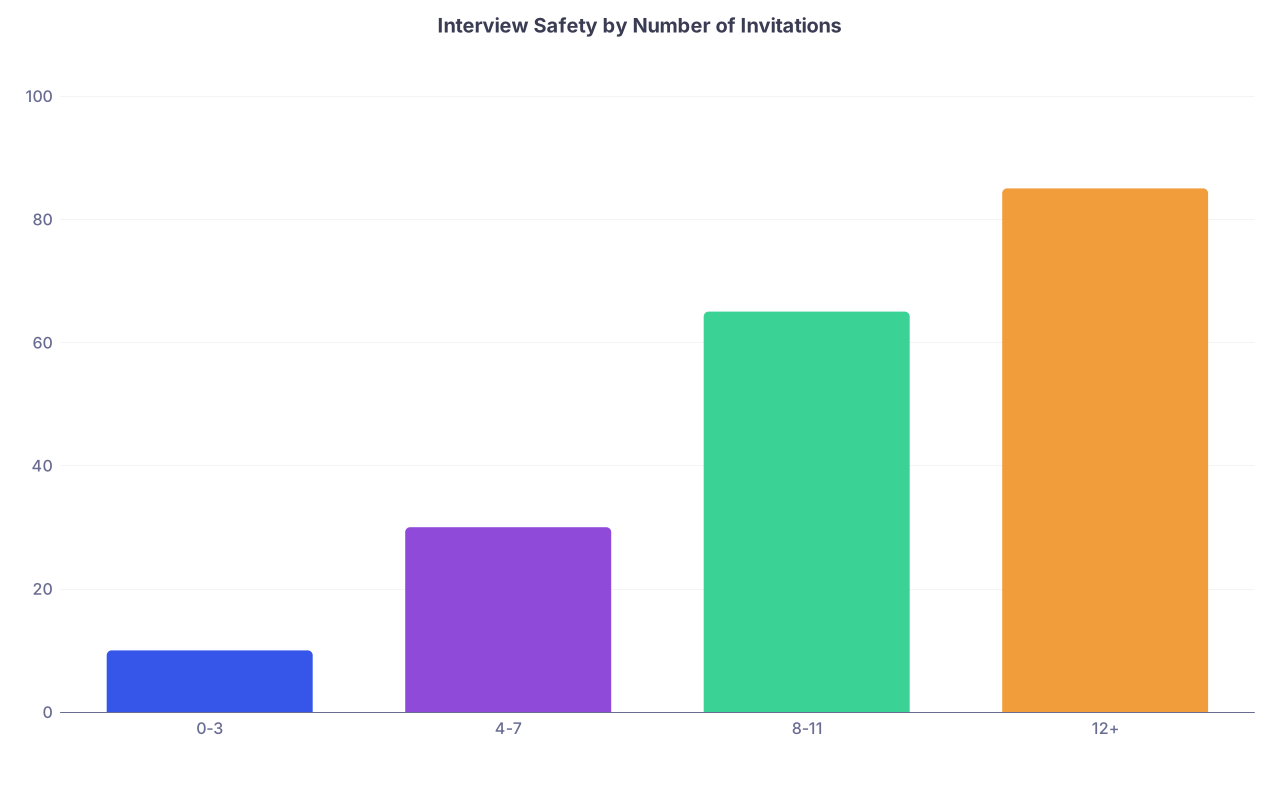
| Category | Value |
|---|---|
| 0-3 | 10 |
| 4-7 | 30 |
| 8-11 | 65 |
| 12+ | 85 |
Interpretation: rough, not perfect. But you can see why 0–3 is not a place to relax.
Late December (Dec 21–31): Holiday Window – Hidden Opportunities
Programs do not all shut down for the holidays. They just get slower. Meanwhile, other applicants:
- Cancel interviews
- Double book and then choose higher‑tier programs
- Realize they are overscheduled and drop lower‑ranked interviews
This creates openings. They rarely get advertised loudly.
Dec 21–23: Pre‑holiday check‑ins
At this point you should:
- Re‑email 5–10 high‑yield programs where:
- You have prior connection (sub‑I, home rotation, mentor link)
- You previously got a neutral or no response
- Frame it as:
- Brief expression of continued serious interest
- Willingness to fill any last‑minute or cancellation slots
- Confirmation that you are fully available in January
Send these in the early morning on a weekday. Coordinators tend to clean their inboxes then.
Dec 24–26: Low‑intensity, high‑yield work
Most people are checked out. You should not grind through 10‑hour days here, but you can:
Refresh and tighten your answers to:
- “Why our program?” for each upcoming interview
- “Where do you see yourself in 5–10 years?”
- “Tell me about a failure.”
Build a one‑page “quick sheet” for each upcoming program:
- Program structure
- Special tracks (research, hospitalist, underserved)
- Key faculty names and interests
- Unique patient population or hospital system info
This is the kind of prep that makes you sound like you actually care about that program, not just “a residency somewhere.”
Dec 27–31: Last wave push
At this point you should:
Do a final targeted outreach wave to:
- Programs that historically send late invites
- Any program where a mentor has even a weak connection
Ask mentors directly:
- “Is there one program director you’d be comfortable emailing or calling on my behalf right now?”
- Many will say yes. They just will not volunteer it on their own.
And simultaneously:
- Confirm every January interview: date, time zone, virtual platform, backup contact.
- Lock in quiet spaces and internet for virtual interviews (not your parents’ kitchen during New Year’s brunch).
January (All Month): Conversion Mode – Make Every Interview Count
January is not the time to chase 50 more programs. It is the time to convert the opportunities you actually have.
Here is a week‑by‑week structure.

Week 1 of January (Jan 1–7): Reset and Rehearse
At this point you should:
Do a full mock interview with someone who will not sugarcoat:
- Faculty advisor, resident, or even a blunt friend who has already matched.
- Ask them: “What about my answers would make you rank me low?”
Fix your opening narrative.
- Your “tell me about yourself” answer should:
- Be 60–90 seconds
- Have a clear timeline (where you started, why medicine, why this specialty)
- End with “and that is why I am excited about [specialty] training now.”
- Your “tell me about yourself” answer should:
Standardize your red‑flag responses.
- Failed exam? Rewrite the answer until it:
- Owns the failure
- Describes a specific change you made
- Demonstrates sustained improvement (not just “I worked harder”)
- Failed exam? Rewrite the answer until it:
By the end of this week, you should have:
- One tight personal intro
- One tight “why this specialty”
- A polished answer for any obvious concern in your file
Week 2 of January (Jan 8–14): Peak Performance Period
This is usually heavy interview week.
Daily, you should:
- Spend 15–20 minutes reviewing that day’s program sheet
- Rehearse out loud 5–7 likely questions
- Log each interview immediately afterward:
- Who you met
- Key topics discussed
- Any moment of clear connection (“we both worked in rural clinics,” “PD loved my QI project”)
That log is gold for later communication and even rank list decisions.
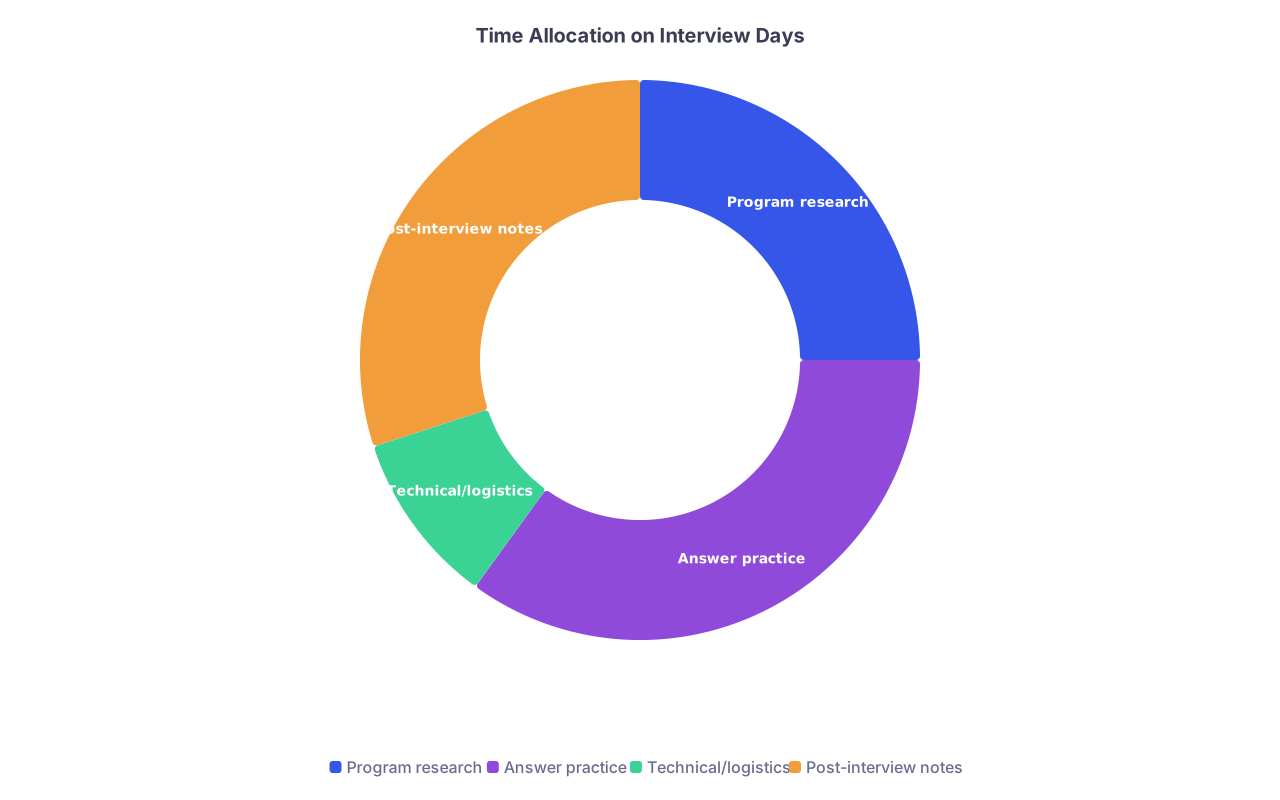
| Category | Value |
|---|---|
| Program research | 25 |
| Answer practice | 35 |
| Technical/logistics | 10 |
| Post-interview notes | 30 |
If you are still getting the occasional new interview invitation in this window, you have done something right. Accept quickly. Do not sit on it for 24 hours “to think.” Others respond faster.
Week 3 of January (Jan 15–21): Strategic Follow‑Up and Ranking Mindset
At this point you should be shifting from “please like me” to “where do I actually want to work?” But you still have no pre‑match offers, so you stay disciplined.
Post‑interview communication
No, thank‑you emails rarely “move the needle” dramatically. But they:
- Reinforce professionalism
- Keep you visible in a sea of names
- Give you a place to mention genuine program‑specific enthusiasm
Your follow‑ups should:
- Be 3–6 sentences
- Reference one specific conversation or program feature
- Reinforce your interest without sounding desperate
- Avoid awkward ranking promises (“I will rank you number one”) unless:
- You absolutely mean it
- You are prepared to back it up, ethically
The better version is:
“I will be ranking [Program] very highly and would be honored to train with your team.”
Begin building your rank list structure
At this point you should:
Sort programs into three buckets:
- “I would be thrilled here.”
- “I would be content and well trained here.”
- “I would go here rather than SOAP or reapply.”
Within each bucket, think about:
- Training quality and board pass rates
- Geography and support system
- Program culture (how residents actually seemed on interview day)
- Fellowship opportunities if relevant
Do not play games about “what if they do not rank me.” You rank in true preference order. The algorithm is built for that.
Week 4 of January (Jan 22–31): Final Interviews, Rank Logic, and SOAP Contingency
You are entering the last serious decision phase. No pre‑match offers is not a disaster, but it means you cannot be sloppy.
Last Interviews: Finish Strong
At this point you should treat your last interview like your most important, not an afterthought.
- You are better at interviewing now than you were in November. Use that.
- Go into each final interview with:
- One clear story that shows growth
- One that shows teamwork
- One that shows resilience under stress
Those three stories, reframed, can answer half the questions you will get.
Rank List – Concrete Steps
Once ERAS rank order lists open (NRMP), your sequence should be:
- Draft a preliminary rank list in a spreadsheet first.
- For each program, answer:
- Could I complete 3–7 years of training here without burning out from misfit alone?
- Would I grow here?
- Finalize an order that matches your priorities, not your classmates’ Instagram flexes.
For most applicants with no pre‑match offers, the worst mistake here is over‑gaming:
- “If I rank this academic program first, will I waste my chance?”
- No. If they do not rank you high enough, you drop to your next choice automatically.
Rank by preference, not prediction.
Parallel Track: SOAP and Reapplication Prep (Quiet but Necessary)
If, by late January, you have:
- 0–3 interviews total
- And/or serious red flags not addressed by strong interview performance
You must quietly prepare a SOAP backup. That does not mean you have given up; it means you are not reckless.
At this point you should:
- Confirm with your dean’s office or ECFMG that you are SOAP‑eligible.
- Update:
- A short, neutral SOAP‑ready personal statement
- A trimmed CV that can be repurposed quickly
- Begin a list of specialties and programs you would actually consider during SOAP. Not fantasy. Reality.

If everything goes well and you match in March, this prep just cost you a few extra hours. If it does not, you will be very glad you did it.
Daily and Weekly Checklists (December–January)
To make this concrete, here is how your routine should look.
| Week (Approx) | Primary Focus |
|---|---|
| Dec 1–7 | Status audit, application review |
| Dec 8–14 | Targeted outreach, mock interviews |
| Dec 15–21 | Outreach + interview tightening |
| Dec 22–31 | Holiday window, logistics, prep |
| Jan 1–7 | Deep interview practice |
| Jan 8–21 | Peak interviews, follow-up |
| Jan 22–31 | Rank list build, SOAP prep |
Daily (especially if you are anxious):
- 1 high‑quality outreach or mentor email
- 20–30 minutes of speaking answers out loud
- 5–10 minutes updating your log and plan

Three Things to Remember
- Silence in December does not mean doom. It means you must be deliberate and proactive, not passive.
- Every January interview is a real shot. With zero pre‑match offers, performance in these weeks is what will decide your match, not what happened in September.
- Plan for the match; prepare for SOAP. Hope is not a strategy. A clear timeline and ruthless honesty about your position is.