
The worst pre‑match mistakes don’t happen on Match Day. They happen three months earlier when you have no plan and say “I’ll see how I feel after interviews.”
You do not have that luxury.
You’re entering the three‑month window where rank list strategy and pre‑match timing collide. At this point you need a calendar, a clear hierarchy of programs, and rules you won’t break when a flattering early offer hits your inbox at 10:03 p.m.
Here’s how to run the next three months, step by step.
Big Picture: Three Months in One View
Let me lay out the arc first, then we’ll drill down.
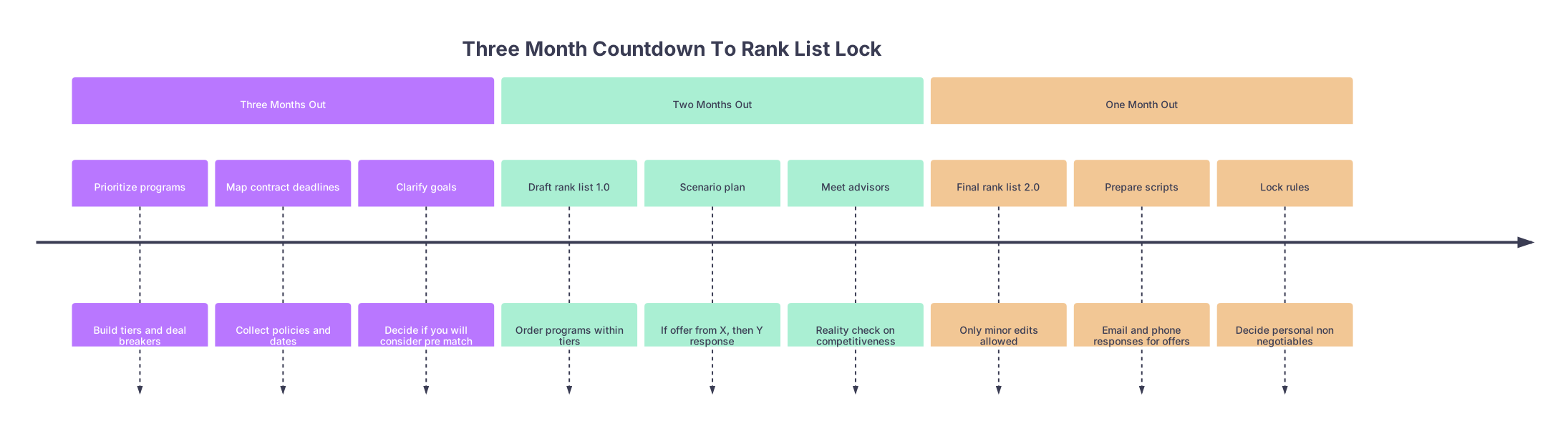
| Period | Event |
|---|---|
| Three Months Out - Prioritize programs | Build tiers and deal breakers |
| Three Months Out - Map contract deadlines | Collect policies and dates |
| Three Months Out - Clarify goals | Decide if you will consider pre match |
| Two Months Out - Draft rank list 1.0 | Order programs within tiers |
| Two Months Out - Scenario plan | If offer from X, then Y response |
| Two Months Out - Meet advisors | Reality check on competitiveness |
| One Month Out - Final rank list 2.0 | Only minor edits allowed |
| One Month Out - Prepare scripts | Email and phone responses for offers |
| One Month Out - Lock rules | Decide personal non negotiables |
At this point you should accept one thing: real‑time “gut feeling” is unreliable under pressure. You’ll be tired, flattered, and a little panicked. So we build the decision before the emotion.
Three Months Out: Build the Framework (Weeks 1–4)
Week 1: Decide How You Feel About Pre‑Match — For Real
First decision is philosophical, not logistical: Are you even willing to consider a pre‑match offer?
At this point you should:
Clarify your default stance
- “I will not take any pre‑match offer; I’m riding the Match.”
- “I will take a pre‑match only if it meets X criteria.”
- “I will almost certainly take a pre‑match if offered by any program above tier Y.”
Pick one. Write it down. This becomes your anchor.
Define your non‑negotiables Make a short list (3–6 max) of things you truly will not compromise on:
- Geography (partner job, childcare, visa constraints)
- Program type (university vs community)
- Required fellowship pathway
- Visa sponsorship specifics (J‑1 vs H‑1B)
- Deal breakers (malignant reputation, 24‑hour call without backup, etc.)
If a pre‑match offer violates one of these, it’s an automatic no. No debate.
Understand your risk position Look at your application honestly:
- Number of interviews booked vs specialty norms
- Step scores / COMLEX, class rank, red flags
- Prior match data from your school in this specialty
If you’re on the edge (few interviews, weaker metrics), your attitude to pre‑match should lean more conservative (more willing to lock in a solid safety).
Week 2: Build Tiers and a Working Draft List
Now you create the skeleton of your rank list before offers muddy the waters.
At this point you should:
Create 3–5 tiers of programs
Example structure:
| Tier | Description | Typical Programs |
|---|---|---|
| Tier 1 | Dream / perfect fit | Top academics, ideal city |
| Tier 2 | Strong fit, minor compromises | Mix of academic and strong community |
| Tier 3 | Solid, safe options | Mostly community, stable training |
| Tier 4 | Backup only | Would attend, but not excited |
Put every program into a tier without worrying about exact order yet.
Draft Rank List 0.5 (within tiers)
- Within each tier, roughly order programs based on:
- Training quality and fellowship outcomes
- Culture you observed on interview day
- Geography and personal life issues
- Contract type (categorical vs prelim + guaranteed advanced)
This is your “pre‑emotion” baseline.
- Within each tier, roughly order programs based on:
Mark “pre‑match likely” programs Think: small programs, community programs, places that hinted at heavy preference signaling or talked about early contracts.
Add a label:
- “High chance of pre‑match”
- “Possible”
- “Unlikely”
These are the ones you’ll scenario‑plan around.
Week 3: Collect Data on Deadlines and Policies
Pre‑match chaos usually comes from not knowing how much time you have to decide.
At this point you should:
Build a deadline tracker
Use a simple spreadsheet with:
- Program name
- Tier
- Contact person
- Any mention of:
- Pre‑match policies
- Offer expiration timelines
- “We may send early contracts to top candidates”
Email or check websites for explicit policies For borderline places, send a short, professional email to the coordinator:
- Ask:
- “Does your program issue pre‑match contracts?”
- “If so, what is the typical response window?”
Record everything. Some places give 24–48 hours. Some give a week. You need to know which is which.
- Ask:
Map those dates against your calendar
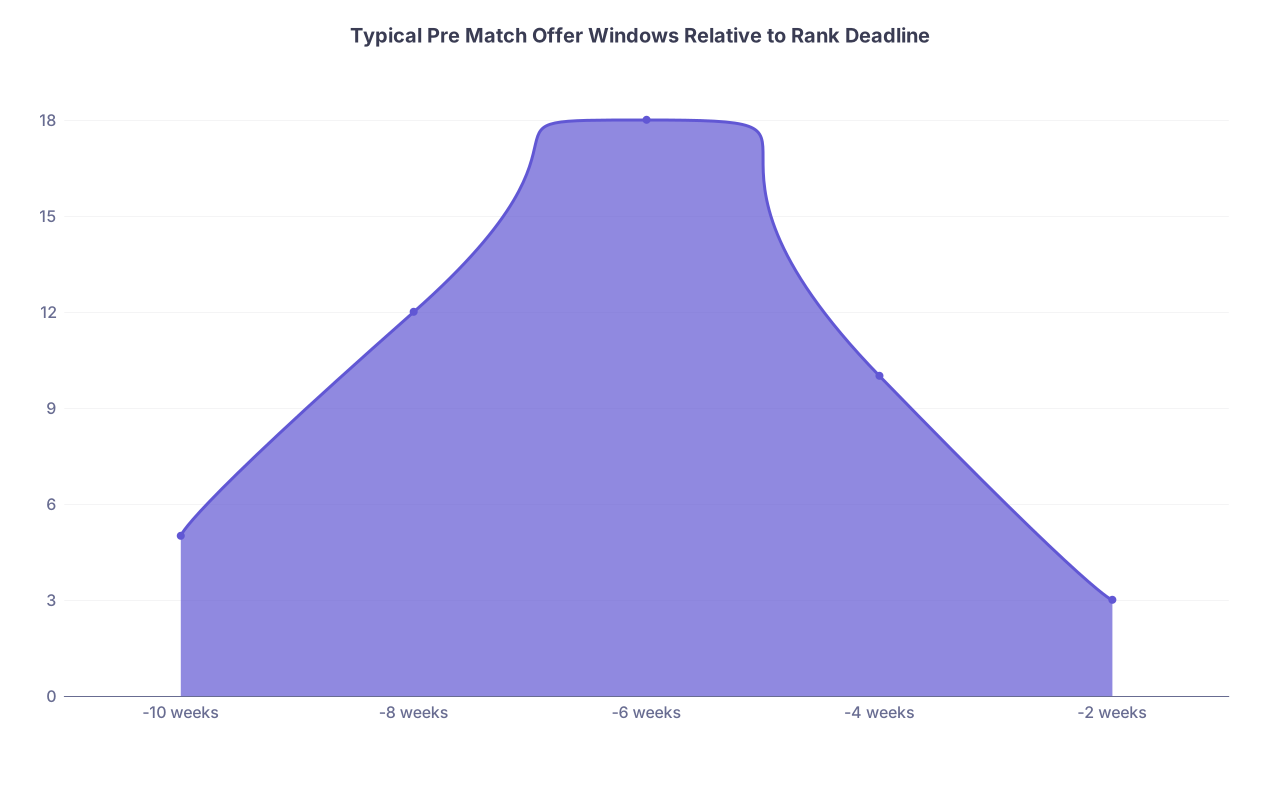
| Category | Value |
|---|---|
| -10 weeks | 5 |
| -8 weeks | 12 |
| -6 weeks | 18 |
| -4 weeks | 10 |
| -2 weeks | 3 |
That’s the general pattern: cluster around 4–8 weeks before the Rank Order List (ROL) deadline. You want your framework built before that spike.
Week 4: Set Explicit “If‑Then” Rules
You’re about to enter offer season. You need rules, not vibes.
At this point you should:
Write explicit scenarios
Example rules:
- “If I receive a pre‑match from any Tier 1 program, I will accept.”
- “If I receive a pre‑match from Tier 2 and I have < 10 total interviews, I will strongly consider accepting; if > 10, I will decline and stay in the Match.”
- “I will not accept pre‑match from Tier 4 under any circumstance.”
Put these in writing. Share with someone who will hold you to them.
Decide your communication style
- Will you ever hint to a program that they are your #1 to encourage a pre‑match?
- Who will you send “you are my top choice” messages to (if anyone)?
Be strategic. Do not tell three different programs they are your clear #1. That gets around.
Brief your support system
- Partner / spouse
- Close friend
- Advisor or PD at your home institution
They should know your rules so when you panic‑call at 11 p.m. with “they offered me a spot if I sign by tomorrow,” they know what you decided sober.
Two Months Out: Shape the Real Rank List (Weeks 5–8)
This is where the list becomes real and you start running drills.
Week 5: Convert Feelings from Interviews into Data
You’ve probably finished most interviews, or close.
At this point you should:
- Score programs with a simple rubric
For each program, rate 1–5 on:
- Training quality / case volume
- Culture and resident happiness
- Geographic fit and lifestyle
- Fellowship or career outcomes
- Gut fit (yes, but as one variable, not the whole story)
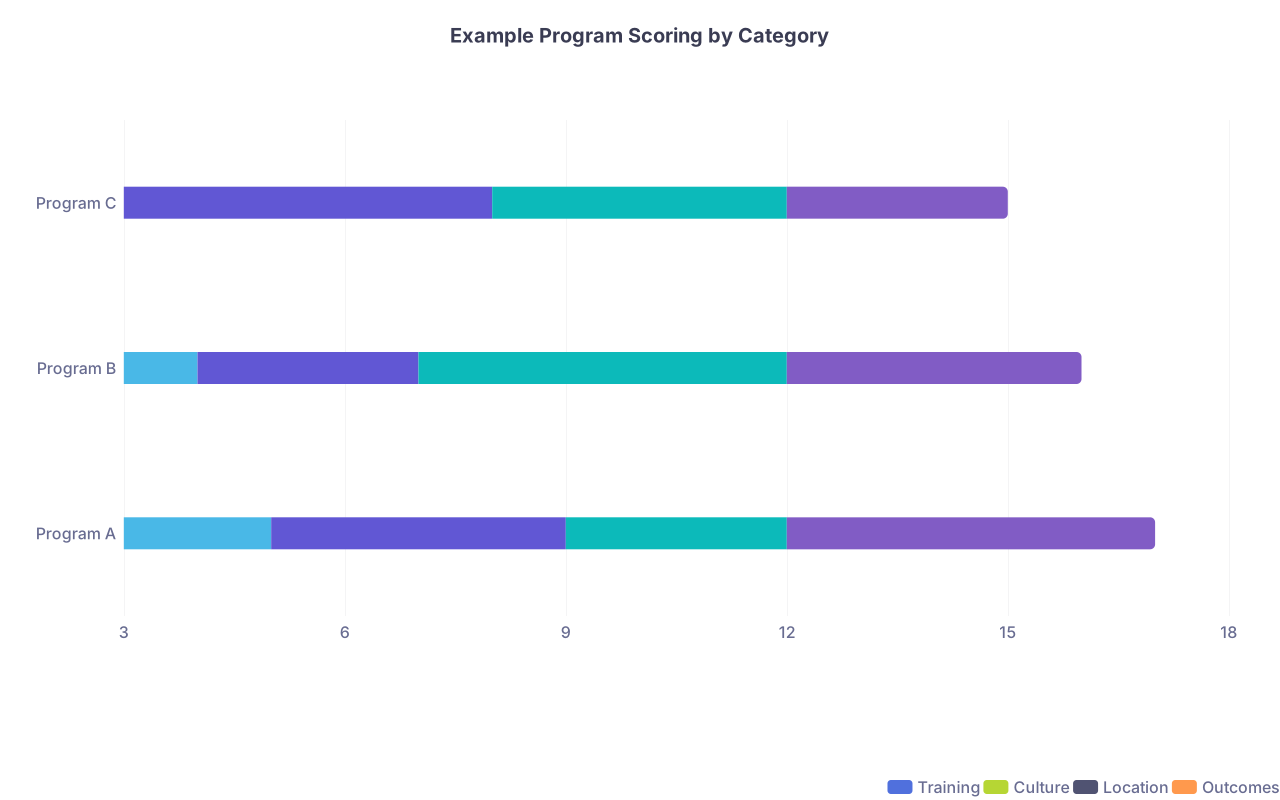
| Category | Training | Culture | Location | Outcomes |
|---|---|---|---|---|
| Program A | 5 | 4 | 3 | 5 |
| Program B | 4 | 3 | 5 | 4 |
| Program C | 3 | 5 | 4 | 3 |
Use this to adjust your tiers. Some “reach” places drop once you realize the residents all looked burned out.
- Update Rank List 1.0
- Tiers may shift
- Within tiers, ordering becomes more intentional
- This list should look 70–80% like the final one
Week 6: Scenario Planning and Scripts
Offers will not come at convenient times. You need pre‑written words.
At this point you should:
Write 3–4 email templates
- If you want more time but are interested:
- “Thank you so much for this offer; I’m very interested. Could you clarify the latest date by which you would need a decision?”
- If you know you’ll decline:
- “I’m honored by your offer. After careful thought, I’ve decided to remain in the Match process. I appreciate your consideration and the opportunity to interview.”
Save them. Customize only names and small details when needed.
- If you want more time but are interested:
Prepare phone scripts
You may have to answer or call back quickly. Write short outlines:
- Express gratitude
- Ask about:
- Binding nature of contract
- Deadline
- Any conditions (prelim + guaranteed advanced, etc.)
- State whether you need time to think
Map “knock‑out” scenarios Example:
- “If Program X (Tier 1) offers pre‑match, it automatically eliminates Programs Y and Z from realistic Match hope because I’d rank X above them anyway.”
You’re trying to avoid the tragic move: declining a pre‑match at a program you’d secretly rank #1, then not matching there or your backup.
Week 7: Advisor Check‑In and Sanity Review
This is the point where an outside, experienced brain is invaluable.
At this point you should:
Meet with trusted advisors
- Home program director
- Core clerkship director
- Faculty mentor in your specialty
Show them:
- Your draft rank list
- Your pre‑match rules
- Your number of interviews and how they went
Let them be blunt Invite honest feedback:
- “Am I overestimating my chances at my top few?”
- “If I get a pre‑match at Program X, would you advise me to take it?”
I’ve watched people ignore this step and it usually goes badly for the over‑confident.
Week 8: Tighten the List and Lock the Rules
Last month coming up. You want minimal big decisions left.
At this point you should:
Update to Rank List 1.5
- Only adjust if new and meaningful information appears:
- Additional interview impressions
- Major red/green flag discovered
- Aim for: “If the ROL deadline were tomorrow, I could live with this list.”
- Only adjust if new and meaningful information appears:
Freeze major philosophy From now on:
- No adding new non‑negotiables
- No inventing new exceptions when an offer comes
- Rules can only be simplified, not made more elaborate
Complexity is how you rationalize bad, last‑minute decisions.
One Month Out: Offer Season and Final Decisions (Weeks 9–12)
This is where theory meets reality. Pre‑match offers will either show up… or they will not. Both outcomes need a plan.
Weeks 9–10: Handling Actual Pre‑Match Offers
Let’s walk through the sequence.
At this point, when an offer comes, you should:
Pause. Don’t answer immediately. Unless the program explicitly demands a same‑day response (rare and kind of a red flag), you say:
- “Thank you so much. I’m very grateful. Could I have until [X date] to give you a thoughtful answer?”
X should be within their stated window, but not 12 hours from now unless absolutely forced.
Run the offer through your rules Ask:
- What tier is this program?
- Where would I rank it honestly if I stayed in the Match?
- Does it violate any hard non‑negotiables?
If it’s below multiple programs you’d rank higher and you have a solid interview count, declining is usually rational.
Compare to realistic Match scenarios Specifically:
- If I sign this contract:
- I’m definitely doing residency here.
- If I decline:
- I might match here anyway if I rank them high enough.
- But I might end up lower on my list or, in extreme cases, unmatched.
Use that to ground your choice. A mid‑tier pre‑match may be gold if your interview slate is thin.
- If I sign this contract:
Talk to exactly 2–3 people
- Partner / family stakeholder
- One mentor who understands your specialty
- Maybe one close peer already through the Match
Do not crowdsource this in group chats. Too many voices.
Week 11: Final Rank List Construction
Offers are mostly done by now. Time to commit.
At this point you should:
Lay out Rank List 2.0
- Programs that gave you pre‑match offers you declined should still appear in your Rank List in honest order. The offer phase is over; now you rank based on true preference.
- Programs where you accepted a binding pre‑match or contract may be:
- Removed from your NRMP list if the contract takes you out of the Match, or
- Ranked appropriately if the offer is non‑binding and you chose not to sign.
This depends heavily on your specialty and country’s rules. Clarify with the program and your dean’s office.
Re‑test rationality For each adjacent pair, ask:
- “If I matched at B instead of A, would I be a little disappointed or genuinely relieved?” If you’d be relieved to land at B instead of A, you should swap them.
Set a “do not touch” date Decide:
- “Three days before the official ROL deadline, I stop moving programs around unless something extreme happens.”
Endless micro‑shuffling the night before the deadline is how people sabotage themselves.
Week 12: Final Checks and Emotional Prep
Last week. Technical cleanup and headspace.
At this point you should:
Confirm all logistics
- NRMP/ERAS (or equivalent) account working
- All programs entered correctly
- No duplicate or missing entries
- Check visa notes and track if any contract affects eligibility
Do a last advisor glance Quick review:
- “Here’s my final list. Do you see anything wildly out of line with how my cycle went?” Listen if they say, “You are under‑ranking these strong mid‑tier safety programs” or “You’re over‑ranking a place with major red flags.”
Stop consuming random Reddit/SDN anxiety You drafted rules. You followed them. At this point more input just creates noise.
Quick Visual: Actions by Timeframe
| Timeframe | Primary Focus | Concrete Output |
|---|---|---|
| 3 months out | Philosophy and tiers | Pre match rules, Tiered program list |
| 2 months out | Refining rank order | Rank List 1.0–1.5, email/phone scripts |
| 1 month out | Executing decisions | Final rank list, signed or declined offers |
A Reality Check on Risk
You’re basically balancing two curves: safety vs upside.
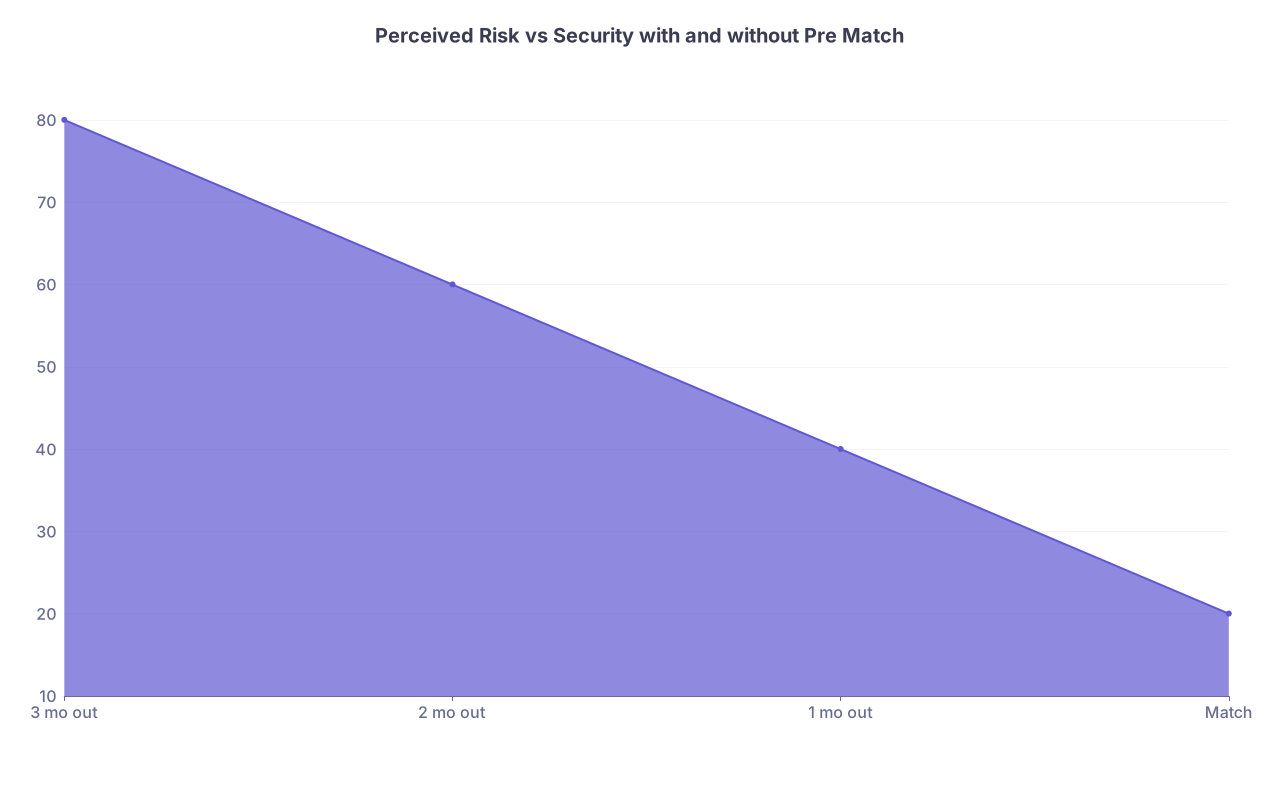
| Category | Value |
|---|---|
| 3 mo out | 80 |
| 2 mo out | 60 |
| 1 mo out | 40 |
| Match | 20 |
Think of it this way:
- Accepting a pre‑match:
- Increases security, lowers upside.
- Great if your interview count or application strength is marginal.
- Declining and riding the Match:
- Preserves upside, increases risk.
- Makes sense if you’re competitive and the offer is not from a top‑tier choice.
The mistake is making this risk decision impulsively, not intentionally.
Final Week: What You Should Be Doing Each Day
You don’t need a full daily micromanagement, but during the last 7 days before the ROL deadline, the rhythm should look like this:
Day –7 to –5
- Open system, check that your list matches Rank List 2.0.
- Sleep on it.
Day –4
- One final pass: check every pair from top to bottom.
- Ask yourself: “If I woke up tomorrow matched at each of these in order, would I be able to live with it?”
Day –3
- This is your personal “freeze” point.
- No further changes unless:
- New catastrophic information about a program
- Clear factual error (wrong program, mismatched track, etc.)
Day –2 to –1
- Confirm submission status.
- Screenshot or print your final list for your own sanity.
- Walk away from the platform.
Deadline day
- Do not start shuffling at 11:30 p.m.
- Your past self already did the hard thinking. Respect that.
Closing: What Actually Matters
Strip away the noise, and the three critical moves are:
- Decide your rules for pre‑match offers early and write them down before any program flatters you.
- Build and refine a tiered rank list across three months, not three hours, so each change is deliberate, not reactive.
- Treat offers as inputs to a pre‑planned system, not emotional emergencies; run them through your rules, confirm with one or two trusted advisors, and then commit.
Do that, and when the email pings with “We’d like to offer you a position outside the Match…”, you’ll know exactly what to do next.