
The most dangerous thing about pre-match offers is how fast they move. Programs plan for weeks. Applicants panic for hours.
If you try to “wing it” from first interview to offer, you’ll either freeze, accept something you shouldn’t, or miss leverage you’ll never get back. You need a timeline. Down to the week.
This is that timeline.
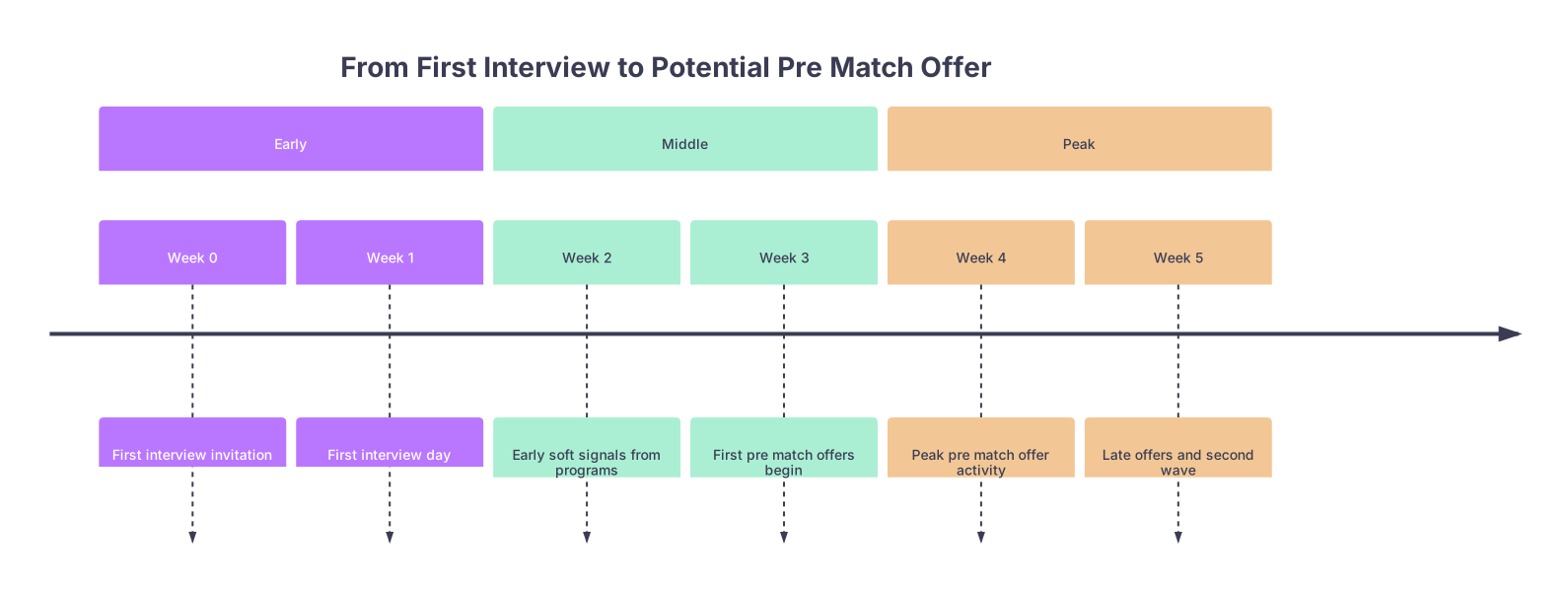
Big Picture: The 6-Week Arc From First Interview to Possible Offer
At this point, you should understand the overall arc before we slice it week by week.
From the moment interview season starts, assume a 6-week window where pre-match offers are most likely to appear:
| Period | Event |
|---|---|
| Early - Week 0 | First interview invitation |
| Early - Week 1 | First interview day |
| Middle - Week 2 | Early soft signals from programs |
| Middle - Week 3 | First pre match offers begin |
| Peak - Week 4 | Peak pre match offer activity |
| Peak - Week 5 | Late offers and second wave |
Here’s the blunt truth:
- Programs already know who they might pre-match before you even show up.
- Your behavior before, during, and right after the interview locks in whether you’re in that “maybe” pile.
- By the time they call you with an offer, 80% of your work should already be done.
So we’ll start one week before your first interview and go week by week until you’re holding an offer and deciding what to do with it.
Week -1: One Week Before Your First Residency Interview
At this point, you should stop thinking “I’m just prepping for interviews” and start thinking “I’m prepping for pre-match negotiations.”
1. Build Your Priority and Policy List
You need two documents:
Program Priority List – live spreadsheet, not a fantasy ranking.
- Columns:
- Name
- Location
- Visa friendliness (if relevant)
- Call schedule style (q4, night float, etc.)
- Fellowship opportunities
- Resident vibe (to be filled later)
- Pre-match history (yes/no/unknown)
- Gut score (1–10)
- Columns:
Personal Policy Sheet – this is where you decide, before pressure hits:
- Will you ever accept a same-day offer?
- What’s your minimum bar for accepting a pre-match? (e.g., must be top 3 on your list, must be in X region, must offer Y support)
- How many days of thinking do you ideally want before accepting? (Programs may not allow it. Know your ideal anyway.)
- Under what conditions will you definitely say no?
Write it out. Not just “I’ll think about it.”
When the PD calls you at 7:18 pm on a Thursday, this sheet is what will keep you from saying something dumb.
2. Pre-Draft Your Messages
You shouldn’t be writing from scratch later. You’ll be tired and emotional. Draft now:
- Post-interview thank-you template (customizable)
- “Expression of strong interest” email
- “I would be honored to train at your program and would accept a pre-match offer” email (only if you’re truly willing to do that)
- Polite decline template for offers you might turn down
Keep these in a doc or notes app, ready to personalize in 30–60 seconds.
3. Understand Program Behavior
Not all specialties and programs play the pre-match game equally hard. Talk to PGY1s and PGY2s. Ask bluntly:
“Does this program give pre-match offers? When? How aggressive are they?”
Make a simple reference:
| Program Type | Pre Match Likelihood | Typical Timing |
|---|---|---|
| Community IM | High | Weeks 2–5 |
| University IM | Moderate | Rare, later |
| Community Surgery | Moderate | Weeks 3–6 |
| University Surgery | Low | Rare |
| Transitional/Prelim | Variable | Late, Weeks 4–6 |
You’re not guessing now. You’re predicting.
Week 0: First Interview Week – Set the Foundation
At this point, you should treat the first week as rehearsal and data collection.
Before Each Interview Day
The night before:
- Review your policy sheet once. Remind yourself of your own rules.
- Look up whether the program is in a pre-match state (e.g., Texas, some military, some specific institutions depending on your country). The strategy is different if pre-match is standard vs. rare.
During the Interview
On interview day, you’re doing three quiet things:
Listening for pre-match hints
- Phrases to catch:
- “We tend to move quickly after interviews.”
- “We’ve historically filled spots before the main match.”
- “We’re very interested in candidates who show strong commitment early.”
- When you hear this, mentally flag them as “pre-match active.”
- Phrases to catch:
Calibrating your gut score
- After each major part (PD session, resident panel, tour), quickly decide:
- Better than expected?
- Worse than expected?
- Update the “Gut score” column same day. Don’t wait. Your memory will lie to you later.
- After each major part (PD session, resident panel, tour), quickly decide:
Signaling interest without begging
- Say the line you’ll use consistently at programs you actually like:
- “I could absolutely see myself training here and would be very happy if I matched here.”
- Do not say “You’re my number one” unless you mean it and you’ve chosen to play that game.
- Say the line you’ll use consistently at programs you actually like:
After Each Interview (Within 24 Hours)
- Send personalized thank-you notes (you already have the template).
- Add:
- Any mention of pre-match or “moving early”
- Whether anyone asked “Are you ranking us highly?” or similar.
- Adjust where the program sits on your priority list.
You’re building the map before the offers start.
Week 1: Early Interview Momentum and First Signals
At this point, you should start to see patterns in how programs communicate.
Watch the Communication Tone
You’ll get a mix of:
- Generic “Thank you for interviewing” emails
- Mild interest signals: “We enjoyed meeting you”
- Strong interest signals:
- Personal emails from PD or APD
- “Please keep us updated on your interest level”
- Calls from chief residents saying, “We’d love to have you here”
Track this. Literally.
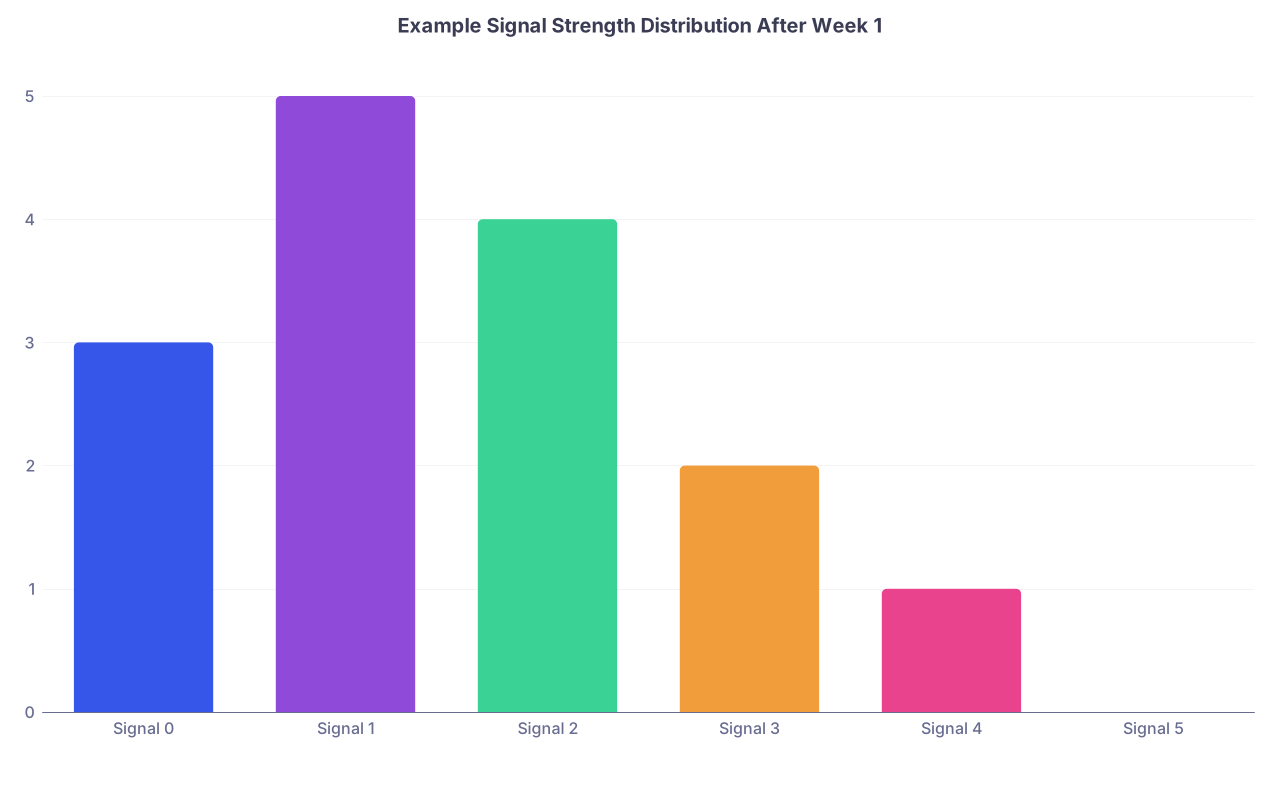
Create a “Signal strength” column in your spreadsheet:
- 0 – Only generic automated email
- 1 – Group thank-you, nothing else
- 2 – Personalized email from faculty or chief
- 3 – PD/APD-specific positive note
- 4 – PD/APD call/Zoom individually
- 5 – Explicit comment about “wanting you here” or “pre-match” language
| Category | Value |
|---|---|
| Signal 0 | 3 |
| Signal 1 | 5 |
| Signal 2 | 4 |
| Signal 3 | 2 |
| Signal 4 | 1 |
| Signal 5 | 0 |
Programs in the 3–5 range are your early pre-match candidates.
Start Controlled Interest Signaling
End of Week 1, you should:
- Identify your top 3–5 programs so far.
- Send slightly stronger messages to 2–3 of them:
- “After completing several interviews, I remain particularly impressed by your program’s [X, Y, Z]. I would be very excited to train there.”
Do not overplay your hand and tell 10 programs they’re your “top choice.” Word gets around. PDs talk.
Week 2: The Quiet Setup for Offers
This is where serious programs are sorting:
- Who they’ll rank normally
- Who they might try to lock in early
At this point, you should be sharpening your stance, not improvising.
Clarify Your True Top Tier
By now you’ve probably done a handful of interviews. Update your list:
- Lock in a Top 3–5 “pre-match acceptable” list
- Programs where, if they called tomorrow, you’d strongly consider accepting immediately.
- Lock in a “No-pre-match” list
- Programs you like but ONLY want through the regular match.
- This is usually:
- Highly competitive academic programs
- Places where you’re still waiting on other interviews
- Locations you’re unsure of
Label them in the spreadsheet:
- “PM-Yes”
- “PM-No”
- “PM-Maybe”
Strengthen Communication With PM-Yes Programs
For PM-Yes programs:
- Consider one strong interest email to the top 1–2:
- Clear but not binding:
- “Your program is currently one of my very top choices. The training environment and resident culture align extremely well with my goals.”
- Clear but not binding:
- If you are truly willing to accept a pre-match offer from a particular program, you may send:
- “If given the opportunity, I would be very eager to commit to training at your program.”
Just don’t lie. It will backfire eventually, directly or indirectly.
Week 3: First Wave of Pre-Match Offers
This is often when you see the first real moves. Community programs, less competitive specialties, and pre-match-friendly regions start calling.
At this point, you should be mentally rehearsed for three scenarios:
Scenario A: Soft Check-In Call/Email
You get:
- PD email: “We really enjoyed meeting you. How interested are you in our program?”
- Or a call: “Where do we stand on your list?”
Your responses are pre-planned:
If they’re PM-Yes and truly high:
- “You’re one of my very top choices. I’d be very excited to train there.”
- If you’re willing to commit: “If I received a pre-match offer from your program, I would be strongly inclined to accept.”
If they’re PM-No (you like them but not for pre-match):
- “I had a very positive impression and would be happy to match there, but I’m still in the middle of my interview season and plan to rank programs through the formal match process.”
If they’re mid-tier for you:
- Stay vague, don’t over-commit, but remain positive.
Scenario B: Indirect Offer Hint
Sometimes PDs don’t say “pre-match” directly. You might hear:
- “Would you be open to committing early if we offered you a position?”
- “If we made you an offer outside the match, how would you feel about that?”
This is the moment of truth. You should not be inventing your values right now.
Use your policy sheet:
- If it’s PM-Yes:
- “Yes, I would definitely be open to committing early here. I’d be very happy to train at your program.”
- If it’s PM-No:
- “I’m very interested in your program, but I’m planning to participate fully in the regular match.”
You’ve just protected your future self from a miserable 3-year mistake.
Scenario C: Direct Offer
“After our discussions, we’d like to offer you a pre-match position.”
Now what?
You have three levers:
Gratitude + Clarify Terms
- “Thank you so much. I’m honored. May I clarify a few details about the position and timeline for a decision?”
Ask (Politely) for Time
- “Given the importance of this decision, would it be possible to have [48–72 hours] to think this over and discuss with my family/mentors?”
- Some programs say yes. Some say “we need an answer today.” You still ask.
Stick to Your Prior Rules
- If they’re not on your PM-Yes list and you know this is not where you want to be, don’t play games. Decline respectfully.
Week 4: Peak Pre-Match Activity and Second-Order Effects
At this point, some of your peers will have accepted offers. Programs feel pressure. More pre-match offers appear, often faster and more aggressive.
If You Already Accepted an Offer
Your week-4 checklist:
Confirm everything in writing:
- Start date
- Program name and location
- Position type (categorical vs prelim)
- Any special conditions (research track, visa support, etc.)
Politely withdraw from remaining interviews, unless:
- Your system doesn’t allow withdrawals
- Your region/custom expects you to still attend (depends heavily on country)
Do not keep interviewing “for fun” after committing. Programs remember.
If You’re Holding or Just Declined an Offer
If you asked for a few days:
- Use that time efficiently:
- Talk to at least 2–3 honest people:
- Residents at that program (not just chiefs)
- One mentor who doesn’t have skin in the game
- Re-score the program on your sheet as if you hadn’t been offered anything. Would you feel lucky to match there through the regular match?
- Talk to at least 2–3 honest people:
If you declined:
- Expect an emotional crash.
- That’s normal. You just turned down certainty. Write down why you declined while it’s fresh, so you don’t spiral later.
Week 5: Late Offers, Cleanup, and Final Positioning
By now, the volume may decrease, but late pre-match offers still happen—especially at:
- Programs that lost candidates to earlier offers
- Programs adjusting to unexpected changes in their class fill
At this point, you should be:
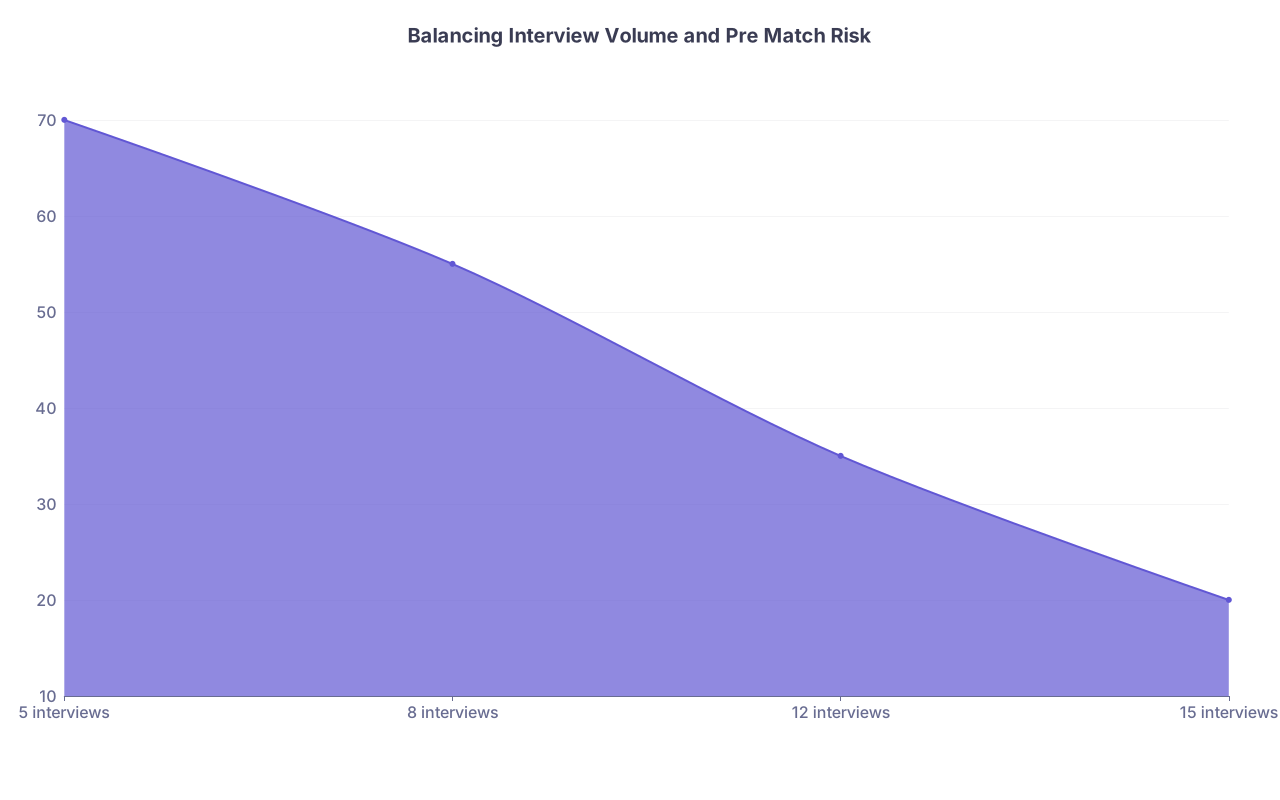
1. Recalibrating Your Risk
Look at your full picture:
- How many interviews completed?
- How many genuine top-tier options realistically possible in the regular match?
- How risk-tolerant are you really?
| Category | Value |
|---|---|
| 5 interviews | 70 |
| 8 interviews | 55 |
| 12 interviews | 35 |
| 15 interviews | 20 |
(Think of the values as “relative risk of going unmatched” – rough mental model, not exact math.)
If you have very few interviews and you receive a solid pre-match from a decent program, you may need to be more pragmatic than idealistic.
2. Tightening Communication
Send one last round of calibrated messages to key programs you have not heard from strongly:
- Short, direct, sincere.
- No drama, no begging.
- “I remain highly interested in your program and would be thrilled to train there. Please let me know if I can provide any additional information.”
This nudge sometimes triggers a late pre-match or at least a stronger ranking.
Week 6 and Beyond: If You Never Got a Pre-Match Offer
Some applicants panic here. They think, “No pre-match = no one wants me.”
That’s wrong.
Many strong programs never pre-match at all. Many specialties barely touch it. Lack of offers is not a verdict on your application.
At this point, you should:
- Stop obsessing over pre-match and shift fully into:
- Solidifying your rank list
- Updating programs with key changes (publications, class rank improvements)
- Mentally preparing for regular Match outcomes
If you’re in a system where pre-match is common and you got nothing:
- Have a blunt talk with a mentor:
- “Given my interview list and no pre-match offers, how aggressive should I be with my rank list breadth?”
- Sometimes this means ranking more community programs and casting wider.
One-Day Micro-Timeline: Handling the Actual Offer Call
Let me zoom in, because this is where people melt.
Hour 0: The Call
- PD: “We’d like to offer you a pre-match position.”
- You:
- Thank them sincerely.
- Ask about the decision deadline.
- Ask if you can see everything in writing/email.
If they pressure you for an answer right now, your pre-written line is:
“I’m extremely grateful and very interested. This is a major life decision, and I’d like to be sure I decide thoughtfully. Is there any flexibility to have even 24 hours to confirm?”
Sometimes they’ll say no. Then you decide if this program was truly on your PM-Yes list or not.
Hours 1–12: Immediate Processing
- Pull out your policy sheet and score sheet.
- Do not ask 15 people for advice. Ask 2–3 who actually know your file and the landscape.
- If you’re leaning toward “no,” don’t stall just to stall. Let them move on.
Before the Deadline
- Call or email with your decision.
- If yes: confirm you’ll receive written confirmation and ask for the next steps.
- If no: be gracious, brief, and clear.
Final Snapshot: What You Should Have Done at Each Stage
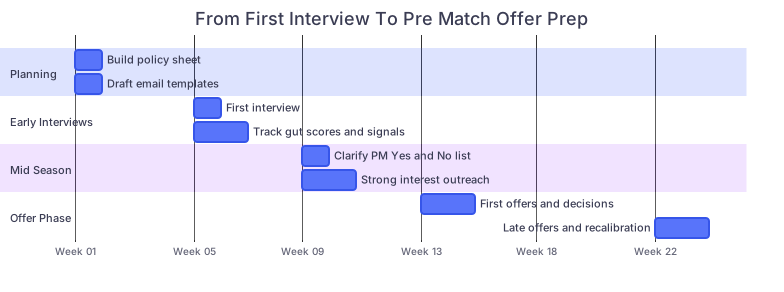
To tie it all together:

| Task | Details |
|---|---|
| Planning: Build policy sheet | w0, 1, 1w |
| Planning: Draft email templates | w0, 1, 1w |
| Early Interviews: First interview | w1, 2, 1w |
| Early Interviews: Track gut scores and signals | w1, 2, 2w |
| Mid Season: Clarify PM Yes and No list | w2, 3, 1w |
| Mid Season: Strong interest outreach | w2, 3, 2w |
| Offer Phase: First offers and decisions | w3, 4, 2w |
| Offer Phase: Late offers and recalibration | w5, 6, 2w |
And a fast checklist of key “at this point you should…” milestones:
- Week -1 – You’ve built your priority + policy sheet and drafted all templates.
- Week 1 – You’re logging signals and have initial top 3–5 programs identified.
- Week 2 – You’ve labeled PM-Yes/No/Maybe and sent calibrated interest signals.
- Week 3–4 – You’re ready for calls, know exactly when you’ll say yes, no, or ask for time.
- Week 5+ – You’ve accepted/declined offers cleanly or transitioned fully to regular Match focus.
Core Takeaways
- Decide your rules before the pressure hits; emotion should not write your contract.
- Track programs with ruthless honesty—signals, gut scores, pre-match history—not vibes.
- When the offer comes, use a scripted, calm response, not a panicked yes or no.