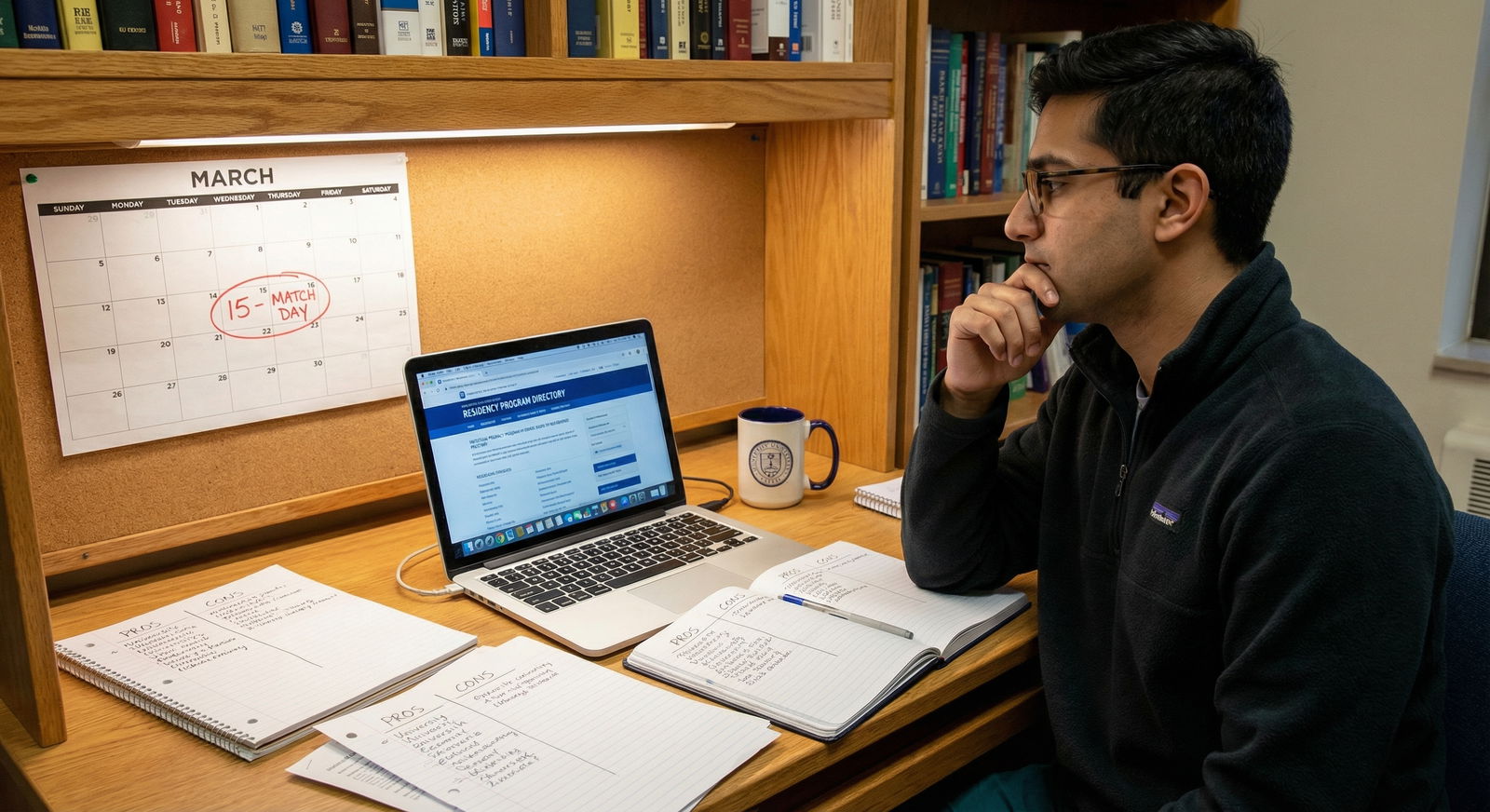
The biggest mistake applicants make with pre-match offers isn’t saying yes too quickly. It’s thinking they have time to “sleep on it” when, practically, they don’t.
You do not have unlimited time to “think about” a pre-match. There’s an unwritten clock that starts the minute that email or phone call lands. If you ignore that clock, programs assume you are not serious, not organized, or both.
Let’s walk through exactly how long you can safely think, what to do hour by hour, and how to buy yourself time without burning the bridge.
First, Understand the Real Clock You’re On
There are two timelines with pre-match offers:
- The formal deadline (if they give you one in writing)
- The informal professionalism clock (how long you can wait before you start looking flaky)
Those are not the same.
Most programs won’t say, “You must answer in 6 hours.” They’ll say things like:
- “Take a couple of days to think about it.”
- “Get back to us by early next week.”
- “We’d appreciate a response soon so we can plan our rank list.”
Those phrases sound fuzzy. They’re not. Behind the scenes, they’re juggling:
- GME office approvals
- Department chair sign-off
- How many other offers they can send
- Internal deadlines for contract generation
So you need a clear internal rulebook.
| Scenario | Safe Window to Decide |
|---|---|
| Verbal offer, no deadline given | 24–48 hours |
| Written offer with vague deadline | 48–72 hours |
| Offer with explicit date/time | Respect stated time |
| International visa-dependent offer | 24–48 hours |
| “Exploding” offer (same-day) | Same day, with 2–6 hr buffer |
If you’re thinking about a pre-match offer for a week, you’re not “being thoughtful.” You’re broadcasting disinterest.
Immediate Timeline: The First 2 Hours After the Offer
At this point you should stop whatever else you’re doing and shift into decision mode.
This is true whether the offer comes:
- Right after your interview
- In a follow-up call
- In an email that hits your inbox at 10:37 PM on a Wednesday
Minute 0–10: Acknowledge and Buy Initial Time
You do not go silent. That’s the rookie move.
Within the first 10–15 minutes (or as soon as you see it), you:
- Reply to the email or
- Verbally respond on the call
Here’s what you say if it’s on the phone and unexpected:
“Thank you so much, I’m truly honored. This is a big decision for me, and I want to be thoughtful. Would it be possible for me to think about this and get back to you by [tomorrow evening / within 48 hours]?”
If it’s by email, your reply within 15–30 minutes can be:
“Thank you very much for this generous offer. I’m very excited about [Program Name] and appreciate your confidence in me. This is an important decision, and I would like to think it through carefully. Would it be acceptable for me to get back to you with a final decision by [specific day and time]?”
Key points:
- You show gratitude.
- You show genuine interest.
- You request a clear time box.
Anything beyond 48–72 hours is pushing it, unless they explicitly offer more.
Minute 10–120: Gather Essential Information
At this point you should clarify details, not just panic and call 5 classmates.
Use the first 2 hours to:
Clarify the offer terms (if not already clear):
- Is this binding if I accept?
- Is there a written contract or letter? When will I receive it?
- Any contingency (visa, Step 2, graduation, etc.)?
Ask the uncomfortable but necessary questions:
- “If I accept this pre-match, can I still interview or rank other programs?” (In many systems, once you sign, you’re done.)
- “By when do you need my final answer?” (Force them to say it clearly.)
You don’t need every tiny detail. You need just enough to know what “yes” actually commits you to.
Short-Term Window: The First 24 Hours
This is your prime thinking window. At this point you should be operating on a 24–48 hour decision arc unless given a firm written deadline that’s longer or shorter.
Hour 0–4: Build Your Comparison List
You can’t think clearly if it’s just vibes and anxiety.
Make a quick, blunt list. Nothing fancy. Columns:
- Program
- Location
- Training quality
- Lifestyle
- Visa/contract stability (if applicable)
- Gut feeling
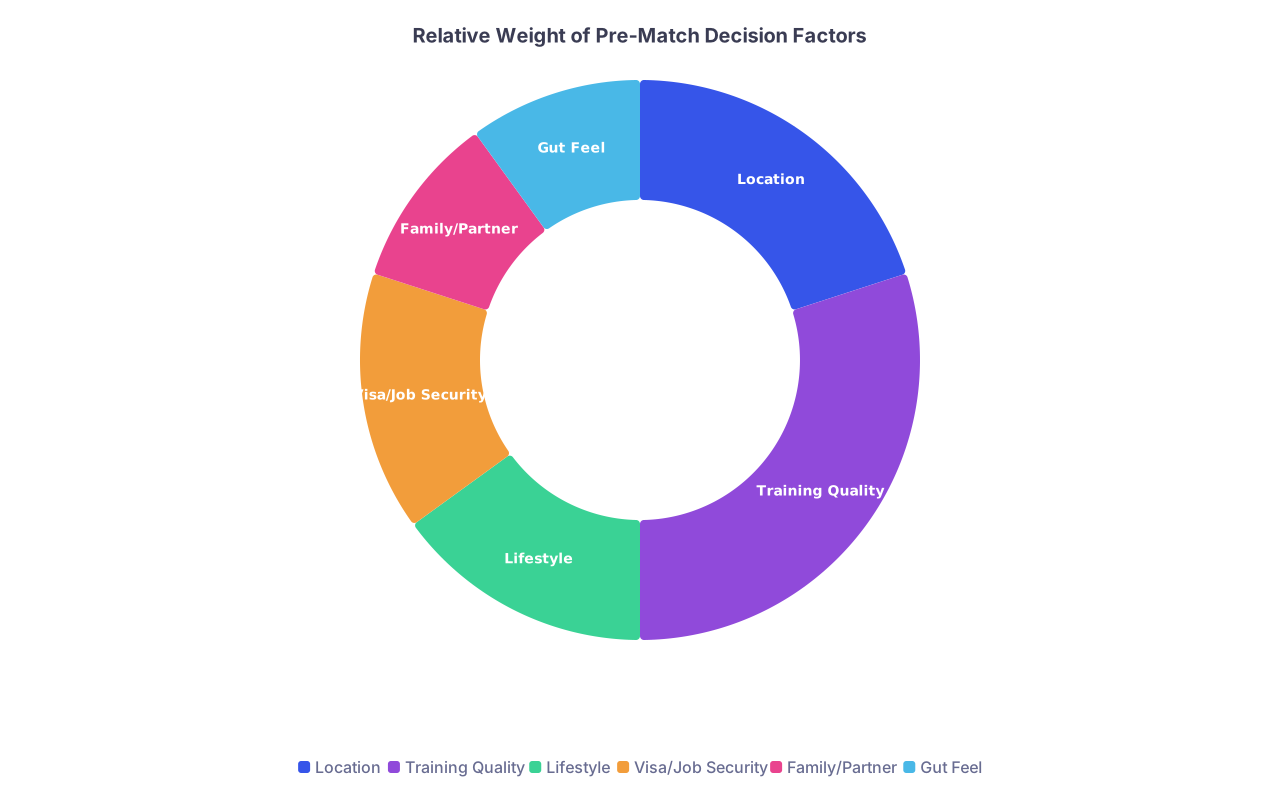
| Category | Value |
|---|---|
| Location | 20 |
| Training Quality | 30 |
| Lifestyle | 15 |
| Visa/Job Security | 15 |
| Family/Partner | 10 |
| Gut Feel | 10 |
Look at:
- How does this pre-match stack up against your top 3 expected programs?
- Would you be genuinely upset if you matched elsewhere instead? Or more upset if you lost this offer?
If this program was already in your mental top 3, you should not need a week to decide. That’s your answer.
Hour 4–12: Talk to 2–3 Trusted People (Not 10)
At this point you should get focused input, not crowd-sourced chaos.
Prioritize:
- Someone in your specialty (resident or attending)
- One mentor who knows your full application risk (scores, fails, visa, red flags)
- Possibly partner/family for location/life considerations
Questions to ask:
- “Given my scores and application, is it smart to lock this in?”
- “How competitive am I realistically? If I say no, what’s my downside?”
- “What have you seen happen when people decline pre-match offers?”
I’ve watched students torpedo themselves asking 15 people and getting 15 different answers. By hour 12, you want fewer voices, not more.
Hour 12–24: Reality-Check Your Risk
This is the part people skip because it’s uncomfortable.
Ask yourself, honestly:
- Did I have any of these?
- Step failures
- Low scores for my specialty
- Weak or minimal US clinical experience
- Gaps in training
- Visa needs (J-1, H-1B, etc.)
- Am I applying to a high-risk specialty (Derm, Ortho, Plastics, ENT, etc.) with a borderline profile?
- Did this pre-match come from a program that tends to rescue borderline applicants?
If you’re in a higher-risk category, your safe thinking time shrinks. You don’t have the luxury that a 260/260, AOA, 10-pub applicant has.
The 48–72 Hour Threshold: When “Thinking” Becomes a Red Flag
If a program has clearly said, “Take a couple of days,” you have at most 48–72 hours before they:
- Assume you are ranking them low
- Move to the next candidate
- Mentally file you as unreliable
At this point you should either:
- Commit and accept, or
- Decline respectfully and clearly
When You Can Safely Use 72 Hours
You can push closer to 72 hours if:
- The program explicitly said “by end of week” and it’s Monday/Tuesday
- You have another interview scheduled in those 2–3 days that could materially change your rank list
- They’ve given you something in writing with a clearly stated deadline at 72 hours or more
Even then, you keep communication warm:
- At ~24–36 hours:
“Thank you again for the offer. I’m still thinking it through carefully and remain very interested. I’ll absolutely get back to you by [deadline].”
This keeps you on their radar as engaged, not ghosting.
What to Do Week-by-Week in Pre-Match Season
Pre-match chaos feels worse when you’re scrambling from zero each time. You want a pre-built decision framework before the first offer ever lands.
Here’s how to structure it by weeks in prime pre-match season (roughly October–January depending on system/country).
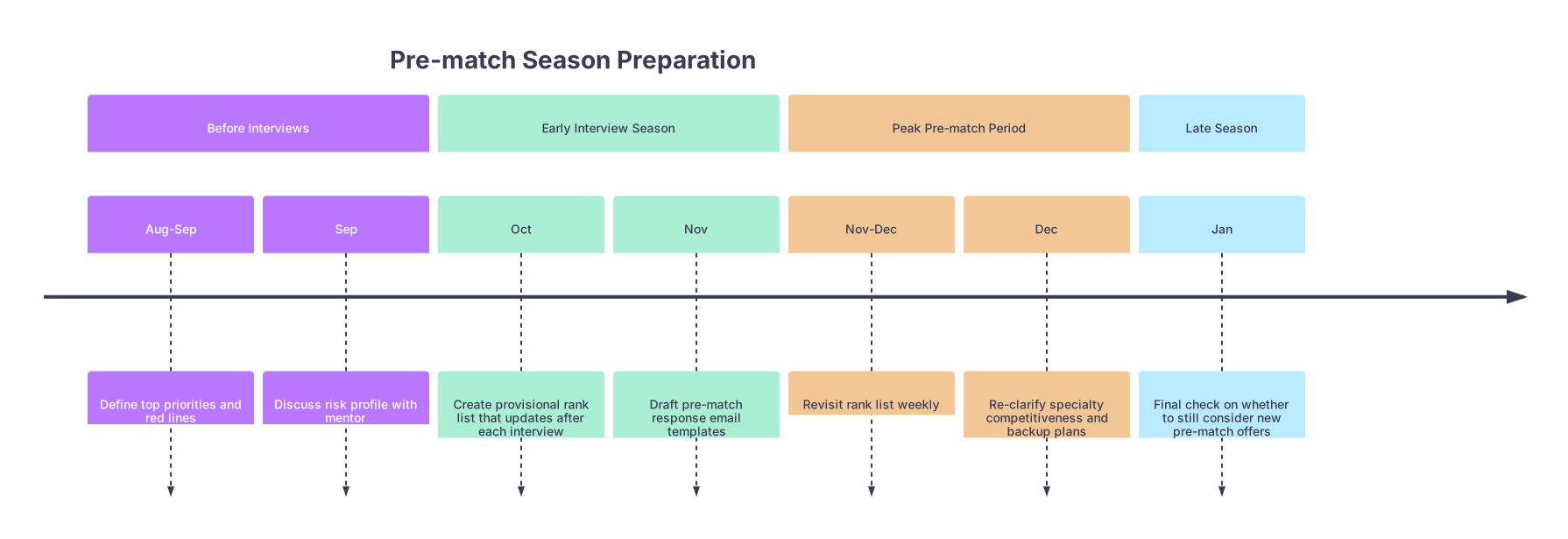
| Period | Event |
|---|---|
| Before Interviews - Aug-Sep | Define top priorities and red lines |
| Before Interviews - Sep | Discuss risk profile with mentor |
| Early Interview Season - Oct | Create provisional rank list that updates after each interview |
| Early Interview Season - Nov | Draft pre-match response email templates |
| Peak Pre-match Period - Nov-Dec | Revisit rank list weekly |
| Peak Pre-match Period - Dec | Re-clarify specialty competitiveness and backup plans |
| Late Season - Jan | Final check on whether to still consider new pre-match offers |
August–September: Before Interviews
At this point you should:
- Decide your non-negotiables:
- Locations you absolutely won’t live in
- Programs you know you’d never pre-match with, no matter what
- Sit with a mentor and bluntly map your risk:
- “If I get a pre-match from a solid but not fancy community program, should I take it?”
This pre-decision saves you from emotionally panicking when the actual email comes.
October–Early November: Early Interview Season
At this point you should:
- Start a living rank list after each interview. Not just stars in your head—actual written ranking.
- Mark programs as:
- “Would pre-match immediately”
- “Would need to think 24–48 hours”
- “Would probably decline pre-match and stay in the Match”
You are building your auto-response rules in advance. That’s how you decide fast without feeling reckless.
Mid-November–December: Peak Pre-Match Window
This is where most offers surface.
Weekly, you:
- Update your rank list
- Review:
- Where would I say “yes” within 24 hours?
- Where would I only say “yes” if my next 2–3 interviews go poorly?
If you’re still totally undecided about your top tiers in December, you’re setting yourself up for panic-acceptance or panic-decline.
Scripts for Different Time-Pressure Scenarios
You don’t want to improvise this while your heart is racing and your phone is buzzing.
Scenario 1: No Clear Deadline Given
Program emails:
“We’d like to offer you a pre-match position with us for next year.”
At this point (within 1–2 hours) you reply:
“Thank you very much for this offer; I’m truly honored and excited about [Program]. This is an important decision and I want to think it through carefully. Would it be alright if I got back to you with a final decision by [48 hours from now – specific date and time]?”
If they say yes, you now have a real clock. Use it fully, don’t stretch beyond.
Scenario 2: “We Need to Know by Tomorrow”
You’ve just been given ~24 hours.
Your move:
Clarify:
“So to be clear, you’d like a final decision by [date, time]?”
If you know you might say yes but need a bit more:
“If needed, is there any flexibility to extend to [another 12–24 hours], or is [stated deadline] a hard cut-off?”
If they say it’s hard, assume it is. You decide inside that window or you lose it.
Scenario 3: Verbal Offer On-Site After Interview
You get pulled aside:
“We really like you. If we offered you a position outside the Match, would you accept?”
This is still a pre-match negotiation disguised as “just talking.”
If you’re not 100% sure:
“I’m very interested and honored. I take commitments seriously, so I don’t want to answer on the spot without thinking it through. If you do decide to extend a formal offer, would it be possible to have 24–48 hours to consider it and get back to you?”
Never promise on the spot if you’re not ready. Programs remember.
When You Should Basically Say Yes Within 24 Hours
Let me be direct. If any of these are true, your safe “thinking” time is short, and leaning “yes” is smart:
- You have:
- Step failures or low scores for the specialty
- Heavily IMG-dependent background with limited USCE
- Visa needs and this program is willing to sponsor
- The program is:
- In your top 3
- In a major city or region you actually want
- Known for stable training, not malignant
If a program that checks all those boxes offers you a pre-match and you spend a week “thinking”, you’re not being strategic. You’re gambling unnecessarily.
When You’re Allowed to Take the Full 72 Hours (or Even Decline)
You can take more time—or even comfortably decline—if:
- Your application is very strong for the specialty (and people you trust confirm this)
- The offer is from:
- A lower-tier program than others you’re interviewing at
- A location you’re lukewarm about
- A program with concerning vibes, resident burnout, or poor board pass rates
At this point you should ask one question:
“If I match at my #1 or #2 instead of this pre-match, will I be happier long-term, even if saying no now leaves a small chance of not matching at all?”
If the answer is clearly yes, take the risk consciously. Not blindly.
Daily Checklist When You’re Sitting on a Pre-Match Offer
Use this 3-day micro-timeline if you’ve negotiated 48–72 hours.
Day 1 – Information and Gut Check
- Confirm:
- Binding nature of offer
- Timeline for formal paperwork
- Any contingencies (Step 2 score, visa, etc.)
- Update your rank list with this program placed honestly
- Talk to 1–3 trusted mentors
- Tell the program you are actively considering it and will reply by the agreed time
Day 2 – Risk vs. Regret
- Ask:
- “If I lose this offer, what is my worst realistic outcome?”
- “If I accept this and then a dream program appears, will I be filled with regret?”
- Sleep on it once. Not five times. Once.
Day 3 – Decide and Communicate Clearly
By now, you’re at the end of safe “thinking.”
If yes:
- Email or call:
“I’d be honored to accept the pre-match offer and commit to [Program] for residency.”
- Ask about next steps for contracts and NRMP implications (if applicable).
- Email or call:
If no:
- Be respectful and concise:
“Thank you again for your generous offer and for your confidence in me. After careful thought, I’ve decided not to accept a pre-match position and will remain in the Match. I truly appreciated meeting your team and wish you the best this season.”
- Be respectful and concise:
Do not ghost. Programs talk. PDs remember names.
The One Thing People Underestimate: Emotional Bandwidth
Most applicants overestimate how rational they’ll be in the moment.
Your brain will go:
- “What if I never get another offer?”
- “What if I say yes and hate it?”
- “What if my parents are right that I should take anything?”
To keep yourself from spiraling, build your decision rules before the first offer. For example:
- “If a pre-match is in my top 3 and I don’t have major red flags against the program, I will accept within 48 hours.”
- “If a pre-match is outside my top 5 and my mentors think I’m reasonably competitive, I will decline and stay in the Match.”
Put these in writing. Future you—tired, anxious, and flooded with adrenaline—will thank past you.
Quick Recap: How Long You Can Safely “Think”
- You have 24–48 hours as a normal, safe thinking window for most pre-match offers, if you acknowledge promptly and communicate clearly.
- You should almost never stretch beyond 72 hours unless the program explicitly allows it—and even then, you maintain contact during that time.
- The right timing isn’t just about the clock. It’s about your risk profile, how highly you truly rate the program, and whether losing the offer would be a disaster or an inconvenience.
Decide your rules early. Communicate like a professional. And when the offer comes, use your limited time to think hard, not long.