
The most dangerous part of a pre‑Match offer is the silence that comes after you say yes.
Most people relax. You cannot afford to. The clock is now running on a very specific, very unforgiving post‑acceptance timeline.
You have two parallel jobs from now until residency starts:
- Lock in and protect your offer.
- Systematically prepare your life, paperwork, and skills so you do not crash and burn in July.
I’ll walk you through this, step by step, from the day you accept until the week you start residency.
Immediate Aftermath: The First 48–72 Hours
At this point you should stop thinking like an applicant and start thinking like an incoming employee.
Within 0–24 hours of accepting
You’ve verbally accepted or signed an offer. Now:
-
- Ask for:
- Formal offer letter or contract (start date, PGY level, salary, benefits)
- Any contingencies (Step 2 score, background check, graduation proof, etc.)
- Save a PDF copy. Back it up to cloud + email to yourself.
- Ask for:
Notify your dean’s office
- Send a short, professional email:
- Program name and specialty
- Start date
- Ask what they need from you (evaluation forms, verification, etc.)
- Send a short, professional email:
Stop shopping around (unless specified)
- Pre‑Match offers are typically binding in spirit, even if not legally iron‑clad.
- Do not casually attend other interviews “for practice.” Programs talk. Word gets around.
Within 24–72 hours
Now you stabilize the commitment and clean up loose ends.
Clarify communication channels
- Ask who your main contact is:
- Program coordinator (for paperwork, logistics)
- Program director or APD (for academic questions)
- Confirm your preferred email and phone.
- Ask who your main contact is:
Document every requirement mentioned
- Open a simple tracker:
- Sheet tabs or notebook sections:
- Program documents
- Licensing
- Exams
- Health/HR
- Moving/life logistics
- Sheet tabs or notebook sections:
- Write down any phrase like: “We’ll need you to…” and translate it into a task with a due date.
- Open a simple tracker:
At this point you should have:
- A confirmed acceptance (in writing)
- A primary contact at the program
- A basic task tracker started
Month-by-Month Overview: From Acceptance to Start Date
The exact months will vary by when you accept, so I’m going to anchor this to “Months Before Start” instead of calendar months. Most residencies start July 1.
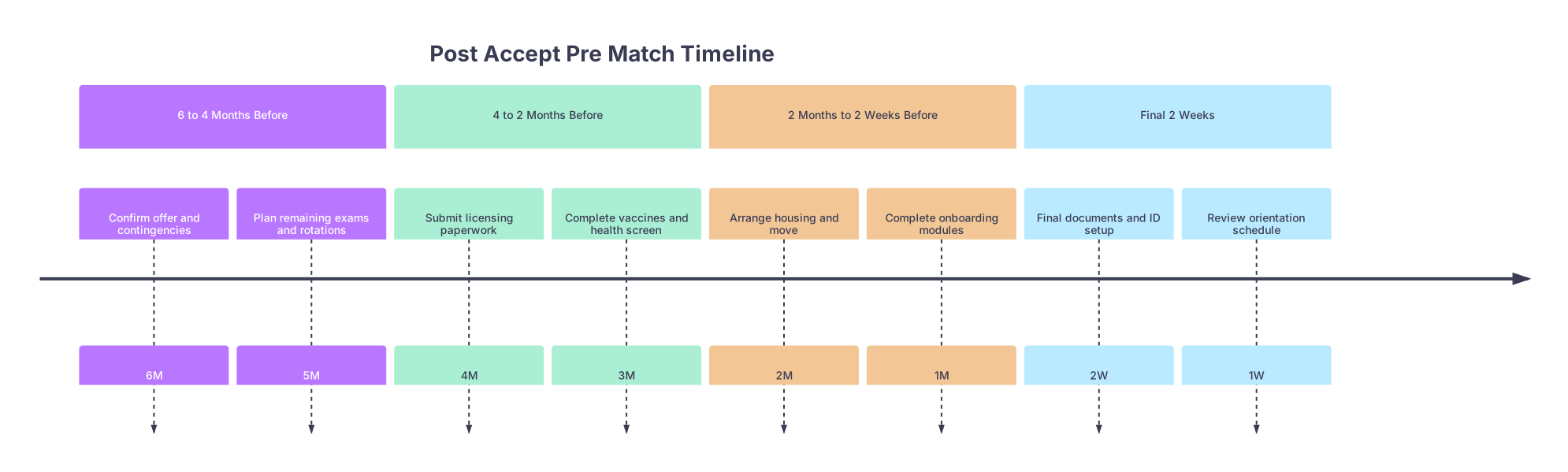
| Period | Event |
|---|---|
| 6 to 4 Months Before - Confirm offer and contingencies | 6M |
| 6 to 4 Months Before - Plan remaining exams and rotations | 5M |
| 4 to 2 Months Before - Submit licensing paperwork | 4M |
| 4 to 2 Months Before - Complete vaccines and health screen | 3M |
| 2 Months to 2 Weeks Before - Arrange housing and move | 2M |
| 2 Months to 2 Weeks Before - Complete onboarding modules | 1M |
| Final 2 Weeks - Final documents and ID setup | 2W |
| Final 2 Weeks - Review orientation schedule | 1W |
We’ll break these into tighter windows.
4–6 Months Before Residency Start: Foundation and Future-Proofing
If you accepted early (classic for pre‑Match), this is your long runway. Use it.
At this point you should lock down academics and exams
Finish any remaining licensing exams
- If you still have:
- USMLE Step 2 CK / COMLEX Level 2 CE
- Step 3 (rare pre‑res, but some IM/FM programs like it early)
- Build a concrete schedule:
- Test date
- Dedicated study blocks
- Buffer weeks for rescheduling if life melts down
- Tell your program if the offer is contingent on a specific score or pass by a deadline.
- If you still have:
Do not coast on rotations
- Program directors absolutely notice if your last year of med school turns into a “victory lap.”
- Target:
- Rotations aligned with your future specialty (or related fields)
- One or two months that challenge your intern‑level responsibility (e.g., sub‑internships, night float, ED)
Build a master checklist (so you don’t miss anything)
Create a master view of what’s coming.
| Category | Examples of Tasks |
|---|---|
| Program/HR | Offer letter, contract, benefits forms |
| Licensing | Training license, DEA (if required later) |
| Exams | Step 2/3 scheduling, score reporting |
| Health | Vaccines, TB test, titers, physical |
| Legal/IDs | SSN, passport, visa, work authorization |
| Housing/Move | Lease, movers, utilities, parking |
Then map tasks by deadline, not by “I’ll get to it later.” The biggest disasters I’ve seen come from people realizing in May that their state medical board takes 90 days and they haven’t even started.
Start initial communication with the program
Introduce yourself to the program coordinator:
- Thank them
- Ask: “What’s your usual schedule for onboarding and paperwork?”
- Ask to be added to any incoming resident email lists or group chats.
Reach out (briefly) to:
- A chief resident or rising senior resident
- Ask:
- “When do people typically move?”
- “Any strongly recommended neighborhoods?”
- “Anything you wish you’d done earlier after you matched here?”
At this point you should:
- Know your remaining exam obligations
- Have a master checklist with rough timelines
- Have at least one resident contact at your future program
2–4 Months Before: Paperwork, Licensing, and Health Requirements
This is the high-stakes paperwork window. If you slack here, you will feel it in June.
Licensing and eligibility
Most programs will require at least a training license or proof that your full license is in progress.
Typical steps:
Training / limited license
- Check the state medical board website:
- Application forms
- Fees
- Required documents (transcripts, exam scores, background checks)
- Processing times (often 60–90+ days)
- Coordinate with your med school for:
- Official transcripts
- Dean’s letter / certificate of graduation (timed with your grad date)
- Check the state medical board website:
USMLE/COMLEX score reporting
- Confirm your program has all required scores:
- Step 1 / Level 1
- Step 2 CK / Level 2 CE
- CS/PE if relevant for older grads
- If you’re waiting on a score:
- Put the expected report date in your calendar
- Tell your coordinator if any delay is expected
- Confirm your program has all required scores:
HR and hospital onboarding
You’ll start seeing a flood of emails now. Do not ignore or “star for later.”
Common tasks:
- Background check forms
- I‑9 employment eligibility
- Direct deposit setup
- Benefits enrollment (health, dental, retirement options)
- Malpractice coverage info (usually automatic via GME, but read it)
Create a weekly 30-minute admin block just to:
- Open every residency email
- Add tasks to your tracker
- Knock out whatever can be done in under 5 minutes
Health and immunization requirements
Every hospital has its own flavor of misery here, but you’ll usually see:
Required:
- TB screening (PPD, Quantiferon)
- MMR, Varicella immunity
- Hep B surface antibody
- Tdap within last 10 years
- Flu vaccine (if starting in flu season)
- Sometimes COVID vaccine and/or boosters
Strategy:
- Collect your existing documents now from student health.
- Get titers early if you don’t have proof.
- If you need a vaccine series (e.g., Hep B), remember:
- It’s a multi‑dose series with gaps. Start early.
At this point you should:
- Have licensing paperwork either submitted or nearly ready
- Be actively working through HR portals and forms
- Have started, not just planned, your health clearance process
1–2 Months Before: Housing, Money, Real Life Logistics
This is where the “I’ll figure it out later” crowd starts panicking.
Housing and relocation
If your program is in a new city:
Timeline
- Aim to sign housing 4–8 weeks before move‑in.
- Move 1–2 weeks before start date if possible.
Decide your approach
- Short-term (month‑to‑month or 3‑month lease) if:
- You don’t know the area
- You want flexibility
- Long-term (12‑month) if:
- You know the region
- You’re moving with family
- Short-term (month‑to‑month or 3‑month lease) if:
Checklist
- Lease signed
- Move‑in date set
- Utilities setup dates (electric, gas, internet)
- Parking arrangements if needed
- Renter’s insurance (often required)
Financial prep
Residency pays, but not much. And expenses hit early.
Map your cash flow for the first 2–3 months:
- Up‑front moving costs
- Deposits (rent, utilities)
- Licensing and exam fees
- Car registration/insurance if new state
Build a basic emergency buffer if you can:
- Even $1000–$2000 reduces a lot of stress in July when your first paycheck is delayed or smaller than expected.
Decide now:
- Will you need a credit card to float some of this?
- Are you consolidating or refinancing any loans later (not urgent now, but put it on a future task list)?
Program-specific prep
Your future program will start pushing more detailed onboarding content.
Typical things you’ll see:
- EMR training modules (Epic, Cerner, etc.)
- Mandatory online education (HIPAA, OSHA, compliance)
- Orientation schedule templates
- Call room, parking, badge instructions
Start a simple folder structure on your laptop:
- /Residency
- /Onboarding
- /Licensing
- /Schedules
- /Education
At this point you should:
- Have a signed lease or clear housing plan
- Know your move-in and approximate travel dates
- Have a sense of your first 2–3 months of financial needs
Final 4–6 Weeks: Tightening Screws and Skill Tuning
This is where you move from “planning” to “executing.”
Confirm every critical document
Use your tracker and do a real audit:
Licensing
- Training license: submitted? Paid? Any missing items?
- Email or portal: confirm status with state board or GME office.
HR
- Background check: completed?
- I‑9 verification: scheduled or done?
- Direct deposit: confirmed with a test deposit or final screen?
Health
- All titers/labs uploaded?
- TB test completed within the valid window?
- Any last vaccines needed?
Graduation
- Diploma date aligned with board requirements
- School sent final transcript / proof of graduation if requested
If anything looks questionable or slow, reach out early, not the week before orientation.
Skill refresh: don’t walk in rusty
You don’t need to become a super‑intern before day one, but you also shouldn’t forget how to write a note.
Focus on:
Core clinical skills
- Writing an H&P and progress note that doesn’t annoy your senior
- Orders for:
- Fluids
- Basic antibiotics
- Insulin
- DVT prophylaxis
- Interpreting:
- Basic EKGs
- Common lab panels
- CXR basics
Procedural
- Watch 1–2 high‑quality videos per procedure you’ll likely see:
- IV placement
- ABG
- Foley
- NG tube
- For some specialties, central lines, paracentesis, etc.
- Watch 1–2 high‑quality videos per procedure you’ll likely see:
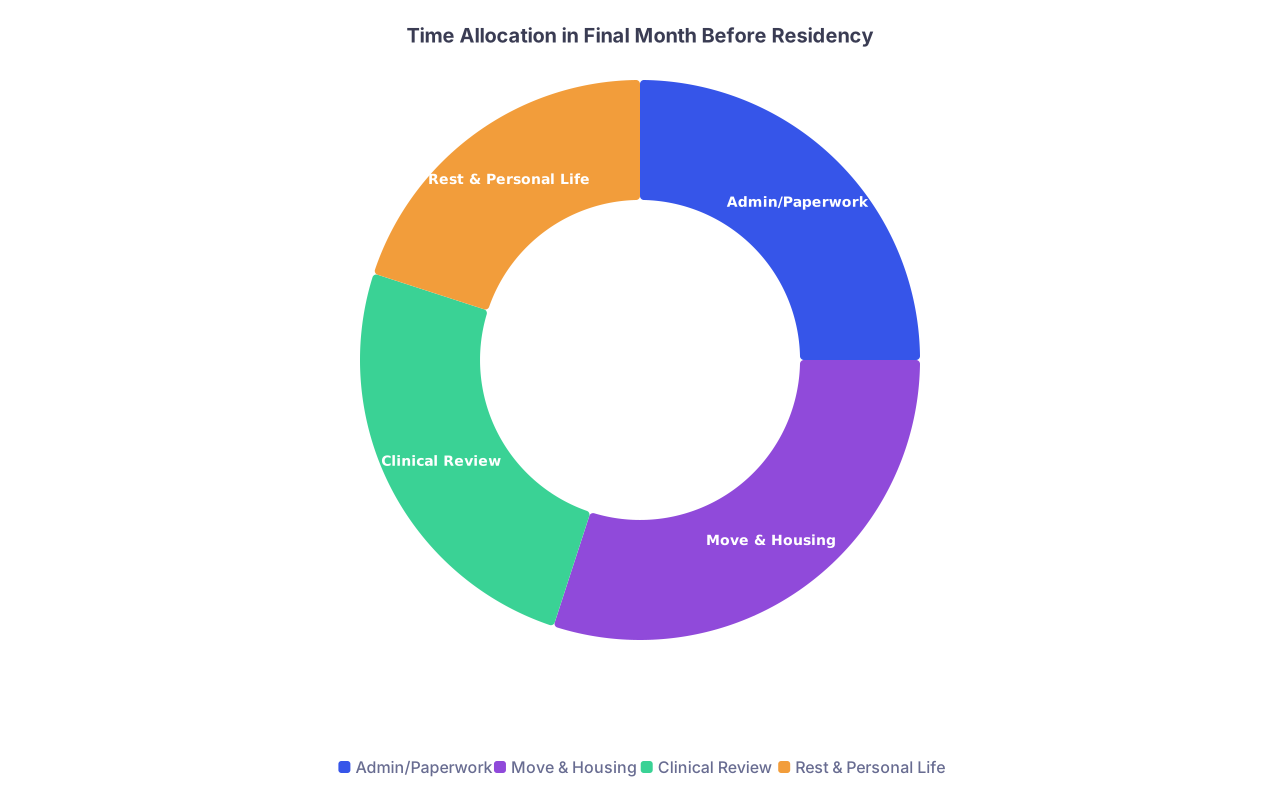
| Category | Value |
|---|---|
| Admin/Paperwork | 25 |
| Move & Housing | 30 |
| Clinical Review | 25 |
| Rest & Personal Life | 20 |
Communication with your future team
Now is a good time to:
- Reply to any group emails or intros with a short, human response.
- If chiefs send out:
- Reading lists
- Orientation prep materials
- Rotations preference forms
- Fill them out on time. Late responders get the junk rotation slots. I’ve seen it more than once.
At this point you should:
- Have all required paperwork either completed or in final review
- Feel at least mildly warmed up clinically
- Know your move plan and orientation dates
Final 1–2 Weeks: Execution and Mental Setup
This stretch is deceptively short. Don’t overpack it.
Administrative last-mile tasks
Physical arrival logistics
- Know where to park day one
- Know where to go for:
- Badging
- ID photo
- Scrub access (if provided via machines)
- Lockers
Tech and access
- Confirm:
- Hospital email login
- EMR access credentials (or when you’ll receive them)
- Any VPN or 2FA app setup on your phone
- Confirm:
Schedule
- Get your first rotation schedule:
- First day start time
- Call schedule for first month
- Any pre-orientation tasks (drug tests, badge photos).
- Get your first rotation schedule:
Set up your personal life for survival, not optimization
You’re not trying to live your dream life in PGY‑1 month 1. You’re trying to not drown.
Do this:
Stock your new place with:
- Quick meals (frozen, canned, easy staples)
- Basic cleaning supplies
- A minimal but functional setup: bed, desk, decent chair, work-light
Automate what you can:
- Bill pay (loans, utilities, credit card)
- Calendar reminders for:
- Loan grace period ending
- Required future trainings
- License renewals (if applicable)
Plan 1–2 actual rest days before start:
- No studying
- No admin
- Just reset. You’ll be glad you did on day 3 of night float.

At this point you should:
- Be physically in or near your training city
- Have your living space basically functional
- Know exactly where to go and when on your first day
The Day Before and First Day: Final Checklist
Day before orientation
Run a simple dry run checklist:
- Clothes set out (business casual or whatever your program specified)
- Badge instructions ready (where to pick it up)
- Folder (digital or physical) with:
- ID (driver’s license/passport)
- Social Security card (if needed for HR)
- Any unread orientation documents
- Phone fully charged, portable charger if you use one
- Route to hospital checked (including traffic at the relevant hour)
Sleep. Seriously.
First day mindset
By now, the post‑acceptance work is mostly done. Your job is to:
- Show up on time.
- Be pleasant and engaged.
- Be honest if you don’t know something.
You’ve already done the heavy lifting of not sabotaging your pre‑Match offer. Most people mess that up months before, not on day one.
Three Things to Remember
- A pre‑Match “yes” is the starting gun, not the finish line. Treat it like the beginning of your employment timeline.
- Work backward from July: licensing, HR, health, housing, and exams each have long lead times. Start them months, not weeks, in advance.
- In the final month, prioritize execution and basic life stability over perfection. Show up licensed, cleared, housed, and rested. That’s winning.