
It’s mid-November. You’re between interviews, sitting in an airport gate, scrolling through your email for the hundredth time. Two weeks ago, a PD or APD looked you in the eye (or through Zoom) and said some version of:
“We really want you here next year.”
“You’d be a great fit for our program.”
“Assume you’ll be very high on our list.”
Since then? Silence. No pre‑match offer. No official email. Just your brain replaying that conversation like a bad TikTok loop.
You’re trying to figure out:
Did I misunderstand?
Is an offer coming?
Should I follow up?
Do I change my rank list strategy?
Let’s go through this like adults. Here’s what this situation actually means and what you should do about it, step by step.
1. First Reality Check: What That Verbal “We Want You” Actually Means
Let me be blunt: most of the time, that comment was:
- A strong signal of interest
- Not a contract
- Not a guarantee of a pre‑match or a specific rank position
Programs say nice things for multiple reasons: they genuinely like you, they want you to rank them highly, they’re building a good impression, or they’re just bad at careful language.
There are three rough buckets of “we want you”:
Polite enthusiasm
- “You’d do well anywhere. We’d be happy to have you.”
- Translation: We like you. You’re in contention. But no specific promise.
Strong-but-vague reassurance
- “You will be very high on our rank list.”
- Translation: Probably top chunk. Still not a guarantee. And they say this to multiple people.
Almost-commitment language
- “If you want to be here, you’ll have a spot.”
- “If you rank us highly, you’ll match here.”
- Translation: This is as close to a promise as they’re allowed to make…but it’s still not binding, and yes, this still sometimes doesn’t pan out.
If there’s no written pre‑match and nothing in ERAS/NRMP, you do not have anything guaranteed. Mentally file their comments as: “Strong interest, not security.”
2. Understand the System You’re Actually In
Before doing anything, you need to be clear about the type of system you’re applying in.
| Context | What a Verbal “We Want You” Usually Means |
|---|---|
| NRMP all-in specialties (IM, Peds, etc.) | Interest only; real decision is rank list |
| Texas (TMDSAS/Pre-Match) | Possible future offer; not binding until written |
| Non-NRMP/independent programs | Could precede real pre-match, but still not binding |
| Highly competitive specialties | Often generic; they say this to many applicants |
In standard NRMP specialties (IM, peds, FM, etc., outside special systems like Texas pre‑match), you will usually not get a formal pre‑match. They rank you, you rank them, the algorithm does the rest. Their “we want you” is rank-list language, not offer language.
In Texas pre‑match or similar systems, a verbal “we want you” without a written contract means only one thing: they haven’t decided (or can’t offer) yet. Until you see a written offer that explicitly says it’s a pre‑match and gives you a deadline, you’re just in the “strong interest” category.
Either way: verbal ≠ binding.
3. Step-by-Step: What To Do This Week
Stop refreshing your email every 90 seconds. Do this instead.
Step 1: Lock in your baseline plan without counting that program as a sure thing
You need a stable rank/app strategy that assumes you do not get a pre‑match from them.
- Build your rank list as if that program is just another interested program, not a safety net.
- If you’re low on interview numbers, continue to aggressively look for more interviews.
- Don’t narrow your list prematurely because “Program X basically said I’m in.”
If you have:
≥ 12 interviews in a core specialty (IM, peds, FM, psych)
You’re in a safer zone. Still don’t assume anything, but you have leeway.5–8 interviews
You need every realistic option. Treat this verbal as positive but not protective.≤ 4 interviews
You’re high-risk. Hope for the best, but behave like you’re not matching yet. More outreach, more backups, maybe SOAP planning in your head.
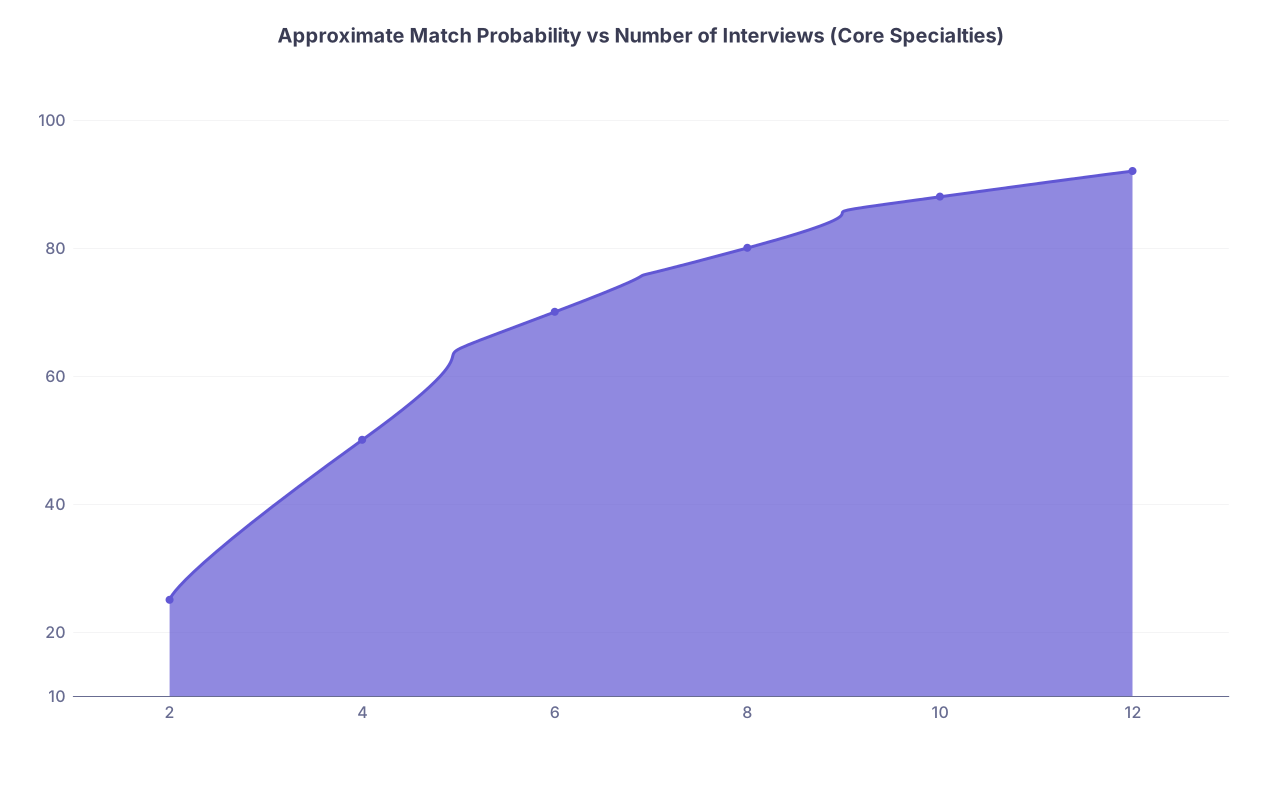
| Category | Value |
|---|---|
| 2 | 25 |
| 4 | 50 |
| 6 | 70 |
| 8 | 80 |
| 10 | 88 |
| 12 | 92 |
(This is rough data-style thinking, not exact percentages, but directionally accurate.)
Step 2: Decide whether to send a follow-up or “love letter”
If it’s been 1–2 weeks since the interview and you haven’t sent a thank-you or update, fine, send one. But do it right.
What you can say:
- Reiterate specific things you liked about the program
- Clarify your genuine interest level
- Provide a brief, concrete update (new publication, rotation eval, leadership position)
What you should not do:
- Ask, “So…am I getting a pre‑match?”
- Push them to violate NRMP/TMDSAS rules
- Sound desperate (“This is my only hope”)
Reasonable email (adapt language to your reality):
Dear Dr. Smith,
Thank you again for the opportunity to interview at [Program]. I’ve thought a lot about our conversation and the residents I met. The combination of [specific feature 1] and [specific feature 2] makes your program one of my top choices.
Since we spoke, I [brief update: completed my ICU rotation, received strong feedback on my intern-level responsibility; submitted a manuscript; started a quality project]. This experience reinforced my interest in [field] and especially in training in a program like yours.
I’d be very excited to train at [Program] and wanted to reiterate my strong interest. Thank you again for your time and consideration.
Sincerely,
[Name], [School]
Notice what that does: clear interest, no pressure, no begging for a contract.
4. How Hard Should You Trust That Verbal Signal?
This is where people either get burned or stay sane.
You should adjust your expectations based on three things:
- Who said it and how
- Your overall competitiveness
- The program’s competitiveness and behavior
1. Who said it and how
More weight:
- PD or APD saying: “If you want to come here, I’m confident you’ll have a spot.”
- Said near the end of the season, when they’ve seen most applicants
- Said in a 1:1, not just in a group Zoom
Less weight:
- Resident saying “We’d love to have you”
- Coordinator chitchat
- Faculty who barely read your file telling you “You’ll end up here”
2. Your competitiveness
If you’re a strong applicant (solid scores, good letters, clean record, good interview skills), that PD comment probably means: “You’re in the top group, and unless something weird happens, you’ll be ranked high.”
If your app is borderline or you know your interview was shaky, I’ve seen PDs still say, “We’d be happy to have you” just to be polite. That doesn’t move the needle much.
3. Program’s competitiveness and behavior
Look at the program.
| Program Type | How Heavily to Rely on Verbal “We Want You” |
|---|---|
| Community IM/FM with open positions most years | Moderate – often fairly honest, but still no guarantees |
| Mid-tier academic with stable fill | Light – you’re probably in their mid-high pile |
| Highly competitive, top 10 specialty site | Very light – they say this to many strong candidates |
| Newer program building reputation | Moderate – they may be more eager and genuine |
So how much do you adjust your behavior?
- Rank list: You can rank them a bit more confidently if you like them, but never rank based solely on verbal promises. Rank based on where you’d actually want to work if everyone took you.
- Backup planning: Don’t stop thinking about SOAP or backup specialties just because one program flirted with you verbally.
5. Should You Ever Ask Explicitly About a Pre‑Match?
Short answer: almost never, and only in specific systems.
If you’re in a true pre‑match system (like Texas or certain non-NRMP spots) and others are already getting written offers, but you received:
“We want you here. You’ll hear from us soon.”
…and it’s been 2–3 weeks with nothing, you can send a very carefully worded inquiry. Not “Where’s my offer?” but:
Dear Dr. Smith,
I hope you’re doing well. I wanted to thank you again for the opportunity to interview at [Program]. I remain very interested in training there next year.
I understand programs approach pre‑match offers and rank lists differently. I was wondering if there is anything else you need from me at this time or any additional information I can provide as you complete your decisions.
Thank you for your time and consideration.
Sincerely,
[Name]
If you’re in standard NRMP land (no formal pre‑match allowed), don’t do this. Programs get very twitchy about anything that smells like NRMP rules violation. You asking directly for promises or positions is not going to help you.
6. What To Do With Your Rank List
You’re probably trying to game this out:
“If PD X basically promised me I’m high, should I just rank them #1 and not worry?”
Here’s the rule I tell actual residents when they’re reminiscing and advising students:
Rank programs in the true order of where you want to train. Full stop.
The match algorithm is applicant-favoring. That means you do not benefit from trying to “strategize” around who likes you more. If your top three look like this:
- Program A (the one who verbally said “we want you”)
- Program B (more prestigious, but no special signals)
- Program C (safest-feeling, community program)
You should only rank A #1 if:
- You’d genuinely rather be at A than B or C, even if all three ranked you to match.
- You’re not letting anxiety turn a “we like you” into “this is my only real shot.”
If you’d actually be happier at B, rank B first. If the PD at A really meant what they said, they’ll still rank you highly and you may still match there if B doesn’t rank you high enough.
Trying to manipulate the algorithm based on unverified promises is how people end up regretting where they land.
7. Red Flags You Should Not Ignore
Sometimes the verbal “we want you” line is masking instability or chaos.
Watch for this combo:
- They gush over you on interview day
- They’re vague about schedules, education, or board pass rates
- Residents send you “off the record” messages about heavy service workloads or high attrition
- You see recent loss of core faculty or change in PD
- They push you to make early verbal commitments, or hint at gaming the system
If a program is:
- Emotionally intense
- Vague about actual training structure
- Overly eager to “lock you in” verbally
…that’s not romantic. That’s a boundary problem. And usually a systems problem.
Your rank list should punish that, no matter how nice the flattery feels.
8. Managing Your Own Head During This
This situation messes with people more than they admit.
Common mental traps:
“If I do not get a written pre‑match, it means I blew the interview.”
False. You might simply be in their top 20, not top 3, and they have no pre‑match mechanism anyway.“If they liked me, they’d have formally offered by now.”
Not necessarily. Decisions are committee-based; timelines are slower than PD compliments.“I should stop caring about other programs because this one basically wants me.”
Terrible idea. You’ll tank other interviews with low energy and limited curiosity.
What to actually do:
- Treat every upcoming interview like you have no safety net. Because you don’t.
- Use that verbal “we want you” as fuel for confidence, not as a reason to coast.
- Keep notes on each program so your rank list is based on reality, not just who complimented you.

| Step | Description |
|---|---|
| Step 1 | Got verbal we want you |
| Step 2 | Review contract and deadlines |
| Step 3 | Decide accept vs enter Match |
| Step 4 | Assume interest only |
| Step 5 | Continue full interview effort |
| Step 6 | Build honest rank list |
| Step 7 | Use interest as confidence not guarantee |
| Step 8 | Written pre match? |
9. If a Written Pre‑Match Suddenly Appears
Sometimes, out of nowhere, you do get that email: “We’re pleased to offer you a pre‑match position…”
Now you have an actual decision.
Key questions:
- Do you truly want to train there, or are you just panicked about matching at all?
- How many solid interviews do you have?
- What is the program’s track record (ABIM/ABFM pass rates, fellowship placement, vibe)?

Rough guidance:
- If you have very few interviews (≤ 4) and it’s a decent program you can tolerate → strongly consider taking the offer. Security matters.
- If you have many solid interviews (≥ 10) and you’re not excited about this pre‑match → it might be worth declining and taking your chances in the regular match.
- If the pre‑match is from a place you’d happily rank #1 anyway → take it, stop the circus, and move on with your life.
Read the contract carefully. Ask about:
- Penalty for backing out (and whether that’s even allowed)
- Start date, salary, benefits, visa situation if relevant
- How this affects your participation in the rest of the match, legally and ethically
Do not accept impulsively in the middle of clinic between patients. Give yourself 24–48 hours, max, to decide.
10. Long-Term View: This Is Not a Moral Judgment
One last thing nobody says out loud: people take this personally. They hear “we want you” and then don’t get an offer or match there, and they decide:
“I must have screwed something up.”
“I’m not as good as I thought.”
“They lied to me.”
Sometimes yes, a PD overpromised. Sometimes the committee overruled them. Sometimes another candidate with no red flags and 10 extra research pubs showed up a week later.
Your job isn’t to psychoanalyze why their behavior shifted. Your job is to:
- Keep your options open
- Make rational, not fear-based, decisions
- Land somewhere you can realistically grow, not just somewhere that flattered you
You’re not crazy for replaying that “we want you” line in your head. Just don’t build your whole life plan around it.
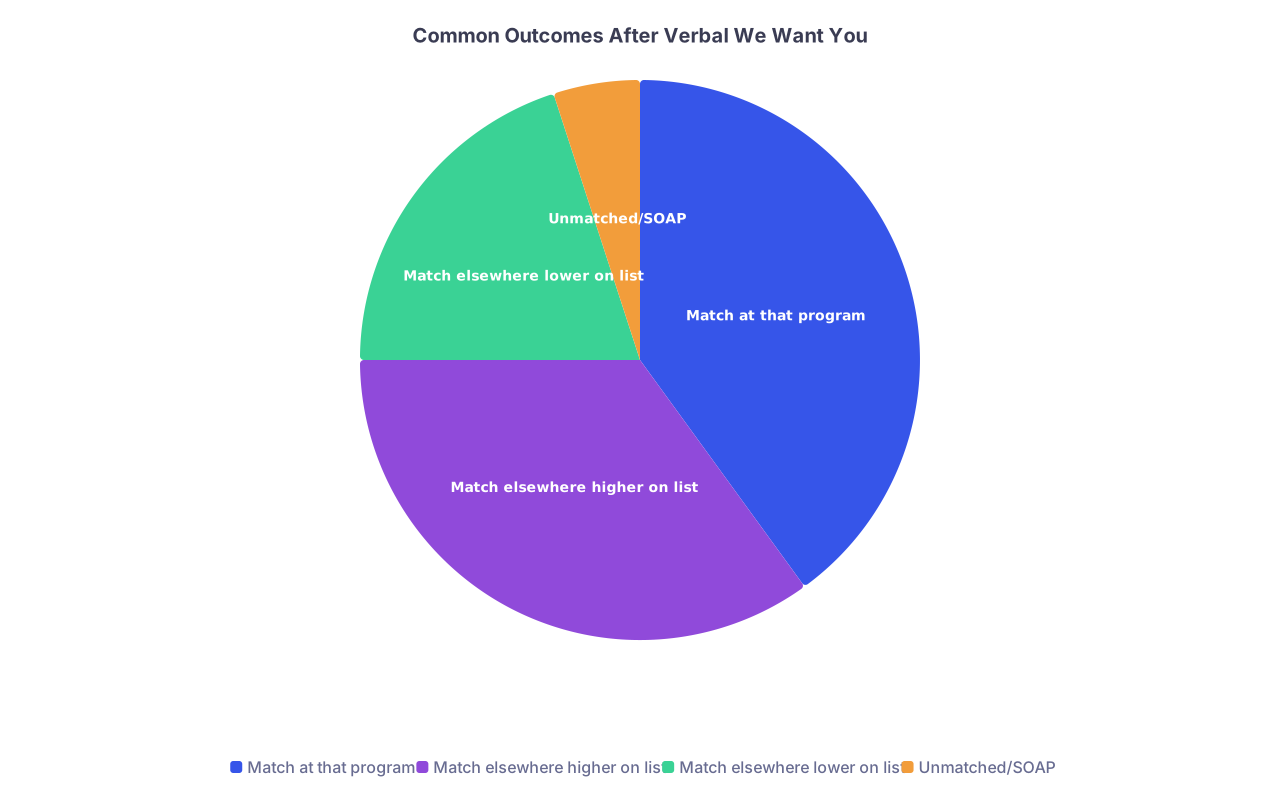
| Category | Value |
|---|---|
| Match at that program | 40 |
| Match elsewhere higher on list | 35 |
| Match elsewhere lower on list | 20 |
| Unmatched/SOAP | 5 |
Again, numbers are illustrative, but the point stands: a big chunk of people who hear “we want you” end up somewhere else, sometimes by choice.
FAQs
1. The PD told me, “If you rank us highly, you’ll match here.” Can I rely on that?
You should treat that as very strong interest, not a guarantee. Programs cannot see your rank list. They also say similar things to multiple top candidates. Rank them where you actually want to go. If they truly meant it and nothing changed, you’ll probably match there anyway. If you do not, it’s usually not because you misranked, it’s because they had more people they liked than spots available.
2. Should I tell them they’re my #1 program?
If it’s true, and if you’ve already decided after seeing enough programs, yes, you can send one genuine “you are my top choice” email. Do not send this to multiple programs. Do not say “number one” if you’re not going to back that up on your rank list. It may help at the margins; it won’t magically turn a mid-list position into a sure match, but it can slightly nudge borderline decisions.
3. Is it a bad sign if other people got written pre‑matches and I didn’t?
It can mean you’re not in the absolute top tier at that program, or simply that timing worked differently. It does not automatically mean you’re out of contention. Many people who don’t get pre‑matches still match there through the regular process. You should, however, avoid counting that program as a safety and continue to cultivate other options.
4. Can I ask directly where I am on their rank list?
You can, but I think it’s a waste of social capital and sometimes puts PDs in a bad spot. Many will not answer. Some will give vague reassurances. A few will over-promise. None of that changes your best move: rank programs in honest preference order and keep showing up well to remaining interviews. If a PD volunteers that you’re high on their list, fine. But cross-examining them rarely helps.
5. I feel misled by a program that strongly signaled interest but didn’t rank me high enough to match. Should I confront them?
No. Vent to your friends, co-residents, or a mentor, not to the program. Post-match “Why didn’t you rank me?” emails aren’t going to fix anything and may burn bridges you don’t even realize you’ll need later (fellowship, job, networking). Chalk it up to sloppy communication, politics, or shifting priorities on their end. Then put your energy into thriving where you did match.
Key takeaways:
- A verbal “we want you” is interest, not insurance.
- Build your rank list and backup plans as if you have no guaranteed pre‑match until you see it in writing.
- Use these signals to boost confidence, not to shut down your options or overtrust a program’s promises.