The fastest way to get burned by a pre‑match offer is to treat it like a gift instead of a business negotiation.
You are not “lucky” to be offered early. You are valuable. And valuable people negotiate—carefully.
You want three things:
- The right start date.
- Real visa support (not vague promises).
- Decent benefits and protections. Without destroying your NRMP options or your immigration status.
Let me walk you through exactly how to do that.
1. Understand the Landmines Before You Say a Word
Most residents mess up before they start negotiating. They do not understand what is binding, what is illegal, and what can quietly ruin their Match options.
Know what can lock you in
Three different things can tie your hands:
Institutional policy
- Some programs: “If you sign a pre‑match, we will list you as a contractually committed resident and not rank you in NRMP.”
- Others: “We use NRMP only. No pre‑match.”
If you do not know which one you are dealing with, you are negotiating blind.
NRMP rules (if the program participates)
- If both you and the program participate in the Main Match:
- You generally should not sign a separate binding contract that circumvents the Match.
- Some states / institutions technically allow “outside of the Match” contracts, but NRMP can sanction if it violates the Match agreement.
- If the program or track is non‑NRMP (common in prelim, non‑ACGME, or some specialties internationally), the rules are different. You negotiate like any job.
- If both you and the program participate in the Main Match:
Visa and immigration law
- Once a DS‑2019 (for J‑1) or H‑1B petition is filed with your name and that employer, switching programs can be a nightmare.
- Gaps between visas, improper status, or “self arranging” start date changes can get you barred from reentry. Seen it more than once.
Step 1 Protocol – Before negotiating anything:
- Ask the program coordinator or PD, in writing:
- “Is this position going through the NRMP Match, or is it outside the Match?”
- “If I accept this pre‑match offer, how will that affect NRMP participation on both sides?”
- Screenshot or save their response. This matters if things go sideways.
- If you are an IMG and need J‑1 or H‑1B:
- Ask: “Do you sponsor J‑1? H‑1B? Both? For categorical residents or only certain tracks?”
- Confirm if they are ECFMG‑accredited host for J‑1.
Do not negotiate details (start date, salary, benefits) until you know the rules of the game.
2. Build Your Negotiation Position Before You Respond
You cannot negotiate from “I am desperate; please take me.” You negotiate from facts.
Collect your leverage points
You may think you have no leverage. That is almost never true. You can use:
Timing
- If they are offering you early, it is usually because:
- They struggled to fill that spot before, or
- They see you as above their usual applicant pool, or
- They have an urgent service need.
Urgency is leverage.
- If they are offering you early, it is usually because:
Your profile
- Strong Step 2 score (e.g., 250+).
- U.S. clinical experience with letters from known faculty.
- Previous training (e.g., completed IM residency abroad).
- Hard‑to‑find skills: procedural experience, language fluency, ICU background.
Competitive alternatives
- Other interviews scheduled.
- Other programs expressing serious interest.
- Previous offers (even if you declined them).
You do not need to brag. You just need to know, privately, that you are not powerless.
Decide your non‑negotiables
Write these down before you talk to them:
Earliest start date you can realistically manage
- Consider:
- USMLE/ECFMG certification timeline.
- Visa processing times.
- Notice period in current job / training.
- Family logistics.
- Consider:
Visa type you will accept
- Are you okay with J‑1 only?
- Do you strongly prefer H‑1B?
- Are you willing to delay start for H‑1B if needed?
-
- Minimum salary that keeps you solvent.
- Whether you require health insurance to start on Day 1.
- Whether you can afford unpaid orientation weeks (bad idea, by the way).
You cannot negotiate effectively if you do not know what you must have versus what is “nice to have.”
3. How to Negotiate Start Dates Without Losing the Offer
Start dates are not “take it or leave it” as often as people think.
Most residency contracts list a default start date (often late June or early July for PGY‑1), but there is usually more flexibility for:
- Off‑cycle spots
- PGY‑2+ transfers
- Newly created positions
- Replacement of a resident who left mid‑year

| Step | Description |
|---|---|
| Step 1 | Receive pre match offer |
| Step 2 | Clarify NRMP and visa status |
| Step 3 | Identify your earliest safe start date |
| Step 4 | Ask program about their flexibility |
| Step 5 | Propose 1-2 specific dates |
| Step 6 | Decide accept or walk |
| Step 7 | Can they adjust? |
Step-by-step approach for start date negotiation
Step 1 – Get their true timing need
You ask, calmly:
“Can you share what start date you are targeting for this position, and how much flexibility there is on that date?”
Let them speak. Do not jump in to “I cannot” yet.
Typical responses you will hear:
- “We ideally want someone by July 1, but we can consider August or September for the right candidate.”
- “This is replacing a resident who left in October; we need someone as soon as credentialing and visa allow.”
- “This is for the regular PGY‑1 class; start date is fixed with GME.”
Different responses → different strategies.
Step 2 – Calculate a realistic start date
Factor in:
- ECFMG certificate: If you do not have it yet, add several weeks after expected completion.
- Visa times:
- J‑1: DS‑2019 issuance by ECFMG + visa appointment wait time.
- H‑1B: Petition preparation + USCIS approval. Premium processing helps but not magic.
- Hospital credentialing: Often 60–90 days.
Be conservative. Over‑promising here is how people end up panicking in embassies and losing offers.
Step 3 – Propose a narrow, precise range
Do not say: “Whenever works” or “Maybe August.” Instead:
“Based on visa and credentialing timelines, the earliest realistic start date I can commit to is August 15. If there is any flexibility, I could also make September 1 work. Would either of those be acceptable for your service needs?”
You give them:
- A clear earliest possible date.
- One backup.
- The sense that you understand the system and are not guessing.
Step 4 – Trade, do not beg
If they push for earlier, you respond with a trade:
“If we aim for July 15, I would need written confirmation that the institution can support expedited visa processing and credentialing, including covering the premium processing cost for the H‑1B. Is that something you can do?”
They want earlier → you want them to pay (time, effort, or money) to make it feasible.
4. Visa Help: What You Must Lock Down in Writing
This is where I see IMGs get hurt the most. Verbal promises, half‑explained sponsorship, and then: “Sorry, GME said no.”
You do not accept a pre‑match offer until the visa situation is crystal clear.
Distinguish real sponsorship from vague hand‑waving
You want specific answers to:
Visa types they actually sponsor
- “Do you currently sponsor J‑1 for residents?”
- “Do you currently sponsor H‑1B for residents?”
- “How many residents are currently on H‑1B in your program?”
Eligibility limits
- Some programs: “We only sponsor J‑1.”
- Some states: limit H‑1B; some hospital GME offices dislike it.
- Past failures: “We tried H‑1B last year and it was denied.” Red flag.
Cost responsibility
- Who pays:
- USCIS filing fees?
- Premium processing fees?
- Attorney fees?
- You never want to be surprised by a $3,000 bill you did not plan for.
- Who pays:
Timeline support
- “Who prepares the visa paperwork—do you use in‑house legal or an external firm?”
- “When would we start the visa process if I accept your offer?”
- “What is the latest date by which I need my ECFMG certificate or Step 3 (for H‑1B)?”
| Factor | J-1 | H-1B |
|---|---|---|
| Common for residents | Very common | Less common |
| Primary sponsor | ECFMG | Hospital/employer |
| Step 3 required | No | Usually yes |
| Max duration | 7 years (with limits) | 6 years (with exceptions) |
| Typical fee payer | Institution | Often institution, sometimes shared |
Questions you should literally copy and send
You can send this as an email once they express serious intent:
“To make sure I understand the immigration side correctly, could you please confirm:
- Which visa types you are able to sponsor for this position (J‑1, H‑1B, or both)?
- Whether there are any institutional or state limitations that might affect my eligibility?
- Who will cover the legal, filing, and premium processing fees, if applicable?
- The approximate timeline for initiating and completing the visa process for the start date we discussed?
- Whether there are any exam or certification requirements I must meet by specific deadlines (e.g., Step 3 for H‑1B, ECFMG certificate for J‑1)?”
All of that needs to be written. Not “the PD said not to worry.”
What must be in the contract or offer letter
If visa support is essential for you, your contract or at least a formal offer letter should:
Specify visa type:
“Hospital X will sponsor the Resident for a J‑1 visa via ECFMG” or “Hospital X will petition for an H‑1B visa.”Clarify costs:
- “Hospital X will cover standard filing and attorney fees associated with the visa petition.”
- If premium processing is needed, specify whether:
- The hospital covers it, or
- You cover it, or
- It is optional.
Indicate contingencies:
- “This offer is contingent upon successful visa issuance and credentialing.”
- That is normal. But if they hide behind this later because they never filed properly, that is a problem.
If they refuse to put anything about visa in writing, I consider that a serious risk. You are betting your entire future on a conversation you cannot prove.
5. Benefits and Protections: What You Can Actually Negotiate
Residents do have some room to negotiate. Not everywhere, not on everything, but more than zero.
Know what is locked and what is flexible
Typically fixed / governed by GME or union:
- Base salary by PGY level.
- Health insurance plan options.
- Retirement plan availability.
- Core benefits (malpractice, disability, life insurance).
- Vacation weeks (not always, but often).
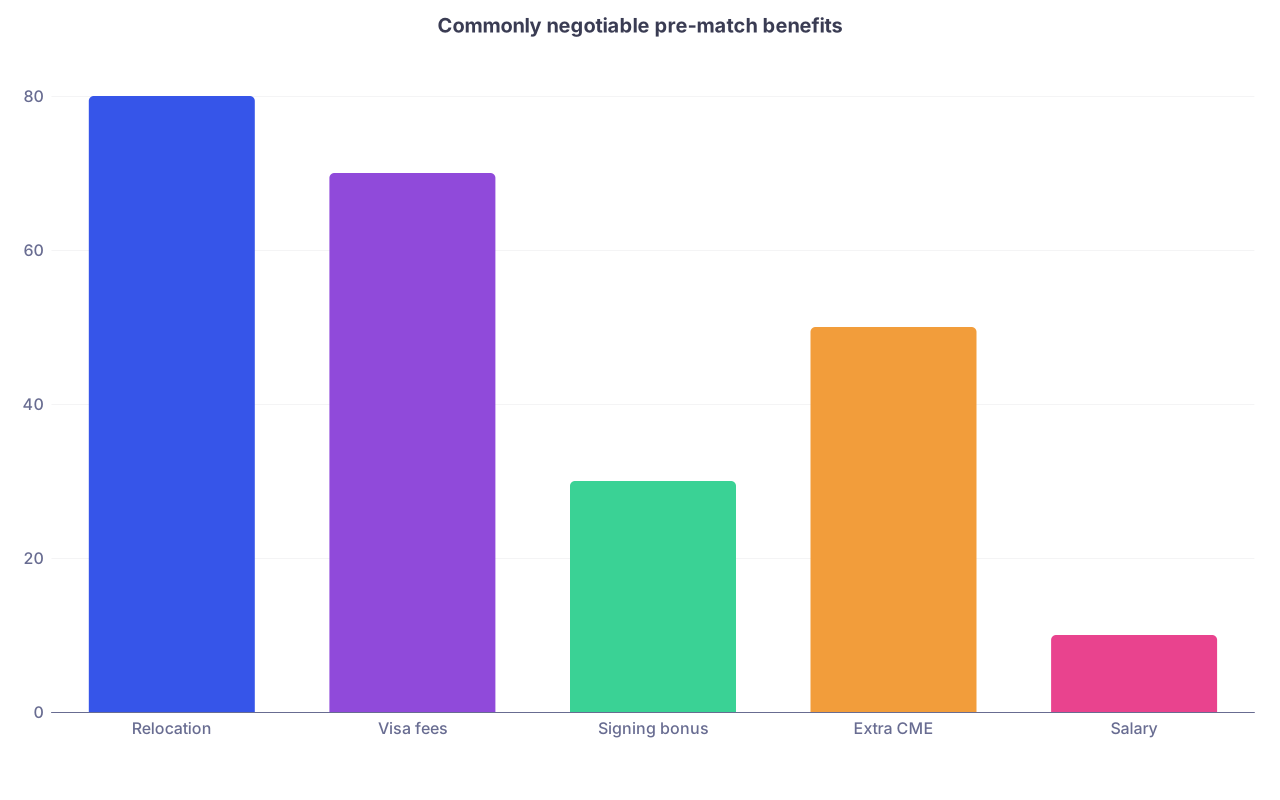
Potentially negotiable, especially for pre‑match or off‑cycle spots:
- Relocation assistance
- Signing bonus (less common but not unheard of)
- Visa‑related fees
- Funding for Step 3, board prep, or licensing fees
- Extra CME money (for PGY‑2+)
- Call schedule protections for first few months
| Category | Value |
|---|---|
| Relocation | 80 |
| Visa fees | 70 |
| Signing bonus | 30 |
| Extra CME | 50 |
| Salary | 10 |
(Values are rough percentages of programs where I have seen each item flex, not official data. That is the reality.)
How to ask for benefits without sounding entitled
Use this formula: Anchor in commitment → explain need → make a modest, specific ask.
Example for relocation help:
“I am very enthusiastic about joining your program and relocating to [City]. As an international graduate moving from [current country/state], the upfront relocation costs are significant. Does your institution offer any relocation assistance or a small signing bonus for residents in this situation?”
Example for visa fee support:
“Given that expedited H‑1B processing would be required to meet the start date we discussed, is the institution able to cover the premium processing and attorney fees, like many teaching hospitals do for residents?”
Example for Step 3 or licensing:
“Since passing Step 3 before arrival would also support the H‑1B petition, would the program be able to reimburse the exam fee or provide a small educational stipend toward that cost?”
You are not demanding. You are opening the door. If they genuinely cannot, fine. If they can but never thought to offer, you just gained thousands of dollars.
6. Do Not Violate the Match While You Negotiate
If this program participates in NRMP, both you and they are under obligations. You cannot treat pre‑match offers like a free‑for‑all.
Red lines you should not cross
Do not sign two binding contracts for residency positions that overlap in time. That is asking for NRMP investigation + possible future sanctions.
Do not ask for “guaranteed ranking” language like:
- “We guarantee we will rank you to match.”
- “We will not rank other candidates ahead of you if you sign this pre‑match.”
Those promises violate the spirit (and often the letter) of the Match.
Do not make ranking commitments in writing like:
- “I promise to rank you first if you give me X.”
You can express strong interest. You cannot barter rankings for concessions.
- “I promise to rank you first if you give me X.”
Safe wording for strong interest
You can say:
“Your program is one of my very top choices, and I would be very happy to train there.”
or
“If everything with visa and start date works out, I can realistically see myself ranking your program extremely highly.”
That conveys commitment without breaking NRMP ethics.

| Step | Description |
|---|---|
| Step 1 | Pre match discussion |
| Step 2 | Use safe interest language |
| Step 3 | Standard job negotiation |
| Step 4 | Avoid ranking guarantees |
| Step 5 | Avoid multiple binding contracts |
| Step 6 | NRMP program? |
7. How to Read (and Fix) a Pre‑Match Offer or Contract
Once you have discussed terms, they will usually send either:
- A formal offer letter, or
- A full GME contract.
This is where most applicants rush and sign. Do not.
Quick review protocol
Print it or open it on a large screen. Then check, line by line:
Position and level
- Correct specialty, PGY level, and track (categorical vs prelim vs advanced).
Start and end dates
- Do they match what you negotiated?
- Any mention of unpaid orientation time? That should still be paid.
Visa clause
- Does it name the visa type?
- Any weird wording like “if feasible” or “if institution decides to sponsor”?
Compensation and benefits
- Salary correct for your PGY and local norms.
- Benefits summary attached or linked (health, liability, disability).
- On‑call meal allowance, parking, etc. often in GME handbook.
Termination and non‑renewal
- What reasons?
- Any repayment clauses (e.g., if you leave early, repay relocation or signing bonus).
- Some payback clauses are reasonable, some are predatory.
Moonlighting (for PGY‑2+)
- Allowed or banned?
- If allowed, under what conditions?
If anything major differs from what you discussed, you go back, politely but firmly:
“Thank you for sending the offer. I noticed that the contract lists a July 1 start date, whereas we had discussed an August 15 start due to visa processing. Could we revise the document to reflect the agreed date?”
You are not being difficult. You are just aligning paper with reality.
8. When to Walk Away (Yes, Sometimes You Should)
Not every pre‑match offer is worth saving. Some are traps.
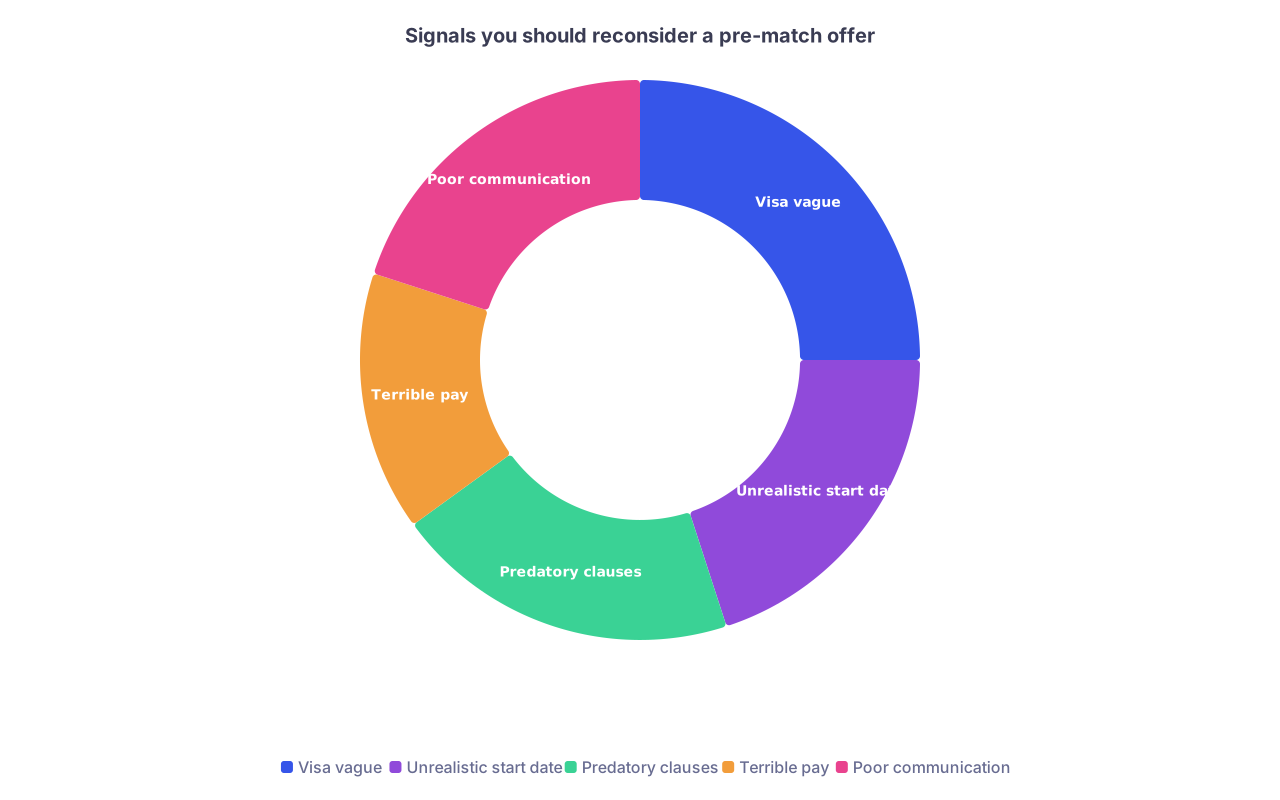
Red flags that justify walking:
- They will not put visa sponsorship in writing.
- They keep pushing you to start earlier than legally or logistically realistic, without real support.
- The contract has heavy penalties for leaving early, but:
- No real support for your visa or training.
- Compensation is far below normal for that region and PGY level.
- PD or leadership avoids clear answers on:
- Work hours.
- Supervision.
- Accreditation or probation status.
You cannot fix a dysfunctional program with good intentions. Better to stay in the Match and aim for a safer option than lock yourself into a three‑year mistake.
| Category | Value |
|---|---|
| Visa vague | 25 |
| Unrealistic start date | 20 |
| Predatory clauses | 20 |
| Terrible pay | 15 |
| Poor communication | 20 |
9. Exact Scripts You Can Use
You do not need to improvise; use or adapt these.
Script: Initial response to a pre‑match offer
“Thank you very much for the offer to join your program. I am very interested and appreciate your confidence in me. Before I can make a final decision, I would like to clarify a few details about the position:
- Whether this position is part of the NRMP Match or outside the Match.
- The expected start date and any flexibility you may have.
- The type of visa sponsorship available for this role.
- A brief overview of the salary and benefits package.
Once I have that information, I will be able to give you a clear and prompt answer.”
Script: Negotiating start date + visa
“Given my current exam and certification timeline, as well as the visa processing steps, the earliest realistic start date I can commit to is August 15. If that is too late for your needs, I could also potentially accommodate a September 1 start.
To support this, I want to confirm that your institution can sponsor a J‑1/H‑1B visa and begin the paperwork promptly after I sign. Can you let me know if these dates and that visa type would work for your program?”
Script: Asking for relocation / visa fee help
“Relocating from [current location] to [program city] will involve significant costs, especially when combined with visa and licensing fees. Does your institution offer any relocation assistance, signing bonus, or coverage of visa‑related legal and filing fees for residents in my situation?
I remain very enthusiastic about joining your team and want to make sure I can plan financially for the transition.”
Script: Clarifying conflicting contract terms
“I reviewed the contract and had one concern I wanted to clarify before signing. The visa clause states that sponsorship will be provided ‘if feasible.’ Given that my ability to start and train with you depends on this, would it be possible to revise the language to confirm that the institution will sponsor a J‑1/H‑1B visa for this position, contingent only on standard approval by ECFMG/USCIS?”
Use these scripts as starting points. Edit so you sound like yourself, not a robot.
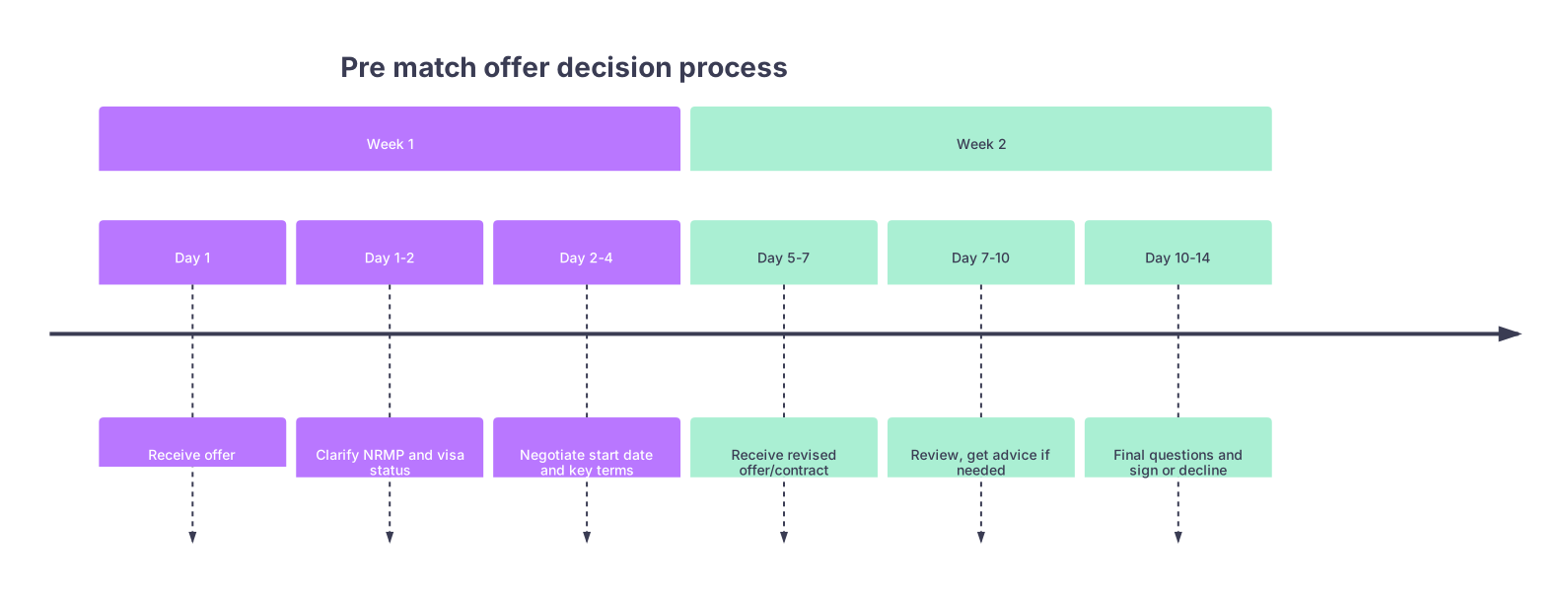
10. Practical Timeline: From Offer to Safe Signature
You do not want this dragging on forever, but you also do not sign in 24 hours out of panic.
| Period | Event |
|---|---|
| Week 1 - Day 1 | Receive offer |
| Week 1 - Day 1-2 | Clarify NRMP and visa status |
| Week 1 - Day 2-4 | Negotiate start date and key terms |
| Week 2 - Day 5-7 | Receive revised offer/contract |
| Week 2 - Day 7-10 | Review, get advice if needed |
| Week 2 - Day 10-14 | Final questions and sign or decline |
If they push for a signature in 24–48 hours without time to review:
- That is not professional.
- You can push back:
“I appreciate the offer and your confidence. To make a responsible decision and ensure there are no misunderstandings, I will need a few days to review the written offer, particularly the visa, start date, and benefits sections. I can get back to you with a final answer by [date 5–7 days away].”
If they refuse even that? You have your answer about what kind of program this is.
Key Takeaways
Do not sign blind. Clarify NRMP status, visa type, and realistic start date before you negotiate details. Get critical promises in writing, not as verbal reassurances.
Negotiate like a professional, not a supplicant. Propose specific dates, trade support (premium processing, relocation help) for earlier starts, and ask directly—but politely—for visa and financial assistance.
Walk away from traps. Vague visa promises, predatory clauses, or pressure to sign instantly are not minor issues. They are warning signs. Protect your career and your status first; prestige and speed come second.