
Pre-match is not code for “second-class program.” That’s a story anxious applicants tell each other, not what the data or actual career outcomes show.
Let me be blunt. A lot of what you’ve heard about pre-match offers is residencymythology passed down on Reddit, WhatsApp groups, and hallway gossip. “Real” or “top” programs don’t pre-match. Pre-match means they cannot compete in the main Match. Anyone who signs a pre-match is “settling.”
Wrong. On all three counts.
If you go into pre-match season with those ideas in your head, you’ll make bad decisions. You’ll misread signals. You might walk away from a genuinely great fit because some classmate said, “Oh, that’s just a backup program.”
Let’s dismantle that.
What Pre-Match Actually Is (And Why Programs Use It)
Pre-match isn’t some underground parallel universe. It’s a legal, NRMP-governed contract path (where allowed) that programs use strategically. The fact that it’s less publicized doesn’t make it shady.
Historically, pre-match has been common in:
- Texas (through the old TMDSAS/Texas system before full NRMP integration)
- Certain community or hybrid academic programs
- Some specialties and regions that worry about getting overlooked by “shotgun” applicants
Programs use pre-match offers mostly for two reasons:
- They want to lock in candidates they really like before they get poached in the main Match.
- They want to stabilize their fill rate and reduce the chaos of February.
Notice what’s missing: “We are low quality and desperate.” That’s not actually how most PDs think. They think: we liked you, we have a slot, we don’t want to lose you to randomness.
Are there a few desperate programs that use pre-match because they can’t fill? Sure. But painting all pre-match programs with that brush is lazy and wrong.
Here’s what the data and patterns actually show.
The “Backup Program” Myth vs Reality
The biggest lie in circulation: “If a program pre-matches, it’s a backup, not a real choice.”
Reality is more complicated, and it cuts against the myth.

1. Outcome Data: Careers Don’t Care About Your Match Path
Look at real-world outcomes. Hospitalist jobs. Fellowship placements. Academic appointments. No one is differentiating: “Matched via NRMP main round” vs “Signed pre-match.”
They care about:
- Where you trained
- What your letters say
- How good you are at your job
I’ve sat in on fellowship rank meetings. The conversation never goes: “Wait, did she pre-match into that IM program?” It goes: “Her mentor is well known. Solid letters. Two publications. Great interview. Rank her high.”
Once you’re in residency, the path you took to get there loses relevance almost immediately.
2. Academic vs Community: Pre-Match Is a Strategy, Not a Scar
Here’s the other lazy assumption: only weak community programs pre-match, and “top” academic programs would never.
Also false.
Plenty of mid-tier and even strong academic-affiliated programs have used pre-match offers over the years, especially in:
- Internal medicine
- Family med
- Psychiatry
- Pediatrics
They’re not trying to mask low quality. They’re trying not to be drowned out by brand-name giants in the main Match.
Some applicants are stunned when they see who pre-matches:
- University-affiliated IM program with solid fellowship outcomes
- County-based safety net hospitals with brutal but excellent training
- Long-established community programs whose grads routinely match into cards, GI, pulm/crit
Those are not “backup” programs. They are working programs training competent physicians who go on to good fellowships or solid jobs.
3. Applicant Stories: “I Pre-Matched and Still Outperformed You”
I know several people who pre-matched into what their classmates called “backup” programs and then:
- Matched GI from a so-called “lower-tier” IM pre-match program
- Landed competitive jobs with better salaries and more autonomy than some ivory-tower grads
- Built strong research portfolios because their smaller program gave them more responsibility and ownership
One FM resident who pre-matched told me:
“My classmate turned down the same offer because she didn’t want to ‘settle’ before the main Match. She scrambled late into a program she liked much less. I had three extra months of peace and got to focus on learning and Step 3.”
The “backup program” label aged poorly.
What the Numbers Actually Suggest About Pre-Match Behavior
Let’s talk about behavior patterns and risk. Because this whole conversation really boils down to this: Are you trading down by signing early?
Most of the time, you’re trading uncertainty for stability. Not quality for garbage.
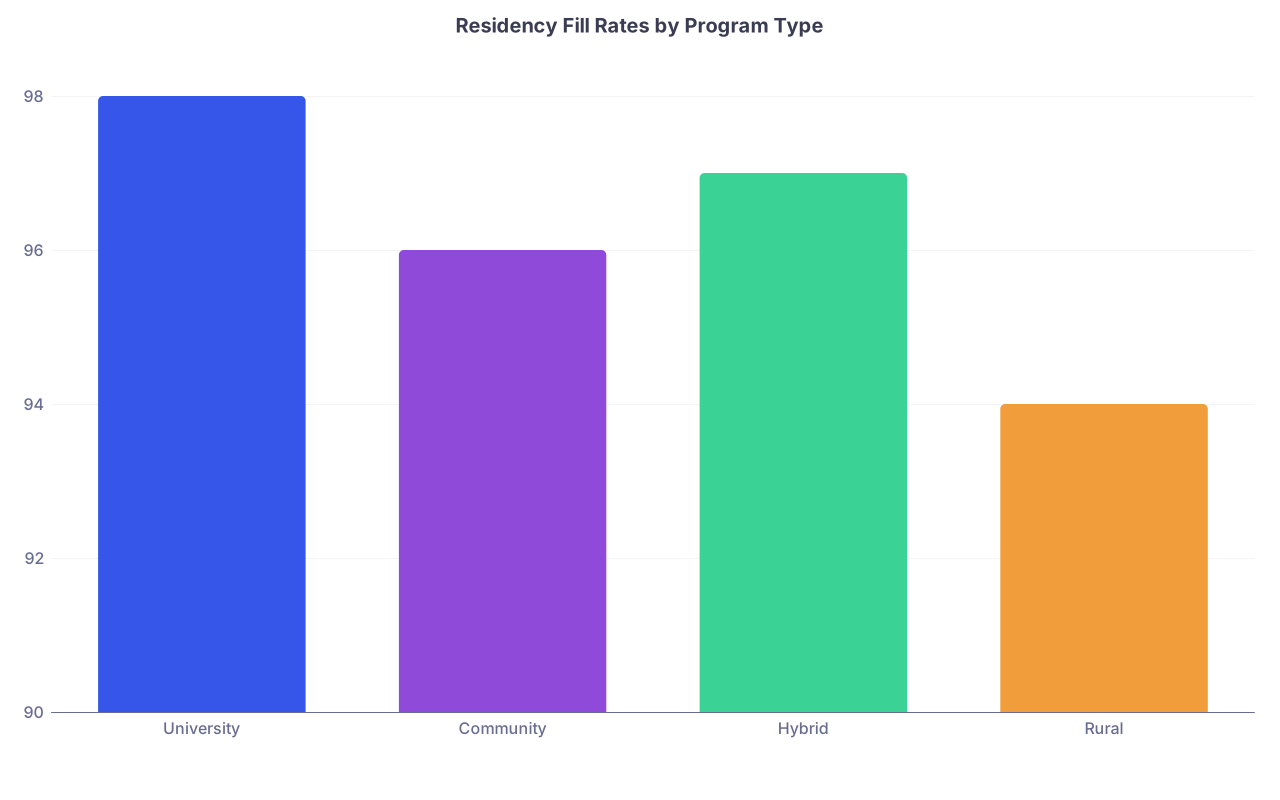
| Category | Value |
|---|---|
| University | 98 |
| Community | 96 |
| Hybrid | 97 |
| Rural | 94 |
Fill rates across program types are high. The overwhelming majority of all positions get filled through Match or pre-match. The programs that routinely go unfilled are usually:
- Very rural
- Very new
- Chronically understaffed or poorly run
- Specialties with low applicant interest in certain locations
Those might use pre-match too, yes—but they’re easy to spot once you actually look at their case mix, board pass rates, and reputation among residents.
The existence of a pre-match pathway doesn’t define program quality. The actual metrics do.
How to Evaluate a Pre-Match Offer Like An Adult, Not A Panicked MS4
Now we get to what you actually need: how to handle a pre-match offer without being suckered by the “backup program” myth or, conversely, blindly grabbing the first offer out of fear.
You’re balancing two realities:
- Once you sign, you’re done. NRMP rules, contractual obligations, all of that. You are off the board.
- If you walk away, that offer may never come back, and the main Match is not some guaranteed upgrade.
So you treat a pre-match offer like what it really is: an early, binding job offer. Nothing more romantic than that.
Here’s what to scrutinize.
Program Data That Actually Matters
Stop obsessing about whether they pre-match. Look at how they train.
| Factor | What You Want To See |
|---|---|
| Board pass rates | At or above national average |
| Recent fill patterns | Consistently filled |
| Fellowship placements | Documented, recent, varied |
| Case volume / acuity | Strong, not anemic |
| Resident attrition | Low and explainable |
If a program shies away from sharing these numbers, that’s a red flag. If they’re transparent and proud of them, that’s a good sign—even if they pre-match aggressively.
Resident Experience: The Unfiltered Version
The biggest truth detector is still current residents.
Ask them, directly and specifically:
- “If you had to choose again, would you pick this program?”
- “What are the 2–3 worst parts of this program?”
- “Do people here get the fellowships or jobs they want?”
- “How often do you work with subspecialists? Do they know residents by name or not care?”
You need content, not vibes. “We’re like a family” is meaningless. “We had three residents match cards, GI, and pulm/crit last year from a class of twelve” is data.
When I hear residents say, “People from here have no trouble getting X if they work for it,” I listen. When I hear, “People leave after intern year,” I also listen.
Your Own Risk Profile: Be Honest
Some of you can safely walk away from pre-match. Strong Step scores, many interviews, multiple “top” programs clearly interested in you. Fine.
Some of you cannot safely walk away.
- Below-average scores
- Visa issues
- Limited geographic flexibility
- Subpar clinical grades or gaps
For that second group, rejecting a solid pre-match offer because it “feels like settling” is sometimes not just naive—it’s reckless.
One IMG I worked with had an early pre-match in a solid community IM program with known fellowship matches. Classmates convinced him to wait for the main Match and “aim higher.” He ended up unmatched, then SOAP’ed into a weaker, unstable prelim. That initial pre-match? Would have changed his entire trajectory.
Was that pre-match program a “backup”? No. It was his best realistic shot.
How To Prepare Before Pre-Match Offers Hit Your Inbox
If you prepare badly, you’ll make a rushed emotional decision. If you prepare well, you’ll have a framework ready before anyone hands you a contract.
Here’s how to get yourself ready.
1. Build Your Personal Program Tiers in Advance
Not “tiers” based on brand prestige. Tiers based on your reality and preferences.
You should have a spreadsheet or document where you’ve already sorted programs into something like:
- Tier A: Dream-but-realistic programs (great training + strong outcomes + you’d be happy)
- Tier B: Good, solid programs (would train you well, maybe less prestige, but clearly competent)
- Tier C: Only-if-I-have-to programs (safety net / SOAP-level)
When a pre-match offer arrives, you already know: is this one of my Tier A/B programs or a C? You do not improvise this in the heat of the moment.
2. Decide Your “Yes Line” Before You’re Pressured
You need a clear rule in your head:
“If I get a pre-match offer from any program at or above this level on my list, I will sign.”
Or, alternatively:
“I will only consider pre-match if the program is clearly in my top X and checks Y boxes.”
That rule should account for your risk factors. A US MD with 255+ and 20 IVs can afford a more aggressive threshold than an IMG with 2–3 interviews and a visa requirement.
Write the rule down. Because on the day you get the call, adrenaline will make you stupid.
3. Understand Timelines and Pressure Tactics
Some programs will give you 24–72 hours to decide. That’s legal in many settings. It’s also manipulative.
You should already know how to respond:
- Ask for the maximum time they’ll allow
- Immediately talk to current residents (not just the PD)
- Call a mentor who is brutally honest, not just supportive
If a program refuses to let you talk to current residents or won’t share basic info like board pass rates, that’s not a “pre-match issue.” That’s a “why would I trust you with three years of my life?” issue.
The Stories People Don’t Tell Loudly: When Pre-Match Was The Smart Play
Everyone loves the drama story: “I turned down three pre-match offers and still matched MGH.” Great. That person was probably a strong applicant with options.
You don’t always hear the quieter stories where pre-match was absolutely the right move.
- The IMG who took a pre-match IM spot at a county-safety-net program that sends people to solid fellowships every year. Now in GI. Zero regrets.
- The DO student who signed early with a mid-tier academic IM program; classmates who waited got stuck SOAP’ing into prelims or low-volume places.
- The FM applicant who locked in a pre-match at a supportive, well-run community program and avoided five more months of anxiety and money burn on interviews she didn’t need.
Their careers? Fine. Often better than peers who “played it cool” and tried to optimize prestige at all costs.
When You Should Walk Away From a Pre-Match
Let me flip the script: there are times when saying no is the right move, myth or not.
Walk away if:
- Residents quietly tell you they’d leave if they could
- Board pass rates are chronically bad and hand-waved away
- Multiple grads fail to get any fellowships or decent jobs despite trying
- PDs oversell, dodge specifics, or talk trash about every other program
You do not sign a three-year contract just to have “matched early” on your CV. You are not trying to win the anxiety Olympics. You are trying to become a competent physician with options.
Stop Using the Word “Backup” Like It Means Anything
The word “backup” has become lazy shorthand for “not top prestige.” And that’s a garbage way to think about training.
Here’s what actually matters:
- Do they train you well?
- Do they support your goals (fellowship vs primary care vs hospitalist)?
- Are residents learning, not just surviving?
- Are you, realistically, likely to do better in the main Match?
Pre-match is not a scarlet letter. It’s just a different timing for a binding decision.
If your mindset is “I’m too good for any pre-match program,” while your application says otherwise, you’re living in fantasyland. If your mindset is “Any pre-match is better than uncertainty,” you’re also wrong.
You calibrate. Using actual data. And honest self-assessment.
The Bottom Line
Three things to walk away with:
- Pre-match ≠ “backup program.” Quality is defined by training, outcomes, and resident experience, not whether they participate in early contracts.
- A good pre-match offer can be the smartest move of your career—or a trap—depending on your risk profile and how seriously you evaluate the program.
- Decide your standards, thresholds, and non-negotiables before the offers come, so you’re choosing strategically, not reacting emotionally.