
The Myth of “You Must Accept Any Pre-Match” in Competitive Specialties
What do you actually lose if you turn down a pre-match in a competitive specialty—your entire career, or just one imperfect offer?
Let me be blunt: the dogma that “you must accept any pre-match in derm, ortho, plastics, etc., or you’re insane” is mostly fear talking, not data. I’ve watched applicants sign miserable contracts at weak programs because some senior resident told them, “In this field, you can’t say no. Ever.” A year later, they’re trying to transfer, burned out, or switching fields.
So let’s kill this myth properly.
You’re not choosing between “pre-match or unemployment forever.” You’re choosing between one guaranteed outcome and a distribution of possible outcomes. That’s a risk decision, not a moral test of how badly you want the specialty.
What a Pre-Match Actually Is (And Is Not)
First, definitions—because people talk past each other all the time.
A pre-match / outside-the-Match offer (varies by country and specialty) is usually:
- An offer made before the main Match process is complete
- Often in competitive or semi-competitive specialties (derm, ortho, ophtho, urology, some IM subspecialty tracks, certain prelim/transitional programs)
- A binding contract if you sign it (legally and ethically, and often reported to your match system or governing body)
What it is not:
- A universal requirement for matching into competitive specialties
- Automatically your best or only realistic shot
- A free “backup” you can hold while still entering the regular Match in the same specialty
I’ve seen people treat pre-match like an early acceptance to undergrad: “Say yes now and still see what happens later.” Residency does not work that way. If you sign, you’re done in that specialty cycle. Continuing to apply elsewhere after signing is—yes—unethical and potentially career-ending.
So the stakes are real. But “real” doesn’t mean “automatic yes.”
The Fear Narrative vs. The Data
The myth springs from a single-story narrative:
“Pre-match = guaranteed spot in a hyper-competitive field; turning it down = unmatched, SOAP, and your specialty dreams are dead.”
Let’s inject some actual numbers and structure into this.
1. Match rates in competitive specialties aren’t 0% without pre-match
No, you don’t need a pre-match to match.
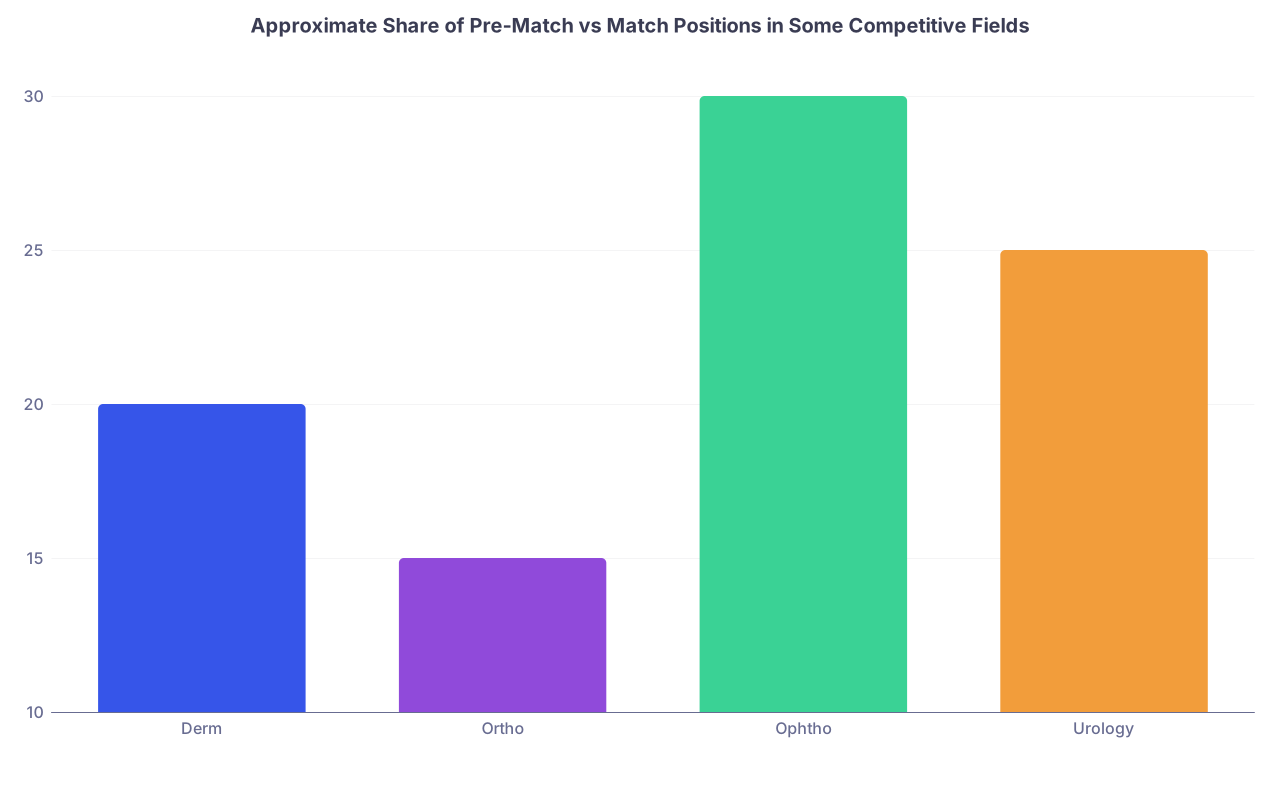
US MD applicants with solid Step scores and reasonable applications still match into derm, ortho, plastics, ENT, etc., every year through the main Match. The pre-match system (where it exists) usually represents a fraction of total positions, not the majority.
| Category | Value |
|---|---|
| Derm | 20 |
| Ortho | 15 |
| Ophtho | 30 |
| Urology | 25 |
Those numbers are illustrative, but the pattern is typical in many systems: a minority of total positions are filled outside the central match. Meaning: most residents in that specialty did not get there via pre-match.
2. “Any spot is better than no spot” is not always true
I’ve watched this play out:
- Applicant with borderline stats but strong clinicals gets a pre-match at a low-volume, poorly supervised community program with weak board pass rates.
- They’re told, “You’ll never do better. If you decline, you’re done.”
- They sign. Three years in, they’re under-trained, struggling with boards, and blocked from competitive fellowships.
Would they have matched into a top-10 program? Probably not. Could they have matched into a solid mid-tier program a year later with strategic improvement or a research year? Very possibly. They didn’t weigh that risk; they were bullied into a false binary.
You’re not just choosing “match vs. unmatched.” You’re choosing:
- Quality of training
- Case volume and complexity
- Board pass rates
- Fellowship doors opened or closed
- The life you live for 3–7 years
The wrong “any spot” can cost you far more than a year.
When Saying No to a Pre-Match Is Rational (Not Reckless)
Let me go against the usual advice: there are absolutely scenarios where declining a pre-match is the smarter move.
Scenario 1: The Program Quality Is Objectively Weak
Look past the specialty name. Look at outcomes. If a program shows any of this:
- Chronically low board pass rates
- Minimal case volume (for surg fields especially)
- Reputation among faculty as “barely adequate”
- High attrition or frequent resident transfers
- Consistent resident complaints about lack of supervision or toxicity
You’re not scoring a golden ticket. You’re signing a high-risk, multi-year contract because you’re afraid.
| Domain | Concerning Sign |
|---|---|
| Boards | <75–80% first-time pass rates over recent years |
| Case Volume | Residents routinely scramble to meet minimums |
| Faculty | High turnover or mostly locums |
| Culture | Multiple residents leaving before finishing |
| Outcomes | Few or no graduates getting good fellowships |
If that table looks like your offer, accepting is not conservative; it’s gambling your long-term career to avoid short-term uncertainty.
Scenario 2: Your Application Is Clearly Competitive
If you’ve got:
- Strong scores / exams
- Solid letters from known people in the field
- Some research or at least leadership / electives in specialty
- Multiple interview invites at reputable programs
Signing the very first pre-match simply because it came early is often irrational. You’re acting as if your probability of matching elsewhere is near zero. It is not.
This is where people confuse “risk-averse” with “panic-driven.” Risk-averse would be honestly estimating your match chance and deciding accordingly. Panic-driven is reflexively equating “not guaranteed” with “impossible.”
Scenario 3: The Contract Is Exploitative
I’ve read some of these contracts. Hidden poison:
- Unusual non-compete language (restricting where you can practice after)
- Very limited or no protected educational time
- Obligatory extra service work outside the scope of normal residency
- Severe penalties for leaving early or transferring
If the contract relies on you being scared and uninformed, that’s not a good partnership. That’s a red flag.

Scenario 4: You Have a Realistic Plan to Strengthen Your Application
If you know your application is weak this cycle but fixable (lack of research, late Step 2, thin specialty exposure), taking a pre-match at a bottom-tier program instead of:
- Doing a focused research year
- Completing an additional sub-I at a better-known institution
- Reapplying with a meaningfully stronger file
…might be the wrong long game. One year is not that long compared to 30–40 years of practice.
No, this isn’t advice to casually reapply to derm three times. It’s saying: if you already know you can be substantially stronger in 12 months, the “any pre-match is gold” mindset is lazy thinking.
When You Probably Should Accept a Pre-Match
Now the other side. Because yes, sometimes you should accept. Quickly.
1. You’re Marginal for the Field This Year
If you’re in a hyper-competitive field and:
- Scores/exams are barely at the typical cutoff
- Research is minimal or nonexistent
- You’re not at a home institution known for that specialty
- Interview invitations are sparse or at lower-tier places only
Then a pre-match from a solid, functional, non-toxic program is a gift. Not “any program,” but a decent one. This is where people err in the other direction—overestimating their market value because one place offered.
Your risk profile matters. A marginal applicant treating themselves like a superstar is just as delusional as a strong applicant acting like they have zero chance.
2. You Cannot Tolerate the Risk of Going Unmatched
Some people cannot realistically take a gap year:
- Visa limitations
- Financial constraints
- Family responsibilities
- Age / life stage considerations
If going unmatched isn’t just a blow to the ego but a logistical disaster, you have a lower risk tolerance. Accepting a good-but-not-ideal pre-match becomes rational.
“Good-but-not-ideal” matters. Even with constraints, don’t sign onto an obviously harmful program out of pure fear.
3. The Program Is Actually Strong, Just Not Prestige-Stamped
Here’s the under-discussed scenario:
- Unknown-name program
- Great case volume, decent board rates
- Residents generally happy
- Faculty invested in teaching
But the online forums sneer because it’s not “Top 10.” You get a pre-match, and your classmates act like you’re settling.
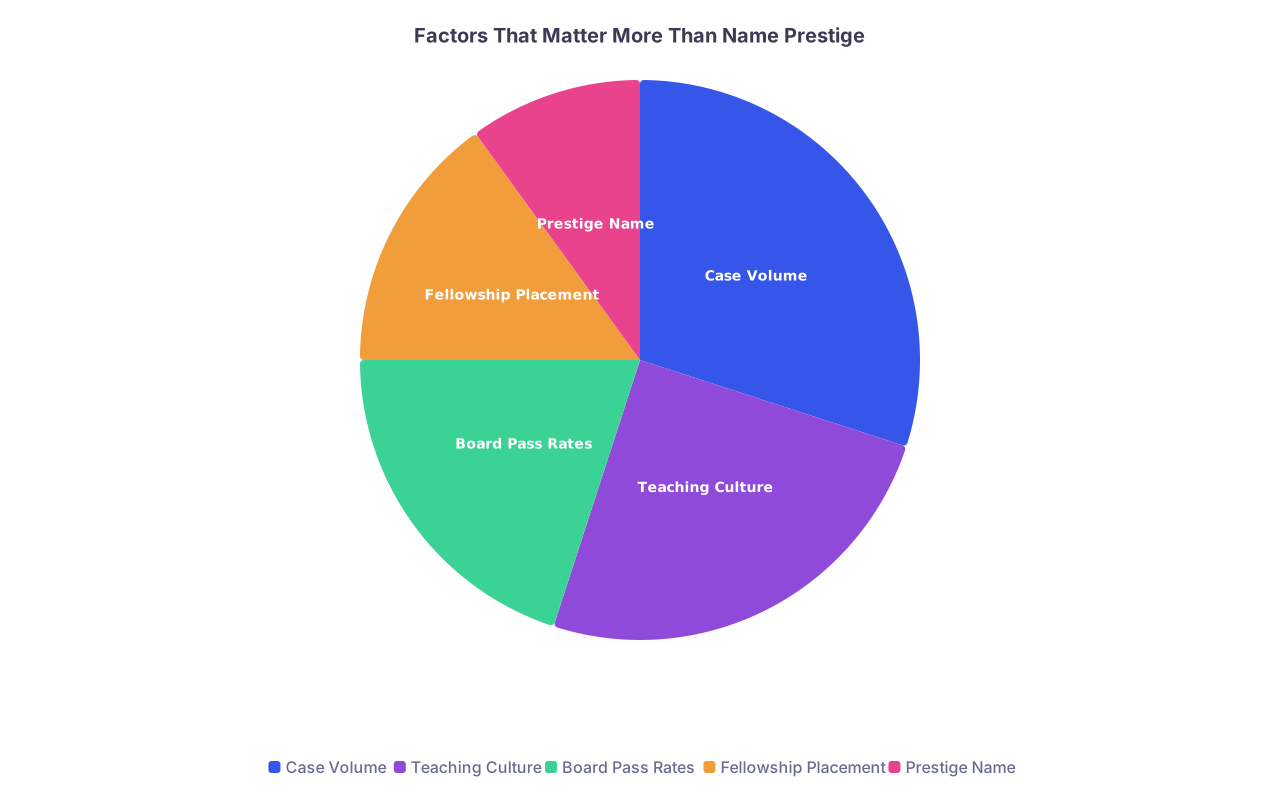
This is where you should ignore them. The match is not Twitter. Patient volume and sane attendings beat brand-name misery. If you’ve checked the data and the current residents actually like their lives, locking that in early is often wise.
| Category | Value |
|---|---|
| Case Volume | 30 |
| Teaching Culture | 25 |
| Board Pass Rates | 20 |
| Fellowship Placement | 15 |
| Prestige Name | 10 |
4. You Don’t Actually Want to Reapply If Things Go Sideways
I ask applicants this directly: “If you don’t match this year, are you truly willing to reapply next cycle?”
Half of them admit: “Honestly, no. I’d probably just pivot specialties.”
In that case, your real choice is:
- Accept this decent pre-match in your dream field now
- Or roll the dice and, if you miss, likely never reapply in that field
Under those preferences, accepting becomes clearly rational.
How to Evaluate a Pre-Match Like an Adult, Not a Panicked MS4
You need something better than “it’s competitive, so yes” or “it’s not famous, so no.”
Here’s a systematic way to think:
Step 1: Program Reality Check
Talk to current residents. Not just the ones on interview day. Ask:
- “Are you getting enough cases? Do seniors struggle to meet minimums?”
- “How many residents failed boards in the last 5 years?”
- “If you had to choose again, would you pick this program?”
- “What happens to grads—what fellowships or jobs do they actually get?”
Then compare that to what you could plausibly get in the Match.
Step 2: Your Market Value Estimate
Rough but useful:
| Factor | Strong Signal | Weak Signal |
|---|---|---|
| Exams | Above avg for that specialty | Barely at or below typical cutoff |
| Letters | From known names in the field | Generic or from non-specialists |
| Research | Specialty-focused, pubs or posters | None or unrelated |
| Interviews | Multiple mid/high-tier programs | Few invites, mostly lower-tier |
If you’re “weak” in multiple cells and still get a pre-match from a decent place, lean towards yes.
Step 3: Risk and Preference Honesty
Ask yourself, privately:
- “If I go unmatched, am I realistically willing to reapply?”
- “Is my life situation flexible enough for a gap year?”
- “Would I rather train at this program than not do this specialty at all?”
If the honest answers are: “No, no, and yes” — then accept.

| Step | Description |
|---|---|
| Step 1 | Pre-match offer received |
| Step 2 | Leaning decline |
| Step 3 | Leaning accept |
| Step 4 | Reasonable to decline |
| Step 5 | Accept is rational |
| Step 6 | Program solid quality? |
| Step 7 | Applicant competitive? |
| Step 8 | Risk tolerance high? |
A Few Ugly Truths People Don’t Tell You
Some attendings push “accept any pre-match” because they themselves trained at mediocre programs and need to believe it was the only way. That’s about their psychology, not your future.
Some pre-match offers exist precisely because the program can’t consistently attract good candidates in the Match. Not always. But often enough that you should ask why they’re so eager to lock you in early.
Saying no to a pre-match does not blacklist you from the entire specialty. Programs are used to people weighing offers. You’re not the first person to decline.
But playing games—verbally accepting, stringing programs along, or trying to sign and still sneak into the Match—is how people really do burn bridges. Pick a lane and stay ethical.

How to Push Back Against the Myth Without Burning Bridges
You’ll probably hear “You can’t turn that down” from someone. Here’s how to handle it without starting a war.
- With faculty: “I really appreciate your advice. I’m carefully comparing this program’s strengths with where I realistically stand in the Match and my long-term goals. I want to make the most informed decision I can.”
- With co-applicants: “It’s a good offer, but I want to see my full interview set first and then decide what aligns with my long-term plans.”
You do not owe anyone your detailed risk calculus. You do owe yourself more than fear-based decision making.

Key Takeaways
- “You must accept any pre-match” is a myth driven by fear, not evidence. Many residents in competitive fields match without pre-match offers.
- Accept a pre-match when the program is solid, your application is marginal, your risk tolerance is low, or you wouldn’t realistically reapply if unmatched.
- Decline when program quality is poor, your application is clearly competitive, the contract is exploitative, or you have a concrete, realistic plan to strengthen and reapply.