
The phrase “we’re very interested in you” is one of the most abused, misunderstood lines in residency recruitment.
Programs use it all the time. Applicants over-interpret it every time. And I’ve watched it ruin rank lists, blow pre-match opportunities, and leave people unmatched who thought they were “safe.”
Let me tell you what that phrase actually means when it comes right before a potential pre‑match offer.
What “We’re Very Interested” Really Signals (From the Other Side of the Table)
On your side of the Zoom screen, “we’re very interested” sounds like:
You’re high on our list. Expect something soon. Maybe a pre‑match.
On the program side, that same phrase almost never has one clean meaning. It usually lives in one of a few buckets, and if you don’t know which bucket you’re in, you’re guessing with your career.
Here’s the unvarnished breakdown.
Bucket 1: Code for “You’re On Our Short List for a Pre-Match”
This is the dream scenario. It does happen.
The program has, say, 20 categorical IM spots. They plan to fill 10 by pre‑match, 10 through the Match. After their first two interview dates, they’ve already identified 5–7 people they’d be happy to lock in early.
Behind closed doors, the PD pulls up the post‑interview spreadsheet and says something like:
“These six are pre‑match caliber. Let’s reach out, signal interest, and see who bites if we float the idea.”
If you’re in this bucket, “we’re very interested” is not random fluff. It usually comes with other clues:
- The PD or APD says it directly, not just a random resident.
- It happens in a 1:1, not just in a big group closing session.
- It’s very specific about fit: “We see you here,” “You’d fit really well with our team,” “We’d be excited to have you join us.”
In these cases, “we’re very interested” is often the soft launch before they formally say something like, “Would you be open to a pre‑match if we offered?”
But read that sentence again. Would you be open to a pre-match if we offered?
That’s still exploratory. Not binding. Not a promise.
Bucket 2: Code for “We Want to Keep You Warm While We Decide”
This is far more common than Bucket 1.
Example: A mid‑tier community IM program in Texas. Strong Step 2? Nice. Decent research? Nice. But they’ve also interviewed a handful of US grads with slightly stronger files who might or might not be willing to pre‑match.
What does the PD do? They hedge.
You get an email or a comment on interview day:
“We’re very interested in you as an applicant. We think you’d be a great fit here.”
Translation from the back room:
“Flag this person so they don’t drop us from their rank list or withdraw. If our top 6 don’t pre‑match, we might circle back to them.”
You’re not the first choice. You’re not out. You’re a backup early-commit candidate.
If you misread this as a near-certain pre‑match and mentally “count” that spot, you’re making a strategic error.
Bucket 3: Code for “We Like You… For the Regular Match”
This is where most applicants get burned.
Many programs, especially those not doing aggressive pre‑matching, are terrified of violating Match rules or even looking like they’re gaming the system. So they speak in generic, legally safe, intentionally vague language.
So you’ll hear:
“We’re very interested in you.”
“We’ll be ranking you highly.”
“You’re the type of resident we’re looking for.”
That might mean:
You’re actually going to be ranked highly. Or you’re solid but middle of the list. Or they just say it to everyone above a certain threshold to keep impressions positive.
From a PD’s chair, this is low‑risk messaging:
- Keeps you feeling good about the program.
- Costs them nothing.
- Doesn’t obligate them to a pre‑match.
- Doesn’t violate the “no promises” culture.
The problem is not the phrase. The problem is applicants emotionally rounding “we’re very interested” up to “we’re going to rank you to match” or “we will pre‑match you.”
They are not the same.
Pre-Match vs “Interest”: What’s Actually on the Table?
Before you can interpret “we’re very interested,” you need to understand what’s even possible in that program’s system.
Some programs cannot or do not pre‑match. Others basically treat pre‑match as their main recruitment device.
| Program Type | Pre-Match Tendency |
|---|---|
| Texas community IM/FM | Frequent, aggressive |
| Texas university IM/specialty | Selective, limited |
| Non-Texas NRMP programs | Rare/none (NRMP only) |
| Smaller community hospitals | Opportunistic |
| Competitive specialties (ENT, Derm) | Almost never pre-match |
If you’re hearing “we’re very interested” from a program that doesn’t do pre‑match, then stop trying to decode it as a pre‑match signal. It’s about ordinary rank list position, nothing more.
But at programs that do pre‑match, here’s how the internal conversation usually runs.
I’ve sat in those rooms. It’s not fancy.
“We like her. She’d be a strong resident. But do we want to spend a pre‑match slot on her, or hold it for a stronger candidate who might say yes?”
That’s when “we’re very interested” gets thrown around like a placeholder.
They’re testing you. Seeing if you’re enthusiastic enough that a pre‑match might “stick.” Trying to get a read on whether you’d say yes, and whether you’d actually show up.
Because here’s a dirty little secret: Some programs have been burned by candidates who verbally agreed to a pre‑match but later tried to back out, or psychologically checked out because they “locked in” early.
So now they want evidence you’re serious before they offer.
How Programs Actually Use “We’re Very Interested” in Pre-Match Season
Let’s walk through the playbook from the program side.
Phase 1: Early Interviews, No Commitments
First few interview days, PDs are gathering data. They’re polite, they’re positive, and they throw “we’re very interested” around quite a bit.
Three internal goals:
- Keep candidates engaged and feeling valued.
- Avoid scaring anyone away while they see how the overall pool looks.
- Avoid early promises they can’t keep if stronger candidates appear later.
You might hear “we’re very interested” here and think it’s special. It usually isn’t. You’re one of 20–40 people in that bucket.
Phase 2: Short-Listing Pre-Match Targets
About 3–5 interview days in, things change. You’ll hear PDs say behind closed doors:
“We need to start thinking about pre‑matches or we’ll lose our top candidates to X, Y, Z.”
At this stage, they create tiers:
- Tier A: People they’d definitely pre‑match if they’d say yes.
- Tier B: People who could get a pre‑match if Tier A declines.
- Tier C: People they like for the regular Match but not enough to spend a pre‑match slot.
“Very interested” gets weaponized here.
- Tier A might get: “We’re very interested, and we think you’d be a great fit here specifically. Are you considering pre‑match offers?”
- Tier B gets: “We’re very interested and will be in touch.” Or “We’ll be ranking you highly.”
- Tier C gets: “We enjoyed meeting you and think you’ll be a strong resident wherever you land.”
You see the pattern.
Phase 3: Soft Probing Before a Real Pre-Match
Before a formal email or contract, PDs often send feelers.
You might get:
- A personal email from the PD or APD mentioning they’re “very interested” and asking about your other interviews.
- A call where they say something like, “If we were to extend a pre‑match offer, would you realistically consider accepting?”
That’s the moment you need to recognize: “We’re very interested” is no longer generic politeness. It’s reconnaissance.
They’re trying to avoid a wasted offer.
If you respond with lukewarm energy, vague “I’m keeping my options open” language, or obvious hesitation, do not be surprised if the next thing that happens is… nothing. They go to the next name.
If you respond with strong, authentic interest, clear geographic or personal ties, and specific reasons you’d choose them, you make it far more likely that “we’re very interested” converts into “we’d like to offer you a pre‑match.”
How YOU Should Respond When You Hear “We’re Very Interested”
Here’s where applicants either play it smart or blow it.
You can’t control what they mean when they say it. You can control how you respond in a way that:
- Keeps doors open.
- Signals genuine interest when appropriate.
- Doesn’t violate NRMP rules or commit you prematurely.
On Interview Day, Live or Virtual
If a PD or faculty member looks you in the eye near the end and says:
“We’re very interested in you.”
The worst thing you can do is just smile awkwardly and say, “Thank you.”
A better response is controlled but clear:
“I’m really glad to hear that. I’ve been very impressed with your residents and the training environment here. This is absolutely a program I could see myself at.”
Notice what you did there:
- You reciprocated interest without promising you’ll rank them first.
- You gave them permission, psychologically, to move you into that Tier A pre‑match bucket.
- You differentiated yourself from the 20 other people who just say, “Thanks, I enjoyed the day.”
If they add something like, “We’ll be in touch,” you can follow with:
“I’d welcome that. And if there’s anything else I can provide to help you in your decision-making, please let me know.”
Simple. Mature. Signals you’re open without begging.
After the Interview: The Thank-You and Interest Reinforcement
If you’re genuinely interested in the program—and especially if it’s in a state or system that uses pre‑match—you should reinforce that interest in your post‑interview communication.
This is where the phrase “we’re very interested” becomes leverage.
You can reply with something like:
“Thank you again for the opportunity to interview with your program. I left the day even more impressed by your residents’ autonomy and the collegial environment. I’d be very excited to train at [Program Name] and would strongly consider any opportunity to join your team.”
You did not say: “I will rank you #1.”
You did say: “If you pre‑match me, there’s a high chance I say yes.”
And in the PD’s head, that’s exactly what they’re assessing.
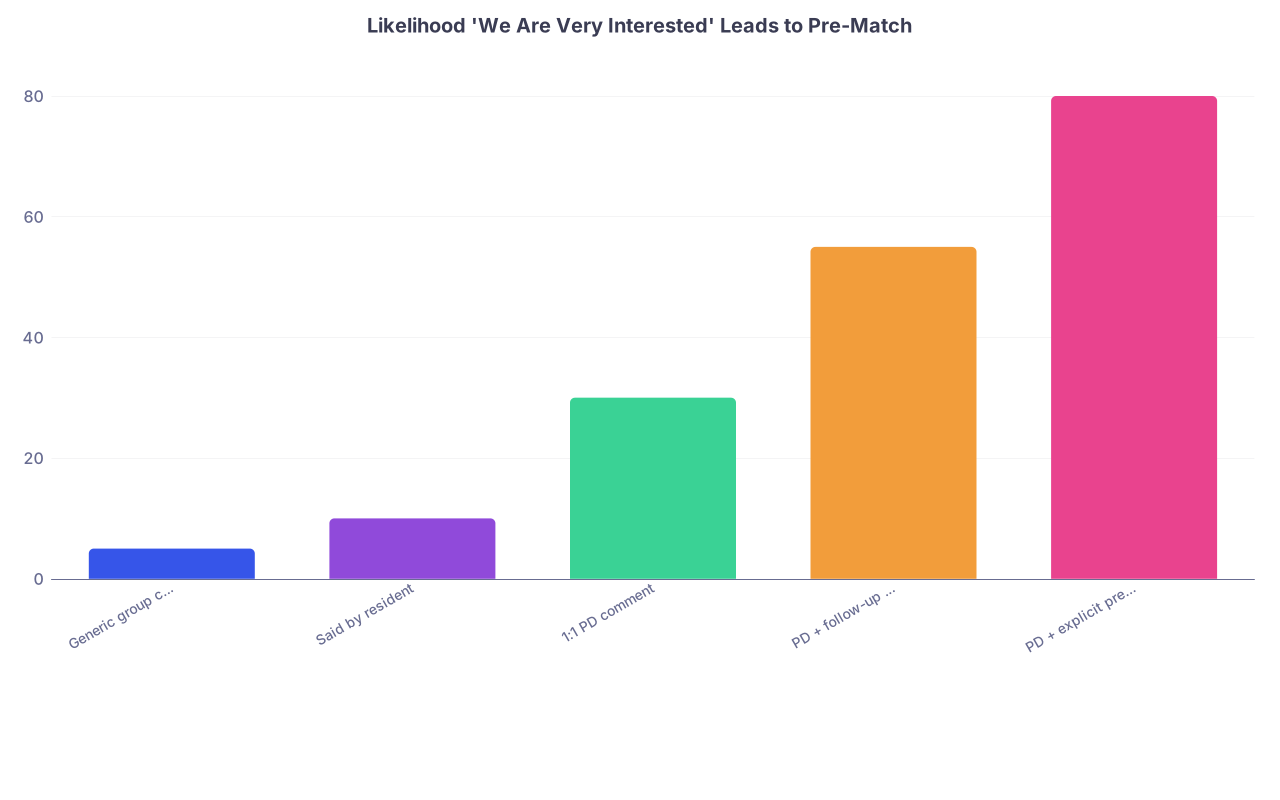
How to Tell If “We’re Very Interested” Might Lead to a Pre-Match
You’ll never know for sure. But there are patterns.
| Category | Value |
|---|---|
| Generic group comment | 5 |
| Said by resident | 10 |
| 1:1 PD comment | 30 |
| PD + follow-up email | 55 |
| PD + explicit pre-match question | 80 |
Let me translate those scenarios into real-world language.
Low Probability: Generic Group Statements
Closing session of the interview day. PD on Zoom:
“We’re very interested in all of you, and we appreciate your time.”
This means nothing for pre‑match. It’s just polite noise. If you hang your strategy on this, you’re setting yourself up.
Low–Moderate: Resident or Fellow Comments
Residents saying things like:
“We’re really interested in you, you’d fit great here.”
Residents often mean it. But they have almost zero say in who actually gets pre‑matched. At best, they can vouch for you on a scoring sheet.
Treat this as social encouragement, not a binding signal.
Moderate: 1:1 PD Comment Without Follow-Up
If, in a private conversation, the PD says:
“We’re very interested in you as an applicant. You’d be a fantastic addition to our program.”
And that’s the end of it—no mention of next steps, pre‑match, or contacting you later—then you’re solidly in the “we like you for the rank list” tier. Maybe pre‑match, maybe not, but nothing close to guaranteed.
High: PD Comment Plus Specific Next Steps
When it starts to sound like:
“We’re very interested, and after we finish our first few interview dates, we’ll be deciding on pre‑match offers. Would you be open to that?”
Now you are in the serious consideration bucket. This is where your answer can tilt the scale. If they probe you about pre‑match at all, they’re trying to figure out if offering you one makes sense.
How Not to Get Played (Or Played Yourself)
The biggest mistake I see: applicants turning comfort phrases into strategic assumptions.
“I don’t need to cast a wide net, Program X is very interested.”
“I can rank fewer safeties, I’ve got some ‘we’re very interested’ emails.”
Dangerous thinking.
Here’s what’s really happening behind those emails and calls:
- Programs have zero obligation to you before a signed pre‑match contract or before rank lists lock.
- PDs routinely say “we’re very interested” to 3–5x more people than they could ever pre‑match.
- They prefer to over-reassure and later disappoint than to undersell and lose people to other programs.
Your guardrails need to be simple and brutal:
- Until you have a written pre‑match offer or a signed contract, you do not “have” that position.
- Verbal warmth is not currency. Only contracts and NRMP rank outcomes are.
If You Actually Receive a Pre-Match Offer
This is the point where “we’re very interested” turns into something real and risky.
Once they extend a pre‑match, here’s what’s happening in their room:
“If this person accepts, we’re done with that slot. No taking it back. Are we okay with that?”
So when they make that leap, understand it’s not casual for them. Don’t treat it casually on your end either.
You need to have already done the internal work before these offers come in:
- Would I rather lock in here or roll the dice in the Match?
- How many interviews do I have scheduled or reasonably expect?
- How does this program compare to my realistic Match outcomes, not my fantasy ones?
If you drag your feet, stall excessively, or sound like you’re shopping their offer aggressively, don’t be shocked if they say:
“We understand. Unfortunately, we do have to move forward and cannot hold this spot indefinitely.”
And it disappears.
A Simple Mental Model: Interest vs Commitment
Treat “we’re very interested” like this:
- It’s a signal to engage, not a signal to relax.
- It’s a nudge for you to clarify interest, not a guarantee they’ll follow through.
- It’s an invitation to step closer to the pre‑match conversation, not the pre‑match itself.

| Step | Description |
|---|---|
| Step 1 | Interview Day |
| Step 2 | We are very interested |
| Step 3 | Regular Match only |
| Step 4 | Soft probing contact |
| Step 5 | Formal pre-match offer |
| Step 6 | Locked pre-match spot |
| Step 7 | Program pre-match capacity |
| Step 8 | Your response strong? |
| Step 9 | You accept? |
That’s the real flow. And you control more of it than you think, but not all of it.
FAQs
1. If a program says “we’re very interested,” can I assume I’ll at least be ranked to match?
No. Most of the time you will be ranked, but how high is impossible to know from that phrase alone. Programs overuse soft-positive language because it costs them nothing. Until rank order lists are in—and you see the results—that phrase is not a safety net. It’s just a mild indicator that you cleared some threshold of likability and competence.
2. Should I tell a program they’re my top choice if they say they’re very interested in me?
Only if it’s true or very close to true. Lying about “top choice” signals can backfire badly, especially in small specialties where PDs talk. Instead, use strong but honest language: “Your program is among my very top choices, and I’d be very excited to train there.” That’s enough to encourage a pre‑match discussion without boxing you into a blatant lie.
3. How fast do I have to respond if a program hints at a potential pre-match?
Fast enough that you don’t look indifferent, but not so fast you sound desperate. If they email or call probing about pre‑match (“Would you consider an early offer?”), replying within 24 hours is reasonable. Use that time to honestly assess your situation and maybe talk to a trusted mentor. Long delays read as disinterest. And disinterest kills pre‑match momentum.
4. What if multiple programs say “we’re very interested”—how do I prioritize?
Strip the phrase out. Pretend they all said nothing. Then rank them by:
- Training quality and case volume.
- Geography and life factors that actually matter to you.
- Realistic competitiveness—where you’re a strong fit vs a long shot.
Then overlay the “interest” signals only as a tie‑breaker, not as the main driver. “We’re very interested” should never outweigh obvious factors like malignant culture, poor board pass rates, or geography that doesn’t work for your life.
The real meaning of “we’re very interested” before a pre‑match offer comes down to this:
- It’s a probability booster, not a promise.
- How you respond—to their words, in your thank‑you, and in follow‑up—can move you up or down their internal tiers.
- You only relax when you have a contract in hand or a Match result on the screen. Everything before that is just noise you learn to interpret without being blinded by it.