
What if you sign a pre‑match and wake up one day thinking: “I made a huge mistake”?
That’s the nightmare, right? You’re so scared of not matching that you grab the pre‑match… and then it hits you:
What if I hate the program?
What if I’m stuck?
What if I ruin my whole career because I panicked and said yes?
Let me be blunt: you’re not as trapped as your brain is telling you right now, but you are more constrained than people like to admit. Both can be true.
Let’s walk through the real options. Not the fantasy ones where you just “switch programs easily.” The ones I’ve actually seen people use — and the landmines that blew up for others.
First: What does a pre‑match actually lock you into?
Before you plan your escape routes, you need to know what cage you’re actually in.
There are basically two big flavors:
Unmatched pre‑round (“pre‑match”) outside the NRMP main Match
Common with some community programs, some specialties, some states (especially for IMGs). You sign a contract before the regular Match. Program can withdraw your spot from the Match.NRMP “early commitment” or non‑NRMP program contract
You sign something that may or may not be subject to NRMP rules (very important). If both you and the program are in NRMP, you usually can’t just go match somewhere else without consequences.
Here’s the problem: most applicants don’t fully understand what they signed. They’re scared, everyone around them is yelling “Take it, take it, any spot is better than no spot,” and they sign.
You need to do this today (seriously):
Open the contract or offer letter and look for:
- NRMP mentioned anywhere
- Commitment length (1 year? categorical 3 years? 5?)
- Penalties for breaking (fees, reporting, “breach,” etc.)
- Any mention of state law or governing jurisdiction
That document decides how painful the “I hate it, I want out” scenario will be.
Realistic exit paths (from least explosive to most)
Notice I didn’t say “easy.” Just “realistic.”
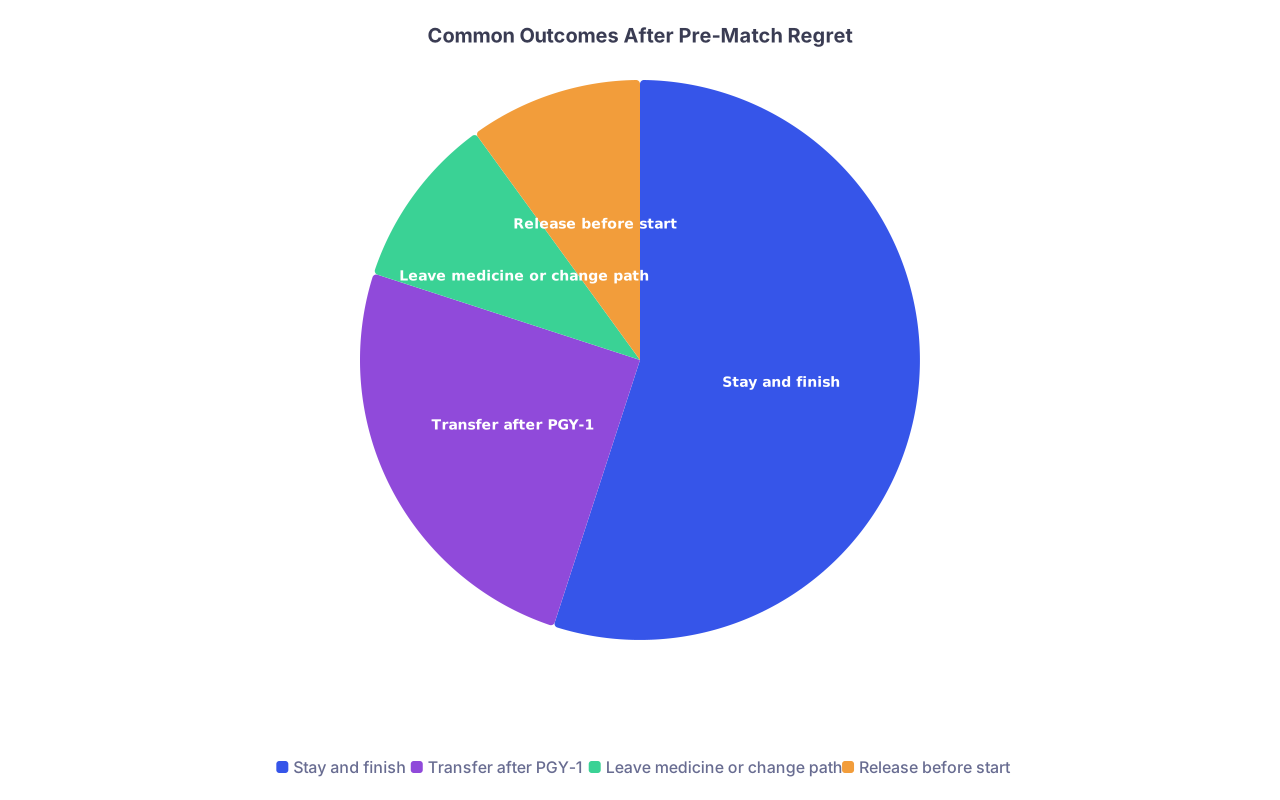
| Category | Value |
|---|---|
| Stay and finish | 55 |
| Transfer after PGY-1 | 25 |
| Leave medicine or change path | 10 |
| Release before start | 10 |
1. You stick it out for PGY‑1, then try to transfer
This is the most common path I’ve seen from people who regret their pre‑match:
“I hate this place. But I’ll survive one year and then get the hell out.”
How it works in real life:
- You complete intern year (PGY‑1)
- You apply for:
- Off‑cycle PGY‑2 spots
- Or re‑enter the Match (for PGY‑2 or even another specialty)
What you need to pull this off:
Minimum:
- No catastrophic evaluations
- No huge professionalism issues
- Decent Step scores and decent letters
- A Program Director willing to provide verification of training (PD letter)
Better:
- At least 1–2 attendings who like you and will write strong letters
- A PD who, while maybe not thrilled, isn’t out to sabotage you
Here’s the catch nobody tells you:
If you openly trash the program, bad‑mouth faculty, or make it obvious you’re trying to bail, some PDs will quietly poison the well. They don’t have to lie; “faint praise” is enough to kill your transfer chances.
So if “escaping after PGY‑1” is your plan, your strategy is survival + professionalism, not open war.
Pros:
- You don’t burn bridges completely
- You still have training credit (PGY‑1)
- You get time to plan your next move
Cons:
- You’re miserable for at least a year
- Transfer spots are limited and competitive
- There’s absolutely no guarantee you’ll find something better
2. You request a release before you start
This is the fantasy scenario: you sign, panic, then gracefully back out before Day 1.
Sometimes it actually works.
This is what it usually looks like:
- You email or call the PD:
- Very respectful.
- Emphasize that you realized it’s not the right fit / family reasons / location — not “I got something better.”
- You basically beg them to release you from the contract.
Whether this works depends on:
- Program culture: Some are surprisingly humane. Others are possessive and punitive.
- Timing: Asking 11 months before start is different from 3 weeks before orientation.
- Their backup options: If they have a long line of applicants or can SOAP someone, they’re calmer.
If you do this:
- Accept you’re likely never matching there in the future
- Don’t blast them on social media or with classmates
- Get any release in writing
Sometimes they’ll be relieved: “Thanks for letting us know early.”
Sometimes they’ll threaten: “We’ll report you to NRMP / your dean / your home program.”
This is when you need actual legal advice, not Reddit.
3. You tough it out but change specialty later
This happens more than people admit.
You match (or pre‑match) into Internal Medicine, you hate everything, and you realize, “I’m actually a Psych or Path person.”
But instead of detonating your current spot immediately, you:
- Finish 1–3 years
- Get board‑eligible in that specialty
- Then:
- Apply for a second residency in another field
- Or do a fellowship in an area that suits you better
This is long‑game thinking. Not satisfying to the anxious brain that wants OUT NOW. But honestly? It’s one of the more stable paths out of a regretted pre‑match.
I’ve seen:
- An IM resident who hated wards, finished 3 years, then did Rheum and found a niche she loved
- A Surgery pre‑match who barely survived 2 years, took a research year, then reapplied and matched Pathology
Pros:
- You keep a stable income
- You don’t look like a flake who bails at the first sign of discomfort
- You leave with real credentials
Cons:
- It’s slow
- You’ll question every life decision at 3 a.m. on call
- You have to tolerate being unhappy longer than feels fair
4. You break the contract and walk away
This is the nuclear option.
It’s not automatically “career over,” but it’s not clean either.
You can’t be forced to physically show up for residency. But you can be:
- Reported to NRMP (if applicable)
- Reported to your med school dean
- Sued for breach of contract in rare extreme cases (more likely in some states and some large hospital systems)
- Blacklisted informally by some PD networks
I’ve seen it go both ways:
- One resident walked away from a toxic prelim spot, took a research year, explained it honestly in interviews, and later matched FM. It was rocky, but possible.
- Another tried to walk from a categorical pre‑match, their PD refused to give any letter, and applied again with no US LORs. They didn’t match the next cycle.
If you’re even thinking about this path:
- Talk to a lawyer who knows employment/contract law in that state
- Talk to your med school dean or advisor — quietly
- Don’t just stop replying to emails and assume it’ll disappear. Ghosting a program is the worst look you can possibly have.
5. You stay, but you change your relationship to the program
This isn’t technically an “exit,” but it’s often the most realistic route.
Sometimes the problem isn’t that the program is abusive or unsafe. It’s that:
- You feel out of place
- You hate the city
- You don’t click with co‑residents
- You’re grieving the programs you didn’t get
In those cases, your brain screams “I chose wrong, bail, bail, bail” — when what you actually need is:
- A mentor or faculty ally
- A therapist who understands residency burnout
- Some small control over your life: schedule tweaks, a near‑home rotation, a vacation you actually use
I’m not saying you should force yourself to stay in a truly toxic environment. I’m saying not all “I hate it” feelings mean “this program is unfixable.” Sometimes it means “this transition is brutal and I’m scared.”

| Step | Description |
|---|---|
| Step 1 | Accept pre match |
| Step 2 | Request release |
| Step 3 | Start residency |
| Step 4 | Seek support and adjust |
| Step 5 | Plan transfer after PGY 1 |
| Step 6 | Apply for PGY 2 spots |
| Step 7 | Consider early exit with legal advice |
| Step 8 | Hate it before start? |
| Step 9 | Hate it PGY 1? |
Hard reality check: what actually counts as “I hate it”?
Your anxious brain will turn any discomfort into “this is a disaster.” But there’s a big difference between:
- “I don’t love this, but it’s survivable,” and
- “This is emotionally or physically unsafe.”
Here’s a rough, honest breakdown:
| Situation | Annoying but survivable? | Red flag or dangerous? |
|---|---|---|
| Long hours, lots of scut | Yes | Only if violating duty limits |
| Attendings with rough personalities | Often yes | Unless harassment/abuse |
| Feeling lonely in a new city | Yes | Becomes serious with depression/SI |
| Chronic sleep deprivation | Yes but serious risk | Dangerous if causing errors/health decline |
| Systemic bullying, screaming, humiliation | Borderline | Red flag, especially if widespread |
| Racial/sexual harassment, retaliation | No | Dangerous, get help fast |
If what you’re dealing with moves into the right column, “exit options” become a safety issue, not just preference.
How bad is it to have “broken a contract” on your record?
Let’s be honest: PDs talk. Not all the time, not everyone, but they do.
Some truths:
- A single line on your CV saying “Left Program X after 3 months” is a huge conversation point in every future interview.
- Some PDs will never touch someone who left a program early. They see it as a character flaw.
- Other PDs are much more nuanced. They know some programs are a nightmare and some residents truly land in the wrong place.
Your job, if you do leave, is to eventually have:
- A coherent, calm explanation that doesn’t trash the old program
- Some kind of professional reference from someone there or from your med school
- Evidence that you used the gap time productively (research, observerships, another clinical role — not just “I sat at home and panicked”)
Again: possible? Yes. Clean? No. Worth it? Depends how bad your current situation is.
How to think about this before you accept a pre‑match
If you’re reading this before signing, your anxiety might actually save you.
Ask yourself:
If this was the only residency I ever did, could I tolerate it?
Not “love it.” Just tolerate. Survive. Grow somewhat.Is there any serious deal‑breaker already visible?
- Zero resident support
- Sketchy duty hours
- Everyone looks dead inside
- Awful location for family or partner with no realistic plan
Would I be okay doing a transfer after PGY‑1 if needed?
Because that’s the real backup plan, not “I’ll just easily switch before start.”
If the honest answer is: “I’d rather reapply and risk not matching at all than be locked there,” then maybe don’t sign it in the first place.
Managing the panic after you’ve accepted
If you’ve already clicked “accept,” signed, or verbally committed and you’re spiraling, do this in sequence:
Read your contract line by line.
Highlight anything that mentions “termination,” “breach,” “NRMP,” or “penalty.”Book a meeting with your med school dean or advisor.
Say exactly this: “I accepted a pre‑match and I’m having serious doubts. I want to understand my realistic options if it doesn’t work out.”Start a “worst‑case plan” document.
This sounds dark, but it can calm you down. Outline:- If I hate it mildly: I do X (therapy, mentor, small changes).
- If I hate it badly but safe: I do Y (stick PGY‑1, apply to transfer).
- If it’s unsafe/toxic: I do Z (document, report, legal advice, consider exit).
Stop polling 50 people for opinions.
Crowdsourced panic from WhatsApp groups and Reddit is just going to make you feel trapped and doomed. You need 2–3 informed adults, not 200 equally anxious MS4s.
The uncomfortable truth you probably already know
No program is perfect. Every resident, even at “dream” places, has a “What have I done?” moment at 2 a.m. on night float.
A pre‑match does reduce your flexibility. That’s real. You are giving up some options.
But you are not sentencing yourself to life in prison. People:
- Transfer
- Re‑specialize
- Pivot to different careers
- Survive bad fits and still build good lives
You’re allowed to be scared. You’re allowed to regret. You’re also allowed to make the best move you can with the information you have now, then adjust later if that reality truly becomes unbearable.
You’re not the first person to sign a pre‑match in a panic. You will not be the last.
What actually matters is how you respond once the panic wave passes.
FAQ (exactly 4 questions)
1. If I accept a pre‑match, can I still enter the regular Match and go somewhere else?
Usually no — or at least not without serious risk.
If the program participates in NRMP and you signed a binding contract, going into the Match for the same start date can violate NRMP rules and get you barred from future Matches. In non‑NRMP pre‑matches, the contract itself might still prohibit going elsewhere. You need to check your contract and talk to your dean or a lawyer before you even consider this.
2. Will programs blacklist me forever if I ask to be released before starting?
Some will hold a grudge. Some won’t. The earlier and more respectful your request, the better your chances of a clean break. If you frame it as “wrong fit / family needs / location” instead of “I got something better,” you’re more likely to be treated as a human and not a traitor. But assume: that one program is probably off the table for the rest of your career.
3. Is it better to risk not matching than accept a pre‑match I’m unsure about?
It depends how unsure you are. If your gut is screaming “absolutely not, this environment will break me,” then yes, it can be smarter to decline and take your chances in the Match or reapply next year. But if it’s more “I’m scared it’s not perfect,” that’s just you being an anxious applicant with a functioning brain. In that case, a decent pre‑match can be a good safety net, with the understanding that a transfer later is possible but not guaranteed.
4. What’s one thing I can do right now to protect my future options?
Today, read your pre‑match contract and make a one‑page summary: NRMP or not, length of commitment, termination clauses, and any penalties. Then email your dean or advisor and attach that summary with a simple subject line: “Pre‑match contract questions — can we meet?”
That’s your next step: open the contract, highlight every line about termination or NRMP, and put it into that one‑page summary right now.