

The prestige hierarchy you think matters for residency is mostly noise.
Not zero. But far, far less than the folklore on Reddit, SDN, and group chats would have you believe. A “no‑name” program is not automatically a red flag. A big‑name program is not automatically safe. And a lot of what gets labeled as “red flags” online is either misunderstood, outdated, or flat-out wrong.
Let’s separate signal from superstition.
What Actually Predicts Training Quality (Hint: Not Name Recognition)
If you look at actual outcomes instead of vibes, the story gets uncomfortable for prestige-chasers.
Here’s what consistently correlates with solid training across specialties:
- Case volume and case mix
- Graduates’ board pass rates and recent in‑training performance
- Fellowships and job placements over the last 5–10 years
- Faculty stability and resident retention
- How much real responsibility residents have (with backup, not abandonment)
Program “tier lists” you see online are mostly based on:
- Historical reputation from 15–30 years ago
- NIH funding (irrelevant to your clinical training in a lot of fields)
- Name recognition among premeds and MS2s who have never set foot in these hospitals
- One or two loud opinions that get repeated until they feel like fact
I’ve watched residents from mid-tier community IM programs match GI, cards, and heme/onc at places that would make the average Reddit user’s jaw drop. I’ve watched people from “top 10” university programs graduate shaky on bread‑and‑butter procedures because everything interesting went to the fellow.
Pick which story you want to believe. But only one matches the data.
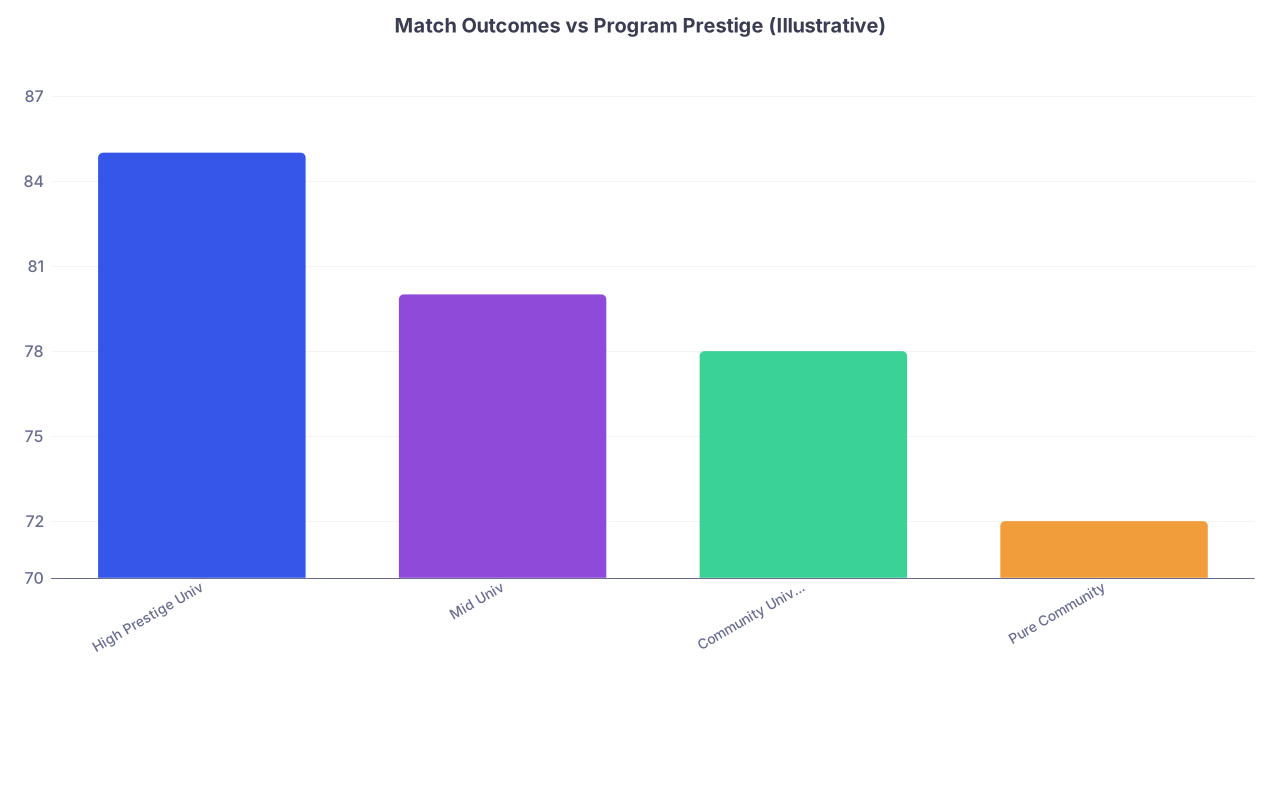
| Category | Value |
|---|---|
| High Prestige Univ | 85 |
| Mid Univ | 80 |
| Community Univ Affil | 78 |
| Pure Community | 72 |
That chart is simplified, but it mirrors what you actually see in NRMP/ specialty match data once you strip away the mythology: yes, there’s some effect of prestige on competitive fellowship placement, but it’s a gradient, not a wall. And inside that gradient there are dozens of “no‑name” programs punching way above their supposed weight.
Myth #1: “If I Haven’t Heard of It, It’s Probably a Red Flag”
This is the laziest heuristic in the game.
You haven’t heard of it because:
- You’re a medical student who’s been in one geographic bubble
- Your classmates talk about the same 20 programs
- Online forums recycle the same names
None of that tells you if the program is good. It tells you what applicants talk about.
When I see students auto‑filtering programs like this:
“Never heard of that one. Must be malignant / weak / sketchy.”
I know they’re about to make bad decisions.
Programs fly under the radar for very boring reasons:
- They’re in less “sexy” cities
- They don’t have giant research machines or marketing teams
- They quietly train locals who stay in the region
- They focus on clinical work instead of Twitter branding
I’ve reviewed CVs where a resident from “Random Regional Medical Center” had:
- 1000+ independent cases as a senior
- Solid QI projects
- Strong letters from faculty I knew and respected
- A fellowship spot at a nationally known center
No one on Reddit has ever typed the name of their program. It still produced a very competent physician.
Real red flag: No data, no transparency, evasive answers about outcomes.
Not a red flag: Your group chat hasn’t heard of it.
Myth #2: “Community Program = Lower Quality Training”
This one’s persistent and mostly wrong.
Are there weak community programs? Absolutely. There are weak university programs too. The difference is that weak university programs get shielded by brand.
Community ≠ inferior. It usually means:
- More hands‑on responsibility, earlier
- Less duplication with fellows
- Closer working relationships with attendings
- More real‑world pathology you’ll actually see in practice
Let’s be concrete. In surgery, EM, OB/GYN, anesthesia, and some IM programs, I’ve seen the same pattern:
- At large quaternary centers: you’re one of many; fellows and subspecialists soak up the rare cases; you may log fewer independent bread‑and‑butter cases.
- At solid community or university‑affiliated community hospitals: residents run the show (with backup), manage the common stuff in huge volume, and graduate ready.
You’re not training to be impressed at conferences. You’re training to handle an unstable GI bleed at 3 a.m. without crying.
| Assumption | Reality |
|---|---|
| Less research | Often true, but not inherently bad for clinicians |
| Worse clinical training | Frequently false; many have better hands-on exposure |
| Fewer fellowship options | Slightly harder, but good grads still match strongly |
| Lower board pass rates | Varies; many match or exceed big-name programs |
If your goal is heavy research and a hyper‑competitive subspecialty, sure, a major academic powerhouse helps. But for becoming a strong practicing physician? A lot of community‑heavy programs are secretly better bets than the Big Name down the street.
Myth #3: “Low or New Prestige Means Hidden Malignancy”
“Malignant” gets thrown around so casually it’s almost lost meaning.
Here’s what malignant actually looks like:
- Systemic disrespect: routine public humiliation, personal attacks
- Unsafe workload: chronic 90+ hour weeks, ignored duty hour violations
- Retaliation: residents punished for raising patient safety concerns
- Institutional gaslighting: consistent dismissal of wellness or education issues
Now compare that to what often gets mislabeled as malignant at lower‑prestige or newer programs:
- “They work you hard” (aka: you’re busy but supported)
- “Old‑school attendings with high expectations”
- “Not a lot of time for research”
- “You’re on call in-house more often”
Those might be reasons the program isn’t a personal fit. They’re not inherent red flags.
I’ve heard residents trash perfectly solid programs because:
“We didn’t get catered food on interview day.”
“The PD seemed a little awkward.”
“The hospital looked old.”
Cosmetic nonsense.
You want to know if a “lower prestige” program is actually malignant? Ask current residents specific, non‑fluffy questions:
- “When was the last resident who left or was pushed out, and why?”
- “What happens when you’re overwhelmed on a call night—who has your back?”
- “How easy is it to call in sick? What practically happens if you do?”
- “Have your hours been trending up or down over the last few years?”
If they give you consistent, specific, non‑defensive answers, you’re likely fine. Even if the wallpaper is ugly and the cafeteria coffee tastes like burnt rubber.
Myth #4: “Strong Program = Shiny Facilities, Famous Chair, Big City”
A strong program is not a hotel.
You’re not booking a vacation. You’re trading 3–7 years of your life for skills, judgment, and a degree of professional credibility.
Some of the most overrated “top” programs share the same traps:
- Gorgeous new hospital towers but chaotic systems
- World‑famous researchers who are useless as teachers and barely know residents’ names
- Brand leverage that hides structural dysfunction
On the flip side, some “no‑frills” programs are quietly excellent because:
- Attendings actually enjoy teaching and supervision
- The residency leadership is present and responsive
- Schedules are tight but sane, and people graduate competent
The obsession with city and aesthetics distracts from the metrics that matter.
When you interview, instead of admiring the lobby art, press them on:
- Last 3 years of board pass rates
- Numbers and locations of fellowships / jobs for graduates
- How often they’ve updated their curriculum or schedule in response to feedback
- Actual case numbers, not just “we’re busy”
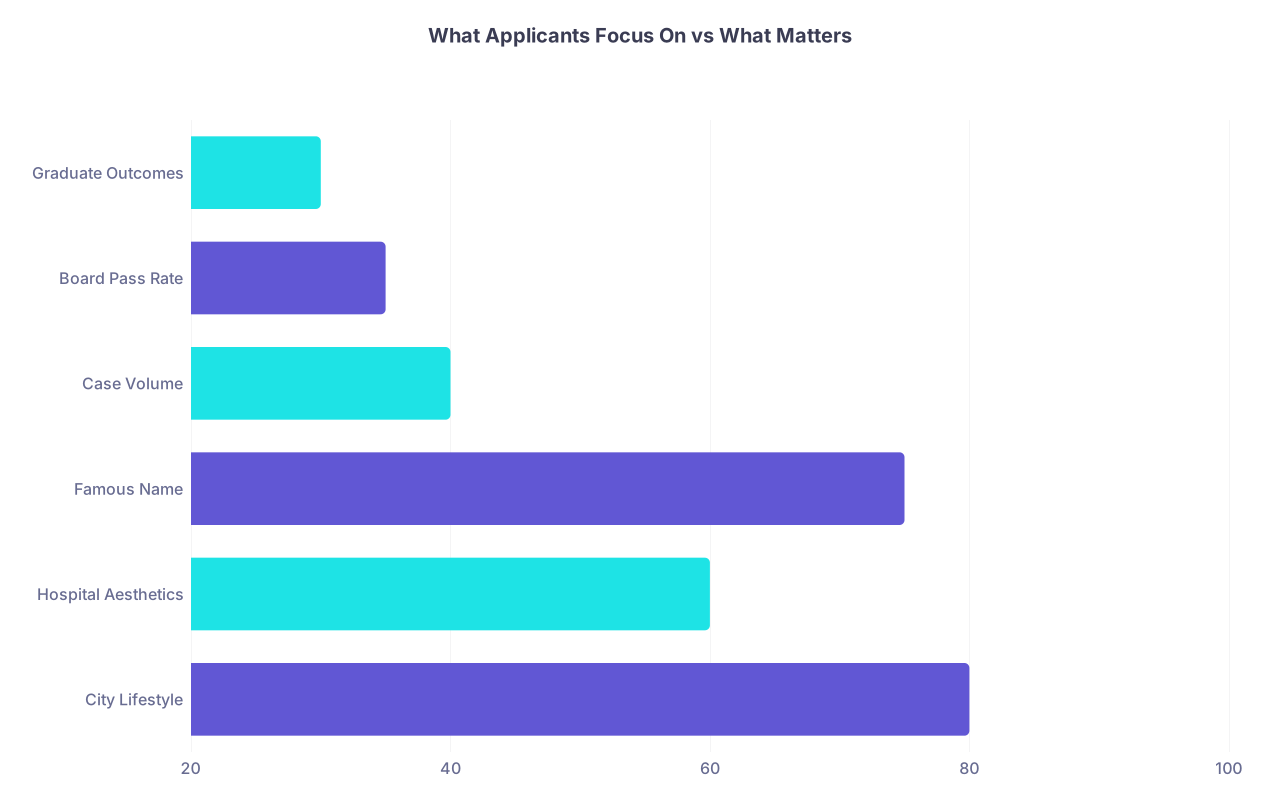
| Category | Value |
|---|---|
| City Lifestyle | 80 |
| Hospital Aesthetics | 60 |
| Famous Name | 75 |
| Case Volume | 40 |
| Board Pass Rate | 35 |
| Graduate Outcomes | 30 |
That chart is illustrative, but you’ve seen it play out: people obsess over lifestyle and brand, then act surprised when they feel undertrained or unsupported.
Myth #5: “Newer or Expanding Program = Automatically Dangerous”
New or growing programs get reflexively thrown into the “red flag” bucket. Sometimes that’s valid. Often it’s lazy.
Here’s the nuance:
Real risks with brand‑new or rapidly expanding programs:
- They don’t yet know how to protect residents from scope creep
- Infrastructure (clinic space, call rooms, IT, ancillary support) may lag growth
- No long‑term outcome data yet (boards, fellowships, jobs)
But those are questions, not verdicts.
Some newer programs are built by people who left dysfunctional legacy programs specifically to fix things. These can be very deliberate, very learner‑centered environments—because leadership still remembers what it’s like to be on the floor.
What you look for in a new/expanding program:
- Clear, documented structure: block schedules, call frequency, supervision expectations
- Evidence of negotiation power: “We won’t expand resident numbers unless we add X faculty / Y APPs”
- Transparent planning horizon: where they expect the program to be in 3–5 years, and how they’re measuring success

| Step | Description |
|---|---|
| Step 1 | New or Expanding Program |
| Step 2 | High Risk |
| Step 3 | Moderate Risk - Ask More |
| Step 4 | Proceed With Caution |
| Step 5 | Potentially Strong Opportunity |
| Step 6 | Has Clear Structure? |
| Step 7 | Transparent Outcomes/Goals? |
| Step 8 | Resident Support Systems in Place? |
Expanding isn’t itself malignant. Expanding without support is. That’s the distinction most people skip.
Where the Real Red Flags Actually Hide
Let’s flip this. Instead of fake red flags (community, lack of name, older building), here’s where the authentic, data‑backed red flags tend to sit—prestige or not:
Opaque board pass data
“We don’t have that handy” is almost never true in 2026. If they dodge, they’re hiding something.High resident turnover or silent PGY‑3 disappearances
If recent classes are full of transfers, non‑renewals, or “he just left,” start digging hard.Residents terrified to talk without faculty present
Watch body language. If they give canned, identical answers, something’s off.Chronic duty hour “creativity”
A few off weeks happen. Systematic under‑reporting or pressure to falsify logs is different.No sense of graduate identity
If they can’t tell you roughly where people end up—fellowships vs hospitalist vs private practice—that’s a leadership problem.
Notice what’s missing from this list: program ranking, city size, building age, how many Instagram followers their department has.
Those are vibes. You’re training for a career, not an aesthetic.
The Future: Prestige Will Matter Less, Data Will Matter More
The prestige bubble is already leaking.
We’re inching toward a world where:
- More states and hospitals look at objective performance data, not logos
- CMS and accrediting bodies scrutinize outcomes and safety more tightly
- Telemedicine and distributed specialist networks erode the power of single “destination” centers
Residency will follow the same path under pressure from:
- Public reporting of outcomes
- Workforce shortages in non‑coastal, non‑glamorous regions
- Trainees who (finally) compare real metrics instead of Reddit noise
Programs that survive and thrive will not necessarily be the fanciest names. They’ll be the ones that can show:
- Graduates who pass boards on the first try
- Alumni getting the fellowships or jobs they wanted
- Reasonable hours with real learning, not service abuse
- Trainees who are safe, competent, and ready on day one as attendings
A community program in “flyover” country with hard numbers on all of that will beat a prestige brand with hand‑waving and historical reputation. Maybe not in cocktail party conversation. But in real‑world value.
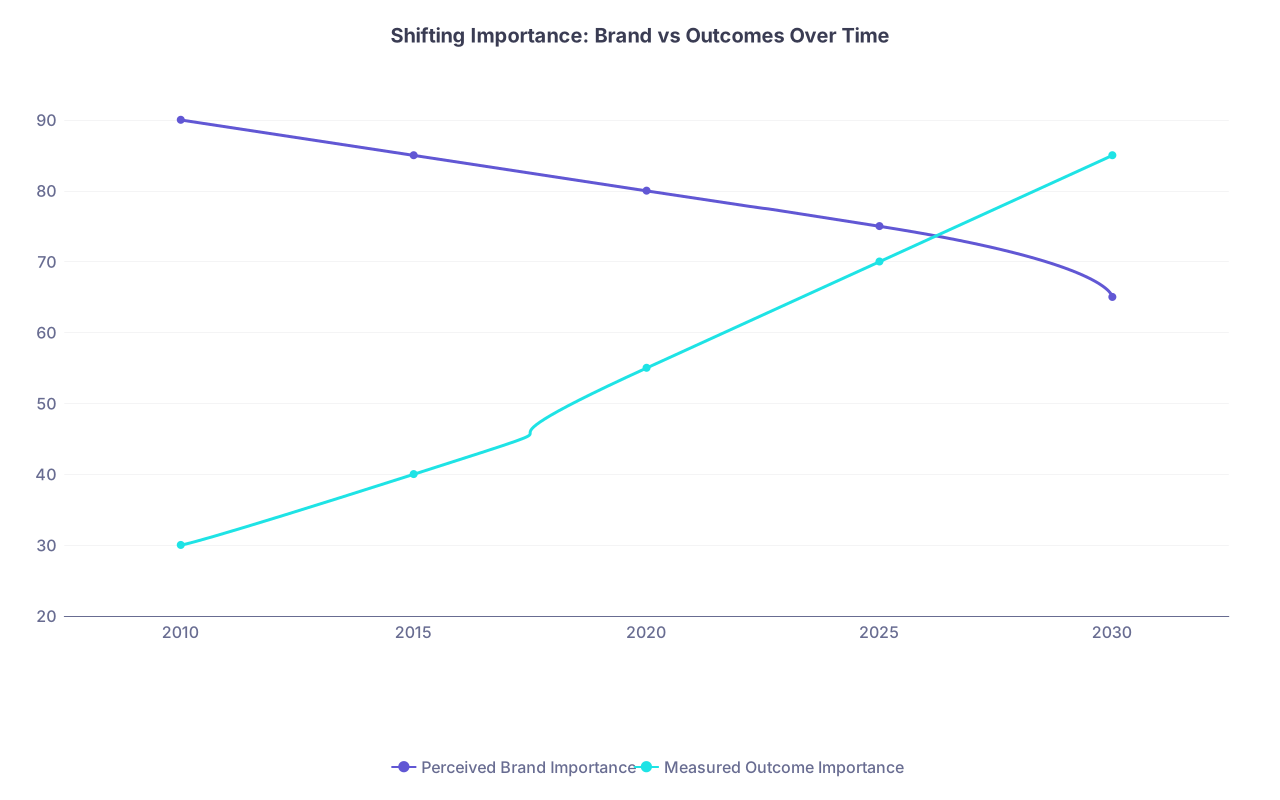
| Category | Perceived Brand Importance | Measured Outcome Importance |
|---|---|---|
| 2010 | 90 | 30 |
| 2015 | 85 | 40 |
| 2020 | 80 | 55 |
| 2025 | 75 | 70 |
| 2030 | 65 | 85 |
How To Actually Judge a “Low Prestige” Program
Forget the label. Use a grown‑up framework:
Outcomes
- Board pass rates, fellowship/job placement, alumni trajectories.
Experience
- Case volume, autonomy with backup, exposure to bread‑and‑butter and emergent pathology.
Culture
- How leadership responds to problems, resident retention, psychological safety.
Structure
- Clear schedules, protected didactics that aren’t constantly canceled, documented supervision.
Fit
- Your goals: research‑heavy academia vs strong clinical practice vs lifestyle priority.
If a “low prestige” program scores high on those, and the main reason you’re hesitating is that your classmates haven’t heard of it, that’s not their problem. That’s your bias.

The Bottom Line
Three points, then you can go back to stalking interview invites:
- Name recognition is a terrible proxy for training quality. Case volume, outcomes, and culture matter more than brand.
- Community and lesser-known programs are not default red flags. Many quietly out‑train their famous neighbors, especially for hands‑on clinical work.
- Real red flags live in opacity, turnover, and culture, not in prestige level. Stop confusing “I’ve never heard of it” with “it must be bad.”


