

You are here
It is the week after Match. Your phone has finally stopped buzzing. The adrenaline is gone. Now it is just…quiet.
You matched. On paper, you should be relieved. But over the last few days, you have heard things. A co‑student who rotated there called the program “brutal.” A recent alum mentioned 5 residents left in 2 years. You found an online review calling your program “toxic.” A chief from another hospital hinted, “That place is…tough. I would keep your eyes open.”
This is the moment where people either:
- Shrug, tell themselves it will be fine, and hope for the best.
- Or pause, examine what they are walking into, and make a plan before July 1.
You are in Post‑Match Week. There is a small window—about 6–10 weeks—where you can still gather data, anticipate problems, and, in extreme cases, start exploring alternatives.
I will walk you through that window chronologically: this week, this month, and the final 2–3 weeks before July 1. At each point: what you should do, who you should talk to, what is a “dealbreaker” vs “just residency being hard.”
Step 1: Post‑Match Week (Days 1–7) – Triage the Red Flags
At this point you should not be making any decisions. You should be sorting the noise.
1. Make a quick inventory (1–2 hours)
Sit down once. Do this on paper or a note file, not only in your head.
Create three lists:
What you have heard
- “High resident attrition over last 3 years.”
- “Multiple 24+ hour calls; not logged as work hours.”
- “PD is punitive if residents call in sick.”
- “Great surgical volume but no teaching.”
What you have actually seen
- Interview day vibes.
- Interactions with residents (if you rotated).
- The way people spoke about leadership.
- How fast/slow they responded to your emails after Match.
What you care about most
- Your physical safety.
- Training quality (cases, board pass rate, procedures).
- Culture and psychological safety.
- Geography/family.
- Visa status if applicable.
Now connect the first two lists to the third: which concerns actually hit your core priorities.
2. Sort red flags into categories (same day)
Use this framework. It prevents you from panicking over things that are just residency being residency.
| Category | Examples |
|---|---|
| Hard but normal | Long hours, heavy service, high-acuity patients |
| Concerning but workable | Disorganized schedules, mediocre didactics |
| Serious structural | Systematic duty hour violations, poor supervision |
| Severe / safety | Bullying, discrimination, retaliation, cover-up of errors |
In plain language:
Hard but normal
- 70–80‑hour weeks in surgical subspecialties.
- Tough attendings who are blunt but fair.
- Limited hand-holding as you become PGY‑2 and up.
Annoying. Not a reason to blow up your life.
Concerning but workable
- Scattered didactics, lectures canceled often.
- Confusing rotation structure.
- Poor communication from admin.
These require coping strategies, mentors, maybe moonlighting later—but usually survivable.
Serious structural red flags
- Multiple residents leaving the program in the last 1–3 years.
- Chronic under‑staffing, consistent >80-hour weeks.
- Board pass rates significantly below national average.
- No reliable supervision at night, especially in surgical/ICU settings.
Severe / safety red flags
- Documented harassment, discrimination, retaliation.
- Pressure to falsify duty hours or clinical documentation.
- Residents discouraged or punished for raising patient safety issues.
- Known ongoing ACGME citations related to education, safety, or work hours.
These last two categories are what justify real escalation.
3. Do a focused, quiet fact‑check (Days 3–7)
You have this week to gather non‑dramatic, discreet data.
A. Check objective data
ACGME and ABMS info
- Look up board pass rates for your specialty and program (where available).
- Check for recent ACGME citations or warning status. If you cannot find public data, ask a trusted faculty mentor to look or advise.
Public forums (use with caution)
- Reddit, SDN, specialty‑specific boards.
Use them to generate questions, not conclusions. Anonymous rage posts are often 30% truth, 70% personal baggage.
- Reddit, SDN, specialty‑specific boards.
B. Reach out to 2–3 residents (not more yet)
At this point you should:
- Contact 1 resident close to your PGY level (current intern or PGY‑2).
- Contact 1 senior (PGY‑3+ or chief).
- Ideally 1 alum if you can find one.
Keep your message short and respectful:
- Congratulate them on being closer to finishing.
- Ask for 15–20 minutes to understand the program culture and training.
- Do not open with “I heard your program is toxic.” You will get nothing useful.
On the calls, ask very specific questions:
- “How often do you actually hit 80 hours? Average week?”
- “When residents leave, is it usually voluntary transfers or people being pushed out?”
- “What happens when someone reports a concern? Does anything change?”
- “Would you choose this program again, knowing what you know now?” (Listen to the silence before the answer.)
Take notes immediately after each conversation. Patterns matter more than any one comment.
Step 2: Weeks 2–4 After Match – Deep Evaluation and Risk Stratification
By Week 2 you should have a rough sense: annoying vs concerning vs serious. Now you move from “collecting rumors” to structured evaluation.
1. Create a rough “risk score” for yourself (Week 2)
Not some perfect algorithm. Just structured thinking. Consider:
Training risk
- Will you graduate competent in your specialty?
- Board pass rates, case logs, fellowship match history.
Health and safety risk
- Likelihood of chronic sleep deprivation, depression, burnout.
- Exposure to harassment or retaliation.
Career risk
- Program reputation in your specialty.
- Whether people match into solid fellowships or jobs afterward.
Personal circumstances
- Visa dependence (you may have fewer realistic escape routes).
- Family or caregiver responsibilities.
- Pre‑existing mental health conditions.
Assign each domain a simple rating: Low / Moderate / High risk. Write out why. This keeps you honest.
2. Talk to your home institution mentors (Week 2–3)
At this point you should not be dealing with this alone.
Pick:
- 1 specialty‑aligned mentor (attending in your matched field).
- 1 dean / student affairs / GME‑savvy person.
Be direct:
- Lay out what you have heard.
- Summarize your resident conversations without naming names.
- Share your “risk score” thoughts.
Ask specific questions:
- “Would you worry about my training in this environment?”
- “Have you heard anything about this program or PD?”
- “If this were your kid or sibling, what would you advise?”
Good mentors will:
- Help distinguish normal pain from abuse.
- Tell you bluntly if they know the program is a mess.
- Outline realistic options if things go south.
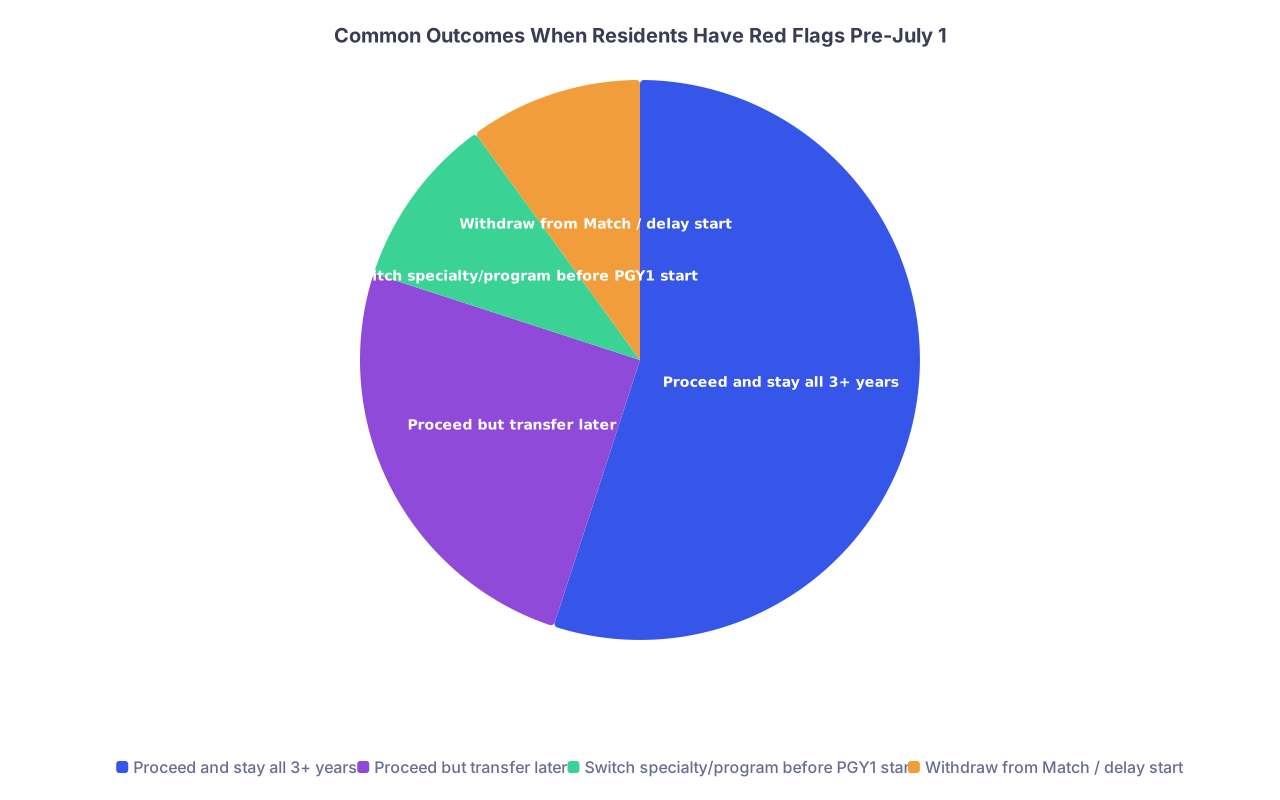
| Category | Value |
|---|---|
| Proceed and stay all 3+ years | 55 |
| Proceed but transfer later | 25 |
| Switch specialty/program before PGY1 start | 10 |
| Withdraw from Match / delay start | 10 |
3. Identify what is non‑negotiable for you (end of Week 3)
By the end of Week 3 you should have a short list—3 to 5 items maximum—of things that would make the program unacceptable.
Examples:
- “Consistent falsification of duty hours encouraged by leadership.”
- “No accessible reporting mechanism for harassment without retaliation.”
- “No senior backup at night for high‑risk procedures.”
- “Repeated blatant racism/sexism/homophobia from faculty with zero consequence.”
If you confirm any one of your non‑negotiables as truly systemic, you have to at least consider major steps: documented complaints, transfer planning, or exploring deferral.
If none of your non‑negotiables are clearly present, but you are uneasy, you likely proceed—but with a clear plan for boundaries and exit routes if needed.
Step 3: Late Spring (Weeks 4–8) – Decide, Prepare, or Escalate
By one month after Match you need to move from diagnosis to plan. July 1 is closer than you think.
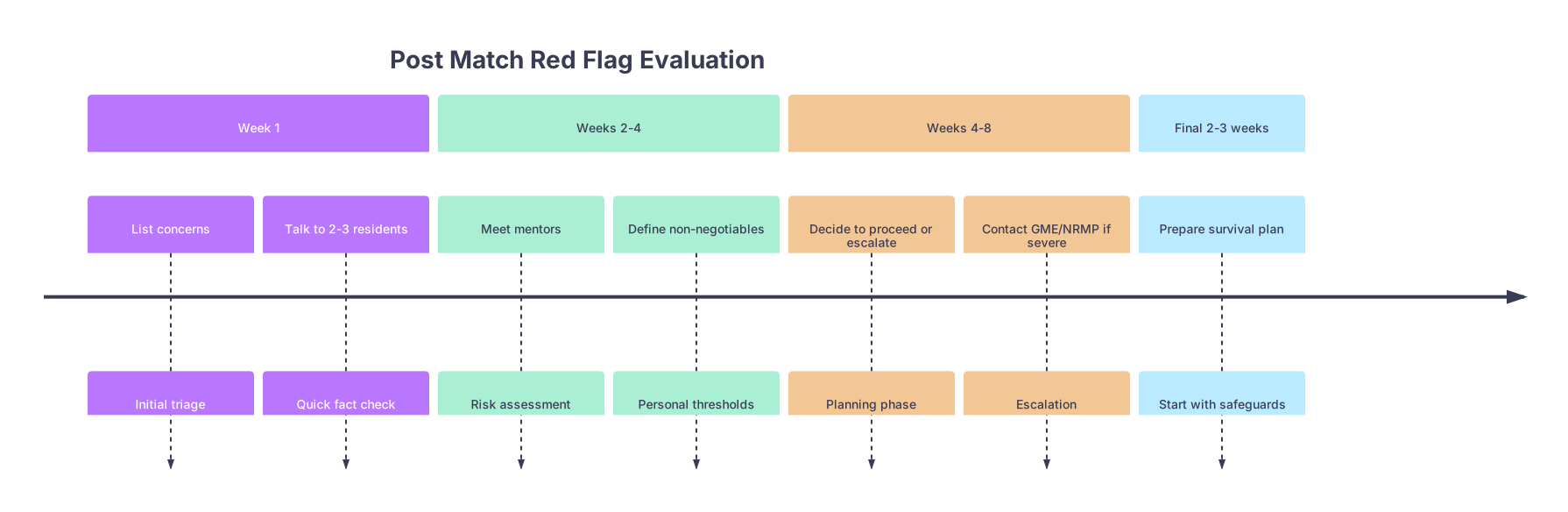
| Period | Event |
|---|---|
| Week 1 - List concerns | Initial triage |
| Week 1 - Talk to 2-3 residents | Quick fact check |
| Weeks 2-4 - Meet mentors | Risk assessment |
| Weeks 2-4 - Define non-negotiables | Personal thresholds |
| Weeks 4-8 - Decide to proceed or escalate | Planning phase |
| Weeks 4-8 - Contact GME/NRMP if severe | Escalation |
| Final 2-3 weeks - Prepare survival plan | Start with safeguards |
Path A: Concerns are real but not catastrophic → Prepare and protect
If your conclusion is: “This place will be hard, maybe disorganized, but I will get trained and not be abused,” then your task is to build a survival and growth plan.
Weeks 4–8, you should:
Clarify expectations with the program
- Reach out to the program coordinator or chief with practical questions:
- Rotations schedule for PGY‑1.
- Call frequency.
- How feedback is typically delivered.
- You are not trying to renegotiate anything. You are mapping the terrain.
- Reach out to the program coordinator or chief with practical questions:
Line up external support
- Therapist or counselor (preferably established before July 1).
- Trusted mentors outside your program (home institution, virtual, national organizations).
- Family/friends who actually understand that residency is not “just a job.”
Identify early warning signs for yourself
- Trouble sleeping even post‑call.
- Persistent dread going to work.
- Loss of interest in anything outside residency.
- Thoughts of quitting medicine altogether by Month 2.
If these hit, you act early, not in November.
Path B: You suspect serious or severe red flags → Quiet escalation
If you are leaning toward: “This may be unsafe or truly toxic,” then Weeks 4–8 are when you explore formal options. Quietly. Document everything.
At this point you should:
Document your info
- Dates and content of all conversations where residents mention duty hour violations, harassment, or attrition.
- Any emails that show problematic culture (do not forward them yet; just archive).
- Public data on board pass rates, ACGME actions, etc.
Talk to graduate medical education (GME) leadership – at your home institution first
- Dean of students, GME office, or an experienced PD you trust.
- Ask what options exist for:
- Changing programs or specialties before PGY‑1 start.
- Deferring a start for health or personal reasons.
- Filing concerns with ACGME or NRMP if there are Match violations.
Understand NRMP and contract implications
- Once you have signed a contract, breaking it is non‑trivial.
- NRMP has policies about “releases” from Match commitments.
- Some states treat GME contracts like employment contracts; there may be penalties or blacklisting if you walk away badly.
This is where you need real legal or institutional advice, not Reddit.

4. Rare but real: considering a pre‑start exit (Weeks 6–8)
Sometimes, the right answer is: do not walk into the fire.
Scenarios where I have seen this be reasonable:
- You discover clear, current ACGME probation due to resident mistreatment or unsafe care in your program.
- Multiple independent, current residents quietly say: “If you have any other option, do not come here.”
- You have a pre‑existing serious mental health condition and the risk profile is simply too high.
If you are even considering this:
Get three layers of input
- A specialty mentor.
- A dean / GME expert.
- A mental health professional who actually understands residency stress.
Ask explicitly about Plan B
- Can you re‑enter the Match the following year?
- Are there open off‑cycle positions at better programs?
- How will walking away impact your record and future applications?
Do not resign or refuse to start until you have a documented, structured alternative or at least a clear recovery year plan.
Panic‑quitting with no plan tends to go badly.
Final 2–3 Weeks Before July 1 – Operational Plan
By mid‑June you should have chosen: you are going, or you are executing an alternative.
Assuming you are going:
1. Clarify logistics and expectations (2–3 weeks out)
You should have:
- Final schedule for your first 3–4 months.
- Orientation dates and any required pre‑reading or modules.
- Contact info for your chief resident and an assigned faculty mentor, if the program does this.
Ask two pointed, respectful questions:
- “How do residents usually raise concerns if they feel overwhelmed early in the year?”
- “Is there a formal process for feedback from interns about rotations and workload?”
Their reaction tells you a lot.
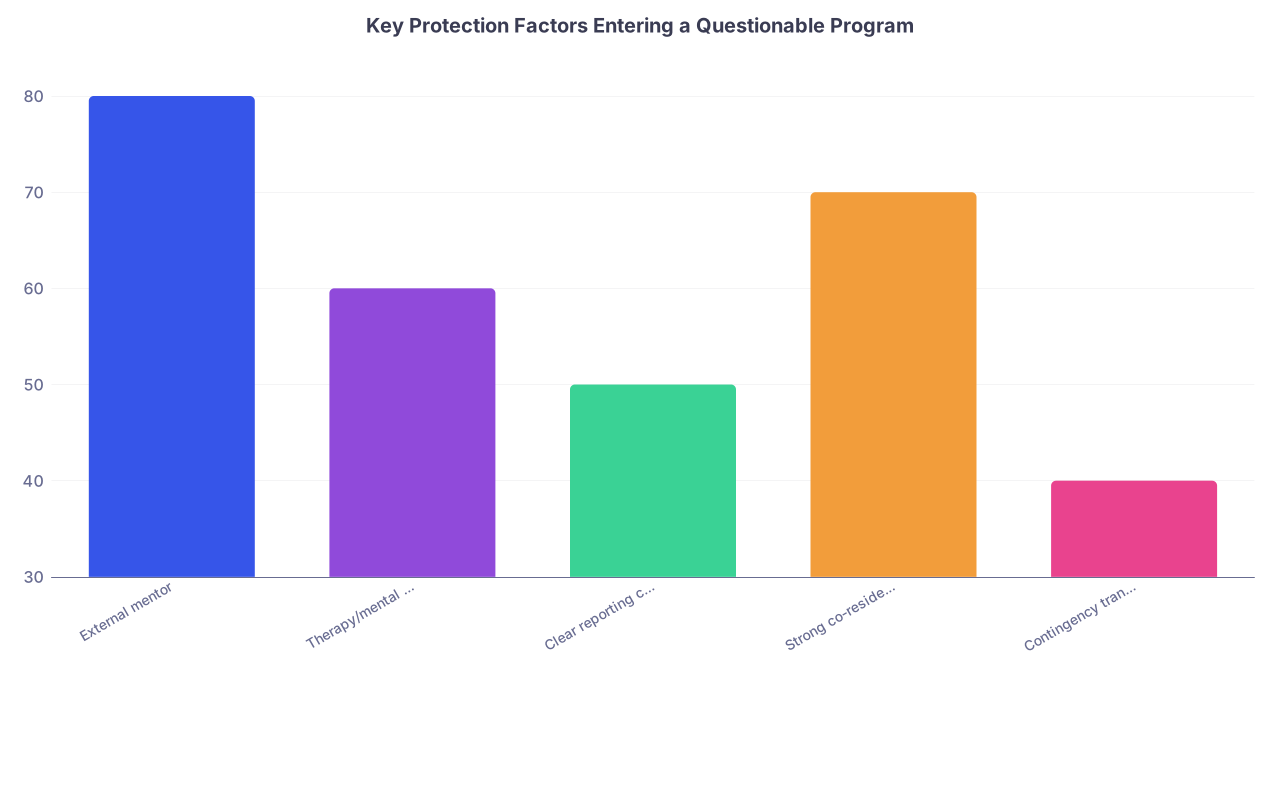
| Category | Value |
|---|---|
| External mentor | 80 |
| Therapy/mental health support | 60 |
| Clear reporting channels | 50 |
| Strong co-resident support | 70 |
| Contingency transfer plan | 40 |
2. Set personal boundaries and red lines
Write down, explicitly, for your own reference:
- How many hours/week you will tolerate before you begin documented conversations with chiefs/PD.
- What behavior from faculty or seniors you will not accept (e.g., racial slurs, public humiliation, being told to falsify notes).
- Who you will contact first, second, and third if these lines are crossed.
You are not going to show this to anyone. It is for you. So that in Month 2 when you are sleep‑deprived, you do not move the goalposts on your own dignity.
3. Plan early check‑ins (weeks 2–4 of residency)
Before you even start, schedule:
- A check‑in meeting with your assigned faculty mentor at Week 3–4.
- A visit or call with your external mentor around the same time.
- Personal time off days in the first 3–4 months, if possible.
You want structured reflection before “this is just how it is” sets in.

How to Tell if You Overreacted vs Underreacted
Everyone worries, after the fact: “Did I overthink this?” The more common error in my experience is the opposite—minimizing what turns out to be a serious problem.
Here is the reality pattern I have seen:
- Residents who do zero pre‑start evaluation are the ones blindsided by obvious red flags that other people quietly knew.
- Residents who do structured evaluation but still decide to go usually cope better. They are not shocked when the first 90‑hour week hits.
- Residents who ignore multiple independent warnings because “I already signed” often end up trying to transfer in PGY‑1 under maximum stress, which is the worst time to be job‑hunting.
Your goal in Post‑Match Week is not to find the perfect residency. It is to avoid walking blind into a situation that could break your training, your health, or both.

FAQ – Exactly 3 Questions
1. Is it ever realistic to switch programs or specialties before starting PGY‑1 based on red flags?
Yes, but it is uncommon and logistically messy. It tends to happen when there are serious structural or safety issues documented at the matched program, or when a resident has a major health or personal crisis pre‑start. You would need coordinated help from your home institution, possibly NRMP involvement, and a receiving program willing to take you off‑cycle or hold a spot. Treat it as a high‑stakes move, not an easy escape hatch.
2. How do I distinguish “normal bad days” from a truly toxic residency once I start?
Normal: you are exhausted, some seniors are brusque, a few rotations are miserable, but residents still support one another, safety is taken seriously, and you see growth in your skills. Toxic: persistent humiliation, fear of retaliation, normalized policy‑breaking (duty hours, documentation), no trust in leadership, and multiple residents planning to leave. Look at patterns over 2–3 months, not one terrible call night.
3. If I am on a visa, do I have any real options if the program is worse than I expected?
You have options, but they are narrower and higher risk. Visa‑dependent residents need to involve legal counsel and GME/IMG advisors early. Transfers require careful timing so you do not fall out of status, and some specialties or locations are more flexible than others. For you, Post‑Match Week evaluation is even more important—walking into a known disaster with limited ability to leave is far more dangerous than tolerating a merely difficult program.
Bottom line – 3 key points
- Use Post‑Match Week and the following month to systematically evaluate late‑discovered red flags, not to catastrophize or deny them.
- Separate “hard but normal” from true structural or safety problems, and define your personal non‑negotiables in writing.
- By mid‑June, you should either have a clear plan to start with safeguards and support in place, or a carefully constructed exit/alternative path—not just vague anxiety.


