
What do you actually do when you realize on day 2 of your away rotation, “This place might be toxic—but leaving could burn a bridge and staying might burn me out”?
This is that situation.
You are already there. You have the badge, the EMR login, the pager. You’re trying to impress for a potential residency spot, and suddenly you’re seeing things that don’t match the website, the smiling brochure, or what that one resident told you at a conference.
You’re stuck between:
“I need a strong letter and interview here”
and
“I feel like garbage coming home every day.”
Let’s walk through exactly how to protect yourself—professionally, emotionally, and strategically—without blowing up your future.
Step 1: Confirm You’re Not Imagining It
You don’t want to overreact to one rough day on wards. But you also don’t want to gaslight yourself.
Here are concrete signs you’re not just “too sensitive” and that a program might actually be toxic:
- Residents publicly humiliated (“Are you stupid?” on rounds, eye rolling, sarcasm as the default).
- Chronic unsafe workload (q3–q4 call but people routinely staying 4–6 hours post-call, everyone joking about “violating duty hours every week”).
- No psychological safety (interns afraid to ask questions, residents warn each other: “Do NOT ever say ‘I don’t know’ to Dr X”).
- Structural disrespect (nurses, techs, and residents openly hostile to each other; frequent yelling; OR or ED staff calling people names).
- Systemic dishonesty (residents quietly telling you “we never log our real hours,” “that wellness stuff is just for ACGME visits,” “don’t believe the 100% board pass rate”).
- You see or hear clear bias (sexist, racist, homophobic “jokes,” repeated pattern of who gets blamed or sidelined).
You do not need all of these. Two or three is enough to take this seriously.
The quick personal check:
- Are you dreading going in, more than you usually would during a hard rotation?
- Do you feel physically tense or nauseated before sign-out or rounds with a specific attending?
- Do residents look visibly anxious when certain names pop up on the schedule?
If yes, stop telling yourself “It’s just me.” Start assuming: “This environment might actually be bad,” and act accordingly.
Step 2: Shift Your Goal for This Rotation
Your original goal was probably: “Crush this rotation to secure an interview / letter / top rank.”
Once you realize a program feels toxic, your goal changes.
New primary goal:
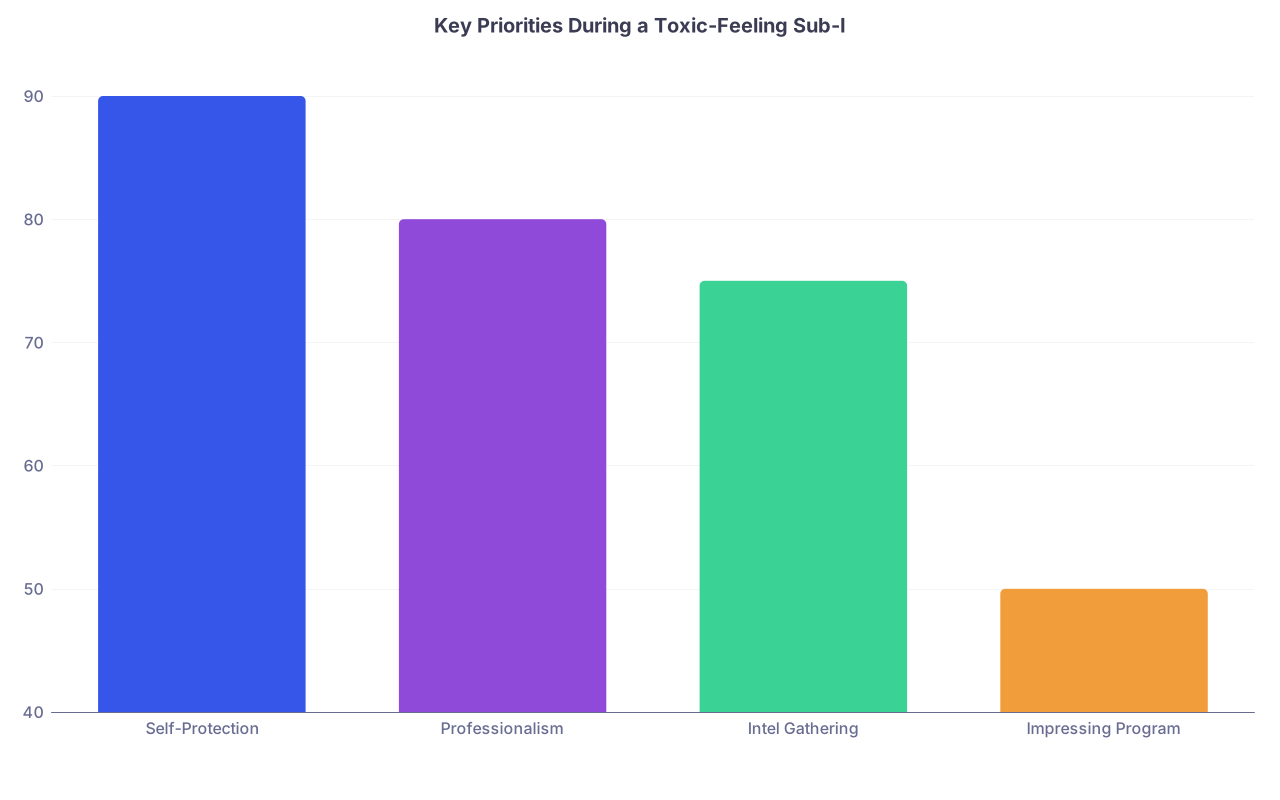
Protect your mental health, your professional reputation, and your future options.
You’re no longer here to “win them over at any cost.” You’re here to:
- Avoid getting injured (emotionally and professionally).
- Gather accurate intel about the program.
- Leave with your dignity intact and, if possible, a neutral or even positive evaluation.
Emotionally, that means something simple but powerful:
You stop taking their culture as a referendum on your worth, and you stop treating their opinions as the ultimate judgment of your potential.
You’re now an observer as much as a participant.
| Category | Value |
|---|---|
| Self-Protection | 90 |
| Professionalism | 80 |
| Intel Gathering | 75 |
| Impressing Program | 50 |
Step 3: Change How You Show Up Day to Day
You cannot fix a toxic residency program as a visiting sub-I. You can only manage how you interact with it.
Here’s how to behave in a way that keeps you safe but still professional.
Be Competent, Not Overexposed
You still:
- Pre-round, know your patients, have a plan.
- Show up on time (actually, a little early).
- Answer pages reasonably quickly.
- Do your notes.
But you do not:
- Overshare personal details with residents you barely know.
- Vent about the program to anyone here, even the “nice” intern.
- Take sides in resident-attending, nurse-resident, or fellow-resident conflicts.
Think “professional but slightly guarded.” Like a temp worker in an office that clearly has political landmines.
Set a Firm Internal Boundary
You will see and hear things that are wrong. Maybe unethical.
You need a mental boundary:
“I will do my job, I will not compromise my integrity, but I’m not absorbing their dysfunction as my problem to fix.”
That means:
If someone tries to pull you into gossip:
“I’m just trying to focus on helping with the patients and learning. I’m too junior to have a real opinion on all that.”If an attending is snide:
You answer the question, ask for clarification if needed, then move on—no arguing, no defending your ego. You’re not here to win the interaction. You’re here to survive it.

Step 4: Protect Your Mental Health in Real Time
You cannot wait until week 4 to start taking care of yourself. On a toxic-feeling sub-I, the damage accumulates fast.
Daily Micro-Protective Habits
These sound small. They’re not.
- Hard stop check-in: once a day, mentally ask, “How am I actually doing?” Not “Do I look weak?” Just: am I anxious, numb, angry all the time?
- Brief reset ritual when you leave: take 3–5 minutes in your car / locker / bathroom. Deep breaths, shake your shoulders, remind yourself: “This place is not my whole life. These people are not the only judges of my worth.”
- One non-medicine thing every 24 hours: a 15-minute walk, a podcast, a call to a friend, making something simple for dinner. Something that proves your whole identity is not “sub-I at this hospital.”
Watch for Red-Flag Symptoms in Yourself
If you notice:
- You’re not sleeping even when you have the time.
- You’re crying in the bathroom or hall regularly.
- You start having intrusive thoughts like “Maybe I’m actually terrible and don’t belong in medicine.”
- You feel unsafe around a specific person.
That’s not “normal sub-I stress.” That’s the environment getting into your nervous system.
In that case:
- Tell someone outside the program: a trusted mentor, dean, therapist, close friend. Use specifics: “The chief told an intern they should kill themselves over a mistake.” Let someone react to the words, not your watered-down summary.
- Start considering whether finishing the month here is worth it. Continuing at the cost of real psychological harm is not “professionalism”; it’s self-sacrifice for a place that would not do the same for you.
Step 5: Deal with Toxic Individuals Strategically
A lot of programs are “fine” except for one or two malignant personalities who manage to poison an entire rotation. You probably already know who they are by day 3.
You handle them differently than normal attendings/residents.
The Malignant Attending
Pattern: humiliation on rounds, unpredictable anger, demeaning comments.
Your strategy:
- Keep interactions short, focused, respectful.
- Answer questions as best you can; if you do not know, say:
“I’m not certain, but I think it might be X because Y. I’d like to look this up after rounds.”
This shows thinking, not laziness. - Never argue, never try to “win.” Just move the interaction forward.
If they cross a line (screaming, insults, discriminatory comments):
- Do not escalate in the moment. You will not win.
- Document specifics the same day: date, time, exact phrases, witnesses. Save that. You may need it if things blow up.
The Burned-Out Senior Resident
Pattern: cynical, constantly complaining, quick to blame, maybe dumping on you.
Your strategy:
- Stay neutral. You’re polite, you help, but you don’t join their bitterness chorus.
- Give them small wins: “I really appreciated how you broke down that case, it actually made sense to me for the first time.” Burned-out people sometimes treat students better if they feel minimally seen.
- If they start yelling or blaming you unfairly, say (calm voice):
“I hear you. For next time, can you clarify what you’d like me to do differently?”
That shifts from attack to process. And it signals you’re trying, which is hard to trash in an eval.
The Passive-Aggressive Intern
Pattern: says “it’s fine” but then complains; gives mixed instructions; throws you under the bus subtly.
Your strategy:
- Clarify expectations in writing when possible: “Just to make sure I heard you right, you’d like me to call these two consults and write the note by 4pm?”
- After something goes sideways, go to them later, 1-on-1, and ask:
“I got the sense you were frustrated earlier. Is there something you need me to be doing differently?”
Sometimes that disarms them; sometimes it makes you a less easy target.
| Situation | Avoid | Use Instead |
|---|---|---|
| Being criticized | Getting defensive, arguing | Ask for specific expectations, take brief notes |
| Seeing bad behavior | Loud public confrontation | Quiet documentation, private debrief with mentor |
| Gossip around you | Agreeing, joining in | Neutral phrases, redirect to patient care |
| Feeling overwhelmed | Isolating completely | Small daily check-ins with outside support |
Step 6: Decide What to Do About Letters and Ranking
Here’s the ugly truth: some toxic programs still have big names, great fellowship placement, or prestige. You may be tempted to overlook red flags.
You need to separate:
- Do I want a letter from here?
- Do I actually want to train here?
About Asking for a Letter
You should not ask for a letter from someone who:
- Harshly criticized you all month.
- Barely knows you.
- Is known as malignant or erratic.
You can consider a letter if:
- There is one attending or senior who is normal, seems to like teaching, and has seen you work consistently.
- They carry real weight in the specialty (PD, APD, division chief, respected faculty).
If the rotation was truly awful and you underperformed because of it, you’re better off skipping the letter. A mediocre or subtly negative letter is worse than no letter.
If you’re unsure, ask your home advisor:
“Here’s how the month went. Here are my other letter options. Is it worth even asking Dr X?”
Be blunt. They’ve seen a lot of these situations.
About Ranking the Program
You do not owe any program your rank list spot just because you survived an away there.
Harsh but true:
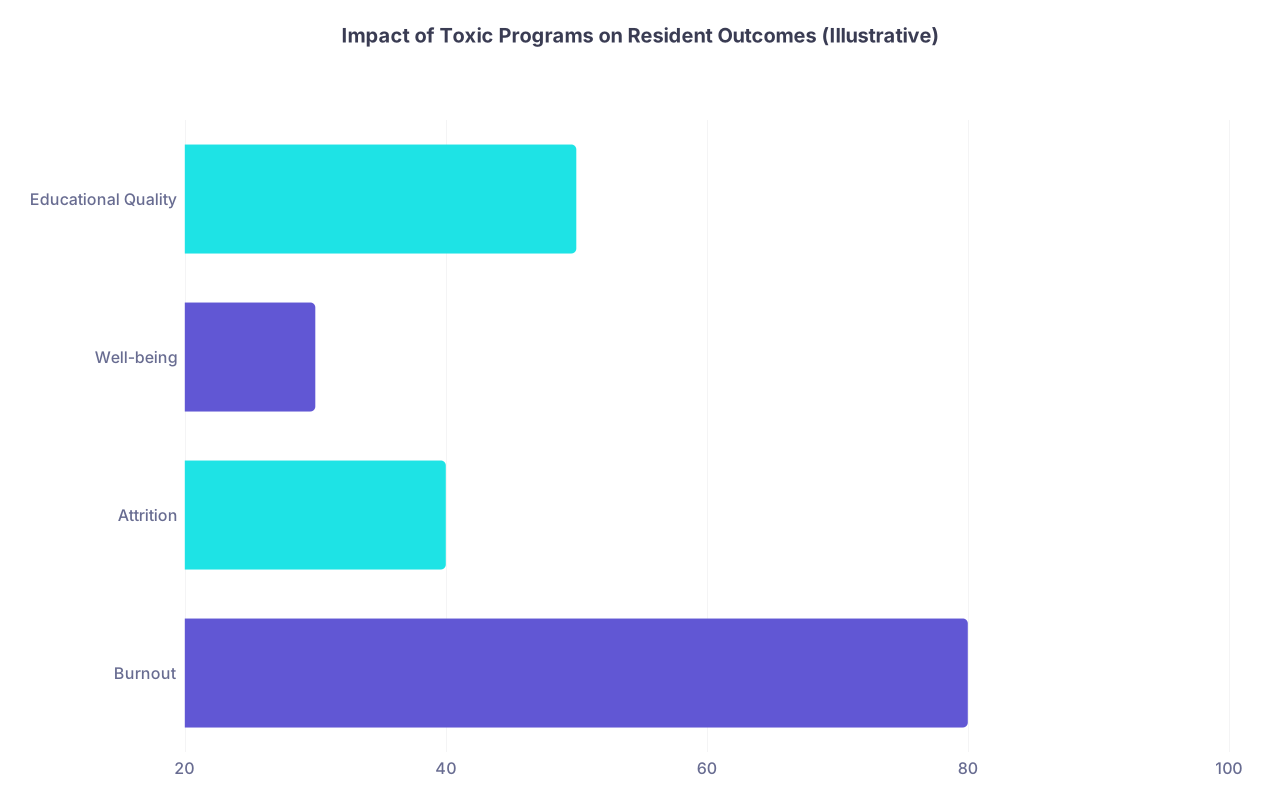
If it’s toxic to you as a student, it will be worse as a resident with no escape hatch.
Use what you saw:
- Did anyone seem genuinely happy to be there?
- Did you see any sign of leadership pushing back against bad behavior?
- Were residents learning or just surviving?
If you left thinking, “I can tolerate this for a month but not 3–7 years,” then you already know your answer.
| Category | Value |
|---|---|
| Burnout | 80 |
| Attrition | 40 |
| Well-being | 30 |
| Educational Quality | 50 |
Step 7: When (and How) to Escalate Concerns
There are two levels: informal debrief and formal reporting.
Informal Debrief
Everyone should do this, especially if things felt off.
Who to talk to:
- Home school advisor or dean.
- Trusted attending at home.
- A resident you trust at another institution who can sanity-check your impression.
Focus on specifics:
- “On three separate days, I watched Dr X call residents ‘idiots’ in front of patients.”
- “Residents warned me not to log true duty hours because they said the PD would punish them.”
- “An attending made repeated racist comments about patients.”
Ask two questions:
- “Am I overreacting?”
- “Is any of this serious enough that it should be formally reported?”
A good mentor will help you parse that.
Formal Reporting
You consider this if:
- There is clear harassment, discrimination, or serious patient safety issues.
- This is not just “the culture is mean,” but “this may be violating policy or law.”
Who you might report to:
- Your home institution: Student Affairs, clerkship director.
- Their institution: GME office, ombuds, anonymous reporting system (if available).
Risks:
You are right to worry about retaliation or being labeled “difficult.” That’s real.
If you choose to report:
- Stick to facts, dates, quotes. Not general impressions.
- Ask explicitly about confidentiality and protections.
- Strongly consider doing it through your home institution first. They can often buffer and advocate.
You are not obligated to blow the whistle. Especially if you’re a rotating student with minimal power. But if something crosses a line for you, you’re allowed to say so.

| Step | Description |
|---|---|
| Step 1 | Notice Red Flags |
| Step 2 | Increase Self Care and Support |
| Step 3 | Continue as Neutral Observer |
| Step 4 | Document Details |
| Step 5 | Talk to Home Advisor |
| Step 6 | Consider Formal Report |
| Step 7 | Finish Rotation Safely |
| Step 8 | Personal Distress High? |
| Step 9 | Specific Harmful Events? |
| Step 10 | Need to Report? |
Step 8: How to Talk About This Rotation Later
You’re going to get questions:
- “How was your away at Program X?”
- “What did you think of City Y?”
- “Why didn’t you rank Program Z higher?” (from friends, not programs)
And maybe in interviews:
“You rotated with us at [Another Program]. What was that experience like?”
Your job: be honest without sounding unprofessional or gossipy.
Examples:
If it was mildly toxic / just not a fit:
- “I learned a lot clinically there and saw a very high-acuity patient population. I also realized I’m looking for a program with a bit more emphasis on resident support and education, which is why I’m very interested in places like yours that prioritize X, Y, Z.”
If it was truly bad:
- “It was a valuable experience, mainly because it clarified what type of learning environment I’m looking for. I saw how hard residents can work when the system is stretched, and it made me prioritize programs with strong mentoring and a culture of feedback rather than shame.”
You do not need to protect their reputation. But you also don’t need to torch them by name in an interview. Frame it around what you learned about your own priorities.
FAQ (4 Questions)
1. Should I ever leave a toxic sub-I early?
Yes, in some situations. If you feel unsafe (emotionally or physically), or if the environment is triggering serious mental health symptoms, leaving is on the table. That’s not weakness; that’s self-preservation.
You don’t just ghost. You contact your home school (clerkship director, dean, or student affairs) first, explain what’s happening in concrete terms, and ask for guidance. They can help you handle communication with the host program, potentially convert the month to pass/fail, or arrange a switch. Leaving will raise questions, but a short, factual explanation—“The environment was not conducive to my learning, and I made the decision in consultation with my dean”—is survivable. A full breakdown or major incident might not be.
2. How do I know if it’s “toxic” or just a tough, high-intensity program?
Look at patterns and direction. Tough but healthy programs have high expectations, but residents still joke with each other, ask questions, and show some sense of team. Feedback may be blunt, but it’s about performance, not about your worth as a person. Toxic programs use shame as a routine teaching tool, ignore duty hours systematically, or normalize disrespect. In a tough program, you might be exhausted but still feel proud. In a toxic one, you mostly feel small, anxious, or numb. If several residents independently tell you, “Do NOT come here if you have other options,” believe them.
3. Will being honest about a bad away rotation hurt me in interviews?
It can—if you sound bitter, unprofessional, or like you can’t function in a challenging environment. The key is how you frame it. You do not need to give gory details. You can say: “I learned a lot, but it also showed me that I value X, Y, and Z in a training environment, which is why I’m especially interested in programs that do A, B, C.” Focus on what you took away and what you’re seeking, not on trashing them. Programs want resilient people, not martyrs who accept abuse or complainers who blame everything on others.
4. If the program felt toxic, but they’re “top tier,” should I still rank them high for the career boost?
I’ve watched that gamble backfire more times than it’s paid off. Prestige cannot save you from a malignant culture. A “top” program with terrible training conditions can wreck your mental health, your confidence, and in some cases your career if you struggle or fail in that environment. A slightly less famous but supportive program will often get you just as far in fellowship and jobs—because you’ll actually thrive. If your gut says, “I could maybe survive three years here, but I’d probably hate myself,” do not put that program at the top of your list.
Open the notes app on your phone right now and write down three things you’ve seen or felt on this sub-I that concern you—and three boundaries you’ll hold for yourself for the rest of the month. That’s your starting point to protecting yourself, starting today.