

It is January. You and your partner just got back from a whirlwind of residency interviews. They are glowing about Big Shiny City Program: the restaurants, the vibe, the name brand. You are staring at your notes from that same interview day: malignant chiefs, residents whispering in the stairwell, a PD who dodged every question about wellness.
You are here:
One of you loves the city. The other sees program red flags. And the rank list deadline is coming whether you two agree or not.
This is fixable, but not with vague “we’ll figure it out” conversations. You need a protocol. Clear steps. Structure. Because this is not choosing a vacation spot. This is 3–7 years of your lives, your mental health, your training, and your relationship.
I am going to walk you through a concrete decision process that:
- Separates city from program
- Turns fuzzy red-flag feelings into specific, weighted risks
- Gives you a framework to negotiate as partners, not adversaries
- Helps you build a rank list you both can live with—and not regret later
We will talk mostly from the perspective of the person seeing program red flags, but the process works regardless of who is the skeptic.
Step 1: Separate “City Lust” From “Program Reality”
First job: pull the city and the program apart in your minds. Right now they are fused. That is how you get bad decisions.
Make two separate lists for each contender:
- City factors
- Program factors
Do it on paper or a shared doc. Not in your head.
City factors (what your partner is excited about)
- Proximity to family/friends
- Cultural life: restaurants, arts, outdoors, sports
- Lifestyle: walkability, public transit, neighborhoods
- Cost of living and housing
- Career opportunities for the non-resident partner
- Schools / childcare if relevant
Program factors (where you are seeing red flags)
- Resident culture and morale
- Workload, hours, backup when things go bad
- Education quality: teaching, feedback, procedures, autonomy
- Safety (clinical safety and your own physical/emotional safety)
- Leadership transparency and responsiveness
- Graduate outcomes: fellowships, jobs, board pass rates
Now—and this matters—rate each factor separately:
- 1–5 for city
- 1–5 for program
For example:
“Big Shiny City”
- City: 5/5
- Program: 2/5
“Smaller City Program”
- City: 3/5
- Program: 4/5
The goal is not statistical perfection. The goal is clarity: “We are in love with the city, not the program,” or “We actually like both, but different things.”
Step 2: Translate Vague Red Flags Into Concrete Risks
“I just got a bad vibe” is easy to dismiss when someone is high on city energy. You need to convert vibe into specific, observable risk.
Use this checklist and mark what you saw or heard. Be blunt.

Resident culture & morale
Ask yourself:
- Did residents warn you off the program indirectly?
- Phrases like “You will get great training, but it is not for everyone,” said with a forced smile.
- Did anyone actually say “If you have other options, take them”? (I have heard this more than once.)
- Did residents seem exhausted, cynical, or guarded when attendings were nearby and more candid when alone?
Red flag patterns:
- No laughter, no joking, everyone just looks dead behind the eyes.
- Nobody stays to talk after the formal tour ends.
- You ask “Would you choose this program again?” and people dodge or answer with long, complicated qualifiers.
Workload, coverage, and safety
You are not afraid of work. But you should be afraid of unsafe systems.
Specific warning signs:
- No clear answer about cross-coverage: “We just figure it out” at 2 AM means you are on your own.
- Residents talk about frequent 28–30 hour shifts even after supposed “duty hour fixes.”
- Stories of “we sometimes cover 40–60 patients alone overnight” with no backup.
- Nursing or ancillary support seems minimal and residents complain of doing a lot of non-physician tasks.
Education vs. service
Residency is training, not just cheap labor. When service devours education, that is a long-term career problem.
Look for:
- Did anyone mention protected teaching time that is actually protected?
- Do residents get regular, useful feedback or is it “you hear from us if there is a problem”?
- How many procedures or key experiences do seniors actually get?
- Are didactics constantly canceled “because we were slammed”?
Leadership behavior and transparency
Program leadership sets tone. If the PD or chairs seem slippery now, they will be worse when you are stuck there.
Watch for:
- Questions about wellness get answered with “we have pizza nights” instead of structural changes.
- They dodge or minimize questions about previous accreditation citations or ACGME issues.
- No meaningful process for resident feedback or QI that residents can point to as having changed something.
- Residents seem scared to criticize leadership even off the record.
Outcomes and reputation among residents
Fancy name does not fix a bad environment. Ask:
- Where do graduates go? Actual fellowships and jobs, not just “strong placements.”
- How do board pass rates look? Any dips recently? Why?
- What do residents from neighboring programs say about this place? People talk.
Now take your red flags and write them as:
- Specific: “Chief residents laughed when I asked about backup overnight and said ‘you just survive.’”
- Persistent: “Three different PGY-2s, independently, said they would not choose the program again.”
- Structural: “No ancillary support; interns wheeling patients to CT themselves at 3 AM.”
That is harder to ignore than “I did not like it.”
Step 3: Make It Visible: A Simple Comparison Grid
You and your partner need to see the tradeoffs. Not just feel them.
Create a short grid for your top 3–4 options.
| Factor | Big Shiny City Program | Solid Midsize Program | Home-State Program |
|---|---|---|---|
| City (lifestyle) | 5 | 3 | 2 |
| Cost of living | 1 | 3 | 4 |
| Resident morale | 2 | 4 | 3 |
| Workload safety | 2 | 4 | 3 |
| Education quality | 3 | 4 | 3 |
| Leadership transparency | 2 | 4 | 3 |
Then do this: mark factors that are non-negotiable safety issues in red (mentally or literally).
City factors almost never fall into that category. Program factors often do.
Step 4: Have the Hard Conversation Like Adults, Not Applicants
Now you sit down with your partner. Devices away. No Netflix in the background.
The structure I have seen work:
- Each of you gets 10–15 uninterrupted minutes to explain your perspective. No interruptions. No debates.
- Start with why you care, not just what you want.
- Then compare written grids and red-flag lists, not just vibes.
You might say:
- “I know you love this city. I do not want you miserable and isolated in a place you hate. At the same time, I am genuinely worried that this program has serious red flags that could wreck my training and mental health. Here are three specific things I saw or heard.”
Your partner might say:
- “I am terrified of being stuck somewhere with no jobs, no social life, and no support system for me. I hear your concerns, but I also know I will deteriorate in a place that feels dead.”
Good. Now you are arguing about real things.
Step 5: Rank Non-Negotiables vs. Preferences
You both need to divide your concerns into:
- Non-negotiables (deal-breakers)
- Strong preferences
- Nice-to-haves
You do this separately first. Then compare.
Examples for the resident:
- Non-negotiable:
- Program must have reasonably safe workload and backup.
- Leadership that is at least somewhat responsive.
- Not widely known as malignant among residents in that specialty.
- Strong preferences:
- Strong fellowship match.
- Good didactics and research opportunities.
- Nice-to-haves:
- Brand name.
- Proximity to a very specific city scene.
Examples for the partner:
- Non-negotiable:
- City must have viable jobs in my field within commuting distance.
- Not completely socially or culturally isolated.
- Strong preferences:
- Close to family or a major hub.
- Good public transit.
- Nice-to-haves:
- That one dream neighborhood.
- Pro-level sports or particular arts scene.
Now ask:
- Is Big Shiny City Program violating the resident’s non-negotiables?
- Are the safer programs violating the partner’s non-negotiables?
If yes on one side and no on the other, the answer is straightforward. Safety and training beat restaurant scene. Every time. Because:
- A broken residency can derail an entire career and your health.
- A less-than-ideal city is survivable if the program is solid and you plan intentionally.
Step 6: Use Actual Data, Not Just Fear
Before you finalize, verify your impressions. Do a controlled, time-limited intel run.
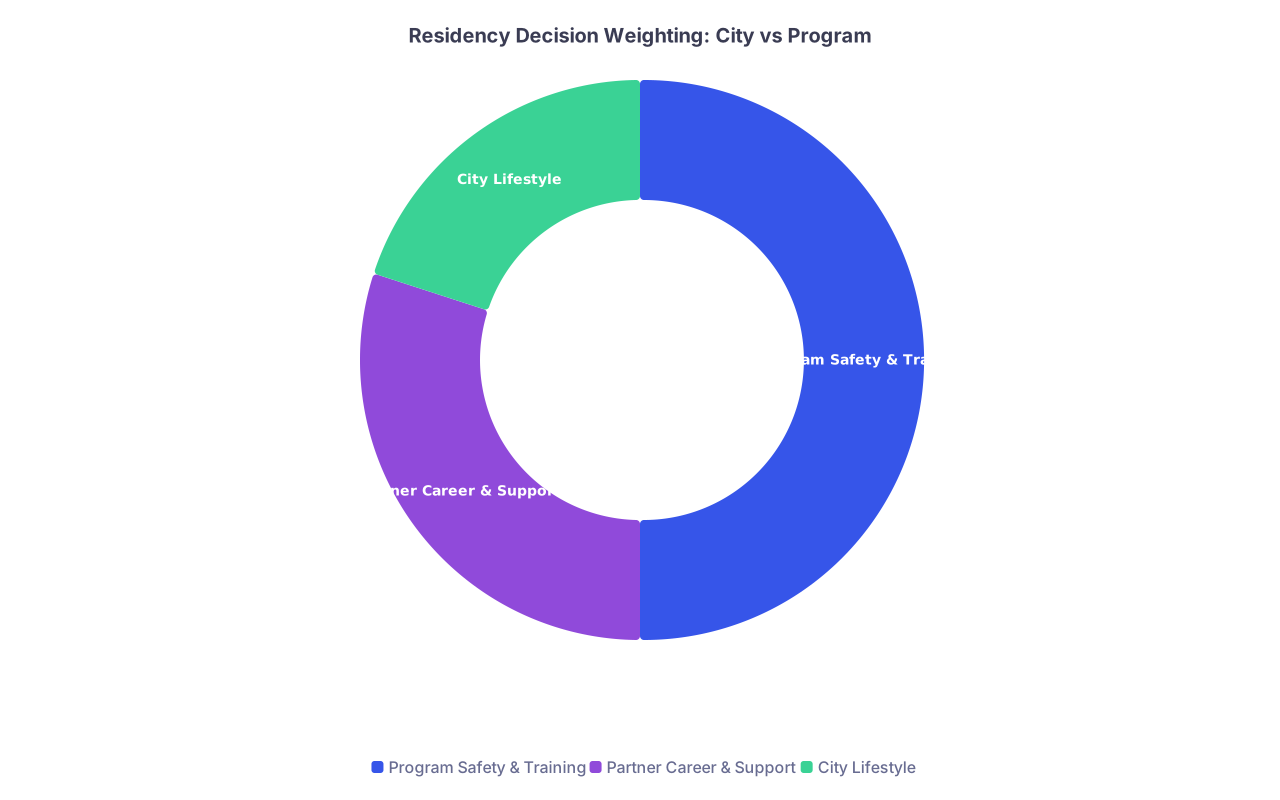
| Category | Value |
|---|---|
| Program Safety & Training | 50 |
| Partner Career & Support | 30 |
| City Lifestyle | 20 |
How to check program red flags smartly
Text or email current residents you trust
Not the hand-picked happy interns from interview day. Ask:- “If you had to decide again, would you come here?”
- “What do you wish you had known before ranking?”
- “How does leadership respond when residents raise concerns?”
Ask your school’s faculty or alumni quietly
- “Do you know anything about Program X’s culture?”
- “Any alumni regret going there?”
Scan for objective issues
- Recent ACGME citations or probation
- Sudden leadership turnover
- Public controversies (social media can actually help here)
You are not trying to build a dossier. Just confirm:
- “Yes, the red flags are real and recurring.” or
- “No, I caught a bad day; overall people feel okay about this program.”
Step 7: Construct a Joint Rank Strategy
Once you have all this, you can build a rank list that reflects both your needs instead of one person steamrolling the other.
Here is a simple framework that works well for couples:
1. Tier your programs into 3 buckets
- Green – Both of you are comfortable with city and program. No major flags.
- Yellow – One person is lukewarm, but no non-negotiables are violated.
- Red – Someone’s non-negotiable is violated.
Rule: Red-tier programs do not get ranked above green or yellow unless both agree consciously to accept that risk.
2. Inside each tier, prioritize by resident safety and training first
Within green and yellow tiers, sort primarily by:
- Resident program quality and safety
- Partner’s city / job preferences
- Nice-to-haves
That usually yields something like:
- Solid Program in Good Enough City (Green)
- Strong Program in OK City (Green)
- Decent Program in Great City (Yellow)
- Dream City Program with Real Red Flags (Red or low Yellow)
3. Decide what “risk” you are willing to accept at the bottom of the list
If you are couples matching, you may end up ranking some programs low that you do not love simply to avoid going unmatched. That is fine—but do it eyes open.
Ask directly:
- “If we matched at Big Shiny City Program, knowing these red flags, could we live with that for 3–4 years?”
If the honest answer is “This would damage our relationship or my mental health,” it should be low or off the list.
Step 8: Plan for the Partner’s Needs if You Choose the Safer Program
If you end up leaning toward the safer but less exciting city/program, do not just say, “You’ll adjust.” That is lazy and unfair.
Make a concrete support plan for your partner:

Career and work
- Research local job markets together. Do not dump it on them.
- Consider slightly longer commutes if that opens up better work.
- Talk about remote or hybrid options if their field allows it.
Social and community life
- Commit to a schedule: you will protect at least one regular shared free block per week (even if residency is insane).
- Help them identify meetups, clubs, or communities early. Not six months after you move when they are already miserable.
- If possible, choose housing that optimizes their daily life (safe, walkable, near their work) even if your commute is a bit worse.
Visits and travel
If family / friends are far:
- Agree on a baseline: “We will budget and protect time for X trips per year to see your people.”
- Plan these before the year starts so residency schedules can accommodate.
This is how you show: “I am not choosing my career over you. I am choosing our long-term stability, and I am willing to sacrifice and plan to make your life better in this city.”
Step 9: Plan for the Worst-Case: If You Do Pick the Red-Flag Program
Sometimes couples still choose the city. Or the brand name. Or they roll the dice because everything else feels worse.
If you are going to do that, at least do it professionally:

| Step | Description |
|---|---|
| Step 1 | Match at Red Flag Program |
| Step 2 | First 3 Months - Observe |
| Step 3 | Stay and Optimize |
| Step 4 | Prepare Exit Plan |
| Step 5 | Talk to PD/Faculty Allies |
| Step 6 | Explore Transfer or Reapplication |
| Step 7 | Decide Stay vs Transition |
| Step 8 | Cultural fit and safety acceptable |
Set monitoring checkpoints
At 3, 6, and 12 months, ask:
- Is workload what they said it would be, or worse?
- Are you emotionally and physically deteriorating?
- Is leadership responsive when problems arise?
If the answers are consistently bad, do not just “tough it out” for 3 years out of sunk-cost guilt.
Have an exit strategy
You will not hear this from many people, but I have seen it work:
- Residents do transfer programs, especially within the same specialty.
- Some switch specialties entirely.
- Some leave and reapply.
If you suspect you might need this path:
- Keep your CV clean: stay professional, avoid burning bridges.
- Quietly nurture relationships with faculty who would support a transfer if needed.
- Document major safety issues or dishonest behavior (for yourself, not for social media).
You hope you never need it. But having a plan lowers anxiety and gives you both more confidence in taking calculated risks.
Step 10: Protect the Relationship During the Decision
People underestimate how much couples match stress wounds relationships. This is not just about geography. It is about identity, sacrifice, and fairness.
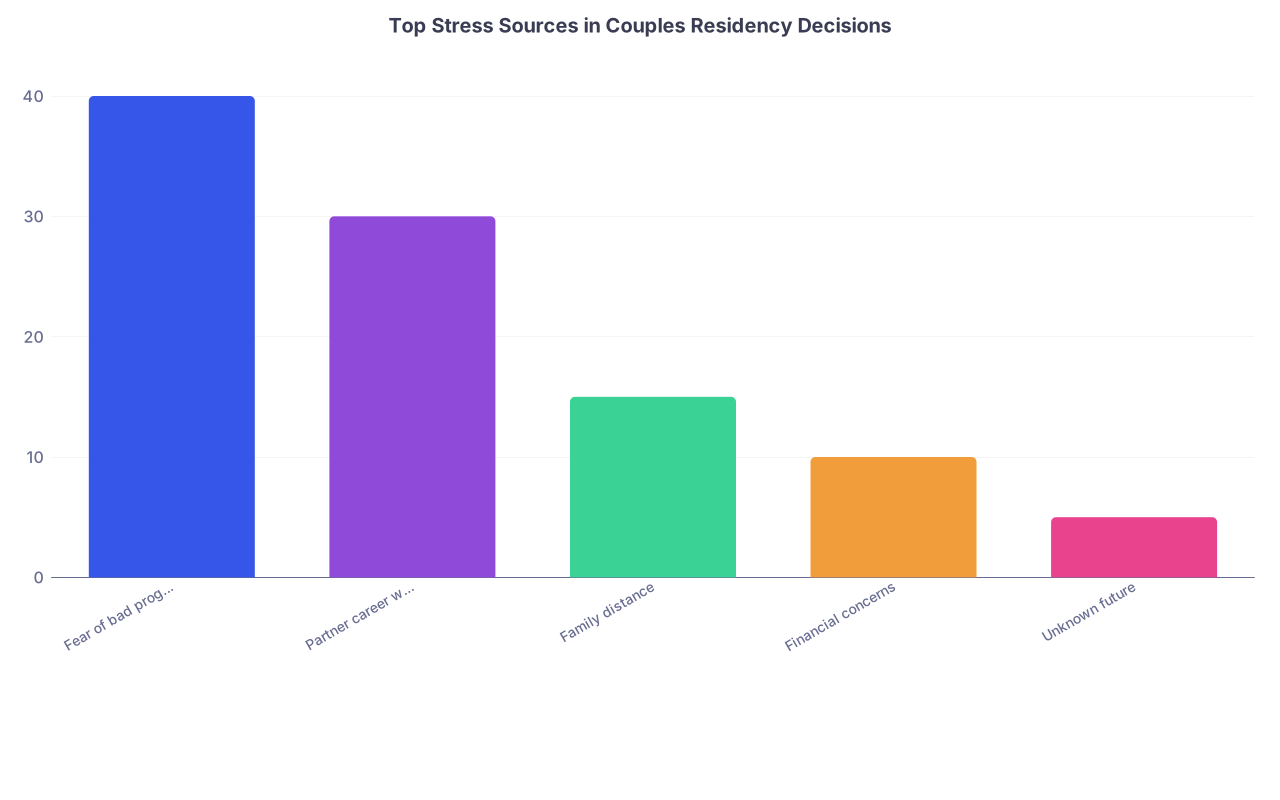
| Category | Value |
|---|---|
| Fear of bad program | 40 |
| Partner career worries | 30 |
| Family distance | 15 |
| Financial concerns | 10 |
| Unknown future | 5 |
Some quick, blunt rules that save couples:
No ultimatums
“If you do not rank X first, I will resent you forever” is not negotiation. It is emotional blackmail.Name the sacrifice explicitly
If one of you is giving up a dream city, say it out loud and appreciate it. Do not pretend it is nothing.Make a time frame deal
Example: “We will do residency in this safer, less exciting city, with the explicit goal of targeting your dream city for fellowship or first job.” Then actually follow through.Do not weaponize future blame
Commit together: “Whatever we choose, we chose it together. We will not use it later as ammunition in fights.”
FAQ (Exactly 4 Questions)
1. What if my partner refuses to consider program red flags and only cares about the city?
Then you have a bigger issue than geography. You are learning how they handle risk, empathy, and shared decision-making. Lay out specific risks clearly, state your non-negotiables, and be candid: “I am not willing to sacrifice my safety and training for a city.” If they still dismiss that, you need to ask whether this is someone you trust to be a long-term teammate in much harder life situations.
2. Are program red flags ever “worth it” for a top-name institution in a great city?
Sometimes the brand and opportunities offset moderate downsides. But true red flags—unsafe workloads, malignant culture, leadership that lies or retaliates—are rarely worth any prestige. A mid-tier, healthy program will usually produce a better long-term career and a healthier you than a “top” program that burns you out or breaks you.
3. How much weight should I give my partner’s career when choosing a residency?
A lot. If your partner cannot work, is isolated, or is miserable, your life will be miserable too, no matter how good the program is. That said, patient safety and your physical/mental health are hard constraints. The right answer usually pairs a safe, solid program with a city where your partner has at least a realistic path to work and community, even if it is not their “dream” location.
4. What if we totally disagree and the rank list deadline is here?
Force a structured decision. Each of you lists your non-negotiables and top two acceptable compromises. Remove any option that clearly violates either person’s true non-negotiables. From the remaining options, prioritize resident safety and training, then partner career viability, then lifestyle. If you still cannot agree, that is a sign to pause and reassess the pace and seriousness of the relationship; marrying or coupling “by default” into a 3–7 year high-stress environment without aligned decision-making is a recipe for resentment.
Key points:
- Separate the city from the program and treat program red flags as concrete risks, not vibes.
- Build a joint, written framework: non-negotiables, preferences, and a tiered rank list that respects both partners.
- If you must compromise, prioritize safety and training, then create an explicit, realistic plan to protect the partner’s career and quality of life in whatever city you choose.


