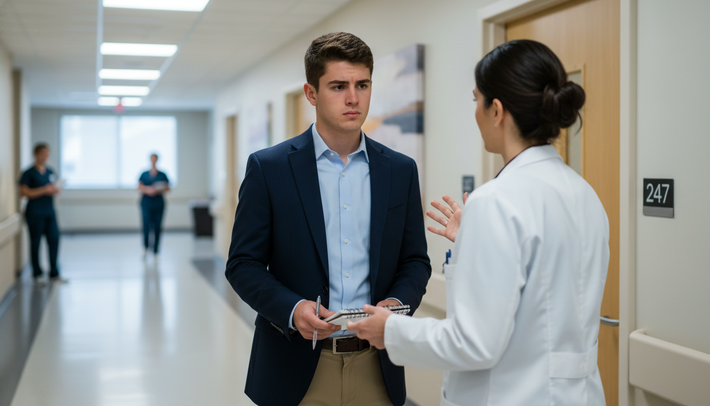
Is Shadowing Only One Specialty a Red Flag?
What actually happens when your application shows 60 hours with one orthopedic surgeon, zero primary care shadowing, and not much else clinical? Do admissions committees quietly flag you… or do they not care nearly as much as Reddit says they do?
Let’s separate superstition from what deans and data actually show.
(See also: How Shadowing Actually Influences Committee Decisions on MD Admits for more details.)
The internet loves a clean rule: “You must shadow multiple specialties or schools will think you’re closed‑minded.” Admissions reality is messier, more contextual, and – inconveniently for premed folklore – does not fit into a TikTok-length formula.
The truth: shadowing only one specialty can be totally fine, or a mild yellow flag, or a real red flag. It depends on what else your application shows, not on some magic number of specialties.
You are not being screened by an algorithm that counts specialties like Pokémon.
What Schools Actually Look For in Shadowing
Let’s start with what medical schools say they want – not what anonymous forums claim.
If you look at official guidance from AAMC, individual schools, and advisor surveys, the consistent theme is this:
They want evidence you understand the day‑to‑day reality of being a physician and working with patients.
Not that you’ve sampled half the specialties on the residency match list.
Most schools emphasize:
- Clinical exposure over “shadowing diversity”
- Capacity to work with patients and a care team
- A realistic understanding of medicine: hours, stress, bureaucracy, emotional load
When deans talk openly at premed conferences or AAMC sessions, they make a few points that rarely go viral because they’re not dramatic.
- Shadowing is the lowest form of clinical involvement. It’s passive.
- They care more about sustained, hands-on clinical work (scribing, CNA, EMT, MA, hospice, etc).
- Shadowing is mainly there to show you’ve seen physicians work and you’re not applying blind.
So where does specialty variety fit?
It’s a supporting character, not the star of the show.
Shadowing only one specialty is rarely the problem. Lacking any convincing, longitudinal clinical exposure is.
When One-Specialty Shadowing Is Totally Fine
There are very common, very normal scenarios where your shadowing is almost entirely one specialty and no serious adcom will care.
1. You have strong hands-on clinical experience elsewhere
If you’re:
- An EMT with 400+ hours, or
- A CNA with a year of work, or
- A hospital volunteer who actually interacts with patients regularly, or
- A scribe in an ED or clinic
…then having 30–80 hours of shadowing, all in one area, is not a red flag. Many reviewers consider your active clinical experiences far more important than whether your shadowing includes neurosurgery plus dermatology plus pediatrics.
For example:
Applicant A has 800 hours as an ED scribe, 40 hours shadowing one emergency physician, and 0 hours with any other specialty.
Applicant B has 120 hours shadowing 4 different specialties, and no real hands-on clinical work.
Applicant A is usually the safer bet. Committees see someone who has lived the chaos of real medicine, not just followed a few attendings around.
2. Your one specialty is broad, high-volume, and generalist
Shadowing only a rural family physician who does clinic, hospital rounds, nursing home visits, and OB? That is one specialty on paper, but functionally you’ve seen a huge slice of medicine.
Same with a general internist managing complex chronic disease, a busy community pediatrician, or a hospitalist.
What matters is what you saw and learned, not whether the billing codes belonged to different departments.
If your one specialty was:
- Internal medicine
- Family medicine
- Pediatrics
- Emergency medicine
- Hospitalist medicine
…you’ve likely seen enough breadth that most reviewers won’t flinch, assuming the rest of your clinical picture is solid.
3. You had realistic access limitations and can explain them
Plenty of students at small colleges, rural areas, or schools without nearby academic centers end up shadowing only whoever they can get in with. Often that’s one provider in one specialty.
Admissions committees actually know this. They read thousands of files a year. They can tell the difference between:
“I was at a rural school, one hospital, one doc willing to take me, and I made the most of it”
versus
“I live down the street from three major hospital systems and just never bothered to do anything but shadow my dad’s cardiologist friend.”
One specialty is not the issue. The story behind it is.

When One-Specialty Shadowing Becomes a Yellow Flag
Now to the part people are actually worried about.
There are ways one-specialty shadowing can start to look questionable. Not because of the number itself, but because of the pattern it suggests.
1. You look obsessed with one specialty and disinterested in the rest of medicine
This is more common than applicants think.
If your application screams, “I’m going to be an orthopedic surgeon, that’s the only reason I want to be a doctor, everything I’ve done is ortho,” and your shadowing is 100% orthopedics, you trigger a concern many deans talk about:
Is this person interested in being a physician, or only in this specific niche fantasy?
Residency choice happens years down the line. Schools are selecting for people who can adapt, explore, and tolerate not being in control of that outcome from day one.
If one specialty dominates your:
- Shadowing (e.g., 150 hours ortho, nothing else)
- Personal statement (“I knew I wanted ortho the first time I saw an ACL tear repaired”)
- Activities (orthopedic research, ortho mentorship program, ortho club leadership)
…then yes, some reviewers will wonder if you’ve actually considered taking care of sick, complex, non-surgical patients over long periods of time.
Shadowing only one specialty is not the problem. Your narrative being overly narrow is.
2. You have little to no genuine patient interaction elsewhere
Say your clinical profile looks like this:
- 50 hours shadowing a cardiologist
- 0 hours of scribing, CNA, MA, EMT, hospice, or similar
- Some general volunteering, but not clearly patient-facing
Now the lack of breadth and depth becomes an issue. Admissions committees see someone who has not:
- Dealt with distressed families
- Taken a patient’s history from scratch
- Witnessed medications not working, patients not complying, or chronic disease grinding people down
In this context, having only one specialty of shadowing can be another signal: you’ve only seen one narrow slice of medicine, and always from the back of the room.
If you’re in this camp, adding a different specialty to “collect more shadowing hours” is less important than getting any solid, longitudinal patient-facing role.
3. Your only shadowing is in something hyper-narrow or lifestyle-focused
If 100% of your clinical shadowing is in:
- Dermatology cosmetics
- Concierge medicine serving primarily wealthy patients
- Outpatient elective-only specialties with minimal acute or complex illness
…then yes, some readers will question whether you truly grasp what most physicians deal with: chronic disease, health inequities, end‑of‑life care, system constraints, and patients who are neither straightforward nor “ideal.”
Again, the issue is not “one specialty.” It’s limited exposure to the hard parts of medicine.
What Deans Actually Say Behind Closed Doors
When admissions deans talk candidly – at AAMC meetings, advisor workshops, or Q&A panels – they emphasize trends that rarely show up in Reddit lore.
A few consistent themes:
They do not have a hard rule like “must shadow at least 3 specialties.”
That sort of rigid formula is almost always made up by applicants, not committees.They look for evidence that you’ve tested your motivation.
Have you seen real clinical work over time, not just a few curated “wow” moments?They read your personal statement and activities in context.
A student with one-specialty shadowing, two years as a CNA, and strong reflection on burnout and health disparities will raise fewer eyebrows than the student with five specialties shadowed but no genuine engagement.They worry more about naivete than about specialty count.
If your essays or interviews suggest you think being a doctor is like an Instagram highlight reel, that is a problem. Variety of shadowing can help combat that – but it is not the only way.
If you listen carefully, deans rarely say, “You must show multiple specialties.” They say, “You must show that you understand what a physician’s life is like,” and “We want depth and continuity.”
Reddit translated that into a checklist. It is not the same thing.

How to Fix a One-Specialty Shadowing Profile (Without Panicking)
If you’re looking at your hours and thinking, “I only have one specialty, am I doomed?” the answer is almost certainly no. But you may need to be intentional about what you do next.
Step 1: Diagnose the real issue
Ask yourself:
- Do I have meaningful, sustained patient-facing experience, or mostly passive observation?
- Does my application narrative sound like “I want to be a doctor,” or “I want to be a [insert specialty] and that’s basically the whole story”?
- Have I seen patients who are not neatly fixable, affluent, or straightforward?
If your main gap is clinical depth, prioritize that. Shadowing more specialties won’t fix a fundamental lack of time in the trenches with patients.
If your main gap is narrow narrative (“it’s all ortho all the time”), then yes, a bit of broader exposure and humbler framing in your essays will help.
Step 2: Add breadth strategically, not cosmetically
If you decide to expand, choose one or two experiences that actually add perspective:
- Shadow a primary care doc if you’ve only seen subspecialty clinic or procedures.
- Spend time with an inpatient service (hospitalist, internal medicine, pediatrics) if you’ve only seen outpatient.
- Observe emergency medicine if you’ve only seen scheduled elective encounters.
You do not need to collect specialties like stamps. Two or three purposeful experiences are far more persuasive than seven superficial ones.
Step 3: Reflect like someone who actually paid attention
The number that matters less than how you write and talk about what you saw.
When you describe your single specialty experience, can you articulate:
- What surprised you about the non-glamorous parts of the job?
- How the physician handled uncertainty, bad outcomes, or patient non-adherence?
- How the health system, not just the physician, shaped care?
If your reflection shows that you saw medicine rather than just “orthopedic surgeries are cool,” then one-specialty shadowing looks much stronger.
Step 4: Don’t overcorrect into box-checking
There’s a predictable overreaction: students realize they’ve only shadowed one specialty, then frantically try to shadow three more for 8–10 hours each right before applying.
Adcoms can tell. They know what “panic shadowing” looks like.
If you’re close to applying, prioritize:
- Strengthening your existing experiences in depth
- Getting or emphasizing any real patient-facing roles
- Tight, mature reflection in your essays and secondaries
Another 6 hours of dermatology shadowing is not going to rescue an application that doesn’t yet show you understand patients, systems, and long-term responsibility.
Myths You Can Safely Ignore
Let’s kill off a few persistent myths.
Myth: “If you only shadow one specialty, top schools will reject you.”
Reality: Plenty of students at highly ranked schools had one main shadowing experience – but strong clinical work elsewhere, and thoughtful reflection. Elite schools are actually more likely to care about depth, not checklist diversity.
Myth: “You must shadow primary care specifically or it’s a red flag.”
Reality: Primary care exposure is useful because it shows day-to-day, relationship-based medicine. But if your main experience is hospitalist work, inpatient pediatrics, or emergency medicine, you’re still very much in the “general medicine” world. Not having literal “family medicine” on your CV is not an automatic problem.
Myth: “Adcoms think you have to know your specialty before you apply, so you should show strong commitment to one area.”
Reality: Many deans are openly wary of applicants who sound rigidly committed to a single specialty before setting foot in medical school. Curiosity and openness read better than pre-locked career plans.
The Bottom Line
One-specialty shadowing is not an automatic red flag.
It becomes a concern only when it’s part of a bigger pattern: narrow interests, minimal patient contact, and a glossy, untested view of medicine.
If you want a simple takeaway:
- Admissions committees care far more about depth of clinical engagement and maturity of insight than about how many specialties you’ve shadowed.
- Shadowing only one specialty is usually fine if you pair it with real patient-facing experience and a narrative that shows you understand medicine as a whole, not just one glamorous corner of it.