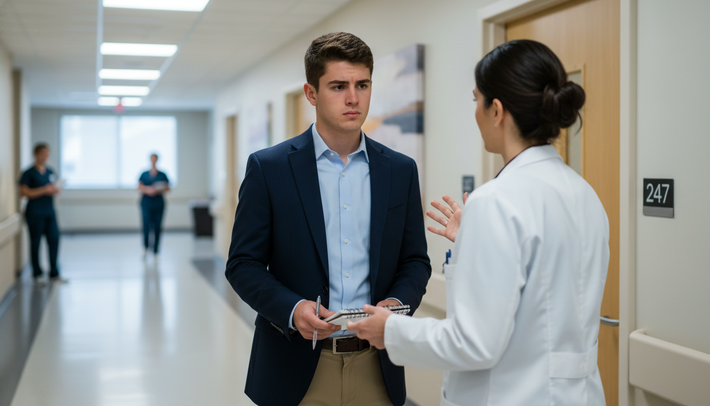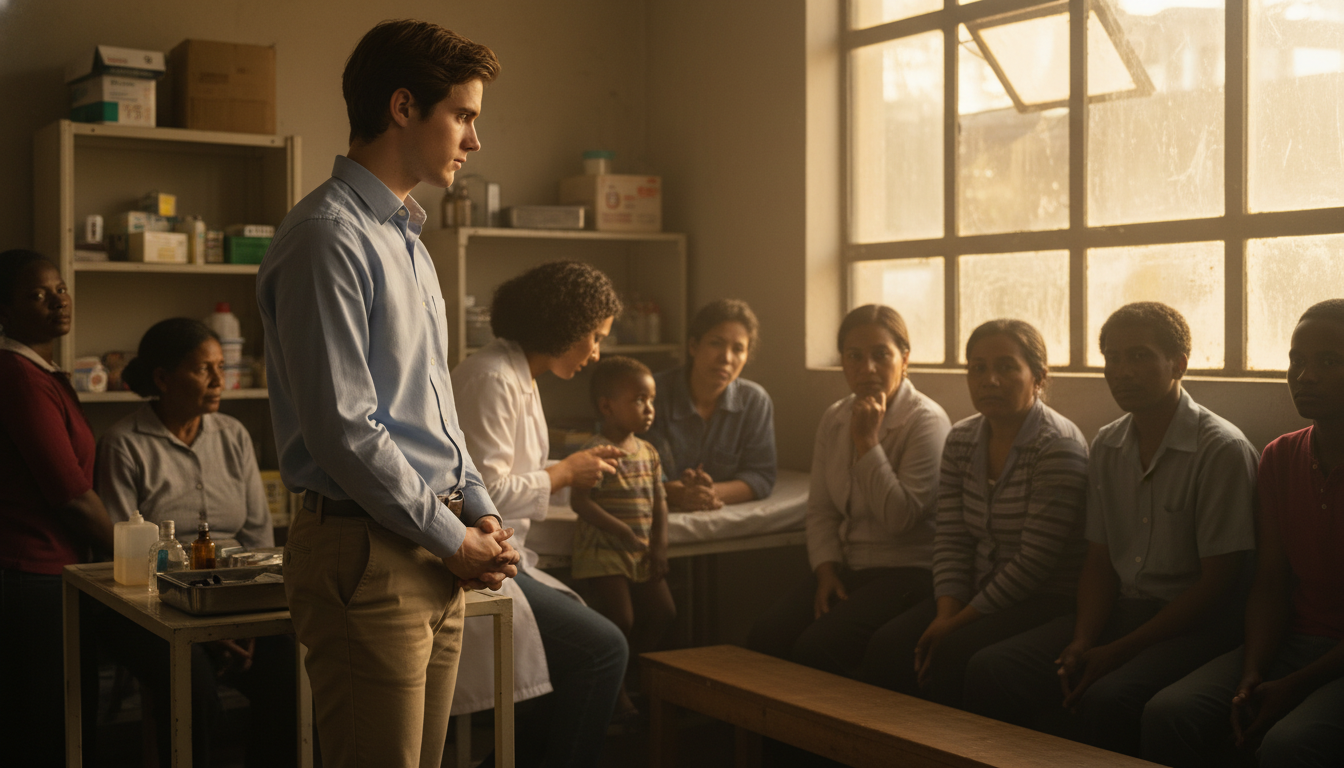
Most “global health shadowing” trips sold to premeds are closer to medical tourism than meaningful preparation for a career in medicine.
That’s the uncomfortable truth almost nobody selling you $4,000 “clinical immersion” packages will admit. And a lot of applicants are still trying to turn a 10‑day trip to Costa Rica into the center of their personal statement.
Let’s separate what feels impressive from what actually helps you as a future physician — and how admissions committees really see this.
What Shadowing Abroad Usually Looks Like (Versus What Students Think It Is)
Students often imagine:
- Immersive global health exposure
- Unique clinical experiences US students “can’t get at home”
- Major application boost because it’s “different” and “shows commitment”
The reality? In the most common premed scenarios, it’s usually:
Short-term, pay-to-play “voluntourism”
- Commercial programs costing thousands of dollars
- 1–3 week trips wrapped in buzzwords: “global health,” “service,” “immersion”
- Heavy marketing to anxious premeds who think they “need something special” to stand out
Minimal educational structure
- Students “shadowing” in disorganized clinical settings
- Few formal teaching goals, little real curriculum
- Often more photo opportunities than genuine mentorship
Ethically gray (or frankly unethical) clinical exposure
- Premeds touching patients, taking vitals, even assisting procedures
- No real training, shaky supervision, unclear consent from patients
- Tasks that would be illegal for unlicensed students in the US
You might think: “But I didn’t do anything invasive. I just watched. That can’t be bad, right?”
Not automatically bad — but not automatically impressive either.
What Admissions Committees Actually Think About Shadowing Abroad
Let’s cut through the folklore.
1. No, they do not count it as superior clinical exposure
Multiple admissions deans have said variations of the same thing in interviews and webinars:
“We value consistent, longitudinal involvement in your own community far more than short-term service trips abroad.”
They’re not being coy.
- US-based shadowing and clinical volunteering remains the foundation.
- A 10-day trip abroad will never substitute for months to years of local involvement.
- If most of your clinical contact is abroad and you’re light on US experience, that’s a red flag.
Why? Because they need to know you:
- Understand US healthcare realities
- Can work in US systems, with US patients, US teams
- Have commitment — which short bursts do not demonstrate very well
2. They’ve seen the same scripts a thousand times
Admissions readers are not dazzled by generic narratives like:
- “I saw how little they had, but the joy on their faces showed me what medicine is really about.”
- “We were in a rural village where there was no running water, and I realized how privileged I am.”
- “Seeing the healthcare disparities abroad inspired me to become a doctor.”
Those lines blend together across hundreds of applications. They don’t differentiate you. They mainly show that you did what a lot of other well-resourced premeds do.
What does stand out?
- Thoughtful reflection about systems, power, ethics, and your own limits
- Evidence you can critique your own role instead of romanticizing it
3. Some programs raise explicit ethical concerns
Ethical flags that catch attention:
- You describe doing clinical tasks beyond your training (giving injections, suturing, managing medications, performing exams independently).
- You emphasize “hands-on” patient care that would never be allowed at your level in the US.
- You clearly did work where the local system used untrained foreign students as cheap labor.
Admissions committees do not want students who chase procedures at the expense of patient safety.
If your essay reads like “I finally got to feel like a real doctor” because you did things you were unqualified to do in a low-resource country, readers infer:
- Poor judgment
- Poor understanding of scope of practice
- Weak grasp of medical ethics
That’s not a small issue. That’s disqualifying at some places.
The Data Reality: Does Shadowing Abroad Help You Match or Get In?
There’s no large randomized trial of “Costa Rica trip vs no Costa Rica trip,” but we can triangulate from what we do know.
1. What’s actually correlated with getting into medical school?
From AAMC and individual school data, what reliably matters:
- GPA and MCAT (yes, obviously)
- Sustained, longitudinal clinical exposure
- Strong letters — often from people who have seen you over time
- Evidence of reliability and consistency, not just high-intensity bursts
- Community engagement — especially with underserved populations
Shadowing abroad does not appear as any major independent predictor.
When schools describe characteristics of strong applicants, you see:
- “Long-term commitment”
- “Impact over time”
- “Depth, not just breadth”
You do not see: “International shadowing experience is strongly preferred.”
2. Match data: global health doesn’t drive residency outcomes
Once you get to med school and residency, structured global health programs within accredited systems can be valuable. But for premeds, no specialty match analysis shows that:
“Applicants with premed shadowing abroad matched significantly better than those without.”
It’s invisible to that level of analysis. It’s at best a tiny footnote in a much larger application story.
The Biggest Myth: “I Need Something Unique, So I’ll Go Abroad”
Let’s break this myth first because it drives a lot of poor decisions.
Students think:
- Everyone has hospital volunteering
- Everyone has some shadowing
- I need something different — so international must be better
That logic has two problems:
Uniqueness is overrated. Meaningfulness is underrated.
It’s better to be the person who spent two years deeply involved in a local free clinic than the person who flew to Guatemala for 10 days and wrote a soaring paragraph about poverty.“Different” can backfire if it exposes poor judgment.
Missing boundaries. Ignoring ethics. Overvaluing spectacle over substance.
Admissions committees aren’t looking for novelty acts. They’re looking for people who can:
- Show up consistently
- Respect patient autonomy and safety
- Work inside systems responsibly
If you want to stand out, you do not need geography. You need depth.
The Ethics Problem: When “Exposure” Turns into Exploitation
This is where shadowing abroad goes from “meh” to “problematic.”
Unlicensed students doing clinical work
In many premed-focused trips, students:
- Take vitals unsupervised
- Do wound care
- Assist in deliveries
- Help with injections or IVs
- Provide “health education” they’re not actually qualified to give
Ask yourself: would a US hospital let you do this as a premed? No. Because:
- You’re untrained
- You’re unlicensed
- It’s not safe for patients
Doing it in another country doesn’t magically make it ethical.
Informed consent and power dynamics
Patients in low-resource settings may:
- Believe you’re a real doctor
- Feel pressured to accept care from foreign teams
- Not realize their “provider” is actually a college sophomore from Ohio
That’s not informed consent. That’s an abuse of the trust and desperation that comes with limited access to care.
When an admissions reader spots this, they don’t think “brave, passionate future doctor.” They think “boundary issues and poor ethics.”
When Shadowing Abroad Can Be Legitimate and Valuable
Not all international exposure is performative. There are solid, ethical, educational opportunities — but they look very different from the typical premed voluntourism package.
Look for elements like:
Partnership with established academic or healthcare institutions
- University-sponsored global health programs
- Longstanding partnerships with local hospitals or public health departments
- Clear oversight from faculty or licensed professionals responsible for your education and conduct
Well-defined educational goals, not vague “experience”
Strong programs usually include:- Pre-departure training: ethics, culture, language basics, health systems
- Structured reflection: journaling, group discussion, debriefing
- Clear limits on clinical roles: observation only or extremely narrow tasks
Respect for scope of practice
- You are not allowed to provide unsupervised clinical care
- You observe, maybe take vitals under careful supervision, or help with non-clinical logistics
- Patients are informed about who you are and your level of training
Reciprocity and sustainability
- The local site sets priorities, not visiting students
- The program contributes resources, training, or continuity — not one-off “photo op” missions
- Local staff are not displaced or undermined by foreign volunteers
In that context, your application can meaningfully highlight:
- Systems-level differences in care delivery
- Resource allocation challenges
- How power and privilege influenced your experience — and your responsibilities
How to Talk About Shadowing Abroad Without Hurting Your Application
If you’ve already gone — damage is not inevitable. But you need to be very careful in how you frame it.
1. Avoid heroism. Emphasize humility.
Bad framing:
“I helped deliver babies in a rural village, and it showed me I’m ready to be a physician.”
Better framing:
“I arrived expecting to be ‘helpful,’ and quickly realized my most ethical role was to observe, support the local team in non-clinical ways, and listen more than I spoke.”
The second version shows growth and self-awareness, not ego.
2. Explicitly acknowledge limitations and ethics
Strong applicants do not gloss over the problematic parts. They show they can critique them.
Example points to include:
- What you were not qualified to do
- Situations where you declined to cross a boundary
- How the experience changed your view of “helping” vs “doing no harm”
3. Connect it to action at home
A trip abroad is not the story. It can be the spark, but the real story is what you did with that spark after you returned.
Better narratives:
- You got involved with local clinics serving immigrant or refugee populations
- You pursued coursework in global health, ethics, or health policy
- You chose research or advocacy projects dealing with access, equity, or health systems
If your international shadowing doesn’t lead to anything sustained afterward, it reads like tourism.
When You Should Not Go Abroad for Shadowing
You probably should skip it if:
- You’re struggling to afford tuition or basic living expenses
- Do not go into debt for this. Admissions committees are not impressed by ability to pay.
- You have minimal or no US clinical exposure
- Build that first. Otherwise the trip looks like you’re chasing novelty instead of doing the hard, boring, consistent work.
- The program promises “hands-on clinical experience” for premeds
- That’s a euphemism for “we’ll let you do things you are not licensed or trained to do.”
- There’s no clear supervision, curriculum, or institutional backing
- If you can’t identify who’s liable if something goes wrong, that’s telling.
What To Do Instead If You Want “Global Health” Credibility
Global health is not defined by plane tickets.
Far more credible approaches:
- Work or volunteer at a local clinic that serves immigrant, refugee, or uninsured populations.
- Join or start projects that address language access, transport barriers, health literacy, or insurance navigation for marginalized communities.
- Take courses in public health, medical anthropology, health policy, or ethics and link your academic understanding to your experiences.
- If your school has them, seek out faculty involved in global health research or partnerships and ask how undergrads can contribute ethically.
You can learn about global health inequities without ever leaving your city. Admissions committees know that.
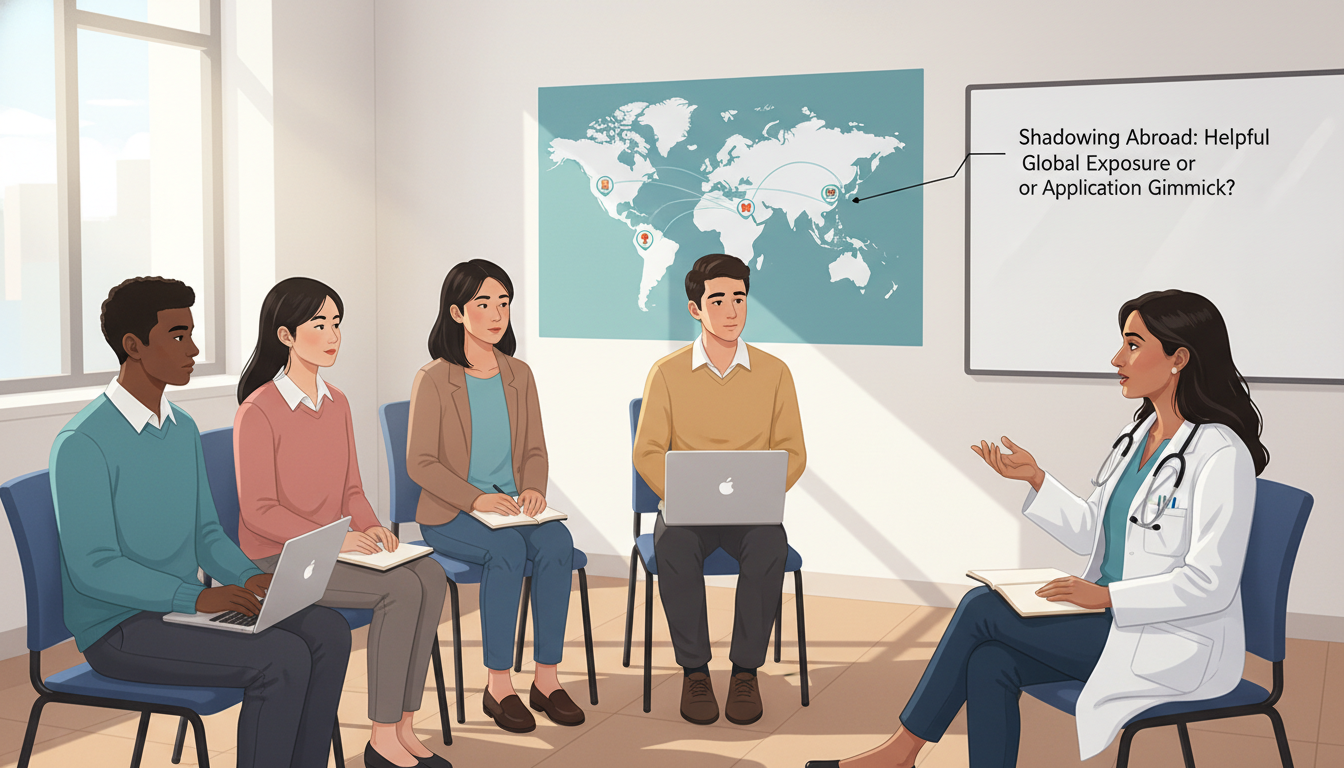
So… Helpful Global Exposure or Application Gimmick?
Here’s what the evidence and real-world behavior show:
Shadowing abroad is not inherently a plus.
It does not automatically make your application stronger than US-based experience. If it crowds out sustained local involvement, it may even make your profile weaker.Ethics matter more than geography.
Observational, well-supervised, academically grounded experiences can be valuable. Programs that let premeds act like undertrained clinicians are red flags — for patients and for your candidacy.Depth beats novelty every time.
Ten days abroad will never compete with two years of consistent, reflective service in your own community. If you cannot articulate growth, systems thinking, and humility from the experience, it’s just an expensive stamp in your passport, not a meaningful step toward medicine.