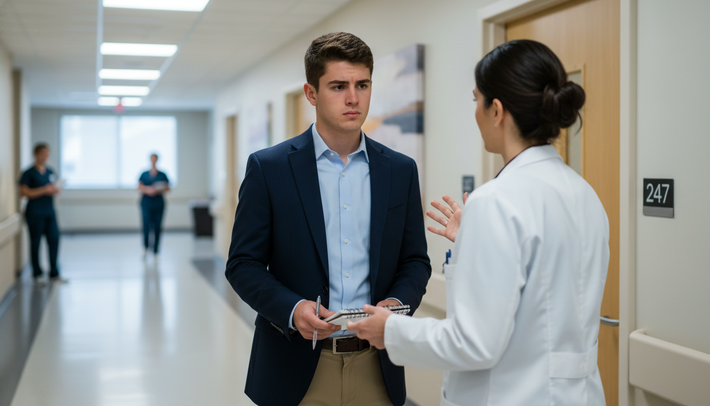
The belief that “no shadowing hours = doomed application” is lazy, convenient, and wrong.
Lack of shadowing can hurt you, but not for the simplistic reason most premed forums scream about. What actually matters is whether your file raises one of two red flags:
- You do not understand what physicians really do day to day, or
- You look like someone who picked medicine from a distance and never pressure‑tested the choice.
Shadowing is just one way to avoid those red flags. It is not the only way, and it is not scored like an MCAT subsection.
Let’s dissect what admissions committees actually look for, where shadowing fits into that, and when “little or no shadowing” is a problem vs when it’s absolutely survivable.
(See also: Myth vs Reality: Does More Shadowing Always Help Your MD Application? for more details.)
What schools actually care about (it’s not “50+ shadowing hours”)
Medical schools don’t sit in a room with a checklist going:
- MCAT ≥ 515
- GPA ≥ 3.7
- Shadowing ≥ 50 hours
- Click “accept”
That’s Reddit fantasy.
What they’re trying to answer is much more basic and much more human:
- Does this person understand what practicing physicians really do?
- Have they tested their interest in medicine in realistic, often unglamorous settings?
- Do they handle people, suffering, and uncertainty without falling apart or becoming robotic?
- Are they likely to stay in medicine once they see the less Instagram‑friendly side?
Shadowing is one proxy for those questions, mainly for #1 and #2. But it’s a weak, passive one.
Think about a typical shadowing day: you trail behind a doctor, say little, see some patients, get a few debriefing moments, maybe watch procedures. It’s useful exposure, but you’re not making decisions, documenting, or taking responsibility.
From an evidence standpoint, shadowing:
- Correlates with having any idea what medicine looks like (good)
- Does not correlate strongly with later performance or specialty choice
- Is extremely dependent on geography, networking, and luck (i.e., not an equal-access metric)
Adcoms know this. That’s why many of them quietly prioritize clinical experience and service work far above raw shadowing hours.
So why does “lack of shadowing” freak people out?
Because it’s visible, easy to compare, and easily turned into a number. And people like numbers, even when those numbers are fake precision.
When lack of shadowing actually hurts you
Let’s be blunt: there are situations where not having shadowed is a legitimate problem. Just not always the ones people think.
1. Zero shadowing + weak clinical exposure
This is the real red flag: no shadowing and also minimal genuine clinical work.
Example profile:
- 3.9 GPA in biology, 518 MCAT
- 10 hours “shadowing” a neighbor’s pediatrician friend
- 40 hours volunteering at a hospital info desk
- No EMT/CNA/scribe, no longitudinal clinical volunteering, no hospice, no free clinic
- Essays talk about “always loving science and wanting to help people” with generic patient stories
This person isn’t weak because they lack 100 shadowing hours. They’re weak because:
- They haven’t meaningfully worked around sick people
- They can’t demonstrate understanding of medicine beyond clichés
- Their application looks like it was built from a premed checklist, not a real, evolving interest
Shadowing here is almost irrelevant. The entire clinical exposure picture is shallow.
2. No shadowing in any core setting
Certain gaps make admissions nervous.
If you’ve never seen a physician in an outpatient clinic or an inpatient/hospital setting, committees will wonder whether you’ve only glimpsed tiny corners of medicine (like a surgery‑only shadow or a single urgent care shift).
It’s not “you must shadow 5 specialties.” It’s more like:
- Have you seen at least one doctor doing longitudinal, bread‑and‑butter patient care?
- Have you observed any physician dealing with complexity, follow‑up, and continuity?
If the answer looks like “Not really,” that’s a minor liability. Fixable, but real.
3. Your story clearly needs shadowing to make sense
If your application narrative is “I switched from engineering to medicine after seeing what doctors do,” and then you list zero shadowing or substantial clinical work?
You just undercut your own story.
Adcoms don’t need you to have a perfect, linear path. But they do need your written narrative to match your activity history. If you claim an “aha” moment from clinical exposure, then never sought out deeper exposure, that inconsistency is what hurts you — not the missing shadowing hours per se.
When a lack of shadowing doesn’t doom you
Now let’s flip the script and look at scenarios that forum culture loves to panic about but admissions committees mostly don’t.

1. Strong, hands-on clinical work but modest shadowing
Example:
- 3.75 GPA, 512 MCAT
- 2 years as an EMT (800+ hours), including urban nights and weekends
- 150 hours as a medical assistant in a primary care clinic
- 20–30 hours shadowing spread over internal medicine and emergency medicine
- Essays clearly reference specific, nuanced observations: system breakdowns, longitudinal patient struggles, interprofessional dynamics
Is this applicant “doomed” by 30 shadowing hours? Not even close.
The EMT and MA work tell adcoms:
- This person has seen real patients in pain
- They know what front-line care looks like
- They’ve worked under physicians and understand team dynamics
From a risk perspective, this candidate is less likely to drop out or burn out unknowingly than someone with 200 shadowing hours but zero responsibility.
Many schools explicitly say: clinical employment and sustained volunteering > shadowing. Shadowing is seasoning. You already have the meal.
2. Nontraditional applicants with clinical careers
Consider:
- 30-year-old ICU nurse with 5+ years of bedside experience
- 0 formal “shadowing” hours listed
Does anyone on a committee lose sleep over that? No.
They’ve lived the clinical world. They’ve watched residents, fellows, attendings, rapid responses, codes, end-of-life decisions. They know exactly what physicians do.
Some schools may still recommend tacking on a bit of explicit shadowing, just to show you made a deliberate transition in mindset (“I observed from a physician lens”). But lack of it is rarely a dealbreaker here.
3. International constraints and contextual understanding
Applicants from rural areas, countries where shadowing is culturally or legally restricted, or those with caregiving obligations often cannot line up classic US-style shadowing.
Most decent schools know this. AMCAS and secondaries even give you space to explain context.
If your file shows:
- Substantial hospital volunteer roles, inpatient aide work, free clinic experience, or community health roles
- A thoughtful explanation in your essays about barriers to formal shadowing
- Clear, grounded understanding of physician tasks and responsibilities
Then you’re not being quietly blacklisted for not following a US suburban premed script.
Is it perfect? No — admissions is still biased toward students with access and connections. But it’s not as rigid as the mythology suggests.
What actually predicts “this person gets it” (beyond shadowing hours)
Since you want what really matters, not superstition, here’s what repeatedly shows up in successful applicants — including those with minimal shadowing.
1. Longitudinal, patient-facing work
Evidence-based reality: sustained engagement beats short, scattered bursts.
- 6–12+ months of any direct patient contact role is gold:
- Medical assistant
- Scribe (if you actually engage, not just watch the EMR)
- EMT
- CNA / PCA
- Hospice volunteer with real bedside time
- Free clinic intake/translator roles
This does several things shadowing never will:
- Forces you to interact with distressed, angry, scared patients
- Shows you the pace and emotional weight of healthcare
- Reveals bureaucratic and systemic frustrations that are part of physician life
- Tests whether you can show up repeatedly in a hard environment
When your personal statement references a year of hospice work instead of “that one cool surgery I watched,” you immediately read differently to a committee.
2. Nuanced reflection, not hero worship
Adcoms are allergic to “the doctor saved the day; I was in awe” as the only theme.
They look for:
- Recognition of limits: patients who did not get better, moral gray zones, system barriers
- Awareness of team roles: nurses, social workers, techs, and how the physician fits into that
- Some understanding of tradeoffs: time pressure, documentation burden, burnout
You can learn this from shadowing, but you can also learn it from working in an ED registration desk, scribing, or volunteering at a free clinic.
If your essays and interview answers sound like you’ve watched a lot of medical TV rather than done actual work, that’s what tanks you. Not your lack of “100 shadowing hours.”
3. Coherent narrative that matches your activities
Committees don’t need you to have a dramatic “calling.” They do need:
- A time sequence that makes sense
- Clear moments where you tested your interest in medicine
- Activities that logically follow your stated motivations
If your path is:
- Freshman year: science classes only
- Sophomore year: start scribing
- Junior year: add free clinic work
- Senior year: continue + maybe minimal shadowing
You’re fine. That’s a believable exploration arc.
If instead:
- Senior spring: realize you “need shadowing”
- Do 40 hours in one week with a single doctor
- Retroactively claim a lifelong passion for medicine
That reads poorly, not because the shadowing hours are low, but because the timing screams “box-checking.”
Schools differ — but not as wildly as you think

Some nuance that rarely makes it to Instagram infographics:
- A few schools explicitly state shadowing recommendations (e.g., 40–50+ hours, primary care exposure preferred). If you’re applying there, ignoring that guidance is unwise unless you have compelling alternative clinical depth and a good explanation.
- Many schools never mention shadowing. They talk about “substantial clinical exposure” or “experience working with patients.” That’s code for: We care about the whole clinical picture, not ticking a shadowing box.
- DO schools historically have leaned slightly more into valuing shadowing with DO physicians, but even there, strong clinical work can offset limited formal shadowing for some programs.
So yes, you should still look up school-specific expectations. But the idea that there’s a secret national minimum shadowing hour requirement? Fiction.
If your shadowing is weak right now, what should you actually do?
Here’s the practical, non-myth version:
1. Audit your clinical story, not your hour log
Ask:
- Across all roles, can I describe:
- How physicians actually spend their day?
- Times I saw good and bad communication?
- Situations that made me question or refine why I want to be a doctor?
- Do I have at least one substantial, longitudinal clinical or patient-facing activity?
If the answer is yes, your lack of big shadowing numbers is probably not fatal.
If the answer is no, fix the clinical depth first — not the shadowing spreadsheet.
2. Add targeted shadowing, not random marathons
If you’re relatively late in the process:
- Aim for quality and variety, not brute-force hours
- 8–12 hours with a primary care or internal medicine physician
- 8–12 hours in a hospital-based specialty (IM, surgery, EM, etc.)
- Ask thoughtful questions, and keep a reflection journal — this fuels essays and interviews.
Now you can credibly say, “I’ve seen physicians in both outpatient and inpatient settings and here’s what I noticed.”
3. Use your application to explain context, not apologize
If you truly had barriers (rural area, family obligations, legal restrictions on shadowing):
- Briefly state the constraint
- Emphasize what you did do instead (hospital volunteer, scribe, MA, etc.)
- Show that you still achieved the underlying goal: understanding the physician role
Adcoms don’t want an essay of excuses. They want to understand your environment and your choices within it.
The bottom line: does a lack of shadowing doom a strong applicant?
No — a lack of shadowing does not automatically doom a strong applicant.
What sinks people isn’t the missing checkbox. It’s:
- Shallow or short-term clinical exposure overall
- A narrative that doesn’t match their experiences
- Essays and interviews that reveal a TV‑level, superficial understanding of physician life
If you can demonstrate mature, nuanced understanding of medicine through real, sustained patient-facing work, shadowing becomes supportive evidence, not the main event.
The real checklist isn’t “50+ shadowing hours.” It’s:
- Have you truly worked around sick people over time, not just watched from a doorway?
- Can you show that you understand both the appeal and the hard, unglamorous parts of being a physician?
- Does your timeline reflect deliberate exploration rather than last-minute box-checking?
Get those right, and your application is built on substance, not shadowing folklore.