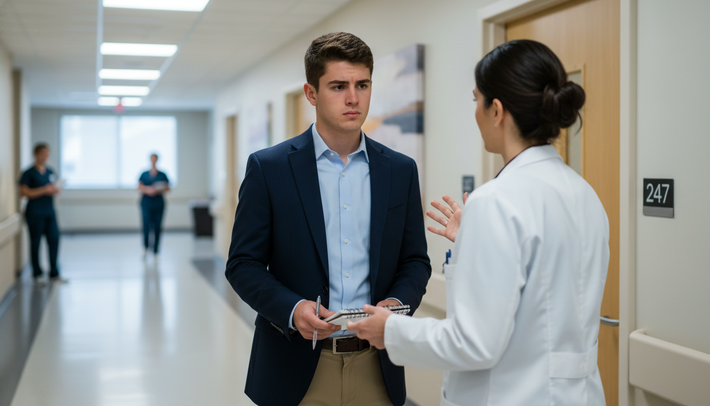
The belief that "more shadowing is always better" for MD applications is wrong—and it is quietly wasting thousands of student hours every year.
Shadowing is not worthless. But it is wildly overrated, frequently misused, and often misunderstood by premeds who think admissions committees are simply counting hours like a punch card at a coffee shop.
They are not.
If you’re chasing 300–500+ shadowing hours because someone on Reddit or a premed advisor said “top schools like a lot of shadowing,” you’re probably burning time you could invest in things that actually move the needle: clinical work, meaningful service, and serious intellectual engagement.
(See also: Do You Really Need Hospital Shadowing? What Evidence Suggests for more details.)
Let’s dismantle this properly.
The Myth: “You Need Tons of Shadowing Hours for MD Admissions”
The standard premed lore goes something like this:
- You must shadow multiple specialties
- You need 100–200+ hours to be “competitive”
- Top-20 schools “expect” extensive shadowing
- More hours always make your application stronger
None of that is supported by what admissions committees actually say—or by what they actually reward.
Look at what real schools state publicly.
- University of Michigan Medical School describes clinical exposure broadly and lists shadowing as one option among many, not a formal requirement.
- Case Western Reserve explicitly notes that patient-facing employment, volunteering, and clinical experiences are key; shadowing is mentioned, but not as a primary metric.
- Harvard, UCSF, Stanford, Mayo and other highly selective schools emphasize sustained clinical engagement and service. None of them say, “We want 200 shadowing hours.”
Most schools do not list a minimum number of shadowing hours. Why? Because shadowing, on its own, has limited predictive value. Watching is not the same as doing. And medical schools know that.
The obsession with accumulating shadowing hours is largely a student-driven myth, amplified by forums, anecdotes, and advisors who prefer simple numeric checklists over the messy reality of holistic review.
What Medical Schools Actually Want Shadowing to Do
Shadowing’s real purpose is narrow and specific:
- Expose you to the reality of clinical work and physician life
- Help you understand what physicians actually do
- Give you enough insight that when you say “I want to be a doctor,” it’s not based on TV shows, family pressure, or fantasy
That’s it.
Shadowing is about confirmation and clarity, not about skill-building, not about proving clinical competence, and definitely not about stockpiling hours like you’re grinding for XP in a video game.
From an admissions standpoint, reasonable shadowing demonstrates:
- You’ve seen physicians in real environments
- You understand medicine involves bureaucracy, EMR clicks, and complex team dynamics
- You realize that not all of the job is glamorous, and you are still in
Once you’ve shown that, the marginal value of hour #75 vs hour #200 plummets. If your application is weak, it's almost never because your shadowing went from 60 to 80 instead of 60 to 180.
The Reality: Diminishing Returns Kick In Early
Let’s talk numbers, because that’s where myths tend to collapse.
Across many successful applicants:
- 20–40 hours of focused, in-person physician shadowing is usually enough to credibly show exposure
- 50–60 hours with reflection and decent variety is more than enough for most MD schools
- Going beyond 80–100 hours rarely adds meaningful value unless there’s something special about the context (longitudinal mentoring, unique setting, deep reflection)
Anecdotally—and confirmed by multiple advisors and admissions committee members—some of the strongest admits to top schools had:
- ~30 hours shadowing primary care
- A few half-days with a specialty
- Strong clinical employment or volunteering that actually involved patient interaction
Compare that to the premed with:
- 300 shadowing hours
- Minimal actual hands-on clinical or service work
- Shallow reflections that all sound like, “I realized how much doctors care about their patients.”
Who looks better? It’s not the one who spent every break silently trailing a doctor through hallways.
The curve is brutally simple:
- Shadowing from 0 → 20 hours: big benefit (you go from “no exposure” to “yes, I’ve seen it”)
- 20 → 50 hours: moderate benefit (more nuanced understanding, can talk more credibly)
- 50 → 100+ hours: almost flat, unless the experience is unusually rich and well-integrated into your narrative
More shadowing is not the same as better shadowing.
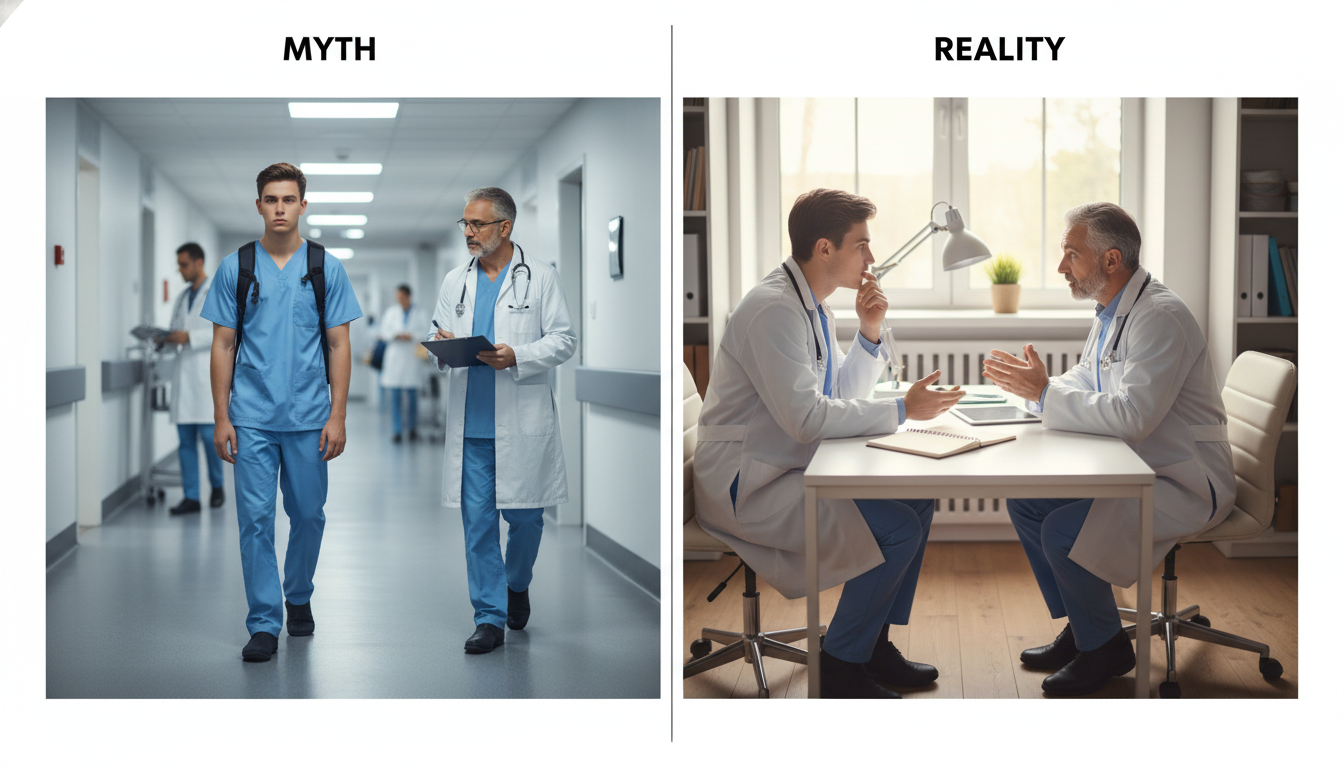
Shadowing vs Clinical Work: The Tradeoff Premeds Ignore
Here’s where the myth does real damage: extra shadowing hours often replace more valuable experiences.
Every hour you’re standing in the corner of an exam room nodding quietly is an hour you are not:
- Working as a medical assistant, scribe, EMT, or CNA
- Volunteering in a free clinic with regular patient interaction
- Engaging in longitudinal community service
- Doing serious research or developing leadership in a sustained way
Medical schools care a lot more about what you have actually done than what you have passively watched.
Think about what shows readiness better:
- 250 shadowing hours across 6 specialties
- Or 40 shadowing hours + 800 hours as an ED scribe + 300 hours at a community clinic
The second profile screams: “I know the system, I’ve interacted with patients, I understand workflow, and I’ve seen the good and the ugly.” That’s not theoretical understanding; it’s lived experience.
Admissions committees routinely emphasize:
- Longitudinal commitment
- Responsibility and initiative
- Real interaction with patients and teams
- Evidence of resilience and follow-through
Shadowing, by design, limits your agency. You’re an observer. At some point, stacking more of that is just… more of that.
Common Shadowing Myths That Need to Die
Let’s take a few greatest hits and put them where they belong.
Myth 1: “Top schools want multiple specialties and tons of hours”
Reality: Top schools want depth, reflection, and coherence. A student who shadowed one primary care physician for 25 hours and can articulate clearly what they saw, what surprised them, and how it shaped their understanding of medicine will outperform the student who racked up 10 specialties and can’t say anything more specific than “cardiology was really cool.”
A bit of variety is fine. Mandatory? No.
Myth 2: “You need 100+ hours to prove you know what you’re getting into”
Reality: The quality of your insight matters more than the count of your hours.
Two well-chosen vignettes, described with detail and nuance in your personal statement or secondaries, will do more for your application than “I shadowed 12 physicians across 6 subspecialties for 180 hours.”
Schools know you cannot fully “know what you’re getting into” even if you had 500 hours. They’re checking for informed motivation, not perfect foresight.
Myth 3: “If your stats are weaker, you can make up for it with more shadowing”
Reality: No one is raising an eyebrow at a 3.3 GPA and saying, “But did you see he shadowed 400 hours? Admit him.”
If your academic metrics are weaker, the levers that actually matter are:
- Upward trend with strong recent coursework
- Post-bacc or SMP performance
- Evidence of discipline and resilience
- Strong clinical employment or service that demonstrates maturity and purpose
Shadowing is a checkbox, not a tiebreaker.
Myth 4: “Schools prefer shadowing over clinical jobs or volunteering”
Reality: It’s usually the opposite.
A well-documented, year-long scribe or MA role where you had responsibility and interaction with patients will typically be valued more than many more hours of silent observation.
Shadowing can supplement that by rounding out your understanding of the physician’s role, but it rarely replaces it in the eyes of serious medical schools.
What Actually Makes Shadowing Valuable
If “more” isn’t the magic ingredient, what is?
Three things: intentionality, reflection, and integration.
Intentionality
Go in with a plan. What do you want to understand?- How does the doctor manage time?
- How do they communicate bad news or uncertainty?
- How do they interact with nurses, MAs, social workers?
- What parts of the day seem most stressful or most meaningful?
Ask permission to debrief briefly at the end of sessions. Take notes after you leave. Treat this like fieldwork, not background noise.
Reflection
After each shadowing session, write down:- A moment that surprised you
- Something that challenged your idealized view of medicine
- A specific interaction that made you think differently about the physician’s role
Those concrete moments will give you the raw material to write personal statements and secondaries that sound like a real person thinking critically—not a premed parroting generic lines about “making a difference.”
Integration
The best applicants connect shadowing to:- Their clinical jobs or volunteering (“I noticed as a scribe how the attending’s documentation choices shaped patient flow, which I’d seen earlier while shadowing in clinic…”)
- Their service work (“Shadowing in a safety-net clinic connected directly to what I’d seen volunteering at the food pantry…”)
- Their academic interests (“Watching a hepatology clinic changed how I thought about my biology research on metabolic disease…”)
Your goal is not to show that you have been near doctors for X hours. Your goal is to show that you’ve learned from proximity and built a more mature understanding of what you’re signing up for.
How Much Shadowing Is “Enough” in Practice?
Let’s strip it down to practical terms.
For most US MD applicants, a smart, efficient target looks like:
- 15–25 hours with a primary care physician (family med, internal med, or pediatrics)
- Optionally 10–20 additional hours in another setting if it fits your story (surgery, ED, outpatient specialty, rural clinic, VA, etc.)
If you genuinely enjoy it and it's easy to continue (strong mentor, interesting practice, unique patient population), going up to ~50–60 hours is perfectly reasonable.
But if you are grinding to 150+ hours while your clinical volunteering is thin, your non-clinical service is weak, or your research is nonexistent, you are optimizing the wrong lever.
There are exceptions, but they reinforce the rule:
- If you had no clinical employment and only limited volunteering, a bit more shadowing might help ensure you clear the “exposure” threshold. But even then, the better move is usually to get a real clinical role, not to double your shadowing total.
- If your shadowing is unusually longitudinal and interactive (e.g., following one physician weekly for a year with significant debriefing and mentorship), then more hours can have narrative value because of the relationship and insight, not the raw number.
The central question isn’t “How many hours?” It’s “Can I clearly and specifically explain what I learned about being a physician from my experiences?”
If the answer is yes at 35 hours, spending 100 more to feel safer is classic premed risk-aversion, not strategy.
The Bottom Line: Shadow Smarter, Not Longer
Three takeaways, stripped of fluff:
Shadowing is a low-yield activity after the first 30–60 hours. It’s for confirming your interest and gaining basic insight, not for racking up impressive-looking numbers.
Medical schools value action over observation. Clinical work, longitudinal service, and serious engagement beat massive shadowing totals almost every time.
Depth and reflection matter more than variety and volume. A few well-chosen, thoughtfully processed shadowing experiences integrated into your narrative will outperform a long, unfocused list of hours and specialties.
If you understand that, you stop playing the hours game—and start building an application that actually looks like preparation for medicine instead of an accounting exercise.