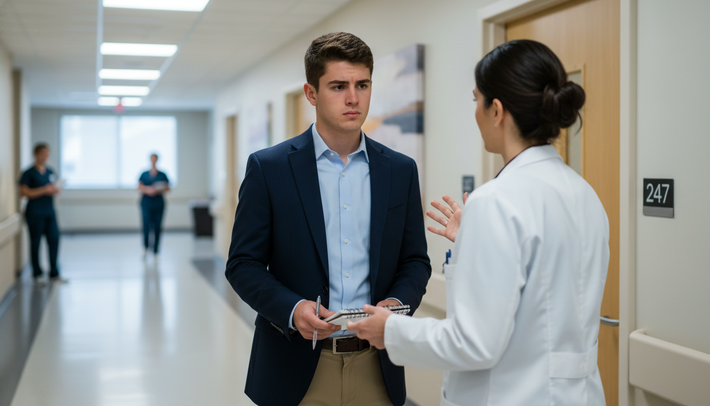
The belief that medical schools prefer subspecialty shadowing over primary care—or vice versa—is mostly fiction, propped up by anecdotes and bad advising.
What actually matters is far less glamorous and far more uncomfortable: whether your experiences show maturity, insight, and a coherent story about why you want to practice medicine at all.
Let’s dismantle the myths.
(See also: Shadowing vs Clinical Volunteering for more details.)
The Core Myth: “Primary Care Shadowing Is Weak; Subspecialty Shadowing Is Impressive”
This is the narrative many premeds absorb:
- Shadow a dermatologist, orthopedic surgeon, or cardiologist = “wow factor”
- Shadow a family physician, internist, or pediatrician = basic, unimpressive, filler
You hear versions of this from upperclassmen, parents who are physicians, and occasionally from poorly-informed pre-health advisors.
But when you actually look at what schools say and what admissions outcomes show, the story is very different.
Here’s the uncomfortable truth most people skip: U.S. MD and DO schools are not systematically penalizing you for shadowing primary care rather than subspecialists. If anything, the more explicit structural bias runs in the opposite direction—toward primary care exposure.
A few concrete points:
- Many schools explicitly require or strongly prefer primary care or generalist exposure (family medicine, internal medicine, pediatrics, or general surgery clinic).
- Admissions committee members repeatedly report that only shadowing in niche subspecialties without broad-based exposure is a red flag, not a flex.
- Some state schools with missions tied to community health and workforce needs (e.g., many public MD and most DO programs) read primary care-heavy applications as more aligned with their goals.
What impresses admissions is not the prestige of the specialty, but whether your experience:
- Demonstrates you understand what physicians actually do day to day.
- Exposes you to longitudinal, unfiltered patient care—not just procedures.
- Leads to mature reflection, not hero narratives.
Primary care often gives you more of that, not less.
What the Data and Policies Actually Show
There’s no single database of “shadowing types” and acceptance rates, but we do have hard evidence on what schools ask for and what they prioritize.
1. Official requirements and recommendations
Look at school websites and MSAR (for MD) or individual DO program pages:
- University of Utah (classic example): explicitly recommends primary care shadowing and longitudinal clinical exposure; their admissions blog has warned against “hyper-specialized” shadowing as your only exposure.
- Many DO schools (e.g., PCOM, UNECOM, CUSOM): emphasize primary care orientation and frequently state that experiences aligned with community-based, holistic care are valued. They do not say, “We love that you spent 60 hours watching robotic surgery.”
- Rural- or community-mission schools (e.g., some state MD schools in the Midwest, South, and Appalachia) push applicants to show understanding of community and outpatient medicine.
When schools mention specific types of shadowing, it’s usually:
“Primary care or other outpatient settings,”
“Broad exposure to general medicine,”
“Understanding of the physician-patient relationship over time.”
Notice what’s missing: “We prefer applicants who shadowed neurosurgery twice.”
2. What admissions committees actually complain about
From adcom talks, podcasts, and blogs, the common concerns aren’t about lack of subspecialty shadowing. They’re about:
- Applicants who only shadowed one physician ever, usually a family friend.
- Experiences that are too passive and too narrow, like 20 hours in an OR with almost no patient interaction.
- Applications that scream “I want to be an orthopedic surgeon” with zero understanding of general medicine or primary care realities.
In other words: the bias, when it appears, is against overly subspecialty-heavy applications that ignore the core of what most doctors do.
3. The health workforce context
The Association of American Medical Colleges (AAMC) has been screaming about primary care shortages for years. Policy discussions, school missions, and funding streams all reflect this.
Schools don’t blindly admit only future primary care doctors. But they are acutely aware that:
- Most care is delivered in outpatient, generalist settings.
- Primary care exposure is one of the best windows into the breadth of medicine and social determinants of health.
So if you think sitting in a cardiothoracic OR for 40 hours looks inherently more “serious” to an admissions committee than 40 hours in a continuity clinic… you’re buying prestige theater, not reading the room.
What Primary Care Shadowing Actually Shows (That Subspecialty Often Doesn’t)
If you do primary care shadowing well, it checks boxes that subspecialty shadowing frequently misses.
1. Continuity and context
In family medicine, internal medicine, or pediatrics clinic you see:
- Chronic disease management (HTN, diabetes, asthma, depression).
- Social barriers: transportation, insurance gaps, housing, food insecurity.
- Preventive care, screening, counseling.
These visits show you how medicine looks when there’s no dramatic procedure to justify the encounter. Just the uncomfortable grind of helping a real person with a messy life do slightly better.
Admissions committees know this is closer to the “average day” of many physicians than six hours of laparoscopic surgery with zero patient follow-up.
2. Communication and relationship-building
Primary care is where you learn:
- How to deliver bad news in a 15–20 minute time slot.
- How doctors handle emotionally draining patients, non-adherence, and conflict.
- How shared decision-making plays out when patients don’t speak English, have low health literacy, or simply don’t agree.
These are narrative gold for your personal statement and secondaries—if you paid attention and reflected, not just watched the EHR clicks.
3. System-level realities
You see:
- Prior authorizations.
- Rushed schedules.
- Coordination with specialists.
- Burnout hints in real time.
That’s the kind of grounded, non-naïve insight committees notice when you talk about “the challenges of practicing medicine” without descending into cynicism.
What Subspecialty Shadowing Actually Shows (And Where It Backfires)
Now, to be clear: subspecialty shadowing is not useless. It can add important layers.
Subspecialty experiences are particularly good at:
- Showing you complex procedures, technology, and acute care settings.
- Exposing you to high-acuity patients (ICU, OR, cath lab, EP lab).
- Demonstrating that you’ve explored beyond a single clinic environment.
But here’s where premeds get seduced by the wrong metrics.
The prestige trap
Many students think:
“I shadowed a neurosurgeon at a big academic center. That has to be more impressive than a community family doc, right?”
No, not inherently.
What most applications show from these experiences:
- “I watched a 10-hour surgery and it was so inspiring.”
- “I saw how the surgeon’s skill saved a patient’s life.”
- “I want to be a neurosurgeon and do big cases like that.”
From an admissions lens, this can read as:
- You are captivated by spectacle, not necessarily by service or long-term care.
- You may have a very narrow, glamorized view of medicine.
- You might flame out when you hit pre-clinicals and realize 90% of medicine isn’t neurosurgery.
It doesn’t mean you’ll be rejected. It does mean the burden is on you to show that you understand the everyday side of medicine too.
The “only subspecialty” red flag
Where subspecialty shadowing becomes a liability:
- All your clinical exposure is in the OR, cath lab, or highly specialized clinic.
- You’ve never seen a regular outpatient internal medicine or family medicine visit.
- You write your entire application like the rest of medicine is background noise for your preferred specialty.
Adcoms know half of students who “know” their specialty are wrong, and even the ones who are right need a robust generalist foundation. An application glued to one specialty with zero primary care or general exposure makes you look naive.
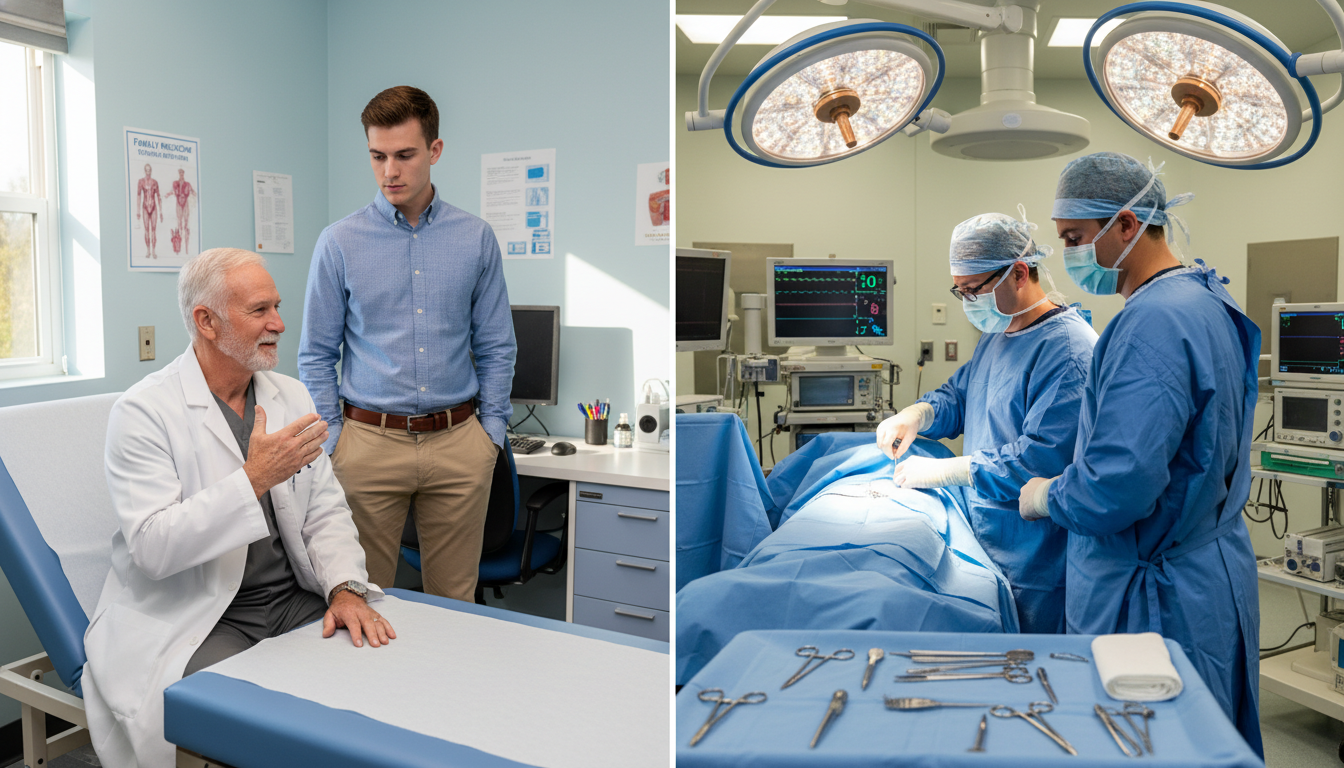
Are Schools Actually “Biased”? The Real Answer
Let’s call out the myths directly.
Myth 1: “Top-tier MD schools want high-prestige subspecialty shadowing.”
Reality:
- Elite schools care about depth of reflection, intellectual curiosity, and service orientation.
- They do not require you to have shadowed at a world-famous hospital or with a celebrity surgeon.
- They do care if you’re clearly chasing prestige rather than demonstrating a grounded understanding of medicine.
A well-argued personal statement built on 60 hours of thoughtful primary care shadowing plus longitudinal volunteering at a free clinic can absolutely outshine 100 hours of random tertiary subspecialty shadowing with no coherent narrative.
Myth 2: “DO schools want only primary care shadowing, so subspecialty exposure looks bad.”
Reality:
- DO schools emphasize primary care and holistic care, yes.
- They are not allergic to subspecialists. Many DOs are subspecialists.
- What they want: demonstrated understanding of osteopathic principles and broad, patient-centered care. Primary care shadowing often reflects that well, but subspecialty experiences can fit if you frame them appropriately.
Myth 3: “Too much primary care shadowing makes you look ‘basic’ or unambitious.”
Reality:
- Extensive primary care exposure, especially in underserved or community settings, often tracks with maturity and service-driven motivation.
- It can actually differentiate you from the “I shadowed orthopedics because I like sports” crowd, particularly at schools with strong community or population health missions.
- The “basic” label comes from shallow reflection, not the setting.
So What Should You Actually Do?
Here’s the evidence-based, non-myth version of smart planning.
1. Get broad-based exposure first
Aim to see the “core” of medicine:
- Outpatient internal medicine or family medicine
- Pediatrics clinic
- Possibly general surgery clinic or OR
20–40 hours across these settings can give you a robust foundation.
2. Layer subspecialty experiences on top, not instead
If you’re curious about cardiology, orthopedics, EM, anesthesia—great.
Do:
- Some targeted shadowing or volunteering in those specialties.
- Enough that you understand lifestyle, patient populations, and workflow.
Don’t:
- Let subspecialty shadowing be your only window into medicine.
- Talk like you’re already locked into that one field for life.
3. Think in terms of narrative coherence, not category counts
Admissions is not counting:
- “X hours primary care” vs “Y hours subspecialty.”
They’re asking:
- Do your experiences logically support your motivation statement?
- Do you understand both the privileges and the frustrations of clinical work?
- Can you discuss real patients (de-identified) with nuance?
Sometimes that means your application is heavy on primary care because that’s where you’ve volunteered, shadowed, and maybe worked as a scribe or MA. That’s fine—if you can tell the story well.
4. Use reflection as your differentiator
The same boring primary care waiting room can produce:
- A generic, forgettable paragraph about “helping people,” or
- A sharp observation about how a physician navigated language barriers, health literacy, and insurance obstacles in one 15-minute visit.
One is noise. The other is what adcoms remember.
How to Spot Bad Advice About Shadowing
A quick heuristic: if someone’s advice is based mainly on prestige or drama, be skeptical.
Red flags:
- “You need at least one surgical specialty on your CV or you’ll look weak.”
- “Primary care is for people who couldn’t get better shadowing.”
- “Schools like to see big-name hospitals on your application.”
- “DO not bother with primary care shadowing; just get a famous cardiologist to write your letter.”
All of those statements are disconnected from how committees actually read files.
Better guidance focuses on:
- Breadth of settings
- Depth of reflection
- Mission fit with your target schools
The Bottom Line
Medical schools are not systematically biased against primary care shadowing in favor of subspecialists. If anything, the structural and mission-based pressures tilt slightly toward valuing primary care exposure as the backbone of your understanding.
Three key truths to keep in focus:
Breadth beats prestige. A mix of primary care and some subspecialty exposure, coupled with real reflection, is far more powerful than a single “fancy” specialty.
Primary care is not filler. It’s often the best lens into real-world medicine—continuity, social determinants, communication, and system-level challenges.
Your interpretation matters more than the label. Two students can shadow in the same clinic; one emerges with clichés, the other with insight. Admissions committees admit the latter, not the one with the flashiest specialty on paper.