
What happens when you give a flawless STAR answer about managing a crashing patient… while your eyes keep drifting to the door and your foot is hammering the floor like a jackhammer?
They stop listening to your words. They start “listening” to your body. And your body is usually harsher than any interviewer.
You can absolutely destroy a great behavioral answer with bad body language. I have watched it happen in real time: smart, capable applicants talking through textbook-perfect responses… and quietly getting written off because their nonverbal cues screamed “immature, defensive, anxious, or arrogant.”
Let’s make sure that is not you.
The Silent Red Flags: How Programs Read Your Body
Residency interviewers do not sit there with a checklist labeled “body language.” But they do constantly scan for:
- Emotional maturity
- Team compatibility
- Stress response
- Confidence vs insecurity
- Honesty vs rehearsed performance
Your nonverbal behavior during behavioral questions is basically a live simulation: “What would you be like at 3 a.m. on call when things go wrong?”
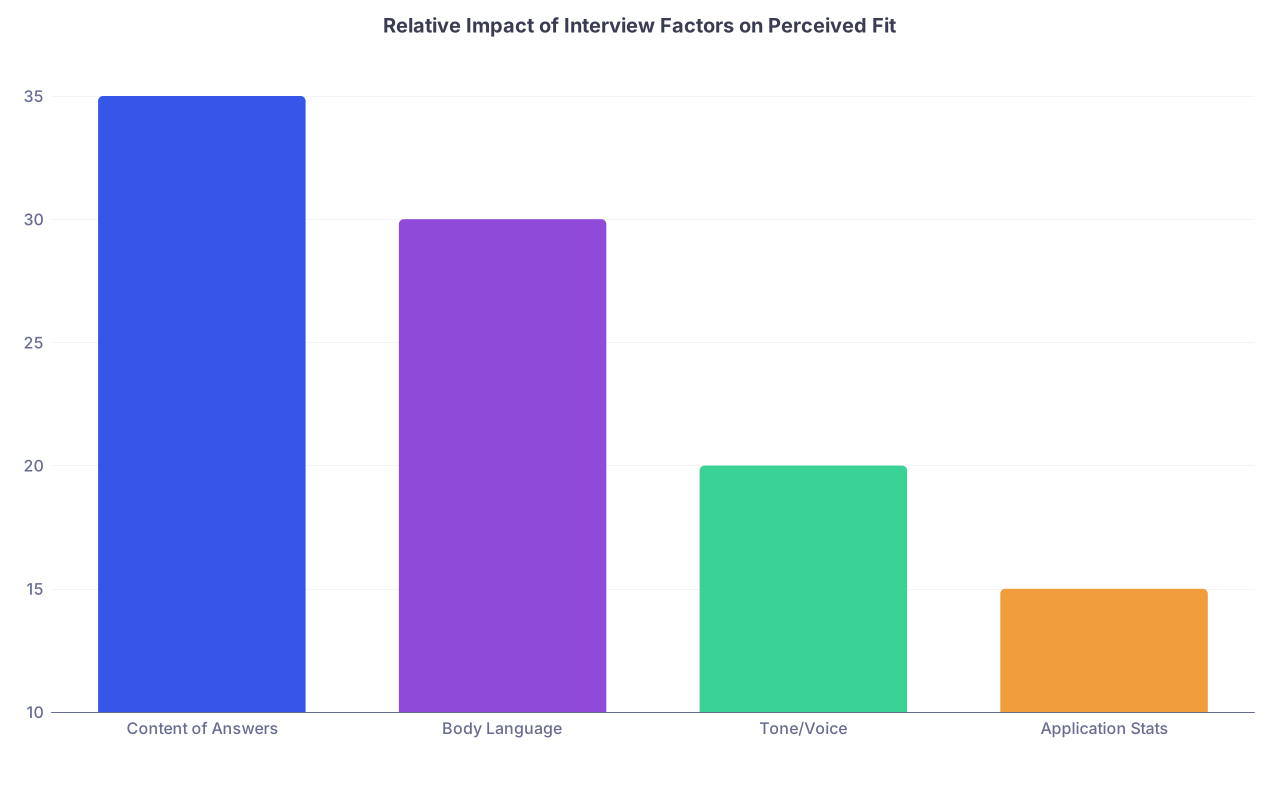
| Category | Value |
|---|---|
| Content of Answers | 35 |
| Body Language | 30 |
| Tone/Voice | 20 |
| Application Stats | 15 |
If your body language fights your story, the story loses. Every time.
Common internal monologue from a faculty interviewer after a mismatch between words and body:
- “She says she handled the conflict well, but she’s visibly irritated just talking about it.”
- “He’s describing a team-based solution, but he keeps leaning back and looking smug, like he did it all himself.”
- “She’s talking about owning her mistakes, but she keeps glancing at the door and fumbling with her hands. Is this rehearsed?”
You do not get to explain your way out of that gut feeling. Once they mark you as “concerning vibe,” that impression usually sticks.
Mistake #1: Defensive Posture While Claiming “I Handled Feedback Well”
This is one of the ugliest, and most common, contradictions I see.
You are asked:
“Tell me about a time you received critical feedback and how you responded.”
You give a strong STAR answer. You describe the feedback, reflect on it, show growth. On paper, perfect.
But your body is doing something else:
- Arms crossed tightly or hugging your body
- Shoulders raised and tense
- Jaw clenched when you mention the feedback
- Leaning back, distancing yourself when you talk about the person who criticized you
- A quick eye-roll you do not even realize slipped out
Your words say: “I’m receptive and coachable.”
Your body says: “I’m still mad and I think they were wrong.”
Guess which one the interviewer believes.
How to avoid this mistake
Uncross everything.
When you talk about criticism or conflict:- Hands resting lightly on your lap or table
- Feet flat or comfortably planted
- Arms open, not crossing or gripping
Watch the micro-reactions.
The dangerous ones:- Quick smirk or scoff when you mention the attending
- Tight sigh before you start describing their feedback
- Subtle eye roll when recalling something you “disagreed with”
Practice your answer in front of a camera and specifically watch your face when you say the word “feedback” or describe what they told you.
Match your posture to your words.
When you say things like:- “I realized they were right.” → Slight nod, softening of face
- “I took some time to reflect.” → Calm, steady eye contact, relaxed shoulders
- “I changed my approach after that.” → Small forward lean, engaged expression
If you cannot tell whether you look defensive, ask someone brutally honest. Not your mom.
Mistake #2: “I’m a Team Player” with Lone-Wolf Body Language
This one is subtle but deadly in residency interviews.
You say:
- “We worked as a team.”
- “I relied on my co-residents.”
- “We collaborated with nursing and RT.”
Good. But your body is communicating something else:
- You point to yourself repeatedly when describing actions: “I did… I decided… I told them…”
- Your head tilts back and chin lifts when you describe your role (classic mini “I’m above it” signal).
- When you say “we,” your body leans back or pulls away, almost like you are distancing from the team.
Programs are allergic to lone-wolf energy. Nobody wants the intern who thinks they are the only competent person in the room.
How to avoid this mistake
Use inclusive gestures.
When you say “we,” subtly open your hand, palm slightly up, as if gesturing to a group. It signals shared ownership.Watch your chin.
Slight upward tilt + smirk while you talk about how you “had to take charge” reads arrogant, not confident.Balance eye contact with “team” words.
When you talk about:- Nurses
- Co-residents
- Interdisciplinary teams
Do not stare the interviewer down like you are delivering a monologue. Allow small, natural glances away as if mentally seeing those people. It softens the ego edge.
I have heard faculty say after an interview:
“His story was all about ‘the team,’ but his whole demeanor was look-how-great-I-am. Hard pass.”
Do not be that story.
Mistake #3: Over-Rehearsed Answers with Robotic Delivery
You practiced your behavioral questions. Good. You memorized them. Bad.
Interviewers can smell over-rehearsal 10 seconds into your answer:
- Zero variation in tone, like you are reciting an essay
- Stiff posture, barely moving
- Eyes locked at a fixed point, or drifting upward like you are reading off an internal teleprompter
- No natural pauses to think; just a continuous script
This screams:
- “I prioritized performance over authenticity.”
- “I might crumble when something unexpected happens.”
- “I prepared to appear perfect, not to be honest.”

How to avoid this mistake
Aim for rehearsed structure, not rehearsed wording.
Know your:- Situation
- Task
- Actions
- Result
But do not script every sentence. If you can say your story the exact same way twice, it is over-rehearsed.
Build in real thinking moments.
Before answering, let yourself:- Take a brief breath
- Glance slightly down or to the side for a second
- Then look back up and start
That micro-pause makes you look thoughtful, not robotic.
Use small, natural gestures.
Light hand movements when you describe steps, a small nod when you emphasize a learning point. Not big theatrical gestures that look fake on camera.
Programs want someone who can think on their feet. Your body should show you are actually thinking, not performing.
Mistake #4: Uncontrolled Anxiety Signals During High-Stakes Stories
You will get questions about:
- Mistakes
- Near-misses
- Ethical dilemmas
- Angry patients
- Conflict with attendings or residents
These questions already trigger anxiety. But here is where people blow it: they let their physical anxiety overwhelm the story, so the interviewer is 80% focused on how nervous they look and 20% on the content.
Common tells:
- Foot tapping under the table (the vibration is obvious)
- Pen clicking or constant fidgeting with a water bottle
- Picking at nails or cuticles while describing a difficult case
- Breathing shallow and fast, voice slightly shaky
- Rapid eye movements, darting from interviewer to door to wall
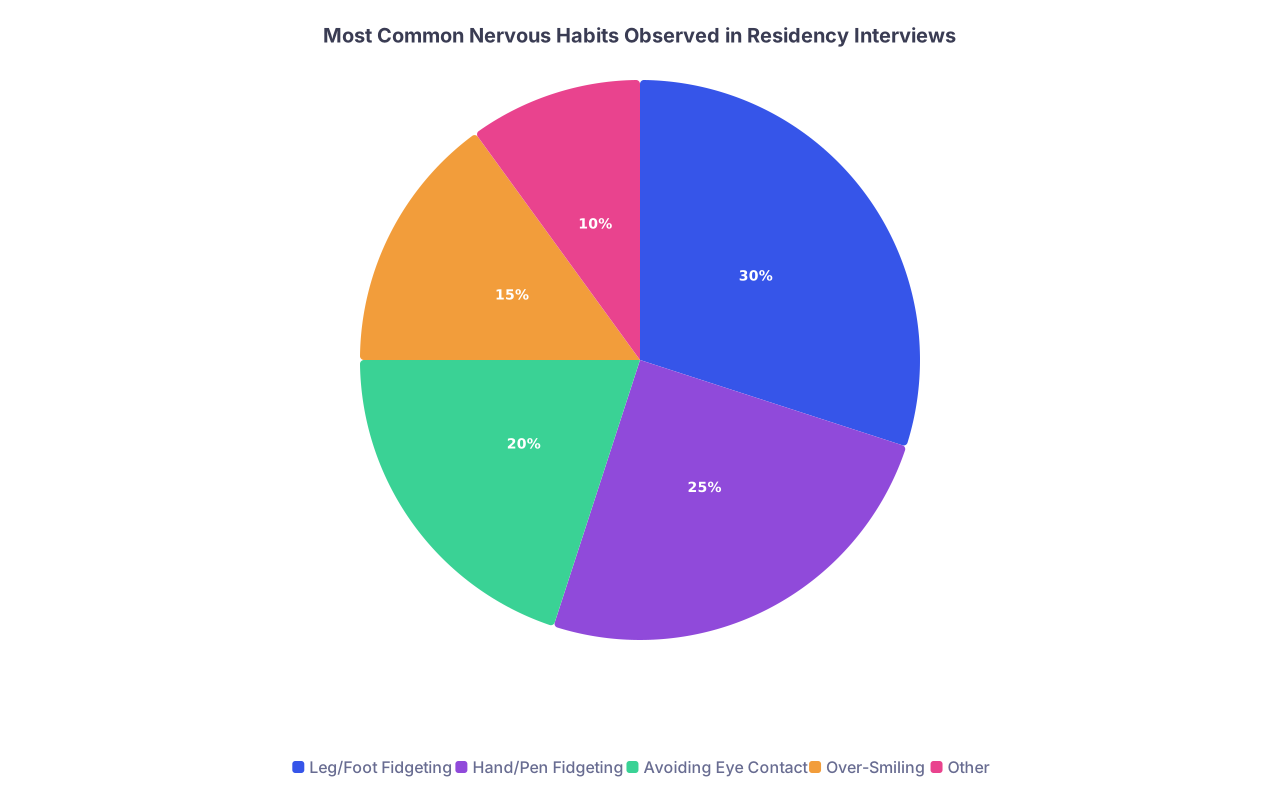
| Category | Value |
|---|---|
| Leg/Foot Fidgeting | 30 |
| Hand/Pen Fidgeting | 25 |
| Avoiding Eye Contact | 20 |
| Over-Smiling | 15 |
| Other | 10 |
The interpretation?
- “If this is how anxious they are just talking about a bad outcome, how will they be during the next real code?”
- “I do not trust this level of instability for a busy floor service.”
How to avoid this mistake
Control what your hands can access.
- Do not hold a pen.
- Do not hold your phone.
- Do not hold anything that can be clicked, spun, or squeezed.
Rest hands lightly:
- On your lap
- On the arms of the chair
- Lightly on the table if one is present
Practice slow exhale before tough stories.
Right before you answer a high-stakes question:- Inhale quietly through your nose
- Longer, slower exhale through your mouth
- Then answer
That one breath can flatten half of the visible shaking in your voice.
Anchor your feet.
Both feet flat on the ground or gently crossed at the ankles. No bouncing, no constant shifting.
I am not asking you to eliminate nerves. That is not realistic. The goal is: your anxiety does not take the spotlight away from your judgment and insight.
Mistake #5: Fake Confidence That Looks Like Arrogance
This one burns a lot of smart people.
They have been told: “Be confident.” So they overcorrect.
Body language of fake confidence:
- Leaning too far back in the chair, ankle-on-knee posture (terrible look for a candidate)
- Over-strong, unblinking eye contact that feels confrontational
- Smirking when describing how they “handled” something others could not
- Interrupting the interviewer, talking over them, or jumping in before they finish the question
- Excessive nodding, like they are impatiently waiting to perform their answer
| Behavior Area | Confident Cue | Arrogant / Off-Putting Cue |
|---|---|---|
| Posture | Upright, relaxed, slightly forward | Leaned back, sprawled, too casual |
| Eye Contact | Steady, with natural breaks | Staring, almost challenging |
| Facial Expression | Calm, engaged, slight smiles | Smirk, “knowing” or superior look |
| Gestures | Moderate, controlled hand movements | Wide, dominating, chopping gestures |
| Turn-Taking | Waits, listens, responds | Interrupts, rushes to speak |
Programs are not looking for swagger. They are looking for calm, teachable, durable people who can take a hit and keep functioning.
How to avoid this mistake
Sit like you are in a serious professional meeting, not at a bar.
- Both feet on the ground
- Slight lean forward when engaged
- Back in contact with the chair, but not slouched
Use “confident but soft” eye contact.
Look at the interviewer when:- They are asking the question
- You are making an important point
Allow natural brief glances away when you think or recall details. That reads as reflective, not weak.
Respect conversational space.
Let the interviewer fully finish their question. Count one beat in your head. Then answer.
Overcompensating for insecurity with alpha posturing is one of the fastest ways to get downgraded, especially in surgical and competitive programs that have seen way too many “hero complex” applicants.
Mistake #6: Expression–Content Mismatch on Emotional Stories
Behavioral questions often tap into emotional material:
- Difficult patient families
- End-of-life conversations
- Adverse outcomes
- Burnout and personal struggle
Programs watch closely: does your affect match the gravity of what you are describing?
Red flags:
- Smiling or laughing while describing a patient’s suffering or a serious error
- Flat, almost bored expression when telling a story that supposedly “changed you”
- Overdramatic facial reactions that feel like theater, not reality
- Tight, forced smile frozen through the whole interview, no matter what you are discussing

This is where interviewers silently write down: “Strange affect” or “Questionable emotional attunement.” That will not help you.
How to avoid this mistake
Let your face respond naturally – but not theatrically.
When you describe:- A dying patient → softer tone, more serious expression
- A breakthrough moment → slight, genuine smile
- A mistake you made → briefly somber, then shifting to focused when you discuss learning
Drop the “customer service” smile.
You are not at a hotel front desk. You do not need to smile through tragedy. That looks fake at best, unempathetic at worst.Use your voice to match the emotional tone.
- Lower volume slightly for serious reflections
- Slow down a bit when you talk about what you learned
- Avoid rapid, upbeat delivery when describing trauma or conflict
If your expression and your story do not match, they will not trust your insight, no matter how beautifully you phrase it.
Mistake #7: Zoom Body Language Disasters
If your residency interviews are virtual, nonverbal mistakes multiply. You are now framed in a little box that emphasizes every weird movement.
Common virtual-body-language killers:
- Camera too low, so you are looking down at the interviewer (unintentionally dominant, also unflattering)
- Constantly glancing at yourself in the corner instead of the camera
- Leaning so close that your face fills the screen
- Sitting so far back that you look like you are hiding
- Fidgeting with your mouse, trackpad, or chair arm—every micro-movement is amplified

| Step | Description |
|---|---|
| Step 1 | Before Interview |
| Step 2 | Adjust camera at eye level |
| Step 3 | Test framing: head & shoulders visible |
| Step 4 | Check lighting on face |
| Step 5 | Disable on-screen self-view if distracting |
| Step 6 | Place hands on desk or lap |
| Step 7 | Practice looking at camera, not screen |
How to avoid this mistake
Frame yourself correctly.
- Camera at eye level
- Head and upper torso visible
- No ceiling fan or bright window directly behind you
Look at the camera when speaking key lines.
Not constantly. But when you say:- “What I learned from that experience was…”
- “That situation shaped how I approach teamwork now…”
Shift your gaze briefly to the camera. It simulates eye contact.
Stabilize your environment.
- Chair that does not spin and tempt you to sway
- Hands resting in view or calmly in your lap
- Mouse/keyboard pushed slightly away during key questions
Virtual interviews exaggerate sloppiness. Fix it now, not the morning of.
Put It All Together: Practice the Right Way
Here is how to train your body language so it stops undermining your answers.

Record yourself answering at least 5 core behavioral questions:
- Conflict with a colleague
- Receiving critical feedback
- A time you made a mistake
- A leadership challenge
- Dealing with a difficult patient or family
Watch the video with a ruthless checklist:
- Do I cross my arms at any point?
- Do I fidget with anything?
- Do I smile at inappropriate times?
- Is my posture open and steady?
- Do I look over-rehearsed or robotic?
Get one harsh reviewer.
Not a cheerleader. Someone who will say:- “You look pissed when you talk about that attending.”
- “You’re smiling while describing a code blue. That feels weird.”
- “You’re nodding so much you look like a bobblehead.”
Fix one thing at a time.
Do not try to overhaul everything in a day. For each practice round, pick:- “Today I will keep my hands still.”
- “Today I will soften my expression in serious parts.”
- “Today I will avoid over-smiling.”
Re-record the same questions after adjustments.
Compare old vs new. If you cannot see a difference, you did not change enough.
FAQ: Body Language in Residency Behavioral Interviews
Can strong content compensate for bad body language?
Rarely. If your nonverbal cues completely contradict your story—defensive posture while claiming openness to feedback, or a smug tone while talking about “teamwork”—interviewers will mark that down as a concern. They may not consciously label it “body language,” but they will say things like “strange vibe,” “defensive,” or “not a team fit,” which absolutely harms your rank position.Is it better to be slightly stiff but controlled, or more animated and natural?
Slightly stiff but controlled is safer than wildly animated and uncontained, especially in conservative programs. But the ideal is controlled and natural: moderate gesturing, calm posture, varied but appropriate facial expression. If you are very animated by nature, channel it into clear gestures and stable posture, not restless fidgeting.How much eye contact is enough without being intense?
Use a simple rule: maintain eye contact for most of the question as they ask it, then 60–70% of the time while you answer. Let your eyes naturally shift away when you recall details or think. If you feel like you are staring, you probably are. Short breaks in gaze are normal and human; what matters is that you regularly come back to the interviewer, not stare at the floor or ceiling for entire answers.What if I naturally smile when I’m nervous—will that sink me?
It can hurt you if the smile shows up during stories about harm, error, conflict, or grief. You must practice this. Record yourself answering hard questions and consciously rehearse letting your face neutralize or show seriousness in those sections. A nervous smile in small doses is forgivable. A grin while describing a patient’s death is not.Do programs actually comment on body language in debriefs?
Yes, all the time, although they phrase it differently. You will hear: “Seemed guarded,” “Came off arrogant,” “Very anxious,” “Odd affect,” “Great energy,” “Easy to talk to.” All of that is shorthand for their read on your nonverbal presence. They may not analyze it formally, but they absolutely use it to decide whether they can see you surviving—and not poisoning—the team.
Open your camera right now and record yourself answering: “Tell me about a time you received critical feedback.” Watch it back and write down every nonverbal cue you would not want a program director to see. Then fix one of them before you record again.