

The worst thing you’re imagining about that failed course or exam? It’s probably not true.
Let me say that again because your brain won’t believe it on the first pass: one failed course or exam is not an automatic residency death sentence. What can hurt you is handling it badly in a behavioral question.
And that’s the part that has you spiraling, right? Not just “I failed,” but “What if they ask me about it and I freeze or sound incompetent or start rambling and they think I’m unsafe and then I don’t match and everyone was right and I should’ve…”.
Yeah. I know that loop.
This is about surviving that moment in the interview. The moment they raise an eyebrow, glance at your transcript or MSPE, and say:
“Tell me about a time you failed.”
Or worse.
“I see you failed [course/exam]. Can you walk me through what happened?”
Let’s build an answer that doesn’t crumble under pressure.
First: What Program Directors Actually Think About Your Failure
They are not shocked you’re human. They’re not sitting there like, “Wow, this person got less than a B once—into the trash they go.”
Program directors care way less about the failure itself and way more about what the failure predicts:
- Are you coachable?
- Do you learn from mistakes?
- Will you fall apart on a tough rotation?
- Do you blame everyone else?
- Do you hide problems until it’s too late?
They’re not playing “gotcha.” They’re screening for risk.
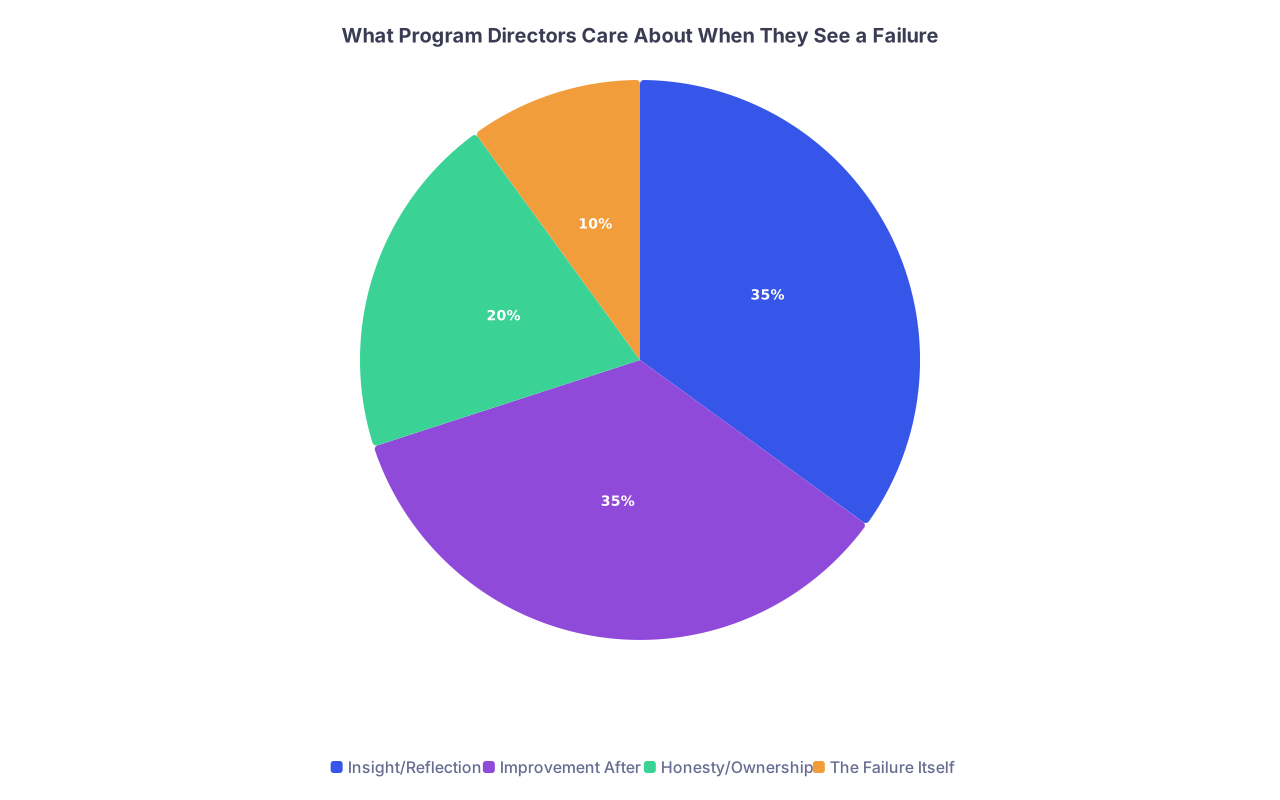
| Category | Value |
|---|---|
| Insight/Reflection | 35 |
| Improvement After | 35 |
| Honesty/Ownership | 20 |
| The Failure Itself | 10 |
So your job isn’t to convince them the failure didn’t matter. Your job is to show:
“I had a setback. I didn’t like it. I figured out what went wrong. I changed. And my later performance proves it.”
If you do that clearly, you’re okay. I’ve seen people with Step 1 fails, remediation, even repeating a year still match when they owned it and showed a coherent recovery story.
The people who get burned? The ones who:
- Get defensive (“the exam was unfair”)
- Minimize it (“it wasn’t a big deal” when it obviously was)
- Over-share and sound unstable
- Completely vague (“I just tried harder and it worked out”)
We’re going to avoid all of that.
Step 1: Decide What You’re Actually Going to Talk About
You probably have this fear: “Which failure do I pick? Do I have to talk about the worst one? What if they dig into others?”
Here’s the deal.
If they ask a generic behavioral question like “Tell me about a time you failed,” you can choose the story that:
- Has a clear beginning-middle-end
- Shows growth that’s easy to see
- Isn’t so emotionally raw that you’ll fall apart telling it
- Has decent outcomes afterward (higher score, good evals, etc.)
If they specifically reference the failed course or board exam that’s on your record, you don’t get to dodge it. That’s the one you talk about. But you can choose how detailed and how structured you are.
What you absolutely should not do: “Uh, yeah, I just… I was overwhelmed and then I failed and then I retook it.”
That’s how you sound like you haven’t processed anything.
Step 2: Use This Skeleton Answer (So You Don’t Ramble)
No, you don’t need 47 frameworks. You need one structure that your anxious brain can remember even with a dry mouth and a 150 bpm heart rate.
Here’s the skeleton:
- Quick context – What was the course/exam and when.
- What went wrong (specific and honest) – 2–3 concrete factors.
- What you did to fix it – What you changed behaviorally, not just “I worked harder.”
- Evidence it worked – Retake success, later rotations, improved scores, feedback.
- What you do differently now on the wards – How this makes you a safer/better resident.
That’s it. Short, structured, grounded.
Let’s plug it into an example.
Example: Failed Step 1 (Or Other Major Exam)
Your nightmare scenario. Let’s write it out.
Try something like this:
“During second year, I failed Step 1 on my first attempt. Going into it, I underestimated how much dedicated time I needed and overestimated how effective my passive studying was. I was doing a lot of watching videos and reading but not enough practice questions under test-like conditions.
Failing was a wake-up call. I met with my academic advisor and a learning specialist, reviewed my score breakdown, and shifted to a very structured plan: daily question blocks with full review, spaced repetition for weak subjects, and full-length practice exams every couple of weeks. I also took an extra four weeks of dedicated time and treated it like a full-time job.
On my second attempt, I passed with a score comfortably above the passing threshold. More importantly, those changes carried over to third year. I used the same question-heavy, feedback-focused approach on my clerkships, and my shelf scores and clinical evaluations reflected that improvement.
Now, when I face something high-stakes, I don’t rely on ‘I’ll just work harder.’ I build in practice under realistic conditions, ask for feedback early, and adjust before it’s too late. Failing Step 1 was painful, but it forced me to build a more reliable system that I still use.”
Notice what that does:
- You didn’t blame the test.
- You didn’t overshare and talk about your full emotional breakdown.
- You gave concrete behavior changes and concrete outcomes.
That’s what they want.

Example: Failed a Course or Clerkship
This one feels even more personal because it’s usually tied to clinical performance or professionalism. Your brain whispers: “They’ll think I’m unsafe. Or unprofessional. Or lazy.”
Again, structure saves you.
Something like:
“In my third year, I failed my internal medicine clerkship. I struggled early with time management and prioritizing tasks on a busy service, and I hesitated to ask for help because I didn’t want to look incompetent. That led to delays in my notes and I missed a couple of follow-up tasks, which rightfully raised concerns about reliability.
After failing, I met with the clerkship director to go through the feedback line by line. For the remediation rotation, I approached it very differently: I carried a written task list, checked in proactively with my senior about priorities, and set specific goals for each week. I also asked for mid-rotation feedback so I could correct things in real time rather than being surprised at the end.
On the repeat rotation, my evaluations reflected that change—I was consistently described as reliable, organized, and responsive to feedback, and I passed with solid comments. Since then, on other rotations, I’ve kept the same systems: written task lists, proactive communication, and scheduled check-ins with my team. It’s made me much more dependable, and I’m very aware now of how my organization directly affects patient care.”
This answers the unspoken question: “Will this happen on my service?”
You show them no, because you now have concrete systems that reduce risk.
The Hard Part: What Do You Admit, What Do You Hold Back?
You’re probably wrestling with how honest to be.
“How much do I say? Do I mention mental health? Family stuff? Burnout? The breakup? The depression diagnosis?”
Here’s my rule from watching a lot of people overshare and regret it:
- You can mention stressors.
- You should avoid making the stressor the only explanation.
- You should not sound like you’re barely holding it together right now.
You can say:
“I was juggling a family health crisis at the time, and I tried to handle it without adjusting my schedule or asking for support. That contributed to me falling behind.”
Then pivot to what you changed going forward.
Be very careful about framing:
- Saying “I was depressed and didn’t get treatment” without clearly emphasizing that you’re now stable, treated, and functioning well? That will scare them.
- Saying “I learned to seek help earlier, I’m now in regular care, and my performance since then reflects that” is much stronger.
You don’t owe them your entire psychiatric history. You do owe them enough reassurance that similar failures aren’t just waiting to happen again.
What If They Keep Probing or Sound Skeptical?
You’re scared of this: you give your nice rehearsed answer and they say, “But why did you really fail?” or “Are you sure this won’t happen in residency?”
Here’s the move: don’t get defensive. Stay calm, stay factual, repeat your core points.
For example:
“That’s a fair question. The main issues were how I studied and avoiding feedback until it was too late. I’ve changed both. Since then, I’ve passed [Step 2 / all subsequent clerkships] on the first attempt and consistently scored [above X / received strong evaluations]. I’m confident in the systems I use now because they’ve worked across multiple settings.”
Or:
“I understand the concern. The failure forced me to build structure around time management and communication. On my later rotations, including [sub-I / ICU / acting internship], I had positive feedback specifically on reliability and follow-through. I’m very aware that residency raises the stakes, which is why I’ve kept those habits non-negotiable.”
You’re not trying to win an argument. You’re just calmly pointing back to data that you’ve changed.

Practice Without Sounding Over-Rehearsed
Another fear: you practice your answer, and now you’re terrified you’ll sound robotic and fake.
This is where you tweak how you practice.
Don’t just write a script and memorize word-for-word. That’s how your mind blanks and you panic.
Instead:
Write down 3–4 anchor phrases you want to hit. For example:
- “Underestimated how much time I needed”
- “Shifted to question-based studying”
- “Met with advisor and learning specialist”
- “Improved scores and clinical performance after”
Practice out loud, different each time, but always hitting those anchors.
Record yourself once or twice. You’ll hate watching it, but you’ll instantly notice where you sound vague, defensive, or overly dramatic.
And yes, you’ll feel cringey the first few times. That’s normal. Better to cringe at home than in front of a PD.
Red Flags You Need to Fix in Your Answer (Before You Say It Live)
Watch out for these phrases when you rehearse:
“Honestly, I just got unlucky.”
No. You don’t want your performance to sound random.“The exam was really unfair.”
Even if it was, this sounds like blame.“I don’t really know what happened.”
Then why should they trust it won’t happen again?“I just studied harder the next time.”
Empty. What specifically changed?
Replace with specifics:
- “I was relying on rereading instead of doing questions.”
- “I wasn’t asking for feedback until grades were final.”
- “I didn’t have a daily schedule; I just reacted to things.”
Specific = believable. Vague = concerning.
Quick Reality Check: Can One Failure Tank Your Match?
Yes, a big red flag can hurt. But it’s not usually one thing; it’s the pattern.
What I’ve actually seen sink people is:
- Failure + no improvement afterward
- Failure + terrible explanation + defensiveness
- Failure + weak letters + mediocre Step 2 + unfocused story
Not:
- “I failed once, learned from it, then consistently did better and can talk about it like an adult.”
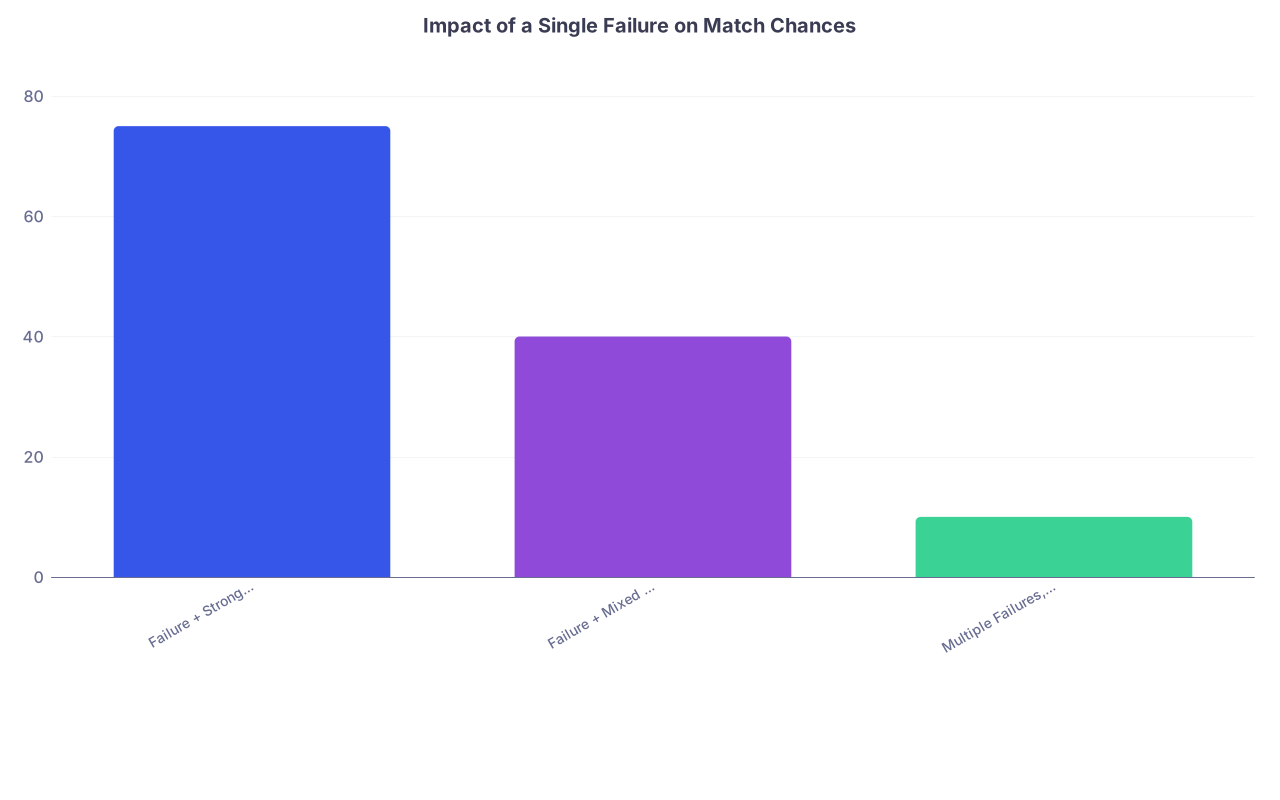
| Category | Value |
|---|---|
| Failure + Strong Recovery | 75 |
| Failure + Mixed Recovery | 40 |
| Multiple Failures, Weak Recovery | 10 |
(Those percentages are illustrative, but the pattern holds: recovery matters way more than the event itself.)
Your anxiety will tell you, “Everyone else is spotless; I’m doomed.” That’s not how it looks from the PD side. Many residents sitting on the other side of the table have their own scars—failed tests, rough clerkships, remediation. They just don’t talk about it on Instagram.
Turning the Story Toward Strength (Without Sounding Fake)
You’re allowed—actually, you’re expected—to turn the narrative toward what this did for you.
The trick is: don’t do the cheesy, “Failing Step 1 was the best thing that ever happened to me” nonsense. No one believes that.
Try something like:
“I wouldn’t choose to repeat that experience, but it forced me to build habits I’m honestly grateful for now.”
That’s believable. You acknowledge the pain, but you also show you didn’t just sit in it.
And whenever you can, tie it back to residency:
- Better time management → safer handoffs
- Better studying system → reliable board performance
- Asking for feedback early → fewer surprises, better team player
You want them thinking, “Okay, they’ve been bruised, but they’re self-aware and trending up.”

| Step | Description |
|---|---|
| Step 1 | Failure: Course or Exam |
| Step 2 | Reflection: What Went Wrong |
| Step 3 | Concrete Changes: Study, Time, Feedback |
| Step 4 | Improved Performance: Scores & Evals |
| Step 5 | Clear, Structured Interview Story |
| Step 6 | Program Director Sees Growth, Not Risk |
FAQ (Exactly 5 Questions)
1. Do I have to bring up my failure if they don’t ask?
If it’s a major, obvious red flag (failed Step, repeated year, failed core clerkship), it’s usually better to address it briefly in your application (personal statement or MSPE addendum) so it’s not a surprise. In the interview, you don’t need to force it into every conversation, but if they open the door with any “failure” question, use that story. Hiding it feels worse than calmly owning it.
2. What if I cry or get emotional when I talk about it?
You’re human. A little emotion is fine. What worries interviewers is when someone seems unable to regain composure. Practice the story enough that the sharpest edge is gone. If you feel tears coming, pause, take a breath, and say, “Sorry, that was a tough period, but I’m happy to talk about what I learned from it.” That alone shows emotional regulation.
3. My failure was partly due to mental health—do I say that?
You can, but be strategic. Briefly acknowledge it, clearly state that you sought and continue appropriate help, and point to stable, improved performance since then. Avoid turning the whole answer into a detailed psychiatric disclosure. The key is: are you stable and functioning now, and does your record support that?
4. What if I still feel ashamed and can’t see any ‘growth’?
You don’t have to feel at peace with it to describe what changed. Go look at your behavior before vs after: Did you start using question banks differently? Meeting with attendings more? Planning your weeks? Those changes are growth even if your brain still calls you a failure at 2 a.m. Your emotions don’t erase the evidence of improvement.
5. Is it better to choose a smaller failure so I don’t scare them?
For generic “failure” questions, yes—you don’t need to volunteer the nuclear story if they didn’t see it or ask about it. But if the big failure is in your transcript or MSPE, and they clearly know about it, dodging will make you look evasive. In that case, talk about the real thing, with structure, honesty, and clear evidence that you’ve moved forward.
Key points:
Your failed course or exam isn’t what kills you—it’s a sloppy, defensive, or vague explanation. Build one clear story: what went wrong, what you changed, and how your later performance proves it. And remember: they’re not expecting perfection. They’re checking whether you’re the kind of person who can fall down once and still be someone they’d trust on call at 3 a.m.


