
Your mind going blank on a behavioral question is not the disaster you think it is.
Let me just say it out loud, because it’s probably already screaming in your head: What if they ask me, “Tell me about a time you failed,” and I just… stare? No clever story, no neat framework, just emptiness and panic and the sound of fluorescent lights buzzing.
I’ve seen this happen. I’ve done this. And no, the world didn’t end and the interviewer didn’t call every other program to blacklist us forever.
This article is basically for that moment—the absolute worst-case scenario in your head: you’re in a residency interview, they hit you with a behavioral question, and your brain responds with the Windows blue screen of death.
Let’s walk through real-time rescue moves you can actually use during the interview. Not theoretical. Not perfect. Just what will keep you from crashing and burning.
First: What “Blank” Really Looks Like (vs What You Fear)
Here’s the annoying truth: what it feels like in your head and what it looks like to them are two different planets.
What you fear it looks like:
- You: wide-eyed, sweating, 20 seconds of dead silence
- Them: quietly writing “UNPREPARED, ANXIOUS, DO NOT MATCH” in all caps
What it usually actually looks like:
- You: take a breath, look up, pause for maybe 5–7 seconds
- Them: “Okay, they’re thinking. Good.”
Most attendings and PDs are used to people taking a moment. They’re not robots who expect instant TED Talk answers. Silence isn’t the enemy. Panic is.
When your mind goes blank, the problem isn’t that you don’t have any experiences. It’s that your working memory gets overloaded by:
- fear of judgment
- “pick the perfect story” pressure
- time pressure
- self-criticism (“you’re blowing it, say something, anything”)
So our goal in that moment: buy time, lower pressure, and trigger your memory. Not to magically become articulate and relaxed. Just to function.
Step 1: Buy 10–15 Seconds Without Looking Lost
You’re going to need a tiny runway. But you can’t just sit there silently, staring, waiting for Jesus or your USMLE scores to save you.
Use one of these “stall but look composed” phrases. Practice them so they come out automatically:
- “That’s a really good question, let me think for a moment.”
- “I want to choose an example that really reflects how I’ve grown—give me just a second.”
- “I’m thinking through a couple of situations where I handled something similar.”
They sound minor. They’re not. They do three important things:
- Signal to them: I’m reflective, not frozen.
- Signal to yourself: I’m allowed to pause.
- Give your brain explicit permission to search for a story instead of panicking about time.
You can even repeat the question back as a bridge:
- “So you’re asking about a time I had a conflict with a colleague and how I handled it…”
That buys time and narrows your brain’s search field.
Step 2: Use the “Default Backup Story” Strategy
The biggest reason your mind goes blank: you’re trying to pick from 30 possible experiences in 2 seconds.
So before interviews, you should have 3–5 “anchor” stories that you can twist and repurpose. But let’s say you’re already in the interview and you didn’t prep that well or you still blanked.
Real-time fix: mentally grab any safe, clinic-related story you remember clearly. Then force it into the question using this structure:
- Brief context (1–2 sentences)
- Your role
- What you did
- What you learned/what changed
Even if it’s not perfectly on-theme, a solid, honest, well-structured answer will score better than silence or a rambling mess.
For example, question:
“Tell me about a time you had to deal with a difficult team member.”
Your brain: “I can’t think of ‘difficult team member,’ I’m doomed.”
But you do remember:
- that one chaotic cross-cover night with nursing, or
- that time you had to clarify a miscommunication with a senior, or
- a group project in med school where no one pulled their weight.
Use something like:
“I’m thinking of a situation on my IM rotation where there was a miscommunication between me and the senior about task priorities….”
Was the person truly “difficult”? Maybe not. But it involves interpersonal friction and how you handled it. That’s what they’re measuring.
Stop waiting for the perfect story. You don’t have time for perfection in an interview chair.
Step 3: When You Really Have No Story (Don’t Lie, Pivot Smartly)
There will be a question or two where you genuinely think: “I don’t have that.”
Example:
- “Tell me about a time you led a large team.”
- “Describe a time you reported a colleague for unprofessional behavior.”
If you truly haven’t done it, don’t invent some dramatic whistleblower story. They can feel it. And lying under pressure is how you end up contradicting yourself 5 questions later.
Here’s how to handle it instead:
Acknowledge honestly but briefly:
- “I haven’t led a large team yet in the sense of formally being in charge of many people…”
Pivot to the closest real experience:
- “…but in medical school, I did lead our small quality improvement group on my surgery rotation where we worked with nursing and residents on improving post-op checklists.”
Then answer the question through that lens using structure (STAR or something similar).
You’re basically saying:
“I don’t have the giant version of that, but here’s the smaller version I do have and how I handled it.”
That reads as honest and self-aware, not underqualified.
Step 4: Use the Simplest Possible Structure (So Your Brain Doesn’t Overheat)
Behavioral answer frameworks like STAR are great—until you’re panicking and forget what the letters stand for.
In a blank-out moment, don’t chase a fancy structure. Use this ultra-simple one-word mental checklist:
Problem → Action → Result → Reflection
Literally ask yourself, in order:
- What was the problem?
- What did I specifically do?
- What happened?
- What did I learn / what would I do differently?
You can even say it out loud in a natural way:
“The situation was…”
“So what I did was…”
“Because of that…”
“Looking back, what I took away from that was…”
That keeps your answer from turning into a rambling autobiography. And structure calms your own anxiety because you know when you’re “done.”
Step 5: If You Lose the Thread Mid-Answer
Honestly, this is the one I personally panic about more than going blank at the start.
You start talking. Halfway through, you realize you’re off track, repeating yourself, or you’ve forgotten the actual question they asked.
Here’s how to not implode:
- Stop mid-sentence if you have to.
- Smile slightly, own it:
- “I’m going a bit off track—let me bring it back to your question.”
- Re-state the question in a short version:
- “You asked about a time I had to adapt quickly…”
- Then jump straight to the Result → Reflection part:
- “…so in that situation, the key outcome was…”
- “…and what I learned from that was…”
Interviewers actually like when you self-correct. It shows self-awareness and the ability to course-correct in real time—exactly what they need in residents at 3 a.m. on call.
Step 6: Use Body Language That Hides the Panic
You will feel panicked. That doesn’t mean you have to look panicked.
Quick physical hacks when your brain goes blank:
- Don’t stare at the floor. Look slightly up or to the side briefly while thinking, then return eye contact.
- Unclench your hands. Rest them lightly on your lap or table. White-knuckle fists scream “I’m dying.”
- Controlled breath while you’re “thinking.” In through your nose for 4 seconds, out for 4 seconds while you’re “choosing an example.” They’ll just think you’re thoughtful.
- Micro-nod while you repeat back the question. Signals: “I’m processing, not paralyzed.”
They’re not grading you on being a flawless public speaker. They want to know if you can stay functional under pressure, which is literally what you’re demonstrating by pulling yourself together after blanking.
Step 7: Pre-Load a Few “Universal” Stories (So You Have a Safety Net)
Yeah, the article is about real-time rescue, but if you’re this anxious (like I am), you’ll feel better with a parachute.
Before interview day, build 4–5 “Swiss Army knife” stories you know cold. Things like:
- A difficult patient or family and how you handled it
- A time you made a mistake or almost made one and what changed after
- A conflict or miscommunication with a peer/nurse/senior
- A leadership role (formal or informal)
- A time you were overwhelmed and had to prioritize or ask for help
Those 5 can be stretched to answer:
- conflict questions
- failure questions
- leadership questions
- professionalism questions
- communication questions
- resilience/burnout questions
So even if your brain freezes, you can mentally grab one of your “known” stories and bend it.
Step 8: How Bad Is It Really If You Blank Once?
Here’s the doomsday thinking most of us have: “If I blank once, I’m done at this program.”
Reality: One slightly awkward behavioral answer in a 20–30 minute interview is:
- Very normal
- Very forgettable
- Almost never fatal if the rest of the conversation is fine
- Repeatedly giving super vague, unstructured answers
- Blaming others in every story
- No reflection or growth in any example
- Obvious dishonesty or wild exaggeration
- Coming off defensive when you’re asked a harder question
A single:
“Let me think for a moment… okay, here’s one example that comes to mind…”
is not going to tank your chances.
Want something concrete?
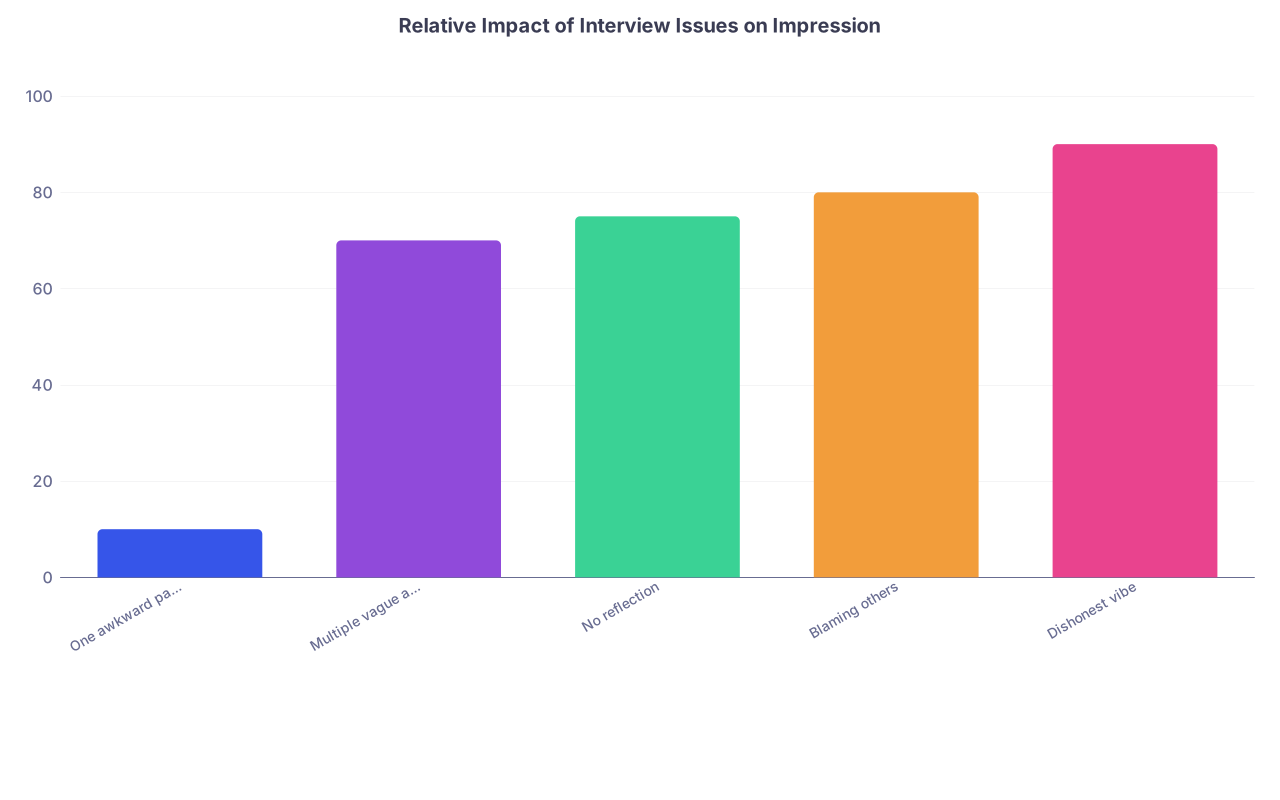
| Category | Value |
|---|---|
| One awkward pause | 10 |
| Multiple vague answers | 70 |
| No reflection | 75 |
| Blaming others | 80 |
| Dishonest vibe | 90 |
The anxiety voice in your head acts like that first bar is a 100. It’s not.
Step 9: Practice the Worst-Case Scenario On Purpose
This sounds twisted, but it works.
When you’re mock-interviewing with a friend, mentor, or even just talking to a wall:
- Have them ask you random behavioral questions from a list.
- Pick one where you genuinely don’t have a clear story.
- Then practice blanking gracefully:
- Buy time
- Acknowledge briefly
- Pivot to the closest experience
- Use Problem–Action–Result–Reflection
You’re basically inoculating your brain: “Oh yeah, we’ve been here before. We survived.”
Quick Decision Flow in the Hot Seat
Here’s how your brain can silently run a mini-algorithm when you get hit with a behavioral question and freeze:

| Step | Description |
|---|---|
| Step 1 | Behavioral Question |
| Step 2 | Repeat question & buy time |
| Step 3 | Use Problem-Action-Result-Reflection |
| Step 4 | Acknowledge briefly & pivot to closest example |
| Step 5 | Admit limited experience & share relevant smaller example or what youd do |
| Step 6 | Close with what you learned |
| Step 7 | Have clear matching story? |
| Step 8 | Have similar/related story? |
You’re not trying to impress them with a superhero story. You’re trying to show that when you’re under pressure and not sure what to do—you still respond thoughtfully, honestly, and with some structure.
Which is exactly what residency is.
One More Thing: The Self-Talk That Won’t Help You
Stuff like:
- “Don’t screw this up.”
- “If you blank they’ll hate you.”
- “You’re not as prepared as everyone else here.”
That self-talk will create the blank you’re afraid of.
Try replacing it with brutally practical lines:
- “I just need one decent story, not the best story.”
- “I can always buy 10 seconds.”
- “They care more about how I think than having a dramatic example.”
You’re not trying to be confident. You’re trying to be functional. That’s enough.

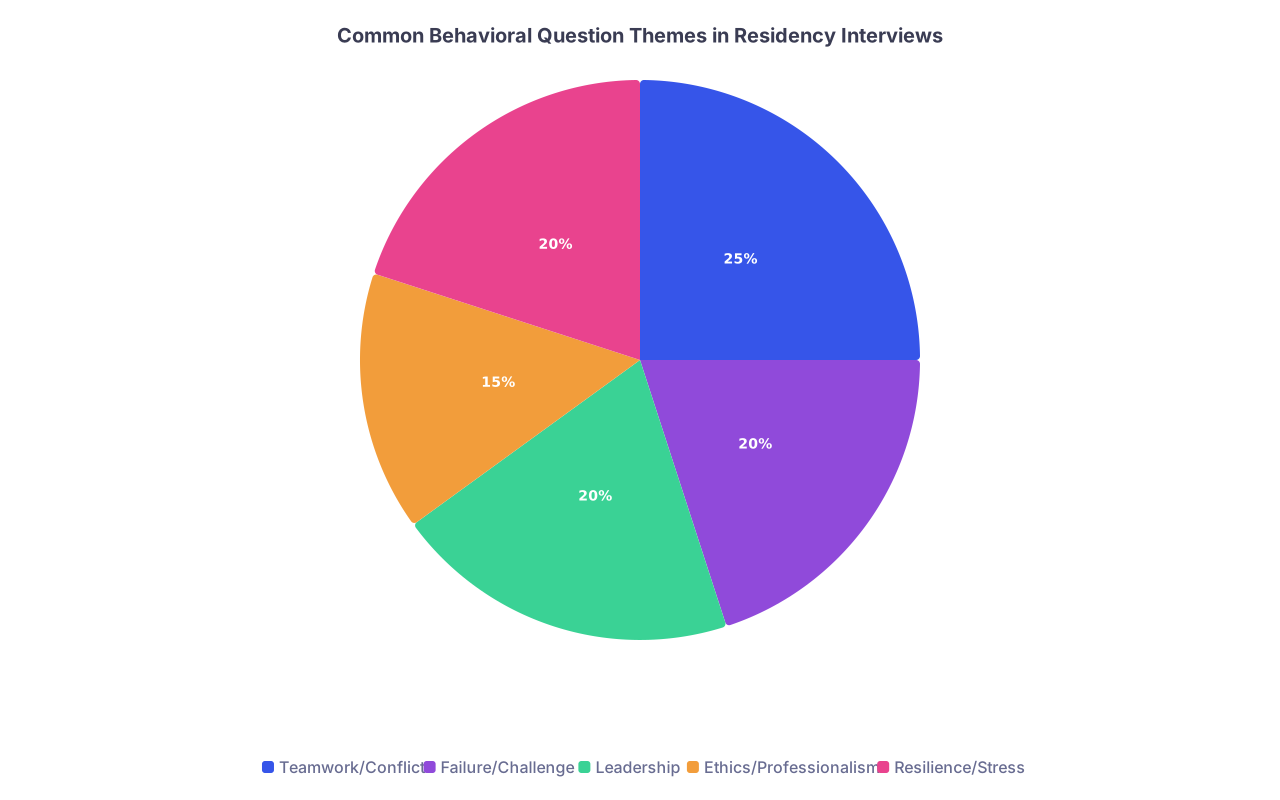
| Category | Value |
|---|---|
| Teamwork/Conflict | 25 |
| Failure/Challenge | 20 |
| Leadership | 20 |
| Ethics/Professionalism | 15 |
| Resilience/Stress | 20 |
| Step | What You Do | Example Phrase |
|---|---|---|
| 1 | Buy time | "Let me think for a moment." |
| 2 | Anchor a story | "One example that comes to mind is..." |
| 3 | Use structure | "The situation was… What I did was…" |
| 4 | Reflect | "What I learned from that was…" |


| Stage | Activity | Score |
|---|---|---|
| Before | Wake up anxious | 4 |
| Before | Travel to site | 3 |
| During | First question | 4 |
| During | Behavioral question | 2 |
| During | Recover and continue | 3 |
| After | Replay answers in head | 2 |
| After | Realize it wasn't catastrophic | 4 |

FAQ (Exactly 5 Questions)
1. If my mind goes blank on one behavioral question, can that alone ruin my chances at a program?
Almost never. Interviewers expect some nerves. One awkward pause or slightly clunky answer is not a death sentence. They’re looking at the overall pattern: Are you professional? Reasonable? Reflective? If most of the conversation goes fine and you show insight and basic communication skills, a single “blank” moment usually won’t matter.
2. What if I pause for too long—like 15–20 seconds? Is that weird?
It feels long to you, but it’s rarely as long as you think. As long as you frame it verbally (“Let me think for a second, I want to pick a good example”), it reads as thoughtfulness, not incapacity. That’s much better than panicking and blurting out a confusing or irrelevant story.
3. Should I apologize if I blank or lose my train of thought?
A brief, light acknowledgment is fine: “Sorry, I lost my train of thought for a second—let me bring it back to your question.” Then move on. Don’t over-apologize or dwell on it. They care more about your recovery than the slip itself.
4. Is it okay to use non-medical examples if I can’t think of a clinical one?
Yes, especially early in training. It’s totally fine to pull from things like tutoring, coaching, leadership in a student org, or a job before med school—as long as the story clearly connects to the skill they’re asking about (conflict resolution, leadership, professionalism, etc.). If you can choose between a clinical and non-clinical example, go clinical. But don’t freeze just because you can’t.
5. How do I stop obsessing about a behavioral question I think I messed up after the interview?
You won’t like this, but: you can’t fix it afterward. And you’re probably judging it way more harshly than they are. The only productive move is to turn it into prep: write down the question, decide what story you wish you’d told, and shape that into a strong, structured answer for the next interview. That way your “failure” actually improves your odds later, which is the only part you still control.
Key takeaways:
- Going blank isn’t fatal if you buy time, pick any reasonable story, and use simple structure.
- Honesty plus a smaller but related example beats lying or freezing every single time.
- Interviewers are judging your recovery and reflection way more than that one awkward silence you can’t stop replaying.