
You’re not going to tank your entire career because you cried in one residency interview.
Let me just rip that band-aid off first, because I know exactly where your brain is going: “If I tear up once, they’ll blacklist me forever, word will spread, I’ll never match, everyone will know I’m too emotional to be a doctor.”
I’ve had that whole panic spiral at 2 a.m. too. You’re not the only one.
This is about that specific nightmare scenario: you’re in a residency interview, they hit you with a brutal behavioral question—something about a bad outcome, an error, a family death, a time you were mistreated—and your throat closes. Your eyes sting. You feel it coming.
And your brain says: “If I cry, it’s over.”
Let’s talk about what actually happens, what programs really think, and what you can do if you do cry. Because you might. And that doesn’t automatically mean disaster.
The Truth: Crying Is Not the Red Flag You Think It Is
Residency interviews are not OSCEs. They’re not grading you on whether your affect is perfectly flat and robotic.
I’ve been in rooms where:
- A candidate choked up talking about losing a patient they’d followed for months.
- Someone’s voice cracked describing burnout and almost quitting medicine.
- A student teared up describing abuse they’d witnessed from a senior.
And no, the panel didn’t go, “Well. Obviously not fit for medicine. Next.”
They usually do something like:
- Hand a tissue.
- Say, “Take your time.”
- Wait.
- Move on or gently reframe.
Are there programs or interviewers who are emotionally clueless, or even judgmental? Yes. I’d be lying if I said every single human in this process is kind and trauma-informed.
But the core reality: modest, context-appropriate emotion is not a red flag. It often reads as human, reflective, and connected to your experiences. Especially when:
- You regain composure.
- You can still answer the question.
- Your response shows insight, not meltdown.
The real problem isn’t “I cried.”
The real problem is “I completely lost control and couldn’t continue, and there was no recovery.”
And even that isn’t an automatic Match death sentence. It’s just…not ideal.
The Worst-Case Scenario You’re Imagining (and What Actually Happens)
Here’s the horror movie version playing in your head:
They ask: “Tell me about a time you made a mistake that harmed a patient.”
You think of that case. The one that still wakes you up at night.
You start explaining. Your throat tightens.
You start crying. Not just a little. Full tears.
Interviewer looks horrified. Makes a note. Rejects you on the spot. Tells every other PD in the country. You go unmatched. Your medical career ends.
Now, here’s the much more boring, reality-based version of what typically happens:
You tear up. You pause.
They say, “It’s okay—take your time.”
You take a breath, maybe dab your eyes, apologize once.
You either:
- Continue, a bit emotional but coherent, or
- Say, “I realize this story is still very emotionally charged for me—can I share a related example instead?”
You get through it. You finish the interview.
They walk away thinking, “That was a heavy story, but they were honest and reflective.”
And then they move on to reviewing 70 other applicants.
That’s it. No blacklist. No secret PD group chat where your name goes on some Emotional Do Not Match list. Programs have seen applicants cry before. You are not the first.
Is crying risky? Slightly. Mainly if it looks like you have zero emotional regulation under stress. But having emotions? That’s normal. Healthy, even.
Why Behavioral Questions Trigger Tears So Easily
You’re not crying because you’re weak. You’re crying because behavioral questions are sometimes brutal.
“Tell me about a time you failed.”
“Describe a conflict with a superior.”
“Tell me about the most difficult patient or family you’ve dealt with.”
“Describe a time you felt morally distressed.”
They’re literally asking you to reopen wounds.
You’re:
- Sleep-deprived from travel and interview season.
- Burned out from clinical rotations.
- Terrified because this feels like your one shot at a real life.
- Sitting in front of a stranger with power over your future, dredging up your worst moments.
Of course your body reacts.
Also, medicine is trauma-adjacent by default. You’ve probably:
- Seen patients die.
- Been yelled at, belittled, or humiliated.
- Watched unfair things happen and been powerless to fix them.
- Made mistakes and carried the guilt around.
You built enough walls to function on the wards. Then someone in a quiet, polished conference room says, “So, tell me about that time.”
The wall cracks. There’s nothing wrong with you.
The question for residency is not “Do you have emotions?”
It’s “Can you still function and reflect when those emotions show up?”
What To Do In the Moment If You Start Crying
Let’s say your worst-case happens. You’re in the chair, you feel it building. What now?
Here’s the move set I’d want in my back pocket.
1. Buy yourself a tiny pause
You’re allowed to slow down. You can say something like:
- “That’s a really important experience for me, so I just want to think for a second.”
- “Give me just a moment to collect my thoughts.”
Then actually pause. Breathe. Don’t rush to fill the silence.
2. If tears come, normalize and contain it
If you feel tears, don’t pretend nothing is happening. That reads more awkward.
Something short and calm works:
- “I’m sorry, this was a really meaningful situation for me.”
- “I realize I’m getting emotional—this was a difficult experience, but I can continue.”
Then keep your voice steady as best you can and go on. One brief acknowledgment is enough. Don’t spiral into, “I’m so sorry, I don’t usually, I promise I’m fine, I swear I’m not always like this…”
3. Shift focus from the pain to the insight
They didn’t ask you to bleed emotionally. They asked to see how you think and grow from hard moments.
Once you’ve shared enough of the story to set context, move hard toward:
- What you learned
- How you acted afterward
- How you’ve changed as a physician-in-training
That transition might sound like:
- “What I took away from that experience was…”
- “Since then, I’ve made a point to…”
- “Looking back now, I see that…”
The more you move into reflection, the safer it gets emotionally. You’re not in the trauma; you’re analyzing it.
4. If it’s truly too much, you’re allowed to pivot
If you feel yourself really losing it—like you can’t speak, you’re shaking—you don’t have to white-knuckle your way through that specific story.
You can say:
- “I’m realizing this example is still very raw for me. Would it be okay if I shared a different situation that also challenged me, but that I can talk through more clearly?”
Most interviewers will say yes. They’re not trying to break you. They just want to understand your behavior in tough situations.
How to Choose Stories That Won’t Break You in Half
A lot of people end up crying in behavioral interviews because they chose the most dramatic, painful story they could think of. Because somewhere they read that “high-impact, emotional stories are more memorable.”
No. Stop. You’re not auditioning for a tragedy.
The best behavioral answers are:
- Honest
- Emotional enough that you clearly cared
- But not so raw that you lose control
If talking about your first patient death makes your stomach drop and your eyes sting every single time—even with friends—maybe that’s not your interview example this year.
Aim for:
- Situations that were challenging but processed
- Conflicts that were hard but resolved
- Failures you’ve had time to integrate and learn from
If you can tell the story to a friend or mentor without tearing up, that’s a good sign it’s safe-ish for an interview.
You don’t get bonus points for choosing the most traumatic event of your training. You get points for clarity, reflection, and maturity. That’s it.
How Programs Actually See Emotional Applicants
Let me be blunt: programs don’t want robots. They also don’t want residents who fall apart with every stressor.
Here’s the kind of emotional expression that usually lands well in an interview:
- You show that you care deeply about patients.
- You acknowledge things are heavy sometimes.
- You have normal, human-level reactions (sadness, frustration, concern).
- You can still think and act appropriately under stress.
- You can talk about hard things with some perspective.
Here’s what raises eyebrows:
- You appear unable to regain control once you’re triggered.
- You seem consumed by unresolved guilt or trauma.
- Your answer becomes about your pain, not the patient, team, or learning.
- You can’t answer the actual question because you’re stuck in the emotion.
Does one emotional moment equal “unfit”? No. People have bad days, tough weeks, grief anniversaries. Most faculty know that. Some of them have cried with their patients.
The question in their minds is more like: “If something intense happens during intern year at 3 a.m., will this person be able to function, ask for help, and reflect? Or will they completely shut down?”
If you cry and still deliver a coherent, thoughtful answer? You’ve actually just demonstrated resilience in real time.
Quiet Prep You Can Do Now So You Don’t Shatter Later
If this is keeping you up at night, don’t just sit in the anxiety. Control what you can.
A few genuinely useful things (that I’ve seen help):
Test-drive your painful stories out loud
In the shower, to your phone voice notes, with a trusted friend, or with a mentor. Notice which ones make your throat close. Those are probably not good interview stories this year.Pre-script your opening lines for tough topics
Something like: “This was a difficult experience, but I’m grateful for what it taught me about X.”
Having that line ready creates a bit of emotional structure before you dive in.Practice the “pause and breathe” move
Literally rehearse:
“That’s a really important question—let me think for a second.”
Then breathe. People underestimate how much calmer they are when they’ve said those words out loud a few times.Name your red-button topics
If there are certain questions that hit too close to home (family death from the same disease, personal trauma, etc.), plan alternative angles:- “I’ve had some personal experiences with that which I’m still processing, but I can share a professional situation that challenged me in a similar way.”
You don’t have to bleed every wound for an interview to go well.
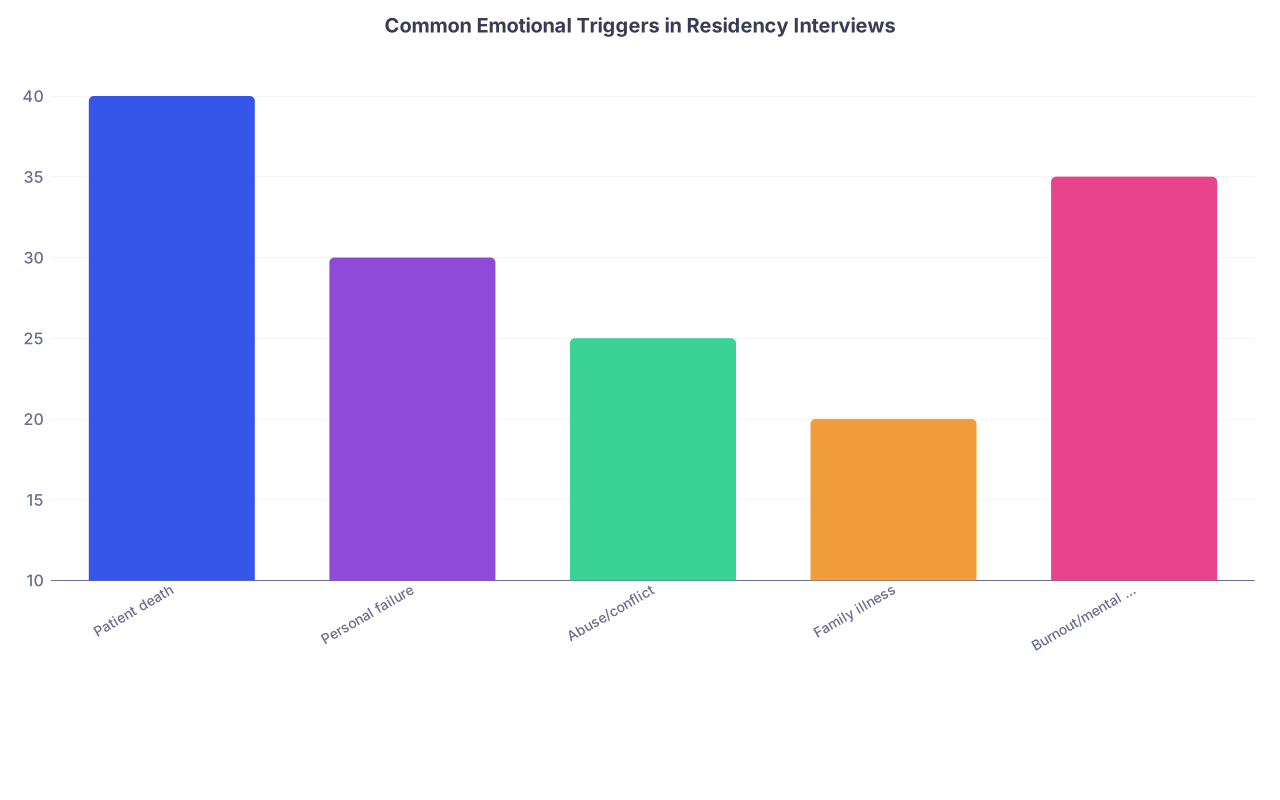
| Category | Value |
|---|---|
| Patient death | 40 |
| Personal failure | 30 |
| Abuse/conflict | 25 |
| Family illness | 20 |
| Burnout/mental health | 35 |
One More Fear: “What If I Cry and Then Obsess Over It Forever?”
Let’s say it happens. You cried. You went back to the hotel or your cousin’s couch and you’re replaying it frame by frame like the Zapruder film.
Here’s the uncomfortable truth: you will never know exactly how that moment landed with them. You just won’t. And your brain is going to fill the uncertainty with the worst possible explanation.
What you can do:
- Ask yourself: “Did I eventually answer the question clearly?”
- If yes, then you probably did fine, emotionally and professionally.
- If no, then learn from it. Adjust your stories and prep before the next interview.
But don’t punish yourself for being human in a deeply unnatural situation.
Also, programs don’t rewatch you crying in slow motion those nights. They write a few notes. They rank you in the context of your whole application. They care about your Step scores, letters, clinical performance, fit, professionalism. One moment of emotion isn’t the centerpiece of your file.

| Step | Description |
|---|---|
| Step 1 | Trigger Question Asked |
| Step 2 | Brief Tearfulness |
| Step 3 | Pause and Regroup |
| Step 4 | Request to Pivot Story |
| Step 5 | Answer with Reflection |
| Step 6 | Interviewer Evaluates Overall Response |
| Step 7 | Emotional Surge |
Very Blunt Bottom Line
You might cry.
It might be awkward.
It will not, by itself, destroy your chances.
If you can:
- Acknowledge what’s happening without spiraling,
- Regain enough control to think and respond,
- And show that you’ve learned from the painful thing you’re describing,
then that emotional moment might actually make you more memorable in a good way. Not as “the crier,” but as “the one who really cared about that patient and clearly grew from it.”
You’re allowed to be human and still be a good resident.
| Response Type | Typical Program Perception |
|---|---|
| No emotion at all | Neutral to slightly distant |
| Mild tears, recovered | Human, invested, reflective |
| Brief cry, unfocused | Some concern about coping skills |
| Complete shutdown | Red flag, but context-dependent |

FAQ (Exactly 6 Questions)
1. If I cry in an interview, is it an automatic rejection?
No. Not even close. I’ve seen applicants cry briefly and still get ranked highly. What matters more is whether you can regain composure and still give a coherent, thoughtful answer. One emotional moment doesn’t outweigh strong letters, solid scores, and good fit.
2. Should I avoid any story that might make me emotional?
Not automatically. You should avoid stories that consistently make you lose control or shut down. But a story that makes you feel a little tight in the chest, where you can still talk through it and explain what you learned—that can be powerful. Test-drive your stories with someone you trust; that’s your best filter.
3. What do I say if I actually start crying?
Keep it short and steady: “I apologize, this was a very meaningful experience for me. I’m okay to continue.” Then shift into reflection: what you learned, how you changed, what you do differently now. Don’t over-apologize or keep drawing attention to the tears.
4. Can I ask to switch to a different example if I’m too emotional?
Yes, and this is more mature than trying to push through something that’s clearly overwhelming you. You can say: “I’m realizing this specific example is still very raw for me. Would it be okay if I shared a different situation that challenged me in a similar way, but that I can talk through more clearly?” Most decent interviewers will respect that.
5. Will programs think I can’t handle residency if I get emotional?
Not if your emotion is proportional and you show good judgment and recovery. Residents cry. Attendings cry. Medicine is intense. Programs worry more about people who explode, shut down, or can’t function under stress—not about someone who briefly tears up while describing a genuinely tough experience.
6. How do I stop obsessing about an emotional moment after the interview?
Do a quick, honest debrief with yourself: Did I eventually answer the question clearly? Did I show insight and growth? If yes, decide that’s “good enough” and move on. Use the experience to tweak which stories you tell and how you frame them for the next interview, rather than using it as evidence that you’re doomed. Because you’re not.

Key points:
- Crying once in a residency interview is not career-ending; how you recover and reflect matters far more than the tears themselves.
- Choose stories that are meaningful but processed, and practice a simple pause–acknowledge–refocus strategy so you’re not blindsided.
- Programs want humans who can handle emotion, not robots; your job isn’t to be tearless, it’s to show you can still think, learn, and function when things get hard.