
It’s late January. You’re in a bland conference room on Zoom, suit jacket on, scrub pants off camera. The program director smiles, glances at your ERAS, and then drops it:
“Tell me about a time you had a conflict with a teammate and how you handled it.”
You launch into a story about a group project, or a nurse who was “kind of rude,” or that one flaky classmate. You think you did fine.
Two hours later, your name comes up in the rank meeting and the PD says, “Yeah… remember that conflict story? I’m getting problem vibes.” And just like that, you slide down the list.
You never hear why.
Let me show you what really happens behind that question. And the dozen others just like it.
Program directors are not asking behavioral questions because HR told them to. They’re using them as landmines to expose the stuff that destroys residencies from the inside: laziness, blame shifting, arrogance, fragility, poor insight, drama.
What PDs Are Actually Trying To Predict
I’ve sat in enough rank meetings and faculty “debriefs” to tell you this: the content of your story matters less than the pattern underneath it.
Behavioral questions are stress tests. PDs are trying to answer a few core questions about you:
- When things go wrong, do you own your part or blame everyone else?
- Are you coachable, or will you fight feedback?
- Can you function on a team under pressure, or do you become the problem?
- When you’re tired and stressed, do you cut corners or double down?
- Are you going to generate work for the chiefs and GME office?
They know Step scores. They’ve seen your grades. Now they want to know: are you safe to put in their call room, their sign-out, their patient’s room?
Behavioral questions are how they smoke out red flags without ever saying “Are you a nightmare to work with?”
The Core “Problem-Spotting” Domains
Let me walk you through the main behavioral domains PDs probe, and the exact kind of future problems they’re hunting for.
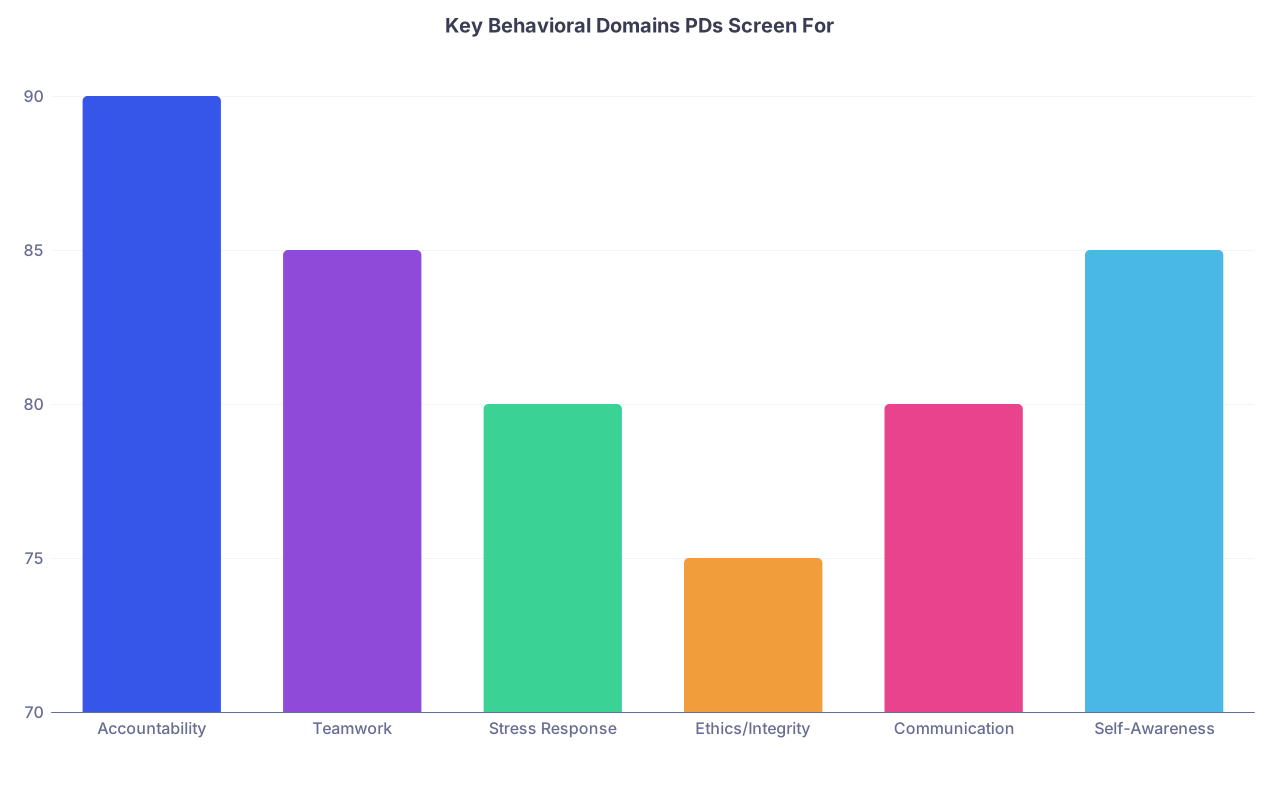
| Category | Value |
|---|---|
| Accountability | 90 |
| Teamwork | 85 |
| Stress Response | 80 |
| Ethics/Integrity | 75 |
| Communication | 80 |
| Self-Awareness | 85 |
Those numbers aren’t from a formal study; they’re the relative weight I’ve seen PDs actually give these in real discussions. Accountability and self-awareness come up almost every single time a borderline applicant is discussed.
1. Accountability vs Blame
Translation: “Will this person be the one always ‘explaining’ why things weren’t their fault?”
Typical questions:
- “Tell me about a time you made a mistake in clinical care.”
- “Describe a time you received critical feedback.”
- “Tell me about a time something didn’t go as planned.”
What PDs listen for behind the scenes:
They’re not interested in the disaster itself; they’re watching how you frame it.
- 80% description of how bad the attending / nurse / system was.
- “I did everything right, but…”
- No clear statement of personal responsibility.
- No specific behavior change afterwards — just vague “I learned a lot.”
What they say after you log off:
- “Low insight.”
- “A lot of externalization.”
- “Going to be hard to remediate if there’s ever an issue.”
Green-flag pattern:
- Concrete mistake you actually owned.
- Clear “this was my part in it.”
- Specific behavioral change going forward (“Now I always double-check X…”).
- No need to destroy someone else to make your point.
If your story requires throwing a nurse, classmate, or attending under the bus to make yourself look good? You’ve already lost points.
2. Teamwork Under Stress
Programs don’t want “brilliant lone wolves.” They want PGY-2s the nurses will not revolt against.
Common questions:
- “Tell me about a time you had a conflict with a colleague.”
- “Describe a difficult team member and how you handled it.”
- “Tell me about a time you had to work with someone whose style clashed with yours.”
This is where future “toxic resident” issues show up.
Subtext program leadership is scanning for:
- Do you always see yourself as the reasonable one and everyone else as unreasonable?
- Do your conflicts always end with you being the unrecognized hero?
- Do you talk with contempt about other roles (nurses, MAs, other students)?
- Are your solutions all about control (“I told them… I made them…”) vs collaboration?
I’ve watched PDs pause videos and literally say, “Listen to the way she talks about the nurse here. That’s going to be a problem on nights.”
You can have conflict stories. You should. But if every story is “I was right and they were wrong,” you’re done.
3. Stress Response and Reliability
Residency is not a wellness retreat. They expect you to be stressed. They want to know what version of you shows up when you’re maxed out.
Typical questions:
- “Tell me about a time you were overwhelmed.”
- “Describe a time you had too many responsibilities at once.”
- “Tell me about a time you were on a steep learning curve.”
What they’re really asking:
- Will this person panic? Shut down? Lash out?
- Do they disappear when things are hard, or do they communicate and re-prioritize?
- Are they brittle perfectionists who crumble when they aren’t top of the class?
Red flags:
- Stories where your “solution” was to work quietly until 2 a.m. without asking for help and then nearly crashing.
- No mention of communication with a supervisor when overwhelmed.
- Lots of “I just pushed through” with no system or support.
- No insight into limits.
Those people become the residents who miss big things and then sob in the call room when confronted. PDs have zero appetite for that anymore. Too much liability. Too much burnout ripple effect.
Green flag structure:
- You notice you’re getting overwhelmed.
- You triage and prioritize.
- You proactively communicate with someone above you.
- You adapt your system going forward.
That’s who chiefs like. That’s who PDs can trust with cross-cover.
4. Ethics, Corners, and “Gray Zone” Decisions
Nobody’s asking, “Have you ever committed fraud?” They’ll ask something like:
- “Tell me about a time you saw something you felt was wrong.”
- “Describe an ethical dilemma you encountered.”
- “Tell me about a time you had to choose between two imperfect options.”
They’re sifting for:
- Do you just go along to get along?
- Do you have any backbone?
- Do you handle concerns through appropriate channels, or do you gossip and grandstand?
I’ve seen applicants tank themselves by:
- Bragging about “bending” rules on documentation to help the team.
- Describing blatant cheating as “we supported each other.”
- Positioning themselves as the lone moral hero who “called out” everyone, in a way that screams drama and poor judgment.
Programs want residents who:
- Recognize the gray.
- Seek guidance.
- Use official routes instead of drama.
- Don’t mess with billing, documentation, or consent. Ever.
5. Communication & Professionalism
The behavioral questions about “difficult patients,” “breaking bad news,” or “explaining something complex” aren’t just about patient care. They’re about your mouth.
Bad communication behaviors PDs are screening out:
- Talking about patients in demeaning ways, even subtly.
- Making yourself the star of the show instead of the patient.
- Overconfidence with no mention of supervision.
- Vague “and they were happy with what I said” with no specifics.
This is also where they spot the “I argue with everyone” type.
If your default is “they just didn’t understand how right I was,” faculties hear that as “this intern is going to argue on every sign-out.”
6. Self-awareness and Growth Trajectory
This is the big one. You don’t realize how much weight this carries.
Self-awareness is the difference between:
- Resident who says, “I’m late sometimes,” changes their system, never late again.
versus - Resident who has a 3-page professionalism file and still insists, “No one told me.”
Behavioral questions that probe this:
- “Tell me about a piece of feedback that surprised you.”
- “What’s a weakness that has actually impacted your work?”
- “Tell me about a time you changed your approach based on feedback.”
PDs are not dumb. They hate the “perfectionist” answer as much as you hate giving it.
What they’re grading:
- Is your weakness real, or a PR stunt?
- Does your story show actual behavior change?
- Do you sound defensive, or matter-of-fact?
- Do you seem like someone they’d want to coach for 3 years?
If your answer is essentially “I used to be too awesome and now I’m slightly less awesome,” they’ll smile, nod, and write “No insight.”
The Exact Behavioral Questions That Trigger Red Flag Conversations
Let’s put some structure to this. Here’s the kind of questions that reliably separate future headaches from future chiefs.
| Question Theme | What PDs Are Actually Testing |
|---|---|
| Mistake/Failure | Accountability, defensiveness, ability to change |
| Conflict with Colleague | Team toxicity risk, respect for other roles |
| Overwhelmed/Too Busy | Reliability under stress, help-seeking behavior |
| Ethical Dilemma | Integrity, judgment, drama potential |
| Difficult Feedback | Coachability, fragility vs growth |
These questions, in some form, are on almost every structured interview guide I’ve seen. Sometimes dressed up, sometimes raw.
“Tell me about a time you made a mistake in patient care.”
Behind closed doors, why PDs love this question:
- Forces you to either show vulnerability and insight. Or your inability to do either.
- Mistakes in med school are usually small. If you still can’t own those, residency mistakes will get buried too.
Killer move:
Use a real, modest mistake. Describe it cleanly. Own your part without theatrics. Then spend most of the answer on what you changed in your process afterward. That “after” piece is where they decide if you’re safe.
Terrible move:
“I mean, nothing big. I’m very careful. But one time the nurse didn’t tell me….”
You just stamped “high risk for cover-ups” on your forehead.
“Tell me about a conflict with a nurse / colleague.”
This one is a trap for arrogance.
Predictable resident-problem responses:
- “They just weren’t as motivated / knowledgeable / committed as I was.”
- “I tried to explain but they didn’t want to listen.”
- “I had to go over their head.”
Every time a candidate says “I had to go over their head,” someone at the table writes a note. It’s not that going up the chain is wrong. It’s that the way you talk about it reveals if you tried adult-level communication first, or just ran to the principal.
The smart way:
- Pick a conflict where both sides had a point.
- Show how you tried to understand their perspective.
- Show how you changed your communication next time.
- No cheap shots at nurses, MAs, or classmates.
The question PDs silently ask: would the nurses on night float hate working with this person?
How PDs Actually Use Your Answers in Rank Meetings
You think each interview stands alone. It doesn’t. The behavioral answers often come back up in committee, especially your worst one.
Picture the scene:
The PD pulls up your file on the projector. Faculty around the table. Someone says, “I interviewed her.”
Comments you never hear:
- “Her scores are fine, but her conflict story — she blamed everyone else.”
- “He talked about feedback like it was an attack. I don’t want to fight with a PGY-1 about every evaluation.”
- “She seems like she’d melt down on nights. We already have one of those.”
- “Great on paper, but I got a really strong ‘I’m too good to be here’ vibe.”
Compare that with:
- “She had this great story about messing up a handoff and how she changed her system — very self-aware.”
- “He talked about a disagreement with a nurse in a really respectful way. I’d take him.”
- “Low ego, high insight. I’d be happy if we matched him.”
Mid-list candidates live or die on exactly those kinds of comments.
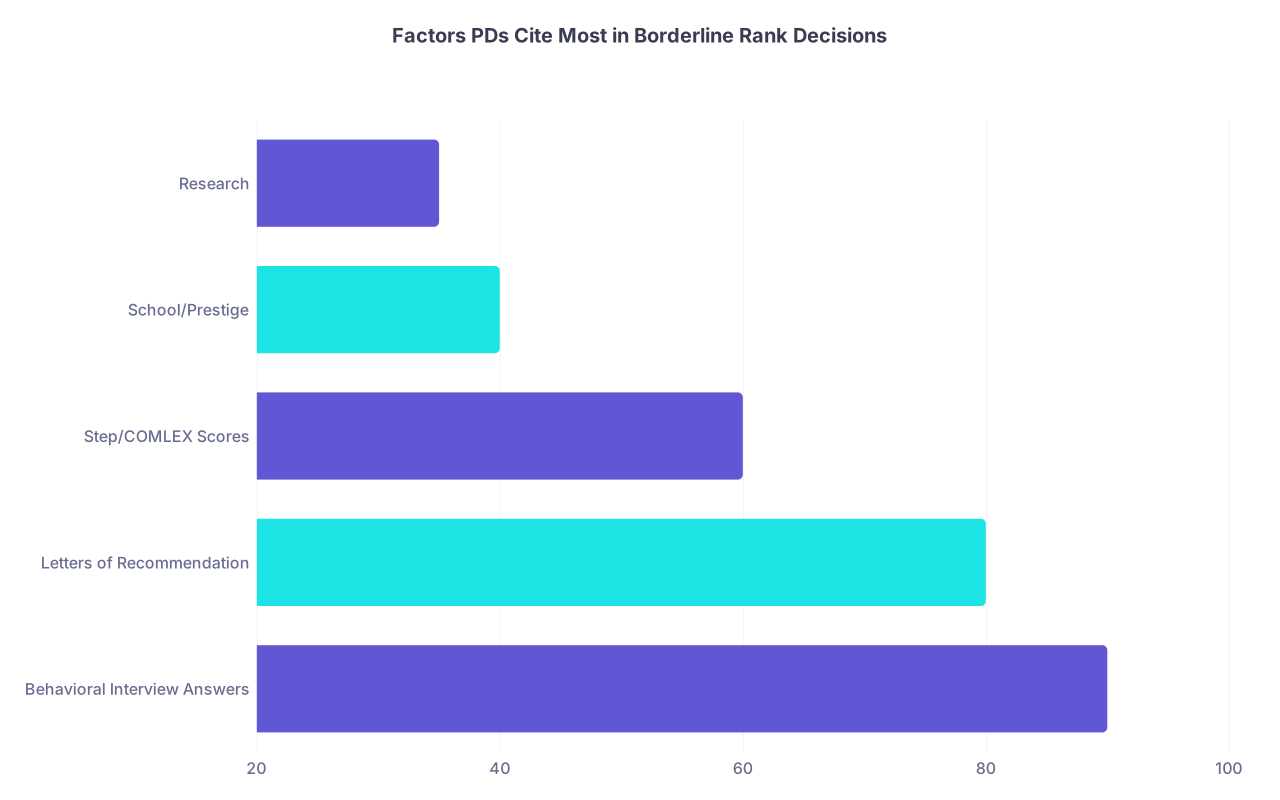
| Category | Value |
|---|---|
| Behavioral Interview Answers | 90 |
| Letters of Recommendation | 80 |
| Step/COMLEX Scores | 60 |
| School/Prestige | 40 |
| Research | 35 |
Again, these weights are from what PDs actually talk about, not what they say on websites. Borderline conversations almost always revolve around “what’s this person like to work with?”
How To Answer Without Sounding Fake or Scripted
You’ve seen “STAR method” advice. Fine. Structure helps. But PDs can smell someone who memorized ten canned stories and keeps jamming them into every answer like an applicant Mad Libs.
The people who do best in these interviews do a few things differently.
1. They pick stories with actual stakes
If your “big mistake” is “I forgot my stethoscope once,” you look ridiculous. If your “conflict” is “we disagreed on a powerpoint font,” you look sheltered.
Pick cases where:
- A patient, a grade, or a real outcome was involved.
- Your judgment or behavior actually mattered.
- You had to sit with discomfort, not just mild annoyance.
PDs want to see you in the real world, not a sanitized brochure.
2. They don’t over-dramatize or trauma-dump
On the flip side, some applicants bring Hiroshima when the question asked for a campfire.
If your story involves:
- Massive institutional wrongdoing
- Ongoing litigation
- Extremely heavy personal trauma
…you better be very skilled at telling it, or you’re going to make the room uncomfortable and derail the interview. Behavioral questions are not your therapy session.
3. They talk about their own thinking, not everyone else’s flaws
The more time you spend narrating other people’s stupidity, the worse you look.
Strong answers sound like:
- “I realized I had assumed…”
- “At the time I was frustrated, but later I understood…”
- “What I changed after that was…”
Weak answers sound like:
- “They just didn’t get it.”
- “The nurse was overreacting.”
- “The attending was just in a bad mood.”
You’re not on trial. But you are being evaluated on your ability to see past your own ego.
4. They end with a concrete, believable change
This is where most people fall apart. You describe a mistake, nod solemnly, say “I learned a lot,” and stop.
PDs want closure:
- What do you do differently now? Specifically.
- How would we see that change if we worked with you?
- Has that lesson shown up again in a later rotation?
If your “lesson” is completely disconnected from any behavior, they chalk it up as performance, not growth.
Bad vs Good: A Realistic Example
Let’s take one classic question and show you how residents get themselves quietly blacklisted.
Question: “Tell me about a time a team member wasn’t pulling their weight and how you handled it.”
Bad answer (I’ve heard close versions of this):
“On my surgery rotation, one of the other students never showed up on time, never wrote notes, and the residents didn’t notice because I was picking up the slack. It was frustrating because I care a lot about my evaluations. I hinted to him that he needed to do more, but he still didn’t, so I just kept doing all the work. At the end, I told the chief that I did most of the work. They agreed and gave me honors. I learned that sometimes you just have to carry the team.”
What PDs hear:
- Hyper-focused on evaluations over patient care.
- No real attempt at direct communication.
- Will throw peers under the bus.
- Sees self as the martyr.
- Zero reflection about system or communication.
Now the stronger version:
“On my surgery rotation, we had two students assigned. I noticed early that I was consistently arriving earlier and staying later, and I started feeling resentful. At first I just stewed about it, which wasn’t productive. After a few days I realized I hadn’t actually talked with him about expectations, so I asked him how he was seeing his role and what his other commitments were.
It turned out he was commuting from pretty far away due to housing issues, and he was trying to balance some legitimate family responsibilities. I told him I was feeling overwhelmed being the only one prerounding and asked if we could split the work more clearly. We agreed that he’d take responsibility for notes on specific patients and stay later on certain days so I wasn’t always last.
I also checked in with the resident and asked if we could clarify expectations for both of us as a team rather than making it about him vs me. The dynamic improved a lot once it was out in the open. What I took from that is that resentment is often a sign I haven’t had a direct conversation yet, so now when I start feeling that, I try to address it earlier.”
What PDs hear:
- Actually uses direct, adult communication.
- Protects teamwork and patient care instead of just their eval.
- Brings in seniors without making it a character assassination.
- Shows growth: “when I feel X, I do Y now.”
Same scenario. Completely different read on future resident behavior.

| Step | Description |
|---|---|
| Step 1 | Behavioral Question Asked |
| Step 2 | Candidate Tells Story |
| Step 3 | Blame Others |
| Step 4 | Shows Insight |
| Step 5 | High Risk: Low Insight |
| Step 6 | Medium Risk: Stagnant |
| Step 7 | Low Risk: Coachable |
| Step 8 | Owns Role? |
| Step 9 | Concrete Change? |
That’s roughly the decision tree happening in their heads.
How To Prep Without Sounding Like a Robot
You don’t need 40 stories and an MBA in HR frameworks. But if you walk in with zero prep, you will default to your worst habits.
Here’s a sane approach that actually works.
List 8–10 real experiences:
- 2–3 genuine mistakes.
- 2 conflict or tension stories.
- 2 times you were overwhelmed.
- 1 ethical/gray-zone moment.
- 1 big piece of feedback that changed you.
For each, write down:
- One sentence: what happened.
- What you did well.
- What you did poorly.
- What you’d do differently now — with specific behaviors.
Practice out loud until you can tell each story in 60–90 seconds.
Not a full TED talk. Just clean, coherent, no rambling.Anchor on themes, not scripts.
Go in knowing: “When they ask about conflict, I’m using the surgery rotation story or the group project story,” but don’t memorize it word-for-word.
That balance — prepared but not plastic — is exactly where the best interviewees land.

What PDs Will Never Say Out Loud (But I Will)
Let me pull back the curtain a bit more.
Some programs have been burned badly. One malignant or unstable resident can nuke a small program’s morale for years. Those programs over-index on “no drama, no risk.” Your behavioral answers matter more there.
Faculty don’t always agree on candidates’ intelligence. But they almost always align quickly on “Would I want this person on my team at 2 a.m.?” Behavioral questions drive that gut call.
If you have any whiff of “prior professionalism concerns” in your file, your behavioral answers are under a microscope. They’re trying to decide: old story or ongoing pattern?
For borderline candidates, one excellent behavioral answer can rescue you. And one awful one can tank you. The story that sticks in the PD’s head walks into that rank list meeting with you.
Programs talk. Especially within institutions. “We had a resident from that school last year who was a disaster” means your class is being watched more closely, and your behavioral answers will carry more weight than you think.

Quick Reality Check: What You Should Aim To Signal
Every behavioral answer, no matter the question, should quietly signal the same three things:
- “I take responsibility for my role without melodrama.”
- “I learn quickly from friction — mistakes, conflict, feedback.”
- “I’m not going to make your life harder as a PD or chief.”
If your story doesn’t push in that direction, change the story or the way you tell it.
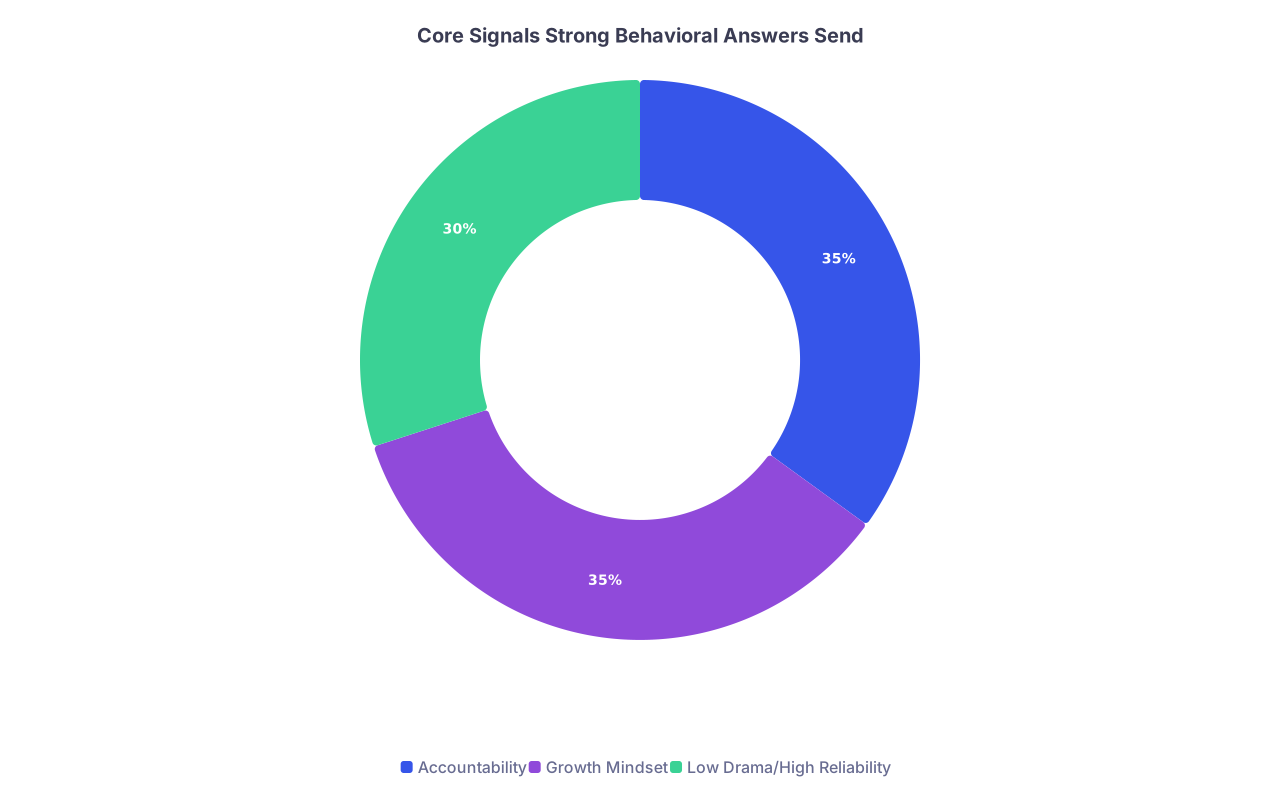
| Category | Value |
|---|---|
| Accountability | 35 |
| Growth Mindset | 35 |
| Low Drama/High Reliability | 30 |
Two residents with identical scores and letters walk into an interview. The one who can show those three things cleanly? That’s the one who gets remembered — and protected — at the ranking table.

FAQ (Exactly 5 Questions)
1. What’s the single biggest mistake applicants make with behavioral questions?
They sanitize everything. They pick stories with no real stakes and no real flaws, then slap on a fake “lesson.” PDs are not impressed. They’d rather hear a modest but real mistake you actually grew from than some perfect scenario where you were the hero from start to finish.
2. Can I reuse the same story for multiple behavioral questions?
Yes, within reason. PDs care more about the pattern of how you think than about variety for its own sake. If one story genuinely fits “conflict,” “feedback,” and “growth,” you can adapt it. Just don’t recycle the exact same story three times in a 20-minute interview; it signals limited experience.
3. How bad is it to mention nurses or attendings negatively in my stories?
Mild criticism with nuance is survivable; contempt is not. If the only way your story works is by making someone else look incompetent or cruel, pick another story. PDs watch how you talk about colleagues because that is exactly how you’ll talk about their nurses and faculty in July.
4. What if I’ve never had a “big” ethical dilemma or major mistake?
You don’t need a lawsuit-level event. Pick something real but smaller: charting decisions, handling sensitive information, borderline professionalism, or gray-zone patient requests. The size matters less than your reflection and the concrete change that followed.
5. Do programs actually use structured rubrics for these answers, or is it all “gut feel”?
Both. Many programs have checkboxes and scoring rubrics for “professionalism,” “teamwork,” and “communication,” but those numbers are driven by gut reactions to your stories. When the committee meets, they don’t read the rubrics line by line; they say things like “really insightful about mistakes” or “lots of blame, low ownership.” Your job is to feed them the kind of stories that lead to the first comment, not the second.
Key points: Behavioral questions are not fluff — they’re the main tool PDs use to predict whether you’ll be a problem. You win these by showing real accountability, clear growth, and low drama, not by pretending you’re flawless. If every story you tell could be summarized as “I was right and everyone else was wrong,” fix your stories now, before you sit down in that call with the PD.