Most residency applicants ruin their interview day before they ever log into Zoom or walk into the hospital.
They wake up late, scroll their phone, grab random stats to memorize—and scramble their brain right before facing behavioral questions that demand clarity, stories, and poise.
You’re not going to do that.
You’re going to run a structured, time-boxed interview morning routine designed specifically to reset your head and lock in your stories so behavioral questions feel like prompts, not traps.
Below is your night-before checklist, then a minute-by-minute morning routine (90 minutes), plus compressed 30- and 15-minute emergency versions.
The Night Before: Lock the System, Don’t Cram
At this point (evening before), your job is not to improve. It’s to stabilize.
Between 6:00–8:00 pm: Final Light Prep (30–45 minutes max)
You’re done with heavy lifting. This is just alignment.
Do this:
Confirm logistics (10 minutes)
- Interview time + time zone
- Virtual link or exact address and parking
- Contact phone/email in case of tech failure
- Expected format:
- 1-on-1 vs panel
- MMI vs traditional
- Number of sessions
Pick 5–7 anchor stories (15–20 minutes)
These are your reusable answers for almost every behavioral question. Aim to cover:- A conflict with a colleague or team
- A time you made a mistake
- A difficult patient/family situation
- A leadership situation
- A time you handled stress/burnout
- A time you advocated for a patient or system change
- A failure or disappointment and what you did after
Write them as headlines only, not essays:
- “ICU night – missed lab result, owned error, fixed workflow”
- “Clerkship conflict – senior vs intern management plan discrepancy”
Make sure each has:
- Situation
- Action you took
- Specific result
- What changed in your behavior after
Print or open a 1-page “Behavioral Cheat Sheet” One side (or one screen):
- Bullet list of your 5–7 story headlines
- 4–5 program-specific talking points (why this program, fit, values)
- 3 strengths, 2 weaknesses with real examples
- 3 questions you’ll ask the program
9:00–10:30 pm: Wind-Down Sequence
At this point, anything you cram will hurt you.
Do this instead:
Lay out interview outfit fully
- Clothes, shoes, belt, watch, socks (yes, all of it)
- If virtual: top, bottom, camera, headphones, backup charger
Set two alarms
- Phone alarm
- Secondary alarm (old phone, alarm clock, smart speaker)
Prep environment
- If virtual:
- Test camera angle and lighting
- Neutral background
- Remove clutter behind you
- Place chair at proper distance (avoid “floating head”)
- If virtual:
Mandatory cutoff
- No interview prep after this point
- No “just one more YouTube video of behavioral questions”
Lights out that allows 7–8 hours of sleep. Less than 6? You’ll feel it in every follow-up question.
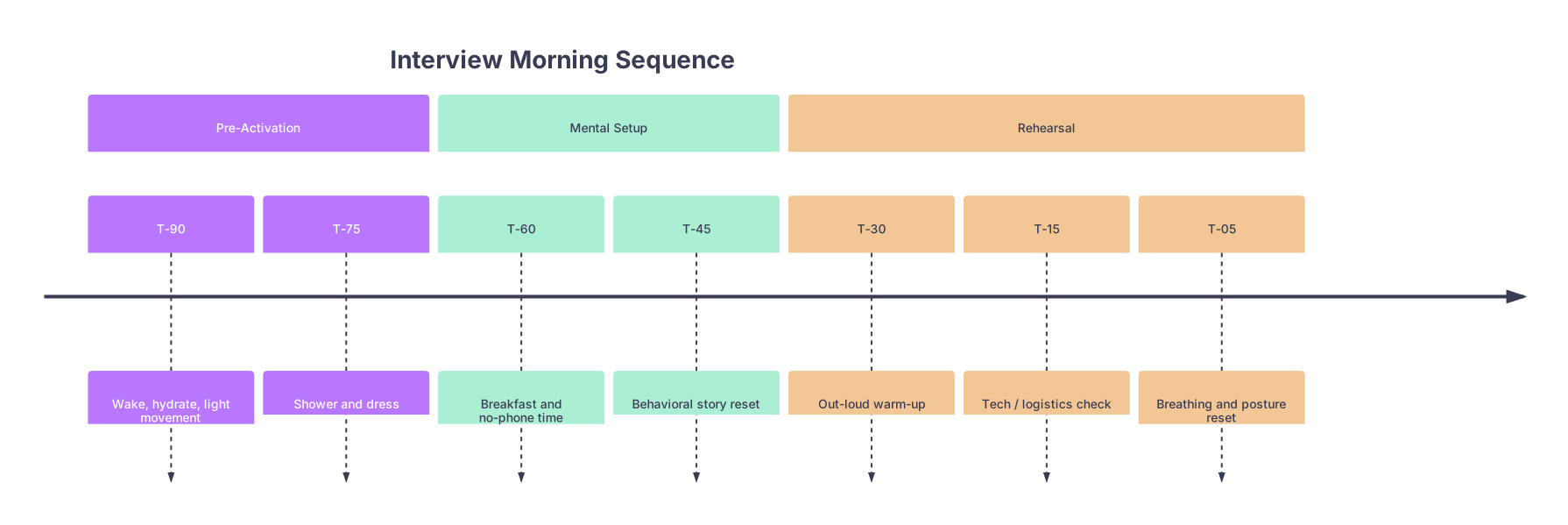
Morning Timeline: 90-Minute Optimal Routine
This assumes you need to be “on” at 8:00 am. Adjust times backward as needed.
| Period | Event |
|---|---|
| Pre-Activation - T-90 | Wake, hydrate, light movement |
| Pre-Activation - T-75 | Shower and dress |
| Mental Setup - T-60 | Breakfast and no-phone time |
| Mental Setup - T-45 | Behavioral story reset |
| Rehearsal - T-30 | Out-loud warm-up |
| Rehearsal - T-15 | Tech / logistics check |
| Rehearsal - T-05 | Breathing and posture reset |
T-90 Minutes: Wake-Up & Physical Reset (10–15 minutes)
Goal: Switch from “sleep brain” to “interview brain” without anxiety spikes.
Do this immediately:
- Get vertical within 2 minutes of alarm
- Hydrate: full glass of water, not just a sip
- 2–3 minutes of movement (pick one):
- Slow yoga flow (cat-cow, forward fold, shoulder rolls)
- Walk up/down a hallway or stairs
- If you’re in a call room/hotel: bodyweight squats + arm circles
You’re not “working out.” You’re increasing alertness and blood flow.
T-75 Minutes: Shower & Dress (15–20 minutes)
This is not optional. Cold-ish water if you’re groggy.
While showering:
- Mentally run through:
- Your name
- Your med school and current role
- One-line version of your story: “I’m a fourth-year at X, interested in Y because Z.”
This prevents the weird phenomenon where people stumble on their own intro because they haven’t said their name out loud since last night.
Dress fully. Even if it’s a Zoom interview—put on the shoes. It changes your posture and your headspace.
T-60 Minutes: Breakfast + No-Phone Block (15–20 minutes)
Goal: Stable energy, low adrenaline, no doom-scroll.
Food rules:
- Light, predictable, not experimental
- Typical combos that work:
- Toast + eggs
- Oatmeal + fruit
- Yogurt + nuts
- Go easy on:
- Grease
- Giant coffees on an empty stomach
Speaking of coffee:
- If you normally drink it, drink your normal amount
- Do not double it “for focus”
- If you never drink coffee, today is not the day to start
Phone rules:
- No email.
- No group chats of classmates panicking about interviews.
- No news.
- If you must: one quick check for any program email about schedule changes, then airplane mode.
At this point, your only job is to eat and breathe, not think.
T-45 Minutes: Behavioral Question Reset (10–15 minutes)
Now you deliberately prime the part of your brain that handles behavioral questions.
This is not content cramming; it’s cue refreshing.
Open your 1-page cheat sheet
For each of your 5–7 anchor stories:
- Whisper or say out loud:
- “This is my ‘conflict with senior resident’ story”
- “This is my ‘mistake on night float’ story”
- Scan:
- What was the exact turning point?
- What changed in how you practice?
- Whisper or say out loud:
Run through three core prompts in your head, linking them to stories:
- “Tell me about a time you had a conflict on a team.”
- “Tell me about a time you made a mistake.”
- “Tell me about a time you were overwhelmed.”
You’re not giving full answers here. You’re just pairing each question with a pre-picked story, like linking files in your brain. Fast, efficient.
| Category | Value |
|---|---|
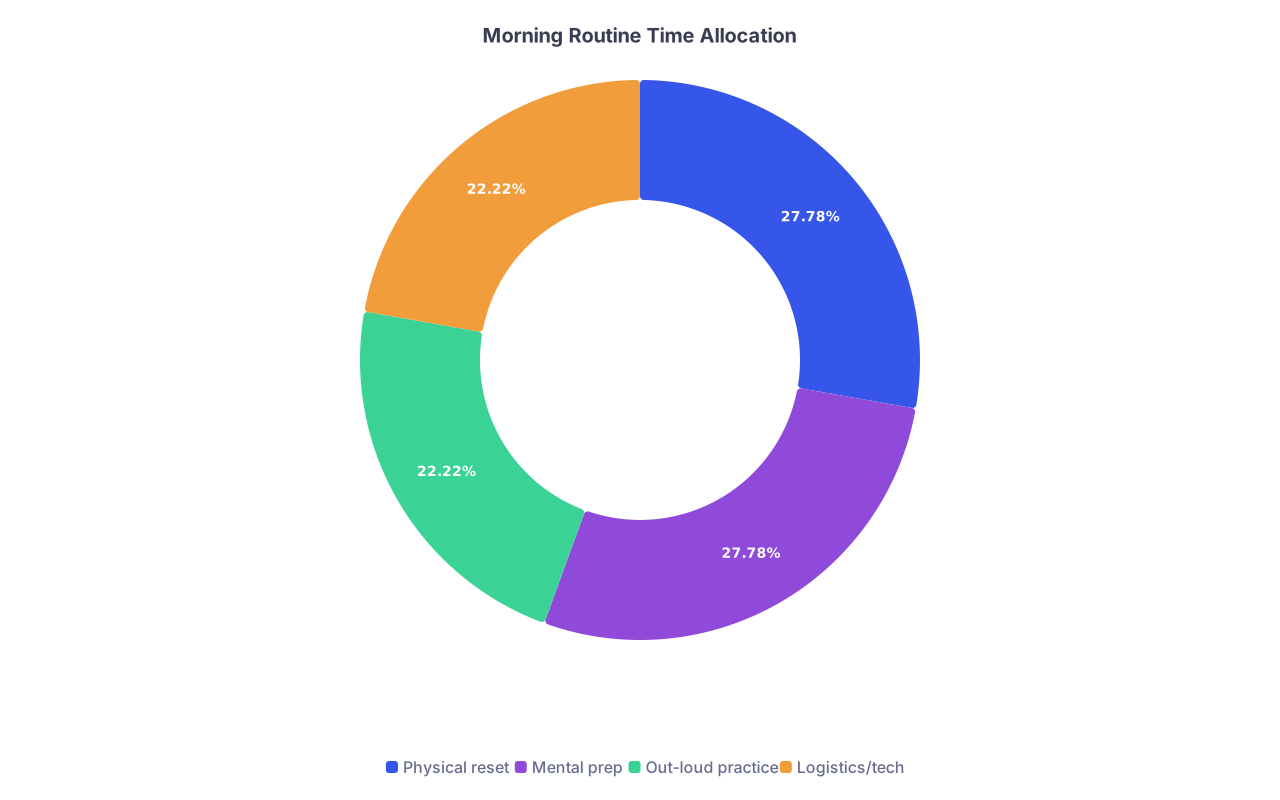
| Physical reset | 25 |
| Mental prep | 25 |
| Out-loud practice | 20 |
| Logistics/tech | 20 |
T-30 Minutes: Out-Loud Warm-Up (10–15 minutes)
This is the step most applicants skip. It’s why their first answer of the day sounds robotic.
You’re going to run a mini-rehearsal:
Stand or sit where you’ll interview
- Same chair, same camera angle if virtual
- Same posture you want on screen or across the table
Speak out loud, full volume—no whispering Answer 3–4 questions:
- “Tell me about yourself.” (60–75 seconds)
- “Why this specialty?” (60–90 seconds)
- “Why our program?” (60–90 seconds)
- One behavioral: “Tell me about a time you had a conflict on a team.”
Focus on:
- Not rushing
- Finishing sentences cleanly
- Not stuffing in every detail
No judgment, no rewrites. This is muscle warm-up, not performance review.
If you can, record a single answer on your phone and play it back at 1.25x speed. Listening at a slightly faster speed makes pacing issues obvious.
T-20 Minutes: Final Appearance & Environment Check (5–10 minutes)
At this point, think like a chief resident doing a quick chart check before rounds. Fast, systematic.
If virtual:
- Camera:
- Eyes at top third of frame
- Head + upper chest visible
- Lighting:
- Light source in front of you, not behind
- Sound:
- Quick mic test
- Headphones connected
- Background:
- No piles of laundry
- No bright, distracting posters
If in-person:
- Check:
- Badge (if needed)
- Directions/parking time
- Folder with printed schedule (if given)
- Pen and small notebook
- Pocket/bag:
- Phone on silent, not vibrate
- Wallet/ID
- Breath mint (not gum)

T-10 Minutes: Micro-Drill Behavioral Questions (5 minutes)
Now you sharpen the exact blade you’re going to use.
Take your cheat sheet and run this quick circuit without fully answering:
For each of these prompts, say out loud which story you’ll use:
- “Tell me about a time you had a conflict with a colleague.”
- “Tell me about a time you received critical feedback.”
- “Tell me about a time something did not go as planned.”
- “Tell me about a time you advocated for a patient.”
Example:
- “Conflict with colleague – I’ll use my ‘surgery resident vs medicine plan’ story”
- “Critical feedback – I’ll use my ‘IM attending said my notes were unclear’ story”
Then for one of those, give a 30-second compressed version:
- Situation in 1 sentence
- Action in 2–3 sentences
- Result + what you learned in 1–2 sentences
This does two things:
- Confirms you know which story you’ll grab
- Primes you to be concise, not rambling
T-5 Minutes: Breathing + Posture Reset (3–5 minutes)
Physiology time. You want to lower anxiety without getting sleepy.
Use a simple pattern:
- Inhale through nose for 4 seconds
- Hold for 2 seconds
- Exhale through mouth for 6 seconds
- Repeat 4–6 times
Then:
- Sit or stand in your interview posture:
- Feet flat on ground
- Shoulders down, not hunched
- Chin slightly tucked (no “looking down your nose” angle)
Finally, repeat 3 short anchors in your head:
- “I have real stories; I’m not making anything up.”
- “I can ask for a moment to think.”
- “I’m here to see if we fit each other, not to beg.”
This is the last thing you do before logging in or walking in. Not refreshing your CV. Not scrolling your phone.
Emergency Compression Plans (If You’re Running Late)
Sometimes the page operator is late, your bus is delayed, or your call night ran long. You still need a reset, not chaos.
30-Minute Version
You overslept, but you’re not doomed.
T-30:
- Bathroom + full glass of water
- 2 minutes of movement (march in place, arm circles)
- Quick face rinse if you can’t shower
T-25:
- Dress fully in interview clothes
- Check mirror once. Done.
T-20: Behavioral cheat sheet (7–8 minutes)
- Scan 5–7 story headlines
- For each:
- Whisper: “This is my [conflict / mistake / stress] story”
- Link each to 1–2 common questions
T-12: Out-loud micro warm-up (5–7 minutes)
- 45–60 second “Tell me about yourself”
- 60 second “Why this specialty”
- 1 behavioral question with very quick answer
T-5: Tech + breathing (5 minutes)
- Fast camera/mic/lighting check
- 4 rounds of 4-2-6 breathing
- Sit in final posture
Skip breakfast only if absolutely forced and grab something small right after the first interview block.
15-Minute “Bare Minimum” Version
You’re in trouble time-wise. This is CPR, not wellness.
T-15:
- Bathroom + 6–8 gulps of water
- Put on interview top and fix hair/face
- 60 seconds of movement (jumping in place, arm swings)
T-12:
- Look at your cheat sheet for 3 minutes:
- Identify:
- 1 conflict story
- 1 mistake story
- 1 stress/burnout or resilience story
- Identify:
T-9:
- Out loud:
- 30-second “Tell me about yourself”
- 30-second “Why this specialty”
- Name which story you’ll use for “conflict” and “mistake” out loud
T-4:
- Log in to platform or walk toward room
- 3 slow breaths (4-2-6 pattern)
- One mental anchor: “Answer like I’m talking to a respected colleague, not a judge.”
Optional: Between Interview Blocks Reset (5 Minutes)
If you have multiple sessions or MMIs, use the gap wisely.
Here’s the 5-minute in-between protocol:
- Stand up (1 minute)
- Roll shoulders
- Shake out hands
- Reset story bank (2 minutes)
- Glance at your story sheet
- Ask: “Which stories have I not used yet?”
- Breathing + posture (2 minutes)
- 3 slow breaths
- Sit back down, re-center, slight smile
You’re not replaying previous answers. That’s how people spiral. Focus forward.
Quick Behavioral Question Mapping Cheat
Most behavioral questions secretly fall into a few buckets. If your morning routine refreshed a handful of flexible stories, you’re covered.
| Question Type | Story Buckets to Use |
|---|---|
| Conflict/Disagreement | Team conflict, senior vs intern |
| Mistake/Failure | Error, missed detail, bad outcome |
| Stress/Burnout | Tough rotation, night float |
| Leadership/Initiative | Committee, QI project, mentoring |
| Ethics/Professionalism | Patient advocacy, boundary issue |
During your morning reset, explicitly tag each story to at least two buckets. That’s how you avoid blanking when a question is worded weirdly.
FAQs
1. Should I memorize full answers to behavioral questions?
No. Memorized answers sound fake and collapse under follow-up questions. You should memorize story headlines and key turning points, not scripts. Your morning routine is about refreshing those anchors so you can speak naturally.
2. What if I blank on a behavioral question even after doing this routine?
Use a simple recovery line:
“Let me think for a moment—I want to give you a specific example.”
Take 3–5 seconds, scan your mental story bank, and pick whatever is closest, even if it’s not perfect. A “good enough” relevant story, told clearly, beats dead silence or a panicked ramble.
3. Is it bad to use the same story for different questions during the day?
Not at all, as long as you emphasize different angles each time. The same ICU night can be a story about conflict, systems failure, or resilience, depending on what you highlight. Programs expect overlap; they do not expect you to invent 20 unique life events.
4. How early should I wake up before an interview?
Aim for 90 minutes before your first “on” time if possible. That lets you complete the full routine: physical reset, food, story review, and out-loud warm-up. If you absolutely cannot, use the 30- or 15-minute compression plans rather than randomly improvising.
Key takeaways:
- Your interview morning is not about cramming facts; it’s about resetting your physiology and refreshing your story bank.
- A structured, time-boxed routine—no phone, light movement, out-loud warm-up—makes behavioral questions feel familiar instead of threatening.
- Even if you’re running late, a compressed 15–30 minute reset is better than stumbling in cold and hoping adrenaline will save you. It won’t.