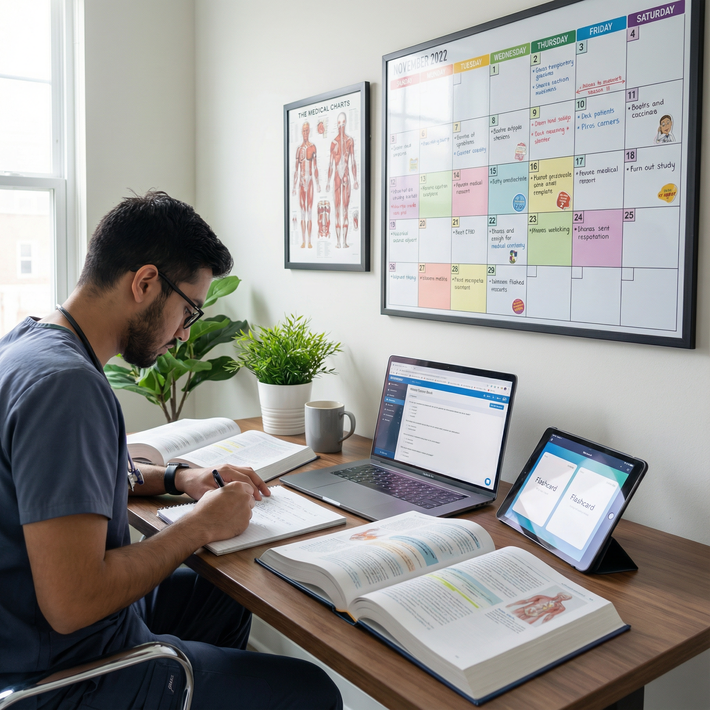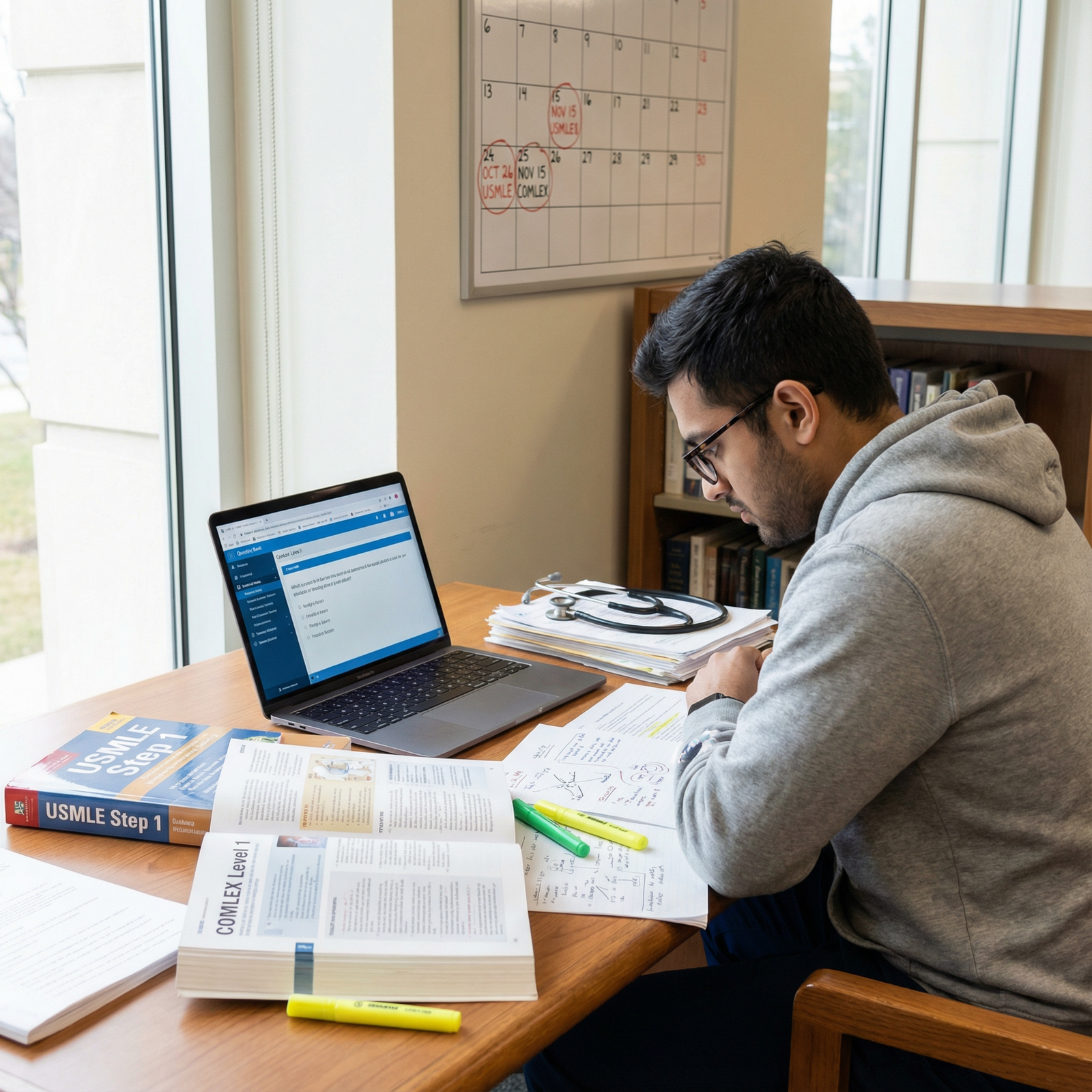
When you begin preparing for high‑stakes medical exams, the volume of available materials can be paralyzing. Between USMLE, COMLEX, shelf exams, in‑training exams, and eventually board certification, you’re navigating a long exam roadmap that shapes your career.
This expanded guide provides a structured, practical checklist of the best Medical Exam Resources—specifically curated for USMLE Preparation, COMLEX Resources, and related assessments. You’ll see not just what to use, but how to combine these tools into an efficient, realistic study strategy during medical school and beyond.
Understanding the Medical Exam Landscape
Before you choose resources, you need clarity on what you’re preparing for. Different exams emphasize different competencies and may require tailored Study Strategies and Medical Education tools.
Major Licensing Exams: USMLE and COMLEX
USMLE Step 1, Step 2 CK, Step 3
- Step 1: Tests foundational basic science and systems‑based pathophysiology. Now pass/fail, but still critical for building core knowledge that drives Step 2 performance.
- Step 2 CK: Focuses on clinical knowledge, diagnosis, and management—highly relevant for residency applications and real‑world patient care.
- Step 3: Assesses independent practice readiness, including multi‑step clinical reasoning and management across inpatient and outpatient settings.
COMLEX-USA Levels 1, 2-CE, 2-PE (historical), and 3
- Level 1: Basic science and osteopathic principles, including OMM/OMT.
- Level 2-CE: Clinical knowledge with osteopathic integration.
- Level 3: Advanced clinical decision‑making and osteopathic practice.
- While the PE has been phased out, schools often still require demonstration of clinical skills through OSCEs.
If you’re a DO student, you’ll need COMLEX Resources and likely at least some USMLE Preparation tools—especially if applying to competitive or historically allopathic programs.
Other Exams Along the Training Path
Clerkship Shelf Exams and Subject Exams
- NBME or COMAT exams during core rotations (Internal Medicine, Surgery, Pediatrics, OB/GYN, Psychiatry, Neurology, etc.).
- These often rely on the same core resources as USMLE Step 2 but with rotation‑specific emphasis.
In‑Training and Board Certification Exams
- In-Training Exams (ITEs): Administered during residency to track progress.
- ABIM, ABS, ABP, and other specialty boards: High‑stakes certification exams requiring focused prep after residency.
Understanding these stages helps you choose resources that are reusable and adaptable—so you’re not starting from scratch each time.
Core Textbooks: Building a Strong Conceptual Foundation
Textbooks remain the backbone of quality Medical Education. They provide depth that question banks alone can’t offer.
Essential Exam‑Oriented Texts
“First Aid for the USMLE Step 1”
- High‑yield summaries, mnemonics, and annotated margins.
- Best used as a framework: consolidate facts, track weak areas, and integrate with question explanations.
- Many students annotate First Aid with pearls from Pathoma, UWorld, and lectures.
“Pathoma” (Book + Videos) – Dr. Hussain Sattar
- Clear explanations of pathology fundamentals and mechanisms.
- Ideal for early systems courses and Step 1 preparation.
- Many students do a full pass in pre‑clinicals, then a rapid rewatch during dedicated.
“Goljan’s Rapid Review Pathology”
- Integrates pathology with pathophysiology, lab findings, and clinical correlations.
- Especially helpful if you prefer more narrative explanation and integrated review questions.
Additional High‑Yield Textbook Options
BRS (Board Review Series) Physiology / Pathology / Behavioral Science
- Concise, exam‑style explanations with chapter questions.
- Useful during coursework and as a bridge into question banks.
Case Files Series (e.g., Case Files Internal Medicine, Surgery, OB/GYN)
- Short case‑based chapters designed for clinical rotations and shelf exams.
- Excellent for developing clinical reasoning alongside didactic review.
How to Use Textbooks Strategically
- Don’t read cover‑to‑cover like a traditional textbook unless you’re very early in training.
- Align chapters with your current course or question bank blocks.
- Use them to clarify persistent weak areas (e.g., renal physiology, immunology, OMM techniques).
- Combine reading with active recall (self‑quizzing, sketching diagrams, or flashcards) to avoid passive learning.
High‑Yield Online Courses and Video Resources
Online courses have become central in modern Study Strategies for both USMLE and COMLEX.
Structured Video Lecture Platforms
Lecturio
- System‑organized video lectures with linked quiz questions, recall prompts, and spaced repetition.
- Strengths: integrated platform, tracking dashboards, and strong Step 1/Step 2 alignment.
OnlineMedEd (OME)
- Gold standard for core clerkship rotations and Step 2 CK.
- Focuses on frameworks and “what you do next” in clinical scenarios.
- Many students watch OME videos before or during each rotation, then reinforce with Qbanks.
Boards & Beyond
- Comprehensive video library for Step 1 and Step 2 CK.
- Strong for foundational understanding, integrating physiology, pathology, and clinical reasoning.
Osteopathic‑Focused Resources (for COMLEX)
- OMM/OMT video series from various schools and commercial providers.
- Savarese’s “OMT Review”: often supplemented with online demonstrations.
Massive Open Online Courses (MOOCs)
- Coursera, edX
- Offer supplementary courses (e.g., biostatistics, public health, global health, ECG interpretation).
- Not exam‑specific, but excellent for filling conceptual gaps.
How to Integrate Online Courses
- Use videos strategically, not as background noise.
- Watch at 1.25–1.5x speed with active notes and pause to predict answers.
- Pair each video block with 10–20 related Qbank questions to cement learning.
- During dedicated study, prioritize high‑yield board review videos over lengthy fundamental courses unless you have major knowledge gaps.
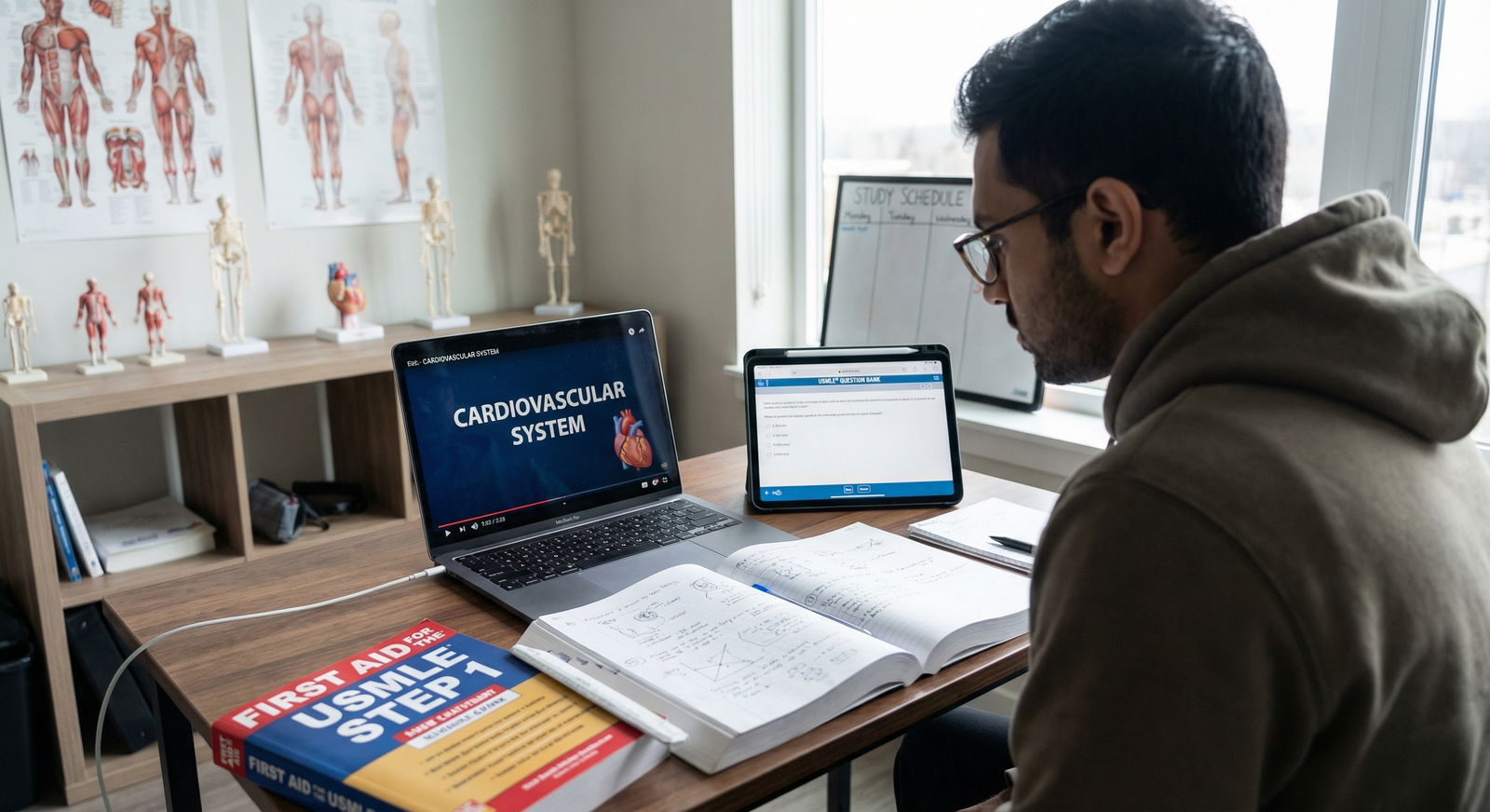
Question Banks: The Core of Effective USMLE and COMLEX Preparation
Question banks (Qbanks) are the single most important resource for high‑stakes exam success. They train your reasoning, timing, and pattern recognition.
Essential Qbanks
UWorld
- Industry standard for USMLE Steps and increasingly used for COMLEX knowledge preparation.
- Strengths: exam‑style questions, detailed explanations, robust biostatistics and ethics content.
- Best used as a learning tool rather than a pure assessment tool—read explanations carefully.
AMBOSS
- Combines a powerful medical library with a large Qbank.
- Highlights are particularly useful on rotations and shelf exams.
- Has COMLEX‑specific modes and OMM questions (depending on subscription).
Kaplan Qbank
- Good supplementary bank, especially for early Phase of preparation.
- Explanations may be more didactic and foundational.
COMBANK / TrueLearn (for COMLEX)
- Tailored to COMLEX style with OMM integration and COM‑style question formatting.
- Essential if you’re DO and need practice with the unique COMLEX question style and exam blueprint.
How to Use Qbanks Effectively
Timing and Mode
- Early on: use tutor mode, 10–20 question blocks by system or subject.
- Closer to exam: switch to timed, mixed blocks to simulate real testing.
Number of Questions
- Many students aim for:
- 2,000–3,000 questions for Step 1
- 3,000–4,000+ questions for Step 2 CK
- Similar volume for COMLEX Levels, including COM‑style banks
- Quality > quantity: it’s better to fully understand 40 questions a day than to rush through 120.
- Many students aim for:
Review Process
- For each question:
- Understand why the right answer is correct.
- Understand why the wrong options are wrong.
- Note recurring themes for flashcards or margin notes.
- Avoid writing down everything—focus on concepts you missed, guessed, or repeatedly forget.
- For each question:
Self‑Assessment Exams
- NBME, UWorld Self‑Assessments, COMSAE, COMAT self‑assesments
- Use them to calibrate your readiness, identify weak systems, and refine your timeline—not as your sole measure of worth or success.
Visual and Concise Study Guides: High‑Yield Reinforcement
Once you build a base with textbooks and Qbanks, focused review resources accelerate retention.
Visual Learning Tools
SketchyMedical
- Microbiology, Pharmacology, Pathology, and more using vivid visual mnemonics.
- Powerful for long‑term retention of bugs, drugs, and mechanisms.
- Start early in pre‑clinicals; revisit key videos during dedicated study and rotations.
Pixorize / Osmosis
- Visual concept maps and animations for biochemistry, immunology, neurology, and more.
- Particularly helpful for visual learners and complex pathways.
Rapid‑Review and Summary Tools
Pathoma Video Reviews
- Concise, organized by organ system.
- Ideal for last‑minute consolidation or bridging to clinical content.
High‑Yield Review Books
- “High‑Yield” series, “Made Ridiculously Simple” series, and similar rapid‑review texts.
- Best used for quick refreshers or during early mornings/late evenings when attention is lower.
How to Integrate These Resources
- Use visual resources (Sketchy, Pixorize) to build memory scaffolds.
- Use rapid‑reviews in your final 2–3 weeks before the exam to tighten weak systems.
- Avoid constantly switching platforms—pick one or two visual tools and commit to them.
Flashcards and Spaced Repetition: Locking Knowledge into Long‑Term Memory
Active recall and spaced repetition are essential for mastering the vast content tested on Medical Exams.
Popular Flashcard Platforms
Anki
- Gold standard among medical students.
- Uses a powerful spaced repetition algorithm.
- Massive shared decks exist (e.g., AnKing, Zanki, Lightyear), often closely aligned with USMLE content and popular resources.
Quizlet
- Easier for quick, custom decks and group sharing.
- Good for rotation‑specific facts, drug names, or procedures.
Best Practices for Flashcards
- Prioritize conceptual understanding over rote memorization.
- Limit daily new card volume to avoid burnout (e.g., 30–80 new cards/day).
- Always review scheduled cards—consistency is more important than occasional marathons.
- Make custom cards from:
- Missed Qbank questions
- Lecture or video pearls
- High‑yield tables in First Aid or Pathoma
Well‑managed flashcards allow you to maintain knowledge across phases of Medical School Life and Exams, rather than relearning material before each test.
Mobile Apps and On‑the‑Go Learning
Learning doesn’t only happen at your desk. Mobile apps make it easier to use small time pockets effectively.
High‑Value Clinical and Exam Apps
Medscape
- Quick reference for diseases, guidelines, and drug information.
- Useful during rotations and for contextual learning.
Epocrates / Lexicomp
- Drug dosing, contraindications, interactions.
- Especially valuable on rounds and for exam pharmacology connections.
USMLE/COMLEX‑Specific Apps
- Some Qbanks (UWorld, AMBOSS, TrueLearn) have mobile apps so you can complete question blocks offline.
- Case‑based apps (e.g., USMLE Case Files apps) simulate clinical scenarios.
Practical Usage
- Use apps during:
- Commutes (audio or light reading)
- Waiting between patients or lectures
- Short breaks where a full Qbank block isn’t possible
- Avoid turning mobile study into mindless scrolling—set concrete mini‑goals (e.g., 5 questions, 10 flashcards).
Podcasts, YouTube, and Auditory Learning
Auditory resources break up monotony and reinforce learning without additional screen fatigue.
Educational Podcasts
The Curbsiders
- Internal medicine–focused with clinical pearls, guidelines, and board‑relevant discussions.
- Great for Step 2 CK, COMLEX 2-CE, and IM residents.
EMCrit, Core EM, and Specialty Podcasts
- Help you think like a resident or attending in emergent scenarios.
- Reinforce pathophysiology and management algorithms.
YouTube Channels
- Armando Hasudungan, Ninja Nerd, Osmosis
- Excellent for visual explanations of physiology, pathology, and pharmacology.
- “ARMY” Anatomy and assessment tutorials
- Useful for OSCEs, clinical skills, and anatomy review.
When to Use Audio/Video Supplements
- During workouts, commuting, cooking, or low‑focus time.
- To revisit challenging topics explained in a new way.
- To stay engaged with clinical thinking during less intense phases of your schedule.
Peer Support, Forums, and Community Resources
You don’t have to navigate Medical Exams alone. Community can save you time, reduce anxiety, and offer practical Study Strategies.
Online Communities
Student Doctor Network (SDN)
- Exam experiences, resource reviews, and score discussions.
- Use cautiously: focus on advice, not on unhealthy score comparison.
Reddit – r/medicalschool, r/Step1, r/Step2, r/COMLEX
- Study schedules, annotated resource lists, and troubleshooting for specific topics.
- Great for finding updated experiences after major exam changes (e.g., Step 1 pass/fail).
Study Groups and Accountability Partners
- Small, focused groups (2–4 people) often work better than large groups.
- Use group time to:
- Teach each other difficult concepts
- Review Qbank blocks and rationales
- Share Anki decks or mnemonics
- Avoid turning groups into venting sessions only—set a clear agenda.
Structured Review Courses and Live Prep Options
For some learners, structured courses provide accountability and organization that self‑study cannot.
Popular Review Courses
Kaplan Review Courses
- Live or on‑demand options for USMLE and COMLEX.
- Typically include lectures, Qbanks, and diagnostic testing.
Board Review Series (BRS) Live/Online Sessions
- Subject‑specific intensive reviews (e.g., cardiology, nephrology, surgery).
- Often used closer to exam dates or in residency for board prep.
Specialty‑Specific Board Review Courses
- High‑yield for ABIM, ABS, ABP, and related boards.
- May offer CME credits and are often subsidized by residency programs.
Who Benefits Most?
- Students who:
- Struggle with self‑discipline or structure.
- Have failed a previous exam attempt and need a fresh, guided approach.
- Require formal accommodations or need more predictable pacing.
If you choose a course, ensure it complements—not replaces—deep engagement with Qbanks and self‑study.
Mentorship, Coaching, and Personalized Guidance
Experience is one of the most valuable “resources” you can access.
Finding Effective Mentors
- Senior Students and Recent Graduates
- Can share up‑to‑date exam experiences, step‑by‑step study timelines, and realistic schedules.
- Faculty Advisors
- Especially helpful for aligning exam timing with research, electives, and residency plans.
- Residents and Fellows
- Offer clinical perspective: which topics truly matter in practice, and how to integrate exam prep during rotations.
Professional Coaching
- Some students benefit from:
- Academic success coaches
- Learning specialists (especially if you have ADHD, learning differences, or test anxiety)
- Structured USMLE/COMLEX prep coaching services
Mentors and coaches can help you customize Study Strategies based on your strengths, weaknesses, and life constraints, making your exam preparation more sustainable and effective.
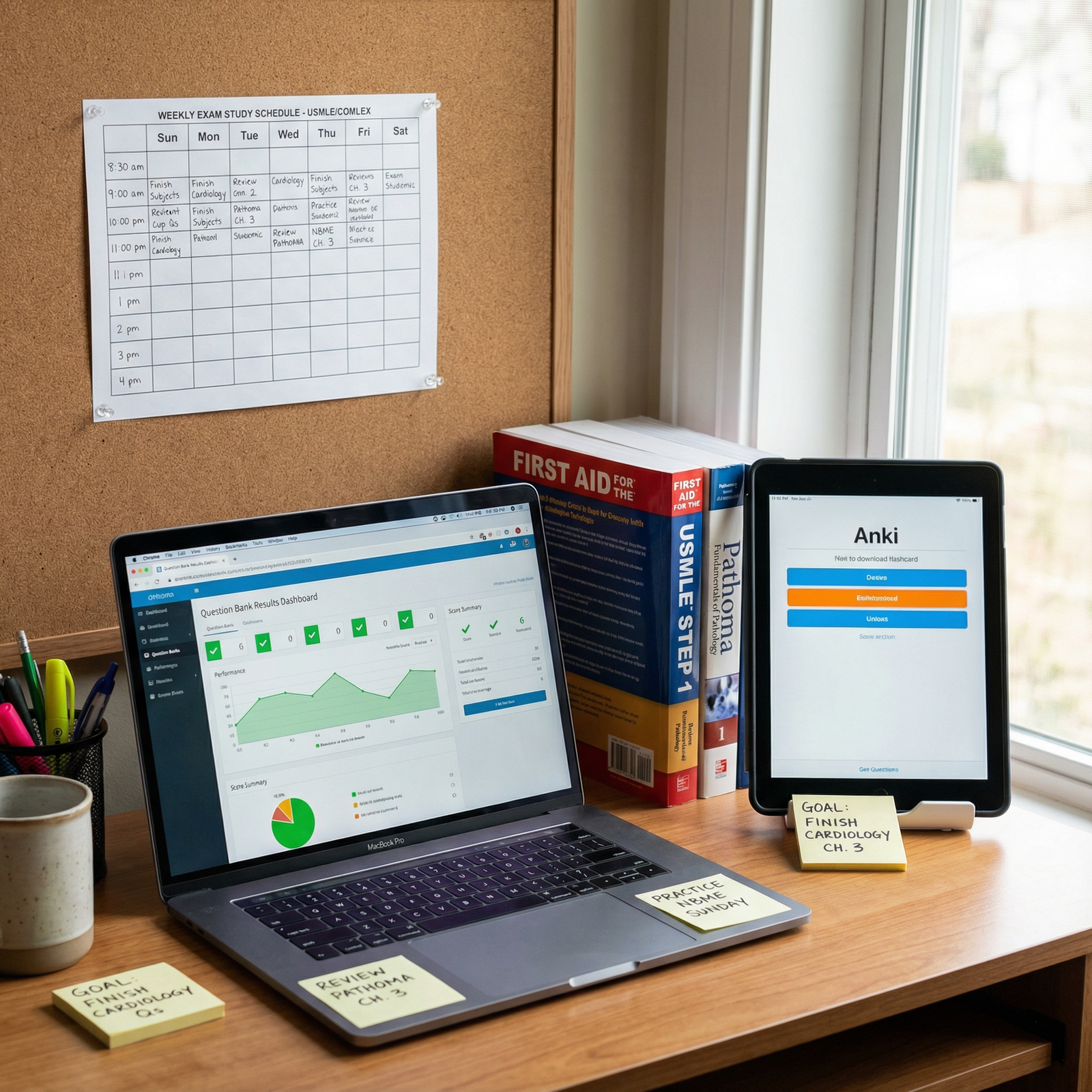
Crafting a High‑Yield Study Plan from Your Resource Toolkit
Collecting Medical Exam Resources is only half the task. The other half is building a realistic study plan that you can sustain.
Step‑by‑Step Framework
Clarify Your Exam Timeline
- Write down your target date(s) for:
- Step 1 / COMLEX Level 1
- Step 2 CK / COMLEX Level 2-CE
- Shelf exams or COMATs
- Work backward to plan content coverage, Qbank completion, and self‑assessments.
- Write down your target date(s) for:
Define Weekly and Daily Goals
- Example for dedicated Step 1/Level 1 prep:
- 40–80 UWorld questions/day (reviewed thoroughly)
- 1–2 hours of video or textbook review
- 200–300 Anki reviews
- Adjust volume based on your baseline, schedule, and mental health.
- Example for dedicated Step 1/Level 1 prep:
Mix Resource Types Intentionally
- For each system (e.g., cardiology):
- Watch/review key videos (Boards & Beyond/OME/Pathoma).
- Do 20–40 Qbank questions focused on that system.
- Reinforce with flashcards and First Aid review.
- For COMLEX, add OMM/OMT review and COMLEX‑style questions.
- For each system (e.g., cardiology):
Schedule Regular Self‑Assessments
- Every 2–3 weeks: NBME, COMSAE, or UWSA.
- Use results to:
- Identify weakest systems and subjects.
- Adjust focus—not to catastrophize.
Review and Adjust
- At the end of each week, ask:
- What worked well?
- Where did I fall behind?
- What can be streamlined or dropped?
- Your plan should be a living document, not a rigid contract.
- At the end of each week, ask:
Protect Your Well‑Being
- Sleep, nutrition, and exercise are performance multipliers.
- Build in one lighter day per week to prevent burnout.
- Track signs of burnout or anxiety early and seek support if needed.
Frequently Asked Questions (FAQs)
1. What is the best way to start preparing for the USMLE or COMLEX in the first two years of medical school?
Start by building strong class foundations and layering in board‑relevant resources early:
- Use First Aid, Pathoma, and a light Qbank (e.g., Kaplan or AMBOSS) alongside your systems courses.
- Begin a manageable Anki routine with a reputable deck aligned to your curriculum.
- For DO students, add consistent review from Savarese and OMM videos to normalize osteopathic concepts from day one.
- Focus on understanding mechanisms and frameworks rather than memorizing isolated facts. This sets you up for easier dedicated study later.
2. How many question bank platforms do I really need?
Most students do very well with:
- One primary Qbank (usually UWorld) for USMLE‑style questions.
- One COMLEX‑specific Qbank (e.g., COMBANK/TrueLearn) if you’re DO.
- Optional secondary Qbank (AMBOSS or Kaplan) if you start early or need extra practice.
Trying to completely finish three or more full Qbanks can be overwhelming and inefficient. Depth of review is more valuable than maximum question count.
3. Are online courses better than textbooks for exam preparation?
Neither is universally “better”—they serve different roles:
- Online courses are:
- Great for structured explanation, visual learners, and time‑limited review.
- Useful when you need to hear a concept explained in multiple ways.
- Textbooks are:
- Better for deep dives and reference.
- Important for clarifying persistent problem areas.
The highest‑yield approach combines both: use videos/texts to learn, Qbanks to apply, and flashcards to retain.
4. How often should I be doing practice questions during dedicated study?
During a typical 4–8 week dedicated period:
- Aim for 40–80 questions per day (depending on your schedule and endurance).
- Always budget time to thoroughly review explanations—this often takes as long as or longer than answering the questions.
- Include periodic full‑length practice exams (NBME/COMSAE/UWSA) to build stamina and refine your pacing every 1–3 weeks.
If you’re earlier in your timeline (e.g., pre‑dedicated), even 10–20 well‑reviewed questions per day can have a major payoff later.
5. How important are mentorship and peer support in exam preparation?
They are extremely valuable:
- Mentors:
- Help you choose resources appropriate for your learning style and specific exam.
- Advise on realistic timelines and exam dates based on your performance and goals.
- Peers and study groups:
- Provide accountability and emotional support.
- Share strategies, annotated notes, and high‑yield insights.
- Help normalize anxiety and setbacks, which are common during this phase.
Students who consistently engage with mentors and peers often have more sustainable, less isolating exam preparation experiences—and better long‑term outcomes.
By intentionally selecting and combining the right Medical Exam Resources—textbooks, online courses, Qbanks, visual tools, flashcards, apps, and human support—you can transform an overwhelming process into a structured, achievable plan. With thoughtful Study Strategies and steady effort, you’ll be ready not only for USMLE and COMLEX, but for every exam that shapes your medical career.