
The way most students use Q‑banks during dedicated is backward. They peak too early, burn through questions, and spend the final month re-reading instead of actually training.
You are going to do the opposite: start controlled, peak deliberately, and taper with purpose.
Below is a week‑by‑week and then day‑by‑day blueprint for a 12‑week dedicated schedule focused on when to start, peak, and taper your Q‑banks for USMLE Step 1/Step 2 CK–style exams.
Big Picture: 12‑Week Q‑Bank Strategy
At this point you need to see the whole arc before we zoom in.
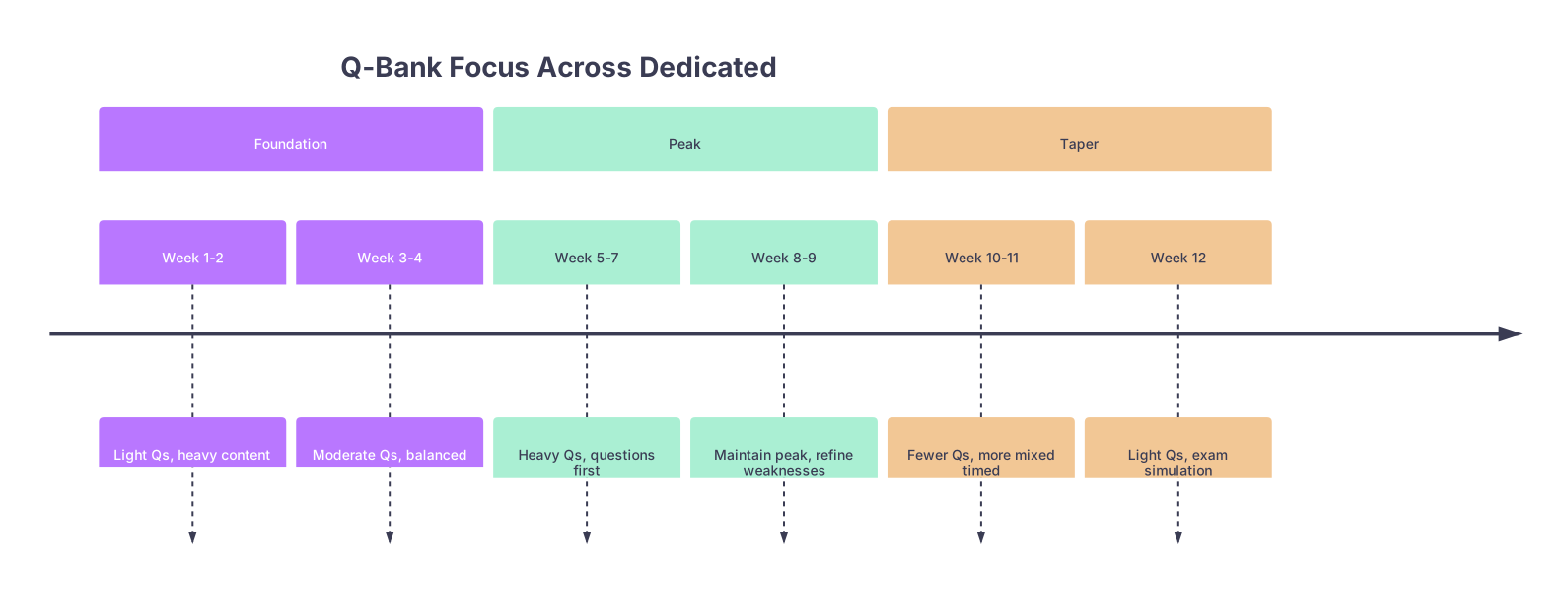
Think of dedicated in three phases:
Foundation (Weeks 1–4):
Build stamina and coverage. Ramp Q‑banks from light to moderate. Focus on learning from questions, not scores.Peak (Weeks 5–9):
Maximum Q‑bank volume. Questions drive the day. Self‑assessments anchor each 2‑week block.Taper (Weeks 10–12):
Decrease raw volume. Sharpen weak areas. Shift to mixed timed blocks, exam conditions, and recovery before test day.
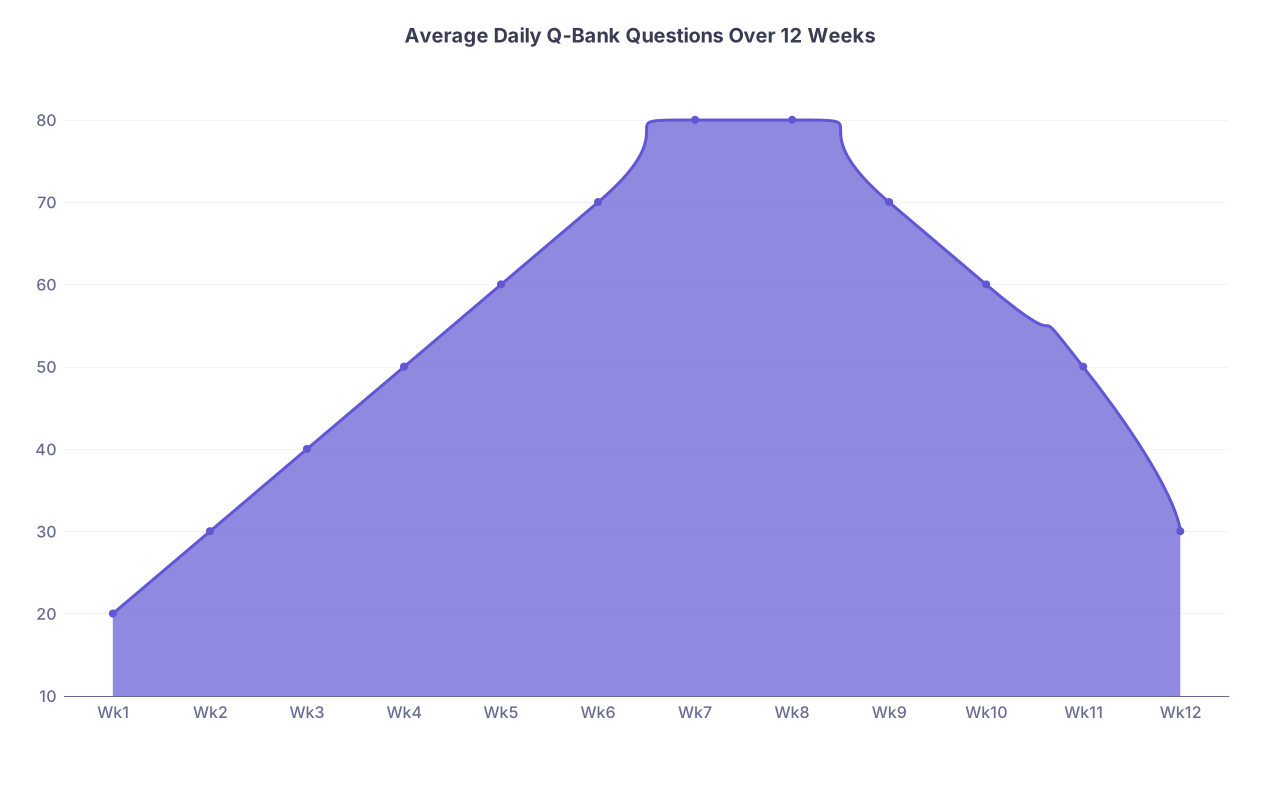
If you want numbers, here is a realistic range for a single major Q‑bank (e.g., UWorld) over 12 weeks:
| Category | Value |
|---|---|
| Wk1 | 20 |
| Wk2 | 30 |
| Wk3 | 40 |
| Wk4 | 50 |
| Wk5 | 60 |
| Wk6 | 70 |
| Wk7 | 80 |
| Wk8 | 80 |
| Wk9 | 70 |
| Wk10 | 60 |
| Wk11 | 50 |
| Wk12 | 30 |
This is the shape you are aiming for: gradual rise, sustained peak, controlled taper.
Before Week 1: Setup Week (T‑minus 7–10 days)
If you skip this, your first two weeks will be chaos.
By the end of this pre‑dedicated window you should have:
-
- Step 1: usually UWorld as main, Amboss as secondary if you can afford it.
- Step 2 CK: again, UWorld primary, Amboss as a supplement.
Know your item counts and targets
Check how many questions are in your primary bank and back‑calculate.
| Q-Bank | Approx. Total Qs | 12-Week Goal |
|---|---|---|
| UWorld Step 1 | ~3,600 | 1.2–1.5 passes |
| UWorld Step 2 | ~4,000 | 1.0–1.3 passes |
| AMBOSS Step 1 | ~2,000–2,500 | Selective supplement |
| AMBOSS Step 2 | ~2,500–3,000 | Selective supplement |
Set your exam date and key self‑assessments
At this point, hard‑schedule:- 1 baseline NBME in Week 1 or 2
- 1 self‑assessment at the end of Week 4
- Every 2 weeks after that (Weeks 6, 8, 10)
- Final one 7–10 days before the real exam
Build your correction system
Decide now how you will review:- Where notes go (OneNote, Notion, paper notebook, margin of First Aid/Boards & Beyond PDFs).
- How strict you will be about reviewing every wrong question. (You should be strict.)
Weeks 1–4: Controlled Start and Build
You are not “behind” in Week 1 if you are not doing 80 questions a day. The goal here is consistency and learning.
Week 1: Gentle On‑Ramp (20–30 Qs/day)
Goal: Learn how to do questions properly.
Q‑bank format:
- 10–20 questions per block, tutor mode allowed for the first few days.
- Systems or subject‑based blocks aligned with your content review that day.
Daily target (Mon–Sat):
- 20–30 total Qs from primary bank
- 1–2 focused review blocks of 30–60 minutes each (going through rationales)
- 4–6 hours of content review (videos / text)
What you should be doing by Day 3–4:
- Timing block lengths (no more than 1 minute 20 seconds per question).
- Writing down recurring mistakes: “Overreads question stem,” “Forgets basic DDx,” “Confuses nephrotic vs nephritic,” etc.
End of Week 1 checkpoint:
- Take a baseline NBME/self‑assessment if you have not already.
Do not “study for it.” You need a clean starting point.
Week 2: Commit to Daily Questions (30–40 Qs/day)
Goal: Move from dabbling to disciplined.
Q‑bank format:
- 20‑question blocks, mostly timed, system‑based (e.g., only cardio, only renal).
- Start mixing a few “mixed” blocks by the second half of the week.
Daily target (Mon–Sat):
- 30–40 Qs from primary bank
- 2–3 hours of dense review of questions
- 4–5 hours content review
At this point you should:
- Have a stable study start time every day.
- Be comfortable finishing 20‑question timed blocks without timing out.
Week 3: First Real Ramp (40–50 Qs/day)
Goal: Shift questions from “extra” to “central.”
You are now training your test‑taking muscles.
Q‑bank format:
- Mostly timed blocks.
- 20–40 Q per block depending on stamina.
- 50–70% system‑based, the rest mixed.
Daily target (Mon–Sat):
- 40–50 Qs
- 3–4 hours of serious review
- 3–4 hours targeted content on your weakest systems
End of Week 3 or early Week 4:
- Schedule your second NBME/self‑assessment.
This is your first check on whether what you are doing is working.
Week 4: Transition to Peak (50–60 Qs/day)
Goal: Reach full “workday” mode.
By the end of this week you should feel like you have a real job: questions and review.
Q‑bank format:
- 40‑question timed blocks, at least one per day.
- Mix of:
- 1 mixed block
- 1 system‑targeted block (e.g., neuro, endocrine).
Daily target (Mon–Sat):
- 50–60 Qs
- 3–5 hours review
- 2–3 hours targeted content
End of Week 4 self‑assessment:
- Compare with baseline.
- Identify top 3 weakest systems and top 3 weakest skills (e.g., interpreting biostats, reading EKGs, derm recognition).
This ends the build phase. The next 5 weeks are where scores actually move.
Weeks 5–9: Peak Q‑Bank Phase
This is where many students either explode their scores or stall. The difference is timing, review discipline, and not burning out.
| Period | Event |
|---|---|
| Foundation - Week 1-2 | Light Qs, heavy content |
| Foundation - Week 3-4 | Moderate Qs, balanced |
| Peak - Week 5-7 | Heavy Qs, questions first |
| Peak - Week 8-9 | Maintain peak, refine weaknesses |
| Taper - Week 10-11 | Fewer Qs, more mixed timed |
| Taper - Week 12 | Light Qs, exam simulation |
Weeks 5–6: Enter and Hold Peak (60–70+ Qs/day)
Goal: Questions are now the backbone; content fills the gaps.
Q‑bank format:
- 2 full 40‑question mixed timed blocks on most days.
- Optional third shorter block (20) for targeted weakness.
Daily target (Mon–Sat):
- 60–70+ Qs (depending on stamina)
- 4–5 hours of detailed review
- 1–3 hours focused content based on missed questions (not random chapters)
At this point you should:
- Be scoring consistently in your Q‑bank at a level that roughly corresponds to near‑passing or better.
- Have a stable review system:
- For each missed question: identify why (knowledge gap vs. misread vs. time pressure vs. overthinking).
- Capture patterns, not just facts.
Week 6 end:
- Take another NBME/self‑assessment.
- Pay attention to:
- Weak system patterns that match Q‑bank data
- Timing issues (running out of time on blocks)
Weeks 7–8: True Peak (70–80 Qs/day, Max Performance)
These are your heaviest Q‑bank weeks. You should have the psychological and physical stamina to handle them now. If you try this in Week 2, you crash.
Goal: Simulate exam conditions repeatedly and refine.
Q‑bank format:
- Most days:
- 2 x 40‑question mixed timed blocks
- Occasional third short block (10–20), but do not overkill
- On self‑assessment days: fewer or no extra blocks.
- Most days:
Daily target (Mon–Sat):
- 70–80 Qs on non‑NBME days
- 40–60 Qs on NBME days (or 0 if you are truly drained)
- 4–5 hours of review, then stop. No zombie‑studying.
You should be:
- Matching or slightly exceeding your Q‑bank predicted scores on NBMEs.
- Starting to see familiar question patterns and “feel” answer choices faster.
- Noticing that your review is more about nuance than first‑time exposure.
End of Week 8:
- Another self‑assessment.
- This mark dictates how aggressively you push Week 9 vs. start an early taper.
Week 9: Controlled Peak / Early Taper (60–70 Qs/day)
Goal: Maintain performance while reducing risk of burnout.
Q‑bank format:
- 1–2 mixed 40‑question timed blocks per day.
- Occasional targeted block for worst topics (e.g., renal phys, heme‑onc).
Daily target (Mon–Sat):
- 60–70 Qs
- Heavy focus on reviewing:
- High‑yield misses
- Repeated mistake patterns
- “Stupid errors” log
At this point you should:
- Have finished your first full pass of the primary Q‑bank or be very close.
- Decide whether you will:
- Start a second pass of selected questions, or
- Open a secondary Q‑bank ONLY for targeted practice of weak areas.
For most students: a targeted second pass of UWorld incorrects + marked questions is better than opening a brand‑new full bank this late.
Weeks 10–12: Taper, Sharpen, Protect Your Brain
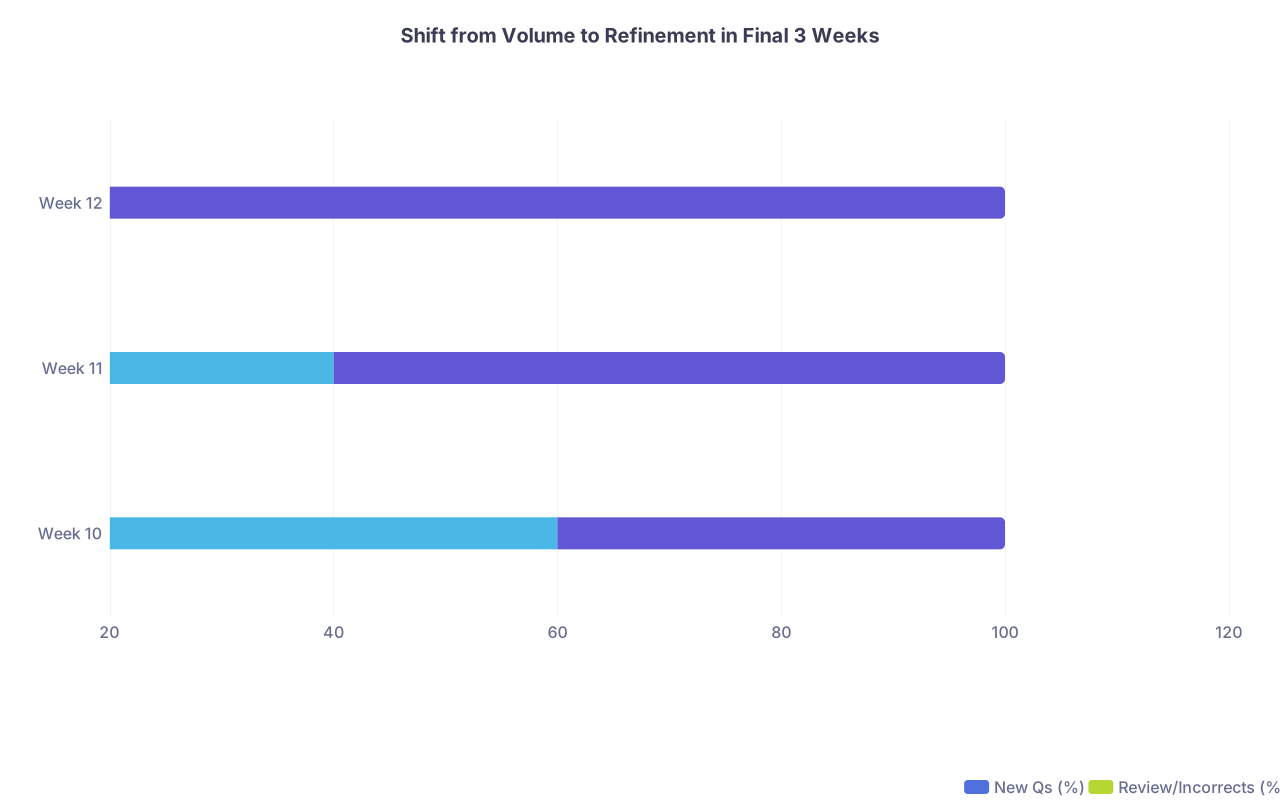
Here is where students often self‑sabotage. They panic and increase volume. Wrong move. The taper is not laziness. It is performance optimization.
| Category | New Qs (%) | Review/Incorrects (%) |
|---|---|---|
| Week 10 | 60 | 40 |
| Week 11 | 40 | 60 |
| Week 12 | 20 | 80 |
Week 10: Begin Taper (50–60 Qs/day)
Goal: Slightly reduce load, focus on precision.
Q‑bank format:
- 1–2 mixed full blocks per day.
- Lean more on:
- Incorrects
- Marked questions
- Selected “high‑yield” subjects (pharm, micro, biostats)
Daily target (Mon–Sat):
- 50–60 Qs
- 3–4 hours deep review
- 2–3 hours structured pass through your consolidation resources (First Aid/Pathoma boards book, etc.)
End of Week 10:
- Another NBME/self‑assessment:
- If score is at or above your minimum target: continue taper.
- If below: you may keep volume higher for a few more days, but do not destroy your sleep and sanity.
Week 11: Sharpen and Simulate (40–50 Qs/day)
Goal: Quality over quantity. This is not the week to suddenly discover a new 500‑page resource.
Q‑bank format:
- Mixed timed blocks only.
- One or two 40‑question blocks on heavy days, some days only 1.
Daily target (Mon–Sat):
- 40–50 Qs
- Intentional review:
- Rewatching targeted videos on your worst 3–4 topics
- Re‑reading your question notes
- Doing “rapid fire” recall (concept lists, pharm side effects, formulas)
By the end of Week 11 you should:
- Have your test‑day plan locked (sleep, meals, commute, break timing).
- Not be adding new content sources. Zero.
Week 12: Final Taper and Exam Week (20–30 Qs/day → 0)
Goal: Arrive at the exam rested, with sharpened recall and stable confidence.
This week should be structured but not brutal.
Day‑by‑day structure (assuming exam on Friday):
Saturday (6 days before):
- Final full self‑assessment (NBME/UWSA).
- Light to moderate Qs afterwards (20–40) only if you have mental bandwidth.
- Evening: review exam briefly, then stop.
Sunday (5 days before):
- 30–40 Qs, all mixed timed.
- Fast, focused review of incorrects.
- 2–3 hours skimming your highest‑yield summary resources.
Monday–Tuesday (4–3 days before):
- 20–30 Qs each day, mostly incorrects or marked.
- No more crushing yourself with new blocks.
- Finish any “must‑see” topics (biostats quirks, ethics).
Wednesday (2 days before):
- 10–20 very light questions at most, or none.
- Only from topics you want to keep “warm.”
- Review key formulas, micro charts, pharm lists.
Thursday (day before exam):
- 0–10 questions. Many do best with zero.
- Short review of your personal error log, not new items.
- Prioritize:
- Sleep schedule aligned with test
- Logistics (print permit, know testing center route, food packed)
Friday: Exam day.
- No Q‑bank login.
- Arrive early. Execute the routines you practiced during timed blocks.
Putting It All Together: Sample Weekly Layout
Here is a snapshot of how the middle of your dedicated (peak) might look.
| Time Block | Task |
|---|---|
| 8:00–9:30 | 40Q mixed timed block |
| 9:30–11:30 | Review block in detail |
| 11:30–12:00 | Break / short walk / snack |
| 12:00–1:30 | 40Q mixed timed block |
| 1:30–3:30 | Review block |
| 3:30–4:00 | Break |
| 4:00–6:00 | Targeted video/text on weak topics |
| Evening (optional) | Flashcards / light review |
You adjust the exact times, but the sequence stands: questions → review → content targeted to misses. Not the other way around.
Common Mistakes by Phase (And What You Should Do Instead)
I have watched dozens of students repeat the same errors. You do not need to.

Early Weeks (1–4)
Mistake: Waiting to “finish content” before starting Q‑banks.
Fix: Start with 20–30 Qs/day Week 1. Questions teach content.Mistake: Doing only tutor mode, reading explanations casually.
Fix: Move to timed blocks by late Week 1. Treat questions like mini‑exams.
Peak Weeks (5–9)
Mistake: Bragging about “120 questions a day” with shallow review.
Fix: Cap yourself at what you can actually review properly. 60–80 well‑reviewed Qs beats 120 skimmed.Mistake: Ignoring fatigue and sleep.
Fix: If your block scores crash across the day, reduce to 2 solid blocks and rest more.
Taper Weeks (10–12)
Mistake: Panic‑adding a new Q‑bank or new textbook.
Fix: Double down on your existing questions and weak areas only.Mistake: Taking a full NBME 1–2 days before the exam and freaking out.
Fix: Last full self‑assessment 5–7 days pre‑exam. After that, trust the process.
Final 3 Takeaways
Peak on purpose. Ramp Q‑banks slowly Weeks 1–4, hit your heaviest volume Weeks 6–8, then taper thoughtfully Weeks 10–12.
Questions first, content second. Use Q‑banks to drive what you study, not as an afterthought once you “finish the book.”
Respect the taper. The final 7–10 days are for refinement and rest, not heroics. You want to walk into the exam trained, not trashed.