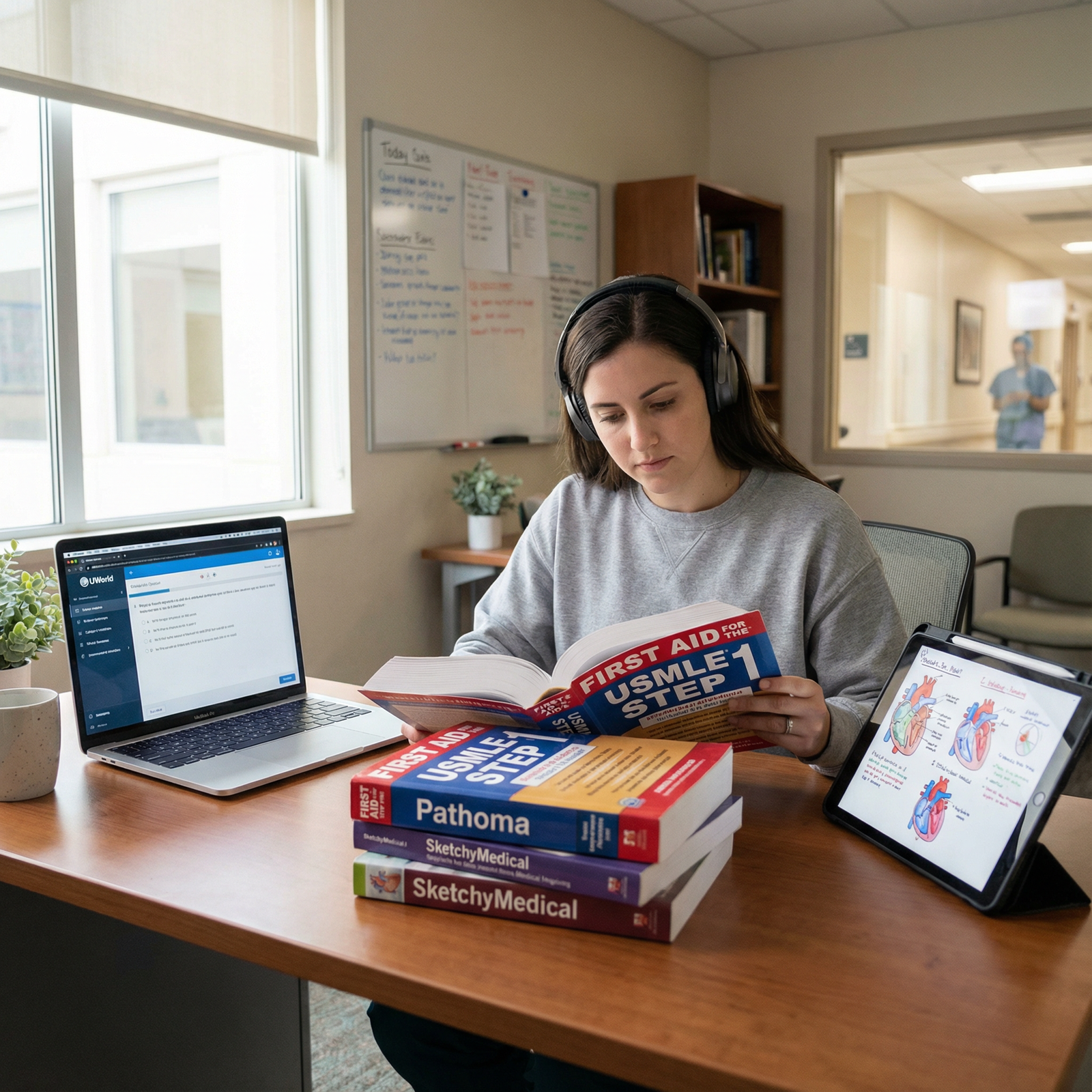
Preparing for high-stakes medical exams can feel overwhelming—endless content, limited time, and constant pressure to perform. The good news: you don’t need more random resources; you need the right ones, used strategically.
This guide breaks down five game-changing Medical Study Guides and tools that can truly transform your Exam Preparation for the USMLE and other major medical exams. You’ll learn not just what these resources are, but how to use them together to maximize Pathology Learning, integrate Visual Learning, and build an efficient, high-yield system that actually works.
1. First Aid for the USMLE Step 1: Your High-Yield Master Blueprint
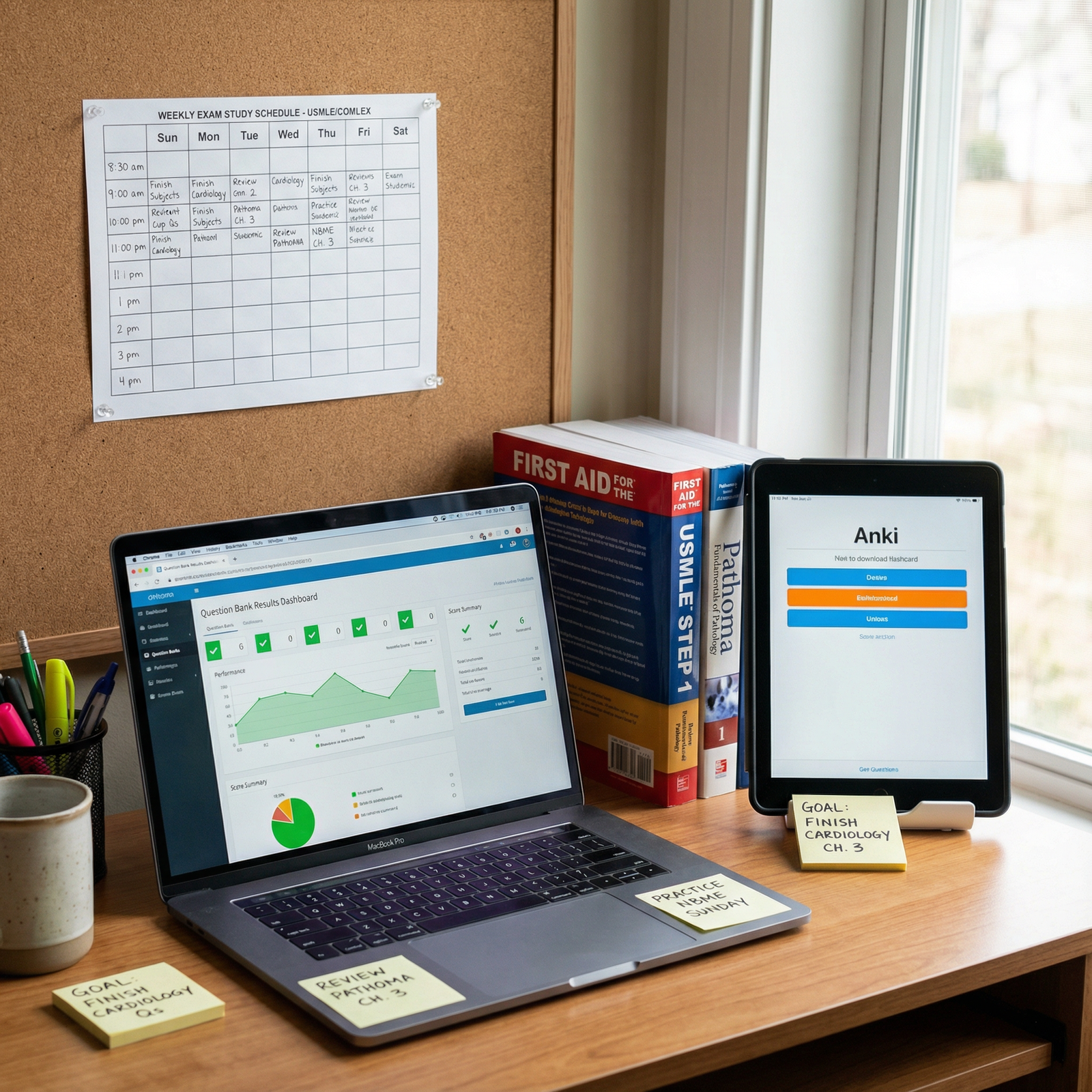
First Aid for the USMLE Step 1 is widely considered the cornerstone resource for Step 1 prep. Think of it as the master outline of everything the exam cares about most.
Why First Aid Still Matters in Modern Exam Prep
Despite constant changes in medical education and the USMLE format, First Aid remains essential because it:
- Maps the exam: It gives a high-yield overview across systems and disciplines—biochemistry, pathology, pharmacology, microbiology, and more.
- Prioritizes key facts: It filters out lower-yield details so you don’t drown in minutiae from full-length textbooks.
- Integrates concepts: You’ll see pathophysiology, clinical findings, and management together, mirroring how Step questions are structured.
Key Features That Make First Aid a Core Study Guide
Condensed Information
- Bullet-point style summaries get straight to the point.
- Ideal for quick review and last-minute consolidation.
- Helpful for building and reinforcing spaced repetition flashcards (e.g., Anki).
High-Yield Visual Aids
- Tables that compare similar diseases (e.g., nephritic vs. nephrotic syndromes).
- Diagrams for pathways like glycolysis and the coagulation cascade.
- Charts for pharmacology (drug classes, mechanisms, adverse effects).
Built-In Framework for Integration
- Organ system chapters allow you to link pathology, pharmacology, and physiology in one place.
- Side notes and mnemonics help memory retention.
How to Use First Aid Effectively (Not Just Read It)
Many students make the mistake of reading First Aid like a textbook. It’s much more powerful when used as a:
Roadmap
- Before you begin a new block (e.g., cardio), skim the corresponding First Aid section to see what’s high-yield.
- Use it to identify “must-know” conditions and concepts.
Anchor for Active Learning
- As you do UWorld questions, annotate your First Aid with:
- Additional explanations
- Missed associations
- Common traps or question patterns
- Over time, your copy becomes a customized, deeply integrated resource.
- As you do UWorld questions, annotate your First Aid with:
Consolidation Tool
- During dedicated study, use it for daily or weekly review:
- Morning “warm-up” review of previously covered systems.
- Final 1–2 weeks: rapid cover-to-cover passes to reinforce retention.
- During dedicated study, use it for daily or weekly review:
Example: Turning First Aid into a Learning Hub
A third-year student, Emily, used First Aid as her central hub:
- She watched Pathoma lectures, then added key clarifications directly into the Pathology chapters in First Aid.
- After each UWorld block, she marked topics she missed with tabs and re-reviewed those sections nightly.
- By exam time, First Aid wasn’t just a book—it was a personalized, integrated “brain map” of Step 1 content.
Where to Get It and Which Format to Choose
- Available in print and eBook formats through major online retailers, campus bookstores, and medical book distributors.
- Print:
- Easier for annotation and flipping between sections.
- Preferred by most students for heavy exam prep.
- Digital:
- Searchable and portable.
- Helpful if you like studying on a tablet with stylus notes.
For exam-heavy phases like dedicated USMLE prep, many students use both: print for deep studying, digital for quick reference on the go.
2. UWorld Qbanks: The Gold Standard for Exam-Style Practice
If First Aid is your blueprint, UWorld Qbanks is your simulation lab—where you actually learn to think like the exam.
Why UWorld Is Considered Essential for USMLE Success
UWorld is not just another question bank; it’s a powerful teaching tool because it:
- Mirrors USMLE question style and difficulty.
- Emphasizes clinical reasoning, not just recall.
- Provides in-depth educational explanations that feel like mini-lectures.
Core Features That Make UWorld a Game-Changer
Realistic Exam Simulation
- Board-style vignettes that require integration of history, labs, imaging, and management.
- Timed and tutor modes to match your current level and goals.
- Interface and navigation similar to actual USMLE exams.
Comprehensive Explanations
- Detailed rationales for:
- The correct answer: underlying pathophysiology, logic, and key clues.
- Each incorrect option: why it’s wrong and what scenario it would be correct in.
- High-quality images and diagrams that support Visual Learning.
- Mini-review sections at the end of explanations summarizing high-yield facts.
- Detailed rationales for:
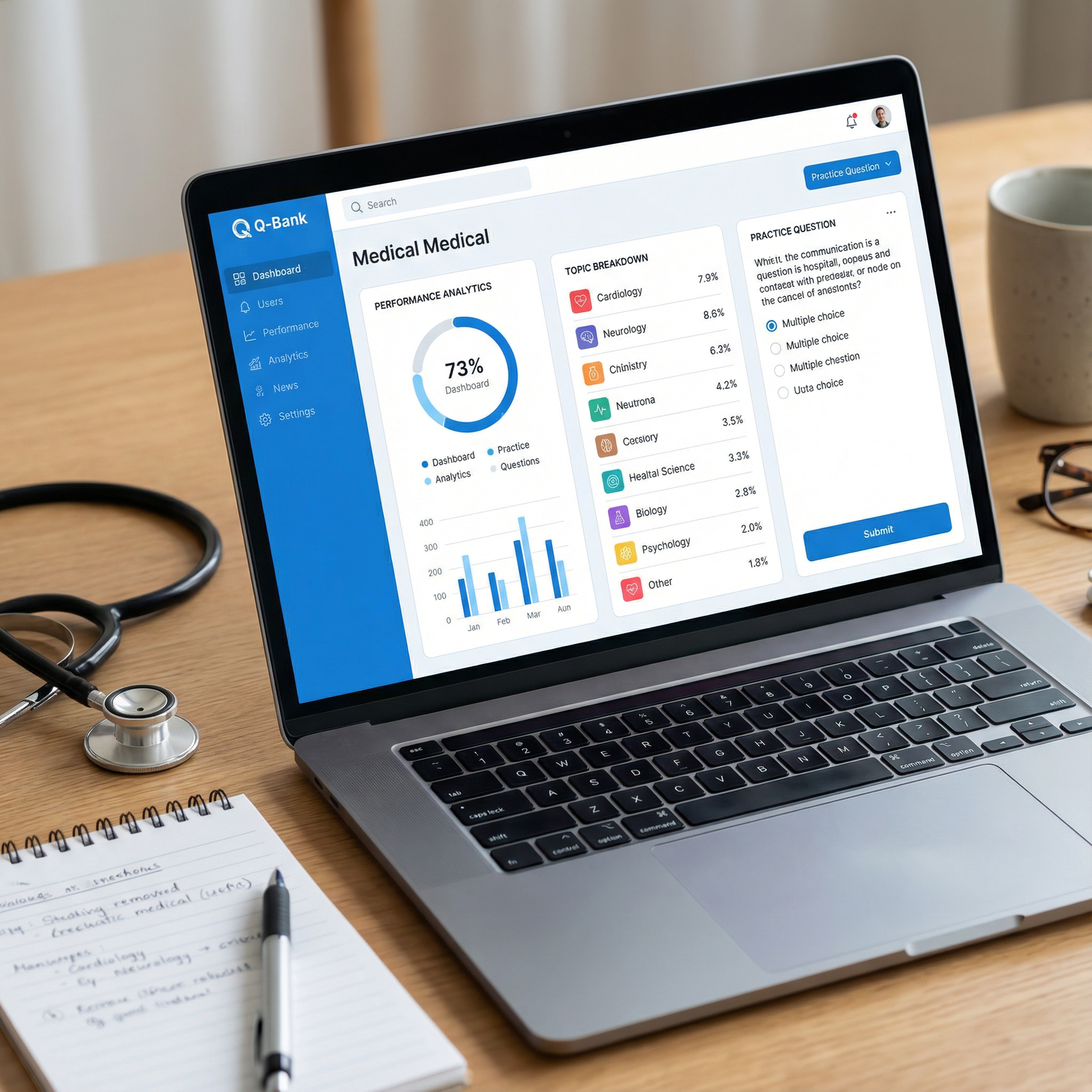
Performance Analytics
- Breakdown by:
- System (e.g., Cardio, Renal, Neuro)
- Discipline (e.g., Pathology, Pharmacology, Biostats)
- Shows trends over time and highlights persistent weak areas.
- Lets you create targeted, custom question blocks.
- Breakdown by:
How to Integrate UWorld into Your Study Plan
Early Phase (Pre-dedicated)
- Start with tutor mode, focusing on:
- Understanding question structure.
- Thoroughly reading explanations, even for correct answers.
- Aim for 10–20 questions/day with deep review.
- Use missed questions to guide what you re-review in First Aid or Pathoma.
Dedicated Phase
- Move toward timed blocks (40 questions) to simulate exam stamina.
- Target 1.5–2 full blocks per day with:
- 2–3 hours for the questions.
- 2–4 hours for in-depth explanation review.
- Track progress weekly and adjust:
- If pathology is weak: add more Pathoma and corresponding UWorld blocks.
- If time management is an issue: build more timed, mixed blocks.
Case Study: Using Analytics to Fix Weaknesses
Jake struggled with time management during practice exams:
- He identified via UWorld analytics that:
- He spent too long on biostatistics questions.
- His renal pathology accuracy was low.
- He responded by:
- Creating timed blocks focused on Renal + Biostats.
- Practicing educated guessing and moving on when stuck.
- By exam day, he could consistently finish full blocks with time to spare and improved accuracy in his weak areas.
Access and Subscription Strategies
- UWorld is available as various time-limited subscriptions (e.g., 30, 90, 180 days).
- Tips:
- Count backward from your exam date and add a buffer (2–4 weeks).
- Start earlier if you want to do a full pass plus a partial second pass or reset.
- Combine with self-assessments (UWSA, NBME) to check readiness.
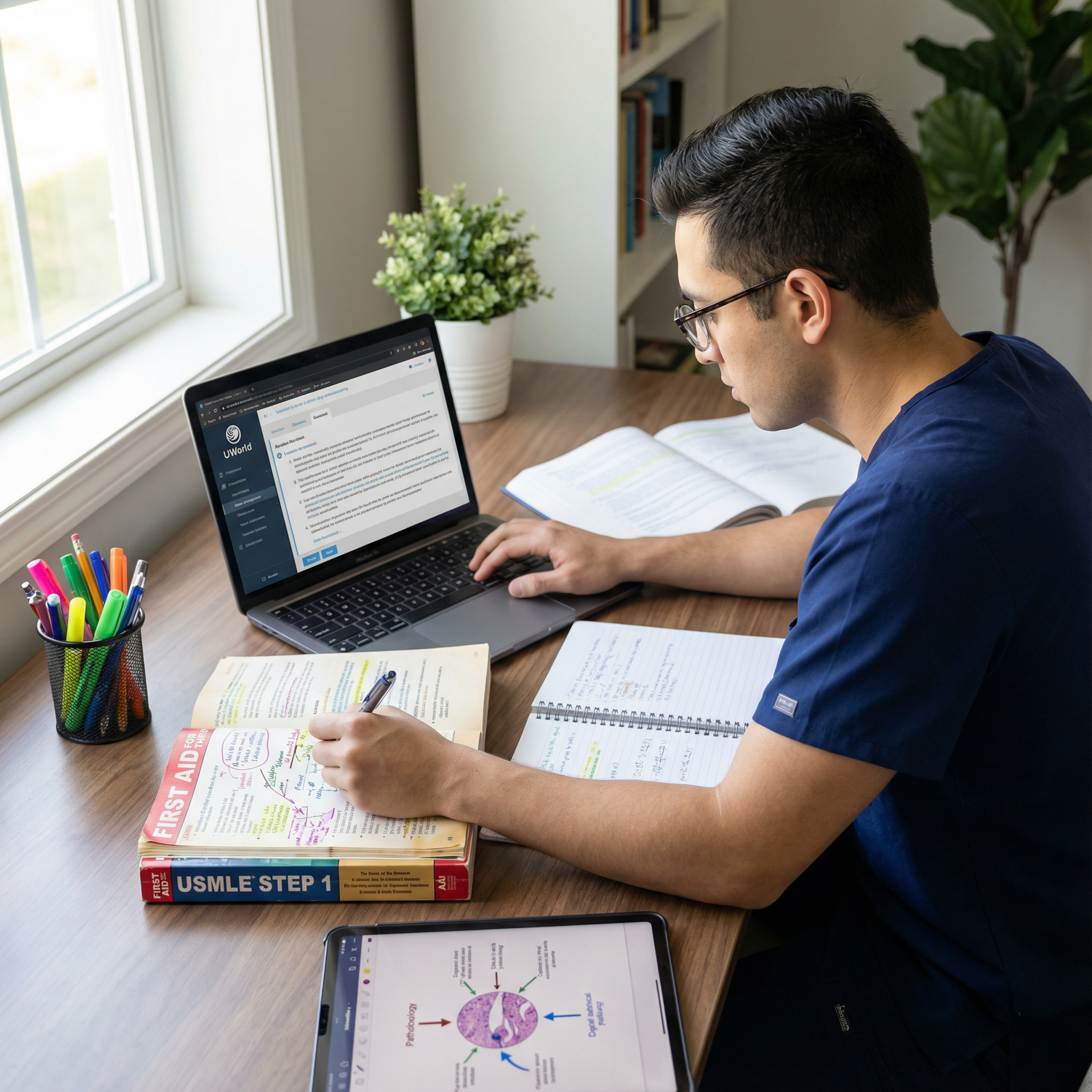
3. Pathoma: Fundamentals of Pathology – Mastering the Core of Step Exams
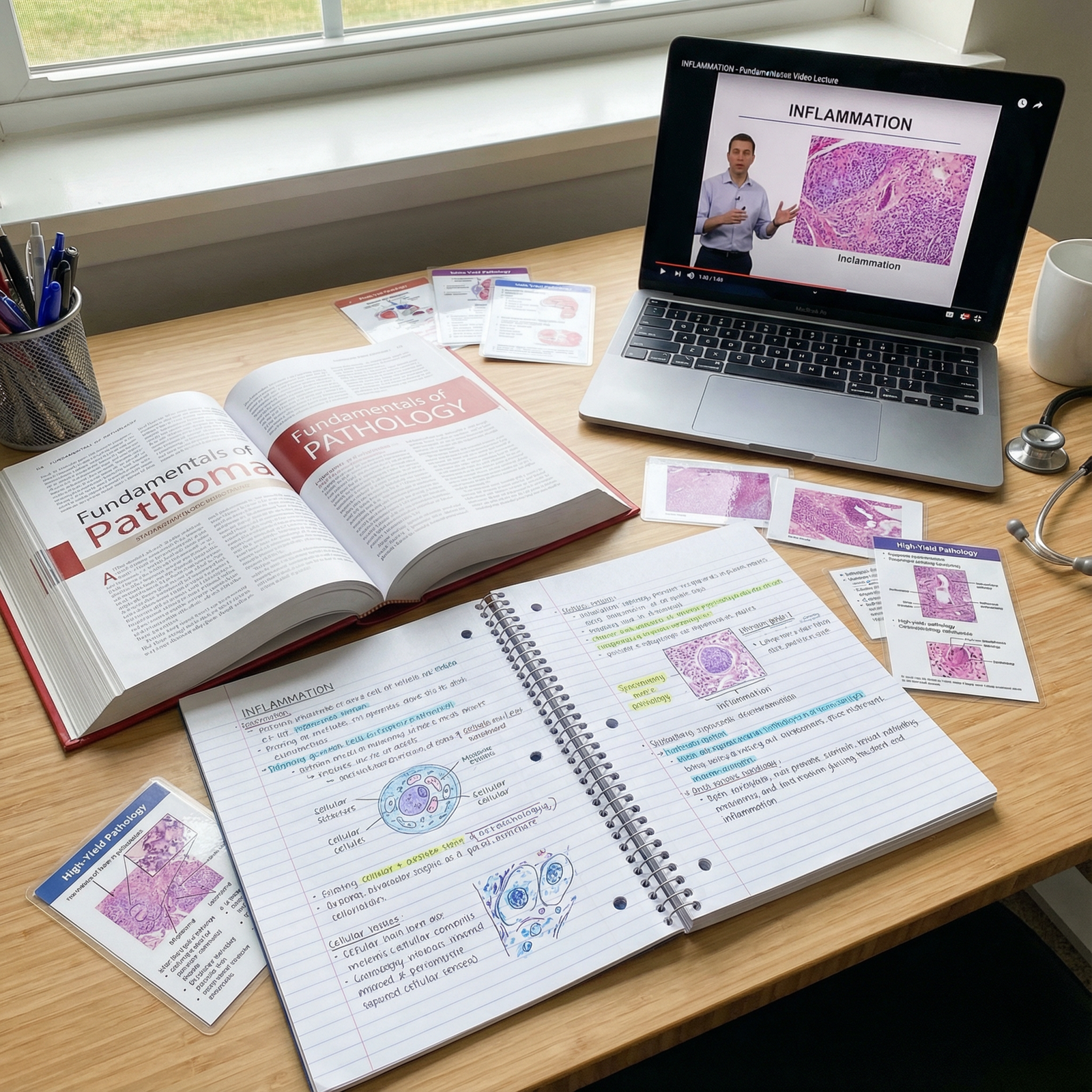
Pathology is the backbone of clinical reasoning, and Pathoma: Fundamentals of Pathology is one of the most efficient ways to truly understand it, not just memorize it.
Why Pathoma Is So Widely Recommended
Created by Dr. Hussain Sattar, Pathoma stands out because it:
- Focuses on mechanisms and logic, not just lists.
- Matches how questions are written—around pathogenesis, manifestations, and clinical correlations.
- Works seamlessly alongside First Aid and UWorld for integrated Pathology Learning.
Key Components of Pathoma
Concise Video Lectures
- System-based and concept-based videos that:
- Explain disease mechanisms step-by-step.
- Emphasize what’s truly high-yield.
- Are usually 5–20 minutes—ideal for focused sessions.
- Dr. Sattar’s whiteboard-style explanations reinforce conceptual understanding.
- System-based and concept-based videos that:
High-Yield Textbook
- The Pathoma book mirrors the lecture content.
- Short, annotated-style notes with diagrams and gross/micro images.
- Perfect for quick pre-lecture read or post-lecture review.
Visual Learning Reinforcement
- Hand-drawn figures simplify complex cellular processes and inflammatory pathways.
- Clear diagrams for neoplasia, hemodynamic disorders, and immune diseases.
- Excellent for students who benefit from seeing mechanisms drawn out.
How to Use Pathoma in a Structured Way
During System Blocks (M1/M2)
- Watch the relevant Pathoma videos before or during your school pathology block.
- After each lecture:
- Do associated UWorld questions.
- Then annotate key clarifications into First Aid or your Anki deck.
During Dedicated USMLE Prep
- Identify pathology-heavy weak systems (e.g., Heme/Onc, Renal, GI).
- Re-watch those specific chapters at 1–1.25x speed.
- Use the book as a rapid-review tool:
- 15–30 minutes/day on previously covered chapters.
- Focus on mechanisms and key buzzwords.
Student Experience: Pathoma as a Pathology Game-Changer
Sarah, a second-year student, felt lost in traditional pathology textbooks:
- She couldn’t connect microscopic changes with clinical findings.
- After switching to Pathoma:
- She gained a structured mental model of inflammation, neoplasia, and vascular pathology.
- Her UWorld and NBME pathology performance significantly improved.
- She described Pathoma as the turning point where pathology finally “clicked.”
Access and Cost Considerations
- Access is via a paid subscription (monthly or annual) for video content.
- The textbook can be purchased in print; many subscriptions bundle access.
- For most students, using Pathoma consistently during preclinical years and again briefly in dedicated prep offers excellent return on investment.
4. SketchyMedical: Visual Mnemonics for Long-Term Retention
For content-heavy fields like microbiology and pharmacology, classic rote memorization is painful and inefficient. SketchyMedical transforms these subjects into memorable stories using Visual Learning and narrative-based mnemonics.
Why SketchyMedical Works So Well
Sketchy leverages:
- Dual coding (visual + verbal information)
- Storytelling (characters, environments, plots) to create memorable, durable memory traces.
Instead of memorizing 20 features of a bacterium, you remember a vivid “scene” full of symbolic elements that represent each fact.
Key Features of SketchyMedical
Animated Story-Based Videos
- Each pathogen, drug, or concept is turned into a scene:
- E.g., a pirate ship for Staph aureus, or a desert scene for certain Gram-negative rods.
- Each character, object, and color encodes specific, testable facts.
- Each pathogen, drug, or concept is turned into a scene:
Narrative-Based Learning
- Information is woven into a coherent story:
- Mechanism of action
- Side effects
- Clinical uses
- Key associations
- Stories are designed for recall during exams (e.g., “blue suit” = drug causing blue discoloration).
- Information is woven into a coherent story:
Integrated Quizzing and Recall
- Practice questions and image-based recall tools after each video.
- Great for spaced repetition:
- Revisit key scenes weekly or monthly.
- Test yourself on what each symbol represents.
How to Use Sketchy Strategically
For Microbiology
- Watch SketchyMicro videos aligned with your microbiology course.
- Make an Anki deck using image occlusion or scene-based prompts to reinforce:
- Virulence factors
- Clinical manifestations
- Treatments
- Before exams:
- Rapidly review the scenes instead of rereading notes.
For Pharmacology
- Use SketchyPharm to build mental “files”:
- Drug classes (e.g., beta-blockers are all in one type of scene).
- Side-effect clusters (specific recurring symbols).
- Integrate with UWorld:
- If you miss a drug question, revisit its Sketchy scene the same day.
Student Testimonial: Transforming Weak Memorization Skills
Tim considered himself “bad at memorization”:
- Traditional flashcards and outlines weren’t sticking.
- After using Sketchy:
- He could recall drug side effects by replaying the scene in his head.
- Microbiology questions felt more intuitive, as he recognized symbolic clues embedded in vignettes.
- His pharmacology scores rose substantially, and he found the learning process more enjoyable.
Access and Subscription Options
- Subscription-based platform with:
- Different plans (monthly, yearly, subject-based).
- Bundles that may include micro, pharm, pathology, and more.
- Consider starting earlier (M1/M2) so you can reuse scenes during dedicated USMLE prep instead of cramming them late.
5. NBME Practice Exams: The Most Reliable Score Predictor
The National Board of Medical Examiners (NBME) creates both the USMLE and a series of official practice exams. These NBME practice tests are crucial for:
- Assessing your true exam readiness.
- Predicting score range.
- Identifying remaining knowledge and test-taking gaps.
Why NBME Exams Are So Valuable
- Authentic Question Style
- Written by the same organization that writes the USMLE.
- Reflects the tone, length, and difficulty of real test questions.
- Realistic Time Pressure
- Simulates the full exam experience, including mental fatigue and pacing.
- Score Reports
- Provides scaled scores and performance breakdown.
- Helps determine if you’re on track or need more time before your exam date.
Key Features and How to Use Them
Authentic Testing Environment
- Take them in one sitting under strict exam conditions:
- Quiet environment.
- No pausing or consulting notes.
- Timed according to real USMLE blocks.
- Take them in one sitting under strict exam conditions:
Performance Feedback
- Review:
- Which systems and disciplines you’re weakest in.
- Patterns of errors (e.g., misreading, second-guessing, biostats difficulty).
- Then:
- Target those weaknesses with UWorld blocks + First Aid/Pathoma review.
- Review:
Score Trajectory and Timing Decisions
- Multiple NBME exams spaced 2–4 weeks apart can show:
- Whether your interventions are working.
- If you’re plateauing and need to adjust strategy.
- Crucial for deciding:
- Whether to postpone or proceed.
- When to ease off new content and focus on review.
- Multiple NBME exams spaced 2–4 weeks apart can show:
Case Example: Targeted Last-Month Adjustments
Laura scheduled NBME exams at 4 and 2 weeks before Step:
- First NBME:
- Exposed weak areas in endocrine and behavioral sciences.
- She refocused her plan on:
- Behavioral science/ethics questions.
- Endocrine Pathoma + First Aid review.
- Second NBME:
- Showed improved performance and a higher predicted score.
- She maintained that targeted review, leading to a result that exceeded her initial goal.
Access and Purchase Options
- NBME practice exams can be purchased individually via the NBME online portal.
- Consider:
- Budgeting for at least 2–3 NBME exams during dedicated prep.
- Scheduling them at logical checkpoints (e.g., 5–6 weeks out, 3–4 weeks out, 1–2 weeks out).
Putting It All Together: A Cohesive Exam Preparation Strategy
These five resources are powerful on their own, but they are transformative when used together in a coordinated plan.
Example Weekly Structure During Dedicated Study
Daily
- 1–2 UWorld blocks (40–80 questions) + deep review.
- Targeted First Aid review of topics missed in UWorld.
- 30–45 minutes of Pathoma or Sketchy (depending on the topic of the day).
3–4 Times/Week
- Short First Aid “sweeps” of previously studied systems.
- Flashcards (e.g., Anki) built from UWorld/Pathoma/Sketchy.
Weekly
- One half-day for cumulative review: weak subjects and previously flagged questions.
- Every 2–3 weeks: NBME or UWorld self-assessment to evaluate trajectory.
Matching Resources to Your Learning Style
Visual Learners
- Emphasize Pathoma diagrams, Sketchy scenes, and UWorld images.
- Use annotated First Aid and drawing your own concept maps.
Conceptual Learners
- Lean heavily on Pathoma explanations and UWorld rationales.
- Use First Aid as a checklist rather than a primary learning tool.
Memorization-Heavy Challenges (Micro/Pharm)
- Use Sketchy as your main learning tool and First Aid to cross-check high-yield facts.
- Create flashcards anchored to the Sketchy scenes.
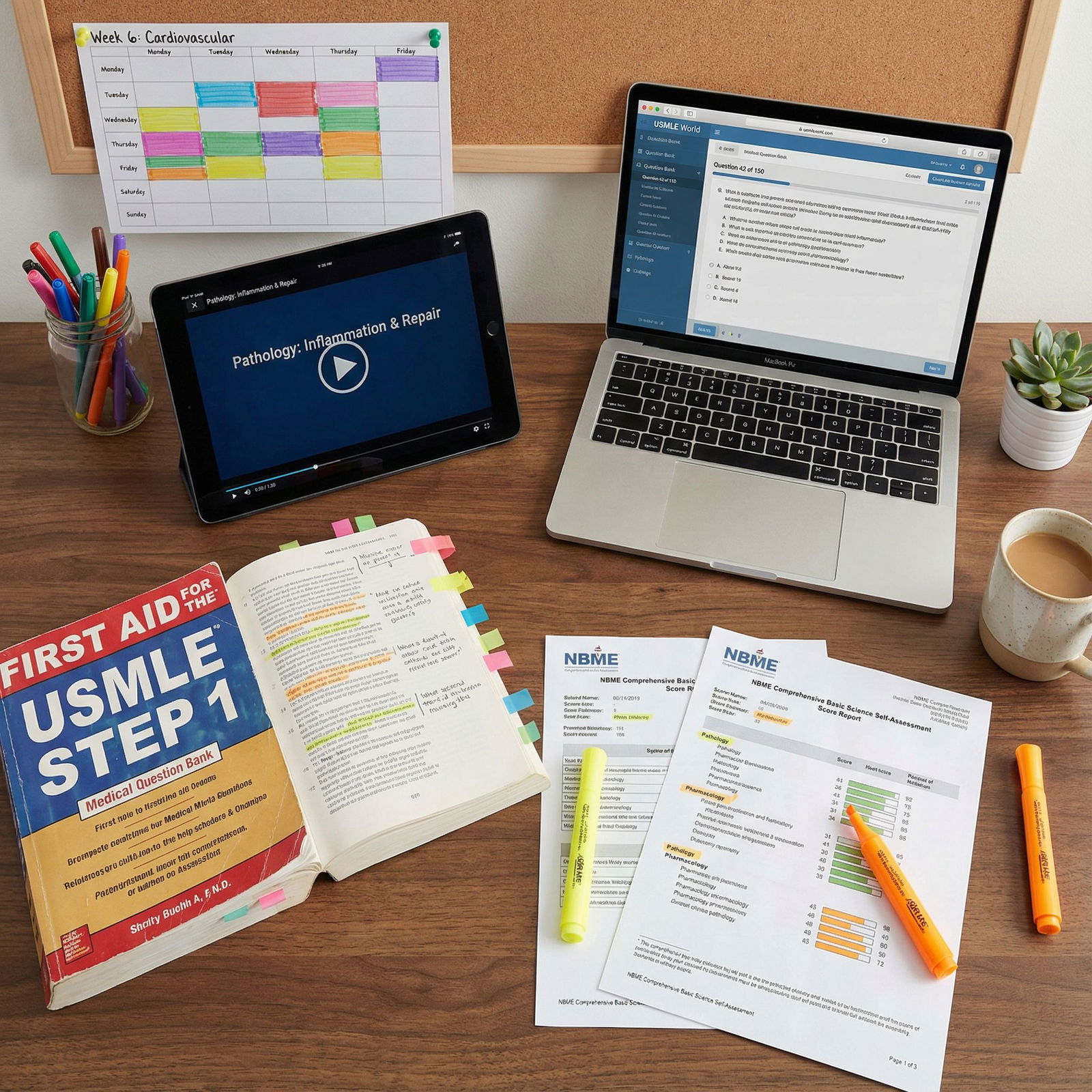
FAQs: Maximizing the Impact of These Medical Study Guides
1. How early should I start using these resources for USMLE preparation?
Ideally, start integrating them during your preclinical years:
- M1/M2 years:
- Use Pathoma and Sketchy alongside your course lectures.
- Begin light First Aid use as an outline, not as a primary text.
- 6–12 months before exam:
- Start a first pass of UWorld at a low daily question volume.
- 3–4 months before exam:
- Increase UWorld intensity.
- Start scheduling NBME practice exams to track readiness.
Starting early lets you build durable understanding instead of cram-based memorization.
2. How do I avoid feeling overwhelmed when combining multiple resources?
Use a primary–secondary framework:
- Choose:
- 1 primary question resource (UWorld).
- 1 primary outline (First Aid).
- 1 primary Pathology Learning tool (Pathoma) and/or Visual Learning tool (Sketchy).
- Everything else is secondary:
- Only add extra texts or videos if a concept truly isn’t clicking.
- Plan your week in advance:
- Assign specific systems or subjects to each day.
- Avoid jumping chaotically between topics and platforms.
3. How many NBME exams should I take before my USMLE?
Most students benefit from 2–4 NBME practice exams:
- First NBME: ~5–6 weeks before test day to establish baseline.
- Second NBME: ~3–4 weeks before to track progress.
- Additional NBME(s): 1–2 weeks before for final check and confidence. Balance cost, time, and anxiety—more is not always better if it cuts into high-yield studying without changing your plan.
4. Are these resources still useful now that Step 1 is pass/fail?
Yes—absolutely:
- Step 1 content still underpins:
- Step 2 CK
- Shelf exams
- Clinical reasoning in rotations and residency
- Strong foundations from First Aid, UWorld, Pathoma, Sketchy, and NBME practice:
- Make Step 2 CK prep easier and more efficient.
- Help you honor shelves and stand out on the wards. Even in a pass/fail era, a strong conceptual base and efficient Exam Preparation are invaluable.
5. What if my budget is limited—how should I prioritize?
If you can’t get everything, prioritize based on impact:
- UWorld Qbank – highest impact for exam-style practice and learning.
- First Aid – core high-yield outline and annotation platform.
- Pathoma – if your pathology foundation is weak or you want clean, conceptual explanations.
- Sketchy – especially if you struggle with micro/pharm memorization.
- NBME exams – at least 1–2 if possible for calibration and readiness checks.
You can also:
- Share or resell physical books responsibly.
- Plan shorter but more intensive subscription periods.
Using these five resources with intention—not just collecting them—can completely change your exam trajectory. With a structured plan, active learning, and regular performance checks, you can transform anxiety into confidence and turn your Medical Study Guides into a powerful, integrated Exam Preparation system.