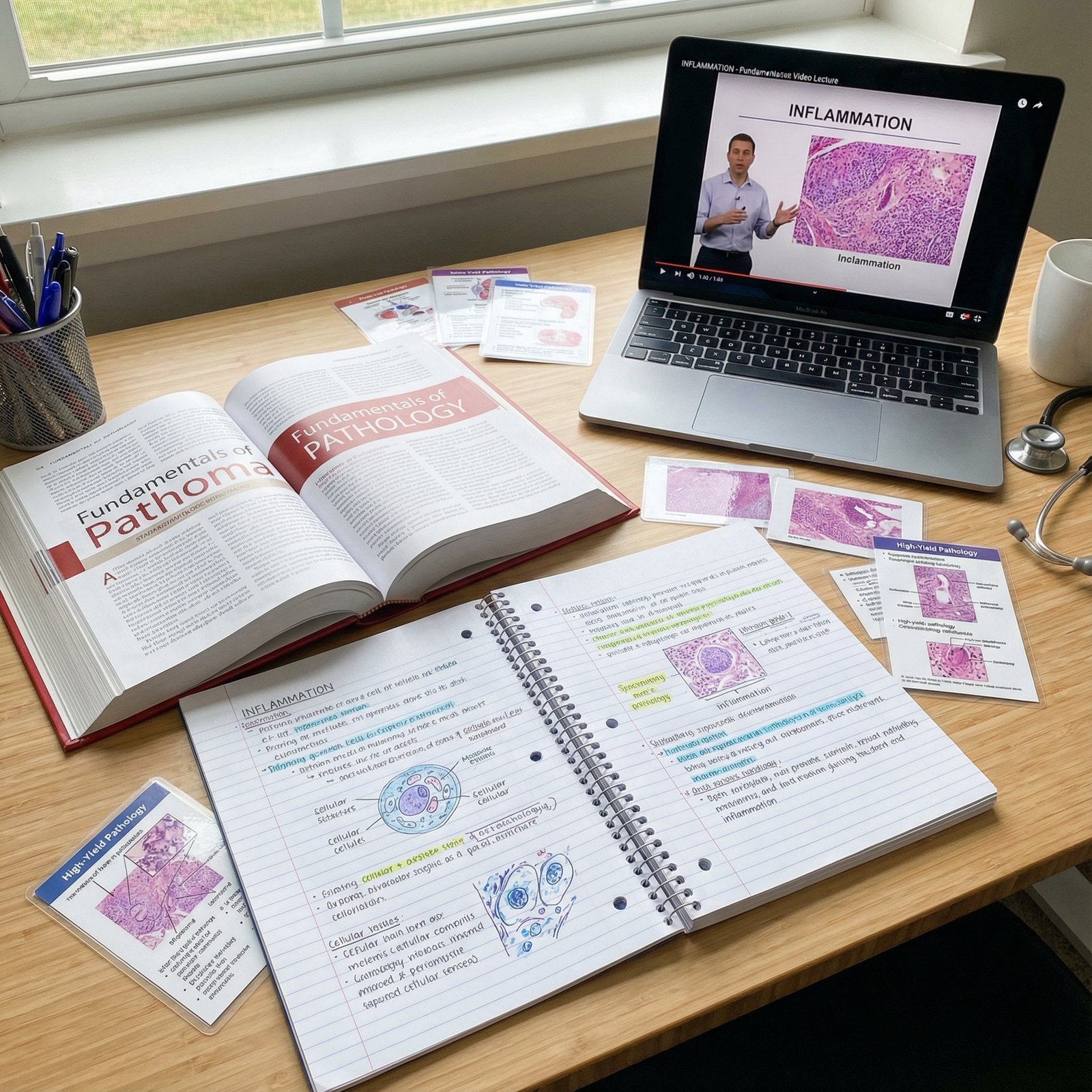
The way most students “study micro and pharm” for boards is wildly inefficient.
They graze over every bug and every drug, touch 40 resources, and then act surprised when questions crush them on the same 60–80 patterns that always show up. Microbiology and pharmacology are high‑yield not because of volume, but because of pattern density. You do not need 10 books. You need the right pairings, used in the right way, with ruthless focus on what Step/Level and shelves actually test.
Let me walk you through that systematically.
The Real Game: Micro + Pharm Are Pattern Recognition, Not Trivia
Micro and pharm are where students get seduced by detail. Every receptor subtype. Every virulence factor. Every exotoxin domain. Then they hit UWorld and realize the exam writers do not care how many subunits Pseudomonas exotoxin A has — they care whether you recognize “burn patient + grape-like odor + blue-green pigment” and that the drug they are hinting at will hit the right mechanism and side effect.
So your resources have to do three things:
- Compress the brute‑force memorization into manageable anchors and images.
- Tie those anchors to specific clinical vignettes and question patterns.
- Rehearse the same heavy hitters over and over until recall is automatic, under time pressure.
That is where book pairings come in. Not “read everything.” Deliberate combinations.
Core Microbiology Pairings: Anchor + Clinical Bridge
1. First Aid + Sketchy Micro: The Default High-Yield Spine
If you do nothing else for micro, this is the pairing that carries the majority of UWorld/AMBOSS questions.
Role of each:
- First Aid (FA) for the USMLE:
- Outline of all testable organisms
- Buzzwords, stains, lab diagnostics
- Treatment tables (with basic pharm integration)
- Sketchy Micro:
- Visual mnemonics that encode:
- Morphology (Gram status, shape)
- Reservoir, transmission
- Key toxins / virulence factors
- Pathologies + organ systems
- Go‑to treatments
- Visual mnemonics that encode:
Used correctly, FA is your index and Sketchy is your encoding.
How to actually pair them (the part most people do wrong):
Day structure when you are in dedicated or a heavy micro block:
- Start with FA section (e.g., Gram+ cocci).
- For each organism:
- Watch the relevant Sketchy video once at normal speed.
- Immediately flip to FA and annotate in the margins:
- Any missing detail from Sketchy that appears in FA.
- Board‑relevant associations (post‑strep GN vs rheumatic fever, etc.).
- Make one simple table per group (on separate paper / digital note):
- Columns: Organism, shape/arrangement, key clinical, major virulence, first‑line drug, classic board scenario.
You are building a micro “control panel” from FA and wiring it into your memory via Sketchy.
, Random Textbook Reading](https://cdn.residencyadvisor.com/images/articles_svg/chart-relative-micro-resource-impact-on-board-performanc-2028.svg "Relative Micro Resource Impact on Board Performance")
| Category | Value |
|---|---|
| First Aid Alone | 60 |
| Sketchy Alone | 70 |
| [FA + Sketchy](https://residencyadvisor.com/resources/exam-prep-resources/what-top-scorers-actually-use-insider-board-prep-book-shortlists) | 88 |
| Random Textbook Reading | 40 |
Those numbers are not from a randomized trial, but they are very close to what I see every year when students tell me their resources and then show me their question block performance. FA + Sketchy is the sweet spot.
When this pairing is enough:
- You have at least 6–8 weeks before your exam.
- You have the discipline to fully annotate FA with Sketchy content.
- You are willing to re-watch key Sketchy videos once or twice in the last 2 weeks.
If those are true, you rarely need another full micro book.
2. Microbiology Made Ridiculously Simple (MMRS) + First Aid: For Concept People
Some students do not connect well with cartoon mnemonics. They remember the story but not the bug. For those I often pivot to:
- Microbiology Made Ridiculously Simple (MMRS)
- Paired with First Aid as the scope limiter
What MMRS actually gives you:
- Group‑based chapters (e.g., Gram+ cocci, Gram– rods) with:
- Clinical scenarios at the start of the chapter.
- Logical grouping by disease pattern (e.g., pneumonia, meningitis, GI).
- Simple, hand‑drawn cartoons that are less busy than Sketchy.
- Shepherd’s Crook symbols or similar “board relevance” flags.
How to pair MMRS with FA without drowning:
Use FA to define what you are responsible for.
For each FA micro section, read the corresponding MMRS chapter, but with a pen:
- Mark only organisms that exist in FA.
- Circle any clinical correlation or phrase you see echoed in question banks (e.g., “currant jelly sputum” for Klebsiella).
- Ignore obscure organisms not in FA unless you have plenty of time.
Then write distilled MMRS insights into FA margins or next to your own tables.
Students who like understanding “why this bug causes this pattern of disease” do well with this pairing. It is slightly more time‑intensive than Sketchy, but for non‑visual learners, it rescues micro from rote memorization.
3. Clinical Microbiology Made Ridiculously Simple (different edition) + Question Banks: Shelf-Oriented Micro
On medicine and pediatrics, the micro questions often play out like:
- You are given day 3 of hospitalization, a new fever, different pattern of infiltrates on CXR.
- They want you to recognize a shift in flora or opportunistic organism based on setting and prior antibiotics.
Those questions require clinical micro.
The “Clinical Microbiology Made Ridiculously Simple” style books lean more into:
- Real clinical presentations.
- Explanation of why certain organisms dominate certain settings (ICU, neutropenia, CF lungs, prosthetic joints).
- Step 2ish scenarios even for Step 1.
You do not need to read these cover to cover. Instead:
- Use them for weak systems:
- Recurrent UTI patterns
- Nosocomial pneumonia (vent‑associated)
- Device‑associated infections (lines, catheters, prosthetics)
- Opportunistic infections in HIV, transplant, neutropenia.
Pair that with UWorld/AMBOSS filtering:
- Select medicine/peds blocks.
- Tag every question where micro is the key pivot point.
- Build a one‑page “clinical micro high yield” summary late in M3.
That one page will save shelf points. I have seen students bring that into pre‑call study and squeeze out two or three extra shelf questions per exam just from pattern familiarity.
Core Pharmacology Pairings: Mechanism + Side Effects + Use Pattern
Pharm is brutal if you try to memorize drug lists flat. It becomes tolerable when you tie:
- Mechanism of action (MOA)
- Clinical use
- Signature toxicity or side effect
- Contraindications / special cautions
into organ system narratives.
1. Katzung & Trevor’s Pharmacology Examination & Board Review + First Aid
This is my workhorse pharm pairing for students who want something more structured than FA but less overwhelming than the full Katzung textbook.
What Katzung Board Review (K&T) actually provides:
- Concise chapters arranged by drug class, organized by:
- Prototype drug
- MOA summary
- Clinical uses
- Adverse effects
- Drug interactions
- Pre‑ and post‑chapter questions that feel like mini‑board questions.
- Good tables that align well with how UWorld organizes drug classes.
How to pair with FA effectively:
- Use FA pharm tables as your scope.
- That prevents you from wandering into low‑yield weird drugs.
- For each system (e.g., cardio, neuro, endocrine):
- Read the corresponding chapter in K&T once.
- As you read, keep FA open:
- For each drug class in FA, find its prototype and high‑yield points in K&T.
- Add missing mechanistic pearls or side effect mnemonics into FA margins.
- Do the end‑of‑chapter questions in K&T:
- Treat them like a diagnostic:
- If you miss more than 30–40%, that class is not encoded yet.
- Go back and rebuild a smaller “class summary table” in your own words.
- Treat them like a diagnostic:
| Resource | Best Use Case | Depth | Time Cost |
|---|---|---|---|
| FA Pharm Tables | Scope + last-week review | Low | Very Low |
| Katzung & Trevor Board Rev | Core conceptual understanding | Medium | Moderate |
| Lippincott Pharm (text) | Deep dive, class explanations | High | High |
| Lange Pharm Flash Cards | On-the-go, spaced recall | Medium | Low |
| Sketchy Pharm | Visual anchors for hard classes | Medium | Moderate |
This pairing is strong if you:
- Are okay with prose and not just charts.
- Need to see mechanism tied to physiological pathway.
- Want practice questions integrated into your reading.
2. Sketchy Pharm + FA Pharm Tables: For Visual Lock-In
Micro + Sketchy is almost standard. Pharm + Sketchy can be trickier.
The upside:
- Excellent for:
- Autonomic drugs (sympathomimetics, blockers, cholinomimetics).
- Cardiovascular (anti‑arrhythmics, anti‑hypertensives, lipid drugs).
- Some neuro (antipsychotics, antidepressants, mood stabilizers).
- The vignettes encode:
- Mechanism
- Major clinical uses
- Signature side effects or warnings
The downside:
- Heavy time cost.
- Not all classes are equally strong or up‑to‑date.
How to use this pairing without getting buried:
- Do not aim to watch every Sketchy Pharm video unless you are very early M2 and disciplined.
- Selectively target:
- Classes you consistently miss in question banks.
- Classes that have complex tiered side effects (e.g., anti‑psychotics, anti‑arrhythmics).
- After each targeted video:
- Immediately update your FA pharm tables:
- Add 1–2 word cues from the Sketchy scene as retrieval hooks.
- Mark in bold or underline the signature side effects.
- Immediately update your FA pharm tables:
Then, last 1–2 weeks before boards:
- Review FA pharm tables row by row.
- As you see each drug, mentally “flash” the Sketchy image.
- If the image will not load in your brain, that class is not encoded; re‑watch only that video.
This works particularly well for students who already used Sketchy in MS2 and just need to reactivate those associations.
3. Lippincott’s Illustrated Reviews: Pharmacology + FA: For the Detail-Oriented
Some of you are pattern people. Some are pathway people. If you are the latter and find short summaries frustratingly thin, Lippincott Pharm gives you:
- Well‑structured chapters by system and class.
- Clear diagrams of pathways (e.g., RAAS, autonomic receptors).
- Good explanations of why certain side effects occur.
This is overkill for most, but valuable for:
- Students with weaker physiology background.
- People who repeatedly miss “why this drug causes this toxicity” questions.
Pairing with FA is straightforward:
- Use Lippincott for:
- Autonomics (foundational).
- Cardio drugs.
- Neuropsych drugs (especially mechanisms).
- Restrict reading to sections explicitly connected to drugs that appear in FA.
If a drug does not appear in FA or your question bank repeatedly, do not sink time into it from Lippincott. You are not writing the exam; you are taking it.
Micro–Pharm Integration: Where the Points Really Hide
The boards rarely test bugs or drugs in isolation. They love the interface:
- “Patient on drug X develops new symptom Y — which organism is now at risk?”
- “Immunocompromised host, prophylaxis regimen, new lab pattern — what adjustment in drugs is needed?”
You need pairings that make you think across the wall between micro and pharm.
1. First Aid Infection Tables + Your Micro Notes
Several FA sections are deceptively high yield when actually mastered:
- HIV opportunistic infection prophylaxis
- Post‑exposure prophylaxis (HIV, rabies, HBV)
- TB treatment regimens and side effects
- Endocarditis prophylaxis patterns
- Surgical prophylaxis (e.g., cefazolin, vancomycin scenarios)
These tables are where micro (organism risk) and pharm (drug choice + toxicity) collide.
How to build this the right way:
- Take FA’s prophylaxis/treatment tables.
- On a separate sheet (or tablet), make a dual column for each row:
- Left: Scenario/organism
- Right Top: First‑line drug(s)
- Right Bottom: Key side effect / monitoring
Example:
- “CD4 < 200, HIV” → Pneumocystis jirovecii → TMP‑SMX → hyperkalemia, rash, bone marrow suppression.
- “Neutropenic fever” → Pseudomonas coverage → e.g., cefepime, piperacillin‑tazobactam → beta‑lactam allergies, interactions.
Then, when you do question blocks:
- Tag every case that hits prophylaxis or odd‑looking infections on strange antibiotic regimens.
- Add those pearls back into your integrated sheet.
Two or three pages of integrated micro–pharm like this are far more valuable than 50 extra pages of a random text.
2. Immunocompromised Host Tables: Use a Single Source, Then Drill
You can use:
- FA immunocompromised section
- MMRS clinical correlation tables
- Or a short clinical micro review book
But pick one as your base. Then:
- Build a table with:
- Type of immunodeficiency (e.g., neutropenia, T‑cell deficiency, splenectomy, CGD).
- Signature organisms.
- Typical prophylaxis drugs or empiric coverage.
This knowledge pops up across:
- Internal medicine shelf
- Pediatrics shelf
- Step/Level 2
- And occasionally still on Step/Level 1
Once you build the table, the way you lock it in is not re‑reading. It is doing 10–15 carefully selected UWorld/AMBOSS questions and pausing after each explanation to ask yourself:
- “Which part of my table did this question just test?”
- “Is my table missing something that keeps coming up?”
This is the part serious test takers do. The casual ones just underline more sentences and hope.
Smart Use of Flashcards and Question Banks With These Pairings
You can have the best book pairing on earth and still underperform if your review loop is weak.
1. Anki as the Glue, Not Another Resource
You do not need to make 10,000 original cards. You need targeted cards that fuse:
- The book pairing content
- The question bank decisions
Typical pattern I use with students:
- Use a mature deck (e.g., AnKing) as the baseline.
- Tag or suspend heavily:
- Keep only cards that are:
- Directly from FA micro/pharm tables.
- Major Sketchy images.
- High‑yield drug MOA + side effects.
- Keep only cards that are:
- Add custom cards for:
- Every unique table you built (prophylaxis, immunocompromised, autonomics).
- Every “I keep missing this same organism–drug–toxicity combo” from UWorld.
For micro:
- Cloze deletions around:
- Stains
- Unique virulence factors
- Distinguishing features between similar bugs (e.g., N. meningitidis vs N. gonorrhoeae; enterotoxigenic vs enterohemorrhagic E. coli).
For pharm:
- Cloze cards with:
- “[Drug] is a [class] that acts by [mechanism] and is commonly used to treat [condition], but can cause [signature adverse effect].”
Review:
- 80–150 micro/pharm cards per day during peak prep.
- Do not chase zero due; prioritize consistency over volume.
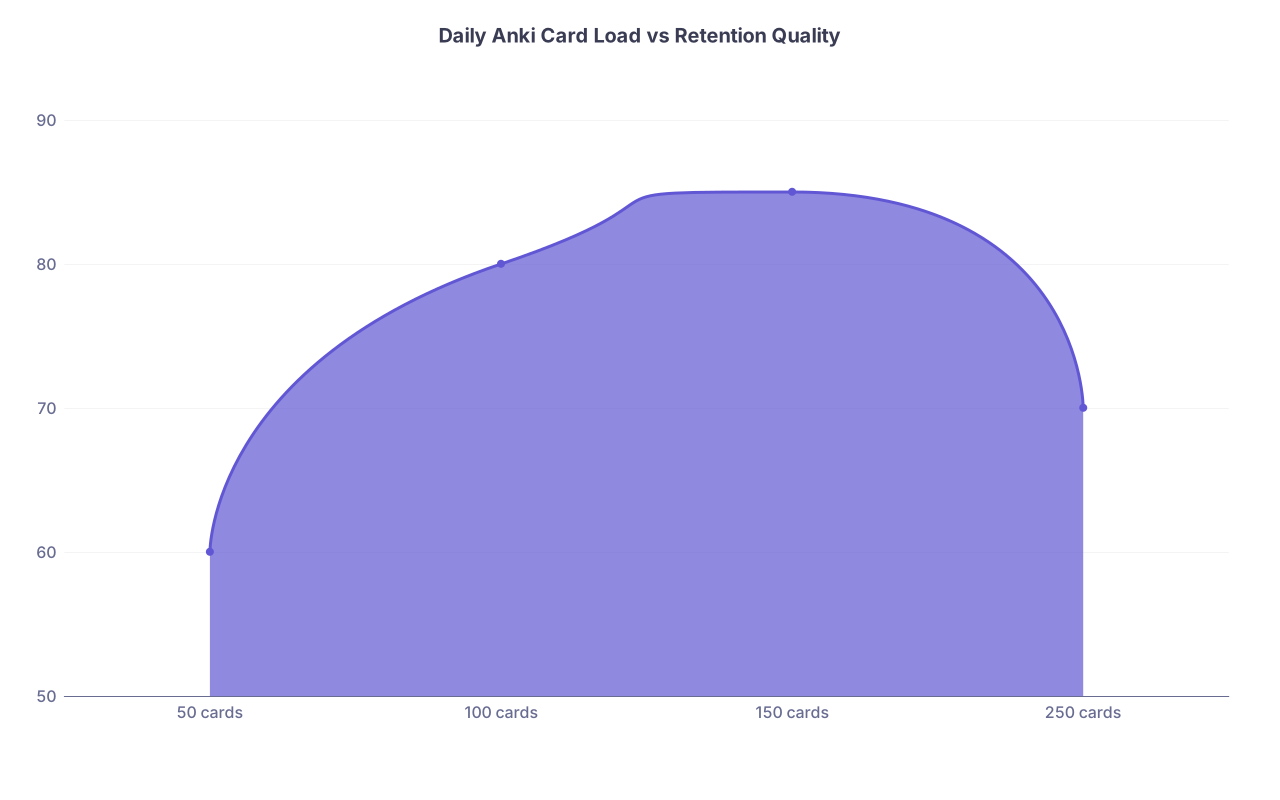
| Category | Value |
|---|---|
| 50 cards | 60 |
| 100 cards | 80 |
| 150 cards | 85 |
| 250 cards | 70 |
Around 100–150 cards/day is usually the retention sweet spot for heavily conceptual material like micro/pharm. Once you cross 200+ new/review cards daily, people start clicking through and their active recall degrades.
2. Question Bank Strategy Focused on Micro/Pharm
Do not just “do questions.” Use the pairings to sharpen your review.
Suggested structure during dedicated:
- 40–80 questions/day from:
- UWorld (primary)
- Or AMBOSS as supplementary or earlier MS2
- For micro/pharm heavy blocks:
- 40 question tutor mode (early) or timed (later).
- After each block, categorize misses:
Categories that matter:
- “Recognized bug, chose wrong drug.” → Pharm understanding gap → Back to K&T / FA table.
- “Recognized drug, missed side effect or contraindication.” → Need specific side‑effect sheet.
- “Did not recognize either bug or drug.” → That is an exposure problem → You probably have not truly studied that class/organism yet.
Then deliberately map review:
- Bug issues → Micro pairing (FA + Sketchy/MMRS).
- Drug issues → Pharm pairing (FA + K&T/Sketchy Pharm/Lippincott).
1–2 hours of such mapped review after a question block are worth more than 4–5 hours of random re‑reading.
Concrete Sample Study Plans Based on Your Timeline
Let me make this painfully practical. Three common scenarios.
Scenario 1: M2, 4–5 Months Before Step/Level 1
Goal: Build solid foundations without burning out.
Micro:
- Months 1–2:
- Finish Sketchy Micro once, in parallel with micro course.
- Annotate FA micro margins.
- Light Anki from Sketchy/FA (50–80 cards/day).
- Months 3–4:
- Quick MMRS reads only for systems where you are still weak.
- Start UWorld sections with micro‑heavy organ systems (GI, pulm, ID).
Pharm:
- Months 1–2:
- Work through K&T autonomics + cardiovascular with corresponding FA tables.
- Finish FA pharm relevant to systems you are currently learning.
- Months 3–4:
- Expand to neuropsych, endocrine drugs in K&T.
- Add Sketchy Pharm only for really sticky classes.
Question banks throughout, stepping up volume as you approach dedicated.
Scenario 2: 6–8 Weeks Before Step/Level 1, You Feel Behind in Micro/Pharm
You do not have time for full resources. You need compression and targeted drilling.
Micro:
- Week 1–2:
- High‑yield Sketchy Micro rewatch:
- Gram+ cocci and rods
- Gram– GI and respiratory
- Atypicals, mycobacteria, spirochetes
- Viruses and fungi that show up all the time
- Directly annotate FA.
- High‑yield Sketchy Micro rewatch:
- Week 3–4:
- Only refer to MMRS / Clinical Micro MRS for patterns you keep missing in questions.
- Build 2–3 one‑page tables:
- Opportunistic infections
- GI/food poisoning patterns
- Meningitis by age group and risk factor.
Pharm:
- Week 1–3:
- System‑by‑system FA pharm review, ~1 system/day:
- Highlight MOA, first‑line clinical uses, signature toxicity.
- Use K&T selectively:
- Only read the chapters for systems where your QBank performance is <60%.
- System‑by‑system FA pharm review, ~1 system/day:
- Week 4–6:
- Focus only on:
- Autonomics
- Cardio
- Neuropsych
- Infectious disease drugs
- Use question banks as your primary “textbook,” then tie answers back to FA.
- Focus only on:
Daily:
- 60–80 questions.
- 60–120 Anki cards micro/pharm heavy, all review, minimal new.
This is salvage mode, but I have seen students push micro/pharm blocks from 40–50% up to 70%+ in 6–8 weeks with discipline.
Scenario 3: You are in M3, Aiming at Medicine/Peds Shelves and Step/Level 2
Now the integration matters more than raw memorization.
Books:
- Keep FA (or Step 2‑style book like Step Up) nearby, but the main micro/pharm work is via:
- UWorld (Step 2).
- Clinical Micro Made Ridiculously Simple, selectively.
Approach:
- For each rotation:
- Build a micro–pharm one‑pager tailored to:
- Common infections on that service.
- Empiric protocols your attendings actually use.
- Prophylaxis rules.
- Build a micro–pharm one‑pager tailored to:
- Every time an attending says:
- “We are using cefepime here because…”
- “We are switching to vancomycin because…”
- “We are stopping this antibiotic because…”
- You write that scenario down that night and tie it back to:
- Organism coverage.
- Pharm properties.
This is the moment where your “Step 1 micro/pharm” stop being trivia and start feeling like professional language.
Where People Waste Time (and How Not To)
Let me be blunt about the common mistakes I see:
Trying to read a full micro or pharm textbook cover to cover.
You will drown in detail and still miss question patterns. Use board‑style review texts, not full tomes, unless you have a very specific gap.Using too many overlapping resources.
FA + Sketchy + MMRS + Lippincott + random PDFs = diluted focus. Two core resources per domain is usually enough, with question banks and Anki as reinforcement.Ignoring pharm in preclinical, then cramming it last minute.
Bad idea. Pharm is easiest when learned alongside physiology and pathophysiology. If you are already late, use FA + K&T or FA + Sketchy Pharm in a highly targeted fashion.Treating question explanations as stories rather than data.
If you just read explanations and nod, your retention will be awful. You have to convert those explanations into:- Anki cards.
- Updates to your FA annotations.
- Tweaks to your one‑page summary tables.
Never integrating micro + pharm conceptually.
Bugs and drugs are two sides of the same coin on exam day. Prophylaxis tables. Empiric therapy choices. Side effects that mimic disease. Your resources need to talk to each other.
Bringing It Together
Microbiology and pharmacology are not conquered by hoarding resources. They are conquered by sharp, deliberate pairings:
- Micro anchored with FA + Sketchy or FA + MMRS.
- Pharm anchored with FA + Katzung Board Review or FA + Sketchy/Lippincott.
- Then glued together by question banks, Anki, and a small number of high‑yield integrated tables you actually review.
You do not have to love bugs and drugs. You just have to respect them enough to study them like a clinician in training, not a trivia contestant.
Get your pairings set, build the tables, and run enough focused question blocks that these patterns feel boringly familiar. When that happens, micro and pharm stop being landmines and start being free points.
With that foundation in place, the next serious upgrade is learning how to read vignettes so you see those patterns faster under time pressure. But that is another skill set, and another conversation.