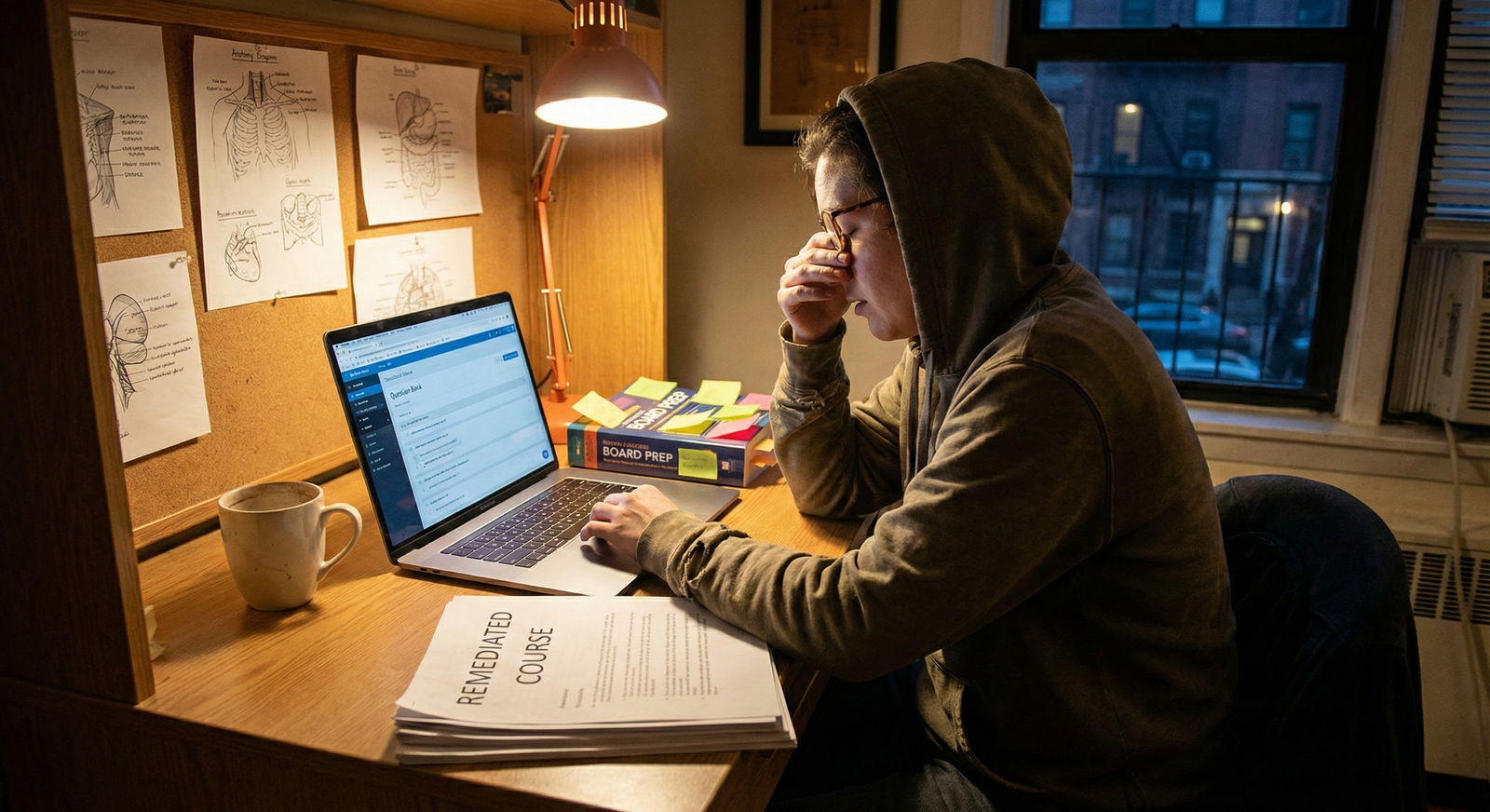
Last week a second‑year told me, “I swear I knew all of cardiology two weeks ago. Today it feels like I’ve never seen a heart before.” Then she laughed in that slightly hysterical way we all recognize. Ten minutes later she opened Anki, blanked on a card she’d seen 12 times, and almost started crying.
If your brain feels like a leaky bucket and you’re scared you’ll forget everything before exams, yeah. You’re not the only one.
The Ugly Truth: Your Brain Will Forget… Unless You Force It Not To
Let me rip the band‑aid off: yes, if you just “study hard” and hope it sticks, you will forget a terrifying amount.
You cram:
- Pathoma binge
- B&B marathon
- 400 UWorld questions in a week
And then two months later? You’re staring at a question asking about the one enzyme in the one pathway you “definitely knew” and your mind is a white void.
You’re not broken. You’re just fighting biology with vibes instead of systems.
Your fear—“I’ll forget everything”—is basically your brain detecting that:
- You’re not seeing things again at the right times
- You’re drowning in too many resources
- You have no actual recall plan, just a vague “I’ll review later” promise you never keep
If you don’t fix how you use resources, your forgetting curve is brutal. But if you structure how you use them, you can be shockingly bad day to day and still rock exams.
The game isn’t “never forget.” The game is “forget → refresh → strengthen.” Over and over.
Step 1: Pick What Actually Deserves to Be Remembered
Here’s the part no one wants to hear when they’re panicking: you can’t treat every fact like it’s sacred.
If you try to remember every single:
- Side effect
- Weird association
- One‑off fact from a 40‑minute YouTube video
…you will burn out your brain and your recall system.
You need a “this is worth fighting to remember” filter.
Concretely, that means:
Core, testable concepts
Things that show up constantly:- Mechanisms you can reason from (RAAS, Starling, insulin, autonomic nervous system)
- Classic presentations (old man + painless hematuria = bladder cancer until proven otherwise)
- MUST‑know micro facts (bugs + drugs, toxins, classic buzzwords)
Things you keep missing
If a fact bites you more than twice on questions, it goes on the “I refuse to miss this again” list. That deserves active recall and spaced repetition.High‑yield connections, not random trivia
You don’t need to memorize the 19th adverse effect of a drug. But you’d better own:- Mechanism
- Major side effects
- Contraindications
This is how you use resources intelligently, not desperately.
| Keep in System | Let Go (for now) |
|---|---|
| Core physiology mechanisms | Ultra-rare zebras |
| Frequently tested micro/pharm | Obscure eponyms |
| Patterns you keep missing | Single-line trivia from long videos |
| Classic imaging/path findings | Tiny details never seen in Qbanks |
If you’re scared you’ll forget everything, it’s probably because your brain is trying to juggle way too much. Start by ruthlessly deciding what actually matters.
Step 2: Use Resources in a Way That Forces Recall (Not Just Comfort)
Most of us use resources for comfort: watch videos, feel productive, highlight things, maybe write pretty notes.
Then a practice exam slaps us and suddenly we realize: none of that proved we could recall anything.
Your litmus test for any resource:
“Does this force me to pull info out of my brain, or does it just feed it into my brain?”
Because only “out” sticks.
Let’s talk about the big ones.
Anki (or Any Spaced Repetition): The Boring Hero You Keep Underusing
Anki is the thing everyone says they use and most people quietly sabotage.
You’ll see people:
- Make giant paragraph cards
- Add every tiny fact from every video
- Do new cards but skip reviews because “I’ll catch up this weekend” (they won’t)
If you’re terrified of forgetting, Anki (properly used) is your best shot at long‑term recall.
Basic rules that actually work:
- Smaller cards, focused on one idea
- Question that makes you think, not just re‑read (“What beta blocker treats HF? → Metoprolol, bisoprolol, carvedilol” beats “All beta blockers that treat HF are…”)
- Review every day, even if only 30–45 minutes
- Suspend/delete trash cards that are too detailed or useless
You don’t need 50k cards. You need a consistent system that hits the right stuff repeatedly.
Question Banks: Not Just for “Testing,” but for Teaching Your Brain
People use Qbanks (UWorld, AMBOSS, etc.) like a final check—“I’ll do them once I’ve learned everything.”
That mindset murders retention.
Questions:
- Force active retrieval under some pressure
- Expose what you actually remember vs what you thought you knew
- Give you high‑yield explanations you can feed back into your spaced repetition system
The key is this: the learning isn’t just in picking an answer, it’s in what you do with the explanation.
When you miss:
- Ask: “What’s the one idea that failed here?”
Example: “Oh, I keep confusing obstructive vs restrictive PFT changes.” - Decide: “Does this deserve an Anki card / short note / diagram?”
- Create a simple recall tool: “In obstruction: FEV1 big drop, FVC smaller, so ratio drops.”
You’re building a recall net from your Qbank, not reading a novel.
Videos, Textbooks, and Notes: Stop Letting Them Be Passive
This is the trap: you watch Boards & Beyond / Sketchy / Osmosis / Lectures, you understand everything while it’s on… then 48 hours later it’s gone.
Because you never forced your brain to pull anything out.
Try this pattern instead:
- Watch 10–15 minutes, then pause
- Close your eyes or look away and dump on paper everything you remember
- Check what you missed
- Turn only the repeated misses into short Anki cards or margin notes
You’re converting passive understanding into active recall. Otherwise videos are just medical Netflix.
Step 3: Build a Recall‑First Daily Structure (So You Don’t Have to Think)
You’re already mentally fried. You don’t need to “optimize” every day. You need a default pattern you can just obey.
Something like:
Morning:
- 30–60 minutes of Anki reviews (non‑negotiable)
- 20–40 Qbank questions with review
Midday / Afternoon:
- Class / lectures / required stuff
- Light note‑making if you must, but only if it feeds recall later
Evening:
- Short video blocks or reading
- Quick recall dump / a few new cards for the key concepts
Not glamorous. But sustainable.
The important piece is this: recall comes first, new content comes second.
Most people do the opposite (cram new stuff, maybe review if there’s time), then panic about forgetting.
If you feel like your memory is slipping, move more of your time from “input” (videos, notes) to “output” (cards, questions, writing from memory).
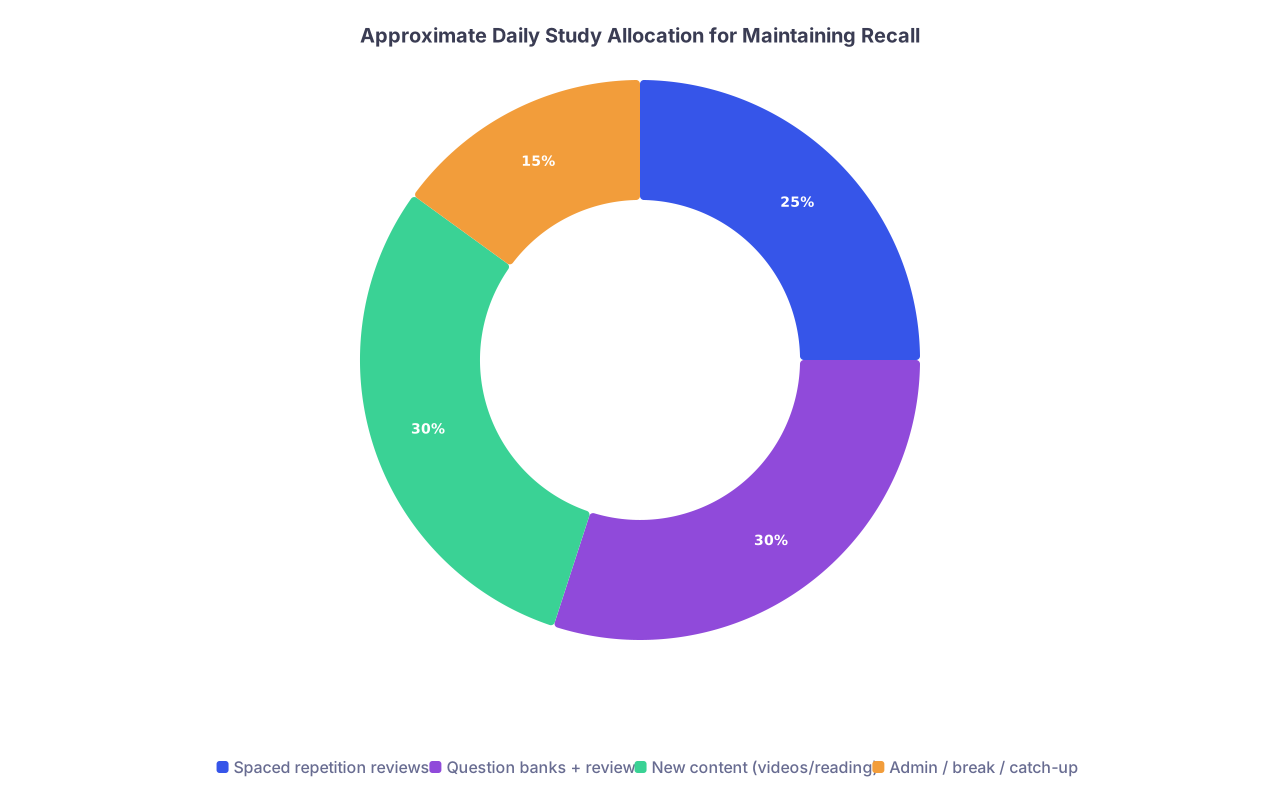
| Category | Value |
|---|---|
| Spaced repetition reviews | 25 |
| Question banks + review | 30 |
| New content (videos/reading) | 30 |
| Admin / break / catch-up | 15 |
Step 4: Timing Is Everything – Use Spacing Like a Weapon
The thing you’re most scared of—“I’ll forget this by next month”—is exactly what spacing was built for.
If you see something once, you’ll forget it fast.
If you see it just as you’re about to forget, the memory deepens.
That’s why random, whenever-you-feel-like-it review doesn’t work.
Here’s a simple, not-fancy spacing pattern you can layer onto anything:
- See it on Day 0 (lecture, video, question explanation)
- Briefly hit it again on Day 1 (Anki card, quick scan, mini-quiz)
- Then around Day 3–4
- Then Day 7–10
- Then two weeks
- Then monthly
Yes, software like Anki automates that. But you need the mental model: “I should be revisiting this right around the time it’s getting fuzzy.”
So if you:
- Watch a video on nephrotic vs nephritic
- Don’t see or test it again for 3 weeks
You will feel like you never learned it. That’s not because you’re bad at medicine. It’s because your spacing was garbage.

| Step | Description |
|---|---|
| Step 1 | New Topic - Video/Lecture |
| Step 2 | Quick Notes or Sketch |
| Step 3 | Day 1: Anki Cards / Mini Quiz |
| Step 4 | Day 3-4: Qbank Questions on Topic |
| Step 5 | Day 7-10: Mixed Review w/ Cards |
| Step 6 | 2-4 Weeks: Practice Exam + Targeted Review |
Step 5: Stop Letting Resource FOMO Destroy Your Memory
This one is brutal but honest: the fear of “not doing enough resources” quietly ruins recall.
You know the move:
- Everyone says: “Use Zanki, AnKing, B&B, Pathoma, Sketchy, UWorld, AMBOSS, Lecturio, and this random Excel someone posted.”
- You load up all of them.
- You’re behind within 3 days.
- You start skipping reviews and bouncing between shiny things.
- Your brain retains… nothing.
You cannot do “all of it” and maintain recall. You just can’t. Not while being a functioning human being.
You’re far better off:
- One main Qbank + one backup if needed
- One main video/text series you actually complete
- A focused deck (or your own cards) that you actually review
Trade “more resources” for “more passes with recall.”
| Overloaded Plan | Sustainable Plan |
|---|---|
| 3 Qbanks at once | 1 main Qbank, fully reviewed |
| 5 decks + random cards | 1 core deck + small personal add-ons |
| Multiple full video series | 1 main series, selective extra videos |
| Constantly switching platforms | Stable routine with rare changes |
If you’re terrified of forgetting, the answer is not more input. It’s more repetition of fewer, higher-yield things.
Step 6: What to Do When You Feel Like You’ve Forgotten Everything
That sick feeling before an exam or a shelf where your brain says:
“Wow. I don’t remember any of this. I’m screwed.”
Here’s what’s usually true:
- You haven’t actually lost everything
- You’ve lost the feeling of familiarity
- Your knowledge is there but un-primed and unorganized
You fix that with targeted reactivation, not blind panic studying.
Short-term rescue moves:
- 20–40 mixed Qbank questions in timed mode: wakes up buried connections
- Quick Anki “cram” of a specific tag (e.g., cardio path, bugs & drugs)
- Writing from memory: “Everything I know about heart failure” → fill a page, then check a resource
Your goal isn’t, “relearn all of medicine in 3 days.” It’s, “Reactivate as much as possible from what’s already in there.”
Spaced repetition and recall systems feel slow… right up until you hit that pre-exam window and realize:
“Oh. Stuff is actually coming back when I need it.”
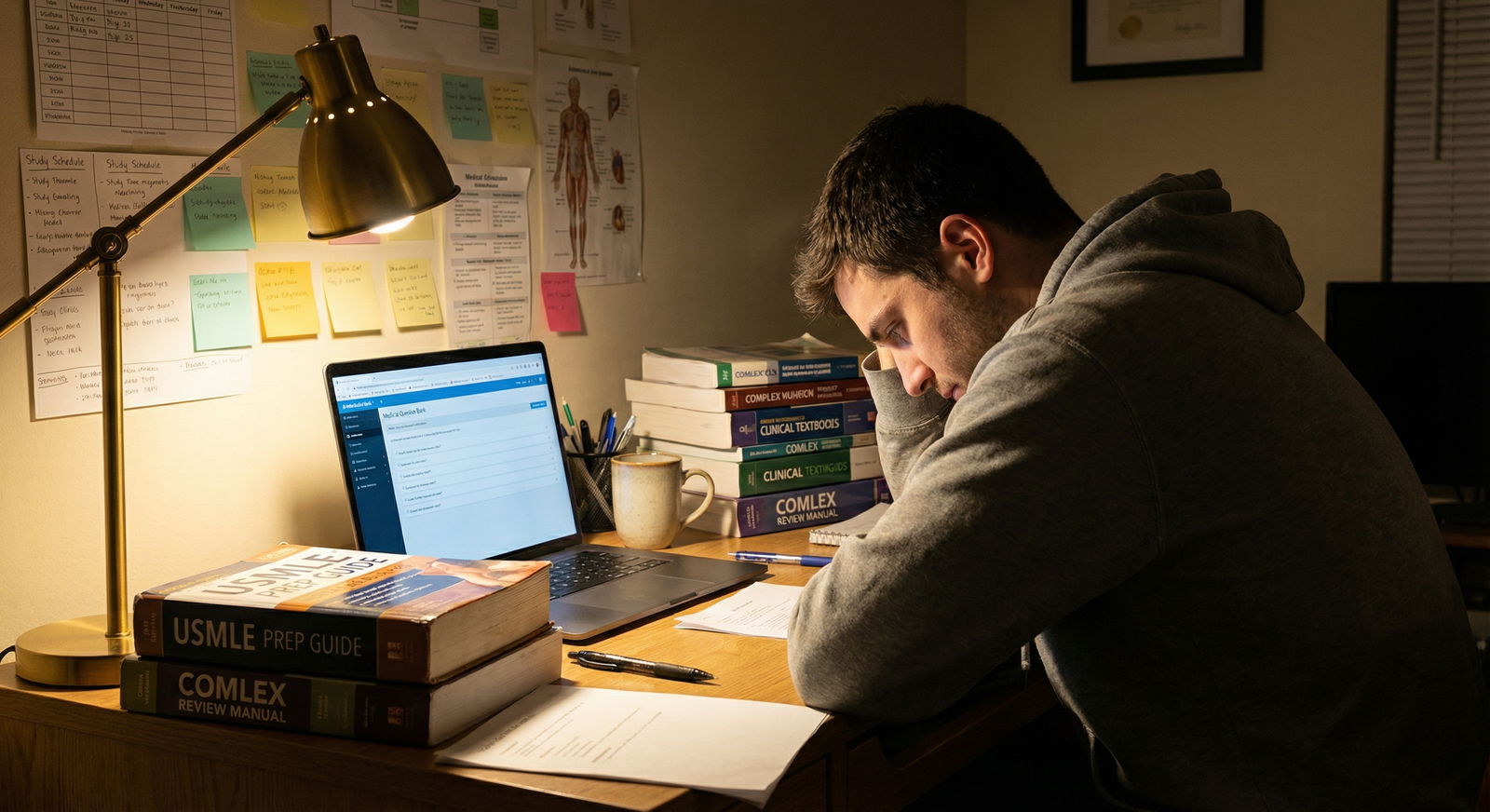
Step 7: Emotional Reality – Studying This Way Still Feels Scary
I’m not going to sugarcoat this: even if you do everything “right,” you will:
- Miss Anki cards you’ve seen 15 times
- Completely blank on “basic” facts some days
- Score lower than you want on practice tests
- Have classmates who “seem” to remember everything effortlessly
And your brain will immediately whisper: “See? You’re not cut out for this. You’re gonna forget everything on the real exam.”
Here’s the part you need to believe even if you don’t feel it yet:
Everyone’s brain is leaky.
You’re just building a stronger plumbing system.
The people who look chill often:
- Started spaced repetition early
- Stick to fewer resources but hammer them
- Accept that forgetting is part of the process, not a sign of failure
You’re not failing because you forgot the 5th side effect of amiodarone. You’d be failing if you let that fear push you into more random input instead of strengthening your recall system.
If You Remember Nothing Else, Remember This
- You will forget things. The goal isn’t perfect memory, it’s having a system—spaced repetition + questions + regular recall—that keeps pulling key facts back online.
- Depth beats breadth. A few core resources, reviewed actively and repeatedly, will protect you way more than 10 half-finished ones.
- Recall first, input second. Every day, prioritize Anki/Qbank/active retrieval over chasing new content. That’s how you stop feeling like everything leaks out of your head the second you close the book.