The worst board prep mistake happens in the last 72 hours: people cling to the wrong resources out of fear and drop the ones that actually move the needle.
You are not “studying” anymore. You are curating. Selecting. Cutting. At this point, what you stop doing matters as much as what you keep.
Let’s walk the final 3 days, hour by hour in broad strokes, and be brutally clear: at this point you should keep X, and you should drop Y.
72–48 Hours Before the Exam: Triage Mode, Not Expansion Mode
This is your last real study window. At this point you should be done “learning” new topics and instead be consolidating.
What you keep in this window
Your primary Qbank review (not full new blocks)
- UWorld/AMBOSS/NBME-style questions you’ve already done.
- Focus:
- Marked/incorrect questions
- Weak subject blocks (e.g., renal, biostats)
- Goal: pattern recognition + confidence, not volume.
At this point you should:
- Do 2–4 targeted 20-question timed blocks per day (not 80-question marathons).
- Immediately review explanations for missed questions only.
- Quickly skim explanations for guessed-but-correct questions.
Your core notes / condensed resource
- This is your one primary summary:
- For Step 1/Level 1: Boards & Beyond notes, First Aid, Sketchy summary sheets, Anki “extra” notes.
- For Step 2/Level 2: your notes from OnlineMedEd/AMBOSS/UWorld, a personal Word document, or a short outline.
- If you don’t know which one is “core,” it’s the one you’ve touched most over the last 6–8 weeks.
At this point you should:
- Commit to ONE written reference.
- Spend 2–3 focused passes on your weakest sections, not the entire book.
- This is your one primary summary:
High-yield formula/ fact lists
- Biostats formulas
- Common equations (MAP, Aa gradient, anion gap, odds ratio, NNT, etc.)
- Pharmacology “must-know” lists (toxicities, antidotes, classic drug associations).
These are small, finite, and extremely testable. They stay.
Targeted Anki / spaced repetition – in moderation
- Only mature decks or custom decks you’ve been doing regularly.
- Drop to review mode only: no new cards, no new decks.
At this point you should:
- Cap Anki at 60–90 minutes total per day.
- Suspend low-yield cards (e.g., obscure cytokines, tiny minutiae) if they’re slowing you down.
- Prioritize image-heavy, association-based cards (EKGs, CTs, rashes, classic buzzwords).
Very short, surgical video refreshers
- 5–15 minute clips on:
- Heart murmurs
- Acid–base
- EKG basics
- Shock types
- Common rashes
- Limit total video time to 60–90 minutes per day.
If you find yourself “settling in” for a 45-minute endocrine lecture at T–60 hours, you’re doing it wrong.
- 5–15 minute clips on:
What you drop at 72 hours
At this point you should be ruthless.
New question banks or brand-new question styles
- No “I’ll just start this 2nd Qbank real quick.”
- No diving into a random NBME you’ve never seen if it’s just to “see where I’m at.”
- New styles = new anxiety + zero consolidation.
Long-form lecture series
- The 200-video playlist? Dead.
- The 4-hour pathology review stream someone posted on Reddit? Dead.
- Long videos lull you into feeling productive while your brain passively coasts.
Brand-new resources you’ve never really touched
- If you haven’t opened it by now, it’s not magic in the last 72 hours.
- Common traps I’ve seen:
- Picking up a new pathology text.
- Trying to “skim” through an entire new pharm deck.
- Downloading a PDF of “500 high-yield facts” from a random group chat.
Obsessive score prediction / forum doomscrolling
- Reddit score predictor threads
- Comparisons of your NBMEs vs someone else’s
- “Is it possible to pass with X correct?” nonsense
This is mental garbage. It doesn’t raise your score; it just drains working memory.
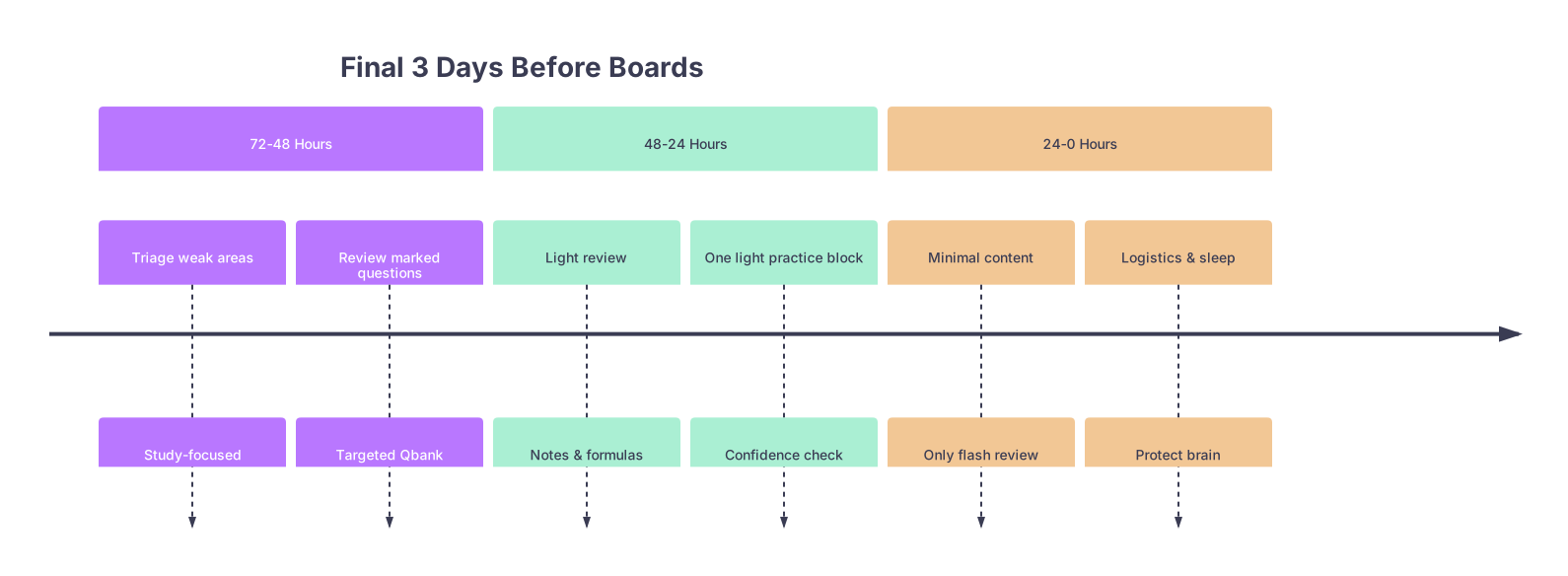
| Period | Event |
|---|---|
| 72-48 Hours - Triage weak areas | Study-focused |
| 72-48 Hours - Review marked questions | Targeted Qbank |
| 48-24 Hours - Light review | Notes & formulas |
| 48-24 Hours - One light practice block | Confidence check |
| 24-0 Hours - Minimal content | Only flash review |
| 24-0 Hours - Logistics & sleep | Protect brain |
The 72–48 Hour Daily Structure
Let’s make this concrete. Here’s what a solid 72–48 hour day looks like.
| Time Block | Focus |
|---|---|
| 8:00–9:00 | Warm-up Anki / flashcards |
| 9:00–11:00 | 2×20-question blocks + review |
| 11:00–12:30 | Weak-topic notes review |
| 12:30–1:30 | Break + food + short walk |
| 1:30–3:00 | Marked Qbank review |
| 3:00–4:00 | High-yield formulas/biostats |
| 4:00–5:00 | Short videos for weak systems |
| Evening | Light review + wind-down |
At this point you should:
- Keep intensity but shorten sprints.
- Protect your eyes and back; no 6‑hour, no-break marathons. They wreck your next day.
48–24 Hours Before the Exam: Stabilization and Confidence
This window is where people either calm down and consolidate, or panic and blow themselves up.
Your brain can still learn a few small things, but the main job now is stability: confidence, rhythm, and recall of things you already “sort of know.”
What you keep in this window
One light practice session
- 10–20 questions, MAX.
- Preferably in the morning. Aim for a “win” block.
- Use familiar Qbank, timed mode, mixed or focused on one shaky topic (e.g., cardio).
At this point you should:
- Stop doing brand-new full blocks.
- Stop doing any more NBMEs or comprehensive practice tests.
Core notes – but narrowed
- Now you shrink down further:
- Pick your 3 weakest systems (e.g., renal, endocrine, biostats).
- Review only those in a structured way.
- Use active recall: cover answers, recite out loud, draw quick diagrams.
- Now you shrink down further:
Formula sheets and must-know visuals
- Biostats sheet
- EKG patterns, neuro localizations, murmurs, acid–base flowcharts
- Classic radiology images (pneumothorax, SBO, kidney stones, etc. for Step 2).
Anki / flashcards – light dose
- 30–45 minutes morning, 20–30 minutes afternoon.
- No heroics. You’re maintaining, not climbing.
Physical and mental routine
- Wake at exam-day time.
- Eat what you will eat for the test.
- Practice your commute or at least map it out.
- Short walk or light exercise (15–30 minutes) to bleed off anxiety.
What you drop at 48–24 hours
Any score-chasing
- No more predictor calculators.
- No more obsessing over your “range.”
- You’re done measuring. Now you perform.
New topics you’ve completely ignored so far
Example:- You never studied porphyrias.
- Do not spend an hour learning porphyrias now.
High effort, low yield, and your brain won’t anchor it properly under stress.
Deep dives into minutiae
- Long tables of obscure side effects
- Rare diseases that haven’t shown up once in any Qbank you’ve done
- Hyper-detailed embryology quirks
Excess caffeine and late-night cramming
- The 48–24 window is where people destroy their sleep architecture.
- No new “extra” afternoon coffee habit you haven’t used before; keep your typical pattern.
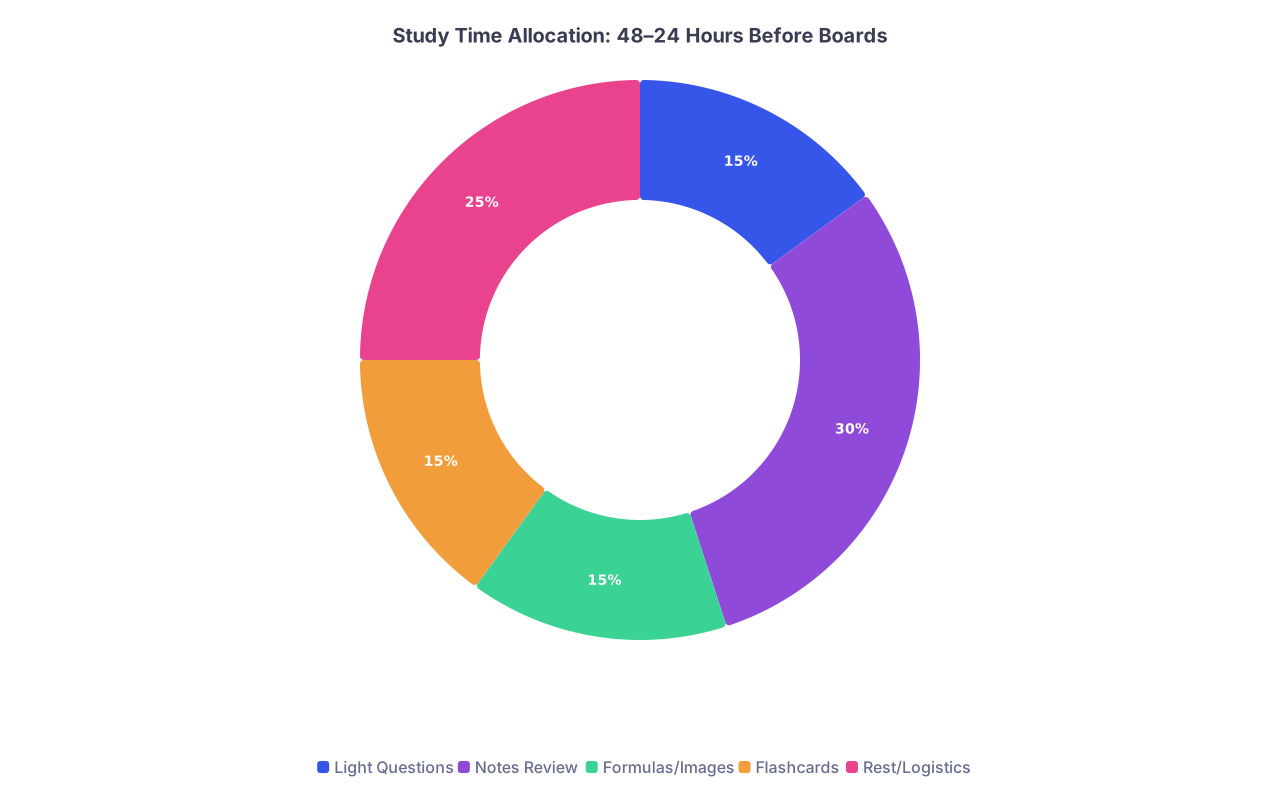
| Category | Value |
|---|---|
| Light Questions | 15 |
| Notes Review | 30 |
| Formulas/Images | 15 |
| Flashcards | 15 |
| Rest/Logistics | 25 |
The Final 24 Hours: Protect the Hardware
By T–24, you’re no longer “prepping for boards.” You’re prepping your brain to sit through a long, brutal test day without crumbling.
At this point you should think like an athlete the day before a marathon.
Morning of the day before
Keep:
- 10–15 super-light questions (optional)
- Only if it calms you down, not if it spikes your anxiety.
- Open-book is fine. The goal is “I know this,” not “how am I scoring?”
- One pass through your absolute highest-yield sheets:
- Biostats
- Formulas
- Quick list of “things I always mix up” (e.g., MEN syndromes, nephritic vs nephrotic, different types of shock).
Drop:
- Any timed block >10–15 questions.
- Any new question source.
- Last-minute “just to see where I’m at” self-assessment. Those wreck sleep.
Afternoon of the day before
This is transition time: from “study mode” to “test-ready mode.”
At this point you should:
- Check your testing permit, ID, directions, arrival time.
- Pack your bag:
- Snacks (simple, not messy: nuts, granola bar, banana).
- Water bottle (if allowed).
- Layers (hoodie, etc., in case the room is freezing).
- Earplugs (if permitted).
- Set out your clothes for the morning.
- Confirm transportation: drive, ride, parking, backup plan.
Study-wise:
Keep (max 2–3 hours total):
- Short, calm review:
- One pass of formulas.
- One pass of your weak-system summary pages.
- Maybe 15–20 minutes of flashcards. Then stop.
- Very short videos if you’re a visual learner:
- 1–2 quick review clips on your worst topic.
- No long playlists.
Drop:
- Heavy note-taking.
- Trying to rewrite or condense big sections.
- Any “last big push” mentality. That’s how you fry your prefrontal cortex.
Evening before the exam
This is where students sabotage themselves. At this point you should be focusing on sleep and calm, not content.
Keep:
- Light, low-stress review only if you need it to avoid spiraling:
- 30–45 minutes of reading your own condensed notes.
- Nothing new. Only what you’ve seen many times.
- A real meal:
- Something you know agrees with your stomach.
- Not the time to experiment with spicy takeout or three energy drinks.
- A wind-down routine:
- Shower, stretching, brief walk, whatever normally signals “day is over” for you.
Drop:
- Studying past a reasonable bedtime.
- If you need to wake at 6:30, you should be in bed by ~10–11, winding down by 9–9:30.
- Blue-light bombardment:
- Turn off exam-related screens at least 45–60 minutes before bed.
- Exam-discussion with friends who are panicking:
- Group chat meltdown? Mute it. Protect your headspace.

Race Morning: Final 3–4 Hours Before Your Exam
You’re not learning now. You’re just warming up the circuits and avoiding self-inflicted damage.
3–4 hours before start time
At this point you should:
- Wake at least 2.5–3 hours before the exam.
- Eat a light, familiar breakfast.
- Hydrate normally, not excessively.
- Drink your usual caffeine dose, not double.
Keep (if helpful):
- 15–20 minutes of low-stimulation review:
- Skim formulas.
- Glance at a single page of “things I always forgot.”
- A few deep breaths / brief mindfulness:
- 3–5 minutes, nothing elaborate.
Drop:
- Any more practice questions. No “warm-up block” right before you leave. If you miss a string of questions, it will stick in your head.
- Intensive Anki sessions. Your recall is what it is at this point.
1–2 hours before start time
You’re either commuting or at the testing center.
Keep:
- Logistics:
- Arrive 30–45 minutes early.
- Use the restroom before check-in.
- Mental framing:
- Remind yourself: you’ve seen this style of question thousands of times.
- Focus on process: read stem, find the real question, eliminate, choose, move on.
Drop:
- Scrolling social media or boards threads about the exam while waiting.
- Any last-minute arguments with partners/friends/family about logistics or picks you made during prep. Lock it in and move forward.
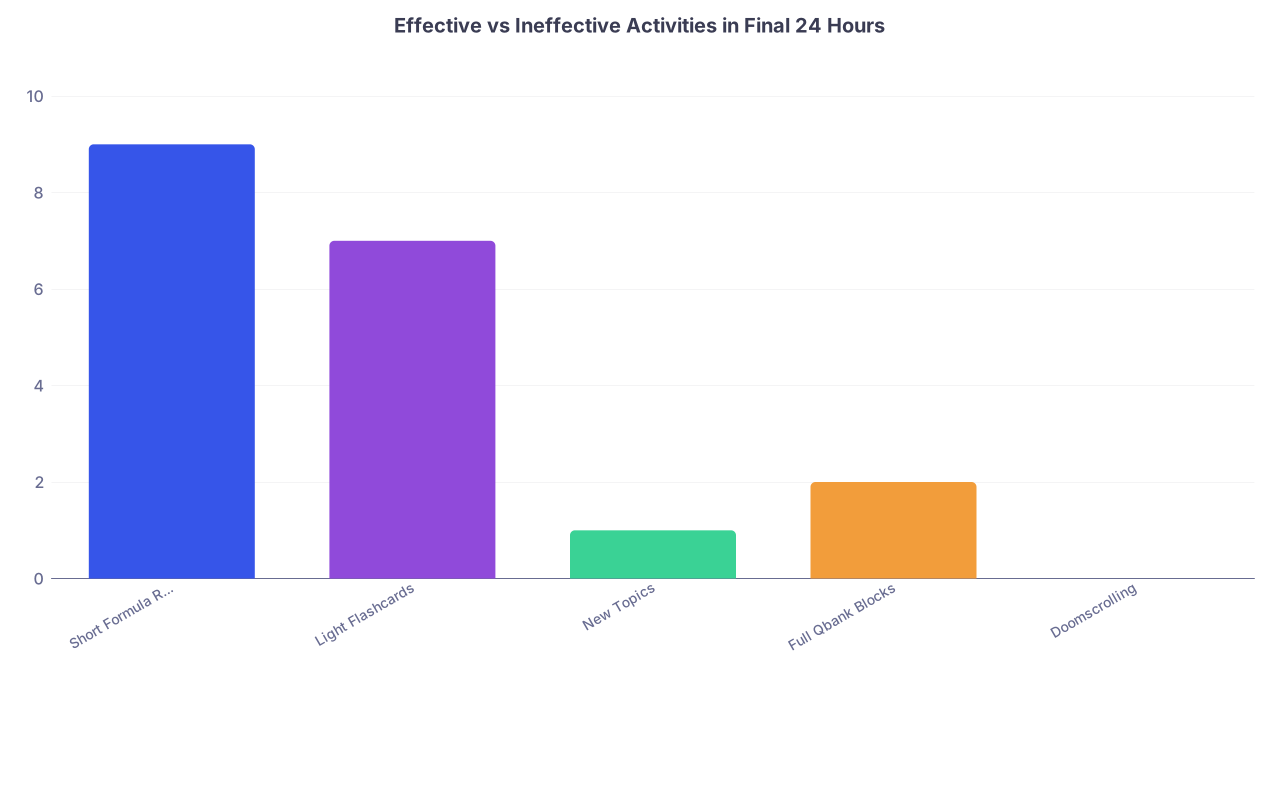
| Category | Value |
|---|---|
| Short Formula Review | 9 |
| Light Flashcards | 7 |
| New Topics | 1 |
| Full Qbank Blocks | 2 |
| Doomscrolling | 0 |
Quick Resource “Keep or Drop” List by Category
You want blunt? Here:
| Resource Type | Final 72h | Final 24h |
|---|---|---|
| Primary Qbank (new blocks) | Keep (limited) | Drop |
| Qbank marked/incorrect review | Keep | Light only before 24h |
| Full NBME/self-assessments | Drop | Drop |
| Core condensed notes (your own or FA) | Keep | Keep (narrow) |
| Long lecture videos (>20–30 min) | Drop | Drop |
| Short targeted review videos | Keep (limited) | Maybe (very limited) |
| Anki/new cards | Drop | Drop |
| Anki/review mature cards | Keep (capped) | Light only |
| Biostats/formula sheets | Keep | Keep |
| Social media/forums about boards | Drop | Drop |

The Core Principles You Actually Need to Remember
Let’s end cleanly.
In the final 72 hours before boards:
Narrow, don’t expand.
Stick to the resources you already know: your main Qbank (for review only), your core notes, your formula sheets. New resources this late are almost always a net negative.Protect your brain as much as your content.
Sleep, anxiety control, and exam-day logistics will swing your score more than another 80 questions at 1 a.m.Use each time window for its real job.
- 72–48 hours: targeted consolidation and pattern practice.
- 48–24 hours: stabilization, confidence, and light review.
- Final 24 hours: rest, logistics, and gentle warm-up only.
If you’re cutting things, you’re doing it right. The last three days are about sharpening the blade—not forging the steel from scratch.