
Introduction: Beyond the Standard Textbook – Finding Hidden Gems in Medical Exam Prep
Medical education is an exhilarating yet demanding journey. From the MCAT and pre-clinical block exams to the USMLE and COMLEX series, shelf exams, and specialty boards, each step requires strategic exam preparation and carefully chosen study resources.
Most students are familiar with the big names: thick textbooks, popular review books, and the major question banks. Yet many struggle despite using these “standard” tools. The problem isn’t lack of effort—it’s often a mismatch between learning style, exam demands, and the resources chosen.
This guide takes you beyond the usual recommendations to highlight hidden gems among medical exam prep books and tools that can transform how you study. We’ll focus on options that:
- Complement traditional resources rather than replace them
- Match different learning styles (visual, auditory, structured, question-based)
- Work across major exams: MCAT, USMLE, COMLEX, NCLEX, and more
- Help you build not only knowledge, but exam strategy and clinical reasoning
Whether you’re an undergraduate pre-med starting MCAT prep, a medical student gearing up for USMLE Step 1, or a nursing student preparing for the NCLEX, these resources can help you study smarter—not just harder.
Why Traditional Study Materials Aren’t Always Enough
Traditional textbooks and lecture notes are essential foundations of medical education. They teach you the science and clinical content you need for your career. But on their own, they’re often not ideal for high-stakes standardized exams.
Limitations of Traditional Textbooks for Exam Preparation
Even excellent textbooks can fall short when used as primary exam prep tools:
- Overly dense and encyclopedic: Many texts prioritize completeness over exam relevance. You may spend hours reading detailed mechanisms that are rarely tested.
- Low yield for time invested: High-yield pearls may be buried in hundreds of pages of narrative.
- Minimal active learning: Reading alone doesn’t mimic exam conditions or force retrieval practice, which is crucial for long-term retention.
- Not tailored to exam style: Exams like USMLE, COMLEX, and MCAT emphasize application, integration, and clinical reasoning—far beyond simple recall.
How Specialized Exam Prep Resources Fill the Gap
Thoughtfully chosen exam prep books and tools can address those gaps:
- Enhance retention through active recall (questions, flashcards), spaced repetition, and visual mnemonics
- Align with test blueprints (e.g., NBME/USMLE content outlines, AAMC for MCAT, NCSBN for NCLEX)
- Translate knowledge into exam performance by training you to think the way exam writers do
- Support different learning styles with videos, sketches, audio, structured schedules, and targeted question sets
The key is not to abandon textbooks, but to layer these hidden gems on top of your core resources for maximum impact.
Hidden Gem #1: Sketchy Medical – Sketchy Pharmacology
Ideal for: Visual learners and anyone struggling with pharmacology retention
Sketchy Medical: Sketchy Pharmacology has become a cult favorite in many medical schools because it solves one of the hardest problems in exam prep: how to remember massive amounts of pharmacology quickly and durably.
Why Sketchy Pharmacology Works
Sketchy uses vivid visual mnemonics and storytelling to encode complex pharmacology into memorable scenes. Each drug class is represented as a themed illustration (e.g., a carnival, a restaurant, a battlefield), with each visual element representing:
- Drug name
- Mechanism of action
- Indications
- Side effects
- Contraindications and key warnings
When used well, these scenes become “mental images” you can recall during exams.
How to Use Sketchy Efficiently
To maximize benefit:
- Pre-read a basic outline before watching each video so the visuals have context
- Actively pause and predict what each new symbol might represent
- Take notes directly on printed screenshots or in a digital notebook
- Review regularly: pair Sketchy with spaced-repetition flashcards or quick visual reviews before practice sessions
Example:
Instead of trying to memorize ten beta-blockers from a text list, you remember a Sketchy scene that encodes them all with subtle variations. On exam day, a question on side effects triggers recall of that entire mental “room” with all the details embedded.
For USMLE, COMLEX, and school pharmacology exams, Sketchy shines as a memory anchor. For MCAT students with more limited drug detail requirements, it can still help for tricky pharmacology-heavy passages if time permits.
Hidden Gem #2: First Aid for the USMLE Step 1 – More Than Just a Checklist
Ideal for: Medical students needing a comprehensive, high-yield exam map
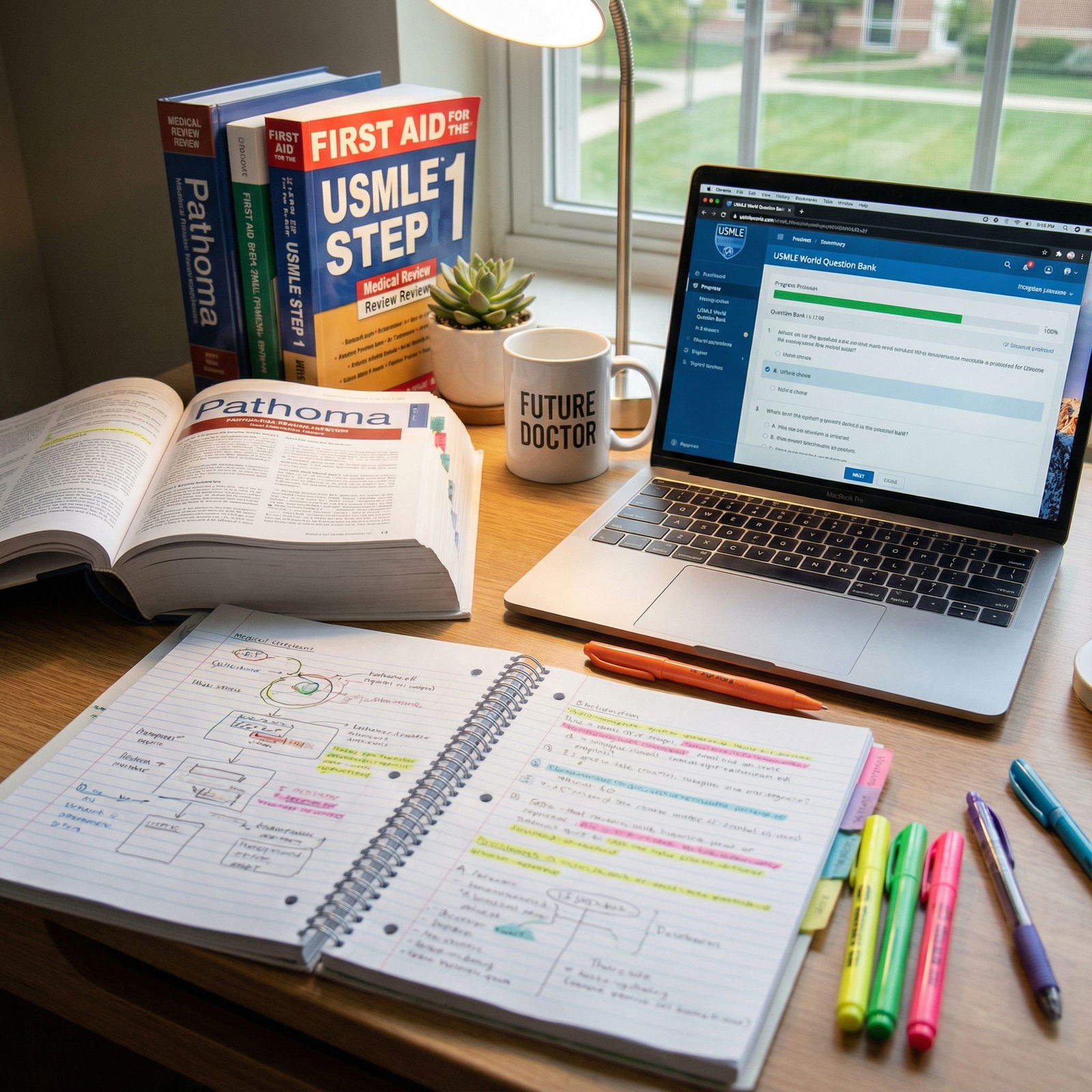
First Aid for the USMLE Step 1 isn’t exactly obscure, but many students seriously underuse it or treat it only as a last-minute cram book. Used correctly, however, it becomes the central framework for Step 1 (and even for MCAT review in some systems-heavy areas).
Why First Aid Is So Valuable
- Condensed, exam-focused content: High-yield facts, associations, and frequently tested concepts
- Integrative tables and mnemonics: Great for comparing disease entities, drugs, and pathologies
- Serves as a master outline: You can map other resources (Pathoma, UWorld, Sketchy) onto specific pages
Strategies to Maximize First Aid
- Start early: Use it as a reference during M1/M2 systems blocks, not just during dedicated Step prep
- Annotate intelligently: Add high-yield pearls from question banks and lectures in the margins rather than writing entire essays
- Link it to other tools: Mark which Sketchy videos, Pathoma chapters, or Anki decks correspond to specific pages
- Use it during spaced review: Set goals like “Review all microbiology in First Aid this week” to structure your revision
Even though Step 1 has shifted to pass/fail, the foundation First Aid provides remains essential for Step 2, clerkships, and shelf exams.
Hidden Gem #3: High-Yield Series – Focused, Fast, and Exam-Oriented
Ideal for: Targeted review of specific subjects for MCAT, USMLE, COMLEX block exams
The High-Yield series (e.g., High-Yield Biostatistics, High-Yield Gross Anatomy, High-Yield Behavioral Science) offers concise, subject-focused summaries that are perfect for last-minute polishing or focused remediation.
When the High-Yield Series Shines
These slim volumes are best used when you:
- Need a quick, high-impact review before a subject exam or boards
- Are weak in a particular area (e.g., neuroanatomy, biostatistics) and feel lost in a large textbook
- Want a portable reference you can carry for short study blocks (e.g., between clinics or during commutes)
Effective Use Cases
- MCAT: Using a High-Yield biochemistry or cell biology book to strengthen weak content areas between full-length practice tests
- USMLE/COMLEX: Quickly revisiting biostatistics & epidemiology with a focused high-yield volume known to mirror exam-style questions
- Block exams: Reviewing anatomy or histology before a practical or written exam
They are not designed to replace comprehensive resources but to streamline what matters most for test day.
Hidden Gem #4: The Boards – Structured USMLE Step 1 Study Schedules
Ideal for: Students who benefit from externally structured, day-by-day study plans
Many students know what they should be doing (UWorld, First Aid, Pathoma), but struggle to:
- Decide when and how much of each resource to use
- Balance content review vs. questions
- Stay consistent over weeks or months
The Boards: USMLE Step 1 Study Schedule (and similar structured schedules) offer ready-made, evidence-informed study plans.
Why Structured Schedules Help
A good schedule will:
- Break your preparation into daily tasks (e.g., specific First Aid pages, UWorld question blocks, Pathoma videos)
- Ensure you cycle through all key resources systematically
- Prevent last-minute cramming with built-in review and practice test days
- Reduce decision fatigue and procrastination
Customizing a Boards-Style Schedule
To get the most from such a schedule:
- Start with a baseline assessment (NBME or equivalent) and adjust your timeline based on performance
- Adapt for your context: Add class-specific resources, modify for part-time or full-time study, and incorporate personal commitments
- Use it as a guide, not a rigid script: If you consistently fall behind, revise the plan rather than abandoning it
Structured schedules are especially valuable if you’re prone to over-studying some topics while neglecting others or delaying question banks until too late.
Hidden Gem #5: Pathoma – Foundations of Pathology
Ideal for: Building a deep, integrated understanding of pathology for Step exams and clerkships
Pathoma: Foundations of Pathology is widely respected for its ability to simplify complex pathology without dumbing it down.
What Makes Pathoma Stand Out
- Clear, concept-driven explanations of disease mechanisms
- Short, high-yield video lectures that track an accompanying concise textbook
- Frequent integration with physiology and pharmacology
- Emphasis on testable concepts and classic pathology findings
How to Integrate Pathoma into Your Study Plan
- During systems blocks, use the relevant Pathoma chapters alongside lectures and First Aid
- Pause videos to sketch diagrams or pathways in your own words
- After watching a section, immediately reinforce with related questions (from UWorld, NBME-style questions, or other Qbanks)
- Revisit key chapters (like inflammation, neoplasia, cardiovascular, renal) during dedicated Step prep
Pathoma isn’t just for pre-clinical years. A strong pathology foundation directly improves performance on USMLE Step 2 CK, COMLEX Level 2, and clinical shelf exams, particularly internal medicine.
Hidden Gem #6: BRS (Board Review Series) – Reinforcing Core Concepts Across Subjects
Ideal for: Structured content review with end-of-chapter questions across many subjects
The Board Review Series (BRS) covers topics such as physiology, pathology, anatomy, behavioral science, and more. These books are often overshadowed by flashier resources but are quietly powerful tools for comprehensive review.
Why BRS is Effective
- Concise but explanatory: More depth than a pure outline, less bulk than a full textbook
- Chapter-end questions: Reinforce what you just read and highlight weak areas
- Organized by system or topic, making them easy to align with class syllabi or board prep plans
Best Ways to Use BRS
- Pre-clinical courses: Use BRS Physiology or BRS Neuroscience as primary or secondary texts to simplify complex lectures
- Board prep: Use specific BRS titles to shore up weak areas after a practice NBME or COMSAE highlights a deficiency
- Active reading: Always do the end-of-chapter questions rather than passively reading
For many students, BRS provides the perfect middle ground between overwhelming detail and oversimplified outlines.
Hidden Gem #7: UWorld Qbank – The Gold Standard for Question-Based Learning
Ideal for: Application of knowledge through high-quality practice questions
While UWorld is well-known, its full potential is often underutilized. It is not just a question bank; it is a powerful teaching tool that closely mirrors USMLE and COMLEX style.
What Makes UWorld Essential
- High-fidelity questions that mimic real exam difficulty and style
- Detailed explanations for correct and incorrect options
- Integrated images, pathology slides, EKGs, radiology, and tables
- Emphasis on clinical reasoning and integration, not just recall
Strategic Use of UWorld
- Start early in tutor mode for learning, then switch to timed blocks to simulate test day
- Carefully read all explanations, not just those for the questions you got wrong
- Create concise notes or flashcards from repeated patterns and “classic” presentations
- Reassess performance regularly and target weak systems or disciplines
UWorld is especially critical for USMLE Step 1, Step 2 CK, COMLEX Levels 1 and 2, and can also be beneficial for MCAT-style passage practice if used selectively.
Hidden Gem #8: Davis’s Q&A Review for the NCLEX-RN
Ideal for: Nursing students preparing for NCLEX-RN with targeted, rationalized questions
For nursing students, Davis’s Q&A Review for the NCLEX-RN is a high-yield, question-heavy resource that goes beyond simple rote practice.
Key Features
- Nearly 2,000 questions organized by system and topic
- Detailed rationales for both correct and incorrect answers
- Focus on test-taking strategies, prioritization (e.g., ABCs, Maslow), and safety
- Helps build clinical judgment, which is central to the NCLEX
How to Use Davis’s Q&A Effectively
- Start with subject-specific sections while you’re still in school courses
- Transition to mixed, comprehensive sets closer to the NCLEX date
- After each session, categorize questions into content gaps and strategy errors
- Pair this book with an adaptive NCLEX-style Qbank for full exam simulation
This resource is a hidden gem for consolidating nursing education and translating it into exam-ready performance.
Hidden Gem #9: The Clinical Examination – A Systematic Guide to Physical Diagnosis
Ideal for: Students preparing for OSCEs, clinical skills exams, and ward-based assessments
The Clinical Examination: A Systematic Guide to Physical Diagnosis (and similar structured examination guides) helps bridge the often-neglected gap between written exam prep and real-world clinical skills.
Why Clinical Examination Guides Matter
- Step-by-step physical exam techniques for each system
- Tips on what findings mean, how to describe them, and how they fit into diagnoses
- Often includes clinical pearls that show up on OSCEs, shelf exams, and oral finals
- Help build professionalism and patient interaction skills
Using Clinical Examination Guides
- Practice with a partner, standardized patient, or even family/friends when appropriate
- Pair reading with simulation labs or real patient encounters
- Create checklists from each section to use during practice OSCE circuits
- Use them as quick refreshers before starting a new rotation
For medical students, these books complement core science resources and prepare you for Step 2 CS-style encounters (where applicable), OSCEs, and clerkship exams.
Hidden Gem #10: Comprehensive Medical Terminology for Reporting and Coding
Ideal for: Students interested in healthcare administration, medical coding, or strengthening language precision
Understanding medical terminology is fundamental not only for exams, but also for interprofessional communication, documentation, and patient safety.
Comprehensive Medical Terminology for Reporting and Coding: An Illustrated Guide fills a niche often not well-covered in standard medical school curricula.
Why Medical Terminology Resources Help
- Build fluency in prefixes, suffixes, and roots across specialties
- Support accurate interpretation of radiology reports, pathology findings, and procedural notes
- Useful for medical coders, health information management students, and clinicians alike
How to Use This Resource
- Use it early in training to shorten the time needed to “translate” complex notes
- Pair terminology exercises with real charts (de-identified or practice cases)
- Use illustrations to anchor unfamiliar terms to anatomical structures or processes
Improving your medical terminology skills can indirectly help with MCAT CARS, USMLE/COMLEX question interpretation, and future clinical documentation.

Real-World Applications: Matching Resources to Your Learning Style
Choosing from this growing list can feel overwhelming, but the key is intentional selection based on who you are as a learner and where you are in training.
Step 1: Identify Your Learning Style and Exam Needs
Consider:
- Do you retain more from visuals, stories, and mnemonics (Sketchy, Pathoma)?
- Do you thrive on structured outlines with questions (BRS, High-Yield Series)?
- Do you learn best via massive question practice and explanations (UWorld, Davis’s Q&A)?
- Do you struggle most with scheduling and discipline (Boards-style schedules)?
- Are you preparing for MCAT, USMLE, COMLEX, NCLEX, or an in-course exam?
Step 2: Build a Balanced Resource Stack
An example stack for a second-year medical student preparing for USMLE Step 1 might be:
- Core content: Lectures + First Aid
- Deep understanding: Pathoma (pathology), BRS Physiology
- Memory support: Sketchy Pharmacology and Microbiology
- Application: UWorld Qbank
- Structure: A Boards-style daily study schedule
For an MCAT student:
- Content review: Standard MCAT prep books
- Targeted reinforcement: High-Yield biochemistry, anatomy, or behavioral science
- Application: AAMC and commercial practice questions
- Strategy: Timed full-length exams and review notes
Case Study: Sarah’s Turnaround in Pharmacology
Sarah, an M2 student, consistently scored below average in pharmacology despite hours of textbook reading. Her instructor recommended Sketchy Pharmacology. She:
- Watched 2–3 Sketchy videos per day
- Annotated First Aid with visual cues from each Sketchy scene
- Reinforced content with related UWorld questions
Within one exam cycle, her pharm scores jumped from the 50th to the >80th percentile, and she began recalling drug details automatically when seeing question stems—an example of how aligning resources with learning style can be transformative.
Frequently Asked Questions (FAQ)
1. Are these hidden gem resources suitable for all stages of medical education?
Most of them are broadly useful, but their primary value depends on your stage:
- Pre-med / MCAT: High-Yield subject books, question banks, clinical terminology, and strategy-focused resources
- Pre-clinical med students: First Aid, Pathoma, BRS, Sketchy, High-Yield series
- Board prep (USMLE/COMLEX): UWorld, First Aid, Pathoma, structured schedules (Boards), Sketchy
- Nursing students (NCLEX): Davis’s Q&A, NCLEX-focused Qbanks
- Clinical years: Clinical Examination guides, UWorld, Pathoma review, subject-specific BRS for weaker areas
Choose based on your immediate exam goals and long-term career trajectory.
2. How do I know which exam prep book or resource is right for me?
Ask yourself:
- What has worked for me in the past—visuals, questions, summaries, or long-form reading?
- What exam am I targeting (MCAT, USMLE, COMLEX, NCLEX, in-school exams)?
- Where are my weaknesses (diagnosed by practice tests or recent exams)?
Then map:
- Visual learners → Sketchy, illustrated terminology guides
- Conceptual learners → Pathoma, BRS
- Outline-oriented learners → First Aid, High-Yield series
- Question-focused learners → UWorld, Davis’s Q&A
You can test a resource for 1–2 weeks, then re-evaluate using practice scores and your own sense of retention.
3. How many resources should I use for a major exam like USMLE or MCAT?
More is not always better. For most students, 2–4 primary resources plus a question bank is ideal. For example:
- USMLE Step 1: First Aid + Pathoma + Sketchy (optional) + UWorld + a structured schedule
- MCAT: One complete commercial set + AAMC official materials + 1–2 targeted “high-yield” companions for weak areas
Avoid spreading your time across too many books; depth and repeated exposure beat breadth and constant switching.
4. Where can I find these exam prep books and study resources?
Most are available through:
- Online retailers (e.g., Amazon, publisher websites)
- Medical school libraries (print or digital access)
- Online platforms (Sketchy, UWorld, Pathoma subscriptions)
- Used book exchanges (student groups, school classifieds)
Always ensure you’re using the latest edition, especially for board exams, where guidelines and emphasis can shift.
5. How should I divide my time between reading and doing questions?
As a general rule for high-stakes exams:
- Early phase: ~60–70% content review, 30–40% questions
- Mid phase: ~50% review, 50% questions
- Late phase (last 4–6 weeks): 30–40% review, 60–70% questions and practice tests
Adjust based on your diagnostic scores. If you know the content but miss questions due to reasoning or timing, shift more time to question practice and review of explanations.
By leveraging these hidden gems in medical exam prep, you can tailor your strategy to your learning style, strengthen weak areas, and approach exams with greater confidence. Thoughtful selection and consistent use of the right study resources can transform your performance across the MCAT, USMLE, COMLEX, NCLEX, and beyond—setting you up not just to pass exams, but to excel in your future clinical practice.