Preparing for medical board exams is one of the most demanding phases of medical school and residency. The sheer volume of information, the pressure of high-stakes testing, and limited study time can make this period feel overwhelming. Strategic use of high-quality review books and Board Exam Preparation tools can transform that challenge into a manageable, structured process.
Below is an expanded, practical guide to the most comprehensive review books and resources for exam success—focused on USMLE Review but broadly applicable to COMLEX, licensing, and specialty boards. You’ll find key features, strengths, and concrete Study Tips and Exam Success Strategies to help you build an efficient, high-yield study plan.
Understanding the Role of Review Books in Board Exam Preparation
Board exams such as the USMLE, COMLEX, and specialty board certifications test not just recall, but also application and clinical reasoning. Review books and associated Medical Study Resources play several critical roles in this process.
Why Review Books Still Matter in the Digital Age
Even with sophisticated Qbanks, videos, and digital flashcards, physical (and digital) review books remain central to effective Board Exam Preparation because they:
Provide a structured backbone for your study plan
A single, comprehensive text can serve as your master outline, helping you avoid gaps and redundancies.Distill high-yield content
Well-designed review books filter thousands of pages of coursework into what is most likely to appear on exam day.Support active learning
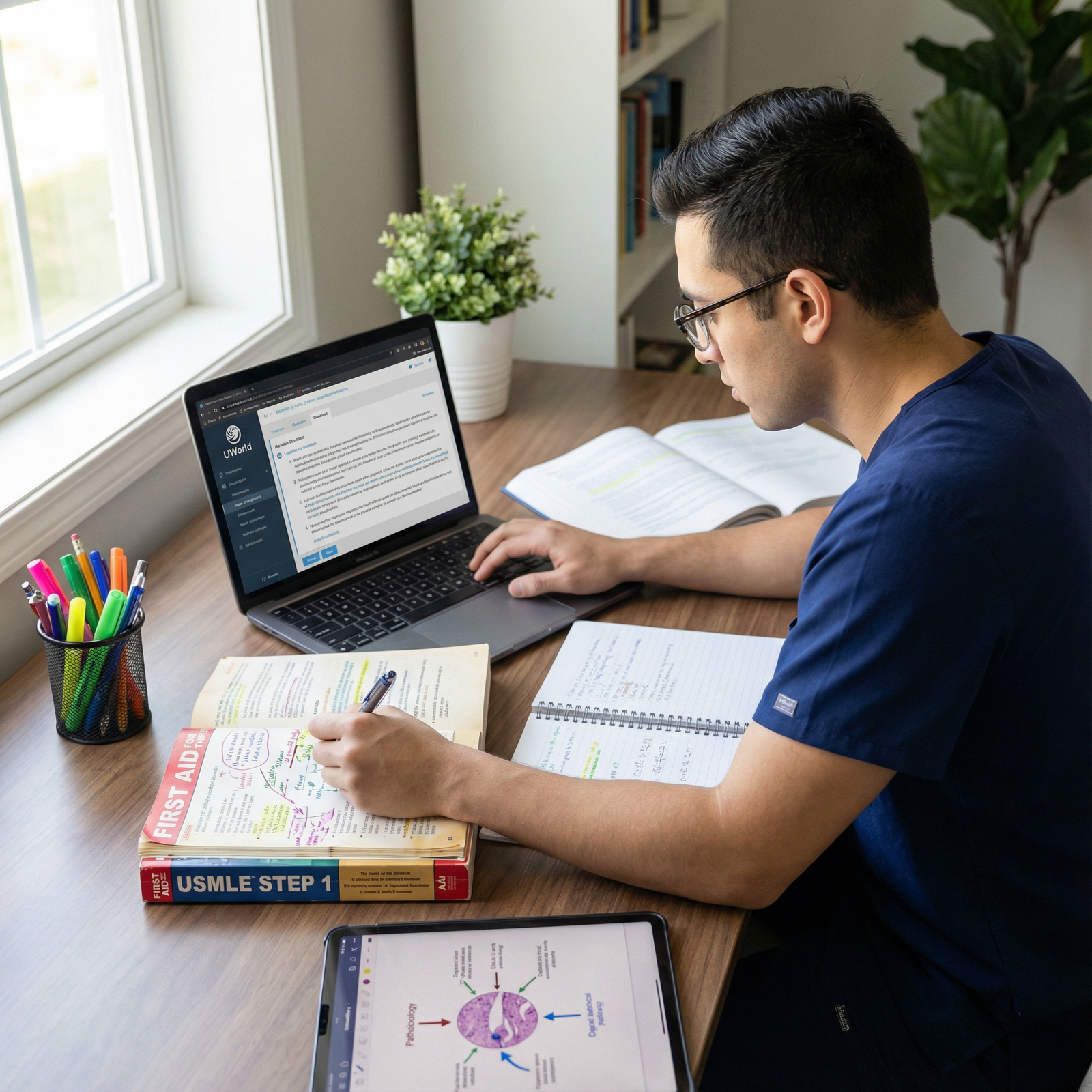
Margin notes, annotating, highlighting, and creating summary tables from books helps cement information in a way that passive video watching often does not.Integrate with other resources
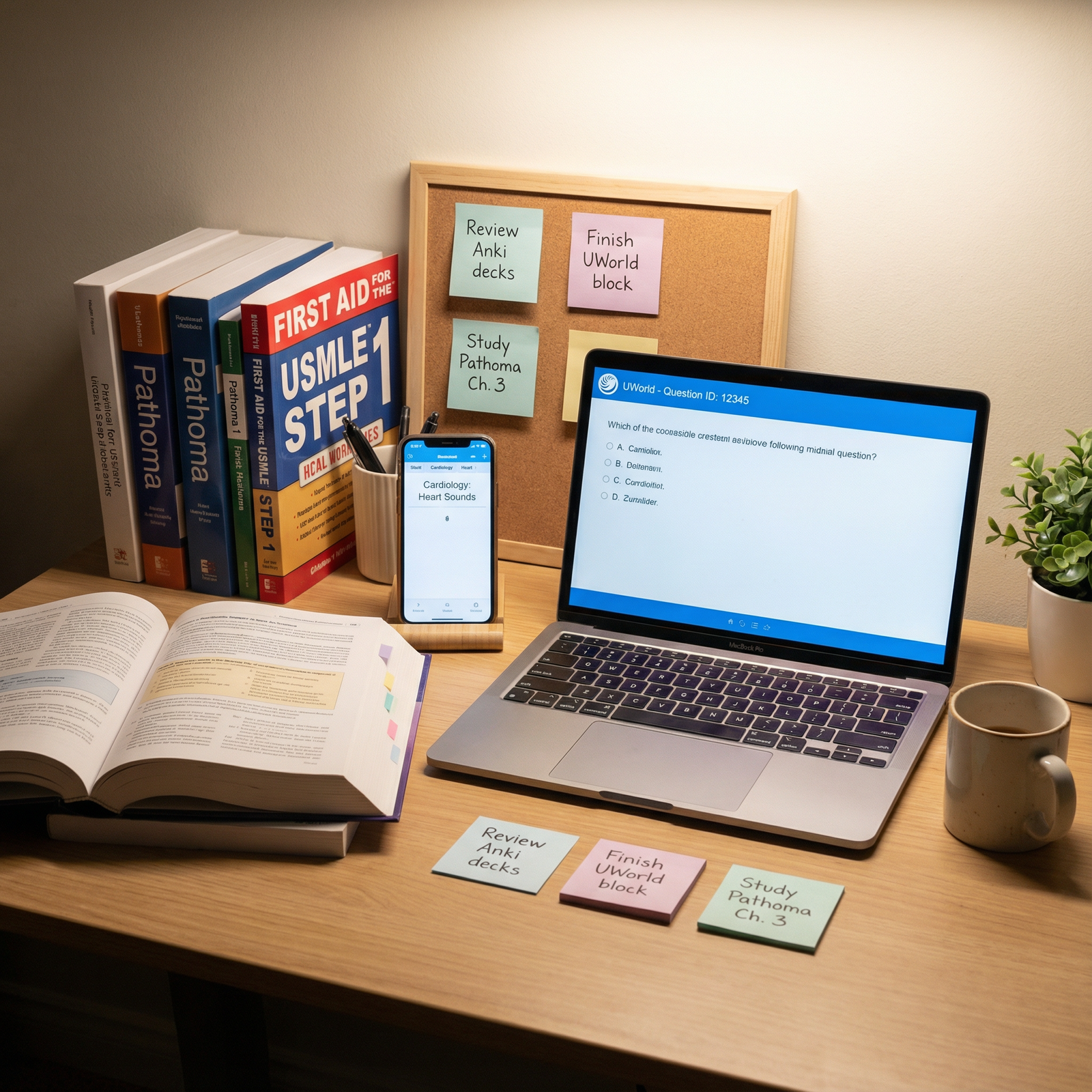
You can link sections in First Aid or BRS to UWorld questions, Anki cards, or Pathoma videos to build an integrated study ecosystem.
Matching Resources to Your Exam and Phase
Different exams require different emphasis:
- USMLE Step 1 / COMLEX Level 1: Heavy on foundational sciences, pathology, pathophysiology, physiology, pharmacology, and biochemistry.
- USMLE Step 2 CK / COMLEX Level 2: More on clinical reasoning, management, and guidelines.
- Specialty boards (e.g., Internal Medicine Boards): Emphasize up-to-date guidelines, diagnostic strategies, and management algorithms.
The review books below are most strongly oriented toward USMLE/COMLEX preclinical and early clinical exams but can often be adapted to other stages by focusing on relevant sections and integrating clinical resources.
Key Features of High-Quality Comprehensive Review Books
Not all review books are equal. Identifying the right features will help you select resources that match your learning style and exam goals.
1. Clear Organization Aligned to Exam Content
Effective review books follow a structure similar to the exam blueprint:
- Organizing by organ system (e.g., cardiovascular, GI, neuro)
- Or by discipline (e.g., pathology, pharmacology, physiology)
This alignment allows you to:
- Track your progress topic by topic
- Coordinate chapters with Qbank blocks
- Quickly identify weak areas based on content outline
Practical tip: Compare the table of contents of your main review book with the official USMLE or COMLEX content outline. Fill any obvious gaps with supplementary texts or notes.
2. High-Yield Emphasis and Exam-Oriented Content
High-yield content focuses on:
- Frequently tested diseases, mechanisms, and drug classes
- Classic presentations and “buzzwords” (even in the era of more clinical vignettes)
- Concepts that integrate multiple disciplines (e.g., physiology + pathology + pharmacology)
Strong review books clearly distinguish:
- Must-know core facts
- Nice-to-know details
- Board-style associations (e.g., “Think this when you see that”)
3. Integrated Practice Questions
Practice questions are essential for:
- Testing understanding vs. memorization
- Learning how questions are actually phrased
- Improving test-taking strategy and time management
Some review books include:
- End-of-chapter questions with explanations
- Full-length practice exams
- Online question banks tied to the text
Even when questions are limited, pairing a book with a robust Qbank like UWorld or Exam Master maximizes retention and application.
4. Mnemonics, Memory Aids, and Conceptual Frameworks
Good review books do more than list facts; they help you remember and connect them:
- Mnemonics for drug side effects, cranial nerves, glycogen storage diseases, etc.
- Concept maps linking pathophysiology to clinical features
- Summary tables that compare similar diseases or drugs
When used wisely (not memorized blindly), mnemonics can save time and boost recall under pressure.
5. Visual Tools and Diagrams
Many students are visual learners, and board exams increasingly test conceptual understanding. Look for:
- Flowcharts for pathways and algorithms
- Pathology images with labeled key findings
- Diagrams explaining cardiac cycles, renal physiology, or immunology
Study tip: Re-draw complex diagrams (e.g., nephron, cardiac pressure-volume loops) from the book from memory. This greatly improves deep understanding for exam questions.

The Most Comprehensive and Trusted Review Resources
Below are the core resources that consistently appear in top-scoring students’ study plans. Each has a distinct role in a comprehensive Board Exam Preparation strategy.
1. First Aid for the USMLE Step 1 – The Core High-Yield Reference
Role in your study plan: Your central outline and high-yield map.
Overview:
Often described as the “Step 1 bible,” First Aid for the USMLE Step 1 compiles the most testable facts across the basic sciences in a bullet-point, high-yield format.
Key Features:
- Organized by system and discipline: Anatomy, biochemistry, immunology, microbiology, pathology, pharmacology, and organ systems.
- Tables and charts: Drugs, bugs, genetic conditions, and classic associations summarized in quickly reviewable formats.
- Mnemonics and memory aids throughout.
- Annual updates reflecting changes in exam content and emphasis.
- Integration suggestions with Qbanks and other resources.
Why It’s Effective:
- Serves as a master checklist: You can mark what you’ve covered, annotate with Qbank pearls, and track weak areas.
- Concise but comprehensive: It doesn’t replace textbooks, but it filters what’s most likely to matter on exam day.
- Community-vetted: Widely used by high scorers, many of whom contribute errata, feedback, and tips for subsequent editions.
How to use it strategically:
- Read system-based sections in parallel with Pathoma and BRS Physiology.
- Annotate with high-yield explanations from UWorld questions.
- Use it for rapid review in the final 2–4 weeks before the exam, focusing on weak systems.
2. Kaplan Medical’s USMLE Step 1 Lecture Notes – Deep Content Foundations
Role in your study plan: Detailed content review and clarification of weak fundamentals.
Overview:
Kaplan’s multi-volume USMLE Step 1 Lecture Notes provide in-depth coverage of all major basic science disciplines, from biochemistry and behavioral sciences to pathology and pharmacology.
Key Features:
- Comprehensive chapter coverage of all preclinical disciplines.
- Clear explanations of complex topics (e.g., renal physiology, neuroanatomy, biostatistics).
- Dedicated figures, charts, and clinical correlations.
- Often paired with online video lectures, questions, and flashcards if you enroll in a Kaplan course.
Why It’s Effective:
- Ideal if your school lectures were weak, you’re an international medical graduate (IMG) re-learning core sciences, or you have knowledge gaps.
- Helpful for slower, first-pass review before moving to ultra-high-yield resources like First Aid.
- Excellent for visual and auditory learners when used with the corresponding Kaplan videos.
How to use it strategically:
- Use during your dedicated pre-dedicated phase (e.g., early M2) to build a strong foundation.
- Don’t try to memorize every detail; aim to understand mechanisms and big-picture connections.
- For time-limited students, prioritize Kaplan for historically challenging areas (e.g., physiology, biochemistry) rather than reading every volume cover to cover.
3. UWorld QBank – The Gold Standard Question Bank
Role in your study plan: Primary source for practice questions, reasoning training, and exam simulation.
Overview:
Although not a traditional book, UWorld QBank is arguably the single most impactful resource for USMLE Review and Exam Success Strategies.
Key Features:
- Thousands of board-style questions with detailed, concept-based explanations.
- Realistic exam interface that closely mimics the actual USMLE test format.
- Highlighted educational objectives for each question.
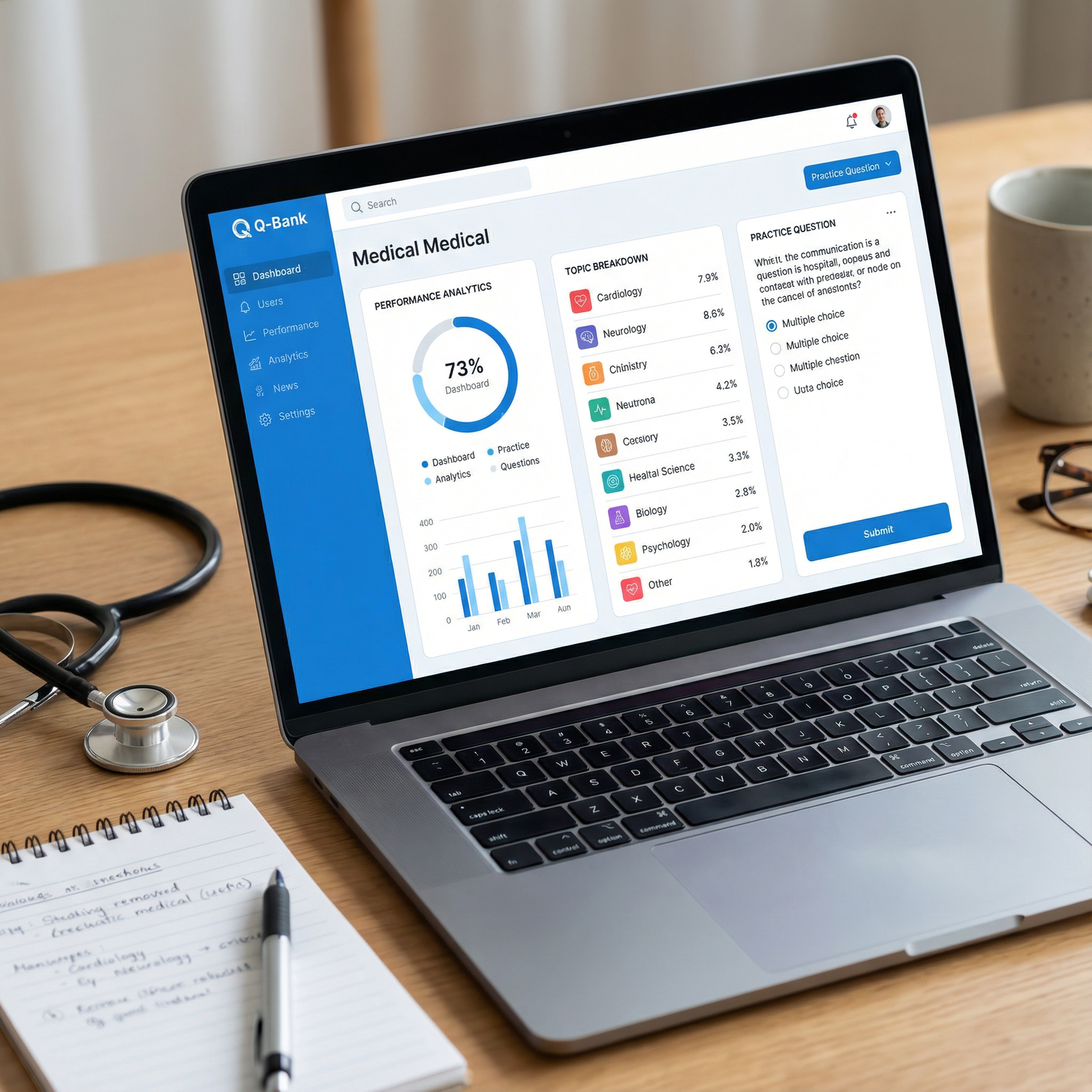
- Performance analytics to pinpoint weak topics and track progress.
Why It’s Effective:
- Exposes you to the style and difficulty of real exam questions.
- Teaches clinical reasoning, test-taking strategy, and differential diagnosis.
- Explanations often function like mini review chapters, consolidating pathophysiology, pharmacology, and guidelines.
How to use it strategically:
- Start early: Do questions in tutor mode during learning, then timed mode closer to the exam.
- Align question blocks with your current study topic (e.g., cardio path questions while reading Pathoma cardio).
- Carefully review both correct and incorrect answers; add key concepts to your notes or Anki.
- In dedicated period, most students aim to complete at least one full pass of UWorld; many aim for 1.5–2 passes.
4. BRS Physiology – Mastering Physiology for Conceptual Questions
Role in your study plan: Clarifying and reinforcing physiology, one of the highest-yield domains.
Overview:
Board Review Series (BRS) Physiology is a focused, well-structured text that explains core physiologic principles with clarity and clinical relevance.
Key Features:
- Concise chapters on each major organ system’s physiology.
- Clinical correlations linking physiology to common diseases and presentations.
- End-of-chapter questions and comprehensive exam at the end of the book.
- Numerous figures and graphs to reinforce understanding of processes.
Why It’s Effective:
- Strong physiology knowledge supports performance across multiple disciplines (pathology, pharmacology, internal medicine).
- The questions help you practice reasoning through mechanism-based questions, which are very common on boards.
- Ideal for students who feel their physiology foundation is weak or fragmented.
How to use it strategically:
- Use BRS Physiology as a primary or secondary text during organ-systems blocks in preclinical years.
- Before dedicated study, skim each chapter’s summaries and questions to reactivate knowledge.
- If time is short, focus on cardio, respiratory, renal, and neuro physiology—frequent exam favorites.
5. Pathoma – High-Yield Pathology Integration
Role in your study plan: Core pathology resource for understanding disease mechanisms and patterns.
Overview:
Pathoma (book + video lectures by Dr. Sattar) has become a staple for both USMLE Step 1 and medical school pathology courses.
Key Features:
- Concise textbook divided into general pathology and system-based pathology.
- Engaging video lectures that emphasize understanding over rote memorization.
- Clear diagrams and histology images that highlight board-relevant patterns.
- Focused on high-yield disease mechanisms and classic associations.
Why It’s Effective:
- Simplifies complex pathology into memorable concepts and stories.
- Allows for rapid, repetitive review—ideal for both first pass and final weeks.
- Integrates well with First Aid and UWorld explanations.
How to use it strategically:
- During preclinical pathology, watch the videos in sync with your school curriculum.
- In dedicated, re-watch high-yield systems (e.g., cardio, heme/onc, renal) and annotate key points directly into First Aid.
- Use Pathoma as your go-to resource whenever a pathology question or UWorld explanation doesn’t fully make sense.
6. Exam Master – Customizable Practice and Targeted Weak-Area Review
Role in your study plan: Supplemental question resource and targeted remediation tool.
Overview:
Exam Master offers large question banks and assessments tailored to multiple licensing exams, including USMLE, COMLEX, and some specialty boards.
Key Features:
- Thousands of questions across multiple subjects.
- The ability to build custom quizzes on specific topics or systems.
- Immediate feedback and analytics to identify patterns of errors.
- Designed for both formative and summative assessment.
Why It’s Effective:
- Excellent for reinforcing weaker areas after you’ve identified them through UWorld or NBME/COMSAE practice exams.
- Helpful if you’ve exhausted primary question banks and want additional practice.
- The customization features support personalized remediation plans.
How to use it strategically:
- After an NBME or practice exam, identify your weakest systems.
- Build Exam Master quizzes specifically on those systems to drill targeted content.
- Use it as extra practice during lighter weeks or between school exams and dedicated study.
How to Combine These Resources for Maximum Exam Success
Collecting resources is easy; using them strategically is where most students struggle. Here is a structured approach to integrate review books and question banks into an efficient, high-yield study plan.
Phase 1: Foundation Building (Pre-Dedicated Period)
Goals:
- Understand core concepts in physiology, pathology, and pharmacology
- Build a high-level framework of all tested content
- Begin light exposure to board-style questions
Suggested Approach:
- Use Kaplan Lecture Notes and/or BRS Physiology as your foundational texts during system-based courses.
- Start Pathoma alongside your school pathology course from day one.
- Begin low-volume UWorld (or other Qbank) in tutor mode—e.g., 5–10 questions per day on topics you’ve covered.
- Keep First Aid nearby but use mainly as a reference and annotation target, not as a standalone textbook at this stage.
Phase 2: Dedicated Board Exam Preparation
Goals:
- Integrate knowledge across disciplines
- Maximize practice with board-style questions
- Identify and remediate weak areas
Suggested Approach (typical 4–8 weeks):
Daily structure:
- 40–80 UWorld questions per day (timed, random or system-based early on, then random later).
- 3–5 hours of review with First Aid, Pathoma, and BRS Physiology for weaker systems.
- Active note-taking, concept mapping, or flashcards for missed questions.
Weekly structure:
- Take at least one simulated exam block (NBME/COMSAE or a full-day simulation in your Qbank).
- Use results to choose which chapters in Kaplan or BRS to revisit.
- For persistent weak areas, build custom quizzes in Exam Master.
Final 1–2 weeks:
- Focus on rapid review of First Aid, Pathoma summaries, and key tables/diagrams.
- Continue daily mixed blocks in UWorld (second pass, if possible).
- Emphasize test-taking strategy: timing, triaging questions, educated guessing, and minimizing careless errors.
Study Tips and Exam Success Strategies
- Active > Passive: Teach concepts out loud to a peer, whiteboard mechanisms, or write mini-summaries instead of just rereading.
- Spaced repetition: Convert high-yield facts and frequently missed concepts into flashcards (e.g., Anki) and review daily.
- Data-driven adjustments: Use Qbank and NBME data to adjust your focus; don’t rely solely on what “feels” weak.
- Practice under exam conditions: Regularly do timed blocks without breaks to build stamina, maintain focus, and manage anxiety.
- Protect your sleep and health: Cognitive performance drops sharply with sleep deprivation and burnout; consistency beats all-nighters.
Frequently Asked Questions (FAQs) on Board Exam Review Books and Resources
1. Which single resource is most important for USMLE Step 1 preparation?
If you must choose just one book, First Aid for the USMLE Step 1 is the most essential. It acts as the backbone of most successful study plans due to its high-yield, exam-focused structure. However, for a truly solid preparation, you should combine it with:
- A strong Qbank (e.g., UWorld)
- A conceptual pathology resource (Pathoma)
- And a reliable physiology review (BRS Physiology)
No single resource can fully replace this integrated approach.
2. Are practice questions more important than review books?
They serve different but complementary purposes:
- Review books (First Aid, Kaplan, BRS, Pathoma) build your knowledge base and conceptual understanding.
- Practice questions (UWorld, Exam Master) train your application, reasoning, and test-taking skills.
In the final analysis, your performance on practice questions is the best predictor of exam success. Many high scorers spend more time reviewing Qbank explanations than passively reading text. The most effective strategy is to:
- Use review books to establish a solid foundation.
- Use Qbanks intensively to test, apply, and refine that foundation.
3. How should I structure my day using these review books and resources?
A common and effective daily structure during dedicated is:
Morning (3–4 hours):
- Complete 2 blocks of 20–40 UWorld questions (timed).
- Immediately review all questions and explanations.
Afternoon (3–5 hours):
- Review related content in First Aid, Pathoma, and BRS Physiology.
- Annotate high-yield insights directly into First Aid or your notes.
- Do a short set of custom questions (e.g., Exam Master) on weak topics if time/energy allows.
Evening (1–2 hours):
- Light review, flashcards/spaced repetition, and brief pass over difficult diagrams or tables.
- Prepare a micro-plan for the next day (systems/topics to prioritize).
Adjust timings to your own endurance and schedule, but keep a consistent balance between questions and content review.
4. What is the best way to use UWorld for maximum benefit?
To maximize UWorld’s value:
- Start earlier than you think, even at a low daily question volume.
- Use tutor mode at first to immediately see explanations and correct misconceptions.
- As your exam approaches, switch to timed, random blocks to mimic real exam conditions.
- For each question block:
- Read every explanation carefully, including for correct answers.
- Identify patterns in your mistakes (e.g., misreading stems, rushing, weak topic areas).
- Create brief notes or flashcards about new or frequently missed concepts.
- Aim to complete at least one full pass, and if possible, a second, more focused pass on previously missed or challenging questions.
5. Can these resources be adapted for COMLEX and specialty board exams?
Yes, with intentional adjustments:
COMLEX Level 1/2:
- First Aid, Pathoma, BRS Physiology, and UWorld (plus a COMLEX-focused Qbank) are still extremely helpful.
- Supplement with resources that specifically cover OMM and osteopathic principles.
Specialty boards (e.g., Internal Medicine, Pediatrics):
- The conceptual grounding from BRS Physiology and Pathoma remains relevant.
- However, you’ll need specialty-specific board review books (e.g., MKSAP for IM, specialty board question banks) for detailed guidelines, management algorithms, and current evidence.
In all cases, the core principles of Board Exam Preparation—structured study, high-yield focus, extensive practice questions, and active learning—remain the same.
By thoughtfully combining these comprehensive review books with high-quality question banks and evidence-based Study Tips, you can transform an intimidating exam into a structured, achievable challenge. Align your resources with your learning style, track your progress with data, and maintain consistency. With a focused plan and the right tools, exam success becomes not just possible, but highly probable.