

What actually happens if you back out of your first attending job after signing… do you get quietly blacklisted, or is that just a horror story people tell residents to keep them obedient?
Let me say the part you’re afraid to say out loud: you signed too fast, your gut is screaming this isn’t right, and now you’re terrified that changing your mind will nuke your reputation before you’ve even started.
You’re not the only one. This happens every hiring cycle. You just don’t hear about it publicly because nobody wants to post: “Hey, I panicked and signed a terrible job and now I’m trying to escape.”
Let’s walk through this systematically, worst-case first (because that’s where your brain is already living), then pull it back to reality.
First: Are You Actually “Stuck,” Or Just Scared?
There are three separate questions that are all tangled together in your head:
- Am I legally stuck in this job?
- Will backing out destroy my reputation?
- Will other employers think I’m unreliable and not hire me?
These are different. You need to tackle them separately, or everything sounds like the end of the world.
Here’s the blunt overview:
- Most attending job offers are employment contracts, not blood oaths.
- There is almost always some way to get out:
- Before start date
- With notice
- Under a termination-without-cause clause
- The real risk is less “career ruined” and more:
- Burning a bridge with that group/hospital
- Possible short-term gossip in that region
- Annoying legal/financial clean-up (sign-on bonus, relocation, visas, etc.)
Does it feel awful? Yes. Does it mean you’ll never work again? No. I’ve watched people back out and still land at academic centers, big private groups, hospital-employed positions—everything.
But you have to be smart and not impulsive about how you pull the plug.
Step One: What Did You Actually Sign?
Stop catastrophizing for one second and pull up the actual document. What you’re imagining is often worse than what’s actually there.
There are usually three possibilities:
| Document Type | How Binding Is It? | Common Contents |
|---|---|---|
| Offer Letter Only | Often not fully binding | Salary, start date, basic terms |
| Short Form Agreement | Semi-detailed, still basic | Pay, schedule, benefits, sometimes tail |
| Full Contract | Fully detailed, binding | Duties, termination, noncompete, bonuses |
Go look for:
- Start date – Is it explicitly listed?
- Termination without cause – Usually something like “Either party may terminate this Agreement without cause with X days’ written notice.”
- Noncompete – Radius + duration; where it applies.
- Sign-on bonus / relocation – Repayment obligations, timelines.
- Liquidated damages – Fixed fees if you breach.
- Any clause about failure to start – Sometimes hidden in “commencement” language.
Now, uncomfortable truth: backing out before you start usually gives you more leverage than backing out after you’ve been working there 6 months. They haven’t credentialed you, onboarded you fully, or built schedules around you as much.
But you absolutely need to know what you agreed to on paper, not what the recruiter “sort of said.”
This is where you stop guessing and accept that step two is mandatory.
Step Two: Talk to a Healthcare Employment Lawyer (Not Reddit)
If there’s any chance you’re backing out, you need someone who actually does this for a living.
I mean a real physician contract / healthcare employment lawyer in your state, not your cousin who does divorces, not a random PD, and not your co-resident who “heard from a fellow” what’s allowed.
Because the law is wildly state-specific here.
What a good lawyer will do for you:
- Tell you exactly what the risks are:
- Lawsuit likely/unlikely
- Noncompete enforceable or garbage
- Whether that “repay $50,000” clause is real or bluff
- Help you script a clean exit strategy:
- Wording for your email/phone call
- Timing (before/after board results, visa timelines, etc.)
- Sometimes quietly negotiate an exit:
- “Doctor will repay sign-on within 60 days, group agrees not to pursue further damages.”
Do some people just disappear and never respond? Yes. I’ve seen it. And it’s lousy and unprofessional and makes life harder for everyone who comes after them.
You don’t want to be that person. Not because you’ll get blacklisted forever, but because you’ll feel awful and you’ll burn a bridge in an ugly, memorable way.
Worst-Case Scenarios (That You’re Probably Looping in Your Head)
Let’s drag the monsters out from under the bed:
1. “They’ll sue me and I’ll owe hundreds of thousands.”
Realistic version:
- If you had a huge sign-on or loan repayment that already got paid out, they might:
- Ask for repayment
- Potentially sue if you refuse and the amount is large enough to bother
- If you back out early, before they’ve spent money on:
- Tail coverage
- Extra hiring
- Major relocation expenses …then their actual damages are often limited.
Most groups don’t want a public legal mess with a new grad. They want coverage, not drama. They may send a scary letter first—that’s normal. That’s also why you want a lawyer.
2. “I’ll be blacklisted from the entire region/specialty.”
Overblown. Here’s what usually happens:
- You burn a bridge with that specific group and possibly:
- A few connected people (medical director, CMO, etc.)
- In tight communities (like a small city, niche subspecialty), there may be short-term gossip. “Yeah, they backed out.” People talk. Is that great? No. Is it fatal? Also no.
What actually kills reputations long-term is a pattern:
- Repeatedly backing out.
- Lying or being deceptive.
- Ghosting completely.
Most attendings and administrators secretly know: people make choices too early in training, life changes, spouses get jobs elsewhere, something better aligns later. As long as you’re honest-ish and professional, you’re not getting erased from medicine.
3. “No other employer will trust me if I back out once.”
This is only true if you handle it badly.
If you:
- Communicate clearly,
- Give reasonable notice,
- Don’t lie in some easily disproven way,
…you can explain it later as: “I realized early it wasn’t the right fit for my family/long-term goals, and I didn’t want to commit half-heartedly.”
That actually sounds mature. Employers have been burned by doctors who stayed and were miserable and toxic. That’s more damaging.
How to Back Out With the Least Damage
Once you’ve checked the contract and spoken to an attorney, you need an actual plan. Not emotional flailing.
Here’s the rough anatomy of a lower-drama exit:
1. Decide Fast, Don’t Drag It Out
If you already know in your gut you won’t go, staying silent for months just makes it worse.
The earlier you tell them, the more:
- They can adjust recruitment.
- They’ll (reluctantly) respect that you didn’t string them along.
- You look like a grown adult instead of a scared kid running away at the last second.
Waiting until 2–4 weeks before the start date? That’s when people get really angry. Understandably.
2. Use a Short, Boring Explanation
You’re tempted to explain every detail and defend yourself. Don’t.
Most stable phrases:
- “Unexpected family circumstances.”
- “A change in my spouse’s job/location.”
- “After serious consideration, I realized this isn’t the right long-term fit.”
Do not:
- Trash-talk the group, hospital, EMR, or other docs.
- Accuse them of “red flags” in writing.
- Turn it into a dramatic manifesto about burnout and RVUs.
They don’t need the whole therapy session. They just need to know you’re not coming and you respect their time.
3. Communicate Like a Professional, Not a Ghost
Ideal order:
- Call the main contact (recruiter or department chair).
- Follow up with a brief email summarizing your decision.
- If your contract requires written notice to a specific address/person, do that too (certified mail etc.—your lawyer will tell you).
Sample structure (you can adapt, but keep it tight):
- Thank them for the opportunity.
- State clearly you will not be starting as planned.
- Very brief reason (1–2 lines).
- Acknowledge the inconvenience.
- If applicable, state you’ll comply with repayment obligations already discussed.
You’re not begging for forgiveness. You’re being clear and respectful. That’s it.
Dealing With the Fallout in Your Own Head
Even if everything goes “fine” logistically, you’re still going to feel like garbage for a while. You’ll second-guess every email. You’ll replay the phone call.
A few things that are actually true, even if your brain resists them:
- A single early-career contract change does not define you.
- A lot of attendings you admire have job histories they’d never post on LinkedIn:
- The job that imploded in 9 months.
- The practice owner who turned out to be abusive.
- The academic job that was way more admin than promised.
- Backing out now may actually save you from:
- A toxic environment that wrecks your confidence.
- Being stuck in a noncompete radius you hate.
- Burnout so bad you question medicine entirely.
You’re allowed to course-correct. Even if it’s messy.
What About the Next Job? How Do You Explain This?
This is the part that really scares people: “What do I say at interviews when they ask what happened?”
You don’t need to spin some elaborate story. You just need a clean, consistent, non-dramatic answer.
Here’s the basic template:
- What happened – one sentence.
- What you learned – one or two sentences.
- Why this opportunity is a better fit – one or two sentences.
Example:
“I initially accepted a position in [City] during the middle of residency because it aligned with where my partner expected to be. Their job situation changed significantly, and as we got closer to graduation, we realized it wasn’t sustainable for our family to relocate there long term. I made the difficult decision to step back before starting rather than commit to something I couldn’t fully invest in.
Since then, I’ve been more deliberate about finding a role that fits both clinically and geographically, which is why I’m particularly interested in your group’s [X/Y/Z].”
Straightforward. No drama. No trashing the old group. That’s how you avoid sounding flaky.
When Backing Out Is Absolutely the Lesser Evil
There are some situations where, honestly, I think you’re safer backing out—even if it’s awkward—than going through with it:
- You discover serious ethical concerns:
- Coding fraud, billing games, unsafe staffing that leadership brushes off.
- You find out the job was misrepresented in a major way:
- “80% outpatient” turns out to be mostly nights/weekends inpatient.
- They suddenly mention a massive call burden that was never discussed.
- Your personal life changes drastically:
- Divorce, serious illness, major caregiver responsibilities, immigration/visa issues shifting.
Staying in a job that’s clearly wrong for you—out of fear of “burning a bridge”—can do way more long-term damage than leaving before you start. Once you’re in, you’re tangled in schedules, colleagues, patients, sometimes noncompetes that only kick in after you’ve worked there.
Backing out now might be the cleanest ugly option.
Reality Check: What Actually “Ruins” Careers
Despite all the campfire horror stories, here’s what I see actually wreck people’s careers far more than backing out of one job:
- Patterns of dishonesty (documented).
- Unsafe clinical care.
- Blatant unprofessionalism:
- Repeated no-shows.
- Screaming at staff.
- Disappearing mid-assignment.
- Substance issues with no attempt at treatment.
- Burning every bridge, everywhere, and acting entitled while doing it.
You? You’re losing sleep because you’re worried that changing your mind on an early contract will make everyone hate you.
That’s not what career-ending behavior looks like.
Messy? Yes. Stressful? Definitely. Fixable? Almost always.
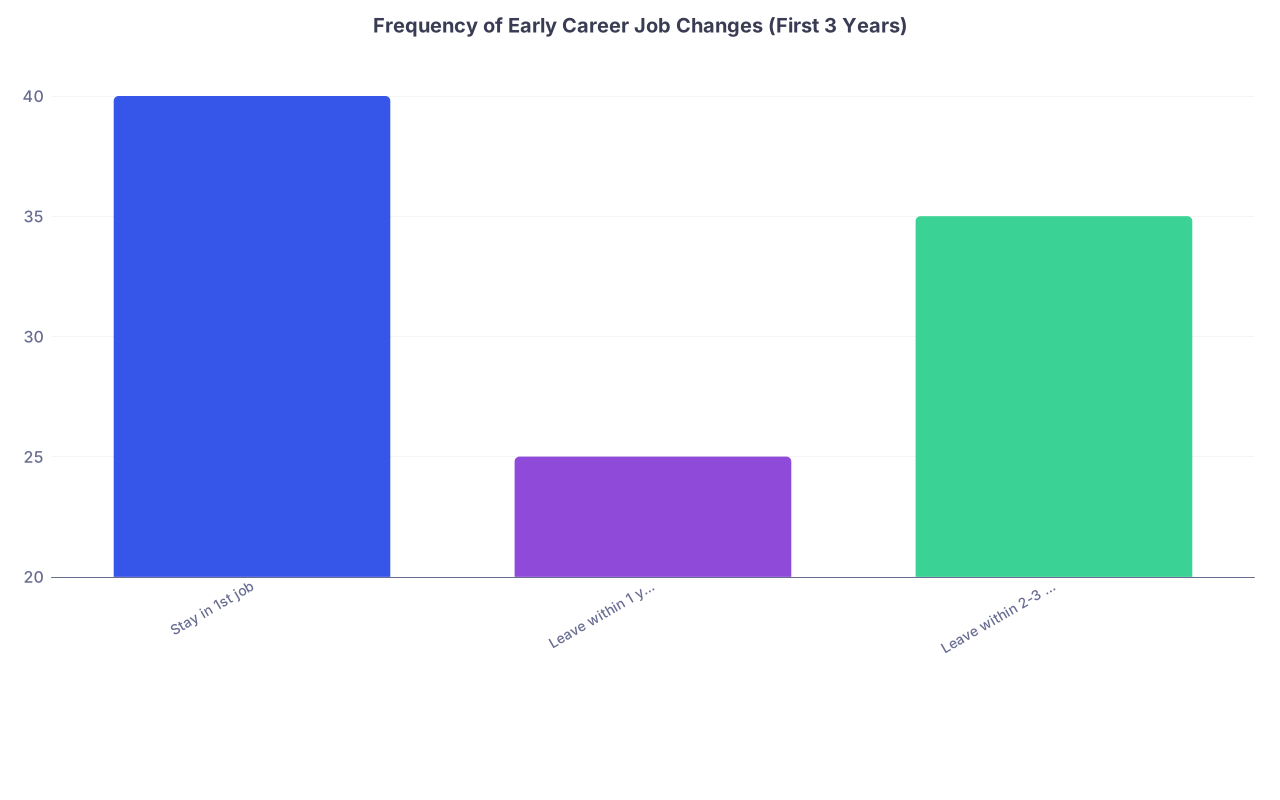
| Category | Value |
|---|---|
| Stay in 1st job | 40 |
| Leave within 1 year | 25 |
| Leave within 2-3 years | 35 |
You’re not some bizarre outlier for realizing your first contract wasn’t the right fit. Plenty of people don’t even know it’s wrong until they’ve already started.
You’re just getting that realization a little earlier—and awkwardly—on paper.

| Step | Description |
|---|---|
| Step 1 | Signed Job Contract |
| Step 2 | Review Contract Terms |
| Step 3 | Consult Lawyer |
| Step 4 | Negotiate Exit Terms |
| Step 5 | Plan Professional Withdrawal |
| Step 6 | Notify Employer Early |
| Step 7 | Prepare Explanation for Future Jobs |
| Step 8 | Serious Risks? |
FAQs
1. If I back out before my start date, can they still enforce the noncompete?
Sometimes yes, sometimes no—it depends on your state and the exact contract language. In many places, enforcement hinges on you actually having worked there, not just signed. In others, the moment you sign, certain obligations kick in. This is exactly why you need a healthcare employment lawyer. But big picture: hospitals/groups are much more likely to fight over a noncompete when you’ve built a huge patient base and then leave, not when you never even showed up.
2. Will this destroy my chances at academic jobs or fellowships later?
Almost never, unless you handle it in an openly hostile or dishonest way. Programs care far more about your clinical reputation, work ethic, and collegiality than a single contract that didn’t pan out. When I’ve seen people explain it simply—“It wasn’t the right fit geographically/clinically, so I withdrew before starting”—most interviewers shrug and move on. If anything, they’re more interested in whether you learned how to ask better questions the next time.
3. Do I have to tell my current PD or mentors what happened?
You don’t have to, but it’s usually better if at least one trusted mentor knows the real story, especially if you’ll need letters or references for a new job. Keep it simple and own your decision: “I signed early, realized it wasn’t right, and I’m working with a lawyer to exit professionally.” Most PDs have seen this happen before. The only time they really get annoyed is when they find out from an angry hospital administrator blindsiding them.
4. What if I don’t have another job lined up yet—should I still back out?
If the job is clearly wrong or unsafe and your lawyer agrees you’re not signing away your future by leaving, I’d rather see you take a short gap and moonlight/locums than chain yourself to a toxic full-time job you already dread. Yes, the gap will freak you out. Yes, your bank account might be tight for a bit. But a few months of limbo is rarely more damaging than spending years in the wrong place, burning out, and then trying to recover while dealing with a fresh set of contractual handcuffs.
Key takeaways:
- Backing out of a first job—done early, honestly, and with legal guidance—is uncomfortable, not career-ending.
- Your reputation hinges more on how you exit than on the fact that you changed your mind once.
- One messy contract does not define your whole career; handling it thoughtfully can actually set you up to choose much better next time.


