

It’s June 25th. The current interns are basically residents now, your name is all over the July schedule, and someone casually said, “You’re running intern orientation, right?” like it’s a five‑minute task.
You know what July feels like from the trenches: pages every two minutes, lost logins, confused orders, panicked cross‑cover calls. Now you’re the one expected to “run orientation” and somehow also not lose your mind.
Here’s the timeline I’d follow, down to the week and the day, to lead a solid intern orientation and avoid starting your year already burned out.
4–5 Weeks Before July 1: Design the Skeleton (Minimalist, On Purpose)
At this point you should stop pretending July will “work itself out” and actually structure it.
Step 1: Decide your real goals (not the fluffy ones)
Write this down. Literally. One piece of paper, three bullets. Intern orientation goals should be:
- Keep patients safe
- Get interns functional by end of week 1
- Protect your own bandwidth so you are not a zombie by July 15
Notice what’s not there: “Teach them everything about medicine” or “Make them love the EMR.” You will not. Stop trying.
Now translate those goals into 3–4 concrete outcomes by the end of week 1, for example:
- Interns can admit a patient independently with appropriate supervision
- Interns can place basic orders correctly (admit, diet, DVT ppx, PRN meds)
- Interns know the escalation chain and when to call for help
- Interns know the logistics: codes, handoff times, where stuff is
Everything in orientation should serve those. Anything that doesn’t? Cut or delegate.
Step 2: Map the month of July
You need a simple, at‑a‑glance month view of what you’re responsible for.
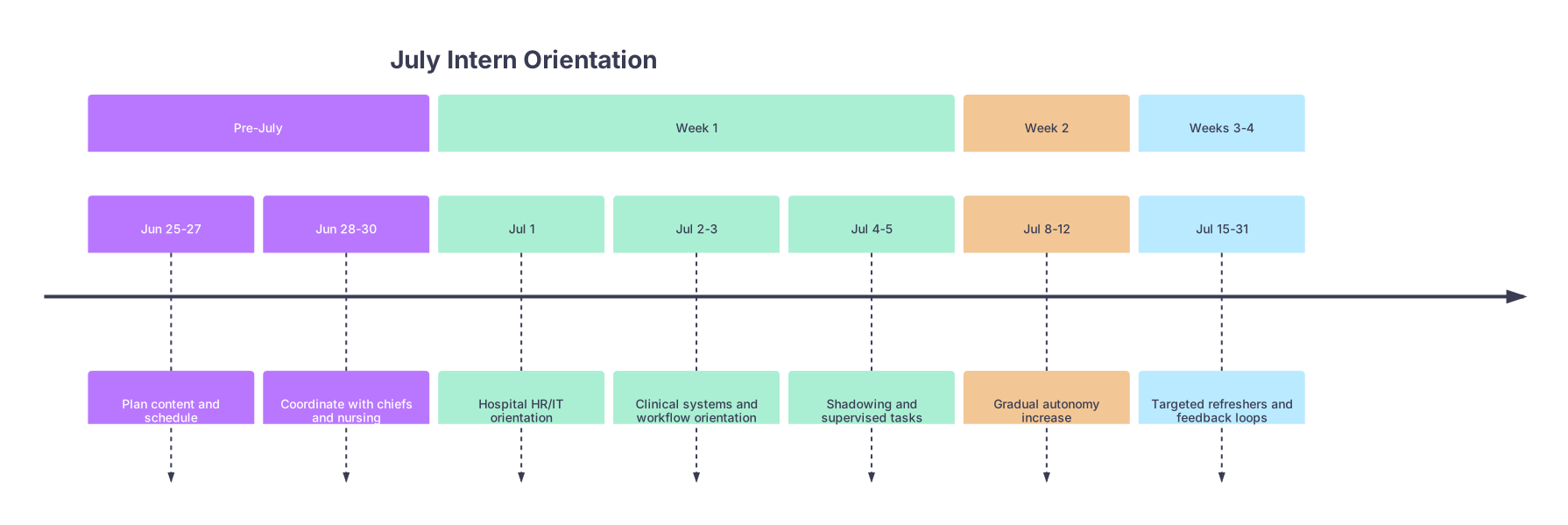
| Period | Event |
|---|---|
| Pre-July - Jun 25-27 | Plan content and schedule |
| Pre-July - Jun 28-30 | Coordinate with chiefs and nursing |
| Week 1 - Jul 1 | Hospital HR/IT orientation |
| Week 1 - Jul 2-3 | Clinical systems and workflow orientation |
| Week 1 - Jul 4-5 | Shadowing and supervised tasks |
| Week 2 - Jul 8-12 | Gradual autonomy increase |
| Weeks 3-4 - Jul 15-31 | Targeted refreshers and feedback loops |
Block off:
- Hospital/HR orientation days (you won’t control these)
- Your own call shifts
- Big known disruptions (July 4th, service transitions, etc.)
Then see where you actually have control to run your own orientation: usually a few half‑days the first week and scattered hours after that. Plan for less time than you think; everything runs late in July.
Step 3: Build a minimal curriculum
Four buckets. That’s it:
- Safety and escalation
- Workflows and the EMR
- Communication and culture
- Self‑preservation and boundaries
Make a short list under each. Example:
- Safety: when to call rapid, sepsis basics, high‑risk meds
- Workflows: admissions, discharges, night float expectations
- Communication: how to page consults, how to call attendings, SBAR
- Self‑preservation: meal breaks, “I’m overwhelmed” scripts, how to ask for backup
Now rank each item: must‑have in week 1, nice‑to‑have in week 2–4, or “they’ll learn it on the job.” You can’t front‑load everything. Don’t try.
2–3 Weeks Before July 1: Coordinate and Offload Smartly
At this point you should stop being a hero and recruit help.
Step 4: Align with chiefs and program leadership
Have a 20–30 minute conversation. Not an email chain. You want answers to:
- What sessions already exist? (HR, IT, GME, formal didactics)
- What are non‑negotiable topics they expect you to cover?
- What time blocks are truly yours to structure?
Then say this out loud:
“I can run [X] hours of focused, high‑yield orientation without compromising my clinical duties. Beyond that, quality drops.”
It sets limits early. If you don’t, July will eat you.
Step 5: Pull in allies
Nurses. Pharmacy. Case management. Co‑residents. They all know things interns must learn that never make it into PowerPoints.
Ask each:
- “If you could teach interns one 15‑minute thing that would make your life easier, what would it be?”
- “Can you or someone from your team join us for that one short block in week 1 or 2?”
That gives you quick, high‑yield segments that aren’t all on you.
| Role | Topic You Want Them To Cover |
|---|---|
| Charge nurse | Calling rapid, unit workflow |
| Pharmacist | Common order pitfalls |
| Case manager | Discharge planning basics |
| Chief resident | Program expectations |
| IT superuser | EMR tips, order sets |
You’re building a team‑based orientation, not a one‑person show.
Step 6: Pre‑build a few “evergreen” tools
You do this now so you’re not frantically making stuff at midnight June 30.
Create 3–4 items:
- One‑page “How to Admit” checklist (from ED/clinic to tucked‑in orders)
- One‑page “When to Call for Help” escalation guide
- A simple sign‑out template (or screenshots of how your team does it)
- A shared “July FAQ” doc you’ll fill as questions come up
Keep these brutally simple. Bullets, not paragraphs. These will save you dozens of repeated explanations.
1 Week Before July 1: Lock the Plan and Set Boundaries
At this point you should nail down details and protect your time.
Step 7: Finalize your July 1–7 micro‑schedule
Build a day‑by‑day, hour‑by‑hour sketch for week 1. Not rigid, but clear.
Example for a typical inpatient service:
Day 1 (often HR/IT heavy):
- Morning: Hospital orientation (you’re mostly off the hook)
- Afternoon (1 hour):
- Quick intros and expectations
- Safety + escalation talk
- Tour of unit, call rooms, supply closets
Day 2:
- 7–9 am: You pre‑round, interns shadow
- 9–10 am: Team rounds, interns mostly listening
- 10–11 am: EMR basics at a workstation, live on real patients
- Afternoon: Each intern writes 1–2 notes with you reviewing in real time
Day 3–4:
- Each intern carries 2–3 patients
- You co‑sign everything, do bedside check‑ins
- Short lunch session: “When to freak out” case vignettes
Day 5:
- Interns closer to full load
- 30‑minute debrief: what’s working, what’s confusing, adjust
Put time for yourself in there too:
- 20 minutes mid‑day to sit in a quiet room
- A hard stop time to leave hospital (barring emergencies)
If you don’t schedule it, July will erase it.
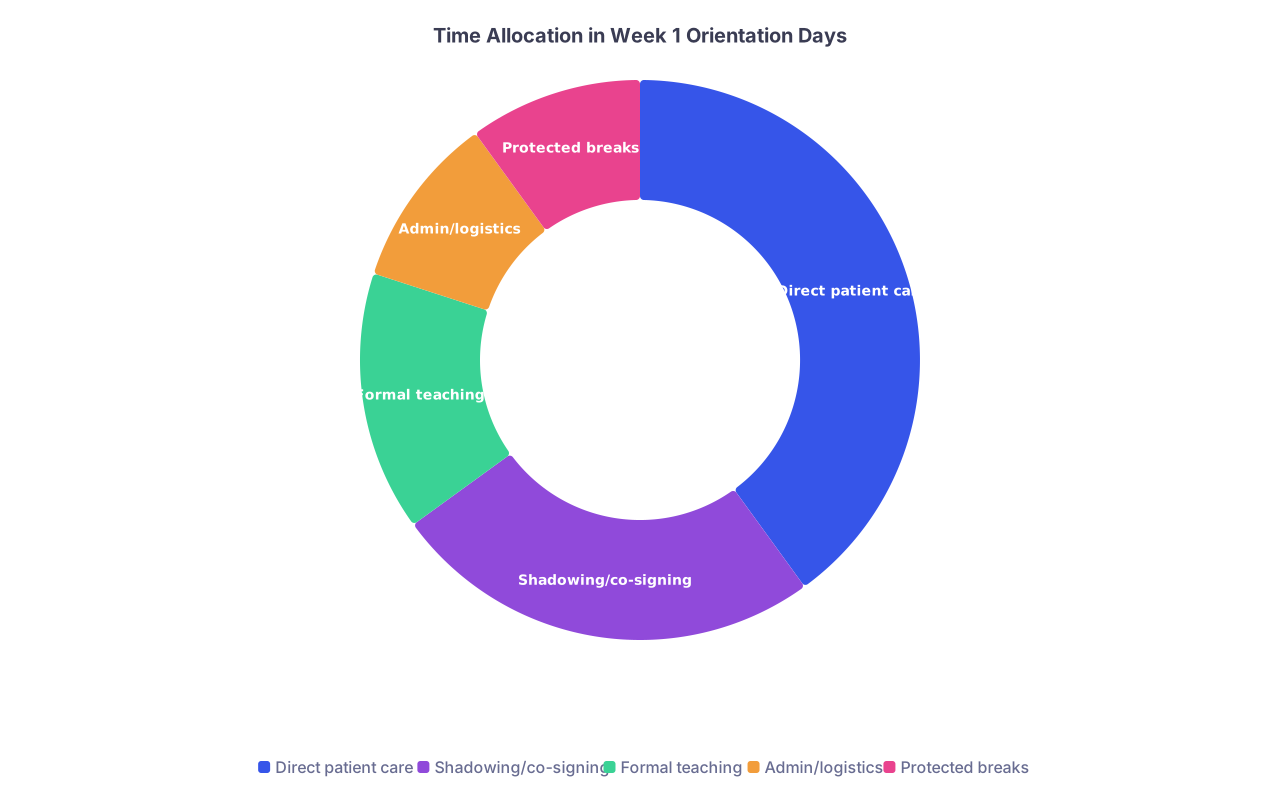
| Category | Value |
|---|---|
| Direct patient care | 40 |
| Shadowing/co-signing | 25 |
| Formal teaching | 15 |
| Admin/logistics | 10 |
| Protected breaks | 10 |
Step 8: Script your non‑negotiables
There are a few things interns must hear from you, clearly, on day 1–2. Script them. Not word‑for‑word, but bullet‑for‑bullet.
Things like:
- “You will never get in trouble for asking for help early. You will get in trouble for hiding a sinking patient.”
- “If you’re drowning, I expect you to say, ‘I am behind and need help with X and Y.’ That’s not failure; that’s safe practice.”
- “I’m not available 24/7, but here’s who is, and here’s exactly how you reach us.”
This is culture‑setting. Do not wing it when you’re post‑call and hungry.
Step 9: Decide what you’re not doing
This is where you protect your sanity.
Examples of things to explicitly skip or push later:
- Detailed lectures on rare diseases
→ push to noon conferences in August - Deep‑dive EMR workflows they won’t use day 1–3
→ introduce when it becomes relevant - Ten different ways to do the same thing
→ show them one safe standard pathway; nuance can wait
Write a list: “Orientation topics for August” and toss non‑urgent stuff there. You can circle back later when life is calmer.
July 1–3: Day‑By‑Day – Start Small, Protect Attention
Now you’re live.
Day 1: Contain the chaos
At this point you should lower your expectations. Day 1 is always scattered: badges, scrubs, passwords.
Focus on three things:
Names and humanity
- Learn their names. Use them. Ask where they trained.
- Give them permission to be clueless. It lowers panic, makes them more honest.
Orientation to space
- Quick walking tour: unit, supply, code cart, workroom, call rooms, cafeteria.
- Show them where to stand on rounds and where not to clog hallways.
Emergency basics
- Where is the code button.
- Who to call first if a patient is crashing.
- What a rapid response looks like on your unit.
Keep teaching under 60 minutes at a time. Their brains are mush. Yours probably too.
Day 2: First real clinical day
At this point you should move from theory to guided reps.
Morning:
- You see patients early, jot plans, and then bring interns in for bedside teaching on 2–3 cases.
- Have them write their first real notes on low‑acuity patients. Sit beside one intern and literally talk through the note structure once.
Midday:
- Quick 20‑minute EMR session:
- How to place admitting orders safely
- How to put DVT ppx and bowel reg on every admit
- How to find last echo, last CT, micro results
Afternoon:
- Each intern follows 1–2 patients as “primary,” but you double‑check all orders and plans.
- Teach basic pages:
“Hi, this is Dr. X, the intern on Y team, calling about Z patient…”
Day 3: Increase load, clarify expectations
At this point you should start giving them accountability with guardrails.
Give each intern 2–3 patients they’re clearly responsible for:
- They pre‑round.
- They present.
- They put in first‑draft orders (you review before signing).
Explicitly say:
- “Today you’re allowed to be wrong. You’re not allowed to be invisible. Speak up.”
End of day 3, pull them together for 10–15 minutes:
- “What’s the one part of the day that feels most confusing?”
- “What’s one thing I can do differently tomorrow to make this smoother?”
You’ll hear patterns. Fix those, not everything.

July 4–7: Consolidate Skills, Guard Your Energy
Holiday or not, July doesn’t care. At this point you should focus on repetition, not novelty.
Clinical load strategy
- Cap intern patient loads intentionally for the first week:
- Example: 3–4 patients per intern by day 5 on a busy medicine service.
- You silently absorb the overflow. Yes, it’s extra work, but it prevents dangerous overload and constant fires.
Micro‑teaching structure
Instead of long “lectures,” use 5–10 minute bursts:
- “How to call a rapid – 5 minute walkthrough”
- “Top 3 things that get you unsafe narc orders”
- “How to discharge safely in under 30 minutes”
Do them:
- While waiting for attending to arrive
- During lull after rounds
- At the computer, using real charts
Protecting yourself during week 1
This is where people blow it and end up hating July.
Be ruthless about:
- Sleep: Don’t stay an extra hour redoing every note if it’s safe to co‑sign and move on.
- Food: Schedule your meal times as non‑negotiable blocks; tell interns, “I disappear for 20 minutes around 1 pm to eat. If something is urgent, text; otherwise, it waits.”
- Saying no: When asked to “just add one more session,” your answer:
“If I add that, something else has to give. Here’s what I can realistically do.”
You’re modeling boundaries. That’s leadership, not selfishness.
Week 2 (July 8–14): Step Back Without Abandoning Them
By now, the interns are dangerous enough to be useful. This is where many seniors either micromanage or vanish. Do neither.
At this point you should: Increase autonomy in planned stages
Outline it like this:
Week 2: Interns manage near‑full patient loads, but you:
- Still review most orders before sign
- Still listen during all pages to new consults or acute changes
- Sit in on every high‑stakes family meeting
Week 3–4: You:
- Spot‑check orders
- Let them lead routine family updates
- Push them to call consults themselves (you listen to first one or two)
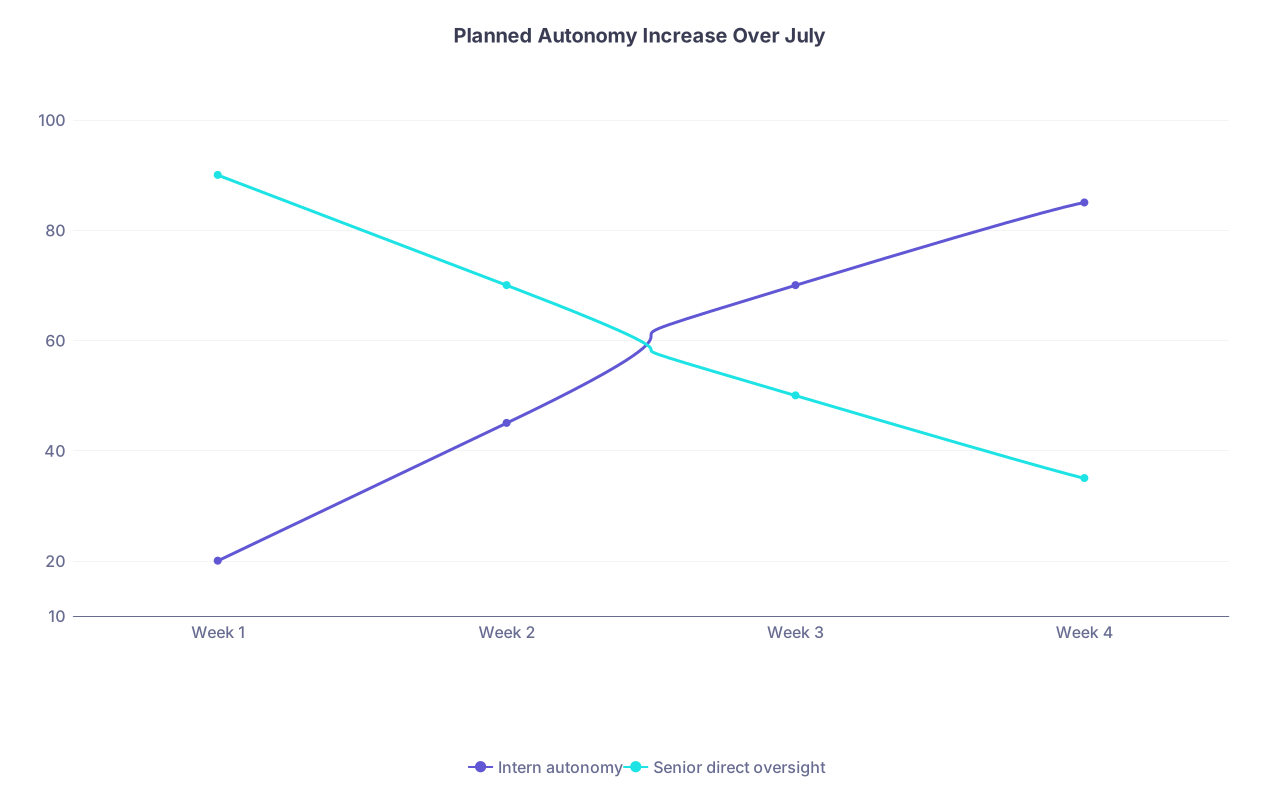
| Category | Intern autonomy | Senior direct oversight |
|---|---|---|
| Week 1 | 20 | 90 |
| Week 2 | 45 | 70 |
| Week 3 | 70 | 50 |
| Week 4 | 85 | 35 |
You tell them this plan upfront:
“Each week, I’ll step back a bit more. If you ever feel that’s too fast, tell me immediately.”
Short targeted refreshers
Use week 2 to patch holes you noticed in week 1:
- If everyone is shaky on sepsis:
- Run two 15‑minute sepsis case drills at the workstation.
- If cross‑cover is chaos:
- Walk them through 3 typical night pages and exactly how you’d respond.
Do not schedule long multi‑hour “bootcamps” now. July clinical volume does not care about your beautiful curriculum.
Normalize mid‑July feedback
At this point you should give blunt, kind feedback before bad habits calcify.
Set a short 1:1 with each intern (10 minutes, max):
- “One strength I’ve already seen from you is X.”
- “One pattern that worries me is Y. Here’s how I want you to adjust this week.”
- “What’s one thing you want more help with?”
Keep it simple. Document a couple bullets for yourself. This helps if issues escalate later.
Weeks 3–4: Sustain, Don’t Spiral
By late July, the novelty is gone and the fatigue is real. For them and for you.
At this point you should: Shift from orientation to maintenance
You’re no longer “leading orientation.” You’re leading a team and keeping it functional.
Your focus:
- Protecting intern morale so they don’t crater in August
- Tightening up any sloppy habits that developed
- Reclaiming your own bandwidth
Concrete actions:
- Drop any remaining “optional” sessions that feel like a burden for everyone.
- Keep only:
- A weekly 20‑minute “what’s tripping you up” huddle
- Brief, focused teaching linked to live cases
- Keep reinforcing:
- Ask‑for‑help culture
- Reasonable boundaries
Watch for your own warning signs
You’re at risk of quiet burnout because everyone’s attention is on the interns.
Red flags I’ve seen in seniors by end of July:
- Dreading coming in, even on reasonable shifts
- Snapping at basic intern questions
- Ruminating about every small mistake at 2 am
If you’re there, pull one of:
- Talk to a trusted co‑resident or chief and say, “I’m maxed. I need one lighter day or help with X.”
- Drop perfection on notes and non‑critical teaching. Choose safe and good enough.
No hero medals for being wrecked by August.

A Template You Can Steal: One-Week Orientation Snapshot
If you want something you can basically plug‑and‑play, here’s a compact version of a week 1 schedule that doesn’t destroy you:
| Day | Morning Focus | Midday Micro-Teaching | Afternoon Focus |
|---|---|---|---|
| Mon | HR/IT, unit tour | Safety & escalation (30m) | Shadow on rounds, simple notes |
| Tue | Pre-round + observe | EMR admit orders (20m) | Write notes, review orders w/ senior |
| Wed | Carry 2 pts w/ close oversight | Paging consults (15m) | Admit 1 pt with guided supervision |
| Thu | Near-full light load | Discharge checklist (15m) | Independent orders, you spot-check |
| Fri | Full functional day | Debrief + Q&A (30m) | Individual feedback (10m each) |
Notice what’s missing: two‑hour lectures, complex simulations, anything that requires AV tech. You won’t have capacity for that when someone’s sodium is 116.
Your Next Step Today
Do one concrete thing now:
Open your calendar and block off a 30‑minute slot this week labeled “July Orientation Plan.”
During that block, write three bullets:
- What your interns must be able to do safely by July 7.
- What time you realistically have to teach them.
- What you will deliberately not cover in week 1.
Once that exists, you’re no longer bracing for “July madness.” You’re running it on your terms.


