

You are here
It is July 5th. You just survived orientation, your pager will not stop chirping, and you are about to lead your first cross-cover night.
You do not feel like a leader. You barely feel like you belong on the unit.
But here is the reality: from day one, everyone is watching you as if you are one.
- Nurses are deciding whether you are reliable.
- Co-interns are subconsciously ranking who they trust.
- Seniors are deciding how much autonomy to give you.
- Patients already assume you are “their doctor.”
The next 90 days will quietly set your leadership reputation for the rest of residency. Not with grand speeches. With tiny, repeatable habits.
I am going to walk you through those 90 days in order—month by month, then week by week. At each point: what you should be doing, what to stop doing, and what habits to lock in.
Weeks 1–2: Surviving While Quietly Building Credibility
Your first two weeks are not about being impressive. They are about becoming predictably safe and dependable.
At this point you should…focus on 3 leadership basics
- Show up early and prepared
- Close the loop on everything
- Treat nursing as your primary leadership test
Daily habit set (Days 1–14)
1. Arrive 20–30 minutes before your team
You do this not to pre-round like a hero, but to:
- Open the EMR calmly
- Check overnight events, vitals, labs
- Make a simple list: who is sickest, what absolutely must happen before noon
Leadership move: when your senior walks in, you can say, “Two things overnight we should look at first,” instead of, “Uh, I have not checked anything yet.”
2. Start a “Promises List”
You will promise an absurd number of things each day:
- “I will order the CT.”
- “I will call the family.”
- “I will follow up with cardiology.”
Most interns forget half by noon. Leaders do not.
Create one running note (paper or digital) labeled: TODAY – PROMISES
Structure it:
- Column 1: Task
- Column 2: Who I told / who is expecting this
- Column 3: Done? (Y/N)
Then aggressively cross things off. This one habit alone separates reliable from chaotic.
3. Learn names, out loud, on purpose
Day 1–3: your job is to get names of:
- Charge nurse on your primary unit
- At least 3 day-shift nurses you work with most
- Unit clerk(s)
- Respiratory therapist who seems to always be there
Use phrases like:
- “Hey, I am new and trying to learn everyone’s name. I am [your name].”
- Then, during the day: “Thanks, Maria” instead of “Thanks, nurse.”
It seems small. It is not. This is how you earn allies who will bail you out when you are drowning at 2 a.m.
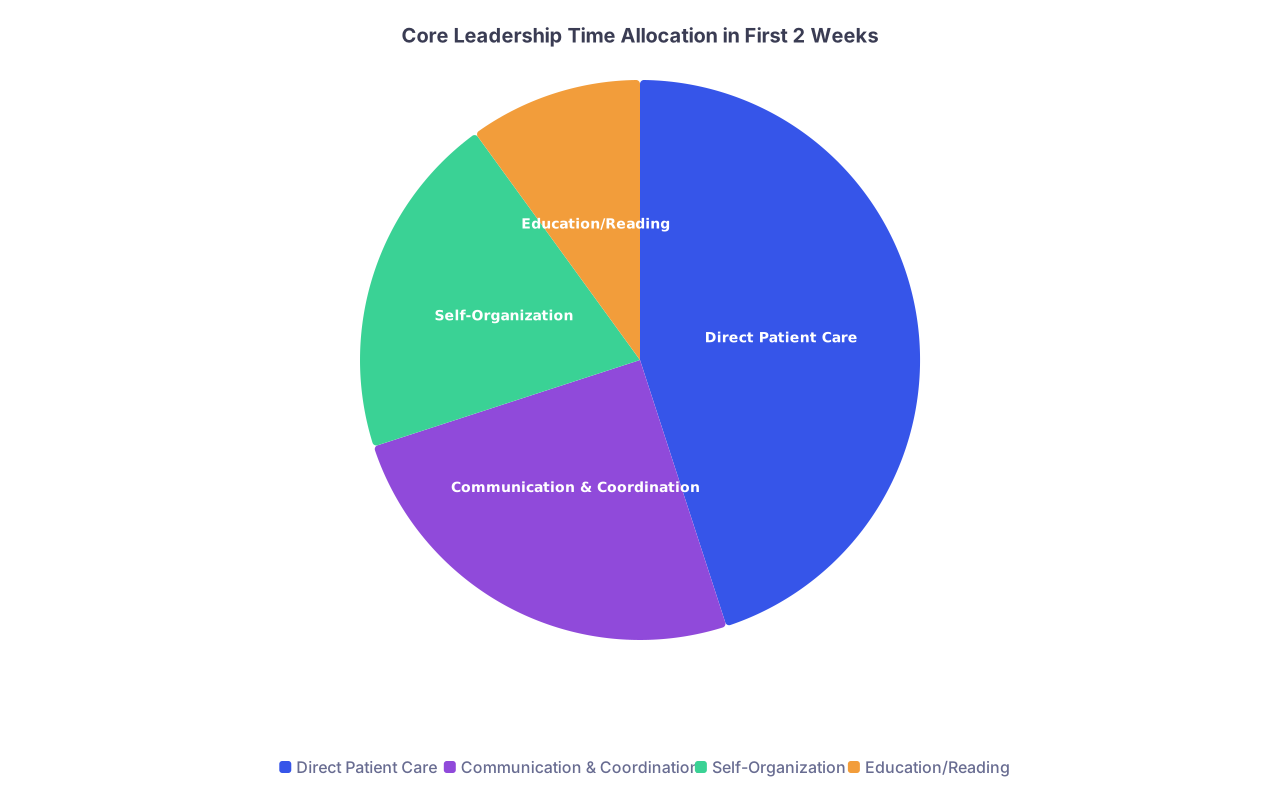
| Category | Value |
|---|---|
| Direct Patient Care | 45 |
| Communication & Coordination | 25 |
| Self-Organization | 20 |
| Education/Reading | 10 |
Leadership pitfalls to avoid in Weeks 1–2
By Day 10, you should have firmly stopped doing:
Nod-and-vanish behavior
When a nurse tells you something important, never just nod and disappear. Say what you are going to do next. Example: “Got it. I will assess her now and then order pain meds if appropriate. I will come back and update you.”Pretending you know what you do not know
Sentences to use daily:- “I have not done that before. Can you walk me through how your team usually does it?”
- “Let me check with my senior so we are on the same page.”
Disorganized consult calls
Before calling: 1–2 sentence summary on paper.
“Hi, this is Dr. X, the intern on medicine A. I am calling about a 67-year-old with X, Y, Z. My question is whether you recommend starting anticoagulation today or waiting until after imaging.”
By the end of Week 2, what you want people thinking is not “brilliant” but “safe, reachable, closes the loop.”
Weeks 3–4: From Surviving to Leading the Micro-Team
You have stopped feeling physically lost in the hospital. Now you need to start acting like the person who quietly runs the day-to-day.
At this point you should…take control of information flow
Your job as intern-leader is to control:
- Who knows what
- When they know it
- How clearly it is communicated
Weekly habit: the 5-minute morning huddle (informal)
Starting around Week 3, 5–10 minutes before rounds, do this with your co-intern(s) and any medical students:
- Rapidly review: Who is sickest? Who might crash?
- Who is likely to discharge? What is blocking it?
- Who needs imaging or procedures early?
This is not a formal meeting. You stand in a corner near the workroom and say:
- “Let us just run the list top to bottom. Anything unstable?”
- Assign: “You track imaging. I will watch the sick COPD patient’s gases. Let the team know if anything changes.”
This is basic leadership: you are organizing limited attention.
Daily communication habits (Weeks 3–4)
1. Pre-emptive updates to nursing
At least twice per day, intentionally:
- Walk to the nurses’ station
- Say: “Quick heads-up on our patients…”
Hit the big three:
- Who is going home and when
- Who may get sicker today
- Any new orders that change the plan (NPO, procedure, code status discussions)
You want nurses thinking: “This intern actually tells us what is going on.”
2. Make the sign-out sacred
By Week 4, your sign-out should be:
- Organized the same way every day
- Focused on anticipate-and-plan, not just copy-paste
Use a structure like:
- One-liner
- Why they are still in the hospital
- Active problems with specific overnight concerns
- Explicit “If X, then Y” statements
Leadership habit: treat sign-out like handing off your patients to your future self. Sloppy sign-out screams, “I do not own this.”
Month 2 (Days 31–60): Deliberate Leadership Habits, Not Just Survival
You are less terrified by code blues and rapid responses now. You know where to find things. This is where interns divide into two groups:
- Group 1: competent task machines, forgettable
- Group 2: emerging leaders people trust, remember, and promote
Month 2 is where you choose which group you are in.
At this point you should…institutionalize your systems
The leadership definition of “mature intern” is simple: you have systems, not vibes.
Weekly reset ritual
Once a week (Sunday evening works):
Review your last 7 days
- How many times did you miss a lab, a follow-up, or a callback?
- When did you feel overwhelmed?
Adjust your systems:
- If you are forgetting callbacks → tighter promises list
- If sign-out is chaos → standardize your template
- If pages crush you at predictable times → pre-empt those hours with proactive check-ins
Treat this like quality improvement. You are not a victim of the chaos. You are iterating your way to stability.
Month 2 leadership habits to add
1. Structured page management
By now, the pager is less terrifying but still relentless. At this point you should:
Stop answering every page instantly with no prioritization
Start using a simple triage system:
- Red: immediate response (acute change, STAT page, uncontrolled pain, high-risk meds)
- Yellow: needs attention in 10–20 minutes (non-urgent symptom changes, clarification questions)
- Green: can wait 30–60 minutes (paperwork, non-urgent clarifications, discharge questions)
When a nurse pages about a yellow or green issue while you are in a critical conversation, you can say:
- “I am in a goals-of-care discussion for the next 10 minutes. I will come by right after—does that work?” (If they say no, you upgrade its priority. And move.)
2. Predictable follow-through on consults
By end of Month 2, your consultants should recognize you as the intern who:
- Calls with a clear question
- Documents the plan concisely in your note
- Follows through on their recommendations
- Thanks them and lets them know when the plan changes
This is leadership in disguise. You are coordinating across teams and making sure the left hand knows what the right hand is doing.

3. Owning the discharge process
Stop thinking of discharges as paperwork. They are leadership tests:
- Did you clarify meds in a way the patient understands?
- Did you call or message the PCP if needed?
- Did you address social barriers? Transport, home oxygen, follow-up appointments?
Set a daily target: When I know someone might discharge tomorrow, I start the work today.
That means:
- Drafting the summary the day before
- Starting med reconciliation early
- Calling case management before noon
People remember the intern who gets patients out safely and on time.
Month 3 (Days 61–90): Quietly Becoming the Intern Others Gravitate Toward
If you have laid the groundwork, Month 3 is where you stop feeling like an impostor most of the time. Not all the time. But you are no longer chronically underwater.
Now you work on higher-level leadership habits.
At this point you should…start leading up and across, not just down
You are still low on the hierarchy. But you can still lead:
- Up – making your senior’s job easier, anticipating needs
- Across – supporting co-interns and students
- Outward – communicating clearly with families
Habit: managing your senior, subtly
Good seniors love interns who make them obsolete in the best way. Aim to:
- Arrive with a plan, not just a problem
Instead of:
“Mr. R’s blood pressure is low.”
Try:
“Mr. R’s BP dropped to 82/50. I checked for new meds or bleeding and did not see obvious causes. He is mentating fine. I am thinking of a 250 cc bolus and rechecking in 15 minutes. Any concerns with that plan?”
You are not pretending to know everything. You are showing you are thinking like a physician, not a scribe.
By 90 days, this should be your default format for almost every question:
Problem → What I have checked → My proposed plan.
Habit: mentoring the medical student (yes, already)
Around Month 3, you will notice students start to look at you like you actually know things. Use that.
Daily micro-leadership moves:
Spend 3–5 minutes after rounds asking:
“What is one thing you want to get good at this week? Presentations? Notes? Assessment and plan?”Give very specific feedback:
- “Make your one-liner shorter—try one sentence.”
- “Start with the top three labs we actually care about.”
You do not need formal teaching sessions. You need small, repeated nudges. That is how leaders develop others.
Pulling the 90 Days Together: Month-by-Month Snapshot
| Phase | Core Leadership Focus | Key Habits |
|---|---|---|
| Days 1–14 | Safety and reliability | Promises list, early arrival, names |
| Days 15–30 | Information flow and ownership | Morning huddle, strong sign-out |
| Days 31–60 | Systems and coordination | Page triage, consult discipline |
| Days 61–90 | Leading up, across, and outward | Presenting plans, mentoring students |
Micro-Timeline: A “Good” Intern Day by Day (Template)
Let me give you a rough template to benchmark yourself against. Adjust to your specialty and call schedule, but the structure holds.
Morning (Pre-rounding and Rounds)
At this point in the morning you should…
20–30 minutes before team:
- Scan vitals, overnight events, urgent labs
- Mark 1–2 sickest patients and plan to see them first
Pre-rounds:
- See the sickest or most active patients in person
- Clarify anything that will change morning rounds (new chest pain, new fever, family demanding updates)
Rounds:
- Present concise one-liners
- Offer a proposed plan, not just a list of facts
- Keep a live task list during rounds (don’t trust memory)
Midday (11:00–15:00)
This is when the wheels usually fall off for new interns. Your job is to fight entropy.
At this point in the day you should…
Before noon:
- Put in the big orders: imaging, consults, procedures
- Start discharge work for anyone likely to go tomorrow
- Touch base with nursing about the day’s major moves
Early afternoon:
- Work through your promises list methodically
- Reassess any unstable or borderline patients
- Sit with at least one patient or family to explain the plan slowly (this is leadership, not a luxury)
Late Afternoon / Sign-out
Before sign-out you should…
- Update each patient’s short “story” for the night team: why they are still here, what could go wrong
- Double-check:
- PRNs for pain, nausea, agitation
- Code status is correct and known
- Critical results followed up or clearly handed off
Then give sign-out like you expect to be held responsible for what happens overnight. Because you are.
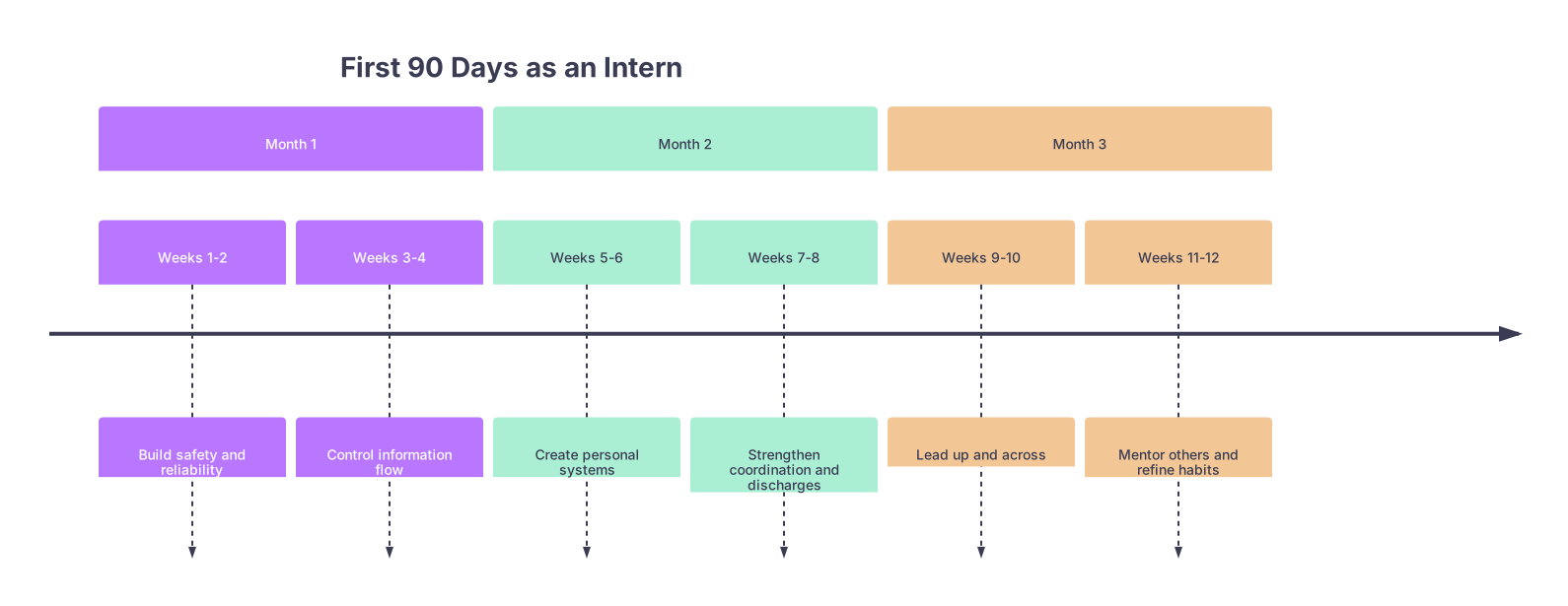
| Period | Event |
|---|---|
| Month 1 - Weeks 1-2 | Build safety and reliability |
| Month 1 - Weeks 3-4 | Control information flow |
| Month 2 - Weeks 5-6 | Create personal systems |
| Month 2 - Weeks 7-8 | Strengthen coordination and discharges |
| Month 3 - Weeks 9-10 | Lead up and across |
| Month 3 - Weeks 11-12 | Mentor others and refine habits |
Leadership Under Pressure: Nights and Cross-Cover
Nights expose your leadership gaps brutally. No attendings hovering. Less backup. More responsibility.
At this point on nights you should…aim for calm, systematic responses
Before starting the shift:
- Identify:
- 2–3 sickest patients on your list
- Anyone with pending critical results (CT head, troponins, etc.)
- Anyone with “if X happens, please Y” notes from the day team
During the shift:
Use a simple algorithm for every page:
- What is the actual question?
- How sick is the patient right now?
- What data do I need before I see them?
- What can I do in 2 minutes to stabilize while I think?
Say your reasoning out loud with nurses when appropriate:
- “Heart rate is 140 but BP is okay and he is mentating well. I will check EKG and recent labs, then come examine him. If BP drops or he changes, call me back STAT.”
Clear, calm, specific. That is leadership.

Protecting Yourself So You Can Lead
Burned-out interns are terrible leaders. They get irritable, forgetful, and self-protective. The trick is not “wellness.” It is operational self-preservation.
At this point in your first 90 days you should…build minimal but non-negotiable boundaries
Three simple ones:
Non-negotiable micro-breaks
- 5 minutes, twice a day, where you step away from the workstation. No EMR, no pages if possible, just reset.
People underestimate how much this protects judgment at 16:00.
- 5 minutes, twice a day, where you step away from the workstation. No EMR, no pages if possible, just reset.
Sleep as a priority, not an afterthought
- Post-call: leave when you can. Do not linger to “help” with tasks that someone else can do. You are not a martyr. You are a future liability if exhausted.
One consistent decompression ritual after shifts
- Walk home in silence
- Short journal dump of the day’s three hardest moments
- 10-minute stretch when you get home
I do not care what it is. I care that it is the same and that you actually do it.
Final 90-Day Check: What Should Be True by Now
By the end of your first 90 days as an intern, you are not supposed to know everything. But some things should be very clearly true.
You should:
- Be predictably reliable: if you say you will do it, people stop worrying about it.
- Control basic information flow: patients, nurses, and seniors are not constantly in the dark.
- Show growing initiative: you bring plans, not just problems.
If you are not there yet, fine. Rewind the timeline, pick one habit from each phase, and start this week. The calendar does not care that it is Day 100. Your leadership clock starts whenever you decide to treat these “small” habits like your real job.


