

The biggest mistake residents make about leadership is thinking it starts when someone hands them the “Chief Resident” title. It doesn’t. It starts the day you walk into orientation as a PGY1.
You want Chief? You want real influence on your program, your patients, and your peers? Then you need a plan that starts now—not in PGY3 when the emails about chief applications go out.
Below is a year‑by‑year, and inside each year a season‑by‑season, roadmap from PGY1 to Chief. At each point: what you should be doing, saying yes to, saying no to, and how people should be talking about you behind closed doors if you’re on the right track.
Big Picture: Leadership Track Overview
Before we go year by year, see the arc you’re aiming for.
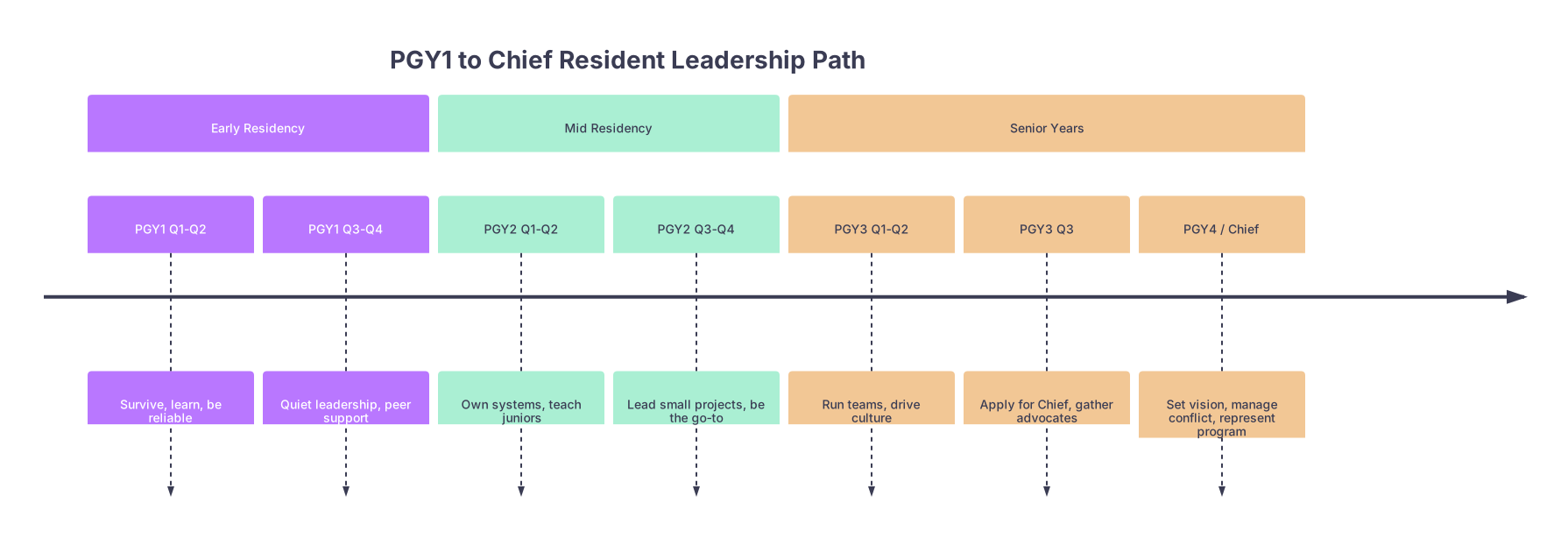
| Period | Event |
|---|---|
| Early Residency - PGY1 Q1-Q2 | Survive, learn, be reliable |
| Early Residency - PGY1 Q3-Q4 | Quiet leadership, peer support |
| Mid Residency - PGY2 Q1-Q2 | Own systems, teach juniors |
| Mid Residency - PGY2 Q3-Q4 | Lead small projects, be the go-to |
| Senior Years - PGY3 Q1-Q2 | Run teams, drive culture |
| Senior Years - PGY3 Q3 | Apply for Chief, gather advocates |
| Senior Years - PGY4 / Chief | Set vision, manage conflict, represent program |
At a high level, your leadership growth should roughly look like this:
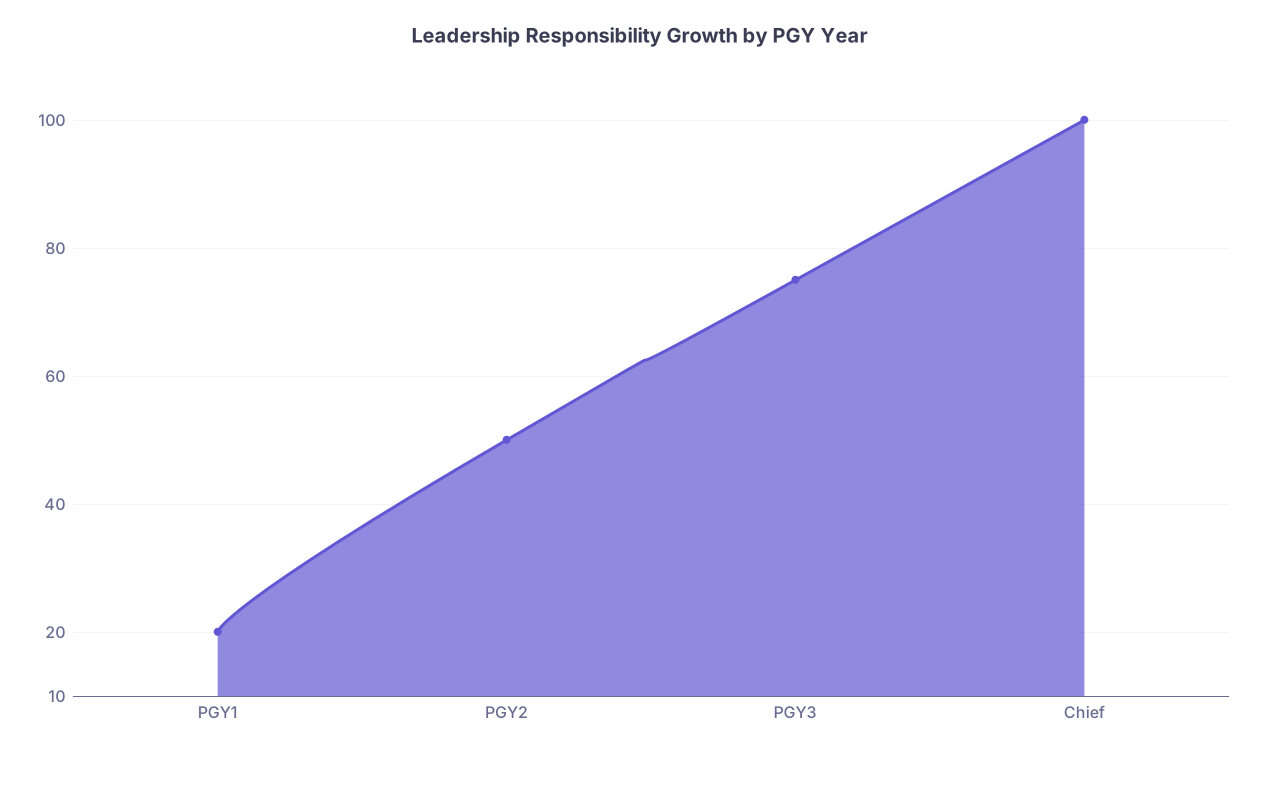
| Category | Value |
|---|---|
| PGY1 | 20 |
| PGY2 | 50 |
| PGY3 | 75 |
| Chief | 100 |
If you’re at PGY2 and still functioning like a high‑functioning PGY1, you’re already behind.
PGY1: Build Trust and Competence (You’re a Future Chief, Not Just an Intern)
This is not the year to “lead the program.” This is the year to prove you’re someone the program can safely trust with more.
PGY1 – Months 1–3: Survival, Reliability, and Reputation
At this point you should:
- Show up on time. Every time. The bar is low but non‑negotiable.
- Know your patients cold on rounds.
- Return pages promptly and communicate clearly.
- Ask for help early rather than hiding your ignorance.
What you focus on:
Master the basics of clinical work
- Intern notes that are concise but complete.
- Clear sign‑outs—written and verbal.
- Anticipating obvious issues (pain, nausea, discharge planning).
Start your leadership reputation quietly
- Do not complain constantly on day 3. Everyone is tired. You’re not special.
- Be the intern who:
- Double‑checks orders without drama.
- Helps co‑interns cross‑cover when possible.
- Reads about their patients without bragging about how much they “love learning.”
Watch your chiefs and seniors like a case study
- Notice:
- Who you’d actually follow into a code.
- Who makes rounds efficient vs miserable.
- How they handle dumb questions, bad consults, and difficult attendings.
- Start a mental file: “Things I’ll do as a chief” vs “Never doing that.”
- Notice:
PGY1 – Months 4–6: Early Micro‑Leadership
By now, the program has a sense of you. At this point you should:
- Be that intern seniors ask to be on their team.
- Handle a standard list without drowning.
- Start to teach medical students one‑on‑one.
What you do now:
Take ownership of small things:
- Create a consistent pre‑round workflow for your team.
- Optimize something small: sign‑out template, progress note smart phrases, or discharge planning checklist.
- Be the reliable point person for something (e.g., follow‑up phone calls, vaccine status, VTE prophylaxis).
Build peer capital:
- Do not throw co‑interns under the bus in front of attendings.
- When something goes wrong, own your part without theatrics.
- Offer specific, practical help: “I can take that admission while you finish your discharge.”
You’re not “in charge” yet—but people are already forming the sentence: “They’d be a great chief someday.” That sentence usually starts during late PGY1.
PGY1 – Months 7–12: Becoming the Go‑To Intern
At this point you should:
- Be one of the more independent interns.
- Handle nights with fewer frantic calls.
- Start noticing broken systems, not just broken patients.
Focus on:
Informal leadership on the team
- Show new rotating interns/medical students how the floor actually runs.
- Offer to walk them through their first admission, sign‑out, or note.
- Model calling for help appropriately, especially in codes and rapid responses.
Early systems thinking
- When something goes wrong (missed lab, delayed imaging, discharge chaos), ask:
- Was this just me?
- Or is this a pattern?
- Start a list of chronic pain points. You’ll use it later for QI, projects, and—yes—chief pitches.
- When something goes wrong (missed lab, delayed imaging, discharge chaos), ask:
Be professional when no one’s “officially” watching
- How you talk in the work room filters back to leadership.
- Chiefs and attendings remember who is toxic on nights. It comes up when they pick chiefs.
PGY2: Step Into Visible Leadership (Whether You Have a Title or Not)
This is the year you shift from “good worker” to “emerging leader.” You’re no longer just managing tasks; you’re influencing people and systems.

PGY2 – Months 1–3: Own the Team, Own the Tone
At this point you should:
- Run the day‑to‑day rhythm of inpatient teams when you’re the senior.
- Be comfortable supervising interns on routine issues.
- Start acting like the “bridge” between attendings and juniors.
Your priorities:
Run efficient, humane rounds
- Set expectations at the beginning of the block:
- When pre‑rounds start.
- How you want sign‑out structured.
- How pages should be escalated.
- Protect teaching time without making the day endless.
- Set expectations at the beginning of the block:
Teach deliberately
- Prepare one 5–10 minute topic per week.
- Use your own patients as springboards:
- “Let’s quickly review management of upper GI bleed.”
- Give interns and students something actionable to improve each week.
Model how to talk to nurses and consultants
- You can be firm without being condescending.
- Your interns will copy your style. For better or worse.
PGY2 – Months 4–6: Take On Small Leadership Roles
At this point you should:
- Be on the radar of at least one APD or chief as “someone we should invest in.”
- Start saying yes selectively to leadership‑adjacent roles.
Good options now:
Committees / roles that actually matter:
- Residency wellness committee (if it’s not just pizza and surveys).
- Education committee for residents or students.
- Morbidity & Mortality planning or QI committee participation.
Start (or join) one small QI or systems project:
- Example targets:
- Decreasing discharge delays on your main service.
- Improving documentation completeness for sepsis bundles.
- Streamlining cross‑coverage handoffs.
- Make it small, measurable, and finishable within a year.
- Example targets:
| Strong Option | Weak / Time-Wasting Option |
|---|---|
| QI project with clear metric | Vague “wellness” side chat group |
| M&M planning involvement | Unstructured journal club only |
| Teaching med student bootcamp | Random poster with no follow-up |
| Residency scheduling input | Social event planning only |
PGY2 – Months 7–12: Build Your Chief Packet Without Calling It That
At this point you should:
- Have at least one tangible leadership accomplishment you can point to.
- Be recognized by juniors as someone safe and helpful.
- Have attendings who would vouch for you without hesitation.
Concrete moves:
Document your work
- Keep a running list:
- Committees served.
- QI/education projects with data or outcomes.
- Teaching activities (lectures, small groups).
- This becomes your chief CV and your “why me” talking points.
- Keep a running list:
Ask for feedback like a grown‑up
- Ask seniors and attendings:
- “What should I change if I want to be a strong senior or future chief?”
- Do not argue with their answers. Adjust, then circle back a month later and ask if they see improvement.
- Ask seniors and attendings:
Handle conflict without drama
- When an intern is underperforming:
- Talk to them privately first.
- Be clear and specific, not vague criticism.
- Chiefs and PDs notice who can handle hard conversations versus who escalates everything.
- When an intern is underperforming:
PGY3 (and PGY4 in Longer Programs): From Senior to Program Shaper
This is where you either consolidate your trajectory toward chief—or take yourself out of the running by plateauing.

PGY3 – Months 1–3: Run the Show on Rotations
At this point you should:
- Be able to run an inpatient service with minimal supervision.
- Orchestrate admissions, discharges, teaching, and cross‑cover without chaos.
- Be seen as one of the “anchors” of the residency class.
Key behaviors now:
Lead across disciplines
- During multidisciplinary rounds:
- You set the agenda.
- You clarify the plan.
- You protect your interns from being steamrolled by 14 different people talking at once.
- Speak up when plans are unsafe or unrealistic.
- During multidisciplinary rounds:
Own your QI/education projects
- By now, at least one project should be:
- Implemented.
- Measured.
- Presented at M&M, grand rounds, or a local conference.
- Chiefs are chosen partly on: “Who actually finishes things?”
- By now, at least one project should be:
Mentor intentionally
- Take 1–2 PGY1s under your wing.
- Offer authentic advice on call strategies, study plans, and career direction.
- This is dry‑run chief work: one‑on‑one resident development.
PGY3 – Months 4–6: Decide If You Actually Want to Be Chief
Not everyone should be. Not even all the excellent clinicians.
Ask yourself:
- Are you willing to:
- Take middle‑of‑the‑night calls about schedule swaps and sick calls?
- Mediate resident vs attending conflicts without picking sides?
- Be the face of policies you didn’t write and may not love?
At this point you should:
- Talk to current or recent chiefs honestly.
- Ask: “What actually sucked? What surprised you?”
- Talk to the PD or APD you trust:
- “If I applied for chief, where do I need to grow in the next 3–6 months?”
Then decide. If yes, commit. Half‑interested people rarely get picked—and shouldn’t.
PGY3 – Months 7–9: The Chief Application Window
This timing varies by program, but usually this is the window. At this point you should:
- Have your story straight.
- Have your advocates lined up.
- Have visible, recent examples of leadership.
Your application (formal or informal) needs to show:
Track record, not just potential
- Specific examples of:
- Systems you improved.
- Conflicts you helped resolve.
- Teaching you led.
- Not just “I care about wellness” but: “I led X initiative that decreased Y.”
- Specific examples of:
Self‑awareness
- You should be able to say:
- “My strengths as a leader are A and B.”
- “Weakness I’m actively working on is C, and here’s what I’ve done about it.”
- Directors are allergic to residents who think they’re flawless.
- You should be able to say:
Clear reasons you want the role
- Wrong reasons:
- “I need it for fellowship.”
- “I like being in charge.”
- Strong reasons:
- “I want to improve how we support struggling interns.”
- “I care about making our schedules more humane and transparent.”
- “I want to strengthen our teaching structure.”
- Wrong reasons:
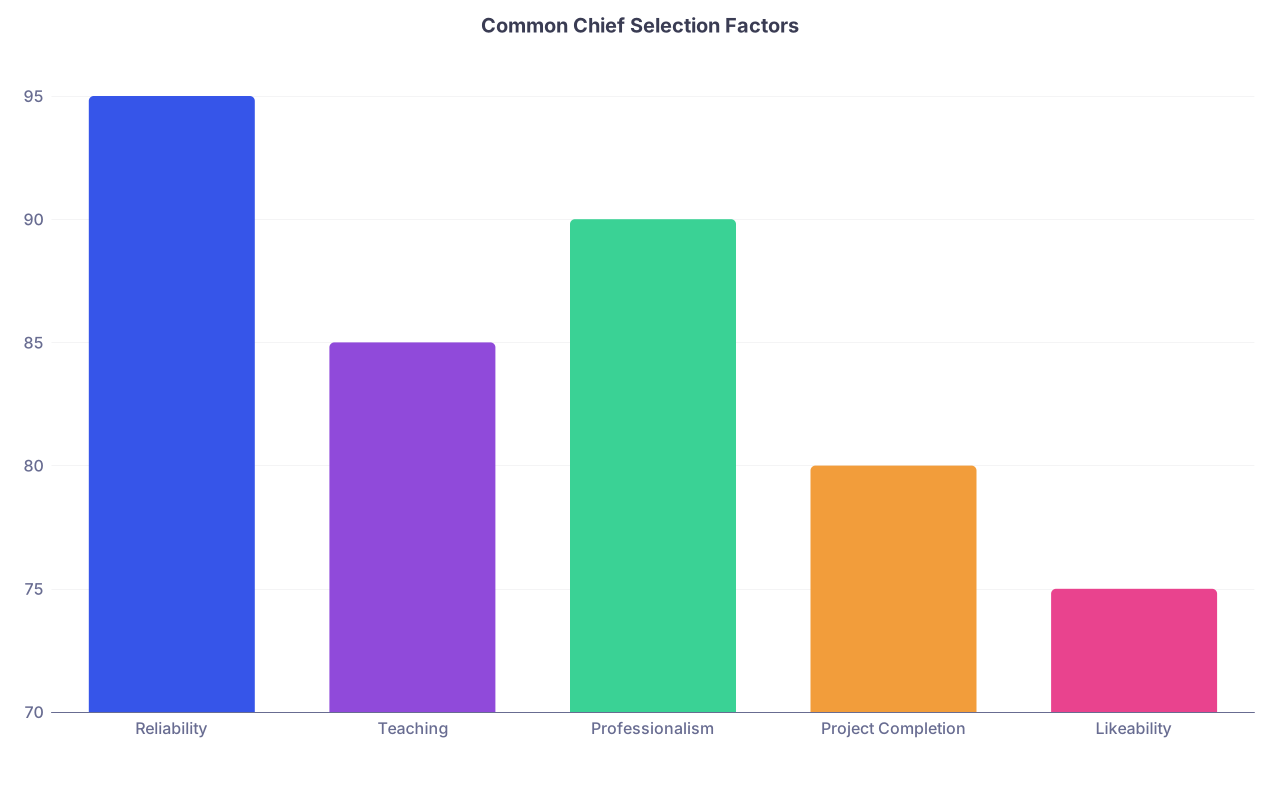
| Category | Value |
|---|---|
| Reliability | 95 |
| Teaching | 85 |
| Professionalism | 90 |
| Project Completion | 80 |
| Likeability | 75 |
Yes, likeability matters. No one wants a brilliant but toxic chief.
PGY3 – Months 10–12: If You’re Selected (Pre‑Chief Ramp‑Up)
At this point you should:
- Shadow the current chiefs in their unglamorous work:
- Schedule building.
- Handling complaints.
- Meetings with department leadership.
- Start transition planning for any projects you lead:
- What will continue?
- What needs to be handed off?
You’re also now watched as “chief‑elect.” How you handle this period sets the tone for your chief year.
Chief Year: You’re Not Just a Resident Anymore
Chief year is not “extra PGY4.” It’s a pivot into middle management. You are both resident and administration. And yes, that’s as awkward as it sounds.

Chief – Quarter 1: Learn the Machinery and Set Priorities
At this point you should:
- Understand every moving part of:
- Scheduling.
- Evaluation systems.
- Clinical coverage expectations.
- Program accreditation pressures (yes, those matter).
Your first 3 months:
- Meet individually with key stakeholders
- Program Director.
- Associate PDs.
- Department chair or vice‑chair.
- Chief of nursing or nurse managers on your main units.
- Resident class reps.
Ask bluntly: “What are the top 2–3 things you want to see improved this year?”
Pick 1–2 big, realistic chief‑year goals
- Examples:
- Smooth out weekend coverage and post‑call rules.
- Improve intern orientation and first‑month support.
- Reduce pager chaos via communication standards or tools.
- If you pick 6 goals, you will accomplish none.
- Examples:
Define how you’ll communicate
- Decide:
- Weekly or monthly chief email?
- Slack / Teams / GroupMe norms?
- Office hours or open‑door blocks?
- Residents need predictable ways to reach you that don’t destroy your life.
- Decide:
Chief – Quarter 2: Own the Schedule and the Culture
This is the messy middle where the novelty wears off. At this point you should:
- Be fully responsible for schedules (or whatever your program assigns to chiefs).
- Have established credibility with both residents and leadership.
Key moves:
Be fair and transparent with the schedule
- When someone says, “This is unfair,” you should be able to show:
- Actual call counts.
- Actual weekend/holiday distribution.
- Fix real inequities. Don’t chase every perception issue.
- When someone says, “This is unfair,” you should be able to show:
Handle conflict like an adult
- Resident vs resident.
- Resident vs attending.
- Resident vs nursing.
- Your job is:
- Listen.
- De‑escalate.
- Clarify expectations.
- Loop in PD/administration when it’s beyond your authority.
- Do not promise what you cannot deliver.
Protect the learning environment
- Advocate when:
- Residents are being used as cheap labor with no teaching.
- Rounding culture becomes consistently toxic.
- But bring solutions, not just complaints.
- Advocate when:
Chief – Quarter 3: Optimize Systems, Develop Others
At this point you should:
- Have stabilized the basics.
- Start shifting from constant firefighting to proactive improvement.
Your focus now:
Refine your big projects
- Collect data:
- Did weekend coverage improve?
- Are interns reporting better support?
- Did pages per night decrease after your new protocol?
- Present results at:
- Program meetings.
- Department quality or education conferences.
- Collect data:
Mentor the next wave
- Identify PGY2s or early PGY3s with leadership potential.
- Give them:
- Small projects.
- Committee roles.
- Chances to run teaching sessions.
- This is your actual legacy, more than whatever schedule tweak you made.
Chief – Quarter 4: Transition and Legacy
You’re tired. Everyone is. This is where most chiefs mentally check out. Don’t.
At this point you should:
- Systematically hand off responsibilities.
- Document what worked and what failed.
Do this:
- Write a simple “Chief Survival Guide”:
- What you wish you’d known coming in.
- Landmines to avoid.
- Templates for:
- Emails.
- Schedules.
- Orientation agendas.
- Meet with incoming chiefs:
- Walk them through your key systems live.
- Be honest about what the PD cares about and what’s just noise.
Quick Year‑By‑Year Checklist
Use this as a blunt self‑audit.
| Year | At This Point You Should... |
|---|---|
| PGY1 | Be reliable, clinically solid, early peer leader |
| PGY2 | Run teams, teach well, start real QI/education work |
| PGY3 | Shape systems, mentor juniors, decide on chief |
| Chief | Manage schedules, culture, conflict, and improvement |
Key Takeaways
- Chief starts in PGY1 with trust, not in PGY3 with an application.
- Each year has a clear leadership upgrade: from reliable intern to team leader to program shaper.
- The best chiefs finish things, handle conflict calmly, and leave the program stronger—and the path to that starts now, not “later.”


