

The chief resident election season is won months before anyone “throws their hat in the ring.”
If you are waiting for the email that says “nominations are open” to start acting like a chief, you have already lost ground. Chiefs are picked based on a story that has been building since your intern year. The election season just brings it into focus.
Here is a month‑by‑month, then week‑by‑week action plan, so you know exactly what to do and when.
Overview Timeline: From 12 Months Out To Election Week
Before breaking it down, orient yourself to the big picture. For most residencies, chief selection happens late PGY‑2 or early PGY‑3 for three‑year programs, or one year before your final year for longer programs.
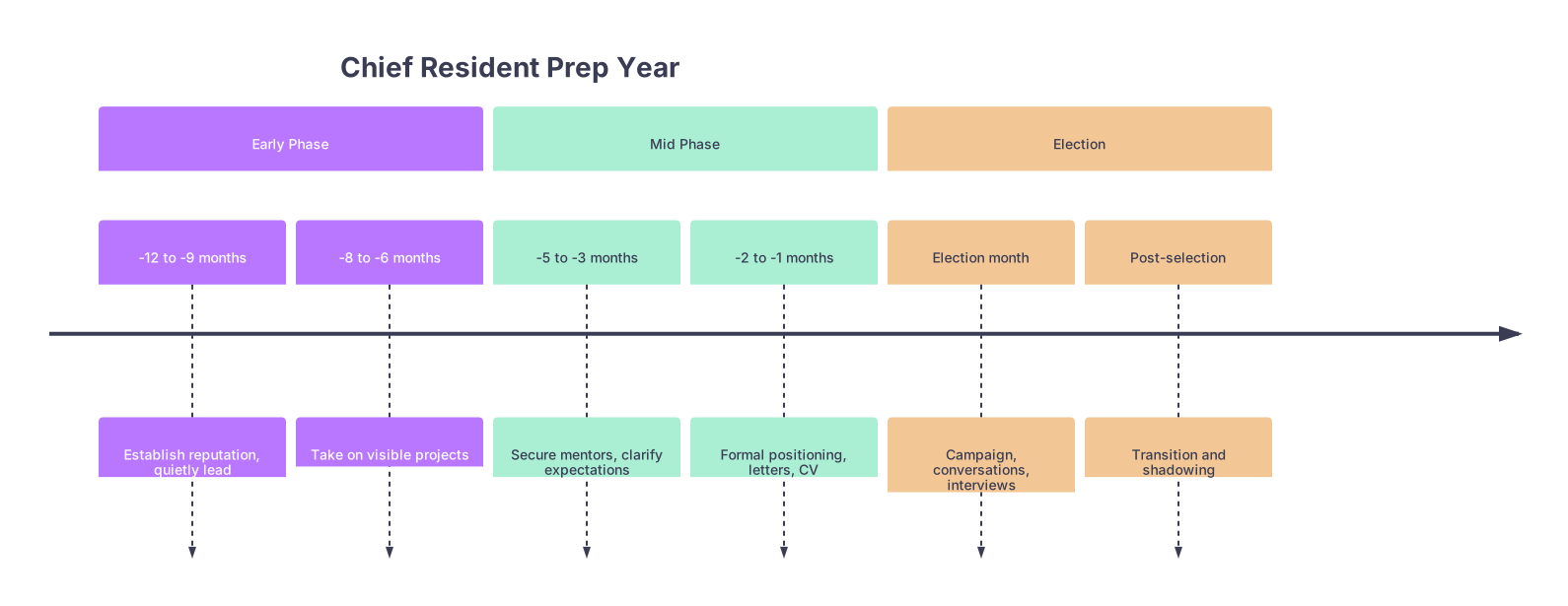
| Period | Event |
|---|---|
| Early Phase - -12 to -9 months | Establish reputation, quietly lead |
| Early Phase - -8 to -6 months | Take on visible projects |
| Mid Phase - -5 to -3 months | Secure mentors, clarify expectations |
| Mid Phase - -2 to -1 months | Formal positioning, letters, CV |
| Election - Election month | Campaign, conversations, interviews |
| Election - Post-selection | Transition and shadowing |
Every program’s calendar is slightly different, but the sequence is the same. At any given point in this process, you should know what lever you are pulling: reputation, relationships, or results.
12–9 Months Before Election: Build The Reputation You Will Be Elected For
At this point you should stop thinking like “maybe I want to be chief someday” and start acting like someone the program would trust with its worst problems.
Month −12: Decide And Observe
At this point you should:
- Decide privately that you are going for chief.
- Start watching current chiefs like a hawk.
Specific moves:
Choose your chief “angle.”
You do not want to be generic. Programs tend to see chiefs in rough buckets:- Scheduling / operations chief
- Education / academic chief
- Wellness / culture chief
- Quality / safety chief
You can be a hybrid, but you need a primary lane.
Shadow informally.
When the chief is dealing with:- A schedule crisis
- A resident meltdown
- A faculty complaint
Be in the room if you can. “Hey, can I sit in while you talk with Dr. X about the jeopardy coverage? I want to learn how you’re handling it.”
Then be quiet and learn.
Audit your own reputation.
Ask two trusted co‑residents and one faculty member, “If chiefs were picked today, what would help or hurt my chances?”
Do not defend. Just write it down. That is your baseline.
Month −11: Clean Up Your Weak Spots
At this point you should be closing any “hard stop” issues that would knock you out, regardless of how likeable you are.
Non‑negotiables to stabilize:
- Consistent on‑time notes and discharges.
- No chronic lateness for sign‑out.
- No persistent conflict with nurses or consultants.
- No “always complaining” vibe on rotations.
If you have known problems (chronically late notes, testy communication on nights), address them directly:
- Tell your APD or mentor: “I want to be considered for chief and I know X has been an issue. Here is exactly what I am changing starting this month.”
Then do it. Reliably. People notice deliberate course corrections.
Month −10: Become The Resident Others Call First
At this point you should be the unofficial “go‑to” person on at least one rotation.
Pick a setting (ward months, ICU, night float, ambulatory). Then:
Volunteer for the annoying logistics:
- Prepping teaching slides.
- Coordinating sign‑out standards.
- Keeping the patient list clean and usable.
Make attending lives easier:
- Email a brief daily summary for complex services.
- Pre‑emptively flag disposition barriers.
You are building a pattern: when things are messy, you stabilise them without drama.
9–6 Months Before Election: Take On Visible, Contained Leadership
This is the phase where you transition from “solid resident” to “obvious leadership material” in the eyes of faculty and co‑residents.
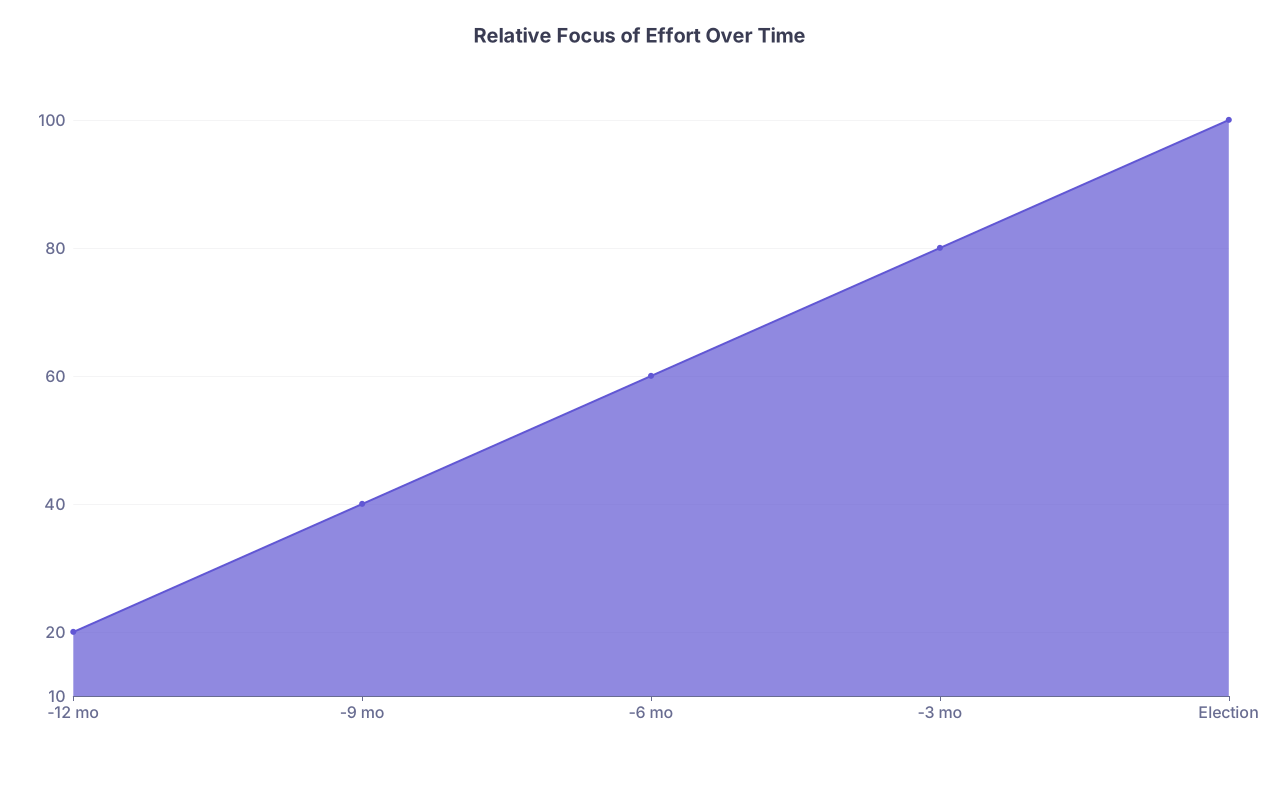
| Category | Value |
|---|---|
| -12 mo | 20 |
| -9 mo | 40 |
| -6 mo | 60 |
| -3 mo | 80 |
| Election | 100 |
Month −9: Lead One Project To Completion
At this point you should have a concrete, visible accomplishment that is not just “worked hard on wards.”
Good candidates:
A small QI project with a clear result:
- Decreased paging burden.
- Standardized sign‑out template.
- Reduced discharge delays.
A teaching initiative:
- Noon report series.
- Case‑based curriculum for interns.
- Simulation sessions for codes.
Run it like this:
- Define the scope: 8–12 weeks, clear deliverable.
- Loop in a faculty sponsor early (ideally someone on the Clinical Competency Committee or selection committee).
- Communicate updates concisely: “Here is what we did. Here is the metric. Here is the change.”
Selection committees love this because it proves you can execute, not just brainstorm.
Month −8: Strengthen Relationships With Nurses And Staff
At this point you should stop seeing nursing as “other” and start acting like you are about to co‑run the place with them.
Practical steps:
- Remember and use names on your core rotations.
- Ask senior nurses privately:
“What do chiefs do that helps or hurts this unit the most?” - Fix something small:
- A standardized way to notify about transfers.
- A clearer protocol for overnight calls.
I have seen chiefs lose support because nurses hated working with them as residents. That rarely gets said out loud in the election meeting, but it absolutely colors the tone: “They are competent, but…”
Month −7: Align With Program Leadership
At this point you should no longer be an anonymous face to your PD and APDs.
Minimum:
- One scheduled meeting with the PD or associate PD to discuss:
- Your long‑term goals.
- Your interest in leadership.
- What they want out of next year’s chiefs.
Do not make this about “I want to be chief.” Make it about “I care about where the program is going, and I want to help.” The chief role becomes the natural vehicle.
6–3 Months Before Election: Position Yourself Deliberately
Now you start quietly, but clearly, signaling that you are in the chief lane.
Month −6: Clarify The Selection Process
At this point you should know exactly how your program picks chiefs. No guesswork.
Ask a current chief or APD:
Is it:
- Pure PD/APD choice?
- Resident vote then PD confirmation?
- Faculty vote?
- Mixed model?
What are the actual selection criteria?
- Clinical strength vs likeability vs reliability.
- Academic productivity vs service.
Capture this in writing. Then align your efforts to what actually counts, not what people complain about in the lounge.
| Model | Who Votes / Decides | Typical Weight of Resident Opinion |
|---|---|---|
| PD/APD only | Program leadership | Low |
| Resident vote only | Residents | Very high |
| Mixed committee | PD, faculty, chiefs | Moderate |
| Hybrid | Resident vote + PD | High but not final |
Month −5: Lock In Your Mentors And Advocates
At this point you should have at least 2–3 people who will speak strongly on your behalf when your name comes up.
Target:
- 1 program leader (PD/APD or site director)
- 1 core faculty in your specialty area
- 1 respected current or past chief
Actions:
- Send a brief email: “Could we meet for 20 minutes? I am seriously considering pursuing chief and want candid feedback about my fit and gaps.”
- In the meeting, ask three direct questions:
- “If you were PD, would you pick me as chief based on what you have seen so far?”
- “What would make you hesitate?”
- “What could I change in the next 3–4 months to fix that?”
Then show visible changes. People back the candidates they feel they helped shape.
Month −4: Build Resident Support Without “Campaigning”
If your program has resident voting, this month matters more than any “speech” later.
At this point you should be:
- Dependable on cross‑cover: answer pages, help with admissions, do not disappear at 2:30 a.m.
- Fair on call swaps and vacation trades.
- A sane, calm presence when things go sideways.
You are not shaking hands and asking for votes. You are quietly becoming the person everyone instinctively trusts.
I have seen elections decided by one sentence overheard on nights: “Honestly, when X is on, I just feel less stressed.” That is what you are aiming for.
3–1 Months Before Election: Formal Positioning And Materials
Now the timeline accelerates. The process usually becomes explicit during this window: calls for interest, nominations, maybe short statements.
Month −3: Understand The “Deliverables”
At this point you should know exactly what you will be asked to submit or do:
- Personal statement or “why chief” paragraph?
- Short talk at noon conference?
- 1:1 interview with PD or selection panel?
- Resident town hall Q&A?
Document these requirements and sketch rough drafts now, not the night they are due.

Month −2: Craft Your Chief Narrative
At this point you should be able to answer, crisply, three questions:
Who are you as a leader?
(“I am the person who takes messy systems and makes them run smoother, without burning out residents.”)What problem do you want to fix next year?
Example:- Improve handoff safety
- Make schedules more predictable
- Strengthen teaching on wards
Why you, now?
Tie your concrete track record to what the program needs.
Draft a 1–page “chief pitch” for yourself. You will not read it aloud, but it will shape:
- Your written statement (if required).
- How you answer questions in conversations.
- How others describe you when they say, “Yeah, they would be a good chief because…”
Month −1: Quiet, Direct Conversations
At this point you should stop pretending this is theoretical.
Moves for this month:
Tell your PD or APD explicitly: “I plan to put my name forward for chief.”
Add: “If there is anything still giving you pause, I want to know now so I can address it.”Check in with your core advocates:
“I am going to apply. Any advice for how to present my strengths honestly?”If resident voting is a factor, have authentic 1:1 conversations with a few influential co‑residents:
- Not: “Vote for me.”
- Instead: “I am going to run for chief. I care a lot about X and Y. Is there anything you think I am missing about what residents need?”
You are signaling seriousness without coming off as a politician.
Election Month: Week‑By‑Week And Day‑By‑Day
Now we zoom in. This is where people panic and over‑perform. Do not. Your job now is to confirm the story you have already built.
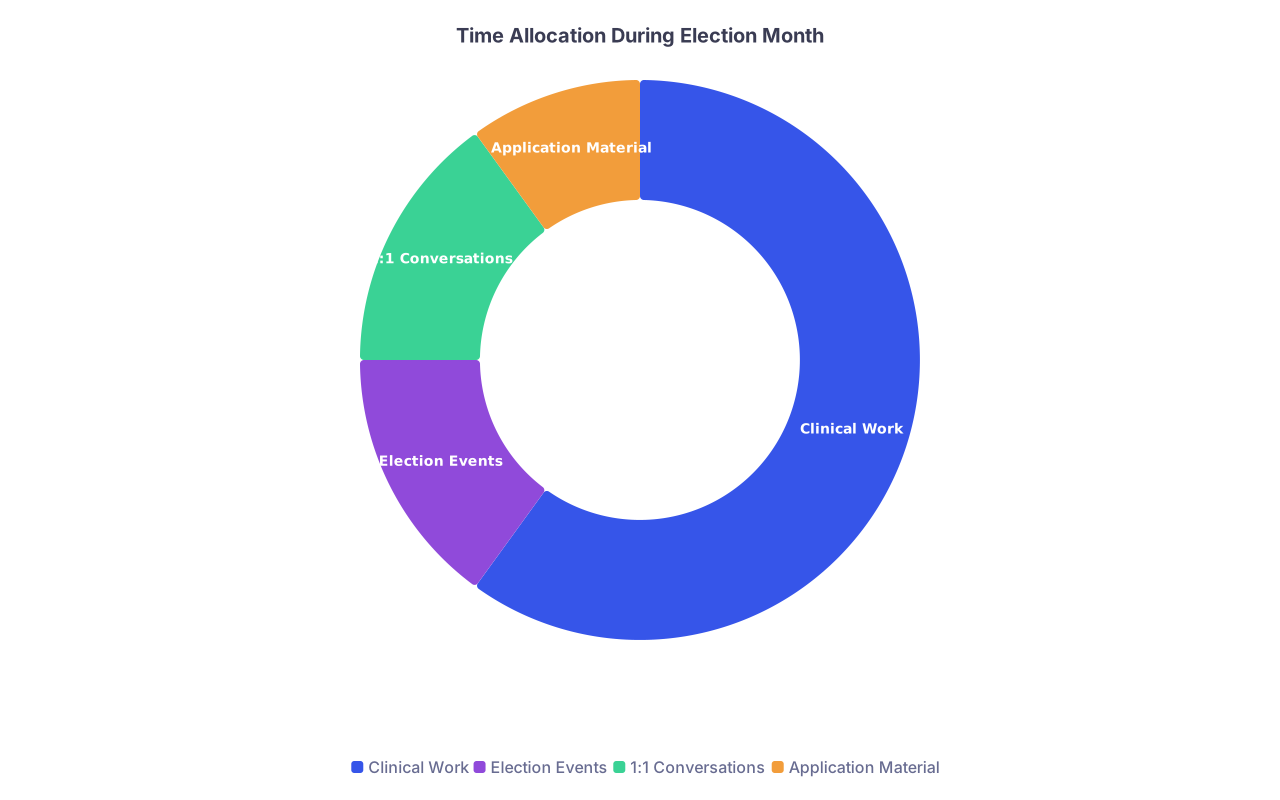
| Category | Value |
|---|---|
| Clinical Work | 60 |
| Election Events | 15 |
| 1:1 Conversations | 15 |
| Application Material | 10 |
Week 1: Official Announcement / Nominations Open
At this point you should:
- Submit your name promptly if self‑nomination is required. Do not be the last person in; it reads as hesitant.
- Finalize and submit:
- Any written statement.
- CV or leadership summary (if requested).
For your written piece:
- Lead with one concrete example of you solving a program problem. Not generic “I care about education.”
- Tie that example to what you plan to do as chief next year.
- Keep it tight. Clear > flowery.
Checklist – Week 1
- Confirm all submission deadlines and formats.
- Send personal statement / paragraph to one trusted mentor for a fast review.
- Notify your closest co‑residents you have officially applied (in person if possible).
Week 2: Presentations / Q&A / Informal Campaigning
This is where many strong candidates sabotage themselves by trying too hard or sounding fake.
At this point you should:
- Prepare a 5–10 minute talk or Q&A plan that hits:
- One sentence: why you want to be chief.
- Two sentences: what you have already done that is “chief‑like.”
- Three bullets: specific, realistic goals for the chief year.
Avoid:
- Over‑promising things chiefs do not control (salary, GME policy).
- Trash‑talking current systems without solutions.
- Making it all about your career goals (“I want to go into academic medicine and this would be good exposure…”).
Daily rhythm this week:
Before work:
Skim your main talking points. You want them sharp but not memorized.During work:
Act exactly how people hope a chief would act on a busy day:- Calm when the ED dumps 6 admissions.
- Fair assigning tasks.
- Willing to stay 20 minutes late to make sure things are safe.
After work:
If there are any resident forums, show up on time, listen more than you speak, answer questions honestly.

Week 3: Voting And Leadership Deliberations
At this point you should not be sending last‑minute mass texts or panicking.
Your focus:
- Maintain normal, high‑quality clinical performance. People notice if you suddenly shift all your energy to “campaigning” and drop balls on patient care.
- Handle any awkward interactions with grace:
- If someone tells you they are also running: “I am glad. The program will be lucky either way.”
- If someone asks, “Why should I vote for you?”: respond with your core narrative, not flattery or promises.
If there are interviews or closed‑door meetings with leadership:
- Treat them like senior faculty discussions, not job interviews:
- Be specific.
- Be honest about challenges you see in the program.
- Offer realistic plans, not heroics.
Week 4: Results And Immediate Aftermath
If you are selected:
At this point you should:
Thank people individually:
- PD/APDs.
- Current chiefs.
- Key residents who supported you.
Ask for a transition plan:
- Shadow current chiefs on:
- Scheduling decisions.
- Difficult conversations.
- Committee meetings.
- Shadow current chiefs on:
Clarify expectations in writing:
- Division of labor between chiefs.
- Time commitment.
- Formal responsibilities vs “hidden” tasks.
If you are not selected:
You still have a leadership future if you handle this well.
At this point you should:
- Ask for a 15–20 minute debrief with PD or APD:
- “What were the main factors in the decision?”
- “What leadership roles do you see as a good fit for me now?”
- Continue acting like someone who cares more about the program than the title. That maturity is not forgotten.
The First 1–3 Months After Selection: Transition Into The Role
The election is not the finish line; it is the handoff.
At this point you should:
Month +1:
Shadow at least:- One schedule build cycle.
- One resident crisis management episode (wellness, professionalism, or conflict).
- One program‑level meeting (CCC, PEC, or similar).
Month +2:
Take ownership of a small part of the chief job:- Conference schedule.
- Communications (weekly email).
- A specific service schedule.
Month +3:
Sit down with your co‑chiefs and PD to set joint priorities for the year:- 2–3 realistic, measurable program goals.
- How you will divide responsibilities.
- How decisions will be made when you disagree.

Condensed Month‑By‑Month Checklist
Use this as your quick reference.
| Time Frame | Primary Focus |
|---|---|
| -12 to -10 months | Decide, observe, fix weaknesses |
| -9 to -7 months | Lead 1 project, build trust |
| -6 to -4 months | Clarify process, secure mentors |
| -3 to -2 months | Prepare narrative and materials |
| -1 month | Direct conversations, refine fit |
| Election month | Execute calmly, confirm reputation |
Open your calendar right now and mark the approximate month your program will pick chiefs. Then, count back 12 months and write one concrete action under each of the phases above. If that first action is not obvious, your next step tonight is simple: email a current chief and ask, “Can we talk this week about what you wish you had done earlier before you ran?”


